Abstract
This study examined the significant relationship between organizational culture and job satisfaction among employees of Panabo City National High School during the academic year 2025–2026. Specifically, it sought to determine the level of organizational culture and job satisfaction, establish the relationship between these two variables, and identify which domain of organizational culture most strongly influences employees’ job satisfaction. The study employed a quantitative, non-experimental research design using a descriptive-correlational approach. Data were collected from both teaching and non-teaching personnel through standardized and researcher-adapted survey questionnaires that were validated for reliability and appropriateness to the study context. Descriptive statistical tools were utilized to determine the levels of organizational culture and job satisfaction, while inferential statistical analyses were applied to examine the relationship between the two variables and identify significant predictors. Results revealed that organizational culture and job satisfaction were both rated at a very high level, indicating a positive work environment and a high degree of employee contentment within the institution. Furthermore, findings confirmed a significant positive relationship between organizational culture and job satisfaction, suggesting that a supportive and well-defined organizational culture contributes meaningfully to employees’ overall satisfaction at work. Among the domains of organizational culture examined, bureaucratic culture emerged as the most significant predictor of employees’ job satisfaction. This result highlights the importance of clear structures, defined roles, established policies, and systematic procedures in fostering satisfaction among school personnel. The findings of this study provide valuable insights for school administrators and policymakers in strengthening organizational practices that enhance employee satisfaction, promote efficiency, and sustain a positive institutional climate. Overall, the study underscores the critical role of organizational culture in shaping job satisfaction within public secondary schools.
Keywords
Organizational Culture, Job Satisfaction, Teachers, Public Secondary School, Panabo City National High School
1. Introduction
Organizational culture and job satisfaction represent two critical constructs in management and organizational psychology that significantly influence both individual and organizational outcomes. The dynamic interplay between these variables has garnered substantial scholarly attention over recent decades, particularly as organizations increasingly recognize that cultural elements serve as powerful determinants of employee attitudes, behaviors, and overall performance
| [1] | Adewojo, O. A., Ugwu, C. U., & Ejikeme, T. (2025). Organizational culture and employee job satisfaction: A study of service-based organizations in Ibadan, Nigeria. International Journal of Research and Innovation in Social Science. |
[1]
. Organizational culture encompasses the shared values, beliefs, assumptions, and behavioral norms that characterize how work gets done within an organization, while job satisfaction reflects the pleasurable emotional state resulting from employees' appraisal of their work experiences and environments (Putra, et al. 2024). The profound significance of this relationship is evidenced by contemporary research indicating that organizational culture can substantially influence employee engagement, productivity, innovation, and retention rates
| [6] | Cameron, K., & Quinn, R. E. (2022). Adaptive organizational cultures and employee satisfaction in the UK. Journal of Organizational Change Management. |
[6]
.
The international context introduces significant variations in how organizational culture influences job satisfaction across different geographical settings. Research conducted in diverse environments reveals both universal patterns and culturally specific dynamics in the culture-satisfaction relationship
| [11] | Tran, Q. H. (2020). Organisational Culture, Leadership Behaviour and Job Satisfaction in Vietnam Context. International Journal of Organizational Analysis, 29, 136-154. |
[11]
. A study examining Vietnam's business context found that organizational culture and leadership behavior significantly influenced job satisfaction, with cultural factors manifesting differently in this emerging economy compared to Western contexts. Similarly, research in the Greek energy sector demonstrated that culture types (specifically clan and adhocracy cultures) were positively associated with both job satisfaction and employee engagement, suggesting that people-oriented cultural frameworks have particular efficacy in this national context
.
Cultural values such as smooth interpersonal relationships community spirit play pivotal roles in the Philippines, understanding organizational culture's impact on job satisfaction is particularly salient
| [23] | Ona, J. S. (2024). Organizational Culture, Work Performance, and Job Satisfaction. Journal of Interdisciplinary Publication, December 2024. |
[23]
. Further, studies in the Philippines have emphasized the significance of organizational culture in educational institutions and service-based organizations, where culture types such as clan (family-like, supportive) are dominant and positively influence job satisfaction and organizational commitment among teachers and employees
| [29] | Sumarjo, W. (2025). The Role of Organizational Culture in Improving Employee Performance through Organizational Commitment. Journal of Management Science, 8(1), 21-28. |
[29]
. The dynamic interplay between organizational culture and leadership style has also been found to mediate employee job satisfaction, suggesting that effective leadership coupled with a supportive culture fosters greater workplace engagement
| [15] | Fajilan, L. F., Acosta, R. A. S., Ajesta, A. C., Bautista, K. A. L., et al. (2021). Impact of Organizational Culture on Employee Engagement, Leadership Style, and Work Performance of Laboratory Workers in Selected Clinical Laboratories in Metro Manila. International Journal of Progressive Research in Science and Engineering, 2(9), 105–114. |
[15]
. Furthermore, adherence to local cultural values may enrich the organizational climate, making job satisfaction a multidimensional experience uniquely contextualized within the Philippine setting.
Studies have underscored the significance of an organizational culture as a driving force that fosters employee commitment and supports institutional success. Job satisfaction among employees in the Davao Region is likewise influenced by interrelated factors such as reward systems, communication clarity, work-life balance, and supportive leadership. Furthermore, teachers in Davao del Norte have demonstrated high organizational commitment linked to organizational culture, which includes efficient change management and a supportive work climate
| [25] | Bantilan, J. D., Hifarva, W. S., Lugatiman, R., & Bauyot, M. M. (2024). Employee Commitment as Influenced by Organizational Culture, Policies, and Practices of Public School Teachers in Davao Region, Philippines: A Focus on Primary and Secondary Levels. International Journal of Research and Innovation in Social Science, 9(4).
https://doi.org/10.47772/IJRISS.2024.801036 |
[25]
. Collectively, these findings highlight the need for local organizations to cultivate strong cultural foundations that enhance employee morale and organizational commitment, thereby contributing to sustainable organizational performance and service quality.
Research on the link between organizational culture and job satisfaction in developing economies, particularly in the Philippines, remains limited. Although culture is a key factor in employee satisfaction, few studies address how local cultural dynamics and sector-specific practices—such as in education—shape satisfaction and retention. This gap is significant, as misaligned cultures can reduce morale, increase turnover, and hinder productivity. Given ongoing socio-economic, global, and technological changes, organizations must foster contextually relevant cultures to strengthen employee well-being and overall performance.
1.1. Research Objectives
This study aimed to determine the relationship between organizational culture and job satisfaction. Specifically, it sought answers the following questions:
1) To assess the level of organizational culture in terms of:
a) Clan culture;
b) Mission culture;
c) Adaptive culture; and
d) Bureaucratic culture.
2) To measure the level of Job satisfaction of teachers in terms of:
a) Working hours;
b) Salary;
c) Personnel development;
d) Working atmosphere;
e) Leadership and management;
f) Working activity; and
g) Infrastructure.
3) To identify the relationship between organizational culture and job satisfaction
4) To determine which domains of organizational culture influence job satisfaction
1.2. Hypothesis
The null hypothesis will be tested at .05 level of significance using appropriate statistical toll will be:
Ho1. There is no significant relationship between organizational culture and job satisfaction.
Ho2. None of the domains of organizational culture significantly influence job satisfaction.
2. Review of Related Literature and Studies
This section synthesizes relevant literature and studies on organizational culture and job satisfaction, emphasizing their conceptual foundations and empirical linkages. In this study, organizational culture is treated as the independent variable, operationalized through clan, mission, adaptive, and bureaucratic cultures, while job satisfaction is examined through working hours, salary, personnel development, working atmosphere, leadership and management, working activity, and infrastructure.
2.1. Organizational Culture
Organizational culture refers to the shared values, beliefs, norms, and practices that shape behavior and decision-making within institutions. Studies consistently indicate that strong and value-driven cultures enhance employee satisfaction, commitment, and retention, while weak cultures contribute to disengagement and turnover
. In educational settings, positive organizational culture promotes collaboration, trust, and professional identity, which are critical to sustaining teacher motivation and effectiveness.
Leadership is widely recognized as a central force in shaping organizational culture. Ethical, transformational, and values-based leadership practices reinforce shared norms, promote transparency, and foster trust, thereby strengthening cultural alignment and job satisfaction
| [24] | Zainab, B., Akbar, W., & Siddiqui, F. (2022). Impact of transformational leadership and transparent communication on employee openness to change: mediating role of employee organization trust … shows how transformative leadership + transparent communication lead to trust and greater openness to change. Emerald. |
| [14] | Ete, Z., Epitropaki, O., Zhou, Q., et al. (2022). “Leader and Organizational Behavioral Integrity and Follower Behavioral Outcomes: The Role of Identification Processes” — showing that leaders’ behavioral integrity (role modeling) fosters follower identification and positive outcomes. SpringerLink. |
[24, 14]
. Open communication further supports culture development by enhancing psychological safety and collective engagement, particularly in increasingly complex and technology-mediated work environments
| [26] | Paulus, P. (2023). The Role of Psychological Safety in Team Communication: Implications for Human Resource Practices. Golden Ratio of Mapping Idea and Literature Format, 3(2), 156–166. https://doi.org/10.52970/grmilf.v3i2.399 |
[26]
.
2.1.1. Clan Culture
Clan culture emphasizes collaboration, trust, and a family-like work environment. Organizations with strong clan cultures prioritize teamwork, participative decision-making, and employee development, resulting in higher job satisfaction, organizational commitment, and psychological safety
| [20] | Hartnell, C. A., Ou, A. Y., Kinicki, A. J., Choi, D., & Karam, E. P. (2022). A meta-analytic test of organizational culture’s association with elements of an organization’s system and performance. Journal of Applied Psychology, 107(3), 458–479.
https://doi.org/10.1037/apl0000876 |
| [12] | Eliophotou-Menon, M., & Ioannou, A. (2021). Linking organizational culture and leadership to employee engagement: The mediating role of psychological safety. Journal of Organizational Effectiveness: People and Performance, 8(3), 270–287. https://doi.org/10.1108/JOEPP-01-2021-0005 |
[20, 12]
. Empirical evidence suggests that such cultures are particularly effective in promoting engagement and knowledge sharing in educational institutions.
2.1.2. Mission Culture
Mission culture centers on shared purpose and organizational values that guide daily practices and decision-making. Research shows that strong mission cultures enhance job satisfaction and engagement by providing employees with meaningful work and a sense of contribution beyond individual tasks
. In education, mission alignment between teachers and school leadership has been associated with higher retention and professional commitment
.
2.1.3. Adaptive Culture
Adaptive culture reflects an organization’s capacity to respond to change through innovation, learning, and flexibility. Studies indicate that schools with adaptive cultures are better positioned to implement reforms, address diverse learner needs, and sustain teacher morale amid changing demands
| [40] | Patel, J. (2024). The Role Of Adaptive Culture In Organizational Success: A Comprehensive Review. Journal of Organizational Culture Communications and Conflict, 28(S2), 1-3. |
[40]
. Adaptive cultures emphasize collaboration, distributed leadership, and data-informed decision-making, which collectively enhance organizational resilience and teacher satisfaction.
2.1.4. Bureaucratic Culture
Bureaucratic culture is characterized by formal rules, hierarchical structures, and standardized procedures. While excessive bureaucracy may constrain innovation, recent studies suggest that clear structures and consistent processes can support stability, fairness, and accountability when balanced with professional autonomy
. In educational contexts, bureaucratic culture may positively influence job satisfaction by reducing role ambiguity and ensuring equitable practices.
2.2. Job Satisfaction
Job satisfaction refers to teachers’ positive emotional evaluation of their work experiences and conditions. High levels of job satisfaction are associated with improved performance, commitment, and retention, while dissatisfaction contributes to stress and attrition
| [13] | Erturk, R. (2022). The Effect of Teachers’ Quality of Work Life on Job Satisfaction and Turnover Intentions. International Journal of Contemporary Educational Research, 9(1), 191–203.
https://doi.org/10.33200/ijcer.1022519 |
| [27] | Tria, J. Z. (2023). Job satisfaction among educators: A systematic review. International Journal of Progressive Development and Learning, 1(1). |
[13, 27]
. Research identifies both intrinsic and extrinsic factors as key determinants of teacher job satisfaction.
Workload and working hours are consistently linked to satisfaction, with excessive demands negatively affecting well-being unless mitigated by autonomy and administrative support
| [10] | Dong R, Wu H, Ni S, Lu T. The nonlinear consequences of working hours for job satisfaction: The moderating role of job autonomy. Curr Psychol. 2021 Nov 12: 1-22.
https://doi.org/10.1007/s12144-021-02463-3 Epub ahead of print. |
[10]
. Salary remains a significant predictor of satisfaction, particularly regarding financial security and perceived fairness, though it primarily functions as a factor preventing dissatisfaction rather than promoting motivation
| [3] | Assaf, Joumana & Antoun, Siham. (2024). Impact of job satisfaction on teacher well-being and education quality. Pedagogical Research. 9. em0204.
https://doi.org/10.29333/pr/14437 |
| [21] | Herzberg, F. (1968). "One More Time: How Do You Motivate Employees?" Harvard Business Review, 46(1), 53–62.
https://www.edweek.org/teaching-learning/teacher-job-satisfaction-hits-an-all-time-low/2022/04 |
| [32] | Tiquel, J. M., Galon, E. G., & Colanggo, A. P. (2022). Teachers’ job satisfaction level analysis of the new normal. E-Saliksik. Department of Education. |
[3, 21, 32]
.
Personnel development positively influences job satisfaction by enhancing teachers’ competence, self-efficacy, and career growth, especially when supported by school leadership
| [33] | Srivastava, V., & Gupta, S. (2025). The relationship between professional development and job satisfaction among secondary school teachers. Journal of Informatics Education and Research, 5(1), 15–17. http://jier.org |
[33]
. Likewise, working atmosphere—encompassing leadership support, collegial relationships, and physical conditions—has been shown to be a strong predictor of satisfaction and retention [
7].
Leadership and management practices significantly affect job satisfaction through supportive supervision, participatory decision-making, and workload management. Transformational and instructional leadership styles, when applied collaboratively, are associated with higher teacher satisfaction and professional commitment
| [34] | Kaya A. (2024). The association between transformational leadership and teachers' creativity: professional resilience and job satisfaction as mediators. Front Psychol. 2024 Dec 30; 15: 1514621. https://doi.org/10.3389/fpsyg.2024.1514621 |
| [31] | Zhang, C., Alias, B. S., & Nordin, M. N. (2025). Effects of Distributive Leadership on Teachers’ Job Satisfaction in Public Schools: A Systematic Review. Education Sciences, 15(4), 412. https://doi.org/10.3390/educsci15040412 |
[34, 31]
. Additionally, the nature of teachers’ work activities, including autonomy over instructional tasks and reduced administrative burden, contributes positively to satisfaction
| [4] | Böhm, M., Sarochan, N., Rausch, A., & Aprea, C. (2024). Working hours, work activities, work experience and job satisfaction of teachers at vocational schools: Conclusions for the (un)attractiveness of the teaching profession, (47).
https://www.bwpat.de/ausgabe47/boehm_etal_bwpat47.pdf |
[4]
. Adequate physical and technological infrastructure further enhances satisfaction by supporting effective teaching and reducing occupational stress
.
2.3. Organizational Culture and Job Satisfaction
Empirical studies consistently demonstrate a significant relationship between organizational culture and teacher job satisfaction. Supportive, collaborative, and purpose-driven cultures foster engagement, commitment, and professional fulfillment, whereas weak cultures contribute to dissatisfaction and turnover
| [30] | Velasco, M. S. (2025). Organizational Culture and Job Satisfaction of Private School Teachers. ResearchGate. |
| [2] | Amissah, A. L. O. (2023). Impact of Organizational Culture on Teacher Job Performance in Public Basic Schools. International Journal of Multidisciplinary Studies and Innovative Research, 13(2), 36-47.
https://doi.org/10.53075/Ijmsirq/09876457543856 |
[30, 2]
. Organizational commitment frequently mediates this relationship, suggesting that positive cultures and effective leadership enhance satisfaction by strengthening teachers’ sense of belonging and collective efficacy
| [35] | Rahman, M. H., Bolotio, R., & Napitupulu, D. (2025). The role of organizational commitment in improving teachers' job satisfaction in public high schools in Indonesia. International Journal of Advanced and Applied Sciences, 12(2), 62-71.
https://doi.org/10.21833/ijaas.2025.02.007 |
[35]
.
2.4. Theoretical Framework
Social Exchange Theory (SET) by Blau (1964) is a sociological and psychological framework that explains human interactions as transactions aimed at maximizing benefits while minimizing costs. It posits that relationships are formed, maintained, or terminated based on individuals’ evaluations of rewards (such as trust, support, or recognition) and costs (such as time, effort, or conflict). When the perceived benefits outweigh the costs, individuals are more likely to sustain the relationship, whether in personal, professional, or organizational contexts. In workplaces, SET is often used to explain how trust, reciprocity, and fairness influence employee satisfaction, commitment, and performance.
Social exchange theory (SET) posits that employee–employer relationships are based on a series of reciprocal exchanges, where a positive organizational culture acts as a catalyst for increased job satisfaction. When an organization invests in its employees through fair treatment, strong support, and a positive culture, employees feel a sense of obligation to reciprocate with beneficial behaviors like increased job satisfaction, commitment, and performance
| [8] | Cropanzano, R., & Mitchell, M. S. (2020). Social exchange theory: An interdisciplinary review. Journal of Management, 31(6), 874-900. |
[8]
. A study on teachers found that a supportive and innovative organizational culture significantly influenced their job satisfaction and innovative behavior, mediated by perceived organizational support
| [36] | Khan, A. H., Khan, A. N., & Masrek, M. (2020). The interplay of leadership styles, innovative work behavior, organizational culture, and organizational citizenship behavior. Journal of Organizational Change Management, 33(7), 1323-1340. |
[36]
. Similarly, research showed that benevolent leadership, a key component of organizational culture, enhances employee engagement and satisfaction through the social exchange process by making them feel cared for and valued
| [37] | Ibrahim, M., & Al-Tawil, S. (2025). A social exchange perspective in sustaining employee engagement: do benevolent leaders really matter? Journal of Human Resources and Organisational Management, 10(1), 1-17. |
[37]
. This reciprocal relationship between the organization's treatment of its employees and the employees' subsequent attitudes and behaviors highlights how SET provides a powerful framework for understanding and predicting job satisfaction and other key outcomes within a specific organizational culture.
2.5. Conceptual Framework
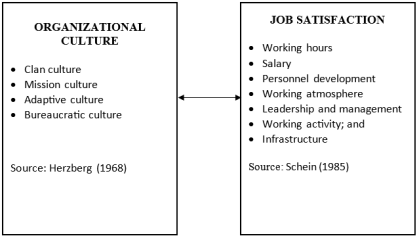
Figure 1 shows the conceptual model of this study. It focuses on organizational culture and job satisfaction. The independent variable focused on this study is organizational culture. It has four indicators namely: clan culture, mission culture, adaptive culture, and bureaucratic culture
| [38] | Schein, E. H. (1985). Organizational Culture and Leadership: A Dynamic View. San Francisco, CA: Jossey-Bass. |
[38]
.
Figure 1. The Conceptual Framework of the Study.
In this study, organizational culture refers to the shared values, beliefs, norms, and behaviors that shape how members of an organization interact and work together; clan culture refers to a collaborative, family-like culture emphasizing teamwork, employee involvement, and loyalty, with a focus on nurturing and mentoring; mission culture refers to a goal-oriented culture driven by a clear sense of purpose and strategic objectives, prioritizing achievement and results; adaptive culture refers to a flexible, innovative culture that embraces change, encourages risk-taking, and adapts quickly to external environments; and bureaucratic culture refers to a structured, rule-driven culture focused on stability, efficiency, and adherence to formal processes and hierarchies.
Meanwhile, the dependent variable is job satisfaction. It has seven indicators namely: working hours, salary, personnel development, working atmosphere, leadership and management, working activity, and infrastructure
.
In this study, job satisfaction refers the level of contentment employees feel toward their job, influenced by factors like work environment, tasks, and rewards; working hours refers to the time employees are required to work, including schedules, shifts, and flexibility in hours; salary refers to the financial compensation paid to employees for their work, typically expressed as an hourly, monthly, or annual amount; personnel development refers to the activities and programs aimed at enhancing employees' skills, knowledge, and career growth, such as training and mentoring; working atmosphere refers to the overall environment and vibe of the workplace, shaped by relationships, culture, and physical conditions; leadership and management refers to the style and effectiveness of those in charge, guiding teams, making decisions, and setting organizational direction; working activity refers to the specific tasks, responsibilities, and duties employees perform as part of their job roles; and infrastructure refers to the physical and technological resources supporting work, such as facilities, equipment, and IT systems.
3. Significance of the Study
The study holds great significance for various stakeholders, including teachers, school heads, students, and future researchers. Understanding the relationship between these two constructs can help in developing policies, programs, interventions and projects to enhance organizational culture and job satisfaction. The study can also contribute to the existing body of knowledge on organizational culture and job satisfaction, providing a basis for further research in this area.
3.1. Teachers
This research may provide them with a deeper understanding of how the prevailing organizational culture directly impacts their job satisfaction. The findings can help them recognize specific cultural elements that may be hindering or enhancing their professional fulfillment. They can further advocate for changes that improve their working conditions, leading to increased morale, motivation, and a more effective teaching experience.
3.2. School Heads
This study may offer empirical evidence on the current state of organizational culture and its direct correlation with job satisfaction among their staff. The findings can provide data-driven recommendations, enabling them to make informed decisions about cultural interventions, professional development programs, and leadership strategies. Further, this research can help school heads foster a healthy and positive culture that retains skilled staff and improves the school's overall performance.
3.3. Students
They are the ultimate beneficiaries of a healthy and satisfying school environment. When teachers and non-teaching staff are fulfilled in their roles, they are more engaged, creative, and committed. This leads to a more stable, nurturing, and effective learning atmosphere. The research indirectly contributes to improved student academic performance, social development, and well-being by providing a framework for creating a better school environment for staff.
3.4. Future Researchers
This study serves as a foundational reference for future research in the fields of organizational culture, human resource management, and educational leadership. It can be used as a literature base for scholars and practitioners who wish to explore similar topics in different contexts, such as other types of educational institutions, or to investigate additional variables. The methodology and findings can also guide future researchers in identifying gaps in existing knowledge and formulating new research questions to further advance the understanding of organizational dynamics in academic settings.
4. Definition of Terms
The researcher will establish a common frame of reference to ensure that all readers have a clear understanding of the concepts being discussed:
Organizational Culture refers to the shared beliefs, values, attitudes, and behavioral norms among school employees that shape how they interact, make decisions, and work toward the institution's goals. It is described as the collective outlook and assumptions that create a unifying force in the school environment, influencing relationships and the overall effectiveness of the educational organization
| [19] | Gonzáles Cardona, J. A., Naranjo Valencia, J. C., & Calderón Hernández, G. (2023). Relationship between organizational culture and school performance: A study in elementary, middle, and high school institutions. Desarrollo Gerencial, 15(2), 1–25. https://doi.org/10.17081/dege.15.2.6414 |
[19].
Job Satisfaction is conceptualized as the positive emotional state resulting from the evaluation of their job experiences. It encompasses their overall attitude toward their teaching career, including aspects like work conditions, relationships with colleagues and supervisors, and the alignment of job roles with personal values and expectations. It includes both intrinsic and extrinsic factors that influence how employees feel about their work environment and professional responsibilities
| [27] | Tria, J. Z. (2023). Job satisfaction among educators: A systematic review. International Journal of Progressive Development and Learning, 1(1). |
[27]
.
5. Method
This chapter describes the research design, population and sample, research instruments, data collection procedures, ethical considerations, and statistical tools employed in the study.
5.1. Research Design
The study adopted a quantitative descriptive-correlational design to examine the relationship between organizational culture and job satisfaction among teachers. Quantitative methods allow for measuring variables objectively, testing hypotheses, and generalizing findings to a broader population. The descriptive component documents the current state of the variables, while the correlational aspect assesses their relationships using statistical measures such as Pearson’s r.
5.2. Population and Sample
The study involved 170 out of 300 teachers at Panabo City National High School, selected through simple random sampling. The sample size was determined using Slovin’s formula with a 5% margin of error, ensuring representativeness and statistical validity.
5.3. Research Instruments
Data were collected using a structured survey questionnaire, divided into two scales:
1) Organizational Culture Scale (OCS) – Adapted from Schein (1985), with 20 items covering clan, mission, adaptive, and bureaucratic cultures. Pilot testing yielded a Cronbach’s alpha of 0.84, indicating strong reliability.
2) Job Satisfaction Scale (JSC) – Adapted from Herzberg (1968), with 35 items covering working hours, salary, personnel development, working atmosphere, leadership, working activity, and infrastructure. Pilot testing yielded a Cronbach’s alpha of 0.82.
Both scales used Likert-type responses, and mean intervals were interpreted to determine levels of organizational culture and job satisfaction.
5.4. Data Gathering Procedures
Permission was obtained from school administrators before distributing surveys. Participants were informed of the study purpose, assured of voluntary participation, and given the right to withdraw at any time. A pilot test confirmed the clarity and reliability of instruments. Completed questionnaires were collected, checked for completeness, and securely stored before data entry and analysis.
5.5. Ethical Considerations
The study adhered to ethical standards to protect participants’ rights and welfare:
1) Informed Consent: Participants were briefed on the study’s purpose and procedures.
2) Confidentiality and Privacy: Data were stored securely, and personal identifiers were excluded from reports.
3) Minimal Risk: Participation posed negligible risk, with participants able to skip uncomfortable questions.
4) Justice: Selection ensured equitable representation across staff roles.
5) Transparency and Integrity: The researcher maintained open communication and declared no conflicts of interest.
Statistical Tools
1) Weighted Mean: To assess levels of organizational culture and job satisfaction.
2) Pearson Product-Moment Correlation: To examine the relationship between organizational culture and job satisfaction (significance at p < 0.05).
3) Multiple Regression Analysis: To identify which dimensions of organizational culture most strongly predict job satisfaction, with significance set at p < 0.05.
6. Results and Discussions
This chapter presents the results of the study on organizational culture and job satisfaction of teachers. Findings are presented through descriptive statistics, correlation analysis, and regression analysis, supported by brief interpretations and relevant literature.
6.1. Level of Organizational Culture
Results show that the overall level of organizational culture is very high (𝑥̄ = 4.2), indicating that positive cultural attributes are consistently evident within the institution.
Mission culture obtained the highest mean (𝑥̄ = 4.4), reflecting a strong sense of purpose, clear goals, and employee motivation toward organizational objectives. This suggests that teachers perceive their work as meaningful and aligned with institutional goals.
Clan culture followed closely (𝑥̄ = 4.3), indicating strong interpersonal relationships, teamwork, and a sense of belonging among employees.
Adaptive culture (𝑥̄ = 4.1) and bureaucratic culture (𝑥̄ = 4.0) were rated high, suggesting that the institution demonstrates flexibility and innovation while maintaining structure, accountability, and formal procedures.
These findings indicate that the organization balances collaboration, purpose-driven leadership, adaptability, and administrative stability. Prior studies affirm that such cultural configurations promote employee engagement, satisfaction, and organizational effectiveness.
6.2. Level of Job Satisfaction
The overall level of job satisfaction was also found to be very high (𝑥̄ = 4.2), indicating that teachers consistently experience positive work-related attitudes.
Among the indicators, working atmosphere ranked highest (𝑥̄ = 4.6), reflecting a supportive, inclusive, and collegial work environment. This was followed by working hours (𝑥̄ = 4.4), working activity (𝑥̄ = 4.3), personnel development (𝑥̄ = 4.2), and leadership and management (𝑥̄ = 4.2), all rated very high.
Salary and infrastructure were rated high (𝑥̄ = 4.1), suggesting general satisfaction, though with room for improvement.
These results imply that teachers are highly satisfied with both the psychosocial and professional aspects of their work. Literature consistently shows that supportive leadership, professional growth opportunities, positive work climate, and manageable workloads are strong predictors of job satisfaction.
6.3. Relationship Between Organizational Culture and Job Satisfaction
Correlation analysis revealed a significant relationship between organizational culture and job satisfaction (r = 0.771, p < 0.05). All cultural dimensions showed significant positive correlations with job satisfaction:
1) Clan Culture: r = 0.752
2) Mission Culture: r = 0.747
3) Adaptive Culture: r = 0.784
4) Bureaucratic Culture: r = 0.804
These findings indicate that improvements in organizational culture are associated with higher levels of job satisfaction among teachers.
6.4. Influence of Organizational Culture on Job Satisfaction
Regression analysis confirmed that organizational culture significantly predicts job satisfaction (R² = 0.731, p < 0.05), explaining 73.1% of the variance in job satisfaction.
Among the predictors, bureaucratic culture (β = 0.303) exerted the strongest influence, followed by mission culture (β = 0.271), clan culture (β = 0.179), and adaptive culture (β = 0.012). These results indicate that structured systems, clear goals, supportive relationships, and adaptability collectively shape teachers’ job satisfaction.
This finding aligns with Social Exchange Theory, which posits that when employees perceive fairness, support, and organizational stability, they reciprocate with positive attitudes such as satisfaction and commitment.
7. Summary, Conclusions, and Recommendations
This chapter presents a brief summary of the study, the conclusions drawn from the findings, and the corresponding recommendations.
Summary
This study examined the relationship between organizational culture and job satisfaction among teachers of Panabo City National High School. Using a descriptive-correlational research design, data were gathered from 170 teachers through validated and pilot-tested instruments. Statistical tools such as weighted mean, Pearson product-moment correlation, and regression analysis were employed at a 0.05 level of significance.
Findings revealed that both organizational culture and job satisfaction were rated very high. A significant relationship was found between organizational culture and job satisfaction, and all domains of organizational culture significantly influenced job satisfaction. Consequently, the null hypotheses were rejected.
Conclusions
The study concludes that organizational culture is strongly and consistently evident in the institution. Clan and mission cultures were rated very high, while adaptive and bureaucratic cultures were rated high. Job satisfaction was also very high, particularly in working hours, personnel development, working atmosphere, leadership and management, and working activity; salary and infrastructure were rated high.
Organizational culture was found to have a significant influence on job satisfaction. All cultural domains—clan, mission, adaptive, and bureaucratic—significantly predicted job satisfaction, indicating that improvements in organizational culture lead to higher levels of teacher satisfaction.
Recommendations
School Administrators
Administrators should sustain effective leadership practices while strengthening teacher recognition systems, improving internet connectivity, and prioritizing facility maintenance. Clarifying lines of authority is also recommended to enhance efficiency and reduce role ambiguity.
Department Heads
Department heads are encouraged to continue fostering collaboration and support while advocating for structured reward systems, assisting in addressing infrastructure concerns, and reinforcing clear task delegation within departments.
Teachers and Employees
Teachers may use the findings to advocate for better recognition, improved facilities, and clearer organizational structures. Increased awareness of institutional strengths can further enhance collaboration and professional engagement.
Future Researchers
Future studies may explore causal relationships between organizational culture and job satisfaction, replicate the study in other educational contexts, or examine specific factors such as recognition systems and infrastructure quality.
Abbreviations
SET | Social Exchange Theory |
IT | Information Technology |
Author Contributions
Lawrence Edward Zamora is the sole author. The author read and approved the final manuscript.
Conflicts of Interest
The author declares no conflicts of interest.
References
| [1] |
Adewojo, O. A., Ugwu, C. U., & Ejikeme, T. (2025). Organizational culture and employee job satisfaction: A study of service-based organizations in Ibadan, Nigeria. International Journal of Research and Innovation in Social Science.
|
| [2] |
Amissah, A. L. O. (2023). Impact of Organizational Culture on Teacher Job Performance in Public Basic Schools. International Journal of Multidisciplinary Studies and Innovative Research, 13(2), 36-47.
https://doi.org/10.53075/Ijmsirq/09876457543856
|
| [3] |
Assaf, Joumana & Antoun, Siham. (2024). Impact of job satisfaction on teacher well-being and education quality. Pedagogical Research. 9. em0204.
https://doi.org/10.29333/pr/14437
|
| [4] |
Böhm, M., Sarochan, N., Rausch, A., & Aprea, C. (2024). Working hours, work activities, work experience and job satisfaction of teachers at vocational schools: Conclusions for the (un)attractiveness of the teaching profession, (47).
https://www.bwpat.de/ausgabe47/boehm_etal_bwpat47.pdf
|
| [5] |
Brill. (2023). Mission Studies. Journal of the International Association for Mission Studies.
https://brill.com/view/journals/mist/mist-overview.xml?language=en&srsltid=AfmBOorjGBCae5ppeXOpi-mKGq8Ku-ep_85xFS4Zs5BT7bSWWLEv240l
|
| [6] |
Cameron, K., & Quinn, R. E. (2022). Adaptive organizational cultures and employee satisfaction in the UK. Journal of Organizational Change Management.
|
| [7] |
Creagh, S., Thompson, G., Mockler, N., Stacey, M., & Hogan, A. (2023). Workload, work intensification and time poverty for teachers and school leaders: a systematic research synthesis. Educational Review, 77(2), 661–680.
https://doi.org/10.1080/00131911.2023.2196607
|
| [8] |
Cropanzano, R., & Mitchell, M. S. (2020). Social exchange theory: An interdisciplinary review. Journal of Management, 31(6), 874-900.
|
| [9] |
Demir-Yıldız, C. (2023). Unveiling Job Satisfaction of Teachers through a Blend of Methodologies. Sustainability, 15(18), 13986.
https://doi.org/10.3390/su151813986
|
| [10] |
Dong R, Wu H, Ni S, Lu T. The nonlinear consequences of working hours for job satisfaction: The moderating role of job autonomy. Curr Psychol. 2021 Nov 12: 1-22.
https://doi.org/10.1007/s12144-021-02463-3
Epub ahead of print.
|
| [11] |
Tran, Q. H. (2020). Organisational Culture, Leadership Behaviour and Job Satisfaction in Vietnam Context. International Journal of Organizational Analysis, 29, 136-154.
|
| [12] |
Eliophotou-Menon, M., & Ioannou, A. (2021). Linking organizational culture and leadership to employee engagement: The mediating role of psychological safety. Journal of Organizational Effectiveness: People and Performance, 8(3), 270–287.
https://doi.org/10.1108/JOEPP-01-2021-0005
|
| [13] |
Erturk, R. (2022). The Effect of Teachers’ Quality of Work Life on Job Satisfaction and Turnover Intentions. International Journal of Contemporary Educational Research, 9(1), 191–203.
https://doi.org/10.33200/ijcer.1022519
|
| [14] |
Ete, Z., Epitropaki, O., Zhou, Q., et al. (2022). “Leader and Organizational Behavioral Integrity and Follower Behavioral Outcomes: The Role of Identification Processes” — showing that leaders’ behavioral integrity (role modeling) fosters follower identification and positive outcomes. SpringerLink.
|
| [15] |
Fajilan, L. F., Acosta, R. A. S., Ajesta, A. C., Bautista, K. A. L., et al. (2021). Impact of Organizational Culture on Employee Engagement, Leadership Style, and Work Performance of Laboratory Workers in Selected Clinical Laboratories in Metro Manila. International Journal of Progressive Research in Science and Engineering, 2(9), 105–114.
|
| [16] |
Gallup. (2022). How to improve employee engagement in the workplace. Retrieved from
https://www.gallup.com/workplace/285674/improve-employee-engagement-workplace.aspx
|
| [17] |
Gallup. (2023). What Is Organizational Culture, and Why Does It Matter?
https://www.gallup.com/workplace/327371/how-to-build-better-company-culture.aspx
|
| [18] |
Gkania, P., & Markaki, E. (2025). The impact of organizational culture on job satisfaction and employee engagement in the Greek energy sector. International Conference on Business and Economics - Hellenic Open University, 4(1). Retrieved from
https://eproceedings.epublishing.ekt.gr/index.php/ICBE-HOU/article/view/8116
|
| [19] |
Gonzáles Cardona, J. A., Naranjo Valencia, J. C., & Calderón Hernández, G. (2023). Relationship between organizational culture and school performance: A study in elementary, middle, and high school institutions. Desarrollo Gerencial, 15(2), 1–25.
https://doi.org/10.17081/dege.15.2.6414
|
| [20] |
Hartnell, C. A., Ou, A. Y., Kinicki, A. J., Choi, D., & Karam, E. P. (2022). A meta-analytic test of organizational culture’s association with elements of an organization’s system and performance. Journal of Applied Psychology, 107(3), 458–479.
https://doi.org/10.1037/apl0000876
|
| [21] |
Herzberg, F. (1968). "One More Time: How Do You Motivate Employees?" Harvard Business Review, 46(1), 53–62.
https://www.edweek.org/teaching-learning/teacher-job-satisfaction-hits-an-all-time-low/2022/04
|
| [22] |
Iqbal, S., Arshad, M. A., & Mahmood, A. (2022). Factors affecting employee’s retention: Integration of situational leadership with social exchange theory. Frontiers in Psychology, 13.
https://doi.org/10.3389/fpsyg.2022.872105
|
| [23] |
Ona, J. S. (2024). Organizational Culture, Work Performance, and Job Satisfaction. Journal of Interdisciplinary Publication, December 2024.
|
| [24] |
Zainab, B., Akbar, W., & Siddiqui, F. (2022). Impact of transformational leadership and transparent communication on employee openness to change: mediating role of employee organization trust … shows how transformative leadership + transparent communication lead to trust and greater openness to change. Emerald.
|
| [25] |
Bantilan, J. D., Hifarva, W. S., Lugatiman, R., & Bauyot, M. M. (2024). Employee Commitment as Influenced by Organizational Culture, Policies, and Practices of Public School Teachers in Davao Region, Philippines: A Focus on Primary and Secondary Levels. International Journal of Research and Innovation in Social Science, 9(4).
https://doi.org/10.47772/IJRISS.2024.801036
|
| [26] |
Paulus, P. (2023). The Role of Psychological Safety in Team Communication: Implications for Human Resource Practices. Golden Ratio of Mapping Idea and Literature Format, 3(2), 156–166.
https://doi.org/10.52970/grmilf.v3i2.399
|
| [27] |
Tria, J. Z. (2023). Job satisfaction among educators: A systematic review. International Journal of Progressive Development and Learning, 1(1).
|
| [28] |
Oliver, A. (2025) Principal’s message. Glenwood Leadership Academy.
https://glenwood.evscschools.com/about_us/principal_s_message
|
| [29] |
Sumarjo, W. (2025). The Role of Organizational Culture in Improving Employee Performance through Organizational Commitment. Journal of Management Science, 8(1), 21-28.
|
| [30] |
Velasco, M. S. (2025). Organizational Culture and Job Satisfaction of Private School Teachers. ResearchGate.
|
| [31] |
Zhang, C., Alias, B. S., & Nordin, M. N. (2025). Effects of Distributive Leadership on Teachers’ Job Satisfaction in Public Schools: A Systematic Review. Education Sciences, 15(4), 412.
https://doi.org/10.3390/educsci15040412
|
| [32] |
Tiquel, J. M., Galon, E. G., & Colanggo, A. P. (2022). Teachers’ job satisfaction level analysis of the new normal. E-Saliksik. Department of Education.
|
| [33] |
Srivastava, V., & Gupta, S. (2025). The relationship between professional development and job satisfaction among secondary school teachers. Journal of Informatics Education and Research, 5(1), 15–17.
http://jier.org
|
| [34] |
Kaya A. (2024). The association between transformational leadership and teachers' creativity: professional resilience and job satisfaction as mediators. Front Psychol. 2024 Dec 30; 15: 1514621.
https://doi.org/10.3389/fpsyg.2024.1514621
|
| [35] |
Rahman, M. H., Bolotio, R., & Napitupulu, D. (2025). The role of organizational commitment in improving teachers' job satisfaction in public high schools in Indonesia. International Journal of Advanced and Applied Sciences, 12(2), 62-71.
https://doi.org/10.21833/ijaas.2025.02.007
|
| [36] |
Khan, A. H., Khan, A. N., & Masrek, M. (2020). The interplay of leadership styles, innovative work behavior, organizational culture, and organizational citizenship behavior. Journal of Organizational Change Management, 33(7), 1323-1340.
|
| [37] |
Ibrahim, M., & Al-Tawil, S. (2025). A social exchange perspective in sustaining employee engagement: do benevolent leaders really matter? Journal of Human Resources and Organisational Management, 10(1), 1-17.
|
| [38] |
Schein, E. H. (1985). Organizational Culture and Leadership: A Dynamic View. San Francisco, CA: Jossey-Bass.
|
| [39] |
Nelson, B. (2023). Organizational Culture. StatPearls Publishing.
https://www.ncbi.nlm.nih.gov/books/NBK560543/
|
| [40] |
Patel, J. (2024). The Role Of Adaptive Culture In Organizational Success: A Comprehensive Review. Journal of Organizational Culture Communications and Conflict, 28(S2), 1-3.
|
Cite This Article
-
-
@article{10.11648/j.ajasr.20261201.12,
  author = {Lawrence Edward Zamora},
  title = {Organizational Culture and Job Satisfaction of Teachers at Panabo City National High School},
  journal = {American Journal of Applied Scientific Research},
  volume = {12},
  number = {1},
  pages = {10-18},
  doi = {10.11648/j.ajasr.20261201.12},
  url = {https://doi.org/10.11648/j.ajasr.20261201.12},
  eprint = {https://article.sciencepublishinggroup.com/pdf/10.11648.j.ajasr.20261201.12},
  abstract = {This study examined the significant relationship between organizational culture and job satisfaction among employees of Panabo City National High School during the academic year 2025–2026. Specifically, it sought to determine the level of organizational culture and job satisfaction, establish the relationship between these two variables, and identify which domain of organizational culture most strongly influences employees’ job satisfaction. The study employed a quantitative, non-experimental research design using a descriptive-correlational approach. Data were collected from both teaching and non-teaching personnel through standardized and researcher-adapted survey questionnaires that were validated for reliability and appropriateness to the study context. Descriptive statistical tools were utilized to determine the levels of organizational culture and job satisfaction, while inferential statistical analyses were applied to examine the relationship between the two variables and identify significant predictors. Results revealed that organizational culture and job satisfaction were both rated at a very high level, indicating a positive work environment and a high degree of employee contentment within the institution. Furthermore, findings confirmed a significant positive relationship between organizational culture and job satisfaction, suggesting that a supportive and well-defined organizational culture contributes meaningfully to employees’ overall satisfaction at work. Among the domains of organizational culture examined, bureaucratic culture emerged as the most significant predictor of employees’ job satisfaction. This result highlights the importance of clear structures, defined roles, established policies, and systematic procedures in fostering satisfaction among school personnel. The findings of this study provide valuable insights for school administrators and policymakers in strengthening organizational practices that enhance employee satisfaction, promote efficiency, and sustain a positive institutional climate. Overall, the study underscores the critical role of organizational culture in shaping job satisfaction within public secondary schools.},
 year = {2026}
}
 Copy
|
Copy
|
 Download
-
TY  - JOUR
T1  - Organizational Culture and Job Satisfaction of Teachers at Panabo City National High School
AU  - Lawrence Edward Zamora
Y1  - 2026/01/30
PY  - 2026
N1  - https://doi.org/10.11648/j.ajasr.20261201.12
DO  - 10.11648/j.ajasr.20261201.12
T2  - American Journal of Applied Scientific Research
JF  - American Journal of Applied Scientific Research
JO  - American Journal of Applied Scientific Research
SP  - 10
EP  - 18
PB  - Science Publishing Group
SN  - 2471-9730
UR  - https://doi.org/10.11648/j.ajasr.20261201.12
AB  - This study examined the significant relationship between organizational culture and job satisfaction among employees of Panabo City National High School during the academic year 2025–2026. Specifically, it sought to determine the level of organizational culture and job satisfaction, establish the relationship between these two variables, and identify which domain of organizational culture most strongly influences employees’ job satisfaction. The study employed a quantitative, non-experimental research design using a descriptive-correlational approach. Data were collected from both teaching and non-teaching personnel through standardized and researcher-adapted survey questionnaires that were validated for reliability and appropriateness to the study context. Descriptive statistical tools were utilized to determine the levels of organizational culture and job satisfaction, while inferential statistical analyses were applied to examine the relationship between the two variables and identify significant predictors. Results revealed that organizational culture and job satisfaction were both rated at a very high level, indicating a positive work environment and a high degree of employee contentment within the institution. Furthermore, findings confirmed a significant positive relationship between organizational culture and job satisfaction, suggesting that a supportive and well-defined organizational culture contributes meaningfully to employees’ overall satisfaction at work. Among the domains of organizational culture examined, bureaucratic culture emerged as the most significant predictor of employees’ job satisfaction. This result highlights the importance of clear structures, defined roles, established policies, and systematic procedures in fostering satisfaction among school personnel. The findings of this study provide valuable insights for school administrators and policymakers in strengthening organizational practices that enhance employee satisfaction, promote efficiency, and sustain a positive institutional climate. Overall, the study underscores the critical role of organizational culture in shaping job satisfaction within public secondary schools.
VL  - 12
IS  - 1
ER  -
Copy
|
Download





 Share This Article
 Twitter
 Linked In
 Facebook