Abstract
Introduction: Discontinuation of the intrauterine contraceptive device (IUCD) is defined as the removal of the method within 12 months of initiation. Early discontinuation represents a critical public health issue, as it elevates the risk of unintended pregnancies, which may subsequently result in unsafe abortions and unplanned births. Despite ongoing efforts by the Ethiopian government to expand access to and utilization of long-acting reversible contraceptives (LARCs), particularly IUCDs, uptake remains suboptimal among women of reproductive age. Therefore, this systematic review and meta-analysis aimed to estimate the pooled prevalence of IUCD discontinuation in Ethiopia. Methods: This systematic review and meta-analysis was prospectively registered in the PROSPERO database (registration number: CRD420251107378). A comprehensive literature search was conducted across major electronic databases, including PubMed, Google Scholar, Cochrane Library, and Embase. The review process adhered to the Preferred Reporting Items for Systematic Reviews and Meta-Analyses (PRISMA) guidelines. Data were analyzed using STATA version 14 (StataCorp, College Station, TX, USA). A random-effects model was employed to estimate the pooled prevalence of intrauterine contraceptive device (IUCD) discontinuation. Statistical heterogeneity among studies was assessed using the I2 statistic, while publication bias was evaluated using Egger’s regression test. Results: A total of four studies comprising 1,874 participants were included in this systematic review and meta-analysis. The pooled prevalence of intrauterine contraceptive device (IUCD) discontinuation in Ethiopia was 29.54% (95% CI: 12.68–46.40). Subgroup analysis by region revealed considerable variation, with the highest discontinuation rate observed in Addis Ababa at 60.67% (95% CI: 55.81–65.52), followed by the Oromia region at 20.56% (95% CI: 16.57–24.55), and the Southern Nations, Nationalities, and Peoples’ Region (SNNPR) at 18.67% (95% CI: 16.36–20.98). Conclusion: The evidence indicates a relatively high pooled rate of intrauterine contraceptive device (IUCD) discontinuation in Ethiopia. This finding underscores the need for targeted interventions to reduce early discontinuation and enhance the acceptability and sustained use of IUCDs among women of reproductive age in Ethiopia.
Keywords
Discontinuation Rate, Intrauterine, Contraceptive, Device, Ethiopia
1. Introduction
Family planning refers to the ability of individuals or couples to determine the timing, number, and spacing of their children through the use of appropriate contraceptive methods. It is a critical public health intervention that significantly contributes to the reduction of maternal and neonatal morbidity and mortality
| [1] | MOH, “National Guideline for Family Planning Services In Ethiopia,” no. July, pp. 1–78, 2020. |
[1]
. The intrauterine contraceptive device (IUCD) is a long-acting, reversible contraceptive method consisting of a small device inserted into the uterine cavity to prevent pregnancy
| [2] | S. R. Gerber, N. Nattell, N. Doty, X. Liu, J. R. Overbey, and R. Masch, “Pelvic pain and early IUD discontinuation : a prospective cohort study,” vol. 8, no. 3, 2019, pp. 792-796
http://dx.doi.org/10.18203/2320-1770.ijrco |
| [3] | S. Staveteig, “Uptake and Discontinuation of Long-Acting Reversible Contraceptives (LARCs) in DHS ANALYTICAL,” no. September, 2015. |
| [4] | M. Demographic and H. Survey, Ethiopia. 2019. |
[2-4]
. The intrauterine contraceptive device (IUCD) is among the most widely utilized methods of reversible contraception globally. It is highly effective, with a failure rate of less than 1% per year during typical use, making it one of the most reliable long-acting reversible contraceptive methods
| [5] | F. J. Rwegoshora, P. S. Muganyizi, G. F. Kimario, P. P. Paul, and A. Makins, “A one-year cohort study of complications, continuation, and failure rates of postpartum TCu380A in Tanzania,” 2020, pp. 1-10
https://doi.org/10.1186/s12978-020-00999–4 |
[5]
.
Rapid population growth is partly driven by inadequate birth spacing, as limited access to or utilization of family planning during the reproductive period shortens inter birth intervals and increases overall fertility. This, in turn, may constrain per capita income growth and adversely affect overall well-being, thereby exacerbating poverty. Consequently, it can create a cycle that traps individuals, communities, and entire nations in persistent socioeconomic disadvantage
| [6] | N. D. Id, B. Engida, and R. P. Holland, “Factors associated with intrauterine contraceptive device use among women of reproductive age group in Addis Ababa, Ethiopia : A case control study,” 2020, pp. 1-12 https://doi.org/10.1371/journal.pone.0229071 |
| [7] | A. M. Ochen, P. C. Chi, and S. Lawoko, “Predictors of teenage pregnancy among girls aged 13–19 years in Uganda.,” BMC Pregnancy Childbirth, vol. 19, pp. 231–231, 2021,
https://doi.org/10.1007/978-3-319-95714-2_300078 |
[6, 7]
.
n Sub-Saharan Africa, there is a substantial unmet need for long-acting and permanent methods of family planning throughout the reproductive period
| [8] | A. Janwadkar and G. S. Shekhawat, “Acceptance, perception, experience and satisfaction of the couple with postpartum intrauterine contraceptive devices (PPIUCD) insertion,” vol. 3, no. 4, pp. 55–64, 2016, https://doi.org/10.21276/apjhs.2016.3.4.9 |
[8]
. In countries with high fertility rates and a significant unmet need for contraception, promoting long-acting reversible contraceptives (LARCs) is a critical strategy to ensure continuity of family planning services. LARCs not only facilitate optimal birth spacing and fertility limitation but also have the potential to prevent thousands of maternal deaths and avert approximately 80 million unintended pregnancies annually
| [9] | A. Haakenstad et al., “Measuring contraceptive method mix, prevalence, and demand satisfied by age and marital status in 204 countries and territories, 1970 – 2019 : a systematic analysis for the Global Burden of Disease Study 2019,” Lancet, vol. 400, no. 10348, pp. 295–327, 2022,
https://doi.org/10.1016/S0140-6736(22)00936-9 |
[9]
. Despite these benefits, only 2% of women in Ethiopia use IUCDs, highlighting that high discontinuation rates pose a significant public health concern and reflect shortcomings in IUCD program implementation
| [10] | T. F. Wolde, “Determinants of Intrauterine Contraceptive Device Discontinuation Among Women Using Family Planning, in Southwest Ethiopia: Unmatched Case – Control Study,” no. April, 2022. https://doi.org/10.2147/OAJC.S351930 |
[10]
.
Access to a broad range of safe and effective contraceptive options, including LARCs such as immediate postpartum insertion of IUCDs (IPPIUCD), can greatly benefit women and couples seeking reliable pregnancy prevention. IPPIUCDs are highly effective and suitable for a wide range of users. However, despite their advantages, IPPIUCDs remain underutilized and are often removed prematurely
| [1] | MOH, “National Guideline for Family Planning Services In Ethiopia,” no. July, pp. 1–78, 2020. |
| [11] | K. R. Bolling et al., “Utilisation, effectiveness, and safety of immediate postpartum intrauterine device insertion : a systematic literature review,” pp. 1–30, 2022,
https://doi.org/10.1136/bmjsrh-2022-201579 |
[1, 11]
.
Evidence indicates that approximately 78% of women who sought to terminate an unintended pregnancy had not been using contraception at the time of conception
| [12] | I. F. Adewole, R. Hussain, and N. Y. B. A, “Unwanted Pregnancy and Associated Factors Among,” pp. 175–184. |
| [13] | C. A. C. Onebunne and F. A. Bello, “Unwanted pregnancy and induced abortion among female undergraduates in University of Ibadan, Nigeria,” 2019,
https://doi.org/10.4103/TJOG.TJOG |
[12, 13]
. Pregnancy termination itself can have adverse consequences on future reproductive outcomes
| [13] | C. A. C. Onebunne and F. A. Bello, “Unwanted pregnancy and induced abortion among female undergraduates in University of Ibadan, Nigeria,” 2019,
https://doi.org/10.4103/TJOG.TJOG |
| [14] | L. America, N. America, and W. Africa, “Contraception Evidence brief,” no. 3, 2017. |
[13, 14]
.
Long-acting reversible contraceptives, particularly IUCDs, are among the most effective contraceptive methods. They offer multiple benefits, including reductions in maternal morbidity and mortality, decreased neonatal and infant mortality, prevention of unsafe abortions resulting from unintended pregnancies, and promotion of women’s empowerment and educational attainment. Despite the implementation of guidelines and service improvements, IUCD uptake and continued use beyond one year remain low in Ethiopia.
| [1] | MOH, “National Guideline for Family Planning Services In Ethiopia,” no. July, pp. 1–78, 2020. |
| [4] | M. Demographic and H. Survey, Ethiopia. 2019. |
[1, 4]
.
Despite several systematic reviews and meta-analyses on long-acting reversible contraceptives (LARCs) in Ethiopia, substantial gaps remain regarding intrauterine contraceptive device (IUCD) discontinuation. Most existing reviews combine data for all LARCs, including implants and IUCDs, without isolating IUCD-specific discontinuation rates, thereby limiting method-specific insights. Moreover, considerable methodological heterogeneity exists across studies, including variations in follow-up periods, definitions of discontinuation, and study settings, which complicates comparisons and pooled analyses. To date, there is no comprehensive, up-to-date national estimate of IUCD discontinuation in Ethiopia.
Therefore, this systematic review and meta-analysis aimed to determine the pooled discontinuation rate of IUCDs in Ethiopia. Evidence on IUCD discontinuation is essential for informing the design and implementation of targeted family planning programs and policies. The findings of this study will provide valuable information for researchers, policymakers, clinicians, and other stakeholders in developing strategies to improve immediate postpartum IUCD uptake and continuation. Additionally, this evidence may contribute to achieving Sustainable Development Goals related to reducing maternal and neonatal morbidity and mortality associated with unintended pregnancies and unsafe abortions. Furthermore, the results of this review can serve as a reference for future research focused on IUCDs and other long-acting reversible contraceptive methods.
2. Methods
2.1. Study Design and Setting
A systematic review and meta-analysis were conducted to assess the discontinuation of intrauterine contraceptive devices (IUCDs) in Ethiopia.
2.2. Reporting
The review was reported in accordance with the Preferred Reporting Items for Systematic Reviews and Meta-Analyses (PRISMA) guidelines
| [15] | S. G. Stewart LA, Clarke M, Rovers M, Riley RD, Simmonds M, “Preferred reporting items for a systematic review and meta-analysis of individual participant data: the PRISMA-IPD statement. Jama 2015; 313(16): 1657–65,” vol. 16, no. 1657–65, p. 313, 2015. |
[15]
. The protocol was prospectively registered in the PROSPERO database.
2.3. Search Strategies
A comprehensive literature search was performed across multiple electronic databases, including PubMed, Embase, Science Direct, Cochrane Library, Google Scholar, and Web of Science. Studies were initially identified using the full title “prevalence, magnitude, and discontinuation rate of intrauterine contraceptive devices in Ethiopia” and relevant keywords, including “prevalence,” “magnitude,” “discontinuation rate,” and “intrauterine contraceptive device in Ethiopia.” Boolean operators (“AND” and “OR”) were applied to combine or separate search terms, and only English-language publications were considered. Additionally, the reference lists of all included studies were manually screened to identify potentially relevant studies not captured in the database search. The literature search was conducted from June 1 to July 10, 2025 (
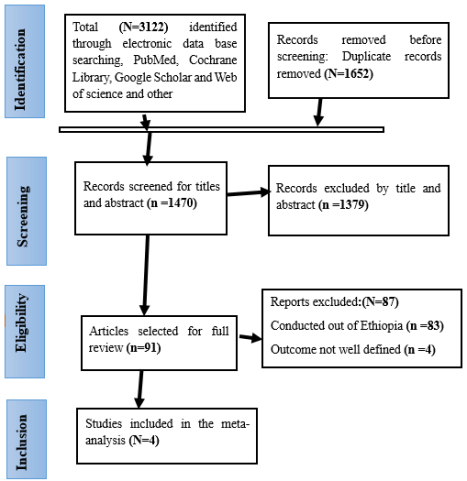
Figure 1).
Figure 1. Flow chart diagram showing selection of studies included in the systematic review and meta-analysis using the PRISMA checklist.
2.4. Population
This systematic review and meta-analysis applied the PECO framework as follows:
1) Population: Women in Ethiopia who have used an intrauterine contraceptive device (IUCD).
2) Exposure: Use of IUCDs.
3) Comparison: Not applicable, as the primary outcome is the pooled discontinuation rate.
4) Outcome: Discontinuation of IUCD use.
2.5. Eligibility Criteria
The inclusion and exclusion criteria were developed using the PICO approach, incorporating the CoCoPop (Condition, Context, and Population) framework for prevalence studies:
1) Study Area: Studies conducted in Ethiopia.
2) Study Design: Observational studies, including cross-sectional and cohort studies, reporting the proportion, prevalence, or magnitude of IUCD discontinuation.
3) Publication Status: Both published and unpublished studies were considered.
4) Language: Studies published in English to ensure clarity and ease of interpretation.
5) Time Frame: No restrictions on publication year; all relevant studies conducted in Ethiopia were included.
Studies were excluded if they met any of the following:
1) Reported unrelated outcome measures.
2) Had missing, incomplete, or insufficient data on IUCD discontinuation.
3) Were reviews, commentaries, editorials, case series/reports, qualitative studies, or case-control studies.
4) Did not include an abstract or full text.
5) Were duplicates or patient stories.
2.6. Data Quality Assessment
The methodological quality of the included studies was rigorously evaluated using a standardized appraisal framework adapted from the Newcastle–Ottawa Scale (NOS), which assesses the potential for bias in study design, conduct, and analysis. Additionally, the Joanna Briggs Institute (JBI) critical appraisal checklist for prevalence studies was employed to evaluate the validity and reliability of the extracted data. Studies scoring ≥50% on the JBI checklist were considered to be of high methodological quality
| [16] | Peters, M. D. et al., “The Joanna Briggs Institute reviewers’ manual 2015: 2015.,” Methodol. JBI scoping Rev., no. 1, 2015. |
[16]
. Based on this quality assessment, all included studies met the threshold for inclusion, with quality scores ranging from 77.8% to 100%. (
Table 1). Y: Yes, N: No, U: Unclear, Q: Question. The total score is calculated by counting the number of Ys in each row evaluated by using There are nine parameters in the tool as follows: (1) Was the sampling frame appropriate to address the target population? (2) Were study participants sampled appropriately? (3) Was the sample size adequate? (4) Were the study subjects and the setting described in detail? (5) Was the data analysis conducted with sufficient coverage of the identified sample? (6) Were valid methods used for the identification of the condition? (7) Was the condition measured in a standard, reliable way for all participants? (8) Was there appropriate statistical analysis? (9) Was the response rate adequate, and if not, was the low response rate managed appropriately?
Table 1. General characteristics of the included cross-sectional studies for the systematic review and meta-analysis of discontinuation rate of an intrauterine rate contraceptive in Ethiopia.
Authors | Year of publication | JBI’s critical appraisal questions | Overall quality score (100%) | Include ed |
Q1 | Q2 | Q3 | Q4 | Q5 | Q6 | Q7 | Q8 | Q9 |
Daniel Girma et at 17] | 2024 | Y | Y | Y | N | Y | N | Y | Y | Y | 77.78% | √ |
Alemu M et al, 18] | 2023 | Y | Y | Y | Y | Y | Y | Y | Y | Y | 100% | √ |
Haregwa Aet al, 19] | 2022 | Y | Y | Y | Y | Y | N | Y | Y | Y | 88.89% | √ |
Adane S et al, 20] | 2018 | Y | Y | Y | Y | Y | Y | Y | Y | Y | 100% | √ |
2.7. Data Extraction
Data were independently extracted by three reviewers (Bacha Merga, Nebiyu Taye, and Geda Edea) using a pre-piloted Microsoft Excel spreadsheet. The extraction template captured key study characteristics, including the first author, year of publication, year of data collection, study design, study area and setting, sample size, and the number of IUCD discontinuation cases. Any discrepancies between reviewers were resolved through discussion and consensus, with reassessment of the original studies to ensure accuracy and consistency of the extracted data. (
Table 2).
Table 2. Summary of characteristics of included studies.
Authors | Year of publication | Year of study | study area | Region | study setting | study design | sample | cases |
Daniel Girma et at 17] | 2024 | 2024 | Marie Stopes Maternal and Child Health Center, Adama | Oromia | IB | CS | 394 | 81 |
Alemu M et al, 18] | 2023 | 2020 | Angacha District | southern nation national people regional | CB | CS | 596 | 116 |
Haregwa Aet al, 19] | 2022 | 2020 | Butajira town | southern nation national people regional | IB | CS | 495 | 88 |
Adane S et al, 20] | 2018 | 2021 | four government hospitals | Addis Ababa | IB | CS | 389 | 236 |
2.8. Measurement of the Outcome of Interest
The major outcome of this systematic review and meta-analysis is the discontinuation rate of an intrauterine rate contraceptive in Ethiopia.
2.9. Statistical Methods and Analysis
The extracted data were imported into STATA™ version 14 for statistical analysis. A meta-analysis was performed to estimate the pooled prevalence of intrauterine contraceptive device (IUCD) discontinuation. Between-study heterogeneity was assessed using the I² statistic, which quantifies the proportion of total variation across studies attributable to heterogeneity rather than chance. According to conventional thresholds, I² values of 30–60% indicate moderate heterogeneity, 50–90% indicate substantial heterogeneity, and 75–100% indicate considerable heterogeneity. Given the observed heterogeneity, a random-effects model was applied to generate the pooled estimate of IUCD discontinuation
| [21] | R. H. Borenstein M, Higgins JP, Hedges LV, “Basics of meta-analysis: I2 is not an absolute measure of heterogeneity. Res Synth Methods ; 8(1): 5–18.,” J. South Asian Fed. Obstet. Gynaecol., vol. 1, no. 8, pp. 5–18, 2017,
https://doi.org/10.5005/jp-journals-10006-1094 |
[21]
. Therefore, a random effects model was used to estimate the pooled discontinuation rate of an intrauterine rate contraceptive.
2.10. Assessment of Heterogeneity and Publication Bias
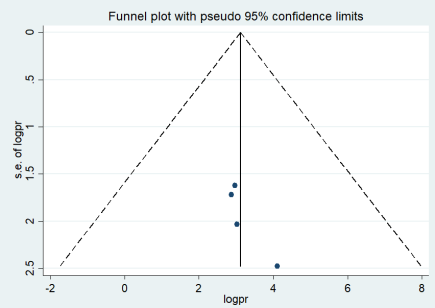
To explore potential sources of heterogeneity among the included studies, subgroup analyses were conducted based on geographic regions. Publication bias was evaluated using a funnel plot, which revealed asymmetry, suggesting the presence of potential publication bias (
Figure 3). The overall heterogeneity in the pooled IUCD discontinuation rate was high, with an I² value of 98.8% (P < 0.001). Accordingly, a random-effects model was employed to account for the observed variability and provide a more robust pooled estimate (
Figure 3).
3. Results
A total of 3,122 published and unpublished records were initially identified through a comprehensive search of multiple international databases. All records were managed using Mendeley reference manager, and duplicates were removed. Following this, 1,470 articles remained for title and abstract screening, of which 1,379 were excluded due to irrelevance. The full texts of 91 articles were then assessed for eligibility, resulting in the exclusion of 87 studies—83 were conducted outside Ethiopia, and 4 did not report clearly defined outcomes. Ultimately, 4 studies met the inclusion criteria and were included in this systematic review and meta-analysis.
3.1. Characteristics of Selected Studies
As summarized in (
Table 1), all included studies were published between 2018 and 2024. Across the four studies, a total of 1,874 women who had used intrauterine contraceptive devices (IUCDs) were included to estimate the pooled discontinuation rate in Ethiopia. All studies employed a cross-sectional design. The reported IUCD discontinuation rates varied widely, ranging from 17.78% to 60.67 Four geographical regions included in this meta-analysis; two studies included in this study were from the southern nation national people region
| [18] | A. Mulatu, E. M. Oridanigo, and M. Markos, “Discontinuation Rate of Intrauterine Device and Associated Factors Among Women in the Last One Year in Angacha District, Southern Ethiopia,” no. June, pp. 119–128, 2023. |
| [19] | H. A. Weldekidan, S. B. Lemlem, W. S. Abebe, and S. A. Sori, “Discontinuation rate of long-acting reversible contraceptives and associated factors among reproductive-age women in Butajira town, Central Ethiopia,” 2022,
https://doi.org/10.1177/17455057221104656 |
[18, 19]
, two studies were from Oromia
| [17] | D. Girma, “The Magnitude of Early Discontinuation of Intrauterine Contraceptive Device Use and Associated Factors among Clients at Marie Stopes Maternal and Child Health Center, Adama, Ethiopia,” pp. 1–17, 2024. |
[17]
, and one study from Addis Ababa city
| [20] | D. N. Liabsuetrakul T, Oumudee N, Armeeroh M, Nima N, “Improvement of early antenatal care initiation: the effects of training local health volunteers in the community.,” Heal. Serv Res Manag Epidemiol, pp. 1-8 2018; 5: 2333392818761483., 2018, https://doi.org/10.1186/s40834-023-00238-8 |
[20]
.
3.2. Pooled Discontinuation Rate of Intrauterine Contraceptive Device
The overall pooled discontinuation rate of intrauterine contraceptive device in Ethiopia
| [17] | D. Girma, “The Magnitude of Early Discontinuation of Intrauterine Contraceptive Device Use and Associated Factors among Clients at Marie Stopes Maternal and Child Health Center, Adama, Ethiopia,” pp. 1–17, 2024. |
| [18] | A. Mulatu, E. M. Oridanigo, and M. Markos, “Discontinuation Rate of Intrauterine Device and Associated Factors Among Women in the Last One Year in Angacha District, Southern Ethiopia,” no. June, pp. 119–128, 2023. |
| [19] | H. A. Weldekidan, S. B. Lemlem, W. S. Abebe, and S. A. Sori, “Discontinuation rate of long-acting reversible contraceptives and associated factors among reproductive-age women in Butajira town, Central Ethiopia,” 2022,
https://doi.org/10.1177/17455057221104656 |
| [20] | D. N. Liabsuetrakul T, Oumudee N, Armeeroh M, Nima N, “Improvement of early antenatal care initiation: the effects of training local health volunteers in the community.,” Heal. Serv Res Manag Epidemiol, pp. 1-8 2018; 5: 2333392818761483., 2018, https://doi.org/10.1186/s40834-023-00238-8 |
[17-20]
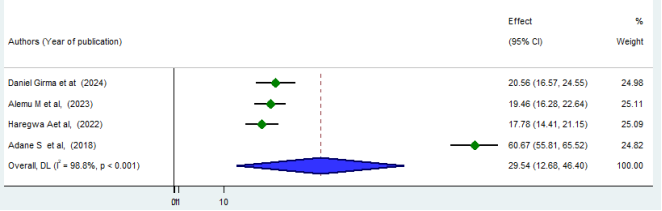
was found to be 29.54% (95% CI =12.68-46.4) (
Figure 2). The study`s heterogeneity was examined by using the I
2 test, and as a result, significant heterogeneity (
I2 =98.8%, P value
< 0.001) were found (
Figure 2).
Figure 2. Overall pooled estimates of discontinuation rate of intrauterine contraceptive device in Ethiopia, 2025.
3.3. Publication Bias and Heterogeneity
Heterogeneity among the included studies was assessed using the Cochrane Q test and the I² statistic with corresponding p-values. I² values of 0%, 25%, 50%, and 75% were interpreted as indicating no, low, moderate, and high heterogeneity, respectively. Given the observed variability, a random-effects model was applied to account for heterogeneity in the pooled estimates. The analysis revealed substantial heterogeneity, with an I² of 98.8% (p < 0.001). Publication bias was evaluated using a funnel plot, which demonstrated asymmetry upon visual inspection, suggesting potential bias. Further assessment using meta-regression was conducted to explore possible sources of heterogeneity and publication bias among the included studies (
Figure 3).
Small study effect: Publication bias among the included studies was assessed using Egger’s regression test. The results indicated no evidence of small-study effects, as the test was not statistically significant, suggesting that the pooled estimate was unlikely to be influenced by publication bias (p-value = 0.116).
Figure 3. Funnel plot shows the study’s publication bias, 2025.
3.4. Subgroup Analysis
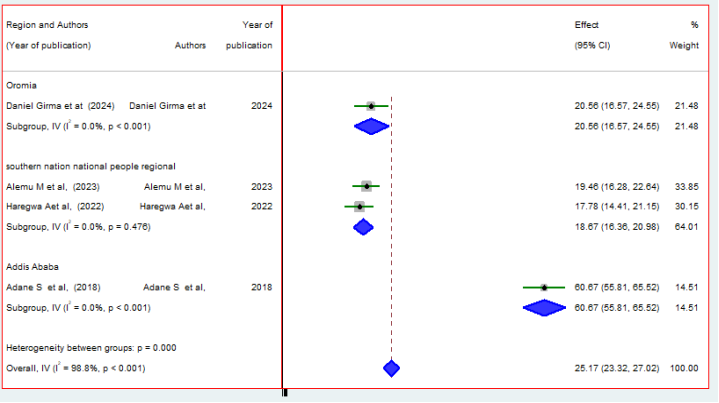
Subgroup analyses were conducted based on the geographic location of the studies to explore potential sources of heterogeneity. The results indicated that Addis Ababa had the highest pooled IUCD discontinuation rate at 60.67% (95% CI: 55.81–65.52), followed by the Oromia region at 20.56% (95% CI: 16.57–24.55), and the Southern Nations, Nationalities, and Peoples’ Region (SNNPR) at 18.67% (95% CI: 16.36–20.98). These findings highlight significant regional variations in IUCD discontinuation across Ethiopia (
Figure 4).
Figure 4. Sub-group analysis of the study by the region.
4. Discussion
This systematic review and meta-analysis aimed to estimate the pooled discontinuation rate of intrauterine contraceptive devices (IUCDs) in Ethiopia. A total of four studies from various regions of Ethiopia, all utilizing primary data, were included. The studies comprised both facility-based and community-based designs. The overall pooled IUCD discontinuation rate was 29.54% (95% CI: 12.68–46.40).
This pooled estimate is higher than the discontinuation rate reported in a primary study conducted in the Angacha District, Southern Ethiopia 19.5%
| [18] | A. Mulatu, E. M. Oridanigo, and M. Markos, “Discontinuation Rate of Intrauterine Device and Associated Factors Among Women in the Last One Year in Angacha District, Southern Ethiopia,” no. June, pp. 119–128, 2023. |
[18]
. The probable reasons for the discrepancy might be due to socio- cultural differences among the different populations. Lower rates, such as those reported in Angacha District (19.5%) may be attributed to stronger community support, better counseling, higher awareness of family planning benefits, and favorable socio-cultural norms encouraging continuation. Additionally, differences in study period, urban-rural residence, and demographic characteristics could contribute to lower discontinuation in these areas.
Accordingly, The pooled IUCD discontinuation rate observed in this systematic review and meta-analysis is higher than that reported in a study conducted in Butajira Town, Central Ethiopia
| [19] | H. A. Weldekidan, S. B. Lemlem, W. S. Abebe, and S. A. Sori, “Discontinuation rate of long-acting reversible contraceptives and associated factors among reproductive-age women in Butajira town, Central Ethiopia,” 2022,
https://doi.org/10.1177/17455057221104656 |
[19]
, which found a rate of 22.5%. The lower discontinuation observed in Butajira may be explained by differences in sociodemographic characteristics, study periods, cultural factors, or variations in the effectiveness of family planning programs and interventions implemented by relevant authorities.
In contrast, the pooled discontinuation rate observed in this review is lower than that reported in a study conducted across four government hospitals in Addis Ababa, which reported a rate of 60.67%. This discrepancy may be attributed to socio-cultural differences between populations. Variations in age distribution, urban lifestyle factors, contraceptive preferences, mobility, and reproductive intentions may contribute to higher discontinuation rates in urban settings. Differences in socio-demographic characteristics, parity, and the quality of health services across regions are also likely to influence discontinuation patterns.
Subgroup analysis by geographic region revealed that the highest pooled IUCD discontinuation rate was in Addis Ababa at 60.67% (95% CI: 55.81–65.52), followed by the Oromia region at 20.56% (95% CI: 16.57–24.55), and the Southern Nations, Nationalities, and Peoples’ Region (SNNPR) at 18.67% (95% CI: 16.36–20.98). These regional differences likely reflect variations in socio-demographic factors, age structure, parity, educational levels, and urban–rural residence, highlighting the combined influence of individual and systemic factors on IUCD continuation.
5. Strengths
This systematic review and meta-analysis provides a comprehensive synthesis of available evidence on intrauterine contraceptive device (IUCD) discontinuation in Ethiopia, generating a pooled national estimate that can inform policy and program planning. The review included studies from multiple regions and both community- and facility-based settings, enhancing the generalizability of the findings. Rigorous methodological approaches were applied, including quality appraisal, heterogeneity assessment, and sensitivity analyses, which strengthen the reliability of the results. Furthermore, only studies using primary data were included, increasing the validity and robustness of the pooled estimate.
6. Limitations
The discontinuation of IUCDs has not been widely studied in Ethiopia, resulting in a limited number of eligible publications. The small number of included studies (n = 4) may reduce precision and contribute to heterogeneity. Additionally, some regions were not represented, limiting national representativeness. Variability in study design, data collection periods, and population characteristics may have introduced heterogeneity. Differences in the reporting of key variables across studies posed challenges for meta-analysis, and potential publication bias could have excluded relevant studies.
7. Implication of the Study
The findings indicate a relatively high pooled IUCD discontinuation rate in Ethiopia, highlighting the need for targeted interventions to improve continuation rates. Healthcare providers, policymakers, and both governmental and non-governmental organizations should strengthen family planning programs by promoting IUCDs, emphasizing their high efficacy, low side-effect profile, and suitability as a long-acting reversible contraceptive method. These efforts can contribute to reducing unintended pregnancies and improving maternal and neonatal health outcomes.
8. Conclusion
This systematic review and meta-analysis demonstrated that the pooled discontinuation rate of intrauterine contraceptive devices (IUCDs) in Ethiopia is relatively high, with notable regional variations. Higher discontinuation rates, particularly in urban areas such as Addis Ababa, suggest the influence of socio-cultural, demographic, and health system–related factors, including differences in counseling quality, follow-up care, awareness, and reproductive intentions. These findings indicate that, despite the effectiveness of IUCDs as a long-acting reversible contraceptive method, there are significant gaps in sustained utilization. Addressing these gaps is essential to reduce unintended pregnancies and improve maternal and child health outcomes. Therefore, strengthening client-centered counseling, improving follow-up services, and enhancing provider competency are critical at the healthcare level. Policymakers and health authorities should implement targeted, context-specific interventions, ensure the availability of trained personnel and supplies, and integrate IUCD services within broader reproductive health programs. Additionally, community-based awareness creation, male involvement, and the use of appropriate communication channels are important to address misconceptions and improve acceptance. Further research, particularly in underrepresented regions and using longitudinal and mixed-method approaches, is also recommended to better understand the determinants of IUCD discontinuation and inform effective interventions.
Abbreviations
IPPIUD | Immediate Postpartum Intrauterine Device |
IUCD | Intrauterine Contraceptive Devices |
LARC | Long-Acting Reversible Contraceptives |
Acknowledgments
We extend our heartfelt appreciation to all authors and researchers whose primary studies were included in this systematic review and meta-analysis. Their rigorous scientific work, dedication, and contributions to advancing knowledge in this field formed the essential foundation for this study. Furthermore, we would like to acknowledge the efforts of data collectors, healthcare professionals, and study participants involved in the primary research. Their time, cooperation, and willingness to contribute valuable information have played a crucial role in generating the evidence analyzed in this review.
Author Contributions
Bacha Merga Chuko: Investigation, Methodology, Project administration, Resources, Software, Supervision, Validation, Visualization, Writing – original draft, Writing – review & editing
Nebiyu Taye: Investigation, Methodology, Validation, Visualization, Writing – original draft, Writing – review & editing
Mone Fikadu: Investigation, Methodology, Project administration, Resources, Software, Supervision, Validation, Visualization, Writing – original draft, Writing – review & editing
Gada Edea: Investigation, Methodology, Software, Supervision, Validation, Visualization, Writing – review & editing
Funding
The author(s) declare that no financial support was received for the study, authorship, and/or publication of this article.
Data Availability Statement
All data generated or analyzed during this study are included in this published article. Further inquiries or requests for additional information can be directed to the corresponding author, who will provide access upon reasonable request.
Conflicts of Interest
The authors declare that the study was conducted in the absence of any commercial or financial relationships that could be construed as a potential conflict of interest.
References
| [1] |
MOH, “National Guideline for Family Planning Services In Ethiopia,” no. July, pp. 1–78, 2020.
|
| [2] |
S. R. Gerber, N. Nattell, N. Doty, X. Liu, J. R. Overbey, and R. Masch, “Pelvic pain and early IUD discontinuation : a prospective cohort study,” vol. 8, no. 3, 2019, pp. 792-796
http://dx.doi.org/10.18203/2320-1770.ijrco
|
| [3] |
S. Staveteig, “Uptake and Discontinuation of Long-Acting Reversible Contraceptives (LARCs) in DHS ANALYTICAL,” no. September, 2015.
|
| [4] |
M. Demographic and H. Survey, Ethiopia. 2019.
|
| [5] |
F. J. Rwegoshora, P. S. Muganyizi, G. F. Kimario, P. P. Paul, and A. Makins, “A one-year cohort study of complications, continuation, and failure rates of postpartum TCu380A in Tanzania,” 2020, pp. 1-10
https://doi.org/10.1186/s12978-020-00999–4
|
| [6] |
N. D. Id, B. Engida, and R. P. Holland, “Factors associated with intrauterine contraceptive device use among women of reproductive age group in Addis Ababa, Ethiopia : A case control study,” 2020, pp. 1-12
https://doi.org/10.1371/journal.pone.0229071
|
| [7] |
A. M. Ochen, P. C. Chi, and S. Lawoko, “Predictors of teenage pregnancy among girls aged 13–19 years in Uganda.,” BMC Pregnancy Childbirth, vol. 19, pp. 231–231, 2021,
https://doi.org/10.1007/978-3-319-95714-2_300078
|
| [8] |
A. Janwadkar and G. S. Shekhawat, “Acceptance, perception, experience and satisfaction of the couple with postpartum intrauterine contraceptive devices (PPIUCD) insertion,” vol. 3, no. 4, pp. 55–64, 2016,
https://doi.org/10.21276/apjhs.2016.3.4.9
|
| [9] |
A. Haakenstad et al., “Measuring contraceptive method mix, prevalence, and demand satisfied by age and marital status in 204 countries and territories, 1970 – 2019 : a systematic analysis for the Global Burden of Disease Study 2019,” Lancet, vol. 400, no. 10348, pp. 295–327, 2022,
https://doi.org/10.1016/S0140-6736(22)00936-9
|
| [10] |
T. F. Wolde, “Determinants of Intrauterine Contraceptive Device Discontinuation Among Women Using Family Planning, in Southwest Ethiopia: Unmatched Case – Control Study,” no. April, 2022.
https://doi.org/10.2147/OAJC.S351930
|
| [11] |
K. R. Bolling et al., “Utilisation, effectiveness, and safety of immediate postpartum intrauterine device insertion : a systematic literature review,” pp. 1–30, 2022,
https://doi.org/10.1136/bmjsrh-2022-201579
|
| [12] |
I. F. Adewole, R. Hussain, and N. Y. B. A, “Unwanted Pregnancy and Associated Factors Among,” pp. 175–184.
|
| [13] |
C. A. C. Onebunne and F. A. Bello, “Unwanted pregnancy and induced abortion among female undergraduates in University of Ibadan, Nigeria,” 2019,
https://doi.org/10.4103/TJOG.TJOG
|
| [14] |
L. America, N. America, and W. Africa, “Contraception Evidence brief,” no. 3, 2017.
|
| [15] |
S. G. Stewart LA, Clarke M, Rovers M, Riley RD, Simmonds M, “Preferred reporting items for a systematic review and meta-analysis of individual participant data: the PRISMA-IPD statement. Jama 2015; 313(16): 1657–65,” vol. 16, no. 1657–65, p. 313, 2015.
|
| [16] |
Peters, M. D. et al., “The Joanna Briggs Institute reviewers’ manual 2015: 2015.,” Methodol. JBI scoping Rev., no. 1, 2015.
|
| [17] |
D. Girma, “The Magnitude of Early Discontinuation of Intrauterine Contraceptive Device Use and Associated Factors among Clients at Marie Stopes Maternal and Child Health Center, Adama, Ethiopia,” pp. 1–17, 2024.
|
| [18] |
A. Mulatu, E. M. Oridanigo, and M. Markos, “Discontinuation Rate of Intrauterine Device and Associated Factors Among Women in the Last One Year in Angacha District, Southern Ethiopia,” no. June, pp. 119–128, 2023.
|
| [19] |
H. A. Weldekidan, S. B. Lemlem, W. S. Abebe, and S. A. Sori, “Discontinuation rate of long-acting reversible contraceptives and associated factors among reproductive-age women in Butajira town, Central Ethiopia,” 2022,
https://doi.org/10.1177/17455057221104656
|
| [20] |
D. N. Liabsuetrakul T, Oumudee N, Armeeroh M, Nima N, “Improvement of early antenatal care initiation: the effects of training local health volunteers in the community.,” Heal. Serv Res Manag Epidemiol, pp. 1-8 2018; 5: 2333392818761483., 2018,
https://doi.org/10.1186/s40834-023-00238-8
|
| [21] |
R. H. Borenstein M, Higgins JP, Hedges LV, “Basics of meta-analysis: I2 is not an absolute measure of heterogeneity. Res Synth Methods ; 8(1): 5–18.,” J. South Asian Fed. Obstet. Gynaecol., vol. 1, no. 8, pp. 5–18, 2017,
https://doi.org/10.5005/jp-journals-10006-1094
|
Cite This Article
-
APA Style
Chuko, B. M., Taye, N., Fikadu, M., Edea, G., Kebata, D. (2026). Discontinuation Rate of Intrauterine Contraceptive Device in Ethiopia: Systematic Review and Meta-analysis. American Journal of Nursing and Health Sciences, 7(2), 31-39. https://doi.org/10.11648/j.ajnhs.20260702.12
 Copy
|
Copy
|
 Download
ACS Style
Chuko, B. M.; Taye, N.; Fikadu, M.; Edea, G.; Kebata, D. Discontinuation Rate of Intrauterine Contraceptive Device in Ethiopia: Systematic Review and Meta-analysis. Am. J. Nurs. Health Sci. 2026, 7(2), 31-39. doi: 10.11648/j.ajnhs.20260702.12
Copy
|
Download
AMA Style
Chuko BM, Taye N, Fikadu M, Edea G, Kebata D. Discontinuation Rate of Intrauterine Contraceptive Device in Ethiopia: Systematic Review and Meta-analysis. Am J Nurs Health Sci. 2026;7(2):31-39. doi: 10.11648/j.ajnhs.20260702.12
Copy
|
Download
-
@article{10.11648/j.ajnhs.20260702.12,
  author = {Bacha Merga Chuko and Nebiyu Taye and Mone Fikadu and Gada Edea and Derara Kebata},
  title = {Discontinuation Rate of Intrauterine Contraceptive Device in Ethiopia: Systematic Review and Meta-analysis},
  journal = {American Journal of Nursing and Health Sciences},
  volume = {7},
  number = {2},
  pages = {31-39},
  doi = {10.11648/j.ajnhs.20260702.12},
  url = {https://doi.org/10.11648/j.ajnhs.20260702.12},
  eprint = {https://article.sciencepublishinggroup.com/pdf/10.11648.j.ajnhs.20260702.12},
  abstract = {Introduction: Discontinuation of the intrauterine contraceptive device (IUCD) is defined as the removal of the method within 12 months of initiation. Early discontinuation represents a critical public health issue, as it elevates the risk of unintended pregnancies, which may subsequently result in unsafe abortions and unplanned births. Despite ongoing efforts by the Ethiopian government to expand access to and utilization of long-acting reversible contraceptives (LARCs), particularly IUCDs, uptake remains suboptimal among women of reproductive age. Therefore, this systematic review and meta-analysis aimed to estimate the pooled prevalence of IUCD discontinuation in Ethiopia. Methods: This systematic review and meta-analysis was prospectively registered in the PROSPERO database (registration number: CRD420251107378). A comprehensive literature search was conducted across major electronic databases, including PubMed, Google Scholar, Cochrane Library, and Embase. The review process adhered to the Preferred Reporting Items for Systematic Reviews and Meta-Analyses (PRISMA) guidelines. Data were analyzed using STATA version 14 (StataCorp, College Station, TX, USA). A random-effects model was employed to estimate the pooled prevalence of intrauterine contraceptive device (IUCD) discontinuation. Statistical heterogeneity among studies was assessed using the I2 statistic, while publication bias was evaluated using Egger’s regression test. Results: A total of four studies comprising 1,874 participants were included in this systematic review and meta-analysis. The pooled prevalence of intrauterine contraceptive device (IUCD) discontinuation in Ethiopia was 29.54% (95% CI: 12.68–46.40). Subgroup analysis by region revealed considerable variation, with the highest discontinuation rate observed in Addis Ababa at 60.67% (95% CI: 55.81–65.52), followed by the Oromia region at 20.56% (95% CI: 16.57–24.55), and the Southern Nations, Nationalities, and Peoples’ Region (SNNPR) at 18.67% (95% CI: 16.36–20.98). Conclusion: The evidence indicates a relatively high pooled rate of intrauterine contraceptive device (IUCD) discontinuation in Ethiopia. This finding underscores the need for targeted interventions to reduce early discontinuation and enhance the acceptability and sustained use of IUCDs among women of reproductive age in Ethiopia.},
 year = {2026}
}
Copy
|
Download
-
TY  - JOUR
T1  - Discontinuation Rate of Intrauterine Contraceptive Device in Ethiopia: Systematic Review and Meta-analysis
AU  - Bacha Merga Chuko
AU  - Nebiyu Taye
AU  - Mone Fikadu
AU  - Gada Edea
AU  - Derara Kebata
Y1  - 2026/05/13
PY  - 2026
N1  - https://doi.org/10.11648/j.ajnhs.20260702.12
DO  - 10.11648/j.ajnhs.20260702.12
T2  - American Journal of Nursing and Health Sciences
JF  - American Journal of Nursing and Health Sciences
JO  - American Journal of Nursing and Health Sciences
SP  - 31
EP  - 39
PB  - Science Publishing Group
SN  - 2994-7227
UR  - https://doi.org/10.11648/j.ajnhs.20260702.12
AB  - Introduction: Discontinuation of the intrauterine contraceptive device (IUCD) is defined as the removal of the method within 12 months of initiation. Early discontinuation represents a critical public health issue, as it elevates the risk of unintended pregnancies, which may subsequently result in unsafe abortions and unplanned births. Despite ongoing efforts by the Ethiopian government to expand access to and utilization of long-acting reversible contraceptives (LARCs), particularly IUCDs, uptake remains suboptimal among women of reproductive age. Therefore, this systematic review and meta-analysis aimed to estimate the pooled prevalence of IUCD discontinuation in Ethiopia. Methods: This systematic review and meta-analysis was prospectively registered in the PROSPERO database (registration number: CRD420251107378). A comprehensive literature search was conducted across major electronic databases, including PubMed, Google Scholar, Cochrane Library, and Embase. The review process adhered to the Preferred Reporting Items for Systematic Reviews and Meta-Analyses (PRISMA) guidelines. Data were analyzed using STATA version 14 (StataCorp, College Station, TX, USA). A random-effects model was employed to estimate the pooled prevalence of intrauterine contraceptive device (IUCD) discontinuation. Statistical heterogeneity among studies was assessed using the I2 statistic, while publication bias was evaluated using Egger’s regression test. Results: A total of four studies comprising 1,874 participants were included in this systematic review and meta-analysis. The pooled prevalence of intrauterine contraceptive device (IUCD) discontinuation in Ethiopia was 29.54% (95% CI: 12.68–46.40). Subgroup analysis by region revealed considerable variation, with the highest discontinuation rate observed in Addis Ababa at 60.67% (95% CI: 55.81–65.52), followed by the Oromia region at 20.56% (95% CI: 16.57–24.55), and the Southern Nations, Nationalities, and Peoples’ Region (SNNPR) at 18.67% (95% CI: 16.36–20.98). Conclusion: The evidence indicates a relatively high pooled rate of intrauterine contraceptive device (IUCD) discontinuation in Ethiopia. This finding underscores the need for targeted interventions to reduce early discontinuation and enhance the acceptability and sustained use of IUCDs among women of reproductive age in Ethiopia.
VL  - 7
IS  - 2
ER  -
Copy
|
Download





 Share This Article
 Twitter
 Linked In
 Facebook