Abstract
The increasing impact of mining activities on aquatic ecosystems has raised serious concerns regarding the accumulation of heavy metals in water bodies, which poses significant risks to fish survival and overall aquaculture sustainability. In regions near mining operations, influents containing metals such as copper (Cu), iron (Fe), and cobalt (Co) can leach into soil and water systems, disrupting water quality. This study was conducted to monitor and predict the physicochemical dynamics of water influenced by mining activities. In-situ measurements of key water quality parameters including pH, Cu, Fe, and Co were carried out using a multi-parameter sensor device in both soil and aquarium water settings to reflect environmental and controlled conditions. The observed concentrations revealed substantial deviations from the optimal levels necessary for healthy aquatic life. To address this, a machine learning (ML) model was developed using the measured influents as input variables to predict future changes in water quality. The predictive model demonstrated high accuracy and potential for real-time application in aquaculture management. Furthermore, linear regression analysis was employed to quantify the relationships between the selected physicochemical parameters and the ideal thresholds for aquatic health, offering deeper insight into their influence on ecosystem stability. The integration of ML for forecasting water quality represents a novel approach to proactive aquaculture monitoring and management, particularly in mining-influenced environments. This research contributes to the growing need for intelligent, data-driven tools in environmental monitoring and supports efforts to mitigate the adverse effects of industrial pollution on aquatic life.
Keywords
Aquarium, Pollutants, Heavy Metals, Machine Learning, Random Forest, Prediction
1. Introduction
The Sentinel copper mine, situated in the Kalumbila district of the North Western Province, Zambia, stands as one of Africa's largest copper-producing mines, boasting significant copper reserves on a global scale
| [1] | Alpaydin, E. (2020). Introduction to machine learning. MIT press. |
[1]
. Operational since 2016, the mine is under the ownership and management of Kalumbila Minerals, a wholly-owned subsidiary of the Canadian metals and mining company First Quantum Minerals. Utilizing conventional open-pit mining techniques, the operation employs fleets of electric face shovels, hydraulic excavators, and haul trucks with capacities of 330 t and 240 t. Extracted ore undergoes in-pit crushing and is subsequently transported to a nearby processing plant via an overland conveyance system
| [3] | Office of Fisheries Zambia. 2020. Fisheries and aquaculture measurements: Yearly report. Chilanga. |
[3]
. Unfortunately, this extraction process results in the release of heavy metal discharge residuals into.
The environment. Zambia Environmental Management Agency (ZEMA) categorizes these emitted heavy metals as some of the most critical pollutants
| [31] | Zambia Environmental Management Agency, 2020: An Environmental and Social Impact Assessment for Musakashi River Catchment and its Tributaries: an independent impact assessment of industrial mining waste pollution in Chambishi. |
[31]
.
Aquaculture, acknowledged for its reliability and low environmental impact in generating high-quality proteins for human consumption, is considered more efficient than alternative forms of agriculture due to higher food convergence
| [32] | Food and Agriculture Organization [FAO]. 2016. The state of world fisheries and aquaculture 2016: Contributing to food security and nutrition for all. Rome: FAO.
http://www.fao.org/3/a-i5555e.pdf |
[32]
. However, the discharge of heavy metal residues significantly impacts the aquatic ecosystem
| [11] | X. Yang, et al., Deep learning for smart fish farming: applications, opportunities and challenges, Rev. Aquacult. 13 (1) (2021) 66–90. |
| [12] | S. Zhao, et al., Adaptive neural fuzzy inference system for feeding decision-making of grass carp (Ctenopharyngodon idellus) in outdoor intensive culturing ponds, Aquaculture 498 (2019) 28–36. |
[11, 12]
. Recognizing this, there is a need to monitor and reduce heavy metal pollution to safeguard the health of aquatic ecosystems and the dependent species. Consequently this study was aimed to develop Machine Learning Model that uses mine influents to soil and Aquarium water to predict future changes
| [33] | Central Statistical Office [CSO]. 2016. 2015 living conditions monitoring survey report. Lusaka, Zambia: CSO. |
[33]
. This proactive approach aims to mitigate the environmental impact of heavy metal discharge and ensure the sustainable coexistence of mining activities and aquatic ecosystems.
2. Literature Review
According to the Auditor General’s 2014 report on environmental degradation caused by mining, it was observed that very little is being done to reduce further degradation of the ecosystem because of mining activities. The Auditor’s General report
| [30] | World Bank Report (2019), Zambia’s GDP in the vision 2030. College, Palghar, Maharashtra, India Associate Professor, Department of Computer Engineering, St. John College of Engineering and Management College, Palghar, Maharashtra, India. |
[30]
further noted that ZEMA has no capacity to ensure that there is environmental compliance by all mining firms in Zambia. As a result, contamination of water by heavy metals is one of the serious environmental problems in Zambia and has significant implications for human health and aquatic organisms
| [7] | Dagar, R.; Som, S.; Khatri, S. K. Savvy Farming—IoT in Agribusiness. In Procedures of the 2018 Universal Conference on Creative Investigate in Computing Applications (ICIRCA), Coimbatore, India, 11–12 July 2018. |
[7]
.
In Zambia, many local communities depend on resources provided by aquatic ecosystems mainly for fishing and supporting small scale farming
| [8] | S. Nocheski, and A. Naumoski (2018), "Water checking IoT framework for angle cultivating lakes," Worldwide Logical Diary "Industry 4.0", vol. 3, no. 2, pp. 77-7. |
[8]
. Studies have shown that there are challenges associated with the usage of polluted water for irrigation of farming
| [9] | Salwa MEK, Sara AM, Samia HA, Abdalla EB, Manal YI, et al. (2016) Overwhelming Metals Contaminants in Water and Angle from Four Diverse Sources in Sudan. J Contaminate Dis Ther 4: 275. https://doi.org/10.4172/2332-0877.1000275 |
[9]
. These include the absence of adequate information in the changes in concentration of heavy metals in water being used for irrigation, crops and soil
| [14] | J.-H. Chen, W.-T. Sung, G.-Y. Lin, Automated monitoring system for the fish farm aquaculture environment, in: 2015 IEEE International Conference on Systems, Man, and Cybernetics, IEEE, 2015. |
[14]
. Although there are challenges in using polluted water for farming, farming remains a major source of livelihood for most communities living near the mines
| [22] | Isiyaka, H. A.; Mustapha, A.; Juahir, H.; Phil-Eze, P. Water quality modelling using artificial neural network and multivariate statistical techniques. Model. Earth Syst. Environ. 2019, 5, 5, 583–593. |
[22]
.
Although mining is a major contributor to resource rich countries income and economy, it has contributed to the challenges of local communities in developing countries
| [21] | Hodson, T. O. Root-mean-square error (RMSE) or mean absolute error (MAE): When to use them or not. Geosci. Model Dev. 2022, 15, 5481–5487. |
[21]
. Literature shows that discharge of metals and dissolved salts into rivers, streams and groundwater, through mining activities, is a major challenge affecting the whole environmental eco-system, as the water bodies spread out
| [2] | M. S. Shahriar, C. D. Este and A. Rahman (2012), “On Identifying and Foreseeing Hurtful Algal Blossoms in Coastal Data Systems,” Proc. IEEE Seas. |
[2]
. The experience of mining and its subsequent effects in Zambia, has raised many challenges to the country, many of which it still faces, especially in water pollution.
According to
| [15] | B. Shi, et al., A wireless sensor network-based monitoring system for freshwater fishpond aquaculture, Biosyst. Eng. 172 (2018) 57–66. |
[15]
, the primary components of an intelligent aquaculture cage system include sensors, controllers, and actuators. Sensors are used to monitor water quality parameters such as pH, temperature, and dissolved oxygen levels. Controllers are used to process the data from the sensors and to make decisions about the management of the cage environment
| [6] | Kumar, R. (2021). Inquire about technique: A step-by-step direct for tenderfoots. Sage. |
[6]
. Actuators are used to control the various systems that maintain the growing conditions in the cage, such as aeration systems, water circulation systems, and feeding systems.
Copper reduces resistance of fish to diseases by disrupting migration; altering swimming; causing oxidative damage; impairing respiration; disrupting osmoregulation structure and pathology of vital organs such as gills, kidney, liver and other stem cells
| [19] | K. Kodali, A. C. Sabu, Aqua monitoring system using AWS, in: 2022 International Conference on Computer Communication and Informatics (ICCCI), IEEE, 2022. |
[19]
. Cu exposed different fish species posed behavioural changes such as decrease in swimming ability and food intake and increase in operculum movements
| [23] | Khoi, D. N.; Quan, N. T.; Linh, D. Q.; Nhi, P. T. T.; Thuy, N. T. D. Using Machine Learning Models for Predicting the Water Quality Index in the La Buong River, Vietnam. Water 2022, 14, 1552. |
| [24] | Tiyasha; Tung, T. M.; Yaseen, Z. M. A survey on river water quality modelling using artificial intelligence models: 2000–2020. J. Hydrol. 2020, 585, 124670. |
[23, 24]
. Findings of Arslan et al. revealed that these changes went back to normal with longer exposure durations
| [29] | Li, L.; Rong, S.; Wang, R.; Yu, S. Recent advances in artificial intelligence and machine learning for nonlinear relationship analysis and process control in drinking water treatment: A review. Chem. Eng. J. 2021, 405, 126673. |
[29]
. In stinging catfish (Heteropneustes fossilis), rainbow trout (Oncorhynchus mykiss) and north african catfish (Clarias lazera) Cu effect caused muscle and liver glycogen levels to decrease and serum glucose levels to increase
| [25] | Simonovic, S. P.; Breach, P. A. The Role of Water Supply Development in the Earth System. Water 2020, 12, 3349. |
[25]
. Arslan et al. suggested that such changes might have arised due to adaptation of fish to hypoxic conditions induced by existence of Cu.
Aquacon
| [9] | Salwa MEK, Sara AM, Samia HA, Abdalla EB, Manal YI, et al. (2016) Overwhelming Metals Contaminants in Water and Angle from Four Diverse Sources in Sudan. J Contaminate Dis Ther 4: 275. https://doi.org/10.4172/2332-0877.1000275 |
[9]
, the system uses sensors and other monitoring devices to gather data on various parameters such as temperature, pH, dissolved oxygen, and more. This data is then analyzed and processed using machine learning algorithms to provide valuable insights into the health and growth of the aquatic organisms being cultured
| [27] | Alam, G.; Ihsanullah, I.; Naushad, M.; Sillanpää, M. Applications of artificial intelligence in water treatment for optimization and automation of adsorption processes: Recent advances and prospects. Chem. Eng. J. 2022, 427, 130011. |
| [28] | Nasir, N.; Kansal, A.; Alshaltone, O.; Barneih, F.; Sameer, M.; Shanableh, A.; Al-Shamma’a, A. Water quality classification using machine learning algorithms. J. Water Process Eng. 2022, 48, 102920. |
[27, 28]
. This information is then used to optimize the aquaculture conditions, such as feeding and water quality, to ensure optimal growth and survival of the organisms.
2.1. Problem Statement
The issue of water quality in ecosystems impacted by mining activities poses a significant environmental challenge, particularly in regions such as the Kalumbila District of the North-Western Province, where the Sentinel Mine has been operational
| [1] | Alpaydin, E. (2020). Introduction to machine learning. MIT press. |
[1]
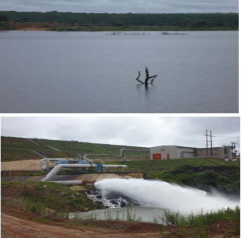
. The discharge of mine influents into water bodies, shown by the Chisola Dam, can introduce varying concentrations of heavy metals, including Copper (Cu), Iron (Fe), and Cobalt (Co), potentially affecting the pH levels and overall aquatic health.
Understanding the complex relationships between mine influents and water quality is critical for developing effective environmental management strategies
. Current practices often rely on periodic manual measurements, lacking the ability to anticipate future changes. There is an urgent need for an advanced predictive tool that leverages machine learning techniques to analyze historical data and forecast potential alterations in soil and aquarium water quality based on mine influents
| [16] | L. Hongpin, et al., Real-time remote monitoring system for aquaculture water quality, Int. J. Agric. Biol. Eng. 8 (6) (2015) 136–143. |
[16]
.
This research aims to address this gap by developing a robust machine learning model capable of predicting future changes in water quality, providing valuable insights for proactive environmental conservation efforts in mining-affected areas
| [17] | F. E. Idachaba, et al., IoT Enabled Real-Time Fishpond Management System, 2017. G. Cario, et al., Long lasting underwater wireless sensors network for water quality monitoring in fish farms, in: OCEANS 2017-Aberdeen, IEEE, 2017. |
[17].
2.2. Objectives
The following are the objectives of the study:
1) To conduct in-situ measurements of key physicochemical properties, including pH, Copper (Cu), Iron (Fe), and Cobalt (Co), using a multi-parameter instrument.
2) To develop a Machine Learning Model that uses mine influents to soil and Aquarium water to predict future changes.
3) To apply linear regression analysis to quantify the relationships between the selected independent variables (pH, Copper, Iron, Cobalt) and the dependent variable (optimum levels of heavy metals for aquatic life).
3. Methodology and Materials
3.1. Preparation of Dataset
The dataset consisted of 252 samples (observations) of surface water taken from Chisola Dam for the period 2015 to 2022. The dataset was systematically arranged based on the recommendation from ZEMA and how the pollutants are determined.
3.2. Study Area
This study was conducted at Kalumbila mine in Kalumbila District of North-Western Province. The mine is currently approximately 100 m deep and is expected to reach a depth of approximately 200 m. The width is in excess of 1000 m and the current length is approximately 1500 m, extending to approximately 8000 m. a dam wall was constructed upstream of Sentinel Mine, as the Chisola Dam actually flowed through the surface mine’s footprint.
3.3. Physicochemical Measurements of Properties of Water
Considering the fact that the concentration of heavy metals in water depends on pH, Copper (Cu), Iron (Fe), Cobalt (Co) and TDS, determination of these quantities in the first portion of the samples was made in-situ using a multi parameter instrument WTW pH330 i (Wissenschaftlich–Technische Germany). The pH probe was calibrated using buffer solutions with 7.00.
3.4. Selection of Inputs
In this study four dependent variables were measured and predicted based on how their levels determines the levels of heavy metals in water. The four dependent variables were pH, Copper (Cu), Iron (Fe) and Cobalt (Co). The dataset distribution was as follows: 70% of the data samples, selected randomly from the entire dataset, for the training phase of a forecast model of the dependent variable. The remaining 30% of the samples was used to verify network performance while training the network and to avoid over-learning. The aim was to test the predictive validity and effectiveness of these models which ranged from 15% for the test and 15% for the validation respectively.
3.5. Linear Regression for Data Formatting
To assess the relationship between the independent and dependent variables of this study, linear regression was applied using the formula:
Where:
Opt-Level - is the dependent variable (optimum levels of heavy Metals for aquatic life)
pHC, CUC, FEC, COC- are the independent variables (pHc, Copper (Cuc), Iron (Fec), and Cobalt (Coc)) respectively
β0 - is the intercept (constant term)
β1, β2, β3, β4 - are the coefficients for each independent
variable, representing the change in Y
for a one-unit change in the
corresponding X
The data was normalized in order to improve the convergence speed and calculation accuracy of the water quality prediction model and eliminate the impacts caused by differences in the data.
3.6. Comparison of Machine Learning Models
To develop a Machine Learning Model that uses mine influents to soil and Aquarium water to predict future changes, various machine learning models were considered and compared:
1) Multiple Linear Regression (MLR)
Multiple Linear Regression (MLR) is a fundamental statistical technique that models the relationship between a dependent variable and multiple independent variables by fitting a linear equation. It assumes a linear relationship between the predictors and the response, making it suitable for scenarios where such relationships exist. However, MLR has limitations in capturing complex nonlinear patterns in the data and can suffer from multicollinearity issues when predictors are highly correlated
| [4] | Simataa S and Musuka CG. 2013. Effect of pulling back oreochromis niloticus (Nile tilapia) from aquaculture generation in Zambia: A case ponder of Solwezi Area. Universal Diary of Aquaculture 3(27): 158–64.7. |
[4]
.
2) Artificial Neural Networks (ANN)
In contrast, Artificial Neural Networks (ANN) are versatile models inspired by the structure and functioning of the human brain. They excel in capturing nonlinear relationships and can handle large and complex datasets effectively. ANNs use interconnected nodes arranged in layers to learn complex patterns and relationships from the data through iterative optimization algorithms
| [5] | Dey, S. (2022). A beginner’s direct to computer science investigate. XRDS: Intersection, The ACM Magazine for Understudies, 20(4), 14-14. |
[5]
.
3) Random Forest (RF)
On the other hand, Random Forest (RF) is an ensemble learning method that combines multiple decision trees to improve predictive performance and reduce overfitting. RF builds a multitude of decision trees during training and aggregates their predictions to make more accurate and robust predictions. It is capable of handling high-dimensional data and can capture complex interactions between variables without requiring extensive preprocessing
| [10] | C. Zhou, et al., Intelligent feeding control methods in aquaculture with an emphasis on fish: a review, Rev. Aquacult. 10 (4) (2018) 975–993. |
[10]
.
4) K-Nearest Neighbors (KNN)
K-Nearest Neighbors (KNN), another popular algorithm, makes predictions based on the majority vote of its k-nearest neighbors in the feature space. KNN is simple to understand and implement but can be computationally expensive, especially for large datasets, and may struggle with high-dimensional data due to the curse of dimensionality
| [13] | D. S. Simbeye, J. Zhao, S. Yang, Design and deployment of wireless sensor networks for aquaculture monitoring and control based on virtual instruments, Comput. Electron. Agric. 102 (2014) 31–42. |
[13]
. Ensemble methods like AdaBoost and Decision Trees represent further extensions to these models, with AdaBoost iteratively adjusting the weights of misclassified instances to focus on difficult-to-classify cases, while Decision Trees recursively partition the feature space into subsets to make predictions.
3.7. Modelling Techniques Developed
In the development of a machine learning model aimed at predicting future changes in soil and aquarium water based on mine influents, the Random Forest ensemble method was employed
| [26] | Chen, Y.; Song, L.; Liu, Y.; Yang, L.; Li, D. A Review of the Artificial Neural Network Models for Water Quality Prediction. Appl. Sci. 2020, 10, 5776. |
[26]
. Random Forest was particularly well-suited for this task because it excels in handling diverse datasets with multiple features. In this case, the model leveraged data from mine influents, integrating information on pH levels, concentrations of heavy metals such as copper, iron, and cobalt, and other relevant parameters under consideration in this study.
4. Results and Discussion
i. Evaluation of the performance of Machine Learning Models
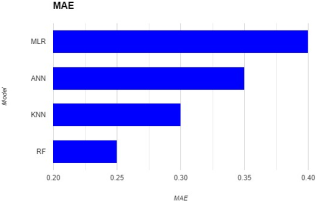
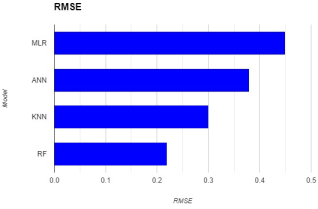
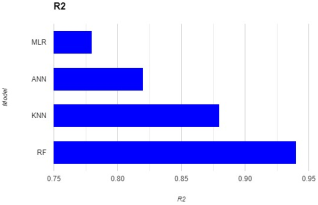
An evaluation of the various machine learning model which included; Multiple Linear Regression (MLR), Artificial Neural Networks (ANN), Random Forest (RF) and K-Nearest Neighbors (KNN), in terms of their predictive abilities was conducted using three key statistical metrics such as Mean Absolute Error (MAE), Root Mean Squared Error (RMSE) and the coefficient of determination (R2 score). The models were evaluated in terms of their prediction accuracy, consistency, and reliability. The results obtained are shown in the table below:
Table 1. Performance of ML Models.
Model | MAE | RMSE | R2 |
MLR | 0.40 | 0.45 | 0.78 |
ANN | 0.35 | 0.38 | 0.82 |
KNN | 0.30 | 0.30 | 0.88 |
RF | 0.25 | 0.22 | 0.94 |
Figure 2. MAE comparison of the ML Models.
According to the results depicted in the table above, the Mean Absolute Error (MAE) were estimated as 40% for MLR, 35% for ANN, 30% for KNN and 25% for RF. The Mean Absolute Error (MAE) was used because it helps calculates the average absolute difference between the actual and predicted values, giving thereby giving an idea of how wrong the predictions were. In a MAE, a lower MAE signifies a better performance of the model as it indicates smaller deviations from the actual value. Therefore, in our study the RF model yielded the lowest MAE (25%), indicating that on average, the RF model’s predictions deviated least from the actual water-quality indices. The figure below shows the performance:
The models were also evaluated using the Root Mean Squared Error (RMSE) to measure their ability to predict the mine influents. According to the results obtained and shown in the table above, the RMSE were 45% for MLR, 38% for ANN, 30% for KNN and 22% for RF respectively. Similar to the MAE, the RF model exhibited the smallest RMSE (22%) among the three other models, indicating its superior performance in controlling larger errors in prediction. The graph below shows the representation:
Figure 3. RMSE comparison of the ML Models.
In an attempt to determine the proportion of the variance in the dependent variable that is predictable from the independent variables, coefficient of determination (R2) was used. Unlike the other models, RF model attained the highest R2 score (92%), implying that it was able to explain a greater proportion of the variance of heavy metal concentration in water compared to the MLR, ANN and KNN models.
Figure 4. R2 comparison of the ML Models.
ii. Evaluation of the results based on the objectives
The results of the study were presented according to the objectives presented II. The following were the objectives:
Objective One: To conduct in-situ measurements of key physicochemical properties, including pH, Copper (Cu), Iron (Fe), and Cobalt (Co), using a multi-parameter instrument.
Table 2. In-situ measurement results.
Parameter (Pollutants) | Optimum Recommended Level | Current | Difference |
pH | 6.5 | 4.0 | 2.5 |
Copper (Cu) | < 0.02-6.0 mg/L | 18–28 µg/L | 17.98-22 µg/L |
Iron (Fe) | 0.1 - 2.0 mg/L | ≤ 0.07 mg/L | 0.03 µg/L |
Cobalt (Co), | 0.01 mg/L | 60 mg/L | 59.99 µg/L |
The findings from the in-situ measurements of key physicochemical properties, including pH, Copper (Cu), Iron (Fe), and Cobalt (Co), reveal notable disparities between the current levels and the optimum recommended levels for fish survival. The pH level is notably lower than the recommended range, with a difference of 2.5, potentially indicating increased acidity in the water. Copper (Cu) concentrations exceed the upper limit of the recommended range (18–28 µg/L), with a difference of 17.98-22 µg/L, posing a potential risk of toxicity to aquatic life. Iron (Fe) levels are significantly below the recommended range, with a difference of 0.03 µg/L, suggesting a potential deficiency in this essential trace element. Cobalt (Co) concentrations are considerably higher than the recommended level, with a difference of 59.99 µg/L, raising concerns about the potential adverse effects on aquatic organisms. These findings underscore the importance of continuous monitoring and highlight the potential implications of the observed deviations from optimal water quality conditions for the well-being of the aquatic ecosystem.
Objective Two: To develop a Machine Learning Model that uses mine influents to soil and Aquarium water to predict future changes.
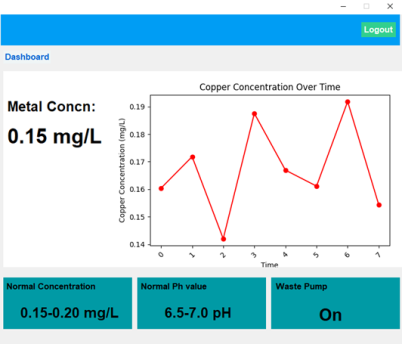
Figure 5. Water Quality Model.
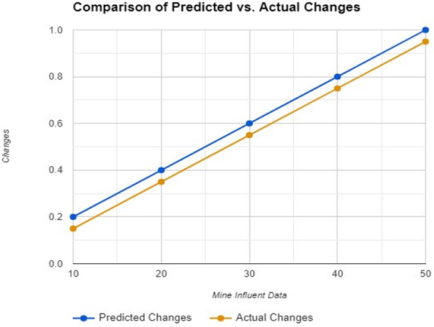
Figure 6. Comparison of Predicted and Actual Values.
The second objective was to develop a Machine Learning Model that uses mine influents to soil and Aquarium water to predict future changes. According to the results obtained and as depicted in the diagram above, the model effectively captured the complex relationships between mine influents such as copper and the physicochemical properties of soil and aquarium water by focusing on the pH values that determines the level of concentration.
The model indicate that high levels of pH concentration in mine surface plant water may limit the growth of fish, lower levels increase the sensitivity of fish to toxic metals.
Objectives Three: To apply linear regression analysis to quantify the relationships between the selected independent variables (pH, Copper, Iron, Cobalt) and the dependent variable (optimum levels of heavy metals for aquatic life).
The third objective was to apply linear regression analysis to quantify the relationships between the selected independent variables (pH, Copper, Iron, Cobalt) with regards to the predicted variable and the dependent variable (optimum levels of heavy metals for aquatic life). According to the results obtained and as depicted in the figure above, the results shows that the new system shows a better and more consistent smoother plot than the old system in terms of predicting the mine influents emitted in the atmosphere.
5. Results Discussion
The main objective of this study was to of a Machine Learning Model that uses mine influents to soil and Aquarium water to predict future changes. According to the results obtained, as illustrated in
Table 1, there was a significant differences between current levels and optimum recommended levels of heavy metals in aquarium water for fish survival. The observed lower pH level (4.0) compared to the recommended range (6.5) suggests a potential increase in water acidity, potentially impacting aquatic life. The results correlates with the findings of Emmanuel Sakala (2020) who established that, high level of pH concentration means the presence of heavy metals in water.
The study also revealed that Elevated Copper (Cu) concentrations (18–28 µg/L) exceeding the recommended range, with a difference of 17.98-22 µg/L, indicate a risk of toxicity. Suboptimal Iron (Fe) levels (≤ 0.07 mg/L) and excessive Cobalt (Co) concentrations (60 mg/L), with differences of 0.03 µg/L and 59.99 µg/L respectively, raise concerns about nutrient deficiencies and potential adverse effects on aquatic organisms, emphasizing the need for continuous monitoring and intervention.
Moving on to Objective Two, the developed Machine Learning Model effectively captured complex relationships between mine influents, particularly copper, and physicochemical properties of soil and aquarium water, as shown in Figure 1. The model highlighted the crucial role of pH in determining concentration levels, indicating that high pH concentrations in mine surface plant water may limit fish growth, while lower levels increase sensitivity to toxic metals. This underscores the model's ability to predict future changes and its potential for proactive environmental management.
In pursuit of Objective Three, the application of linear regression analysis to quantify relationships between independent variables (pH, Copper, Iron, and Cobalt) and the dependent variable (optimum levels of heavy metals for aquatic life) yielded insightful results, as depicted in Figure 3. The new system demonstrated improved consistency and predictive accuracy compared to the old system, providing a more effective tool for quantifying the relationships between mine influents and the optimal levels of heavy metals for aquatic life
| [20] | M. D. Fadillah, et al., Fuzzy logic-based control system to maintain pH in aquaponic, in: 2021 7th International Conference on Wireless and Telematics (ICWT), IEEE, 2021. |
[20]
. These findings collectively emphasize the significance of integrating machine learning models and advanced analytical techniques for enhancing predictive capabilities and informing sustainable environmental practices.
6. Conclusion
In this study the development and implementation of a machine learning model utilizing mine influent data to predict future changes in soil and aquarium water quality at Kalumbila Mine in has been developed. Through a thorough preparation and analysis of a comprehensive dataset sourced from Chisola Dam, encompassing seven years of surface water samples, this study successfully employed linear regression for data formatting and subsequently employed the Random Forest ensemble method for robust modeling. The model, adept at handling diverse datasets with multiple features, incorporated key physicochemical measurements and delivered reliable predictions for the concentrations of heavy metals specifically, pH, Copper, Iron, and Cobalt. The results not only provide valuable insights into the intricate relationships between mine influents and water quality but also establish a foundation for proactive measures in mitigating potential adverse effects on aquatic ecosystems. The predictive validity demonstrated by the model underscores its potential applicability in anticipating future changes in water quality, offering a valuable tool for environmentalists, regulators, and stakeholders in safeguarding the integrity of aquatic ecosystems impacted by mining activities.
7. Recommendation
Based on the above discussion and conclusion, this study recommends that the findings be integrated into environmental monitoring and management practices at Kalumbila mine and similar settings. The predictive capabilities of the Random Forest model, combined with insights from linear regression analyses, offer a valuable tool for anticipating alterations in pH, Copper, Iron, and Cobalt concentrations. This information can aid in proactive decision-making to mitigate potential adverse effects on aquatic ecosystems. Additionally, the study recommends ongoing collaboration between environmental authorities, mining companies, and data scientists to continually refine and update the predictive model, incorporating new data for improved accuracy.
Abbreviations
ZEMA | Zambia Environmental Management Agency |
ZDA | Zambia Development Agency |
MLR | Multiple Linear Regression |
ANN | Artificial Neural Networks |
RF | Random Forest |
KNN | K-Nearest Neighbors |
Acknowledgments
The authors would like to express their sincere gratitude to the Zambia Environmental Management Agency (ZEMA), Zambia Developmental Agency (ZDA), Management at Kalumbila Mine and the communities surrounding Chisola and Musanghezi dams helped to provide valuable information needed for this study.
Conflicts of Interest
The authors declare no conflicts of interest.
References
| [1] |
Alpaydin, E. (2020). Introduction to machine learning. MIT press.
|
| [2] |
M. S. Shahriar, C. D. Este and A. Rahman (2012), “On Identifying and Foreseeing Hurtful Algal Blossoms in Coastal Data Systems,” Proc. IEEE Seas.
|
| [3] |
Office of Fisheries Zambia. 2020. Fisheries and aquaculture measurements: Yearly report. Chilanga.
|
| [4] |
Simataa S and Musuka CG. 2013. Effect of pulling back oreochromis niloticus (Nile tilapia) from aquaculture generation in Zambia: A case ponder of Solwezi Area. Universal Diary of Aquaculture 3(27): 158–64.7.
|
| [5] |
Dey, S. (2022). A beginner’s direct to computer science investigate. XRDS: Intersection, The ACM Magazine for Understudies, 20(4), 14-14.
|
| [6] |
Kumar, R. (2021). Inquire about technique: A step-by-step direct for tenderfoots. Sage.
|
| [7] |
Dagar, R.; Som, S.; Khatri, S. K. Savvy Farming—IoT in Agribusiness. In Procedures of the 2018 Universal Conference on Creative Investigate in Computing Applications (ICIRCA), Coimbatore, India, 11–12 July 2018.
|
| [8] |
S. Nocheski, and A. Naumoski (2018), "Water checking IoT framework for angle cultivating lakes," Worldwide Logical Diary "Industry 4.0", vol. 3, no. 2, pp. 77-7.
|
| [9] |
Salwa MEK, Sara AM, Samia HA, Abdalla EB, Manal YI, et al. (2016) Overwhelming Metals Contaminants in Water and Angle from Four Diverse Sources in Sudan. J Contaminate Dis Ther 4: 275.
https://doi.org/10.4172/2332-0877.1000275
|
| [10] |
C. Zhou, et al., Intelligent feeding control methods in aquaculture with an emphasis on fish: a review, Rev. Aquacult. 10 (4) (2018) 975–993.
|
| [11] |
X. Yang, et al., Deep learning for smart fish farming: applications, opportunities and challenges, Rev. Aquacult. 13 (1) (2021) 66–90.
|
| [12] |
S. Zhao, et al., Adaptive neural fuzzy inference system for feeding decision-making of grass carp (Ctenopharyngodon idellus) in outdoor intensive culturing ponds, Aquaculture 498 (2019) 28–36.
|
| [13] |
D. S. Simbeye, J. Zhao, S. Yang, Design and deployment of wireless sensor networks for aquaculture monitoring and control based on virtual instruments, Comput. Electron. Agric. 102 (2014) 31–42.
|
| [14] |
J.-H. Chen, W.-T. Sung, G.-Y. Lin, Automated monitoring system for the fish farm aquaculture environment, in: 2015 IEEE International Conference on Systems, Man, and Cybernetics, IEEE, 2015.
|
| [15] |
B. Shi, et al., A wireless sensor network-based monitoring system for freshwater fishpond aquaculture, Biosyst. Eng. 172 (2018) 57–66.
|
| [16] |
L. Hongpin, et al., Real-time remote monitoring system for aquaculture water quality, Int. J. Agric. Biol. Eng. 8 (6) (2015) 136–143.
|
| [17] |
F. E. Idachaba, et al., IoT Enabled Real-Time Fishpond Management System, 2017. G. Cario, et al., Long lasting underwater wireless sensors network for water quality monitoring in fish farms, in: OCEANS 2017-Aberdeen, IEEE, 2017.
|
| [18] |
W.-C. Hu, et al., A computer vision-based intelligent fish feeding system using deep learning techniques for aquaculture, IEEE Sensor. J. 22 (7) (2022) 7185–7194.
|
| [19] |
K. Kodali, A. C. Sabu, Aqua monitoring system using AWS, in: 2022 International Conference on Computer Communication and Informatics (ICCCI), IEEE, 2022.
|
| [20] |
M. D. Fadillah, et al., Fuzzy logic-based control system to maintain pH in aquaponic, in: 2021 7th International Conference on Wireless and Telematics (ICWT), IEEE, 2021.
|
| [21] |
Hodson, T. O. Root-mean-square error (RMSE) or mean absolute error (MAE): When to use them or not. Geosci. Model Dev. 2022, 15, 5481–5487.
|
| [22] |
Isiyaka, H. A.; Mustapha, A.; Juahir, H.; Phil-Eze, P. Water quality modelling using artificial neural network and multivariate statistical techniques. Model. Earth Syst. Environ. 2019, 5, 5, 583–593.
|
| [23] |
Khoi, D. N.; Quan, N. T.; Linh, D. Q.; Nhi, P. T. T.; Thuy, N. T. D. Using Machine Learning Models for Predicting the Water Quality Index in the La Buong River, Vietnam. Water 2022, 14, 1552.
|
| [24] |
Tiyasha; Tung, T. M.; Yaseen, Z. M. A survey on river water quality modelling using artificial intelligence models: 2000–2020. J. Hydrol. 2020, 585, 124670.
|
| [25] |
Simonovic, S. P.; Breach, P. A. The Role of Water Supply Development in the Earth System. Water 2020, 12, 3349.
|
| [26] |
Chen, Y.; Song, L.; Liu, Y.; Yang, L.; Li, D. A Review of the Artificial Neural Network Models for Water Quality Prediction. Appl. Sci. 2020, 10, 5776.
|
| [27] |
Alam, G.; Ihsanullah, I.; Naushad, M.; Sillanpää, M. Applications of artificial intelligence in water treatment for optimization and automation of adsorption processes: Recent advances and prospects. Chem. Eng. J. 2022, 427, 130011.
|
| [28] |
Nasir, N.; Kansal, A.; Alshaltone, O.; Barneih, F.; Sameer, M.; Shanableh, A.; Al-Shamma’a, A. Water quality classification using machine learning algorithms. J. Water Process Eng. 2022, 48, 102920.
|
| [29] |
Li, L.; Rong, S.; Wang, R.; Yu, S. Recent advances in artificial intelligence and machine learning for nonlinear relationship analysis and process control in drinking water treatment: A review. Chem. Eng. J. 2021, 405, 126673.
|
| [30] |
World Bank Report (2019), Zambia’s GDP in the vision 2030. College, Palghar, Maharashtra, India Associate Professor, Department of Computer Engineering, St. John College of Engineering and Management College, Palghar, Maharashtra, India.
|
| [31] |
Zambia Environmental Management Agency, 2020: An Environmental and Social Impact Assessment for Musakashi River Catchment and its Tributaries: an independent impact assessment of industrial mining waste pollution in Chambishi.
|
| [32] |
Food and Agriculture Organization [FAO]. 2016. The state of world fisheries and aquaculture 2016: Contributing to food security and nutrition for all. Rome: FAO.
http://www.fao.org/3/a-i5555e.pdf
|
| [33] |
Central Statistical Office [CSO]. 2016. 2015 living conditions monitoring survey report. Lusaka, Zambia: CSO.
|
| [34] |
World Bank. (2019). The World Bank in Zambia: Overview.
https://www.worldbank.org/en/country/zambia/overview
|
Cite This Article
-
APA Style
Chimanga, K., Chembe, C., Jere, B. E. (2026). Development of a Machine Learning Model That Uses Mine Influents to Soil and Aquarium Water to Predict Future Changes. American Journal of Robotics and Intelligent Systems, 1(1), 10-18. https://doi.org/10.11648/j.ajris.20260101.12
 Copy
|
Copy
|
 Download
ACS Style
Chimanga, K.; Chembe, C.; Jere, B. E. Development of a Machine Learning Model That Uses Mine Influents to Soil and Aquarium Water to Predict Future Changes. Am. J. Rob. Intell. Syst. 2026, 1(1), 10-18. doi: 10.11648/j.ajris.20260101.12
Copy
|
Download
AMA Style
Chimanga K, Chembe C, Jere BE. Development of a Machine Learning Model That Uses Mine Influents to Soil and Aquarium Water to Predict Future Changes. Am J Rob Intell Syst. 2026;1(1):10-18. doi: 10.11648/j.ajris.20260101.12
Copy
|
Download
-
@article{10.11648/j.ajris.20260101.12,
  author = {Kashale Chimanga and Christopher Chembe and Bob Ezekiel Jere},
  title = {Development of a Machine Learning Model That Uses Mine Influents to Soil and Aquarium Water to Predict Future Changes},
  journal = {American Journal of Robotics and Intelligent Systems},
  volume = {1},
  number = {1},
  pages = {10-18},
  doi = {10.11648/j.ajris.20260101.12},
  url = {https://doi.org/10.11648/j.ajris.20260101.12},
  eprint = {https://article.sciencepublishinggroup.com/pdf/10.11648.j.ajris.20260101.12},
  abstract = {The increasing impact of mining activities on aquatic ecosystems has raised serious concerns regarding the accumulation of heavy metals in water bodies, which poses significant risks to fish survival and overall aquaculture sustainability. In regions near mining operations, influents containing metals such as copper (Cu), iron (Fe), and cobalt (Co) can leach into soil and water systems, disrupting water quality. This study was conducted to monitor and predict the physicochemical dynamics of water influenced by mining activities. In-situ measurements of key water quality parameters including pH, Cu, Fe, and Co were carried out using a multi-parameter sensor device in both soil and aquarium water settings to reflect environmental and controlled conditions. The observed concentrations revealed substantial deviations from the optimal levels necessary for healthy aquatic life. To address this, a machine learning (ML) model was developed using the measured influents as input variables to predict future changes in water quality. The predictive model demonstrated high accuracy and potential for real-time application in aquaculture management. Furthermore, linear regression analysis was employed to quantify the relationships between the selected physicochemical parameters and the ideal thresholds for aquatic health, offering deeper insight into their influence on ecosystem stability. The integration of ML for forecasting water quality represents a novel approach to proactive aquaculture monitoring and management, particularly in mining-influenced environments. This research contributes to the growing need for intelligent, data-driven tools in environmental monitoring and supports efforts to mitigate the adverse effects of industrial pollution on aquatic life.},
 year = {2026}
}
Copy
|
Download
-
TY  - JOUR
T1  - Development of a Machine Learning Model That Uses Mine Influents to Soil and Aquarium Water to Predict Future Changes
AU  - Kashale Chimanga
AU  - Christopher Chembe
AU  - Bob Ezekiel Jere
Y1  - 2026/02/14
PY  - 2026
N1  - https://doi.org/10.11648/j.ajris.20260101.12
DO  - 10.11648/j.ajris.20260101.12
T2  - American Journal of Robotics and Intelligent Systems
JF  - American Journal of Robotics and Intelligent Systems
JO  - American Journal of Robotics and Intelligent Systems
SP  - 10
EP  - 18
PB  - Science Publishing Group
UR  - https://doi.org/10.11648/j.ajris.20260101.12
AB  - The increasing impact of mining activities on aquatic ecosystems has raised serious concerns regarding the accumulation of heavy metals in water bodies, which poses significant risks to fish survival and overall aquaculture sustainability. In regions near mining operations, influents containing metals such as copper (Cu), iron (Fe), and cobalt (Co) can leach into soil and water systems, disrupting water quality. This study was conducted to monitor and predict the physicochemical dynamics of water influenced by mining activities. In-situ measurements of key water quality parameters including pH, Cu, Fe, and Co were carried out using a multi-parameter sensor device in both soil and aquarium water settings to reflect environmental and controlled conditions. The observed concentrations revealed substantial deviations from the optimal levels necessary for healthy aquatic life. To address this, a machine learning (ML) model was developed using the measured influents as input variables to predict future changes in water quality. The predictive model demonstrated high accuracy and potential for real-time application in aquaculture management. Furthermore, linear regression analysis was employed to quantify the relationships between the selected physicochemical parameters and the ideal thresholds for aquatic health, offering deeper insight into their influence on ecosystem stability. The integration of ML for forecasting water quality represents a novel approach to proactive aquaculture monitoring and management, particularly in mining-influenced environments. This research contributes to the growing need for intelligent, data-driven tools in environmental monitoring and supports efforts to mitigate the adverse effects of industrial pollution on aquatic life.
VL  - 1
IS  - 1
ER  -
Copy
|
Download





 Share This Article
 Twitter
 Linked In
 Facebook