The remediation of low-permeability clay soils co-contaminated with Polycyclic Aromatic Hydrocarbons (PAHs) and Total Petroleum Hydrocarbons (TPH) remains a significant environmental challenge. Traditional Electrokinetic Remediation (EKR) is fundamentally constrained by the high hydrophobicity of these contaminants and strong matrix adsorption, which severely limit their aqueous solubility and mobility. This study systematically investigated the combined effects of critical operating parameters, chemical amendments, and physical constraints on the efficiency of Surfactant-Enhanced EKR (SE-EKR) for a highly contaminated clay matrix. A suite of batch tests was performed to optimize EKR conditions. Key findings demonstrated that operating parameters exert a crucial influence on both current dynamics and contaminant removal. Acidic conditions (pH 4.5) were optimal, yielding the highest average removal rate of 70.97% for 12 target contaminants, primarily driven by the high mobility of H+ ions which significantly boosted electrical current. This elevated current led to increased Joule heating (accelerating VOC volatilization) and enhanced oxidative capacity (improving PAH degradation). The use of the composite electrolyte EDTA further improved performance, achieving 69.29% removal by increasing overall conductivity and effectively solubilizing and desorbing highly adsorbed SVOCs (e.g., Benzo[a]anthracene removal reached 82.41%). Furthermore, increasing the voltage gradient to 2.0 V/cm maximized removal at 73.42%, confirming the importance of electromigration and electrochemical oxidation for persistent pollutants. The incorporation of Activated Carbon (AC) increased the system current by 14.3% and enhanced PAH removal, functioning as a 3D particulate electrode that established internal electron conduction pathways and localized redox reaction sites within the low-conductivity clay. Comparing chemical enhancers, SDBS demonstrated superior solubilization and removal efficiency over Alpha Olefin Sulfonate (AOS), likely due to favorable π-π stacking interactions with PAHs. Finally, the simulation of non-conductive subsurface infrastructure demonstrated its role as a physical constraint, disrupting electroosmotic flow pathways, reducing current, and successfully preventing the severe local contaminant accumulation observed in the EKR control. This research provides essential insights into developing robust, field-applicable strategies for EKR by emphasizing the combined necessity of optimized chemical control and mitigation of physical constraints.
This is an Open Access article, distributed under the terms of the Creative Commons Attribution 4.0 International License (http://creativecommons.org/licenses/by/4.0/), which permits unrestricted use, distribution and reproduction in any medium or format, provided the original work is properly cited.
Polycyclic Aromatic Hydrocarbons (PAHs) and Total Petroleum Hydrocarbons (TPH) are widespread environmental contaminants classified as persistent, toxic, and carcinogenic compounds. Their remediation poses a significant challenge, particularly in low-permeability matrices like clay and silt, where traditional pump-and-treat methods are ineffective due to low hydraulic conductivity.
Electrokinetic Remediation (EKR) is an emerging in-situ technology that utilizes a low-intensity direct current (DC) electric field to induce contaminant migration through electroosmotic flow (EOF) and electromigration
[1]
Reddy, Krishna R., and Claudio Cameselle. Electrochemical remediation technologies for polluted soils, sediments and groundwater; 2009. John Wiley & Sons.
[1]
. While EKR is highly effective for inorganic contaminants in clay, its application to Hydrophobic Organic Contaminants (HOCs) is limited by two major factors: (1) the low aqueous solubility of HOCs, which restricts their presence in the water phase; and (2) the strong adsorption of HOCs to the soil matrix, which hinders their mobility
[2]
Maturi, Kranti, Krishna R. Reddy, and Claudio Cameselle. "Surfactant-enhanced electrokinetic remediation of mixed contamination in low permeability soil." Separation Science and Technology 44.10 (2009): 2385-2409.
Boulakradeche, Mohamed Oualid, et al. "Enhanced electrokinetic remediation of hydrophobic organics contaminated soils by the combination of non-ionic and ionic surfactants." Electrochimica Acta 174 (2015): 1057-1066.
To overcome these limitations, Surfactant-Enhanced Electrokinetic Remediation (SE-EKR) has been developed. Surfactants, when above their critical micelle concentration (CMC), form micelles that solubilize HOCs into the micellar pseudophase, thereby significantly increasing their apparent solubility and mobility
[5]
Kim, Jaesup, and Kisay Lee. "Effects of electric field directions on surfactant enhanced electrokinetic remediation of diesel‐contaminated sand column." Journal of Environmental Science & Health Part A 34.4 (1999): 863-877.
. The charged micelles are then effectively transported toward the reaction zone (electrodes) by the electric field and EOF for subsequent removal or degradation
[6]
Bhattacharya, Sujan Kumar. Surfactant enhanced electrokinetic remediation of gasoline contaminated soils. University of Wyoming, 1996.
[7]
Fan, Guangping, et al. "Surfactant and oxidant enhanced electrokinetic remediation of a PCBs polluted soil." Separation and Purification Technology 123 (2014): 106-113.
This study aims to investigate the complex interplay between chemical enhancers and physical constraints in SE-EKR systems by systematically addressing four key research objectives: (1) Influence of Operating Parameters: To evaluate the effect of pH, electrolyte type, and voltage gradient on current kinetics and contaminant removal efficiency. (2) Surfactant Type and Effectiveness: To compare the efficacy of two common anionic surfactants, Alpha Olefin Sulfonate (AOS) and Sodium Dodecyl benzenesulfonate (SDBS). (3) Conductivity Enhancement: To assess the effect of using Activated Carbon to improve system conductivity and enhance internal reaction mechanisms. (4) Complex Boundary Conditions: To evaluate the influence of non-conductive subsurface infrastructure on current distribution, flow field dynamics, and contaminant fate and transport.
2. Materials and Methods
2.1. Soil and Contaminants
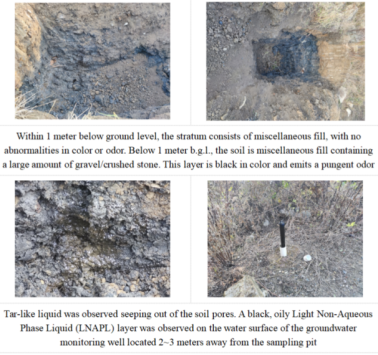
The contaminated soil used for the experiments was collected from a polluted site in the Yangpu District of Shanghai, China. This soil is classified as low-permeability clay and is severely contaminated with a mixture of Volatile Organic Compounds (VOCs), Semi-Volatile Organic Compounds (SVOCs/PAHs), and Total Petroleum Hydrocarbons (TPH). Specific field photographs of the soil and the detected contaminant concentrations are as follows.
Table 1. Contaminant Detection Results in the Test Soil (mg/kg)
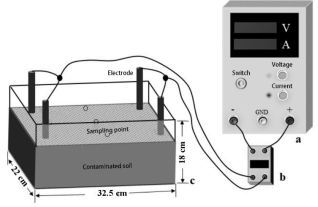
The experiments were conducted in transparent polypropylene (PP) reactors (32.5 cm×22 cm×18 cm), each with a capacity of 7 L. Graphite rod electrodes were used, with an electrode spacing of 21 cm. Unless otherwise specified, a constant voltage gradient of approximately 0.5 V/cm (V=30 V) was applied using a DC regulated power supply. Current, pH, and temperature were monitored using a paperless recorder and RS485 sensors with wireless data logging via a DTU module. A 10 Ω resistor was connected in series for current measurement. The experimental setup is shown in Figure 2.
The study encompasses 15 sequential batch Electrokinetic Remediation (EKR) unit tests, summarized across three main experimental design tables.
2.3.1. Impact of Electrolyte, pH, and Voltage on Electrochemical Removal Efficiency of Organic Contaminants (TPH and PAHs)
This section systematically investigates the effects of soil properties, electrolyte type, pH value, and voltage intensity on the removal efficiency of TPH and PAHs during the electrochemical remediation process. The goal is to identify key controlling factors and optimize the combination of electrochemical remediation parameters, as specifically detailed in Table 2.
Table 2. Design of Impact of Electrolyte, pH, and Voltage on Electrochemical Removal Efficiency of Organic Contaminants.
Test No.
Electrolyte/Modifier
Initial pH
Voltage Gradient (V/cm)
1#
-
-
-
2#
0.1M NaCl
4.5
0.5
3#
0.1M NaCl
7.0
0.5
4#
0.1M NaCl
8.5
0.5
5#
0.1M KCl
7.0
0.5
6#
0.05M NaCl+0.05M EDTA
7.0
0.5
7#
0.1M NaCl
7.0
1.0
8#
0.1M NaCl
7.0
2.0
9#
-
-
0.5
10#
Activated Carbon
-
0.5
2.3.2. Solubilization of Contaminants by Surfactants
Electrokinetic remediation of hydrophobic organic contaminants (HOCs) is limited by their low solubility and strong adsorption to soil matrices. Petroleum hydrocarbons and PAHs (log Kow 3-7) are easily trapped in micropores and remain inaccessible to electrochemical oxidants. Surfactants, with their amphiphilic structures, form micelles above the CMC that greatly reduce interfacial tension and increase contaminant solubility by 1-2 orders of magnitude. The micellar pseudophase migrates with electroosmotic flow, improving contact with anodic oxidizing species and enabling a synergistic solubilization–transport–oxidation process. Thus, adding surfactants is an essential strategy to overcome hydrophobicity and enhance electrokinetic remediation. Experimental details are shown in Table 3.
2.3.3. Simulation Tests for Complex Subsurface Infrastructure Conditions
These tests aim to investigate the impact of complex infrastructure conditions, such as underground pipelines and storage tanks within operating facilities, on the electrochemical remediation of organic-contaminated soil. We simulated underground pipelines using a PVC pipe (plastic material) with a diameter of 10 cm and a length of 30 cm, which was buried in the center of the soil box. Underground storage tanks were simulated using a small plastic storage container, approximately 7 cm in diameter and 10 cm in height, buried on one side of the soil box. The specific design parameters are presented in Table 3.
Table 3. Design of Impact of Solubilization of Contaminants by Surfactants and Subsurface Infrastructure Conditions.
Test No.
Test Description
Concentration
Voltage Gradient (V/cm)
1#
Clay Blank Control
-
-
2#
Clay Solubilization Blank
-
0.5
3#
Clay with Alpha Olefin Sulfonate (AOS)
Approximately 5 times CMC
0.5
4#
Clay with SDBS
Approximately 5 times CMC
0.5
5#
Clay with Simulated Pipeline Storage Tank
-
0.5
2.4. Measurements
Contaminant concentrations (mg/kg) were analyzed according to standard methods (Table 4). Current (mA) was monitored continuously. Sampling occurred at T = 0, 7, 14, 21, and 28 days (midpoint sampling).
Table 4. Test Method.
Parameter
Test Method
Instrument
Model No.
VOC
"Soil and Sediment -Determination of Volatile Organic Compounds -Purge-and-Trap/Gas Chromatography-Mass Spectrometry"(HJ 605-2011)
Gas Chromatography-Mass Spectrometry (GC-MS) / Fully Automated Purge-and-Trap Sampler
Agilent7890/5977B/Atomx-XYZ
SVOCs
"Soil and Sediment -Determination of Semi-Volatile Organic Compounds - Gas Chromatography-Mass Spectrometry"(HJ 834-2017)
Gas Chromatography-Mass Spectrometry (GC-MS)
Agilent7890B/5977B
TPH
"Soil and Sediment -Determination of Petroleum Hydrocarbons(C10-C40)- Gas Chromatography"(HJ 1021-2019)
Gas Chromatograph (GC)
Agilent8890
3. Results
3.1. lnfluence of Operational Parameters on Current Dynamics
3.1.1. Effect of pH
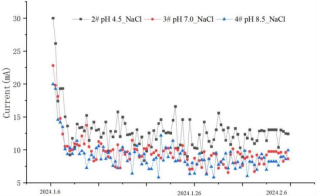
A decrease in pH resulted in an increase in current. The average current was 10.96 mA at pH 4.5, compared with 8.72 mA at pH 7.0 and 8.19 mA at pH 8.5. This is mainly because H⁺ ions have high mobility under acidic conditions, which exponentially increases the electrical conductivity of the pore water. In addition, acidic conditions suppress the precipitation of metal hydroxides, thereby increasing the total concentration of mobile ions
[8]
Han, Ding, et al. "Critical review of electro-kinetic remediation of contaminated soils and sediments: mechanisms, performances and technologies." Water, Air, & Soil Pollution 232.8 (2021): 335.
Gidudu, Brian, and Evans MN Chirwa. "The role of pH, electrodes, surfactants, and electrolytes in electrokinetic remediation of contaminated soil." Molecules 27.21 (2022): 7381.
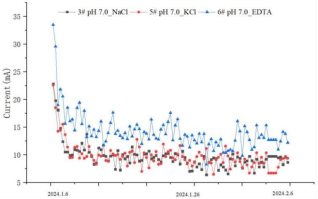
Compared with simple salt solutions (0.1 M NaCl or 0.1 M KCl), the introduction of 0.05 M NaCl + 0.05 M EDTA significantly increased the current. NaCl and KCl provide similar conductivities. The enhancing effect of EDTA arises from its strong chelating ability, forming soluble, charged metal–EDTA complexes. This process releases previously immobilized metal contaminants into the pore water, greatly increasing the total concentration of mobile ions and thus raising the system’s conductivity
[9]
Gidudu, Brian, and Evans MN Chirwa. "The role of pH, electrodes, surfactants, and electrolytes in electrokinetic remediation of contaminated soil." Molecules 27.21 (2022): 7381.
Lee, Hyun-Ho, and Ji-Won Yang. "A new method to control electrolytes pH by circulation system in electrokinetic soil remediation." Journal of Hazardous Materials 77.1-3 (2000): 227-240.
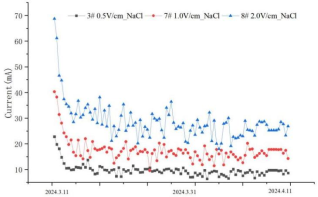
Figure 4. Effect of electrolyte composition on Current.
3.1.3. Effect of Voltage Gradient
Current increased with increasing voltage gradient (from 0.5 V/cm to 2.0 V/cm). However, the increase in current was not proportional to the increase in voltage, likely due to enhanced electrode polarization at higher voltages, which creates a back electromotive force and effectively increases the overall resistance of the system, partially offsetting the current growth
[11]
Mena, Esperanza, et al. "Electrokinetic remediation of soil polluted with insoluble organics using biological permeable reactive barriers: effect of periodic polarity reversal and voltage gradient." Chemical Engineering Journal 299 (2016): 30-36.
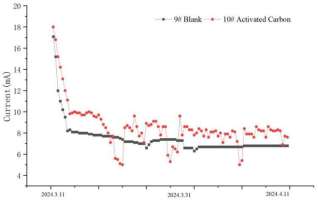
The addition of activated carbon increased the current by approximately 14.3%. This is because activated carbon, as a conductive solid, establishes additional electron conduction pathways within the low-conductivity clay matrix, effectively transforming the system into a composite conductor and enhancing ion exchange at the interfaces.
3.2. Influence of Operational Parameters on Remediation Efficiency
3.2.1. Effect of pH
Acidic conditions (pH 4.5) produced the best overall removal performance, with an average removal rate of 70.97% for the 12 contaminants, outperforming pH 7.0 (54.49%) and pH 8.5 (58.09%). VOCs (toluene): pH 4.5 achieved an 86.76% removal rate, mainly due to increased Joule heating caused by higher current, which accelerated volatilization. PAHs (benzo[a]pyrene, indeno[1,2,3-cd]pyrene): pH 4.5 also showed better removal, e.g., 75.25% for indeno[1,2,3-cd]pyrene. The high current and acidic environment favored strong oxidative degradation
[9]
Gidudu, Brian, and Evans MN Chirwa. "The role of pH, electrodes, surfactants, and electrolytes in electrokinetic remediation of contaminated soil." Molecules 27.21 (2022): 7381.
Cang, Long, et al. "Enhanced-electrokinetic remediation of copper–pyrene co-contaminated soil with different oxidants and pH control." Chemosphere 90.8 (2013): 2326-2331.
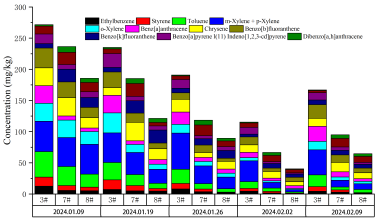
The composite electrolyte containing EDTA achieved the highest average removal rate (69.29%), exceeding the simple salt solutions (54.49% and 44.97%). PAHs (benzo[a]pyrene): EDTA achieved a high removal rate of 82.41%, highlighting its effectiveness in desorbing and solubilizing strongly adsorbed SVOCs
[9]
Gidudu, Brian, and Evans MN Chirwa. "The role of pH, electrodes, surfactants, and electrolytes in electrokinetic remediation of contaminated soil." Molecules 27.21 (2022): 7381.
Rozas, F., and Marta Castellote. "Electrokinetic remediation of dredged sediments polluted with heavy metals with different enhancing electrolytes." Electrochimica Acta 86 (2012): 102-109.
Figure 8. Effect of electrolyte composition on Removal Rate of PAHs.
3.2.3. Effect of Voltage Gradient
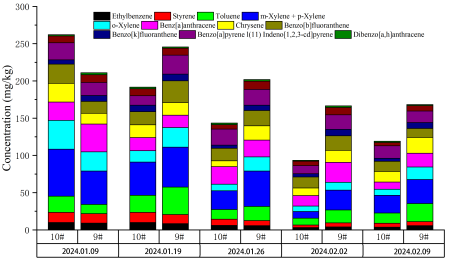
Removal efficiency increased with voltage and reached a peak average removal rate of 73.42% at 2.0 V/cm. VOCs (toluene): Removal reached 91.38% at 2.0 V/cm, driven by enhanced electromigration and increased Joule heating. PAHs (benzo[a]pyrene): Removal reached 79.61% at 2.0 V/cm, as high voltage strengthened the electrochemical oxidation of persistent pollutants
[11]
Mena, Esperanza, et al. "Electrokinetic remediation of soil polluted with insoluble organics using biological permeable reactive barriers: effect of periodic polarity reversal and voltage gradient." Chemical Engineering Journal 299 (2016): 30-36.
Figure 9. Effect of voltage gradient on Removal Rate of PAHs.
3.2.4. Effect of Activated Carbon
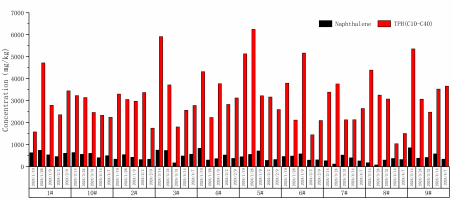
Activated carbon improved removal efficiency compared with the control, especially for hard-to-remove PAHs (e.g., 53.12% removal of benzo[a]pyrene). Activated carbon acts as a three-dimensional particle electrode, increasing current density and providing localized oxidation/reduction sites within the soil matrix.
Figure 11. Effect of activated carbon on Removal Rate of Naphthalene and TPH.
3.3. Surfactant-Enhanced EKR and Complex Boundary Conditions
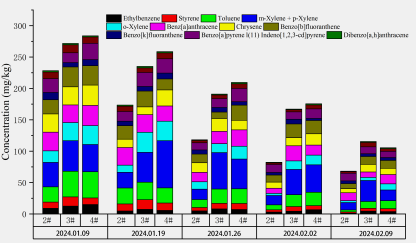
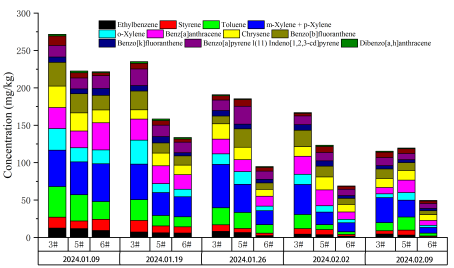
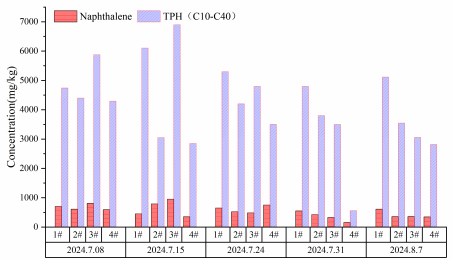
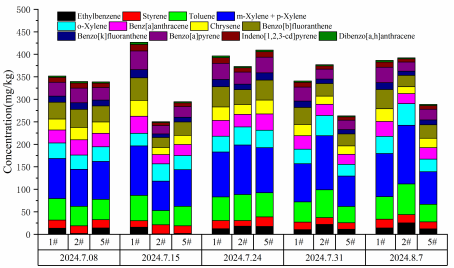
During the first 21 days, abnormal concentration increases were observed, likely due to sampling point errors and the inherent instability of the EKR process. However, by day 28, the treatment groups still showed clear net removal effects, especially for VOCs and TPH. In the SDBS group, ethylbenzene (from 12.06 mg/kg to 0.31 mg/kg) and toluene (from 42.54 mg/kg to 1.55 mg/kg) exhibited the most significant removal. SVOCs and TPH also showed notable reductions, but their residual concentrations remained relatively high (e.g., TPH at 2815.42 mg/kg), reflecting the difficulty of remediating such heavily contaminated clay. The AOS group performed better than the control group, but less effectively than the SDBS group.
The simulated underground structure prevented the severe VOC accumulation observed in the blank control group and resulted in slight net removal. This phenomenon is attributed to the obstruction disrupting the uniform EOF pathways, thereby preventing contaminants from concentrating at the central sampling point
[9]
Gidudu, Brian, and Evans MN Chirwa. "The role of pH, electrodes, surfactants, and electrolytes in electrokinetic remediation of contaminated soil." Molecules 27.21 (2022): 7381.
Karagunduz, Ahmet, Aras Gezer, and Gulden Karasuloglu. "Surfactant enhanced electrokinetic remediation of DDT from soils." Science of the total environment 385.1-3 (2007): 1-11.
Saichek, R. E., and K. R. Reddy. "Effects of system variables on surfactant enhanced electrokinetic removal of polycyclic aromatic hydrocarbons from clayey soils." Environmental technology 24.4 (2003): 503-515.
Li, Yunlong, and Liguo Jiang. "Comparison of the crude oil removal effects of different surfactants in electrokinetic remediation of low-permeability soil." Journal of Environmental Chemical Engineering 9.4 (2021): 105190.
Figure 13. Effectiveness of Electrochemically Enhanced Solubilization Remediation of Naphthalene and TPH.

4. Discussion
The mechanisms underlying optimal EKR performance are driven by controlled ionic conditions and electric field strength. The high efficiency under acidic pH is a combined physical–chemical effect: the high mobility of H⁺ ions maintains elevated conductivity and current, generating more Joule heating (enhancing VOC volatilization) and promoting the formation of highly reactive hydroxyl radicals (·OH) at the anode (enhancing SVOC oxidation)
[17]
Acar, Yalcin B., and Akram N. Alshawabkeh. "Principles of electrokinetic remediation." Environmental science & technology 27.13 (1993): 2638-2647.
[17]
.
The use of EDTA composite electrolyte provides a dual enhancement mechanism: First, as a strong chelating agent, EDTA effectively desorbs and solubilizes coexisting heavy metals, thereby freeing soil adsorption sites for organic contaminant release. Second, EDTA itself can act as a solubilizing agent, promoting the transfer of organic molecules into the aqueous phase and facilitating their transport via EOF
[18]
Gu, Yingying, Albert T. Yeung, and Hongjiang Li. "Enhanced electrokinetic remediation of cadmium-contaminated natural clay using organophosphonates in comparison with EDTA." Chinese Journal of Chemical Engineering 26.5 (2018): 1152-1159.
Han, Hyoyeol, et al. "Electrokinetic remediation of soil contaminated with diesel oil using EDTA–Cosolvent solutions." Separation Science and Technology 44.10 (2009): 2437-2454.
Activated carbon enhances remediation primarily through a composite conduction mechanism. In low-conductivity clay, activated carbon particles act as microscopic conductive bridges, transforming the ion-dependent system into a mixed ion–electron conductive network. This increases the total current and, importantly, allows the carbon particles to function as bipolar electrodes within the electric field. As a result, redox reactions can occur directly on the carbon surface, creating localized reaction zones inside contaminated soil aggregates. This “adsorption–electrolysis” synergy overcomes mass-transfer limitations that would otherwise require contaminants to migrate to the main electrodes to react.
The superiority of SDBS lies in its structural compatibility: its aromatic ring enables π–π stacking with PAHs, resulting in more stable and higher-capacity micellar solubilization than AOS. In contrast, complex boundary conditions highlight a physical constraint: non-conductive barriers disrupt EOF, increase the overall system resistance, and disperse flow lines. Although such disruption prevents severe local accumulation artifacts, it simultaneously creates unrepaired “blind zones” behind obstacles, indicating a trade-off between avoiding measurement artifacts and achieving true spatial uniformity in field remediation
[20]
Fan, Guangping, et al. "Review of chemical and electrokinetic remediation of PCBs contaminated soils and sediments." Environmental Science: Processes & Impacts 18.9 (2016): 1140-1156.
Shu, Jiancheng, et al. "Enhanced electrokinetic remediation of manganese and ammonia nitrogen from electrolytic manganese residue using pulsed electric field in different enhancement agents." Ecotoxicology and Environmental Safety 171 (2019): 523-529.
This study confirms that surfactant-enhanced EKR (SE-EKR) is essential, as EKR alone leads to severe contaminant accumulation, whereas SE-EKR enables net removal of hydrophobic organic contaminants in low-permeability clay soils. SDBS demonstrated superior performance compared with AOS, likely due to its aromatic structure facilitating enhanced solubilization. Optimal operational controls-particularly lowering pH and increasing voltage-significantly improved efficiency by boosting current and oxidative capacity. The presence of non-conductive underground infrastructure reduced current and altered the electroosmotic flow field, effectively disrupting the focused transport that caused catastrophic contaminant enrichment in the EKR control group.
Abbreviations
EKR
Electrokinetic Remediation
SE-EKR
Surfactant-Enhanced Electrokinetic Remediation
PAHs
Polycyclic Aromatic Hydrocarbons
TPH
Total Petroleum Hydrocarbons
HOCs
Hydrophobic Organic Compounds
EOF
Electroosmotic Flow
CMC
Critical Micelle Concentration
AOS
Alpha Olefin Sulfonate
SDBS
Sodium Dodecylbenzenesulfonate
AC
Activated Carbon
EDTA
Ethylenediaminetetraacetic acid
VOCs
Volatile Organic Compounds
SVOCs
Semi-Volatile Organic Compounds
LNAPL
Light Non-Aqueous Phase Liquid
Author Contributions
Sheng Huang is the sole author. The author read and approved the final manuscript.
Funding
This work is supported by Shanghai Rising-Star Program of Shanghai Municipal Science and Technology Commission (23QB1404500) and Research Project K2022J013A of Shanghai Municipal Engineering Design Institute (Group) Co., Ltd.
Data Availability Statement
The data is available from the corresponding author upon reasonable request.
Conflicts of Interest
The authors declare no conflicts of interest.
References
[1]
Reddy, Krishna R., and Claudio Cameselle. Electrochemical remediation technologies for polluted soils, sediments and groundwater; 2009. John Wiley & Sons.
[2]
Maturi, Kranti, Krishna R. Reddy, and Claudio Cameselle. "Surfactant-enhanced electrokinetic remediation of mixed contamination in low permeability soil." Separation Science and Technology 44.10 (2009): 2385-2409.
Boulakradeche, Mohamed Oualid, et al. "Enhanced electrokinetic remediation of hydrophobic organics contaminated soils by the combination of non-ionic and ionic surfactants." Electrochimica Acta 174 (2015): 1057-1066.
Kim, Jaesup, and Kisay Lee. "Effects of electric field directions on surfactant enhanced electrokinetic remediation of diesel‐contaminated sand column." Journal of Environmental Science & Health Part A 34.4 (1999): 863-877.
Bhattacharya, Sujan Kumar. Surfactant enhanced electrokinetic remediation of gasoline contaminated soils. University of Wyoming, 1996.
[7]
Fan, Guangping, et al. "Surfactant and oxidant enhanced electrokinetic remediation of a PCBs polluted soil." Separation and Purification Technology 123 (2014): 106-113.
Gidudu, Brian, and Evans MN Chirwa. "The role of pH, electrodes, surfactants, and electrolytes in electrokinetic remediation of contaminated soil." Molecules 27.21 (2022): 7381.
Lee, Hyun-Ho, and Ji-Won Yang. "A new method to control electrolytes pH by circulation system in electrokinetic soil remediation." Journal of Hazardous Materials 77.1-3 (2000): 227-240.
Mena, Esperanza, et al. "Electrokinetic remediation of soil polluted with insoluble organics using biological permeable reactive barriers: effect of periodic polarity reversal and voltage gradient." Chemical Engineering Journal 299 (2016): 30-36.
Cang, Long, et al. "Enhanced-electrokinetic remediation of copper–pyrene co-contaminated soil with different oxidants and pH control." Chemosphere 90.8 (2013): 2326-2331.
Rozas, F., and Marta Castellote. "Electrokinetic remediation of dredged sediments polluted with heavy metals with different enhancing electrolytes." Electrochimica Acta 86 (2012): 102-109.
Karagunduz, Ahmet, Aras Gezer, and Gulden Karasuloglu. "Surfactant enhanced electrokinetic remediation of DDT from soils." Science of the total environment 385.1-3 (2007): 1-11.
Saichek, R. E., and K. R. Reddy. "Effects of system variables on surfactant enhanced electrokinetic removal of polycyclic aromatic hydrocarbons from clayey soils." Environmental technology 24.4 (2003): 503-515.
Li, Yunlong, and Liguo Jiang. "Comparison of the crude oil removal effects of different surfactants in electrokinetic remediation of low-permeability soil." Journal of Environmental Chemical Engineering 9.4 (2021): 105190.
Acar, Yalcin B., and Akram N. Alshawabkeh. "Principles of electrokinetic remediation." Environmental science & technology 27.13 (1993): 2638-2647.
[18]
Gu, Yingying, Albert T. Yeung, and Hongjiang Li. "Enhanced electrokinetic remediation of cadmium-contaminated natural clay using organophosphonates in comparison with EDTA." Chinese Journal of Chemical Engineering 26.5 (2018): 1152-1159.
Han, Hyoyeol, et al. "Electrokinetic remediation of soil contaminated with diesel oil using EDTA–Cosolvent solutions." Separation Science and Technology 44.10 (2009): 2437-2454.
Fan, Guangping, et al. "Review of chemical and electrokinetic remediation of PCBs contaminated soils and sediments." Environmental Science: Processes & Impacts 18.9 (2016): 1140-1156.
Shu, Jiancheng, et al. "Enhanced electrokinetic remediation of manganese and ammonia nitrogen from electrolytic manganese residue using pulsed electric field in different enhancement agents." Ecotoxicology and Environmental Safety 171 (2019): 523-529.
Huang, S. (2025). Investigation of Chemical Enhancers and Physical Constraints in Electrokinetic Remediation of Low-Permeability Soil Contaminated by PAHs and TPH. Earth Sciences, 14(6), 290-300. https://doi.org/10.11648/j.earth.20251406.17
Huang, S. Investigation of Chemical Enhancers and Physical Constraints in Electrokinetic Remediation of Low-Permeability Soil Contaminated by PAHs and TPH. Earth Sci.2025, 14(6), 290-300. doi: 10.11648/j.earth.20251406.17
Huang S. Investigation of Chemical Enhancers and Physical Constraints in Electrokinetic Remediation of Low-Permeability Soil Contaminated by PAHs and TPH. Earth Sci. 2025;14(6):290-300. doi: 10.11648/j.earth.20251406.17
@article{10.11648/j.earth.20251406.17,
author = {Sheng Huang},
title = {Investigation of Chemical Enhancers and Physical Constraints in Electrokinetic Remediation of Low-Permeability Soil Contaminated by PAHs and TPH},
journal = {Earth Sciences},
volume = {14},
number = {6},
pages = {290-300},
doi = {10.11648/j.earth.20251406.17},
url = {https://doi.org/10.11648/j.earth.20251406.17},
eprint = {https://article.sciencepublishinggroup.com/pdf/10.11648.j.earth.20251406.17},
abstract = {The remediation of low-permeability clay soils co-contaminated with Polycyclic Aromatic Hydrocarbons (PAHs) and Total Petroleum Hydrocarbons (TPH) remains a significant environmental challenge. Traditional Electrokinetic Remediation (EKR) is fundamentally constrained by the high hydrophobicity of these contaminants and strong matrix adsorption, which severely limit their aqueous solubility and mobility. This study systematically investigated the combined effects of critical operating parameters, chemical amendments, and physical constraints on the efficiency of Surfactant-Enhanced EKR (SE-EKR) for a highly contaminated clay matrix. A suite of batch tests was performed to optimize EKR conditions. Key findings demonstrated that operating parameters exert a crucial influence on both current dynamics and contaminant removal. Acidic conditions (pH 4.5) were optimal, yielding the highest average removal rate of 70.97% for 12 target contaminants, primarily driven by the high mobility of H+ ions which significantly boosted electrical current. This elevated current led to increased Joule heating (accelerating VOC volatilization) and enhanced oxidative capacity (improving PAH degradation). The use of the composite electrolyte EDTA further improved performance, achieving 69.29% removal by increasing overall conductivity and effectively solubilizing and desorbing highly adsorbed SVOCs (e.g., Benzo[a]anthracene removal reached 82.41%). Furthermore, increasing the voltage gradient to 2.0 V/cm maximized removal at 73.42%, confirming the importance of electromigration and electrochemical oxidation for persistent pollutants. The incorporation of Activated Carbon (AC) increased the system current by 14.3% and enhanced PAH removal, functioning as a 3D particulate electrode that established internal electron conduction pathways and localized redox reaction sites within the low-conductivity clay. Comparing chemical enhancers, SDBS demonstrated superior solubilization and removal efficiency over Alpha Olefin Sulfonate (AOS), likely due to favorable π-π stacking interactions with PAHs. Finally, the simulation of non-conductive subsurface infrastructure demonstrated its role as a physical constraint, disrupting electroosmotic flow pathways, reducing current, and successfully preventing the severe local contaminant accumulation observed in the EKR control. This research provides essential insights into developing robust, field-applicable strategies for EKR by emphasizing the combined necessity of optimized chemical control and mitigation of physical constraints.},
year = {2025}
}
TY - JOUR
T1 - Investigation of Chemical Enhancers and Physical Constraints in Electrokinetic Remediation of Low-Permeability Soil Contaminated by PAHs and TPH
AU - Sheng Huang
Y1 - 2025/12/27
PY - 2025
N1 - https://doi.org/10.11648/j.earth.20251406.17
DO - 10.11648/j.earth.20251406.17
T2 - Earth Sciences
JF - Earth Sciences
JO - Earth Sciences
SP - 290
EP - 300
PB - Science Publishing Group
SN - 2328-5982
UR - https://doi.org/10.11648/j.earth.20251406.17
AB - The remediation of low-permeability clay soils co-contaminated with Polycyclic Aromatic Hydrocarbons (PAHs) and Total Petroleum Hydrocarbons (TPH) remains a significant environmental challenge. Traditional Electrokinetic Remediation (EKR) is fundamentally constrained by the high hydrophobicity of these contaminants and strong matrix adsorption, which severely limit their aqueous solubility and mobility. This study systematically investigated the combined effects of critical operating parameters, chemical amendments, and physical constraints on the efficiency of Surfactant-Enhanced EKR (SE-EKR) for a highly contaminated clay matrix. A suite of batch tests was performed to optimize EKR conditions. Key findings demonstrated that operating parameters exert a crucial influence on both current dynamics and contaminant removal. Acidic conditions (pH 4.5) were optimal, yielding the highest average removal rate of 70.97% for 12 target contaminants, primarily driven by the high mobility of H+ ions which significantly boosted electrical current. This elevated current led to increased Joule heating (accelerating VOC volatilization) and enhanced oxidative capacity (improving PAH degradation). The use of the composite electrolyte EDTA further improved performance, achieving 69.29% removal by increasing overall conductivity and effectively solubilizing and desorbing highly adsorbed SVOCs (e.g., Benzo[a]anthracene removal reached 82.41%). Furthermore, increasing the voltage gradient to 2.0 V/cm maximized removal at 73.42%, confirming the importance of electromigration and electrochemical oxidation for persistent pollutants. The incorporation of Activated Carbon (AC) increased the system current by 14.3% and enhanced PAH removal, functioning as a 3D particulate electrode that established internal electron conduction pathways and localized redox reaction sites within the low-conductivity clay. Comparing chemical enhancers, SDBS demonstrated superior solubilization and removal efficiency over Alpha Olefin Sulfonate (AOS), likely due to favorable π-π stacking interactions with PAHs. Finally, the simulation of non-conductive subsurface infrastructure demonstrated its role as a physical constraint, disrupting electroosmotic flow pathways, reducing current, and successfully preventing the severe local contaminant accumulation observed in the EKR control. This research provides essential insights into developing robust, field-applicable strategies for EKR by emphasizing the combined necessity of optimized chemical control and mitigation of physical constraints.
VL - 14
IS - 6
ER -
Huang, S. (2025). Investigation of Chemical Enhancers and Physical Constraints in Electrokinetic Remediation of Low-Permeability Soil Contaminated by PAHs and TPH. Earth Sciences, 14(6), 290-300. https://doi.org/10.11648/j.earth.20251406.17
Huang, S. Investigation of Chemical Enhancers and Physical Constraints in Electrokinetic Remediation of Low-Permeability Soil Contaminated by PAHs and TPH. Earth Sci.2025, 14(6), 290-300. doi: 10.11648/j.earth.20251406.17
Huang S. Investigation of Chemical Enhancers and Physical Constraints in Electrokinetic Remediation of Low-Permeability Soil Contaminated by PAHs and TPH. Earth Sci. 2025;14(6):290-300. doi: 10.11648/j.earth.20251406.17
@article{10.11648/j.earth.20251406.17,
author = {Sheng Huang},
title = {Investigation of Chemical Enhancers and Physical Constraints in Electrokinetic Remediation of Low-Permeability Soil Contaminated by PAHs and TPH},
journal = {Earth Sciences},
volume = {14},
number = {6},
pages = {290-300},
doi = {10.11648/j.earth.20251406.17},
url = {https://doi.org/10.11648/j.earth.20251406.17},
eprint = {https://article.sciencepublishinggroup.com/pdf/10.11648.j.earth.20251406.17},
abstract = {The remediation of low-permeability clay soils co-contaminated with Polycyclic Aromatic Hydrocarbons (PAHs) and Total Petroleum Hydrocarbons (TPH) remains a significant environmental challenge. Traditional Electrokinetic Remediation (EKR) is fundamentally constrained by the high hydrophobicity of these contaminants and strong matrix adsorption, which severely limit their aqueous solubility and mobility. This study systematically investigated the combined effects of critical operating parameters, chemical amendments, and physical constraints on the efficiency of Surfactant-Enhanced EKR (SE-EKR) for a highly contaminated clay matrix. A suite of batch tests was performed to optimize EKR conditions. Key findings demonstrated that operating parameters exert a crucial influence on both current dynamics and contaminant removal. Acidic conditions (pH 4.5) were optimal, yielding the highest average removal rate of 70.97% for 12 target contaminants, primarily driven by the high mobility of H+ ions which significantly boosted electrical current. This elevated current led to increased Joule heating (accelerating VOC volatilization) and enhanced oxidative capacity (improving PAH degradation). The use of the composite electrolyte EDTA further improved performance, achieving 69.29% removal by increasing overall conductivity and effectively solubilizing and desorbing highly adsorbed SVOCs (e.g., Benzo[a]anthracene removal reached 82.41%). Furthermore, increasing the voltage gradient to 2.0 V/cm maximized removal at 73.42%, confirming the importance of electromigration and electrochemical oxidation for persistent pollutants. The incorporation of Activated Carbon (AC) increased the system current by 14.3% and enhanced PAH removal, functioning as a 3D particulate electrode that established internal electron conduction pathways and localized redox reaction sites within the low-conductivity clay. Comparing chemical enhancers, SDBS demonstrated superior solubilization and removal efficiency over Alpha Olefin Sulfonate (AOS), likely due to favorable π-π stacking interactions with PAHs. Finally, the simulation of non-conductive subsurface infrastructure demonstrated its role as a physical constraint, disrupting electroosmotic flow pathways, reducing current, and successfully preventing the severe local contaminant accumulation observed in the EKR control. This research provides essential insights into developing robust, field-applicable strategies for EKR by emphasizing the combined necessity of optimized chemical control and mitigation of physical constraints.},
year = {2025}
}
TY - JOUR
T1 - Investigation of Chemical Enhancers and Physical Constraints in Electrokinetic Remediation of Low-Permeability Soil Contaminated by PAHs and TPH
AU - Sheng Huang
Y1 - 2025/12/27
PY - 2025
N1 - https://doi.org/10.11648/j.earth.20251406.17
DO - 10.11648/j.earth.20251406.17
T2 - Earth Sciences
JF - Earth Sciences
JO - Earth Sciences
SP - 290
EP - 300
PB - Science Publishing Group
SN - 2328-5982
UR - https://doi.org/10.11648/j.earth.20251406.17
AB - The remediation of low-permeability clay soils co-contaminated with Polycyclic Aromatic Hydrocarbons (PAHs) and Total Petroleum Hydrocarbons (TPH) remains a significant environmental challenge. Traditional Electrokinetic Remediation (EKR) is fundamentally constrained by the high hydrophobicity of these contaminants and strong matrix adsorption, which severely limit their aqueous solubility and mobility. This study systematically investigated the combined effects of critical operating parameters, chemical amendments, and physical constraints on the efficiency of Surfactant-Enhanced EKR (SE-EKR) for a highly contaminated clay matrix. A suite of batch tests was performed to optimize EKR conditions. Key findings demonstrated that operating parameters exert a crucial influence on both current dynamics and contaminant removal. Acidic conditions (pH 4.5) were optimal, yielding the highest average removal rate of 70.97% for 12 target contaminants, primarily driven by the high mobility of H+ ions which significantly boosted electrical current. This elevated current led to increased Joule heating (accelerating VOC volatilization) and enhanced oxidative capacity (improving PAH degradation). The use of the composite electrolyte EDTA further improved performance, achieving 69.29% removal by increasing overall conductivity and effectively solubilizing and desorbing highly adsorbed SVOCs (e.g., Benzo[a]anthracene removal reached 82.41%). Furthermore, increasing the voltage gradient to 2.0 V/cm maximized removal at 73.42%, confirming the importance of electromigration and electrochemical oxidation for persistent pollutants. The incorporation of Activated Carbon (AC) increased the system current by 14.3% and enhanced PAH removal, functioning as a 3D particulate electrode that established internal electron conduction pathways and localized redox reaction sites within the low-conductivity clay. Comparing chemical enhancers, SDBS demonstrated superior solubilization and removal efficiency over Alpha Olefin Sulfonate (AOS), likely due to favorable π-π stacking interactions with PAHs. Finally, the simulation of non-conductive subsurface infrastructure demonstrated its role as a physical constraint, disrupting electroosmotic flow pathways, reducing current, and successfully preventing the severe local contaminant accumulation observed in the EKR control. This research provides essential insights into developing robust, field-applicable strategies for EKR by emphasizing the combined necessity of optimized chemical control and mitigation of physical constraints.
VL - 14
IS - 6
ER -