
 ,
Anthony Verdin,
Mathilda Osiris Mahouekpo,
Robert Faomowe Foko,
Fatoumata Bah,
Aminata Toure,
Mathilde Cabral,
Mamadou Fall,
Cheikh Diop*
,
Anthony Verdin,
Mathilda Osiris Mahouekpo,
Robert Faomowe Foko,
Fatoumata Bah,
Aminata Toure,
Mathilde Cabral,
Mamadou Fall,
Cheikh Diop*
Bioavailable trace metals in sediments can be a significant source of contamination for aquatic organisms. The present study aims to evaluate the overall toxicity of the bioavailable fraction of Pb and Cd in sediments from the Senegalese coast on the bacterium Aliivibrio fischeri. Surface sediment samples were collected at five sites (Rufisque, Soumbedioune, Saint-Louis, Hann, and Kayar) on the Senegalese coast during the dry and wet seasons, and trace metals content were determined by flame atomic absorption spectrophotometry. The results revealed a high level of contamination at the Rufisque and Soumbedioune sites, mainly related to lead and more pronounced during the dry season. In contrast, cadmium had the highest bioavailable fraction, exceeding 80% during the dry season at the Soumbedioune, Rufisque, and Saint-Louis sites, suggesting an anthropogenic origin for these metals. The results of the test carried out on the marine bacterium Aliivibrio fischeri confirm this observation by highlighting a proven higher toxicity of sediments during the dry season at the Soumbedioune site, followed by Rufisque, compared to the Kayar control site. Ultimately, this work has shown that even though lead contributes more to sediment contamination, the harmful effects on aquatic life are more related to cadmium due to its higher bioavailability. These effects are more pronounced in the dry season and at Soumbedioune due to the discharge of domestic and industrial wastewater without prior treatment.
| Published in | International Journal of Ecotoxicology and Ecobiology (Volume 11, Issue 1) |
| DOI | 10.11648/j.ijee.20261101.12 |
| Page(s) | 9-18 |
| Creative Commons |
This is an Open Access article, distributed under the terms of the Creative Commons Attribution 4.0 International License (http://creativecommons.org/licenses/by/4.0/), which permits unrestricted use, distribution and reproduction in any medium or format, provided the original work is properly cited. |
| Copyright |
Copyright © The Author(s), 2026. Published by Science Publishing Group |
Trace Metals, Sediments, Bioavailability, Ecotoxicity, Aliivibrio fischeri, Senegalese Coast
Er | RI | ||
|---|---|---|---|
Level | Classification | Level | Classification |
< 40 | Low risk | RI <150 | Ecological risk |
40 ≤ < 80 | Moderate risk | 150 ≤ RI 300 < | Moderate ecological risk |
80 ≤ < 160 | Considerable risk | 300 ≤ RI <600 | Significant ecological risk |
160 ≤ < 320 | High risk | RI≥ 600 | Very high ecological risk |
≥ 320 | Very high risk | - | - |
Site | Season | Pb (mg/kg) | Cd (mg/kg) |
|---|---|---|---|
Ru | Dry | 44.51±4.50 | 3.15±0.02 |
Wet | 31.20 ±2.83 | 2.26 ±0.01 | |
So | Dry | 28.39 ±6.42 | 3.75 ±0.02 |
Wet | 41.90 ±2.71 | 2.48 ±0.62 | |
St | Dry | 22.89 ±2.33 | 2.51±0.08 |
Wet | 20.92 ±10.61 | 2.32±0.15 | |
Hn | Dry | 26.78 ±0.52 | 1.58±0.68 |
Wet | 19.08 ±8.11 | 1.66 ±0.06 | |
Ky | Dry | 21.78 ±4.37 | 0.77±0.29 |
Wet | 21.31 ±4.96 | 0.29 ±0.06 | |
ERL | 46.7 | 1.2 | |
ERM | 218 | 9.6 |
Site | Season | Cd | %bioavailable | Pb | %bioavailable |
|---|---|---|---|---|---|
Ru | Dry | 2.68±0.08 | 85 | 24.95±1.44 | 56 |
Wet | 0.77±0.15 | 34 | 16.65±0.75 | 53 | |
So | Dry | 3.45±0.15 | 92 | 26.40±0.08 | 93 |
Wet | 1.48±0.16 | 60 | 37.65±4.42 | 90 | |
St | Dry | 2.1±0.05 | 84 | 8±0.71 | 35 |
Wet | 0.6±0.05 | 26 | 7.60±1.21 | 36 | |
Hn | Dry | 0.43±0.05 | 27 | 6.50±0.83 | 24 |
Wet | 0.35±0.06 | 21 | 9.55±1.22 | 50 | |
Ky | Dry | 0.28±0.10 | 36 | 4.15±0.38 | 19 |
Wet | 0.17±0.07 | 59 | 5.2±0.38 | 24 |
Site | Season | CF | Cdeg | |
|---|---|---|---|---|
Cd | Pb | |||
Ru | Dry | 2.83±0.08 | 6.24±0.36 | 9.26±0.43 |
Wet | 0.81±0.16 | 4.17±0.19 | 5.13±0.29 | |
So | Dry | 3.64±0.08 | 7.15±0.36 | 11.25±0.43 |
Wet | 1.56±0.16 | 9.42±1.11 | 11.22±1.00 | |
St | Dry | 2.21±0.05 | 2±0.18 | 4.37±0.19 |
Wet | 0.61±0.06 | 1.9±0.30 | 2.66±0.28 | |
Hn | Dry | 1.56±0.06 | 1.63±0.21 | 3.42±0.16 |
Wet | 0.18±0.08 | 2.39±0.30 | 2.77±0.28 | |
Ky | Dry | 0.79±0.11 | 1.04±0.09 | 1.99±0.02 |
Wet | 0.39±0.06 | 1.3±0.15 | 1.84±0.20 | |
Site | Season | Er | RI | |
|---|---|---|---|---|
Cd | Pb | |||
Ru | Dry | 84.84±2.41 | 31.22±1.80 | 116.25±3.97 |
Wet | 16.33±10.53 | 20.84±0.94 | 37.38±9.52 | |
So | Dry | 109.08±4.74 | 35.73±0.11 | 145.28±4.77 |
Wet | 7.82±0.80 | 47.12±5.53 | 55.4±4.98 | |
St | Dry | 66.4±1.58 | 10.01±0.89 | 76.56±1.97 |
Wet | 3.07±0.30 | 9.51±1.52 | 12.86±1.39 | |
Hn | Dry | 46.9±1.83 | 8.13±1.03 | 55.27±1.11 |
Wet | 0.88±0.40 | 11.95±1.52 | 13.24±1.39 | |
Ky | Dry | 23.71±3.16 | 5.19±0.47 | 29.06±2.69 |
Wet | 1.93±0.30 | 6.51±0.76 | 8.75±1.02 | |
Site | Season | Cd | Pb |
|---|---|---|---|
Ru | Dry | 2.23 | 0.53 |
Wet | 0.64 | 0.35 | |
So | Dry | 2.87 | 0.56 |
Wet | 1.23 | 0.8 | |
St | Dry | 1.75 | 0.17 |
Wet | 0.5 | 0.16 | |
Hn | Dry | 0.35 | 0.14 |
Wet | 0.29 | 0.20 | |
Ky | Dry | 0.23 | 0.08 |
Wet | 0.14 | 0.11 |
AEI | Adverse Effects Index |
Cdeg | Degree of Contamination |
CF | Contamination Factor |
D | Dry Season |
Er | Potential Ecological Risk Coefficient |
ERL | Low Effect Range |
ERM | Median Effect Range |
Hn | Hann |
Ky | Kayar |
RI | Potential Ecological Risk Index |
Ru | Rufisque |
So | Soumbedioune |
St | Saint-Louis |
W | Wet Season |
| [1] | Abbas, M., Adil, M., Ehtisham-Ul-Haque, S., Munir, B., Yameen, M., Ghaffar, A., Shar, G. A., Tahir, MA., & Iqbal, M. (2018). Vibrio fischeri bioluminescence inhibition assay for ecotoxicity assessment: A review. The Science of the total environment, 626, 1295-1309. |
| [2] | APHA, 1999. Standard methods for the examination of water and wastewater (23rd ed). Washington DC: American Public Health Association. |
| [3] | Badassan, T. E., Avumadi, A. D., Ouro-Sama, K., Gnandi, K., Jean-Dupuy, S., & Probst, J. L. (2020). Geochemical Composition of the Lomé Lagoon Sediments, Togo: Seasonal and Spatial Variations of Major, Trace and Rare. Earth Element Concentrations. Water 12(11): 3026. |
| [4] | Bláha, L., Hilscherová, K., Čáp, T., Klánová, J., Machát, J., Zeman, J., & Holoubek, I. (2010). Kinetic bacterial bioluminescence assay for contact sediment toxicity testing: Relationships with the matrix composition and contamination. Environmental Toxicology and Chemistry, 29(3), 507-514. |
| [5] | Chanpiwat, P., Montree, P., & Apisit, N. (2023). Effects of sediment resuspension and changes in water nutrient concentrations on the remobilization of lead from contaminated sediments in Klity Creek, Thailand. Journal of Environmental Management, 339: 117909. |
| [6] | Chen, M., Ding, S., Zhang, L., Li, Y., Sun, Q., & Zhang, C. (2017). An investigation of the effects of elevated phosphorus in water on the release of heavy metals in sediments at a high resolution. The Science of the total environment, 575, 330-337. |
| [7] | Diankha, O., Ndiaye, T., Agbogba, C., & Sarr, A. (2020). Determination of Total Mercury (HG) Concentrations in the Mussel Perna Perna and the Sea Urchin Echinometra Lucunter From Soumbedioune Bay (Senegal) and Health Risk Assessment. European Scientific Journal, 16(9), 1857 – 7881. |
| [8] | Diop, C., Dewaelé, D., Cazier, F., Diouf, A., & Ouddane, B. (2015). Assessment of trace metals contamination level, bioavailability and toxicity in sediments from Dakar coast and Saint Louis estuary in Senegal, West Africa. Chemosphere, 138: 980-7. |
| [9] | Diop, C., Dewaelé, D., Diop, M., Touré, A., Cabral, M., Cazier, F., Fall, M., Diouf, A., & Bagdade, O. (2014). Assessment of contamination, distribution and chemical speciation of trace metals in water column in the Dakar coast and the Saint Louis estuary from Senegal, West Africa. Marine Pollution Bulletin, 86(1), 539-546. |
| [10] | Diop, M., Howsam, M., Diop, C., Goossens, J. F., Diouf, A., & Amara, R. (2016). Assessment of trace element contamination and bioaccumulation in algae (Ulva lactuca), mussels (Perna perna), shrimp (Penaeus kerathurus), and fish (Mugil cephalus, Saratherondon melanotheron) along the Senegalese coast. Marine Pollution Bulletin, 103(1), 339-343. |
| [11] | Fathollahzadeh, H., Kaczala, F., Bhatnagar, A., & Hogland, W. (2014). Speciation of metals in contaminated sediments from Oskarshamn Harbor, Oskarshamn, Sweden. Environmental Science and Pollution Research, 21(4), 2455-2464. |
| [12] | Fetters, K. J., Costello, D. M., Hammerschmidt, C. R., & Allen, B. G. (2016). Toxicological effects of short‐term resuspension of metal‐contaminated freshwater and marine sediments. Environmental Toxicology and Chemistry, 35(3), 676-686. |
| [13] | Freitas, A. R., Castro, A. P., Nascimento M. C., Freire, A. S., Santelli, R. E., Machado, W., & Santos, E. S. (2019). Increase in the bioavailability of trace metals after sediment resuspension. SN Applied Sciences, 1(10): 1288. |
| [14] | Ghirardini, A. V., Girardini, M., Marchetto, D., & Pantani, C. (2009). Microtox® solid phase test: effect of diluent used in toxicity test. Ecotoxicology and environmental safety, 72(3), 851-861. |
| [15] | Gopal, V., Nithya, B., Magesh, N. S., & Jayaprakash, M. (2018). Seasonal variations and environmental risk assessment of trace elements in the sediments of Uppanar River estuary, southern India. Marine Pollution Bulletin, 129(1), 347-356. |
| [16] | Gujre, N., Mitra, S., Soni, A., Agnihotri, R., Rangan, L., Rene, E. R., & Sharma, M. P. (2021). Speciation, contamination, ecological and human health risks assessment of heavy metals in soils dumped with municipal solid wastes. Chemosphere, 262: 128013. |
| [17] | Hakanson, L. (1980). An ecological risk index for aquatic pollution control a sedimentological approach. Water Research, 14(8), 975-1001. |
| [18] | Hama-Aziz, K. H., Mustafa, F. S., Omer, K. M., Hama, S., Hamarawf, R. F, & Rahman, K. O. (2023). Heavy metal pollution in the aquatic environment: efficient and low-cost removal approaches to eliminate their toxicity: a review. RSC advances, 13(26), 17595-17610. |
| [19] | Jarque, S., Masner, P., Klánová, J., Prokeš, R., & Bláha, L. (2016). Bioluminescent Vibrio fischeri Assays in the Assessment of Seasonal and Spatial Patterns in Toxicity of Contaminated River Sediments. Frontiers in microbiology, 7: 1738. |
| [20] | Li, S., Irin, F., Atore, F. O., Green, M. J., & Cañas-Carrell, J. E. (2013). Determination of multi-walled carbon nanotube bioaccumulation in earthworms measured by a microwave-based detection technique. Science of the total environment, 445: 9-13. |
| [21] | Long, E. R., Macdonald, D. D., Smith, S. L., & Calder, F. D. (1995). Incidence of adverse biological effects within ranges of chemical concentrations in marine and estuarine sediments. Environmental management, 19(1), 81-97. |
| [22] | Maradonna, F., Ancillai, D., Notarstefano, V., Valenti, A., Leoni, T., & Carnevali, O. (2020). An integrated approach to evaluate port sediment quality: From chemical characterization to multispecies bioassays. Science of The Total Environment, 746: 141204. |
| [23] | Mohajane, C., & Manjoro, M. (2022). Sediment-associated heavy metal contamination and potential ecological risk along an urban river in South Africa. Heliyon, 8(12): 12499. |
| [24] | Monte, C., Rodrigues, A., Cordeiro, R. C., Freire, A. S., Santelli, R. E., & Machado, W. (2015). Changes in Cd and Zn bioavailability upon an experimental resuspension of highly contaminated coastal sediments from a tropical estuary. Sustain Water Resour Manag, 1: 335-342. |
| [25] | Monte, C., Rodrigues, A., Campos, B., Buruaem, L., Grebbe, B., Eufrasio, G., Cruz, A. C., Silva, L. A., Cordeiro, RC., Abessa, D., & Machado, W. (2025). Influence of seasonality on the toxicity and metals bioavailability after the resuspension of sediments from a tropical estuary. Estuarine, Coastal and Shelf Science, 315: 109167. |
| [26] | Mortimer, M., Kasemets, K., Heinlaan, M., Kurvet, I., & Kahru, A. (2008). High throughput kinetic Vibrio fischeri bioluminescence inhibition assay for study of toxic effects of nanoparticles. Toxicology in Vitro, 22(5), 1412-1417. |
| [27] | Muñoz-Barbosa., Gutiérrez-Galindo., Daesslé, L., Orozco-Borbón, M., & Segovia-Zavala, J. (2012). Relationship between metal enrichments and a biological adverse effects index in sediments from Todos Santos Bay, northwest coast of Baja California, México. Marine Pollution Bulletin, 64(2), 405-409. |
| [28] | Neyestani, M. R., Bastami, K. D., Esmaeilzadeh, M., Shemirani, F., Khazaali, A., Mohyeddin, N. M., Afkhami, M., Nourbakhsh, S., Dehghani, M., Aghaei, S., & Firouzbakht, M. (2016). Geochemical speciation and ecological risk assessment of selected metals in the surface sediments of the northern Persian Gulf. Marine Pollution Bulletin, 109(1), 603-611. |
| [29] | Palma, P., Penha, A. M., Novais, M. H., Fialho, S., Lima, A., Catarino, A., Mourhina, C., Alvarenga, P., Lakunin, M., Rodrigues, G., Potes, M., Morais, M., Costa, M. J., & Salgado, R. (2023). Integrative toolbox to assess the quality of freshwater sediments contaminated with potentially toxic metals. Environmental research 217: 114798. |
| [30] | Parvez, S., Venkataraman, C., & Mukherji, S. (2006). A review on advantages of implementing luminescence inhibition test (Vibrio fischeri) for acute toxicity prediction of chemicals. Environ Int, 32(2), 265-8. |
| [31] | Pérez, F. B., Charlatchka, R., Sahli, L., & Férard, J. F. (2012). New methodological improvements in the Microtox® solid phase assay. Chemosphere, 86(1), 105-110. |
| [32] | Rosado, D., Usero, J., & Morillo, J. (2016). Assessment of heavy metals bioavailability and toxicity toward Vibrio fischeri in sediment of the Huelva estuary. Chemosphere, 153: 10-17. |
| [33] | Schroeder, H., Duester, L., Fabricius, A. L., Ecker, D., Breitung, V., & Ternes, T. A. (2020). Sediment water (interface) mobility of metal (loid) s and nutrients under undisturbed conditions and during resuspension. Journal of Hazardous Materials, 394: 122543. |
| [34] | Tata, T., Belabed, B. E., Boucheker, A., Bououdina, M., Bellucci, S., & Kyzas, G. Z. (2023). Seasonal and spatial contamination of trace elements in sediments and fish tissues (Mugil cephalus) from Annaba gulf (North East of Algeria). Science of The Total Environment, 900: 166137. |
| [35] | Vuillemin, M. E., Waterlot, C., Verdin, A., Laclef, S., Cézard, C., Lesur, D., Sarazin, C., Courcot, D., Hadad, C., Husson, E., & Nhien, A. N. (2023). Copper-uptake mediated by an ecofriendly zwitterionic ionic liquid: A new challenge for a cleaner bioeconomy. Journal of Environmental Sciences, 130: 92-101. |
| [36] | Wei, X., Han, L., Gao, B., Zhou, H., Lu, J., & Wan, X. (2016). Distribution, bioavailability, and potential risk assessment of the metals in tributary sediments of Three Gorges Reservoir: The impact of water impoundment. Ecological Indicators, 61: 667-675. |
| [37] | Zhang, M., Chen, G., Luo, Z., Sun, X., & Xu, J. (2020). Spatial distribution, source identification, and risk assessment of heavy metals in seawater and sediments from Meishan Bay, Zhejiang coast, China. Marine Pollution Bulletin, 156: 111217. |
APA Style
Peleka, J. C. M., Verdin, A., Mahouekpo, M. O., Foko, R. F., Gueye, F., et al. (2026). Assessment of the Overall Ecotoxicity Associated with the Bioavailable Fraction of Trace Metals in Surface Sediments Along the Senegalese Coast on Aliivibrio fischeri. International Journal of Ecotoxicology and Ecobiology, 11(1), 9-18. https://doi.org/10.11648/j.ijee.20261101.12
ACS Style
Peleka, J. C. M.; Verdin, A.; Mahouekpo, M. O.; Foko, R. F.; Gueye, F., et al. Assessment of the Overall Ecotoxicity Associated with the Bioavailable Fraction of Trace Metals in Surface Sediments Along the Senegalese Coast on Aliivibrio fischeri. Int. J. Ecotoxicol. Ecobiol. 2026, 11(1), 9-18. doi: 10.11648/j.ijee.20261101.12
AMA Style
Peleka JCM, Verdin A, Mahouekpo MO, Foko RF, Gueye F, et al. Assessment of the Overall Ecotoxicity Associated with the Bioavailable Fraction of Trace Metals in Surface Sediments Along the Senegalese Coast on Aliivibrio fischeri. Int J Ecotoxicol Ecobiol. 2026;11(1):9-18. doi: 10.11648/j.ijee.20261101.12
@article{10.11648/j.ijee.20261101.12,
  author = {Jessica Carmelia Mbemba Peleka and Anthony Verdin and Mathilda Osiris Mahouekpo and Robert Faomowe Foko and Fatoumata Gueye and Fatoumata Bah and Aminata Toure and Mathilde Cabral and Mamadou Fall and Cheikh Diop},
  title = {Assessment of the Overall Ecotoxicity Associated with the Bioavailable Fraction of Trace Metals in Surface Sediments Along the Senegalese Coast on Aliivibrio fischeri},
  journal = {International Journal of Ecotoxicology and Ecobiology},
  volume = {11},
  number = {1},
  pages = {9-18},
  doi = {10.11648/j.ijee.20261101.12},
  url = {https://doi.org/10.11648/j.ijee.20261101.12},
  eprint = {https://article.sciencepublishinggroup.com/pdf/10.11648.j.ijee.20261101.12},
  abstract = {Bioavailable trace metals in sediments can be a significant source of contamination for aquatic organisms. The present study aims to evaluate the overall toxicity of the bioavailable fraction of Pb and Cd in sediments from the Senegalese coast on the bacterium Aliivibrio fischeri. Surface sediment samples were collected at five sites (Rufisque, Soumbedioune, Saint-Louis, Hann, and Kayar) on the Senegalese coast during the dry and wet seasons, and trace metals content were determined by flame atomic absorption spectrophotometry. The results revealed a high level of contamination at the Rufisque and Soumbedioune sites, mainly related to lead and more pronounced during the dry season. In contrast, cadmium had the highest bioavailable fraction, exceeding 80% during the dry season at the Soumbedioune, Rufisque, and Saint-Louis sites, suggesting an anthropogenic origin for these metals. The results of the test carried out on the marine bacterium Aliivibrio fischeri confirm this observation by highlighting a proven higher toxicity of sediments during the dry season at the Soumbedioune site, followed by Rufisque, compared to the Kayar control site. Ultimately, this work has shown that even though lead contributes more to sediment contamination, the harmful effects on aquatic life are more related to cadmium due to its higher bioavailability. These effects are more pronounced in the dry season and at Soumbedioune due to the discharge of domestic and industrial wastewater without prior treatment.},
 year = {2026}
}
TY  - JOUR
T1  - Assessment of the Overall Ecotoxicity Associated with the Bioavailable Fraction of Trace Metals in Surface Sediments Along the Senegalese Coast on Aliivibrio fischeri
AU  - Jessica Carmelia Mbemba Peleka
AU  - Anthony Verdin
AU  - Mathilda Osiris Mahouekpo
AU  - Robert Faomowe Foko
AU  - Fatoumata Gueye
AU  - Fatoumata Bah
AU  - Aminata Toure
AU  - Mathilde Cabral
AU  - Mamadou Fall
AU  - Cheikh Diop
Y1  - 2026/04/16
PY  - 2026
N1  - https://doi.org/10.11648/j.ijee.20261101.12
DO  - 10.11648/j.ijee.20261101.12
T2  - International Journal of Ecotoxicology and Ecobiology
JF  - International Journal of Ecotoxicology and Ecobiology
JO  - International Journal of Ecotoxicology and Ecobiology
SP  - 9
EP  - 18
PB  - Science Publishing Group
SN  - 2575-1735
UR  - https://doi.org/10.11648/j.ijee.20261101.12
AB  - Bioavailable trace metals in sediments can be a significant source of contamination for aquatic organisms. The present study aims to evaluate the overall toxicity of the bioavailable fraction of Pb and Cd in sediments from the Senegalese coast on the bacterium Aliivibrio fischeri. Surface sediment samples were collected at five sites (Rufisque, Soumbedioune, Saint-Louis, Hann, and Kayar) on the Senegalese coast during the dry and wet seasons, and trace metals content were determined by flame atomic absorption spectrophotometry. The results revealed a high level of contamination at the Rufisque and Soumbedioune sites, mainly related to lead and more pronounced during the dry season. In contrast, cadmium had the highest bioavailable fraction, exceeding 80% during the dry season at the Soumbedioune, Rufisque, and Saint-Louis sites, suggesting an anthropogenic origin for these metals. The results of the test carried out on the marine bacterium Aliivibrio fischeri confirm this observation by highlighting a proven higher toxicity of sediments during the dry season at the Soumbedioune site, followed by Rufisque, compared to the Kayar control site. Ultimately, this work has shown that even though lead contributes more to sediment contamination, the harmful effects on aquatic life are more related to cadmium due to its higher bioavailability. These effects are more pronounced in the dry season and at Soumbedioune due to the discharge of domestic and industrial wastewater without prior treatment.
VL  - 11
IS  - 1
ER  -
Laboratory of Toxicology and Hydrology, Cheikh Anta Diop University, Dakar, Senegal
Environmental Chemistry and Live Interactions Unit, University of Littoral Côte d'Opale, Dunkerque, France
Laboratory of Toxicology and Hydrology, Cheikh Anta Diop University, Dakar, Senegal
Laboratory of Toxicology and Hydrology, Cheikh Anta Diop University, Dakar, Senegal
Laboratory of Toxicology and Hydrology, Cheikh Anta Diop University, Dakar, Senegal
Laboratory of Toxicology and Hydrology, Cheikh Anta Diop University, Dakar, Senegal
Laboratory of Toxicology and Hydrology, Cheikh Anta Diop University, Dakar, Senegal
Laboratory of Toxicology and Hydrology, Cheikh Anta Diop University, Dakar, Senegal
Laboratory of Toxicology and Hydrology, Cheikh Anta Diop University, Dakar, Senegal;IRL3189 ESS CNRS, Cheikh Anta Diop University, Dakar, Senegal
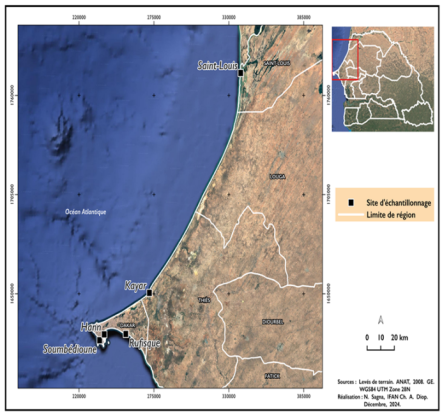
Figure 1. Geographic location of sampling sites.
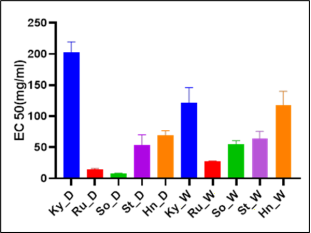
Figure 2. Inhibition of Aliivibrio fischeri bioluminescence in sediments. D = dry season, W = wet season.
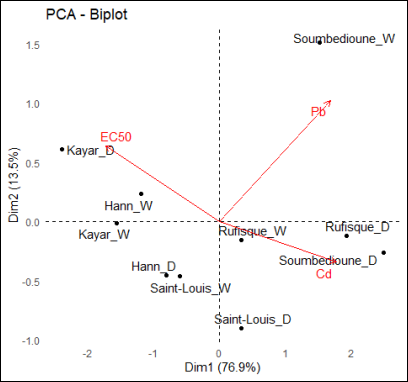
Figure 3. PCA linking the observed effects (EC50) on Aliivibrio fischeri to the levels of bioavailable metals (Pb, Cd) in sediments at the study sites during the dry season (D) and wet season (W).

Information


 Share This Article
 Twitter
 Linked In
 Facebook
 Copy
Copy Download