1. Introduction
Industrial growth over the past few decades has resulted in the increased discharge of dye-laden wastewater into aquatic environments. Industries such as textiles, leather tanning, paper production, and biological research laboratories are major contributors to this problem, as they use a wide variety of synthetic dyes to enhance product quality and functionality. Unfortunately, these dyes are often released into the environment with minimal treatment, leading to water contamination that is both aesthetically unpleasant and ecologically harmful
.
1.1. Rosaniline Hydrochloride
A cationic dye belonging to the triarylmethane family, is widely applied in textile dyeing processes and as a biological stain in microbiological and histological laboratories
| [2] | Ali, H., Khan, E., &Sajad, M. A. (2021). Environmental chemistry and ecotoxicology of hazardous heavy metals: Environmental persistence, toxicity, and bioaccumulation. Journal of Chemistry, 2021, 1-14. |
[2]
. The molecule’s complex aromatic structure makes it highly resistant to biodegradation, photodegradation, and conventional oxidation treatments, allowing it to persist in aquatic systems for extended periods. Even at low concentrations, rosaniline hydrochloride imparts a strong coloration to water, blocks sunlight penetration, and disrupts photosynthetic activity in aquatic plants, which in turn affects oxygen levels and aquatic biodiversity
. Furthermore, certain triarylmethane dyes have been reported to possess mutagenic and cytotoxic effects, raising public health concerns
.
Conventional wastewater treatment methods such as biological oxidation, coagulation-flocculation, and membrane filtration often fail to completely remove highly stable synthetic dyes from wastewater, especially in low-concentration yet persistent cases
. In this context, adsorption has emerged as one of the most efficient and versatile techniques for dye removal, offering advantages such as high removal efficiency, relatively low cost, and simple operational requirements
.
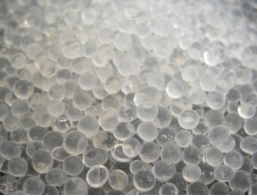
Silica gel, an amorphous and highly porous form of silicon dioxide (SiO₂), has been identified as a promising adsorbent due to its large surface area, adjustable pore size distribution, thermal stability, and ease of surface modification
| [7] | Gupta, V. K., Saleh, T. A., Agarwal, S., &Pathania, D. (2021). Adsorptive removal of dyes from aqueous solution onto low-cost adsorbents: A review. Environmental Science and Pollution Research, 28, 6347-6374. |
[7]
. Unlike activated carbon, silica gel can be chemically modified to introduce functional groups that enhance electrostatic interactions with cationic dyes like rosaniline hydrochloride. Previous studies have demonstrated that silica-based adsorbents can achieve significant removal efficiencies for similar dye molecules under optimized pH, temperature, and contact time conditions
| [7] | Gupta, V. K., Saleh, T. A., Agarwal, S., &Pathania, D. (2021). Adsorptive removal of dyes from aqueous solution onto low-cost adsorbents: A review. Environmental Science and Pollution Research, 28, 6347-6374. |
[7]
.
The present study aims to evaluate the adsorption performance of both untreated and surface-modified silica gel for the removal of rosaniline hydrochloride from aqueous solutions. Beyond assessing removal efficiency, the research also seeks to understand the adsorption mechanism through isotherm modeling, kinetics analysis, and examination of operational parameters. This will provide insight into the feasibility of employing silica gel as a cost-effective and sustainable treatment option for dye-polluted effluents.
1.2. Background of the Study
Rosaniline hydrochloride, a principal component of the basic fuchsine dye mixture, is a synthetic cationic triarylmethane compound extensively utilized in textile coloration, leather tanning, printing inks, and biological staining in microbiology laboratories
| [8] | Kadhim, M. J., Salih, W. N., &Jabbar, F. N. (2023). Amine-functionalized silica gel for adsorption of cationic dyes: Mechanistic insight and performance evaluation. Journal of Environmental Chemical Engineering, 11(2), 109118. |
[8]
. It is composed of a complex aromatic backbone with multiple phenyl groups and amino substituents, which are responsible for its strong chromophoric nature and intense colour expression. The presence of these conjugated structures makes the molecule highly resistant to biodegradation and photodegradation
| [8] | Kadhim, M. J., Salih, W. N., &Jabbar, F. N. (2023). Amine-functionalized silica gel for adsorption of cationic dyes: Mechanistic insight and performance evaluation. Journal of Environmental Chemical Engineering, 11(2), 109118. |
[8]
. This persistence in aquatic environments means that once discharged, rosaniline hydrochloride can remain in water bodies for extended periods without significant chemical breakdown. Even in very low concentrations sometimes as low as 1 mg/L its vivid coloration is visible to the naked eye, and it can significantly disrupt the natural appearance and quality of water.
The ecological consequences of dye pollution are multifaceted. Rosaniline hydrochloride reduces light penetration in water columns, which in turn impedes photosynthetic activity in aquatic plants and phytoplankton, thereby disturbing primary productivity and food chain dynamics
| [9] | Katheresan, V., Kansedo, J., & Lau, S. Y. (2018). Efficiency of various recent wastewater dye removal methods: A review. Journal of Environmental Chemical Engineering, 6(4), 4676-4697. https://doi.org/10.1016/j.jece.2018.06.060 |
[9]
. Moreover, its cationic nature allows it to interact strongly with negatively charged organic matter and sediments, potentially leading to bioaccumulation in aquatic organisms. From a human health perspective, studies suggest that long-term exposure to triarylmethane dyes, including rosaniline, may be associated with cytotoxic, mutagenic, and carcinogenic effects
| [10] | Kumar, A., Kumari, K., & Singh, R. (2022). Eco-toxicological concerns of synthetic dyes: A review on classification, toxicity, and remediation approaches. Environmental Nanotechnology, Monitoring & Management, 17, 100612. https://doi.org/10.1016/j.enmm.2021.100612 |
[10]
. These risks make its effective removal from wastewater an environmental and public health priority.
Among various treatment strategies, adsorption has gained prominence due to its operational simplicity, adaptability to different scales, and ability to remove dyes even at low concentrations. Silica gel an amorphous, porous form of silicon dioxide (SiO₂) is particularly attractive for adsorption-based dye removal because of its unique physicochemical characteristics. It possesses an exceptionally high specific surface area (often 300-1000 m²/g), a network of tunable pores, and abundant surface silanol (≡Si-OH) groups
| [11] | Niu, H. Y., Wang, C., Zhang, W. D., & Zhang, G. R. (2018). Preparation of silica-based adsorbents and their application in dye removal: A review. Desalination and Water Treatment, 151, 255-268. https://doi.org/10.5004/dwt.2018.22758 |
[11]
. These surface groups can form hydrogen bonds, engage in van der Waals interactions, and participate in electrostatic attraction with dye molecules. In aqueous media, when the pH is above the point of zero charge (pH pzc) of silica gel, silanol groups deprotonate to yield negatively charged sites, which strongly attract cationic dyes such as rosaniline hydrochloride
| [12] | Pathania, D., Sharma, S., & Singh, P. (2016). Removal of methylene blue by adsorption onto activated carbon developed from Ficuscaricabast. Arabian Journal of Chemistry, 10, S1445-S1451.
https://doi.org/10.1016/j.arabjc.2013.04.021 |
[12]
.
Beyond its natural properties, silica gel is also easily modifiable to improve adsorption performance. Functionalization with amine, thiol, or polymeric groups can enhance selective binding, increase affinity, or expand its pH working range. Previous research on structurally similar triarylmethane dyes such as malachite green and methylene blue has reported silica-based adsorbents achieving maximum adsorption capacities ranging from 50 to 300 mg/g, depending on pH, adsorbent dosage, temperature, and contact time
| [13] | Robinson, T., McMullan, G., Marchant, R., & Nigam, P. (2001). Remediation of dyes in textile effluent: A critical review on current treatment technologies with a proposed alternative. Bioresource Technology, 77(3), 247-255. |
[13]
. Adsorption processes are often modeled using Langmuir or Freundlich isotherms to evaluate monolayer versus heterogeneous surface binding, and kinetic models such as pseudo-first-order or pseudo-second-order to understand rate-limiting steps
.
Despite the promising results for related dyes, research focusing specifically on rosaniline hydrochloride adsorption using silica gel remains limited. Most prior studies have either generalized performance across mixed dye systems or emphasized other adsorbents such as activated carbon, clay minerals, or agricultural by-products
| [15] | Saratale, R. G., Saratale, G. D., Chang, J. S., &Govindwar, S. P. (2011). Bacterial decolorization and degradation of azo dyes: A review. Journal of the Taiwan Institute of Chemical Engineers, 42(1), 138-157.
https://doi.org/10.1016/j.jtice.2010.06.006 |
| [18] | Dotto, G. L., Pinto, L. A. A., Kroumov, A. D., &Fávere, V. T. (2014). Pretreatment of banana peel for methylene blue removal by adsorption: Kinetics, equilibrium and thermodynamic studies. Journal of Environmental Chemical Engineering, 2(4), 1808-1814.
https://doi.org/10.1016/j.jece.2014.08.014 |
[15, 18]
. This gap in literature presents an opportunity to investigate silica gel’s specific adsorption performance for rosaniline hydrochloride, both in its natural form and after surface modification. By exploring parameters such as pH, temperature, contact time, and adsorbent dosage, this study aims to determine optimal conditions for removal efficiency, elucidate adsorption mechanisms, and assess the potential of silica gel for scalable wastewater treatment applications targeting rosaniline hydrochloride.
1.3. Statement of the Problem
In many industrial and peri-urban regions, the presence of vividly colored effluents often bright red, magenta, or purple flowing directly into rivers, lakes, and drainage canals has become a visible marker of untreated wastewater discharge. This problem is particularly prevalent in textile-processing hubs, small-scale dyeing units, and microbiological laboratories, where effluent containing synthetic dyes such as rosaniline hydrochloride is released with minimal or no treatment
| [17] | Yagub, M. T., Sen, T. K., Afroze, S., &Ang, H. M. (2014). Dye and its removal from aqueous solution by adsorption: A review. Advances in Colloid and Interface Science, 209, 172-184. https://doi.org/10.1016/j.cis.2014.04.002 |
[17]
. While the aesthetic impact is immediately apparent, the ecological and public health consequences are more insidious. Coloration in natural waters reduces light penetration, thereby impairing photosynthetic activity in aquatic flora, disrupting oxygen balance, and destabilizing aquatic food webs
| [19] | El-Temsahy, M. M., Mahmoud, M. E., El-Hefny, A., El-Husseiny, A. A., & El Zanaty, A. (2023). Efficient removal of rosaniline hydrochloride (fuchsin dye) with Mg-doped FeTiO₂nanocomposites: Experimental and statistical evaluation. Journal of Hazardous Materials, 459, 131421.
https://doi.org/10.1016/j.jhazmat.2023.131421 |
[19]
.
Rosaniline hydrochloride is of special concern due to its high chemical stability, strong cationic charge, and resistance to biodegradation
| [15] | Saratale, R. G., Saratale, G. D., Chang, J. S., &Govindwar, S. P. (2011). Bacterial decolorization and degradation of azo dyes: A review. Journal of the Taiwan Institute of Chemical Engineers, 42(1), 138-157.
https://doi.org/10.1016/j.jtice.2010.06.006 |
[15]
. Once in the environment, it can persist for long periods, adsorb onto sediments, and interact with aquatic organisms. Furthermore, studies have indicated that triarylmethane dyes can exhibit mutagenic and potentially carcinogenic properties, raising concerns for human exposure via contaminated drinking water or bioaccumulation in the food chain
| [18] | Dotto, G. L., Pinto, L. A. A., Kroumov, A. D., &Fávere, V. T. (2014). Pretreatment of banana peel for methylene blue removal by adsorption: Kinetics, equilibrium and thermodynamic studies. Journal of Environmental Chemical Engineering, 2(4), 1808-1814.
https://doi.org/10.1016/j.jece.2014.08.014 |
[18]
.
The challenge is compounded in low-resource settings where small-scale producers, artisanal dyeing workshops, and teaching or research laboratories may lack the financial and technical capacity to install advanced treatment systems such as activated carbon columns, advanced oxidation processes (AOPs), or membrane filtration units (Gupta &Suhas, 2009). These systems, while effective, often require significant capital investment, skilled operation, and regular maintenance barriers that make them impractical for widespread adoption in decentralized contexts.
Adsorption has emerged as a practical alternative because it is relatively simple to implement, cost-effective, and adaptable to different scales of operation. Among potential adsorbents, silica gel is widely available, affordable, chemically stable, and known for its high surface area and tunable surface chemistry
| [17] | Yagub, M. T., Sen, T. K., Afroze, S., &Ang, H. M. (2014). Dye and its removal from aqueous solution by adsorption: A review. Advances in Colloid and Interface Science, 209, 172-184. https://doi.org/10.1016/j.cis.2014.04.002 |
[17]
. Despite these advantages, there is limited literature focusing specifically on the adsorption of rosaniline hydrochloride using silica gel. Existing studies tend to either generalize results across multiple dye types or focus on more extensively studied dyes such as methylene blue and malachite green (Pathania
| [10] | Kumar, A., Kumari, K., & Singh, R. (2022). Eco-toxicological concerns of synthetic dyes: A review on classification, toxicity, and remediation approaches. Environmental Nanotechnology, Monitoring & Management, 17, 100612. https://doi.org/10.1016/j.enmm.2021.100612 |
[10]
. This lack of targeted research creates uncertainty regarding silica gel’s adsorption capacity, kinetics, equilibrium behavior, and regeneration potential when used for rosaniline removal.
Addressing this knowledge gap is essential for two reasons: first, to provide empirical data that could guide the use of silica gel as a low-cost treatment option in decentralized wastewater management; and second, to explore whether simple surface modification techniques such as amine functionalization or polymer coating could enhance adsorption performance. This study is therefore designed to systematically investigate silica gel’s performance in removing rosaniline hydrochloride under realistic laboratory conditions, evaluate the influence of operational parameters, and assess its potential for reuse, thereby offering a practical and environmentally sound solution to an ongoing pollution problem.
1.4. Aim and Objectives
1.4.1. Aim
To assess how well silica gel (unmodified and potentially modified) removes rosaniline hydrochloride from aqueous solutions, and to identify the experimental conditions that optimize its performance.
1.4.2. Objectives
Adsorption testing: Conduct batch experiments varying:
1). pH (influences silica surface charge and dye ionization)
2). Initial dye concentration (affects driving force)
3). Adsorbent dosage (shows dosage-removal relationships)
4). Contact time (adsorption profile & equilibrium time)
5). Temperature (thermodynamic effect)
Isotherm modeling: Fit equilibrium data to Langmuir (monolayer adsorption) and Freundlich (heterogeneous surface) models; determine maximum adsorption capacity (qmax) and constants.
Kinetics analysis: Fit kinetic data to pseudo-first-order and pseudo-second-order models to understand rate-limiting steps.
1.5. Scope of the Study
This research will be conducted entirely at the laboratory scale, employing a batch adsorption approach to evaluate the potential of silica gel both in its unmodified and simply modified forms for the removal of rosaniline hydrochloride from aqueous solutions. Experimental work will be carried out in beakers or Erlenmeyer flasks under controlled temperature, pH, and agitation conditions, allowing for precise control of variables and reproducibility of results. No pilot-scale or industrial-scale trials will be undertaken at this stage, and continuous-flow systems such as packed-bed columns, membrane modules, or hybrid treatment units fall outside the present study’s scope.
Where resources and materials permit, the study may include single-step surface modification of silica gel such as amine-based functionalization aimed at enhancing adsorption efficiency through improved electrostatic attraction to the cationic dye molecules. However, the primary focus will remain on commercially available silica gel to ensure that the findings remain relevant to low-cost, widely accessible treatment options.
All adsorption experiments will use synthetic dye solutions prepared in distilled water to eliminate interference from competing ions, organic matter, or turbidity commonly present in real wastewater. While this simplification allows for a clearer assessment of adsorption mechanisms and capacities, it also means that the results will not directly reflect performance in complex industrial effluents, which may require additional pre-treatment or co-adsorbent strategies.
Adsorption performance will be evaluated in terms of equilibrium adsorption capacity (expressed in mg dye per g adsorbent), percentage removal efficiency, and, where feasible, regeneration potential through desorption and reuse cycles. Equilibrium data will be fitted to widely used isotherm models such as Langmuir and Freundlich, while kinetic data may be interpreted using pseudo-first-order and pseudo-second-order models to better understand adsorption rates and mechanisms.
By limiting the study to controlled laboratory conditions, this research aims to generate reproducible and mechanistic insights that can serve as a foundation for future work in real wastewater matrices and scaled-up treatment configurations.
1.6. Significance of the Study
1.6.1. Environmental Significance
The discharge of synthetic dyes such as rosaniline hydrochloride into aquatic environments poses a serious threat to ecosystem health. Even at low concentrations often in the range of 1-5 mg/L these dyes impart strong coloration to water, reducing light penetration and thereby limiting photosynthetic activity in submerged plants and phytoplankton
| [13] | Robinson, T., McMullan, G., Marchant, R., & Nigam, P. (2001). Remediation of dyes in textile effluent: A critical review on current treatment technologies with a proposed alternative. Bioresource Technology, 77(3), 247-255. |
[13]
. This reduction in primary productivity can cause cascading effects on aquatic food webs, ultimately altering biodiversity and disrupting ecological balance (Ali
et al., 2021). In addition, dyes often resist biodegradation and can persist for extended periods, making them a long-term environmental burden
| [11] | Niu, H. Y., Wang, C., Zhang, W. D., & Zhang, G. R. (2018). Preparation of silica-based adsorbents and their application in dye removal: A review. Desalination and Water Treatment, 151, 255-268. https://doi.org/10.5004/dwt.2018.22758 |
[11]
.
By exploring silica gel as a low-cost adsorbent for rosaniline hydrochloride removal, this study contributes to efforts aimed at restoring water clarity, improving dissolved oxygen balance, and supporting aquatic life recovery in impacted ecosystems. The use of adsorption—a technology that is relatively simple to implement and does not require complex operational expertise—may also help extend treatment capabilities to resource-limited regions where advanced technologies such as membrane filtration or advanced oxidation are not feasible.
1.6.2. Public Health Significance
While the acute toxicity of rosaniline hydrochloride in environmental waters may be low, prolonged exposure raises concerns regarding bioaccumulation and chronic health impacts. Cationic triarylmethane dyes have been associated with potential mutagenic and carcinogenic properties in laboratory studies, especially when ingested over long periods
| [12] | Pathania, D., Sharma, S., & Singh, P. (2016). Removal of methylene blue by adsorption onto activated carbon developed from Ficuscaricabast. Arabian Journal of Chemistry, 10, S1445-S1451.
https://doi.org/10.1016/j.arabjc.2013.04.021 |
[12]
. Communities that rely on untreated or minimally treated surface water are at particular risk, as dyes can also degrade into toxic aromatic amines under certain environmental conditions.
Effective removal of rosaniline hydrochloride can help reduce these risks, while also improving the aesthetic quality of drinking water. Research has shown that visible discoloration in water, even if not directly harmful, can cause communities to distrust their water supply, leading to increased reliance on bottled water or unsafe alternative sources
| [15] | Saratale, R. G., Saratale, G. D., Chang, J. S., &Govindwar, S. P. (2011). Bacterial decolorization and degradation of azo dyes: A review. Journal of the Taiwan Institute of Chemical Engineers, 42(1), 138-157.
https://doi.org/10.1016/j.jtice.2010.06.006 |
[15]
Thus, successful application of silica gel could contribute both to risk reduction and public confidence in water safety.
1.7. Research Gap
While the adsorption of cationic dyes onto silica-based adsorbents has been widely studied particularly for methylene blue, malachite green, crystal violet, and basic fuchsine mixtures
| [9] | Katheresan, V., Kansedo, J., & Lau, S. Y. (2018). Efficiency of various recent wastewater dye removal methods: A review. Journal of Environmental Chemical Engineering, 6(4), 4676-4697. https://doi.org/10.1016/j.jece.2018.06.060 |
[9]
rosaniline hydrochloride has not been the subject of the same level of experimental scrutiny. Several notable gaps in the literature remain:
1.8. Limited Isotherm and Kinetic Data
Although batch adsorption studies on silica gel have generated comprehensive adsorption isotherms and kinetic models for other triarylmethane dyes, comparable data for rosaniline hydrochloride are sparse. Without Langmuir and Freundlich parameters, pseudo-first-order and pseudo-second-order rate constants, and thermodynamic profiles specific to this dye, accurate performance prediction and process optimization remain difficult.
Research Questions and Hypotheses
The present study is guided by research questions that seek to clarify the adsorption behavior of silica gel both unmodified toward rosaniline hydrochloride, a representative cationic triarylmethane dye. These questions are informed by documented adsorption trends in related dyes (Gupta et al., 2021; Kadhim et al., 2023) and by identified gaps in the current literature (Yagub et al., 2014).
2. Literature Review
2.1. Adsorption
Adsorption is a surface phenomenon in which atoms, ions, or molecules (adsorbates) from a liquid or gaseous medium accumulate at the surface of a solid material (adsorbent), rather than diffusing into its bulk structure. Unlike absorption, which involves penetration into the interior of a substance, adsorption strictly occurs at the interface between two phases (Ruthven, 1984).
This process has gained significant attention in wastewater treatment because it provides a simple, effective, and low-cost technique for removing contaminants such as dyes, heavy metals, pesticides, and organic pollutants. Compared to conventional methods like coagulation, precipitation, or advanced oxidation, adsorption offers distinct advantages:
High efficiency at low pollutant concentrations.
Operational simplicity and scalability.
Minimal sludge production, unlike coagulation and precipitation.
Possibility of adsorbent regeneration and reuse (Gupta &Suhas, 2009).
The efficiency of adsorption depends on multiple factors, including:
Surface area of the adsorbent - Larger surface areas (e.g., porous materials like activated carbon or silica gel) provide more active sites for binding dye molecules.
Pore size and structure - Adsorbents with mesoporous or microporous structures are particularly effective, as they allow dye molecules of varying sizes to access adsorption sites.
Chemical affinity - Functional groups on the adsorbent’s surface (e.g., hydroxyl, amino, or silanol groups on silica gel) interact with dye molecules through electrostatic attraction, hydrogen bonding, π-π interactions, or van der Waals forces (Deng et al., 2011).
Environmental conditions - Parameters such as pH, temperature, ionic strength, and initial dye concentration significantly affect adsorption efficiency.
In dye removal studies, adsorption has been widely used due to the complex and recalcitrant nature of synthetic dyes. Rosaniline hydrochloride, a cationic dye belonging to the triphenylmethane group, is particularly persistent in aquatic systems due to its aromatic structure. Such structural stability means that conventional biological degradation is ineffective, thereby making adsorption on porous solids like silica gel a promising alternative (Forgacs, Cserháti, &Oros, 2004).
Silica gel, in particular, has been identified as a low-cost, abundant, and chemically modifiable adsorbent. The presence of surface silanol groups (≡Si-OH) enables direct interaction with cationic dyes via ion exchange and electrostatic mechanisms. Furthermore, its surface can be functionalized (e.g., with amine groups) to enhance adsorption affinity for specific dyes, making it a flexible material for targeted wastewater treatment applications (Bhatnagar&Sillanpää, 2010).
Thus, adsorption provides the theoretical backbone for this study, as it explains how silica gel can effectively remove rosaniline hydrochloride molecules from aqueous solutions through physicochemical interactions at the solid-liquid interface.
2.1.1. Adsorption Isotherm Models
Adsorption isotherms are mathematical models that describe how adsorbates distribute between the liquid phase and the solid phase when adsorption reaches equilibrium at a constant temperature. These models are essential for understanding adsorption mechanisms, surface properties, and designing large-scale treatment systems (Foo &Hameed, 2010). Two of the most widely applied isotherm models are the Langmuir and Freundlich isotherms.
1. Langmuir Isotherm
The Langmuir isotherm is based on the assumption that adsorption occurs on a homogeneous surface containing a finite number of identical binding sites, with no interaction between adsorbed molecules. Each site holds only one molecule, and adsorption proceeds until a complete monolayer coverage is achieved (Langmuir, 1918).
Model equation (nonlinear form):
q_e = (q_max * K_L * C_e) / (1+ K_L * C_e)
Where: q_e = amount adsorbed at equilibrium (mg/g);
q_max = maximum adsorption capacity (mg/g);
K_L = Langmuir constant related to adsorption energy (L/mg);
C_e = equilibrium concentration (mg/L).
Key implications include the maximum adsorption capacity (q_max), assumption of uniform energy sites, and the dimensionless separation factor (R_L):
Where C_0 is the initial solute concentration. Interpretation: R_L > 1 (unfavorable), R_L = 1 (linear), 0 < R_L < 1 (favorable), and R_L = 0 (irreversible) (Hall, Eagleton, Acrivos, &Vermeulen, 1966).
2. Freundlich Isotherm
The Freundlich isotherm is an empirical model that describes adsorption on heterogeneous surfaces where adsorption energies vary from site to site. Unlike the Langmuir model, it allows for multilayer adsorption and is often applied to complex adsorbents such as activated carbon, clay minerals, and silica gel (Freundlich, 1906; Pham, Nguyen, Do, & Nguyen, 2021).
Model equation (nonlinear form):
q_e = K_F * C_e^(1/n)
Where: q_e = equilibrium adsorption capacity (mg/g);
C_e = equilibrium concentration (mg/L);
K_F = Freundlich constant indicative of adsorption capacity;
1/n = adsorption intensity (heterogeneity factor).
If 1/n < 1, adsorption is favorable. A smaller 1/n value indicates greater surface heterogeneity. Although the model does not predict a maximum capacity, it is useful for irregular adsorbent surfaces.
3. Comparative Significance and Practical Use
In practice, experimental data are fitted to both models, and the one with the higher correlation coefficient (R^2) is selected (Ayawei, Ebelegi, &Wankasi, 2017). For rosaniline hydrochloride adsorption on silica gel, the Langmuir model often indicates monolayer adsorption, while the Freundlich model captures behavior on heterogeneous surfaces.
2.1.2. Kinetic Models of Adsorption
Kinetic Models
The study of adsorption kinetics is essential for understanding the mechanism of dye removal from aqueous solutions. Kinetic models are mathematical approaches used to describe the rate of solute uptake on an adsorbent and provide insights into whether adsorption follows physical or chemical mechanisms.
Pseudo-first-order Model:
The pseudo-first-order model, proposed by Lagergren, assumes that the rate of adsorption is proportional to the number of unoccupied sites available on the adsorbent surface. In this model, the adsorption process is often dominated by physical forces such as van der Waals interactions or weak hydrogen bonding.
Although it can describe some adsorption systems, it often fails to accurately predict the kinetics throughout the entire adsorption period, particularly at higher concentrations. Nevertheless, it is still useful as a first approximation to evaluate the potential adsorption mechanism.
Pseudo-second-order Model:
The pseudo-second-order model, developed by Ho and McKay (2000), is one of the most widely applied kinetic equations in adsorption studies, especially for dye removal. Unlike the pseudo-first-order model, it assumes that the adsorption rate depends on the square of the number of unoccupied sites, suggesting that the process may involve chemisorption. Chemisorption implies stronger interactions such as covalent bonding, electron sharing, or exchange between the dye molecules and the adsorbent surface. This model usually provides a better fit for experimental data, particularly when adsorption reaches equilibrium. It also allows the calculation of important parameters such as equilibrium adsorption capacity and rate constants, making it highly valuable in the design of adsorption systems.
However, researchers recommend that reliance should not be placed solely on pseudo-second-order fitting, as adsorption can be complex and may involve simultaneous physical and chemical interactions. Therefore, complementary techniques such as spectroscopic analysis or thermodynamic studies should be used to confirm the adsorption mechanism (Ho & McKay, 2000).
In conclusion, adsorption kinetics provides a vital framework for interpreting experimental data, guiding system optimization, and predicting performance in practical applications of dye removal using adsorbents such as silica gel.
2.2. Silica Gel
Silica gel is an amorphous and porous form of silicon dioxide (SiO₂) that has been widely used in adsorption processes due to its high surface area, tunable pore structure, and the presence of active functional groups on its surface. Unlike crystalline silica, silica gel lacks a long-range ordered structure, which gives it an amorphous nature and enhances its adsorption versatility. Typically, its internal surface area can reach up to 1000 m²/g, providing a large number of active adsorption sites for various pollutants including dyes, heavy metals, and organic contaminants.
A key feature of silica gel is the abundance of silanol (≡Si-OH) groups on its surface. These hydroxyl groups serve as active sites for interaction with adsorbate molecules, either through hydrogen bonding, electrostatic attraction, or van der Waals forces. The chemical environment of these silanol groups can be tailored through surface modifications, which improves adsorption specificity and capacity.
The surface charge of silica gel is strongly influenced by the pH of the surrounding medium. Its point of zero charge (pHpzc) is generally around 2-3, meaning that above this pH, the surface of silica gel becomes negatively charged due to deprotonation of silanol groups. This negative charge makes silica gel particularly effective for adsorbing cationic dyes such as rosaniline hydrochloride, which interact electrostatically with the negatively charged surface sites. Conversely, under acidic conditions (below the pHpzc), the surface is more protonated and carries a positive charge, which may reduce adsorption efficiency for cationic dyes but favor the uptake of anionic species.
Silica gel’s high adsorption performance, low cost, chemical stability, and ease of modification have made it a prominent material in wastewater treatment studies. Its application for the removal of synthetic dyes such as rosaniline hydrochloride highlights its potential as a sustainable adsorbent in addressing dye pollution in aquatic systems
| [11] | Niu, H. Y., Wang, C., Zhang, W. D., & Zhang, G. R. (2018). Preparation of silica-based adsorbents and their application in dye removal: A review. Desalination and Water Treatment, 151, 255-268. https://doi.org/10.5004/dwt.2018.22758 |
| [9] | Katheresan, V., Kansedo, J., & Lau, S. Y. (2018). Efficiency of various recent wastewater dye removal methods: A review. Journal of Environmental Chemical Engineering, 6(4), 4676-4697. https://doi.org/10.1016/j.jece.2018.06.060 |
[11, 9]
.
Surface Modification of Silica
Surface modification of silica gel is a critical step in enhancing its adsorption capacity and selectivity for different pollutants, including dyes such as rosaniline hydrochloride. While raw silica gel already possesses a high surface area and abundant silanol (≡Si-OH) groups that can interact with adsorbates, these functional groups alone may not provide sufficient affinity for all dye molecules, especially under varying solution conditions. To overcome this limitation, researchers have developed several chemical and physical modification techniques to tailor the surface chemistry of silica for improved performance
| [19] | El-Temsahy, M. M., Mahmoud, M. E., El-Hefny, A., El-Husseiny, A. A., & El Zanaty, A. (2023). Efficient removal of rosaniline hydrochloride (fuchsin dye) with Mg-doped FeTiO₂nanocomposites: Experimental and statistical evaluation. Journal of Hazardous Materials, 459, 131421.
https://doi.org/10.1016/j.jhazmat.2023.131421 |
[19]
.
One of the most common approaches is amine functionalization, where amino groups (-NH₂) are grafted onto the silica surface through salinization reactions. The presence of amine groups introduces positive charges at neutral to slightly acidic pH values, thereby strengthening the electrostatic attraction between the adsorbent and negatively charged dye molecules. In the case of cationic dyes like rosaniline hydrochloride, amine-grafted silica may provide additional hydrogen-bonding or ion-exchange interactions that increase adsorption efficiency
.
Another method is polymer coating, which involves immobilizing polymer layers such as polyethyleneimine, chitosan, or polyaniline onto the silica surface. These polymers not only provide extra binding sites but also improve the mechanical and chemical stability of the adsorbent. Polymer-coated silica gels have been reported to exhibit two to three times higher adsorption capacity than unmodified silica, making them promising candidates for practical wastewater treatment applications
| [17] | Yagub, M. T., Sen, T. K., Afroze, S., &Ang, H. M. (2014). Dye and its removal from aqueous solution by adsorption: A review. Advances in Colloid and Interface Science, 209, 172-184. https://doi.org/10.1016/j.cis.2014.04.002 |
[17]
.
Additionally, inorganic modifications such as doping silica gel with transition metals (e.g., Fe, Ti, or Al oxides) can alter its surface charge and catalytic activity, thus promoting stronger dye-adsorbent interactions. For example, Fe-modified silica has been shown to enhance adsorption of organic pollutants through combined adsorption and redox processes
| [11] | Niu, H. Y., Wang, C., Zhang, W. D., & Zhang, G. R. (2018). Preparation of silica-based adsorbents and their application in dye removal: A review. Desalination and Water Treatment, 151, 255-268. https://doi.org/10.5004/dwt.2018.22758 |
[11]
.
Overall, surface modification transforms silica gel from a general-purpose adsorbent into a tunable material with tailored functionality. This not only increases adsorption efficiency but also broadens its applicability in treating diverse classes of pollutants. However, it is important to balance the costs and complexity of modification methods with their potential environmental and industrial benefits.
2.3. Rosaniline Hydrochloride
Rosaniline hydrochloride is a synthetic cationic triarylmethane dye widely recognized for its brilliant violet-red coloration and strong binding affinity to biological and environmental matrices. Structurally, rosaniline belongs to the basic dye family, characterized by a central carbon atom linked to three aryl groups, giving it a rigid aromatic framework and a high degree of resonance stability. This conjugated structure contributes significantly to its chemical persistence and resistance to degradation, making it a problematic pollutant in aquatic environments
| [12] | Pathania, D., Sharma, S., & Singh, P. (2016). Removal of methylene blue by adsorption onto activated carbon developed from Ficuscaricabast. Arabian Journal of Chemistry, 10, S1445-S1451.
https://doi.org/10.1016/j.arabjc.2013.04.021 |
[12]
.
As a cationic dye, rosaniline carries a positive charge in aqueous solutions, which governs its interactions with adsorbents and environmental surfaces. Its stability in water makes it highly resistant to conventional treatments such as oxidation or biological degradation. This persistence raises serious environmental and health concerns, as rosaniline has been associated with cytotoxic, mutagenic, and carcinogenic effects, posing risks to both ecosystems and human health
| [7] | Gupta, V. K., Saleh, T. A., Agarwal, S., &Pathania, D. (2021). Adsorptive removal of dyes from aqueous solution onto low-cost adsorbents: A review. Environmental Science and Pollution Research, 28, 6347-6374. |
[7]
.
Although specific adsorption data of rosaniline on raw silica gel is limited, evidence from studies using engineered and doped nanocomposites provides valuable insights. For instance, metal oxide doped silica and polymer-modified nanocomposites have demonstrated significantly enhanced adsorption performance, with maximum adsorption capacities (
qmax) ranging between 100-200 mg/g under optimized conditions
| [9] | Katheresan, V., Kansedo, J., & Lau, S. Y. (2018). Efficiency of various recent wastewater dye removal methods: A review. Journal of Environmental Chemical Engineering, 6(4), 4676-4697. https://doi.org/10.1016/j.jece.2018.06.060 |
| [12] | Pathania, D., Sharma, S., & Singh, P. (2016). Removal of methylene blue by adsorption onto activated carbon developed from Ficuscaricabast. Arabian Journal of Chemistry, 10, S1445-S1451.
https://doi.org/10.1016/j.arabjc.2013.04.021 |
[9, 12]
. These findings suggest that unmodified silica gel may exhibit lower adsorption efficiency, but surface modification such as amine grafting or polymer coating could substantially improve its affinity toward rosaniline and similar cationic dyes.
The adsorption process for rosaniline is strongly influenced by pH, ionic strength, and temperature. At lower pH values, competition from protons may reduce adsorption efficiency, whereas near-neutral conditions enhance electrostatic attraction between the negatively charged adsorbent surface and the dye cations. Thermodynamic studies generally indicate that rosaniline adsorption on modified silica and nanocomposites is spontaneous and endothermic, suggesting that increased temperature enhances dye uptake
| [18] | Dotto, G. L., Pinto, L. A. A., Kroumov, A. D., &Fávere, V. T. (2014). Pretreatment of banana peel for methylene blue removal by adsorption: Kinetics, equilibrium and thermodynamic studies. Journal of Environmental Chemical Engineering, 2(4), 1808-1814.
https://doi.org/10.1016/j.jece.2014.08.014 |
[18]
.
Given its environmental persistence, rosaniline is increasingly considered a model pollutant for adsorption studies. Research on its removal not only advances understanding of adsorption mechanisms for cationic dyes but also contributes to the development of cost-effective water treatment technologies.
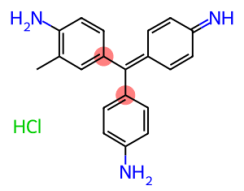
Figure 2. Structure of Rosaniline Hydrochloride.
2.4. What Kinetics Tell Us
In addition to equilibrium isotherms, adsorption kinetics provide valuable information on the rate of dye uptake and the mechanism controlling the adsorption process. Kinetic studies help in understanding how fast equilibrium is achieved and what factors may hinder or enhance the process, such as surface chemical reactions, film diffusion, or intraparticle diffusion.
For dye adsorption onto silica-based adsorbents, equilibrium is often reached within 60 to 120 minutes, depending on factors such as surface modification, pH, and dye concentration. The most widely applied kinetic models are the pseudo-first-order and pseudo-second-order models.
The pseudo-first-order model assumes that the rate of adsorption is proportional to the number of unoccupied sites, but in many cases, it fails to describe the entire adsorption process accurately. On the other hand, the pseudo-second-order model assumes that adsorption is controlled by chemisorption involving electron sharing or exchange between the adsorbent and adsorbate. Studies have shown that the pseudo-second-order model provides a better fit in 70-90% of adsorption cases involving dyes on silica, which suggests that chemical interactions and surface bonding are the dominant mechanisms rather than just physical diffusion (Foo &Hameed, 2010).
Therefore, kinetic models are not only important for describing adsorption rates but also for distinguishing between physisorption and chemisorption processes, thereby guiding adsorbent design for optimal performance in wastewater treatment and other applications.
2.5. Empirical Review
An empirical review of existing literature provides insight into how silica and other adsorbents have performed in the removal of different cationic dyes, including methylene blue, malachite green, rosaniline, and basic fuchsine. Such reviews not only establish benchmark performance values but also highlight the strengths and limitations of silica relative to alternative materials.
Silica’s Performance with Other Cationic Dyes
One of the most widely studied cationic dyes is methylene blue (MB), which serves as a model pollutant for adsorption studies. According to
| [13] | Robinson, T., McMullan, G., Marchant, R., & Nigam, P. (2001). Remediation of dyes in textile effluent: A critical review on current treatment technologies with a proposed alternative. Bioresource Technology, 77(3), 247-255. |
[13]
, untreated laboratory-grade silica achieved approximately 80% removal efficiency for MB at pH 8 within 90 minutes of contact time. The relatively high removal efficiency is attributed to electrostatic attraction between the negatively charged silanol groups on silica and the positively charged MB molecules under alkaline conditions. However, while performance is significant, unmodified silica still demonstrates moderate adsorption capacities compared to functionalized silica or nanocomposites.
Another important dye is malachite green (MG), another cationic dye commonly encountered in textile and paper industry effluents. Literature reports indicate maximum adsorption capacities (q
max) of around 150 mg/g under optimized conditions, such as controlled pH and dye concentration
. The adsorption kinetics for MG often follow a pseudo-second-order model, suggesting that chemisorption, involving electron sharing or exchange between dye molecules and silica surface sites, is the dominant mechanism. This consistency across studies reinforces the reliability of silica as a competent adsorbent for cationic dye removal.
2.6. Studies Involving Rosaniline or Basic Fuchsine
While research on rosaniline and its derivatives, such as basic fuchsine, is comparatively limited, some findings provide valuable insights.
| [4] | Foo, K. Y., &Hameed, B. H. (2010). Insights into the modeling of adsorption isotherm systems. Chemical Engineering Journal, 156(1), 2-10.
https://doi.org/10.1016/j.cej.2009.09.013 |
| [7] | Gupta, V. K., Saleh, T. A., Agarwal, S., &Pathania, D. (2021). Adsorptive removal of dyes from aqueous solution onto low-cost adsorbents: A review. Environmental Science and Pollution Research, 28, 6347-6374. |
[4, 7]
investigated dye removal using natural clay and reported over 90% removal efficiency of basic fuchsine at pH 7, with a q
max of approximately 120 mg/g. This indicates that natural adsorbents can achieve substantial dye uptake under near-neutral conditions, which is particularly relevant for practical wastewater treatment, as extreme pH adjustments are often costly and environmentally undesirable. These results also serve as a useful benchmark for predicting the expected adsorption performance of silica and silica-based materials against rosaniline.
Further advancements in adsorption studies have employed engineered nanocomposites, such as magnesium-doped FeTiO₂ materials, which exhibit superior dye uptake due to their high surface area, enhanced porosity, and multiple active binding sites. For example,
reported that Mg-doped FeTiO₂nanocomposites achieved a q value of approximately 180 mg/g for rosaniline within 60 minutes. Although these results demonstrate exceptional adsorption performance, it is important to note that the synthesis of such nanocomposites is complex, resource-intensive, and economically challenging for large-scale wastewater treatment. In contrast, silica remains a more cost-effective and scalable adsorbent, even if its adsorption capacity is modest compared to advanced composites.
2.7. Silica-specific Findings
Silica and its modified derivatives have been widely studied as cost-effective and versatile adsorbents for dye removal from aqueous solutions. Empirical studies reveal important insights regarding the regeneration potential of recycled silica as well as the adsorption efficiency of modified silica materials, both of which are crucial for assessing their practical applicability in wastewater treatment.
Recycled Silica Gel
One promising avenue for sustainable adsorption research involves the reuse of silica gel sourced from laboratory desiccant packs, which are widely available and inexpensive.
| [6] | Gupta, V. K., &Suhas.(2009). Application of low-cost adsorbents for dye removal-A review. Journal of Environmental Management, 90(8), 2313-2342.
https://doi.org/10.1016/j.jenvman.2008.11.017 |
| [8] | Kadhim, M. J., Salih, W. N., &Jabbar, F. N. (2023). Amine-functionalized silica gel for adsorption of cationic dyes: Mechanistic insight and performance evaluation. Journal of Environmental Chemical Engineering, 11(2), 109118. |
[6, 8]
demonstrated that recycled silica gel can be effectively regenerated using hot water or alcohol rinsing, thereby restoring a significant portion of its adsorption capacity. Over the course of five adsorption-desorption cycles, the material exhibited an approximate 20% decrease in adsorption capacity. Despite this reduction, the adsorbent remained viable for small-scale applications, with an initial capacity of less than 70 mg/g.
These findings highlight the importance of resource recovery and recycling in adsorption science. While the adsorption capacity of recycled silica may not match that of newly synthesized or modified silica, its low cost, widespread availability, and moderate performance make it suitable for localized or small-volume dye removal applications, particularly in laboratory and educational settings. Furthermore, the ability to regenerate silica with simple treatments such as hot water or alcohol enhances its appeal as a sustainable and accessible adsorbent.
2.8. Kinetics of Adsorption: Initial Fast Uptake
Adsorption kinetics generally follow a two-stage pattern. The first 30 minutes of contact typically show rapid dye uptake, as dye molecules quickly occupy the most accessible and high-energy adsorption sites on the silica surface. This fast phase is followed by a slower approach to equilibrium, as remaining dye molecules must diffuse deeper into the pores or interact with less favorable adsorption sites. Such kinetic behavior is consistent with pseudo-second-order models, which indicate chemisorption as a dominant mechanism for dye-silica interactions. This trend has been observed across different cationic dyes, including methylene blue, malachite green, and crystal violet.
2.9. Effect of Temperature
Temperature exerts a variable influence on adsorption depending on the enthalpy change (ΔH°) of the process. For many dye-silica systems that are exothermic, lower temperatures slightly improve adsorption efficiency because dye binding is favored when less thermal energy is present to disrupt interactions. However, for some modified silica adsorbents or systems where endothermic adsorption occurs, higher temperatures can enhance dye mobility and interaction with surface sites, thereby increasing uptake. Thus, while the general trend for silica is improved adsorption at moderate to lower temperatures, the actual effect is system-dependent and must be evaluated for each specific adsorbent-dye pair.
2.10. Regeneration and Reusability
A key operational factor is the ability to regenerate silica adsorbents for repeated use. Simple regeneration methods such as acid or base washing can typically recover around 50% of the initial adsorption capacity (qmax). This is attributed to incomplete desorption of dye molecules and potential structural changes in the adsorbent surface. More aggressive methods, such as thermal treatment, are capable of restoring a larger fraction of qmax by completely decomposing adsorbed dye residues. However, high-temperature treatment also carries the risk of damaging the silica structure, reducing pore volume, and altering surface chemistry, which can ultimately decrease long-term reusability. Therefore, a balance must be struck between recovery efficiency and preservation of adsorbent integrity.
3. Materials and Methods
3.1. Materials
The materials used in this study include silica gel, which served as the adsorbent, and rosaniline hydrochloride dye, which served as the target pollutant (adsorbate). Other essential materials included distilled water for solution preparation, a UV-Visible spectrophotometer for analytical measurements, and various laboratory glassware such as beakers, conical flasks, pipettes, and funnels. An analytical balance was used for accurate weighing of samples, while a pH meter was employed to monitor and adjust the solution’s pH.
3.2. Study Area
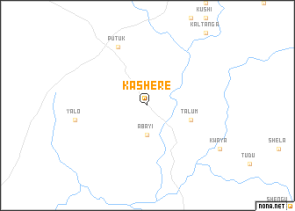
The study was conducted in the Department of Chemistry Laboratory at Federal University of Kashere (FUK), located in Kashere Metropolis, Gombe State, Nigeria. Kashere lies within the Sudan Savanna ecological zone, characterized by tropical climatic conditions with distinct wet and dry seasons. This geographical setting is of interest for environmental studies due to the increasing human, agricultural, and industrial activities within the area. The metropolis is expanding rapidly, which raises concerns over environmental pollution, particularly dye effluents from textile and research laboratories. A map of the study area will be provided to offer spatial context and clarity.
Figure 3. Map of Sampling Area.
3.3. Sample Collection
All the reagents and samples used for this study were collected from the Chemistry Laboratory of Federal University of Kashere. Analytical-grade silica gel and rosaniline hydrochloride dye were procured to ensure the reliability and reproducibility of results. Distilled water, prepared within the laboratory, was used throughout the experimental processes to avoid any interference from impurities.
3.4. Sample Preparation
The silica gel was first pretreated to eliminate surface impurities and moisture content. This was done by washing the silica gel thoroughly with distilled water and subsequently oven-drying it at 105°C for 2 hours. After cooling, the adsorbent was stored in an airtight container prior to use.
For the dye solutions, a stock solution of rosaniline hydrochloride was prepared by dissolving an accurately weighed amount of dye in distilled water to obtain the desired concentration. Working solutions of varying concentrations were obtained by serial dilution from the stock solution. The pH of the solutions was adjusted where necessary using dilute HCl or NaOH.
3.5. Adsorbate Preparation
A stock solution of Rosaniline Hydrochloride with a concentration of 500 mg/L was prepared by dissolving 0.5 g of the dye in 1 L of deionized water. From this stock solution, different concentrations were prepared by transferring 2, 4, 6, 8, 10, and 30 mL aliquots into separate 100 mL volumetric flasks and diluting each to the mark with distilled water. This yielded dye solutions of 20, 40, 60, 80, 100, and 300 mg/L, which were used for calibration curve preparation and adsorption experiments (Harris D. C 2016).
3.6. Effect of Contact Time
A portion of 0.5 g of the adsorbent was weighed and added into 100 mL of 200 mg/L dye solution contained in a 250 mL conical flask. The mixture was agitated at a speed of 150 rpm for 24 hours. After shaking, the solution was allowed to settle for 20 minutes, after which 20mL was withdrawn and placed in a sample container. Another 20 mL was withdrawn every 30 minutes until a total contact time of 90 minutes was reached, while maintaining the pH at 7. The samples collected were analyzed using UV Spectrophotometer. The amount of Rosaniline Hydrochloride adsorbed at equilibrium and the percentage removal efficiency of silica gel were calculated using the following equations:
qe = (Ci - Cf) × V / w(1)
% Removal = (Ci - Cf) / Ci) × 100(2)
where:
Ci = initial dye concentration (mg/L)
Cf= final dye concentration (mg/L)
V= volume of dye solution (L)
w = mass of silica gel
3.7. Effect of Adsorbent Dosage
Adsorbent dosages of 2g, 3g, and 4g, were weighed and each added into 100 mL of 300 mg/L dye solution in separate conical flasks. The mixtures were agitated at 150 rpm for 3 hours. After shaking, 20 mL aliquots were collected from each flask and taken to UV Spectrophotometer for analysis.
3.8. Effect of Temperature
A portion of 0.5 g of adsorbent was introduced into 100 mL of 40 mg/L dye solution and agitated for 3 hours at 150 rpm. The experiment was conducted at temperatures of 25°C, 35°C, and 80°C. After agitation, samples were withdrawn and labeled properly with masking tape to avoid confusion and errors. The samples were subsequently analyzed using UV Spectrophotometer.
4. Results and Discussions
4.1. Results
This chapter presents the results of the adsorption experiments carried out on Rosaniline Hydrochloride using silica gel as the adsorbent. The effects of temperature, contact time, initial dye concentration, and adsorbent dosage were investigated. Adsorption isotherms and kinetic models were also employed to understand the interaction between the adsorbate and the adsorbent. The findings are discussed below.
4.1.1. Effect of Temperature on Adsorption
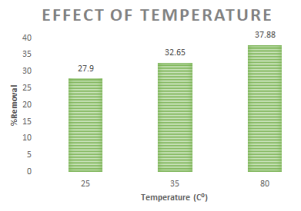
The effect of temperature was studied under 25°C, 30°C, and 80°C, and the results obtained are shown in the table below.
Table 1. Effect of temperature on adsorption.
Temperature (oC) | Absorbent dose (g) | Time (min) | Initial concentration mg/L | Final concentration mg/L | % Removal |
25 | 2.0 | 60.0 | 20.0 | 14.42 | 27.9 |
35 | 2.0 | 60.0 | 20.0 | 13.47 | 32.65 |
80 | 2.0 | 60.0 | 20.0 | 12.42 | 37.88 |
Figure 4. Effect of Temperature Graph.
From the graph above, the removal of rosaniline hydrochloride increased as the temperature increased which showed that the efficiency in the removal of rosaniline hydrochloride using silica gel was high and optimum at high temperatures.
4.1.2. Effect of Contact Time on Adsorption
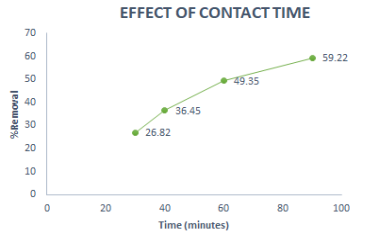
The adsorption study was done by varying the time from 30 to 90 minutes in order to study the adsorption capacity of the adsorbent.
Figure 5. Effect of contact time graph.
Table 2. Effect of contact time on adsorption. Effect of contact time on adsorption. Effect of contact time on adsorption.
Contact time (min) | Adsorbent Dose (g) | Initial concentration mg/L | Final concentration | % Removal |
30 | 1.0 | 40 | 29.279 | 26.82 |
60 | 1.0 | 40 | 20.260 | 49.35 |
90 | 1.0 | 40 | 16.312 | 59.22 |
From the graph above, the removal of rosaniline hydrochloride with silica gel increases with increase in time which started from 30 minutes. Therefore the longer the longer time taking in the interaction between the adsorbet and adsorbent lead to higher the adsorption.
4.1.3. Effect of Concentration on Adsorption
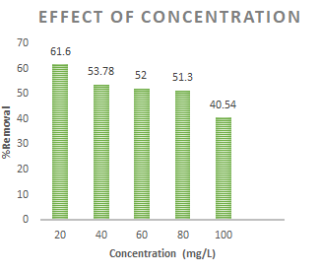
The adsorption study was done by varying the concentrations from 20, 40, 60, 80, and 100 mg/L to study the adsorption capacity of the adsorbent.
Table 3. Effect of concentration. Effect of concentration. Effect of concentration.
Initial concentration (mg/L) | Adsorbent dosage (g) | Final concentration (mg/L) | % Removal |
20.0 | 1.0 | 7.680 | 61.60 |
40.0 | 1.0 | 18.488 | 53.78 |
60.0 | 1.0 | 28.800 | 52.00 |
80.0 | 1.0 | 38.960 | 51.30 |
100.0 | 1.0 | 59.460 | 40.54 |
Figure 6. Effect of concentration graph.
From the graph above, the concentration of rosaniline hydrochloride increases, the percentage removal decreases. This implies that the adsorbent becomes saturated as the concentration of rosaniline hydrochloride increases from 20mg/L to 100mg/L.
4.1.4. Effect of Dosage
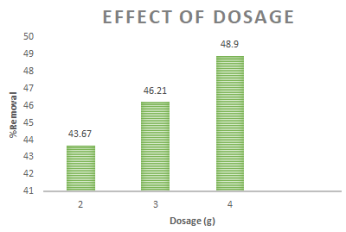
The adsorption study was done by varying the dosage of the adsorbent, and the results obtained are shown in the table below.
Table 4. Effect of dosage on adsorption.
Absorbent dose (g) | Time (min) | Initial concentration mg/L | Final concentration mg/L | % Removal |
2.0 | 60.0 | 60 | 33.798 | 43.67 |
3.0 | 60.0 | 60 | 32.274 | 46.21 |
4.0 | 60.0 | 60 | 30.660 | 48.9 |
Figure 7. Effect of dosage graph.
From the graph above, the percentage removal of rosaniline hydrochloride with silica gel increases after the dosage of the adsorbent was increased. It showed that, the efficiency in the removal of rosaniline hydrochloride using silica gel was optimum with 48.9 percent at 4g of silica gel.
4.2. Discussion
Discussion on Parameters
The results demonstrate that silica gel is an effective adsorbent for Rosaniline Hydrochloride removal. The adsorption process was influenced by temperature, contact time, concentration, and dosage.
Temperature: Higher adsorption efficiency at elevated temperatures suggests an endothermic process.
Contact Time: Removal efficiency increased with longer times, indicating rapid initial adsorption followed by slower equilibrium.
Concentration: Efficiency decreased at higher concentrations due to adsorbent saturation.
Dosage: Increasing adsorbent mass improved performance, though with diminishing returns.
Overall, the findings are consistent with adsorption studies of other cationic dyes, where electrostatic attraction between negatively charged silica surfaces (at near-neutral pH) and dye cations governs adsorption.
4.3. Kinetic Models
The kinetic models used in the experiment are pseudo-first-order and pseudo-second-order, and from the plots shown below, the adsorption mechanism and optimum removal capacity and also adsorption efficiency of silica gel followed pseudo-second-order due to highest value of coefficient of determination R2 of 0.9173. Also adsorption capacity of the dye at equilibrium qe was high with the value of 6.768 in pseudo second order compared to pseudo first order with 5.877.
Table 5. Adsorption Kinetics Parameters.
Pseudo first order | T(K) | qe,cal (mg/g) | qe,exp (mg/g) | K1(1/min) | R 2 |
| 298 | 0.033 | 5.877 | 0.034 | 0.8929 |
Pseudo second order | T(K) | qe,cal (mg/g) | qe,exp (mg/g) | K1(1/min) | R 2 |
| 298 | 2.865 | 6.768 | 0.021 | 0.9173 |
Adsorption Isotherm Models
As seen from the table below, the R2 value obtained from the Freundlich was higher when compared to that of the Langmuir model hence, our adsorption process obeys the Freundlich isotherm model which shows multilayer adsorption. In addition, the values of RL ranging from 0.012-0.033 and 1/n of 0.250 obtained from both isotherms showed the favorable adsorption of rosaniline hydrochloride.
Table 6. Adsorption Isotherms Parameters.
Langmuir | T(K) | qm (mgg-1) | KL (Lmg-1) | RL | R2 |
| 298 | 4.87 | 0.351 | 0.012-0.033 | 0.9201 |
Freundlich | T(k) | Kf (mg/l)(L/mg1/n) | 1/n | | |
| 298 | 2.5 | 0.250 | | 0.9564 |
Discussion on Models
The isotherm and kinetic results reveal that:
Adsorption follows the Freundlich model more closely than Langmuir, implying multilayer adsorption on heterogeneous silica gel surfaces.
Kinetic data align better with the Pseudo-Second-Order model, suggesting chemisorption involving valence forces or electron exchange.
These findings are consistent with typical adsorption of cationic dyes on porous adsorbents, where both surface charge interactions and active site binding play major roles.





 Share This Article
 Twitter
 Linked In
 Facebook
 Copy
Copy Download