
 ,
Mohammad Mizanur Rahman*,
Aysha Siddika Mukta,
Shams Mohammed Noman,
Md Zahangir Alam,
,
Mohammad Mizanur Rahman*,
Aysha Siddika Mukta,
Shams Mohammed Noman,
Md Zahangir Alam,
Background: Strabismus, a common ocular disorder among children, often coexists with refractive errors. Understanding the pattern of refractive errors in pediatric patients with Strabismus is crucial for effective clinical management. Since depth perception and binocular vision develop during the first six years, early detection and correction of refractive errors are essential to appropriate care. Methods: A hospital-based, retrospective cross-sectional association study was conducted among 235 pediatric patients attending BSMMU (Jan 2021 - Dec 2022), considering demographic characteristics and strabismus type, pre-treatment and post-treatment refractive errors. Analysis was implemented with SPSS v23, and p≤0.05 was considered statistically significant. Results: In this study (n=235), the mean age was 12.49±3.51 years. Refractive errors were myopia (25.5%), astigmatism (53.2%), hypermetropia (9.4%), and combined >10%. Strabismus was reported in 21.7% (31.4% esotropia, 68.6% exotropia). Myopia was higher in 12-16 years, and hypermetropia and astigmatism in 6-11 years (p<0.001). Girls had a higher prevalence of Strabismus, and boys had a higher prevalence of myopia and astigmatism. Hypermetropia showed a statistically significant association with the presence of strabismus (OR 2.8, p = 0.026), whereas myopia was less frequently observed among children with strabismus (OR = 0.39, p = 0.033). Conclusion: Nearly one-fourth of children with Strabismus were associated with refractive errors; astigmatism was the most frequently observed refractive error among children with strabismus. Regular screening, early interventions, and a holistic approach—including affordable care, parental awareness, parental education, and psychosocial support- are the key to better children's visual, educational, and social development.
| Published in | International Journal of Ophthalmology & Visual Science (Volume 11, Issue 1) |
| DOI | 10.11648/j.ijovs.20261101.12 |
| Page(s) | 9-17 |
| Creative Commons |
This is an Open Access article, distributed under the terms of the Creative Commons Attribution 4.0 International License (http://creativecommons.org/licenses/by/4.0/), which permits unrestricted use, distribution and reproduction in any medium or format, provided the original work is properly cited. |
| Copyright |
Copyright © The Author(s), 2026. Published by Science Publishing Group |
Refractive Error, Amblyopia, Strabismus, Esotropia, Exotropia
Age (years) | Frequency (n) | Percentage (%) |
|---|---|---|
6-11 | 96 | 40.9 |
12-16 | 92 | 39.1 |
17-18 | 47 | 20.0 |
Mean ± SD | 12.49 ± 3.51 | — |
Median (range) | 12 (6-18) | — |
Presenting Complains (multiple responses) | Frequency (N=235) | Percentage (%) |
|---|---|---|
Difficulty of vision | 189 | 81.8% |
Headache | 108 | 46.8% |
Watering | 64 | 27.7% |
Itching | 58 | 25.1% |
Eyeache | 45 | 19.15% |
Deviation of eye | 27 | 11.5% |
Redness | 18 | 7.8% |
Burning Sensation | 14 | 6.1% |
Discharge | 10 | 4.3% |
Photophobia | 06 | 2.6% |
Foreign body sensation | 01 | 0.4% |
Age (years) | Strabismus Present, n (%) | Strabismus Absent, n (%) | Total, n (%) | P value |
|---|---|---|---|---|
6-11 | 45 (47.1) | 51 (52.9) | 96 (100) | |
12-16 | 36 (39.1) | 56 (60.9) | 92 (100) | |
17-18 | 15 (31.9) | 32 (68.1) | 47 (100) | 0.527 NS |
Total | 96 (40.9) | 139 (59.1) | 235 (100) |
Refractive error | Strabismus Present, n (%) | Strabismus Absent, n (%) | Total, n (%) | P value |
|---|---|---|---|---|
Myopia | 7 (11.7) | 53 (88.3) | 60 (100) | |
Hypermetropia | 9 (40.9) | 13 (59.1) | 22 (100) | |
Astigmatism | 31 (24.8) | 94 (75.2) | 125 (100) | |
Combined | 4 (14.3) | 24 (85.7) | 28 (100) | 0.019 S |
Total | 51 (21.7) | 184 (78.3) | 235 (100) |
Refractive Error | OR | 95% CI Lower | 95% CI Upper | P value |
|---|---|---|---|---|
Myopia | 0.393 | 0.167 | 0.928 | 0.033s |
Hypermetropia | 2.819 | 1.130 | 7.034 | 0.026s |
Astigmatism | 1.484 | 0.789 | 2.792 | 0.221NS |
Combined | 0.567 | 0.187 | 1.717 | 0.316NS |
RE | Refractive Error |
BSMMU | Bangabandhu Sheikh Mujib Medical University |
VA | Visual Acuity |
OR | Odds Ratio |
CI | Confidence Interval |
SD | Standard Deviation |
NS | Not Significant |
LMICs | Low- and Middle-Income Countries |
ET | Esotropia |
XT | Exotropia |
N | Sample Size / Number of Participants |
| [1] | Abady, N. H.; Al-Jumaili, A. A.; Fayyadh, R. A. Association between Strabismus and Refractive Errors among Preschool Children in Fallujah, Iraq. Indian J. Public Health Res. Dev. 2019, 10, 508-513. |
| [2] | Al-Tamimi, E. R.; Shakeel, A.; Yassin, S. A.; Ali, S. I.; Khan, U. A. A clinic-based study of refractive errors, strabismus, and amblyopia in pediatric age group. J. Fam. Community Med. 2015, 22, 158. |
| [3] | American Academy of Ophthalmology. Pediatric Ophthalmology and Strabismus, 2021-2022, Basic and Clinical Science Course, Section 6; AAO: San Francisco, CA, USA, 2021; pp. 15-16. |
| [4] | Agaje, B. G.; Delelegne, D.; Abera, E.; Desta, K.; Girum, M.; Mossie, M.; Eshetu, D.; Hirigo, A. T. Strabismus prevalence and associated factors among pediatric patients in southern Ethiopia: A cross-sectional study. J. Int. Med. Res. 2020, 48, 0300060520964339. |
| [5] | Bruce, A.; Santorelli, G. Prevalence and risk factors of strabismus in a UK multi-ethnic birth cohort. Strabismus 2016, 24, 153-160. |
| [6] | Chia, A.; Roy, L.; Seenyen, L. Comitant horizontal strabismus: An Asian perspective. Br. J. Ophthalmol. 2007, 91, 1337-1340. |
| [7] | Czepita, D.; Mojsa, A.; Ustianowska, M.; Czepita, M.; Lachowicz, E. Prevalence of refractive errors in schoolchildren ranging from 6 to 18 years of age. Ann. Acad. Med. Stetin. 2007, 53, 53-56. |
| [8] | Dandona, R.; Dandona, L. Refractive error blindness. Bull. World Health Organ. 2001, 79, 237-243. |
| [9] | Dirani, M.; Chan, Y. H.; Gazzard, G.; Hornbeak, D. M.; Leo, S. W.; Selvaraj, P.; Zhou, B.; Young, T. L.; Mitchell, P.; Vanna, R.; Wong, T. Y. Prevalence of refractive error in Singaporean Chinese children: The STARS study. Investig. Ophthalmol. Vis. Sci. 2010, 51, 1348-1355. |
| [10] | Elkington, A. R.; Frank, H. J.; Greaney, M. J. Clinical Optics, 3rd ed.; Blackwell Science Ltd.: Oxford, UK, 1999; pp. 113-115. |
| [11] | Ferdausi, N.; Hussain, A. H. M.; Mostafa, G.; Ahmed, J. Prevalence of refractive error among primary school children in Bangladesh: Demographic pattern analysis. J. Ophthalmol. Bangladesh 2017, 44, 4-9. |
| [12] | Gao, Z.; Meng, N.; Muecke, J.; Chan, W. O.; Piseth, H.; Kong, A.; Nguyen, T. P.; Dehghan, Y.; Selva, D.; Casson, R.; Ang, K. Refractive error in school children in an urban and rural setting in Cambodia. Ophthalmic Epidemiol. 2012, 19, 16-22. |
| [13] | Gunton, K. B.; Wasserman, B. N.; DeBenedictis, C. Strabismus. Prim. Care Clin. Office Pract. 2015, 42, 393-407. |
| [14] | Gupta, M.; Gupta, B. P.; Chauhan, A.; Bhardwaj, A. Ocular morbidity prevalence among school children in Shimla, Himachal, North India. Indian J. Ophthalmol. 2009, 57, 133. |
| [15] | Harvey, E. M.; Dobson, V.; Miller, J. M.; Sherrill, D. L. Treatment of astigmatism-related amblyopia in 3- to 5-year-old children. Vision Res. 2004, 44, 1623-1634. |
| [16] | Hashemi, H.; Fotouhi, A.; Yekta, A.; Pakzad, R.; Ostadimoghaddam, H.; Khabazkhoob, M. Global and regional estimates of prevalence of refractive errors: Systematic review and meta-analysis. J. Curr. Ophthalmol. 2018, 30, 3-22. |
| [17] | Hatt, S. R.; Leske, D. A.; Castaneda, Y. S.; Wernimont, S. M.; Liebermann, L.; Cheng-Patel, C. S.; Birch, E. E.; Holmes, J. M. Association of strabismus with functional vision and eye-related quality of life in children. JAMA Ophthalmol. 2020, 138, 528-535. |
| [18] | He, H.; Fu, J.; Meng, Z.; Chen, W.; Li, L.; Zhao, X. Prevalence and associated risk factors for childhood strabismus in Lhasa, Tibet, China: A cross-sectional, school-based study. BMC Ophthalmol. 2020, 20, 315. |
| [19] | Kader, M. A.; Tarafder, S. R.; Anwar, A. A.; Sajj, A. B.; Karmokar, P. K.; Das, C. K. Study of refractive errors on school-going children in North West Zone of Bangladesh. TAJ J. Teach. Assoc. 2016, 29, 1-6. |
| [20] | Kazi, U.; Saleem, A.; Ali, M. H. G.; Abro, A. S.; Khan, H. Frequency of refractive error in children with strabismus at tertiary care hospital Gadap Town, Karachi. Professional Med. J. 2021, 28, 686-690. |
| [21] | Lee, J. E.; Kim, C. Z.; Nam, K. Y.; Lee, S. U.; Lee, S. J. An epidemiologic survey of strabismus and nystagmus in South Korea: KNHANES V. J. Korean Ophthalmol. Soc. 2017, 58, 998-1006. |
| [22] | Malik, N.; Masud, H.; Basit, I.; Noor, P. Frequency of refractive error and amblyopia in strabismus in pediatric age group. Pak. Armed Forces Med. J. 2021, 71, 405-408. |
| [23] | Michaeline, I.; Sheriff, A.; Bimbo, A. Pediatric refractive errors in an eye clinic in Osogbo, Nigeria. Ethiop. J. Health Sci. 2016, 26, 147-154. |
| [24] | Naidoo, K. S.; Leasher, J.; Bourne, R. R.; Flaxman, S. R.; Jonas, J. B.; Keeffe, J.; Limburg, H.; Pesudovs, K.; Price, H.; White, R. A.; Wong, T. Y. Global vision impairment and blindness due to uncorrected refractive error, 1990-2010. Optom. Vis. Sci. 2016, 93, 227-234. |
| [25] | Norouzirad, R.; Hashemi, H.; Yekta, A.; Nirouzad, F.; Ostadimoghaddam, H.; Yazdani, N.; Dadbin, N.; Javaherforoushzadeh, A.; Khabazkhoob, M. The prevalence of refractive errors in 6- to 15-year-old school children in Dezful, Iran. J. Curr. Ophthalmol. 2015, 27, 51-55. |
| [26] | H Nwachukwu, AA Onua, and AO Adio, Risk Factors of Strabismus in Children in a Southern Nigerian Tertiary Hospital. World Journal of Ophthalmology & Vision ResearchVolume 2 - Issue 3, 2019, |
| [27] | Paduca, A.; Arnăut, O.; Cardaniuc, C.; Spinei, L.; Bendelic, E.; Bruenech, J. R.; Lundmark, P. O. Epidemiology of childhood manifest strabismus in the Republic of Moldova. Strabismus 2020, 28, 128-135. |
| [28] | Pokharel, A.; Pokharel, P. K.; Das, H.; Adhikari, S. The patterns of refractive errors among the school children of rural and urban settings in Nepal. Nepal J. Ophthalmol. 2010, 2, 114-120. |
| [29] | Qanat A S; Alsuheili A; Alzahrani A M; Faydhi A A; Albadri A H; Alhibshi N. Assessment of Different Types of Strabismus Among Pediatric Patients in a Tertiary Hospital in Jeddah. Cureus. 2020 Dec 8; 12(12): e11978. |
| [30] | Zimmermann, A.; de Carvalho, K. M. M.; Atihe, C.; Alam SMD, Quddus AHG, Husain R, Gupta JD. Ocular Status, Health Seeking Behaviours and Barriers to Uptake Eye Care Services among Children of Slum Community in Chittagong, Bangladesh. J Ophthalmol Clinical Res. 2017; 1(2): 1-7. 29. |
APA Style
Alam, S. M. D., Rahman, M. M., Mukta, A. S., Noman, S. M., Alam, M. Z., et al. (2026). Pattern of Refractive Errors in Association with Strabismus Among Paediatric Patients (6-18 Years) Attending Ophthalmology Outdoors in BSMMU Hospital, Bangladesh. International Journal of Ophthalmology & Visual Science, 11(1), 9-17. https://doi.org/10.11648/j.ijovs.20261101.12
ACS Style
Alam, S. M. D.; Rahman, M. M.; Mukta, A. S.; Noman, S. M.; Alam, M. Z., et al. Pattern of Refractive Errors in Association with Strabismus Among Paediatric Patients (6-18 Years) Attending Ophthalmology Outdoors in BSMMU Hospital, Bangladesh. Int. J. Ophthalmol. Vis. Sci. 2026, 11(1), 9-17. doi: 10.11648/j.ijovs.20261101.12
AMA Style
Alam SMD, Rahman MM, Mukta AS, Noman SM, Alam MZ, et al. Pattern of Refractive Errors in Association with Strabismus Among Paediatric Patients (6-18 Years) Attending Ophthalmology Outdoors in BSMMU Hospital, Bangladesh. Int J Ophthalmol Vis Sci. 2026;11(1):9-17. doi: 10.11648/j.ijovs.20261101.12
@article{10.11648/j.ijovs.20261101.12,
  author = {Syed Mohammad Didarul Alam and Mohammad Mizanur Rahman and Aysha Siddika Mukta and Shams Mohammed Noman and Md Zahangir Alam and Mohd Zaki Awg Isa},
  title = {Pattern of Refractive Errors in Association with Strabismus Among Paediatric Patients (6-18 Years) Attending Ophthalmology Outdoors in BSMMU Hospital, Bangladesh},
  journal = {International Journal of Ophthalmology & Visual Science},
  volume = {11},
  number = {1},
  pages = {9-17},
  doi = {10.11648/j.ijovs.20261101.12},
  url = {https://doi.org/10.11648/j.ijovs.20261101.12},
  eprint = {https://article.sciencepublishinggroup.com/pdf/10.11648.j.ijovs.20261101.12},
  abstract = {Background: Strabismus, a common ocular disorder among children, often coexists with refractive errors. Understanding the pattern of refractive errors in pediatric patients with Strabismus is crucial for effective clinical management. Since depth perception and binocular vision develop during the first six years, early detection and correction of refractive errors are essential to appropriate care. Methods: A hospital-based, retrospective cross-sectional association study was conducted among 235 pediatric patients attending BSMMU (Jan 2021 - Dec 2022), considering demographic characteristics and strabismus type, pre-treatment and post-treatment refractive errors. Analysis was implemented with SPSS v23, and p≤0.05 was considered statistically significant. Results: In this study (n=235), the mean age was 12.49±3.51 years. Refractive errors were myopia (25.5%), astigmatism (53.2%), hypermetropia (9.4%), and combined >10%. Strabismus was reported in 21.7% (31.4% esotropia, 68.6% exotropia). Myopia was higher in 12-16 years, and hypermetropia and astigmatism in 6-11 years (p<0.001). Girls had a higher prevalence of Strabismus, and boys had a higher prevalence of myopia and astigmatism. Hypermetropia showed a statistically significant association with the presence of strabismus (OR 2.8, p = 0.026), whereas myopia was less frequently observed among children with strabismus (OR = 0.39, p = 0.033). Conclusion: Nearly one-fourth of children with Strabismus were associated with refractive errors; astigmatism was the most frequently observed refractive error among children with strabismus. Regular screening, early interventions, and a holistic approach—including affordable care, parental awareness, parental education, and psychosocial support- are the key to better children's visual, educational, and social development.},
 year = {2026}
}
TY  - JOUR
T1  - Pattern of Refractive Errors in Association with Strabismus Among Paediatric Patients (6-18 Years) Attending Ophthalmology Outdoors in BSMMU Hospital, Bangladesh
AU  - Syed Mohammad Didarul Alam
AU  - Mohammad Mizanur Rahman
AU  - Aysha Siddika Mukta
AU  - Shams Mohammed Noman
AU  - Md Zahangir Alam
AU  - Mohd Zaki Awg Isa
Y1  - 2026/03/12
PY  - 2026
N1  - https://doi.org/10.11648/j.ijovs.20261101.12
DO  - 10.11648/j.ijovs.20261101.12
T2  - International Journal of Ophthalmology & Visual Science
JF  - International Journal of Ophthalmology & Visual Science
JO  - International Journal of Ophthalmology & Visual Science
SP  - 9
EP  - 17
PB  - Science Publishing Group
SN  - 2637-3858
UR  - https://doi.org/10.11648/j.ijovs.20261101.12
AB  - Background: Strabismus, a common ocular disorder among children, often coexists with refractive errors. Understanding the pattern of refractive errors in pediatric patients with Strabismus is crucial for effective clinical management. Since depth perception and binocular vision develop during the first six years, early detection and correction of refractive errors are essential to appropriate care. Methods: A hospital-based, retrospective cross-sectional association study was conducted among 235 pediatric patients attending BSMMU (Jan 2021 - Dec 2022), considering demographic characteristics and strabismus type, pre-treatment and post-treatment refractive errors. Analysis was implemented with SPSS v23, and p≤0.05 was considered statistically significant. Results: In this study (n=235), the mean age was 12.49±3.51 years. Refractive errors were myopia (25.5%), astigmatism (53.2%), hypermetropia (9.4%), and combined >10%. Strabismus was reported in 21.7% (31.4% esotropia, 68.6% exotropia). Myopia was higher in 12-16 years, and hypermetropia and astigmatism in 6-11 years (p<0.001). Girls had a higher prevalence of Strabismus, and boys had a higher prevalence of myopia and astigmatism. Hypermetropia showed a statistically significant association with the presence of strabismus (OR 2.8, p = 0.026), whereas myopia was less frequently observed among children with strabismus (OR = 0.39, p = 0.033). Conclusion: Nearly one-fourth of children with Strabismus were associated with refractive errors; astigmatism was the most frequently observed refractive error among children with strabismus. Regular screening, early interventions, and a holistic approach—including affordable care, parental awareness, parental education, and psychosocial support- are the key to better children's visual, educational, and social development.
VL  - 11
IS  - 1
ER  -
Department of Ophthalmology, Bangladesh Medical University (BMU) Hospital, Dhaka, Bangladesh
MSU Center of Excellence for Vision and Eye Care, Management and Science University, Shah Alam, Malaysia;Faculty of Health and Life Sciences, Management and Science University, Shah Alam, Malaysia
Department of Ophthalmology, Shimane University Hospital, Shimane, Japan
Department of Ophthalmology, Bangladesh Medical University (BMU) Hospital, Dhaka, Bangladesh
Fashion Eye Hospital and Institute, Dhaka, Bangladesh
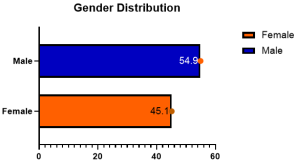
Figure 1. Gender distribution of children with refractive errors (N = 235)
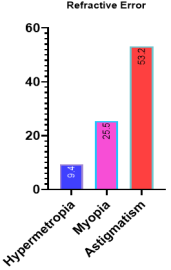
Figure 2. Distribution of types of refractive errors among children (N=235).
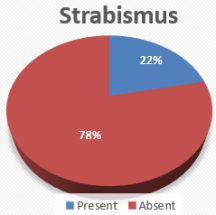
Figure 3. Distribution of strabismus among children with refractive errors (N = 235).
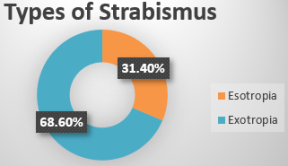
Figure 4. Distribution of strabismus subtypes among children with strabismus (n = 51).
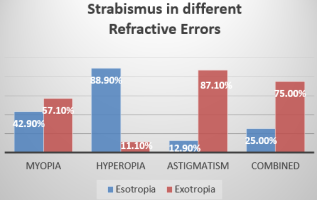
Figure 5. Distribution of different strabismus in different refractive errors (n=51).

Information


 Share This Article
 Twitter
 Linked In
 Facebook
 Copy
Copy Download