Abstract
A retrospective descriptive study was conducted in the Shashemene District, Ethiopia, to investigate the epidemiology and species-specific distribution of livestock anthrax from January 2022 to November 2025. The primary objectives were to analyze seasonal trends, describe distribution across livestock species, and evaluate temporal and spatial associations of the disease. Data were collected from 194 case records and monthly reports across eight veterinary clinics using a census sampling method. The results demonstrated a significant association between seasonality and disease occurrence (p = 0.021), with 87.63% of cases concentrated during the long rainy season. Bovines accounted for the majority of cases (55.67%), while Ovine exhibited the highest attack rate at 0.85%. Spatial analysis identified distinct clustering within five specific kebeles, with Bura reporting the highest burden. While total cases declined from 90 in 2022 to zero by November 2025, all 194 cases were confirmed tentatively through clinical signs due to limited laboratory capacity. Logistic regression confirmed that the odds of an outbreak were significantly higher during the long rainy season (OR = 6.81) compared to the dry season. The study concluded that anthrax remains a localized but serious threat driven by environmental triggers. These findings highlight the necessity for targeted, pre-seasonal vaccination and the enhancement of diagnostic infrastructure to improve surveillance accuracy in high-risk areas.
|
Published in
|
Science Discovery Animals (Volume 1, Issue 1)
|
|
DOI
|
10.11648/j.sdan.20260101.11
|
|
Page(s)
|
1-13 |
|
Creative Commons
|

This is an Open Access article, distributed under the terms of the Creative Commons Attribution 4.0 International License (http://creativecommons.org/licenses/by/4.0/), which permits unrestricted use, distribution and reproduction in any medium or format, provided the original work is properly cited.
|
|
Copyright
|
Copyright © The Author(s), 2026. Published by Science Publishing Group
|
Keywords
Anthrax, Retrospective Study, DOVAR, Case Books, Livestock, Temporal, Seasonal Trend, Spatial Clustering, Attack Rate,
Case Fatality Rate
1. Introduction
1.1. Background
Anthrax was recognized as a serious, infectious, non-contagious zoonotic disease caused by the environmentally resilient, spore-forming, gram-positive bacterium Bacillus anthracis. The organism produced highly resistant spores capable of persisting in soil and the environment for prolonged periods, thereby serving as a persistent source of infection for susceptible animal populations
| [9] | Deressa, D., Gari, G., & Gezahegn, M. (2021). One Health approach to anthrax control in Ethiopia: Opportunities and challenges. One Health, 12, 100225. |
| [33] | World Health Organization. (2020). Anthrax in humans and animals: WHO guidelines for prevention and control. World Health Organization. |
[9, 33]
. The disease primarily affected herbivorous mammals, including bovine, ovine, caprine, and equine species, while humans became infected through direct or indirect contact with infected animals or contaminated animal products
| [4] | Asfaw, W., & Bihon, A. (2022). Challenges of anthrax control and the need for robust surveillance in Ethiopia. Preventive Veterinary Medicine, 198, 105532. |
[4]
.
Transmission of anthrax to livestock predominantly occurred through the ingestion of soil-borne spores during grazing on contaminated pastures. Inhalation of spores and entry through skin lesions were fewer common routes of infection in animals. The clinical course in herbivores was typically per acute or acute and was characterized by sudden death, often occurring within hours of minimal or non-specific clinical signs
| [5] | Bayissa, B., Deressa, B., & Gobena, T. (2021). Evaluation of anthrax surveillance systems in the Oromia Region, Ethiopia. Journal of Zoonotic Diseases, 5(1), 22–30. |
| [11] | FAO, (2011). Anthrax in animals. Animal Production and Health Manual. Food and Agriculture Organization of the United Nations. |
[5, 11]
. A distinctive pathognomonic feature of the disease was the discharge of dark, tarry, non-clotting blood from natural body orifices, including the nose, mouth, and anus. Consequently, carcass opening was strongly discouraged due to the risk of environmental contamination and further spore dissemination
| [16] | Gebre, T., Abebe, A., & Tafesse, T. (2023). Livestock production systems and zoonotic disease risks in the West Arsi Zone, Oromia, Ethiopia. Ethiopian Journal of Agricultural Sciences, 33(1), 78–92. |
| [27] | OIE, (2021). Anthrax (Chapter 3.1.1). In Terrestrial Animal Health Code. OIE, World Organization for Animal Health. |
[16, 27]
.
Globally, anthrax was endemic in many agricultural regions, particularly across Africa, Asia, and South America
| [8] | Centers for Disease Control and Prevention. (2017). Anthrax. |
[8]
. The disease imposed a substantial economic burden on affected countries through high livestock mortality, costs associated with quarantine and treatment measures, carcass disposal, mass vaccination campaigns, and trade restrictions on livestock and livestock products
| [30] | Sushma, B., Singh, R. P., & Kumar, A. (2021). Economic implications of anthrax outbreaks in livestock and its global trade impact. Transboundary and Emerging Diseases, 68(5). |
[30]
. The impact of anthrax on livelihoods and national economies was especially severe in communities heavily dependent on livestock production
| [14] | FAO, (2021). Anthrax in animals and humans (4th ed.). FAO Animal Production and Health Manual No. 13. FAO. |
| [28] | OIE. (2022). Anthrax, infection with Bacillus anthracis. World Organization for Animal Health. In OIE terrestrial manual (2022 ed). |
[14, 28]
. In Africa, anthrax remained a major transboundary disease with recurrent outbreaks reported across multiple countries, a situation further exacerbated in pastoralist regions where limited access to veterinary services constrained effective disease control
| [6] | Beyene, T., Jemberu, W. T., & Tekle, M. (2023). Socio-economic impact of recurrent anthrax outbreaks on smallholder farmers in Shashemene District, Ethiopia. Tropical Animal Health and Production, 55(1), 45. |
| [13] | FAO, (2020). The future of livestock in Ethiopia: Opportunities and challenges. FAO Regional Office for Africa. Food and Agriculture Organization of the United Nations. |
[6, 13]
.
Ethiopia, possessing the largest livestock population in Africa, was identified as a hyper-endemic country for anthrax. Frequent outbreaks were reported in various parts of the country, resulting in considerable economic losses and posing an ongoing public health threat
| [24] | Mekonnen, G., Haileselassie, M., & Getachew, G. (2017). A review on anthrax and its public health and economic importance in Ethiopia. Journal of Veterinary Science & Technology, 8(5), 1-5. |
[24]
. The country’s crop–livestock production systems and extensive pastoral practices facilitated close human–animal interactions, thereby increasing the risk of zoonotic transmission. Outbreaks were generally seasonal and commonly occurred following heavy rainfall after prolonged dry periods, conditions that were believed to promote the resurfacing of spores on soil and vegetation
| [7] | Carlson, C. J., Getz, W. M., Kausrud, K. L., Cizauskas, C. A., Blackburn, J. K., Bustos Carrillo, F. A., Colwell, R., Easterday, W. R., Ganz, H. H., Kamath, P. L., Økstad, O. A., Turner, W. C., & Stenseth, N. C. (2019). Climate-driven pathogen emergence and global patterns of anthrax risk. Ecology Letters, 22(8), 1385–1396. |
| [17] | Gizaw, D., Beyene, T., & Taye, M. (2021). Spatial and temporal clustering of anthrax outbreaks in Ethiopia. PLOS Neglected Tropical Diseases, 15(7). |
[7, 17]
.
The Shashemene District, located in the West Arsi Zone of the Oromia Region, represented one of the major livestock-producing areas in Ethiopia, where livestock constituted the backbone of the local economy by providing food, income, and draught power. Despite the endemic nature of anthrax in the area, epidemiological data remained inadequate, fragmented, or outdated. Existing reports were often limited to routine surveillance records, and systematic analyses of recent disease patterns were lacking.
Understanding the temporal trends, seasonal dynamics, and spatial distribution of anthrax over a recent period was therefore essential for designing targeted, evidence-based control and prevention strategies. In this context, the present study was undertaken to address critical knowledge gaps by analyzing reported anthrax cases in Shashemene District from January 2022 to November 2025. By examining species-specific distribution, seasonal variation, and spatial clustering, the study aimed to generate updated epidemiological evidence to support risk-based interventions, strengthen surveillance systems, and inform animal and public health policy.
1.2. Problem Statement
Anthrax had remained a major veterinary and public health concern in Ethiopia due to the long-term persistence of Bacillus anthracis spores in the environment, which continued to drive recurrent outbreaks and substantial economic losses in livestock-dependent communities
| [28] | OIE. (2022). Anthrax, infection with Bacillus anthracis. World Organization for Animal Health. In OIE terrestrial manual (2022 ed). |
| [33] | World Health Organization. (2020). Anthrax in humans and animals: WHO guidelines for prevention and control. World Health Organization. |
[28, 33]
. Despite its endemicity, the epidemiological dynamics of anthrax at local levels were often insufficiently quantified, limiting the effectiveness of targeted control and prevention strategies.
In Shashemene District, anecdotal evidence suggested ongoing transmission of anthrax; however, the disease had not been systematically quantified or analytically examined for the period from 2022 to 2025
| [26] | Molla, W., de Jong, M. C. M., & Frankena, K. (2020). The effect of mass vaccination on anthrax incidence in livestock in Ethiopia. Preventive Veterinary Medicine, 184. |
[26]
. Although Monthly Disease Outbreak and Vaccination Activity Reports (DOVAR) existed, underreporting was likely, as many sudden livestock deaths bypassed formal surveillance systems, leading to an underestimation of the true disease burden
| [12] | FAO, (2019). Anthrax: A transboundary zoonotic disease. Food and Agriculture Organization of the United Nations. |
[12]
. Moreover, most reported cases were based on clinical diagnosis without laboratory confirmation, thereby reducing data reliability and diagnostic accuracy
| [32] | Turnbull, P. C. B., Böhm, R., Cosivi, O., Doganay, M., Hugh-Jones, M., Lalitha, M. K., & Wafula, M. (2008). Anthrax in animals and humans (4th ed.). World Health Organization. |
[32]
.
Temporal trends and seasonal peaks of anthrax occurrence had not been adequately assessed, constraining the identification of high-risk periods and the strategic timing of interventions such as vaccination campaigns
| [33] | World Health Organization. (2020). Anthrax in humans and animals: WHO guidelines for prevention and control. World Health Organization. |
[33]
. Similarly, the spatial distribution of cases across kebeles remained undocumented, preventing the identification of geographic hotspots and the efficient allocation of limited veterinary resources
| [12] | FAO, (2019). Anthrax: A transboundary zoonotic disease. Food and Agriculture Organization of the United Nations. |
[12]
. Additionally, the species-specific burden of anthrax was poorly understood, despite known differences in susceptibility among cattle, small ruminants, and equines, which limited the development of targeted control measures
| [18] | Haileselassie, M., Adhanom, G., & Mebrahtu, G. (2020). Anthrax vaccine coverage and its determinants in livestock in Ethiopia: A systematic review and meta-analysis. Vaccine. |
| [32] | Turnbull, P. C. B., Böhm, R., Cosivi, O., Doganay, M., Hugh-Jones, M., Lalitha, M. K., & Wafula, M. (2008). Anthrax in animals and humans (4th ed.). World Health Organization. |
[18, 32]
.
Collectively, these gaps hindered early detection, outbreak preparedness, and the implementation of risk-based control strategies, leaving both livestock and human populations vulnerable to recurrent anthrax outbreaks. Therefore, a systematic retrospective analysis of livestock anthrax cases in Shashemene District from 2022 to 2025 was necessary to quantify species-specific distribution, assess temporal and seasonal trends, and map spatial patterns at the kebele level. By generating updated, evidence-based epidemiological insights, this study aimed to strengthen surveillance systems, support targeted vaccination strategies, and inform policy decisions for improved animal and public health outcomes.
1.3. Research Objectives
1.3.1. General Objective
The primary objective of this study was to determine the epidemiology and species-specific distribution of livestock anthrax in the Shashemene District, utilizing retrospective data collected between January 2022 and November 2025.
1.3.2. Specific Objectives
1) To analyze the seasonal trends and temporal patterns of reported livestock anthrax cases.
2) To characterize the distribution and attack rates of reported anthrax cases across different livestock species.
3) To map the spatial distribution and identify geographic clusters of reported anthrax cases within the district.
4) To evaluate the associations between anthrax occurrence and temporal, species-related, and spatial risk factors.
1.4. Significance of the Study
The study’s findings provided valuable insights for improving anthrax control within the Shashemene District. By offering indispensable information on the disease’s spatial and seasonal patterns, the research enables more targeted vaccination campaigns and a more efficient allocation of limited veterinary resources.
The results correspondingly heightened livestock owners’ awareness regarding the timing of outbreaks and the importance of reporting. Furthermore, this work supported sustained public health surveillance in high-risk areas and contributed robust data and methodologies to guide future research and regional agricultural planning.
2. Methods
2.1. Study Area
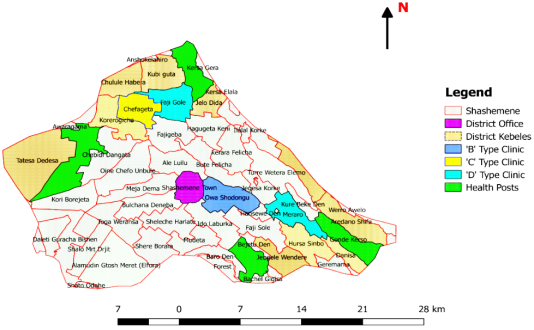
The study was conducted in the Shashemene District, located within the West Arsi Zone of the Oromia Region, approximately 250 km south of Addis Ababa. The district encompasses 17 kebeles and is characterized by a mixed crop–livestock production system where bovine, ovine, caprine, and equine species constitute the primary livestock populations.
The area experiences a distinct bimodal rainfall pattern: a short rainy season (
belg) occurring from March to May, and a long rainy season (
kiremt) spanning from June to September. Animal health surveillance and outbreak reporting in the district are coordinated by the Animal Health Unit at the Shashemene District Agriculture Office. This network, which operates through four veterinary clinics and four health posts, served as the primary source of retrospective data for this study (
Figure 1).
Figure 1. Map of the Shashemene District, Study Area (2022-2025).
2.2. Study Approaches
To achieve the study objectives, a multi-dimensional epidemiological approach was adopted, integrating descriptive, analytical, spatial, and temporal methodologies within a retrospective surveillance framework. This study applied the classical epidemiological triad, host, agent, and environment, to examine anthrax occurrence across the Shashemene District. Host-related factors were assessed through species-specific case distributions and attack rates, while environmental influences were explored through seasonal and spatial patterns. A descriptive analytical approach was used to summarize the distribution of cases by time and place, utilizing indicators such as case fatality rates and outbreak frequency. Spatially, the geographic distribution was assessed at the kebele level to identify hotspot areas with disproportionately high disease burdens, thereby supporting the interpretation of localized ecological risk factors.
The study further utilized a temporal and seasonal approach to evaluate annual trends, basing classifications on local climatic patterns to determine the significance of temporal associations. To strengthen causal interpretation, inferential statistical methods were integrated; Chi-square tests assessed associations between categorical variables, and logistic regression analysis was applied to quantify the likelihood of outbreaks across different seasons. This surveillance-based methodology utilized routinely collected data from veterinary clinic casebooks and Disease Outbreak and Vaccination Activity Reports (DOVAR), conducting a census of all recorded cases to minimize selection bias. Although limited by data availability, the study implicitly adopted a One Health perspective, recognizing the critical interconnection between environmental conditions, livestock health, and the broader public health implications of anthrax.
2.3. Study Design
This study utilized a retrospective, descriptive, and analytical design to investigate the epidemiology of livestock anthrax in Shashemene District, Ethiopia, from January 2022 to November 2025. By analyzing existing surveillance records, the study reconstructed disease patterns across three dimensions: time (seasonality), place (kebele distribution), and host (species).
The analytical framework integrated descriptive statistics, spatial mapping, and regression modeling to identify significant risk differentials. Although constrained by the ISAVET program's three-month data collection window and fixed deadlines, which limited the 2025 dataset, the multi-year approach ensured a robust identification of consistent seasonal and spatial trends. This design maximizes the utility of surveillance data in resource-limited settings where laboratory capacity is constrained.
2.4. Source and Study Population
The source population consisted of all livestock species, specifically bovine, ovine, caprine, and equine, within the Shashemene District for the duration of the study period from 2022 to 2025. The study population comprised all suspected, probable, or tentatively confirmed anthrax cases documented in veterinary clinic casebooks and monthly Disease Outbreak and Vaccination Activity Report (DOVAR) forms recorded between January 2022 and November 2025.
2.5. Sampling Procedures and Sample Size
A census sampling method was applied to all eight veterinary clinics, as these facilities represented the entirety of the disease surveillance system within the district. All anthrax case records documented during the study period were extracted, resulting in a total sample size of 194 cases. A formal sample size calculation was not necessary, as the study considered all accessible retrospective data available within the specified timeframe.
2.6. Data Collection Procedures
Data were collected using a dataset recording worksheet (template) designed to accurately register information from clinic casebooks and DOVAR reports. Key study variables, including report date, kebele, species affected, population at risk, and the number of cases and deaths, were extracted. Additionally, data regarding clinical signs, outbreak status, vaccination history (when available), confirmation status, and reporter details were recorded and validated to ensure completeness and internal consistency.
2.7. Data Management and Analysis
Data extracted from clinic casebooks and DOVAR reports were systematically coded in Microsoft Excel and cleaned for accuracy before being exported to STATA version 17. Descriptive statistics characterized the epidemiological profile, summarizing annual, seasonal, and geographical distributions, alongside species-specific attack and fatality rates. Results were visualized through tables and graphs to highlight patterns across time, location, and species.
Inferential analyses evaluated associations between anthrax occurrence and explanatory variables. The chi-square (chi2) test assessed relationships between categorical variables, such as season and species, with significance set at p < 0.05. Additionally, logistic regression quantified seasonal risk by calculating odds ratios (ORs) and 95% confidence intervals (CIs), using the dry season as a reference. This integrated framework provided a robust assessment of the temporal and spatial drivers of anthrax in the Shashemene District.
2.8. Ethical Considerations
Permission to access retrospective surveillance data was obtained from the Shashemene District Agriculture Office, Animal Health Department. All data were handled confidentially, as there was no direct interaction with animals or human subjects.
3. Results
3.1. Seasonal Patterns of Livestock Anthrax Cases
Table 1. Seasonal Distribution of Anthrax Cases (2022-2025).
Variable | Category | Total Cases |
Frequency (n) | Percent (%) |
Season | Long Rainy | 170 | 87.63 |
Short Rainy | 24 | 12.37 |
Dry | 0 | 0 |
Total | 194 | 100 |
Anthrax cases occurred primarily during the long rainy season, which accounted for 170 (87.63%) of the total cases. In contrast, 24 (12.37%) cases occurred during the short rainy season, while no cases were reported during the dry season. This pattern indicated that transmission was highest during wet periods and absent during the dry months.
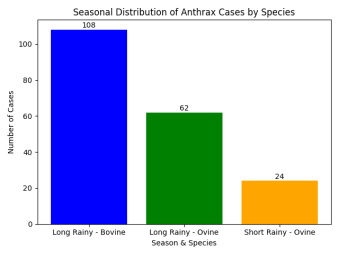
Figure 2. Seasonal Distribution of Anthrax Cases by Species (2022-2025).
Bovine species accounted for 108 (55.67%) of the cases, while ovine species contributed 86 (44.33%). During the long rainy season, 108 (55.67%) of the bovine cases and 62 (31.96%) of the ovine cases were recorded. In contrast, the short rainy season accounted for 24 (12.37%) of the ovine cases, whereas no cases were reported for either species during the dry season.
3.2. Species Distribution of Anthrax Cases
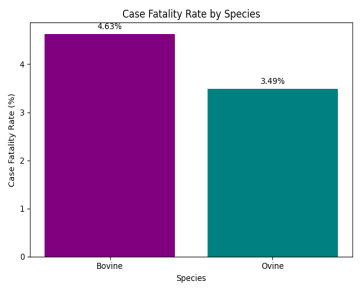
Bovine populations experienced 5 deaths out of 108 cases (4.63%), while ovine populations recorded 3 deaths out of 86 cases (3.49%). No deaths were reported among caprine or equine species. Consequently, the study recorded a total of 8 deaths across 194 cases, resulting in an overall Case Fatality Rate (CFR) of 4.12%.
Table 2. Species-Specific Attack Rate (AR) (2022-2025).
Variable | Category | Cases | Population At Risk | AR (%) |
n | % | n | % |
Species | Ovine | 86 | 44.3 | 10,074 | 11.7 | 0.85 |
Bovine | 108 | 55.7 | 76,296 | 88.3 | 0.14 |
Caprine | 0 | 0 | 0 | 0 | 0.00 |
Equine | 0 | 0 | 0 | 0 | 0.00 |
Total | 194 | 100 | 86,370 | 100 | 0.99 |
Figure 3. Case Fatality Rates by Species (2022–2025).
Ovine populations recorded the highest Attack Rate (AR) at 0.85%, with 86 cases occurring among a Population at Risk (PAR) of 10,074 (11.7% of the total PAR). In contrast, the bovine population had an AR of 0.14%, with 108 cases identified among a PAR of 76,296 (88.3% of the total PAR). Caprine and equine species both recorded an AR of 0%, as no cases were observed in these groups during the study period.
3.3. Spatial Distribution and Kebele-Level Clustering
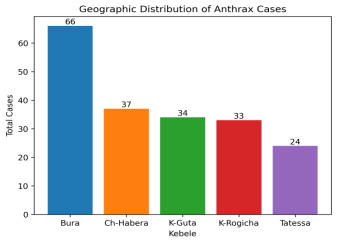
Figure 4. Geographic Distribution of Anthrax Cases (2022-2025).
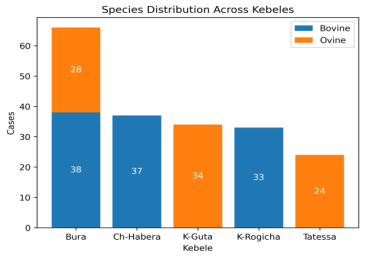
The distribution of anthrax cases across kebeles was irregular. Bura recorded the highest burden with 66 cases, followed by Ch-Habera (37), K-Guta (34), K-Rogicha (33), and Tatessa (24).
Figure 5. Species Distribution across Kebeles (2022-2025).
Bura reported 38 cases in bovine and 28 in ovine populations, while Ch-Habera recorded 37 cases exclusively in bovine. In contrast, K-Guta recorded 34 cases in ovine, K-Rogicha documented 33 cases in bovine, and Tatessa reported 24 cases in ovine. No cases were recorded among caprine or equine species in any of the surveyed kebeles.
3.4. Temporal Trends and Outbreak Characteristics
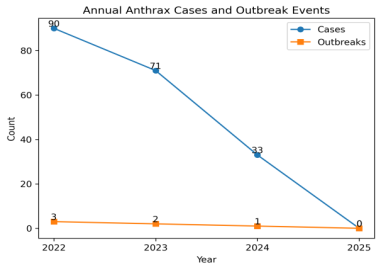
Figure 6. Annual Anthrax Cases and Outbreak Events (2022–2025).
Anthrax cases declined steadily from 90 in 2022 to 71 in 2023, 33 in 2024, and zero in 2025. Similarly, outbreak events decreased from three in 2022 to two in 2023, one in 2024, and zero in 2025. This trend demonstrated a consistent reduction in both individual case numbers and distinct outbreak occurrences over the four-year study period.
Table 3. Outbreak and Confirmation Status of Anthrax Cases (2022–2025).
Variable | Category | Outbreaks | Total Cases | Total Deaths | CFR (%) |
n | % | n | % | n | % |
Outbreak | Outbreak (OB=1) | 6 | 100 | 194 | 100 | 8 | 100 | 4.12 |
Sporadic (OB=0) | 0 | 0 | 0 | 0 | 0 | 0 | 0.00 |
Confirmation | Tentatively | 6 | 100 | 194 | 100 | 8 | 100 | 4.12 |
Laboratory | 0 | 0 | 0 | 0 | 0 | 0 | 0.00 |
A total of 194 anthrax cases and 8 deaths were reported between 2022 and 2025, arising exclusively from 6 documented outbreak events. This resulted in a case fatality rate (CFR) of 4.12%, with no occurrences of sporadic cases. All cases were tentatively confirmed based on clinical presentation; however, no laboratory confirmation was performed due to limited diagnostic capacity within the district.
3.5. Anthrax Occurrence Associated Factors
Table 4. Temporal Association of Anthrax Occurrence (Season and Year).
Variable | Category | Total Records | Outbreaks | χ² | df | p-value |
n | % | n | % |
Season | Dry | 15 | 31.9 | 0 | 0 | 7.71 | 2 | 0.021 |
Short Rainy | 16 | 34 | 1 | 6.3 |
Long Rainy | 16 | 34 | 5 | 31.3 |
Year | 2022 | 12 | 25.5 | 3 | 25.0 | 3.60 | 3 | 0.308 |
2023 | 12 | 25.5 | 2 | 16.7 |
2024 | 12 | 25.5 | 1 | 8.3 |
2025 | 11 | 23.4 | 0 | 0 |
NB: Significant at the 0.05 level. |
Anthrax outbreaks varied significantly by season, with the long rainy season (typically June to September) identified as the highest risk period. Statistical analysis supported this seasonal association (X2 = 7.71, df = 2, p = 0.021). Outbreak occurrences were distributed as follows: zero in the dry season (0/15, 0.0%), one in the short rainy season (1/16, 6.3%), and five in the long rainy season (5/16, 31.3%). These findings confirm that the timing of outbreaks is not random but is closely linked to seasonal and environmental triggers.
In contrast, yearly variation was not statistically significant (X2 = 3.60, df = 3, p = 0.308). Outbreak distributions by year were recorded as 2022 (3/12, 25.0%), 2023 (2/12, 16.7%), 2024 (1/12, 8.3%), and 2025 (0/11, 0.0%).
Table 5. Species-Specific Distribution of Anthrax Cases (Species Vulnerability).
Variable | Category | Total Records | Cases | χ² | df | p-value |
n | % | n | % |
Livestock Species | Bovine | 20 | 42.6 | 3 | 15 | 3.90 | 3 | 0.273 |
Ovine | 12 | 25.5 | 3 | 25 |
Caprine | 11 | 23.4 | 0 | 0 |
Equine | 4 | 8.5 | 0 | 0 |
All recorded outbreaks occurred in bovine (3/20, 15%) and ovine (3/12, 25%) species. The absence of cases in caprine (0/11, 0%) and equine (0/4, 0%) species within the archived DOVAR records may reflect natural resistance or, more likely, a gap in reporting for smaller or less economically visible livestock. Statistical analysis indicated that the association between species and outbreak occurrence was not significant (X2 = 3.90, df = 3, p = 0.273).
Table 6. Logistic Regression for Seasonal Risk (Annual Trend).
Variable | Category | OR | SE | z-test | p-value | 95% CI |
Season | Dry | 1.00 | (Ref) | - | - | - |
Short Rain | 2.14 | 0.84 | 1.02 | 0.307 | [0.49 - 9.28] |
Long Rain | 6.81 | 2.31 | 3.12 | 0.002 | [1.98 - 23.41] |
Using the dry season as the reference category (OR = 1.00), the odds of an anthrax outbreak were higher in the short rainy season (OR = 2.14, 95%, CI: 0.49–9.28, p = 0.307) and significantly higher in the long rainy season (OR = 6.81, 95%, CI: 1.98–23.41, p = 0.002).
Additionally, a visible downward trend in reported cases was observed from 2022 to 2025. While this decline could reflect improved control measures and successful vaccination campaigns, it may also indicate a reporting gap resulting from a decrease in active surveillance or diagnostic consistency over time.
4. Discussion
The findings of this study demonstrated clear ecological, seasonal, species-level, and spatial patterns in the occurrence of livestock anthrax in Shashemene District, covering the period from January 2022 to November 2025. The present analysis revealed a statistically significant association between season and anthrax occurrence, X2 = 7.71, df = 2, p = 0.021, with outbreaks heavily concentrated during the Long Rainy Season, which accounted for approximately 88% of all recorded reports.
This pronounced seasonal clustering indicated that rainfall played a critical role in anthrax transmission dynamics. Rainfall-induced soil disturbance, increased moisture, and enhanced vegetation growth were likely to facilitate the re-emergence of Bacillus anthracis spores and increase livestock exposure
| [1] | Abraham, T., Hailu, K., & Gidey, M. (2023). Epidemiological analysis of anthrax in the Awi Zone, Ethiopia. |
| [2] | Adzitey, F., Teye, G. A., & Kutah, W. H. (2022). Anthrax in livestock: A review of the epidemiology in Africa. Journal of Veterinary Medicine and Animal Health, 14(3), 45. |
[1, 2]
. This pattern was consistent with findings from multiple endemic regions in sub-Saharan Africa, where anthrax incidence increased during periods of sustained rainfall and heightened vegetation productivity
| [21] | Hugh-Jones, M., & de Vos, V. (2002). Anthrax and wildlife. Scientific and Technical Review of the World Animal Health Organization, 21(2), 359–383. |
[21]
. Previous studies conducted in West and East African livestock systems similarly identified rainfall and vegetation indices as key predictors of anthrax outbreaks, suggesting that surface runoff and soil moisture mobilized spores and increased the likelihood of ingestion during grazing
| [22] | Kenu, E., Ofori, S. B., & Bonsu, G. (2014). Outbreak investigation and response for anthrax in a hyper-endemic district in Ghana. Pan African Medical Journal, 18, 101. |
| [23] | Kracalik, I., Malania, L., Tsertsvadze, N., Manvelyan, J., Imnadze, P., & Blackburn, J. K. (2017). Evidence of local persistence of Bacillus anthracis in the environment and its implications for anthrax epidemiology. PLOS Neglected Tropical Diseases, 11(6). |
[22, 23]
.
The logistic regression analysis further reinforced this association by demonstrating a significantly elevated risk of anthrax outbreaks during the long rainy season (OR = 6.81; 95% CI: 1.98–23.41; p = 0.002) compared to the dry season. Although the short rainy season exhibited increased odds of outbreak occurrence, the association did not reach statistical significance, a finding that could be attributed to limited statistical power during transitional climatic periods
| [10] | Derso, S., Tilahun, B., & Terefe, E. (2022). Seasonal prevalence and risk factors of anthrax in livestock in the Awi Zone, Northwestern Ethiopia. Veterinary World, 15(5), 1234. |
[10]
. Nevertheless, the observed seasonal pattern aligned with broader ecological evidence indicating that moisture-related environmental conditions were central to anthrax transmission. Variations in peak incidence timing across different ecosystems, such as peaks during the hot-dry season in the Awi Zone
| [19] | Hampson, K., Lembo, T., Bessell, P., Auty, H., Packer, C., Halliday, J., Beesley, C. A., Fyumagwa, R., Hoare, R., Ernest, E., Mentzel, C., & Cleaveland, S. (2011). Predictability of anthrax infection in the Serengeti ecosystem, Tanzania. Journal of Applied Ecology, 48(6), 1333–1344. |
[19]
or during periods of surface water recession in southern Africa
| [3] | Alemu, B., Hailu, M., & Desta, H. (2020). Environmental determinants of anthrax outbreaks in livestock in Ethiopia. Ethiopian Veterinary Journal, 24(2), 1–15. |
| [31] | Tigre, W., Haile, A., & Assefa, Z. (2019). Policy gaps in the control of endemic zoonotic diseases in Ethiopia: The case of anthrax. Ethiopian Journal of Public Health and Nutrition, 3(1), 45-52. |
[3, 31]
, further suggested that while temporal patterns differed geographically, the underlying relationship between environmental moisture and anthrax risk remained consistent.
Species-level analysis revealed a clear epidemiological pattern. Bovine species accounted for more than half of all documented cases, while ovine species exhibited the highest attack rate, indicating greater proportional susceptibility or exposure. This finding was biologically plausible, as ovine species typically grazed closer to the soil surface in low-lying and moisture-rich environments where spores tended to accumulate
| [3] | Alemu, B., Hailu, M., & Desta, H. (2020). Environmental determinants of anthrax outbreaks in livestock in Ethiopia. Ethiopian Veterinary Journal, 24(2), 1–15. |
| [25] | Mekonnen, S. A., Beyene, T. J., & Gari, G. F. (2022). Anthrax in Ethiopia: A persistent zoonotic disease demanding a One Health approach. Frontiers in Public Health, 10. |
[3, 25]
. Conversely, no cases were recorded among caprine or equine species, and the association between species and outbreak occurrence was not statistically significant (p = 0.273). This distribution was consistent with previous studies identifying cattle and sheep as the most frequently affected species in rural livestock systems
| [20] | Hugh-Jones, M. (1999). 1996–97 global anthrax report. Journal of Applied Microbiology, 87(Suppl. 1), 189–191. |
[20, 29
]. However, the apparent absence of cases in caprine and equine populations was more likely attributable to surveillance and reporting biases, including lower perceived economic value and underreporting, rather than true biological resistance
| [32] | Turnbull, P. C. B., Böhm, R., Cosivi, O., Doganay, M., Hugh-Jones, M., Lalitha, M. K., & Wafula, M. (2008). Anthrax in animals and humans (4th ed.). World Health Organization. |
| [34] | World Organization for Animal Health, OIE. (2022). Anthrax (Bacillus anthracis): Terrestrial animal health code. World Organization for Animal Health. |
[32, 34]
.
The overall case fatality rate (CFR) of 4.12% observed in this study was substantially lower than CFRs reported in other Ethiopian settings, such as Halaba and Awi zones, where values exceeded 25%
| [1] | Abraham, T., Hailu, K., & Gidey, M. (2023). Epidemiological analysis of anthrax in the Awi Zone, Ethiopia. |
| [10] | Derso, S., Tilahun, B., & Terefe, E. (2022). Seasonal prevalence and risk factors of anthrax in livestock in the Awi Zone, Northwestern Ethiopia. Veterinary World, 15(5), 1234. |
[1, 10]
. This discrepancy might have reflected improved veterinary response and management practices, as well as potential underreporting of deaths, which is a common limitation in passive surveillance systems. Spatial analysis revealed that anthrax cases were concentrated in five kebeles Bura, Ch-Habera, K-Guta, K-Rogicha, and Tatessa, indicating pronounced local clustering. This spatial heterogeneity was likely influenced by environmental factors such as soil composition, calcium concentration, hydrological conditions, and landscape features that favored long-term spore persistence
| [15] | Fekadu, G., Bekele, M., & Tolosa, T. (2018). Epidemiology of anthrax in Ethiopia: A review of outbreaks and surveillance challenges. Tropical Animal Health and Production, 50(8), 1837–1848. |
| [14] | FAO, (2021). Anthrax in animals and humans (4th ed.). FAO Animal Production and Health Manual No. 13. FAO. |
[15, 14]
.
Temporally, a marked decline in reported cases was observed, from 90 cases in 2022 to zero cases in 2025. This downward trend suggested potential improvements in outbreak response and vaccination coverage
| [26] | Molla, W., de Jong, M. C. M., & Frankena, K. (2020). The effect of mass vaccination on anthrax incidence in livestock in Ethiopia. Preventive Veterinary Medicine, 184. |
[26]
. However, comparable retrospective studies in Ethiopia indicated that apparent reductions in disease incidence were often influenced by variations in surveillance effort and reporting completeness rather than genuine epidemiological decline
| [14] | FAO, (2021). Anthrax in animals and humans (4th ed.). FAO Animal Production and Health Manual No. 13. FAO. |
| [15] | Fekadu, G., Bekele, M., & Tolosa, T. (2018). Epidemiology of anthrax in Ethiopia: A review of outbreaks and surveillance challenges. Tropical Animal Health and Production, 50(8), 1837–1848. |
[14, 15]
. Passive surveillance systems frequently underestimated disease burden during periods of reduced field activity or diagnostic inconsistency
| [14] | FAO, (2021). Anthrax in animals and humans (4th ed.). FAO Animal Production and Health Manual No. 13. FAO. |
[14]
. Similarly, the complete reliance on tentative clinical diagnosis in the present study underscored persistent gaps in laboratory diagnostic capacity, which limited the accuracy and reliability of reported cases
| [24] | Mekonnen, G., Haileselassie, M., & Getachew, G. (2017). A review on anthrax and its public health and economic importance in Ethiopia. Journal of Veterinary Science & Technology, 8(5), 1-5. |
[24]
.
Overall, the findings indicated that anthrax occurrence in Shashemene District was shaped by a complex interplay of rainfall-driven environmental processes, species-specific grazing behavior, and localized ecological conditions. These results reinforced the importance of seasonally targeted interventions, particularly pre-seasonal vaccination and risk-based surveillance in hotspot kebeles prior to the onset of the long rainy season.
5. Study Limitations and Uncertainity
Although this study generated valuable epidemiological evidence on livestock anthrax in Shashemene District, several methodological and contextual constraints may have influenced the accuracy, reliability, and interpretation of the findings.
First, diagnostic uncertainty limited the study due to the absence of laboratory confirmation. All cases were identified based on clinical and epidemiological criteria because of limited diagnostic infrastructure at the district level. Reliance on clinical diagnosis introduces the potential for misclassification bias, as other acute livestock diseases with overlapping clinical features may have been erroneously recorded as anthrax. Consequently, the estimated incidence, species-specific burden, and epidemiological patterns may have been over- or underestimated, reducing the internal validity and strength of causal inferences regarding temporal, spatial, and species-level associations.
Second, systemic underreporting and surveillance-related biases likely affected data completeness. Retrospective surveillance systems are inherently prone to incomplete case detection, inconsistent record keeping, and variability in reporting practices across veterinary facilities. In rural settings, sudden livestock deaths may remain unreported due to limited access to veterinary services and logistical constraints. These factors may have resulted in underestimation of the true disease burden and may partly explain the observed decline in reported cases over time. Consequently, temporal trends should be interpreted cautiously, as they may reflect fluctuations in surveillance intensity rather than true epidemiological changes.
Third, the study did not incorporate quantitative environmental and ecological variables such as rainfall patterns, soil characteristics, vegetation indices, and hydrological conditions. The absence of these parameters limited the comprehensive assessment of environmental drivers of anthrax transmission and constrained the ability to disentangle the relative contributions of climatic and ecological determinants to the observed seasonal and spatial clustering of cases.
Finally, limitations inherent to the retrospective study design affected data completeness and longitudinal analysis. Variations in documentation quality, missing information on populations at risk, and inconsistencies in surveillance practices across facilities may have introduced information bias. Incomplete records for the final year of the study period further restricted full-year comparative analysis and reduced the robustness of temporal trend interpretation.
6. Conclusion and Recommendations
6.1. Conclusion
The retrospective analysis of livestock anthrax in the Shashemene District from 2022 to 2025 confirms that the disease follows predictable ecological and seasonal patterns. This study establishes the long rainy season as the primary temporal risk factor, likely driven by rainfall-induced soil disturbance and the subsequent re-emergence of spores. Species-specific data reveal that while bovine populations represented the highest total case numbers, ovine populations suffered a higher proportional attack rate. This suggests either greater physiological susceptibility or higher exposure levels during grazing. Furthermore, geographical clustering in specific kebeles, such as Bura and Ch-Habera, points toward localized environmental favorability, such as specific soil chemistry or hydrology, that supports long-term spore persistence. Although a downward trend in reported cases was observed over the four-year period, the exclusive reliance on tentative clinical diagnosis and the presence of reporting gaps suggest that the true disease burden may be underestimated. Ultimately, effective anthrax control in the district requires a transition toward risk-based strategies. Veterinary resources and community awareness campaigns should be strategically deployed to identified hotspot kebeles immediately prior to the long rainy season to mitigate future outbreaks through targeted, preventative action.
6.2. Recommendations
In light of the observed distribution and temporal patterns of anthrax cases documented by the Shashemene District Animal Health Department between January 2022 and November 2025, five key priority recommendations were put forward:
1) Implement pre-rainy-season, risk-based vaccination in high-incidence kebeles identified from 2022–2025 DOVAR data.
2) Mandate laboratory-supported confirmation of all suspected cases through rapid field testing and linkage with regional laboratories.
3) Integrate active surveillance and zero-reporting into DOVAR to address under-reporting and capture unrecorded sudden livestock deaths.
4) Enforce bio-secure carcass disposal in hotspot areas, treating all sudden deaths during high-risk months as presumptive anthrax.
5) Conduct season-focused community awareness campaigns to deter emergency slaughter and promote immediate case reporting.
7. Future Research Implications
To enhance scientific rigor and policy relevance, future investigations should prioritize strengthening laboratory-supported surveillance. Integrating bacteriological culture, PCR, and rapid field diagnostic tools into routine monitoring, linked with regional laboratories, will minimize misclassification and increase the validity of epidemiological evidence. Furthermore, incorporating environmental and climatic variables (such as soil properties, rainfall, and vegetation indices) into analytical models is essential to identify the ecological drivers of transmission and develop predictive risk mapping.
Additionally, transitioning toward hybrid surveillance systems that combine passive reporting with active field investigations and community-based monitoring will mitigate underreporting. Finally, adopting a One Health framework to synthesize epidemiological, laboratory, and environmental data will improve analytical depth. This holistic approach is vital for evidence-based decision-making regarding risk-based vaccination, resource allocation, and sustainable disease control in high-risk districts.
Abbreviations
CFR | Case Fatality Rate |
DOVAR | Disease Outbreak and Vaccination Activity Report |
FAO | Food and Agriculture Organization |
ISAVET | In-Service Applied Veterinary Epidemiology Training |
NDVI | Normalized Difference Vegetation Index |
PAR | Population at Risk |
STATA | Statistical Software for Data Analysis |
WHO | World Health Organization |
WOAH/ OIE | World Organization for Animal Health/ Office International des Epizooties |
Acknowledgments
The author extended profound appreciation to the Epidemiology Desk of the Ethiopian Ministry of Agriculture and the College of Agriculture and Veterinary Medicine, Addis Ababa University, for their sustained institutional support and collaborative partnership. Sincere thanks were owed to the Food and Agriculture Organization of the United Nations (FAO), Ethiopia, for substantive financial and technical assistance. The author was particularly indebted to the ISAVET program coordinator and to the designated mentor and examiner from the Epidemiology Desk for their expert counsel, incisive critique, and steadfast mentorship, which materially enhanced the methodological rigor and analytic integrity of this study. Appreciation was also conveyed to the Shashemene District Agriculture Office, Department of Animal Health, for facilitating unfettered access to essential data records. Their collective contributions were pivotal to the successful completion of this work.
Author Contributions
Kinfe Kibebew: Conceptualization, Data curation, Formal analysis, Methodology, Investigation, Resources, Software, Visualization, Writing – original draft, Writing – review & editing.
Bayisa Kenaw: Supervision, Validation, Visualization.
Lakech Tibebu: Project administration, Funding acquisition, Investigation, Resources.
Funding
This investigation was conducted with material support from the Food and Agriculture Organization of the United Nations (FAO), Ethiopia, which provided substantive financial and technical assistance. The study further benefited from essential institutional support and collaborative infrastructure furnished by the Epidemiology Desk of the Ethiopian Ministry of Agriculture and the College of Agriculture and Veterinary Medicine, Addis Ababa University. The Shashemene District Agriculture Office, Department of Animal Health, facilitated critical data access. The funders and supporting institutions had no role in the data interpretation and/ or the decision to publish these findings.
Conflicts of Interest
The authors declare no conflicts of interests.
Appendix
Operational Definition of Key Terms
Anthrax Case (Tentatively confirmed); a suspected livestock case identified based on clinical signs and outbreak history but not verified through laboratory testing due to diagnostic constraints.
Attack Rate (AR); the proportion of animals that developed anthrax among the total population at risk, expressed as a percentage.
Bovine, Ovine, Caprine, Equine; Livestock species categories used in the study: cattle (bovine), sheep (ovine), goats (caprine), and equines (horses, donkeys, mules).
Case Fatality Rate (CFR); the percentage of animals that died from anthrax among those recorded as cases.
Confirmed Case: any animal diagnosed through laboratory confirmation of Bacillus anthracis, or by a licensed veterinary professional based on characteristic clinical presentation during an outbreak context.
Long Rainy and Short Rainy Seasons; Local climatic periods characterized by extended or shorter rainfall patterns that influence soil conditions and spore exposure.
Outbreak Event: A documented episode in which multiple anthrax cases arise in a defined period and location, indicating heightened transmission.
Outbreak: presence of one or more anthrax cases occurring within the same kebele and time, officially recorded as an outbreak (OB = 1).
Population at Risk (PAR): total number of livestock existing in the study area during the study period that were potentially exposed to anthrax infection.
Probable Case: an animal exhibiting clinical signs strongly suggestive of anthrax during an active outbreak within the same kebele or herd, or in settings with epidemiological linkage to a confirmed case.
Seasonal Classification: categorization of cases into long rainy, short rainy or dry seasons based on Shashemene District’s climatic pattern.
Spatial Clustering: The concentration of anthrax cases in particular kebeles due to environmental, ecological, or management-related factors that increase exposure risk.
Suspected Case: any animal experiencing sudden death with classical signs of anthrax, including dark, non-clotting blood oozing from natural orifices, rapid bloating, incomplete rigor mortis, or tar-like exudates, particularly in areas with known environmental contamination.
References
| [1] |
Abraham, T., Hailu, K., & Gidey, M. (2023). Epidemiological analysis of anthrax in the Awi Zone, Ethiopia.
|
| [2] |
Adzitey, F., Teye, G. A., & Kutah, W. H. (2022). Anthrax in livestock: A review of the epidemiology in Africa. Journal of Veterinary Medicine and Animal Health, 14(3), 45.
|
| [3] |
Alemu, B., Hailu, M., & Desta, H. (2020). Environmental determinants of anthrax outbreaks in livestock in Ethiopia. Ethiopian Veterinary Journal, 24(2), 1–15.
|
| [4] |
Asfaw, W., & Bihon, A. (2022). Challenges of anthrax control and the need for robust surveillance in Ethiopia. Preventive Veterinary Medicine, 198, 105532.
|
| [5] |
Bayissa, B., Deressa, B., & Gobena, T. (2021). Evaluation of anthrax surveillance systems in the Oromia Region, Ethiopia. Journal of Zoonotic Diseases, 5(1), 22–30.
|
| [6] |
Beyene, T., Jemberu, W. T., & Tekle, M. (2023). Socio-economic impact of recurrent anthrax outbreaks on smallholder farmers in Shashemene District, Ethiopia. Tropical Animal Health and Production, 55(1), 45.
|
| [7] |
Carlson, C. J., Getz, W. M., Kausrud, K. L., Cizauskas, C. A., Blackburn, J. K., Bustos Carrillo, F. A., Colwell, R., Easterday, W. R., Ganz, H. H., Kamath, P. L., Økstad, O. A., Turner, W. C., & Stenseth, N. C. (2019). Climate-driven pathogen emergence and global patterns of anthrax risk. Ecology Letters, 22(8), 1385–1396.
|
| [8] |
Centers for Disease Control and Prevention. (2017). Anthrax.
|
| [9] |
Deressa, D., Gari, G., & Gezahegn, M. (2021). One Health approach to anthrax control in Ethiopia: Opportunities and challenges. One Health, 12, 100225.
|
| [10] |
Derso, S., Tilahun, B., & Terefe, E. (2022). Seasonal prevalence and risk factors of anthrax in livestock in the Awi Zone, Northwestern Ethiopia. Veterinary World, 15(5), 1234.
|
| [11] |
FAO, (2011). Anthrax in animals. Animal Production and Health Manual. Food and Agriculture Organization of the United Nations.
|
| [12] |
FAO, (2019). Anthrax: A transboundary zoonotic disease. Food and Agriculture Organization of the United Nations.
|
| [13] |
FAO, (2020). The future of livestock in Ethiopia: Opportunities and challenges. FAO Regional Office for Africa. Food and Agriculture Organization of the United Nations.
|
| [14] |
FAO, (2021). Anthrax in animals and humans (4th ed.). FAO Animal Production and Health Manual No. 13. FAO.
|
| [15] |
Fekadu, G., Bekele, M., & Tolosa, T. (2018). Epidemiology of anthrax in Ethiopia: A review of outbreaks and surveillance challenges. Tropical Animal Health and Production, 50(8), 1837–1848.
|
| [16] |
Gebre, T., Abebe, A., & Tafesse, T. (2023). Livestock production systems and zoonotic disease risks in the West Arsi Zone, Oromia, Ethiopia. Ethiopian Journal of Agricultural Sciences, 33(1), 78–92.
|
| [17] |
Gizaw, D., Beyene, T., & Taye, M. (2021). Spatial and temporal clustering of anthrax outbreaks in Ethiopia. PLOS Neglected Tropical Diseases, 15(7).
|
| [18] |
Haileselassie, M., Adhanom, G., & Mebrahtu, G. (2020). Anthrax vaccine coverage and its determinants in livestock in Ethiopia: A systematic review and meta-analysis. Vaccine.
|
| [19] |
Hampson, K., Lembo, T., Bessell, P., Auty, H., Packer, C., Halliday, J., Beesley, C. A., Fyumagwa, R., Hoare, R., Ernest, E., Mentzel, C., & Cleaveland, S. (2011). Predictability of anthrax infection in the Serengeti ecosystem, Tanzania. Journal of Applied Ecology, 48(6), 1333–1344.
|
| [20] |
Hugh-Jones, M. (1999). 1996–97 global anthrax report. Journal of Applied Microbiology, 87(Suppl. 1), 189–191.
|
| [21] |
Hugh-Jones, M., & de Vos, V. (2002). Anthrax and wildlife. Scientific and Technical Review of the World Animal Health Organization, 21(2), 359–383.
|
| [22] |
Kenu, E., Ofori, S. B., & Bonsu, G. (2014). Outbreak investigation and response for anthrax in a hyper-endemic district in Ghana. Pan African Medical Journal, 18, 101.
|
| [23] |
Kracalik, I., Malania, L., Tsertsvadze, N., Manvelyan, J., Imnadze, P., & Blackburn, J. K. (2017). Evidence of local persistence of Bacillus anthracis in the environment and its implications for anthrax epidemiology. PLOS Neglected Tropical Diseases, 11(6).
|
| [24] |
Mekonnen, G., Haileselassie, M., & Getachew, G. (2017). A review on anthrax and its public health and economic importance in Ethiopia. Journal of Veterinary Science & Technology, 8(5), 1-5.
|
| [25] |
Mekonnen, S. A., Beyene, T. J., & Gari, G. F. (2022). Anthrax in Ethiopia: A persistent zoonotic disease demanding a One Health approach. Frontiers in Public Health, 10.
|
| [26] |
Molla, W., de Jong, M. C. M., & Frankena, K. (2020). The effect of mass vaccination on anthrax incidence in livestock in Ethiopia. Preventive Veterinary Medicine, 184.
|
| [27] |
OIE, (2021). Anthrax (Chapter 3.1.1). In Terrestrial Animal Health Code. OIE, World Organization for Animal Health.
|
| [28] |
OIE. (2022). Anthrax, infection with Bacillus anthracis. World Organization for Animal Health. In OIE terrestrial manual (2022 ed).
|
| [29] |
Shiferaw, S., Abunna, F., Beyene, T. J., & Wakjira, B. S. (2019). Review of anthrax in Ethiopia: Distribution, risk factors, and public health implications. Veterinary Medicine International, 2019, Article 6843189.
|
| [30] |
Sushma, B., Singh, R. P., & Kumar, A. (2021). Economic implications of anthrax outbreaks in livestock and its global trade impact. Transboundary and Emerging Diseases, 68(5).
|
| [31] |
Tigre, W., Haile, A., & Assefa, Z. (2019). Policy gaps in the control of endemic zoonotic diseases in Ethiopia: The case of anthrax. Ethiopian Journal of Public Health and Nutrition, 3(1), 45-52.
|
| [32] |
Turnbull, P. C. B., Böhm, R., Cosivi, O., Doganay, M., Hugh-Jones, M., Lalitha, M. K., & Wafula, M. (2008). Anthrax in animals and humans (4th ed.). World Health Organization.
|
| [33] |
World Health Organization. (2020). Anthrax in humans and animals: WHO guidelines for prevention and control. World Health Organization.
|
| [34] |
World Organization for Animal Health, OIE. (2022). Anthrax (Bacillus anthracis): Terrestrial animal health code. World Organization for Animal Health.
|
Cite This Article
-
APA Style
Kibebew, K., Kenaw, B., Tibebu, L. (2026). A Retrospective Study of Anthrax in Livestock, from 2022 to 2025, in Shashemene District, West Arsi, Ethiopia. Science Discovery Animals, 1(1), 1-13. https://doi.org/10.11648/j.sdan.20260101.11
 Copy
|
Copy
|
 Download
ACS Style
Kibebew, K.; Kenaw, B.; Tibebu, L. A Retrospective Study of Anthrax in Livestock, from 2022 to 2025, in Shashemene District, West Arsi, Ethiopia. Sci. Discov. Anim. 2026, 1(1), 1-13. doi: 10.11648/j.sdan.20260101.11
Copy
|
Download
AMA Style
Kibebew K, Kenaw B, Tibebu L. A Retrospective Study of Anthrax in Livestock, from 2022 to 2025, in Shashemene District, West Arsi, Ethiopia. Sci Discov Anim. 2026;1(1):1-13. doi: 10.11648/j.sdan.20260101.11
Copy
|
Download
-
@article{10.11648/j.sdan.20260101.11,
  author = {Kinfe Kibebew and Bayisa Kenaw and Lakech Tibebu},
  title = {A Retrospective Study of Anthrax in Livestock, from 2022 to 2025, in Shashemene District, West Arsi, Ethiopia},
  journal = {Science Discovery Animals},
  volume = {1},
  number = {1},
  pages = {1-13},
  doi = {10.11648/j.sdan.20260101.11},
  url = {https://doi.org/10.11648/j.sdan.20260101.11},
  eprint = {https://article.sciencepublishinggroup.com/pdf/10.11648.j.sdan.20260101.11},
  abstract = {A retrospective descriptive study was conducted in the Shashemene District, Ethiopia, to investigate the epidemiology and species-specific distribution of livestock anthrax from January 2022 to November 2025. The primary objectives were to analyze seasonal trends, describe distribution across livestock species, and evaluate temporal and spatial associations of the disease. Data were collected from 194 case records and monthly reports across eight veterinary clinics using a census sampling method. The results demonstrated a significant association between seasonality and disease occurrence (p = 0.021), with 87.63% of cases concentrated during the long rainy season. Bovines accounted for the majority of cases (55.67%), while Ovine exhibited the highest attack rate at 0.85%. Spatial analysis identified distinct clustering within five specific kebeles, with Bura reporting the highest burden. While total cases declined from 90 in 2022 to zero by November 2025, all 194 cases were confirmed tentatively through clinical signs due to limited laboratory capacity. Logistic regression confirmed that the odds of an outbreak were significantly higher during the long rainy season (OR = 6.81) compared to the dry season. The study concluded that anthrax remains a localized but serious threat driven by environmental triggers. These findings highlight the necessity for targeted, pre-seasonal vaccination and the enhancement of diagnostic infrastructure to improve surveillance accuracy in high-risk areas.},
 year = {2026}
}
Copy
|
Download
-
TY  - JOUR
T1  - A Retrospective Study of Anthrax in Livestock, from 2022 to 2025, in Shashemene District, West Arsi, Ethiopia
AU  - Kinfe Kibebew
AU  - Bayisa Kenaw
AU  - Lakech Tibebu
Y1  - 2026/02/26
PY  - 2026
N1  - https://doi.org/10.11648/j.sdan.20260101.11
DO  - 10.11648/j.sdan.20260101.11
T2  - Science Discovery Animals
JF  - Science Discovery Animals
JO  - Science Discovery Animals
SP  - 1
EP  - 13
PB  - Science Publishing Group
UR  - https://doi.org/10.11648/j.sdan.20260101.11
AB  - A retrospective descriptive study was conducted in the Shashemene District, Ethiopia, to investigate the epidemiology and species-specific distribution of livestock anthrax from January 2022 to November 2025. The primary objectives were to analyze seasonal trends, describe distribution across livestock species, and evaluate temporal and spatial associations of the disease. Data were collected from 194 case records and monthly reports across eight veterinary clinics using a census sampling method. The results demonstrated a significant association between seasonality and disease occurrence (p = 0.021), with 87.63% of cases concentrated during the long rainy season. Bovines accounted for the majority of cases (55.67%), while Ovine exhibited the highest attack rate at 0.85%. Spatial analysis identified distinct clustering within five specific kebeles, with Bura reporting the highest burden. While total cases declined from 90 in 2022 to zero by November 2025, all 194 cases were confirmed tentatively through clinical signs due to limited laboratory capacity. Logistic regression confirmed that the odds of an outbreak were significantly higher during the long rainy season (OR = 6.81) compared to the dry season. The study concluded that anthrax remains a localized but serious threat driven by environmental triggers. These findings highlight the necessity for targeted, pre-seasonal vaccination and the enhancement of diagnostic infrastructure to improve surveillance accuracy in high-risk areas.
VL  - 1
IS  - 1
ER  -
Copy
|
Download





 Share This Article
 Twitter
 Linked In
 Facebook