Abstract
Conventional teacher-oriented instructional strategies tend to render higher secondary learner’s passive in the classroom settings, underscoring the significance of interactive methods. Despite the extensive popularity of cooperative learning in education in general, the dearth of empirical evidence concerning the influence of such instructional technique on the academic success of secondary students requires more attention. Therefore, the purpose of this paper was to assess the effects of cooperative learning on the academic success and skill acquisition of senior secondary learners as well as evaluate their attitudes towards the instructional technique. A quasi-experimental, realistic intervention approach was used. The participants comprised two groups, experimental (N=35) and control (N=28), chosen from among higher secondary school students. Prior to intervention, a pretest was performed to gauge the prior knowledge of learners. In turn, the learners of the experimental group were taught through the utilization of Jigsaw strategy of cooperation during the eight-week intervention period. The collection of data involved an academic success test, an attitude questionnaire, and a cooperative learning behavior form. The quantitative results of the analysis suggest that the learners taught in a cooperative way were characterized by higher academic achievements and more success indicators compared to the control group. Moreover, according to the answers to the questionnaire, learners positively viewed the use of Jigsaw strategy as an effective means of promoting interpersonal skills.
|
Published in
|
American Journal of Applied Psychology (Volume 15, Issue 4)
|
|
DOI
|
10.11648/j.ajap.20261504.14
|
|
Page(s)
|
106-114 |
|
Creative Commons
|

This is an Open Access article, distributed under the terms of the Creative Commons Attribution 4.0 International License (http://creativecommons.org/licenses/by/4.0/), which permits unrestricted use, distribution and reproduction in any medium or format, provided the original work is properly cited.
|
|
Copyright
|
Copyright © The Author(s), 2026. Published by Science Publishing Group
|
Keywords
Cooperative Learning, Jigsaw Method, Quasi-experimental Design, Active Learning, Higher Secondary Education,
Academic Achievement, Student Attitudes, Interpersonal Skills
1. Introduction
In higher secondary institutions, it has often been observed that teachers find it difficult to create sufficient learner interactions and participation during conventional classroom sessions. For effective learning to take place, modern and interactive classrooms need to be created in secondary schools where a constructive exchange of ideas takes place between the learners and the teacher.
| [1] | Aronson, E. (1978). The jigsaw classroom. Sage Publications. |
[1]
The learners of the senior secondary class move away from the position of being mere listeners to becoming active learners who create knowledge themselves. At the same time, the role of the teacher becomes that of facilitation of the learning process according to predefined outcomes.
| [2] | Aronson, E., & Patnoe, S. (2011). Cooperation in the classroom: The jigsaw method (3rd ed.). PCCS Books. |
[2]
The 21st-century instructional strategies have taken shape in terms of making the learner interact actively along with peer social interaction. The most significant strategy is the cooperative learning strategy where learners are grouped into teams in order to solve some specific task and build their concepts. According to experts, cooperative learning is an instructional strategy where different forms of motivation are applied in order to make instruction interesting and learners responsible for themselves.
| [3] | Barker, L. (2004). The effects of cooperative learning strategies on the academic achievement of secondary school students. Journal of Educational Pedagogy, 14(2), 112–125. |
[3]
It has been found out through research that five vital components have to co-exist to constitute an effective cooperative learning team:
1) Positive interdependence
2) Face-to-face interaction
3) Individual and group accountability for a fair workload
4) Purposeful interpersonal and group skills
5) Group processing to make sure the members work as a team
Under this concept, team members assume responsibility for the progress of their teammates in learning.
| [4] | Hattie, J. (2009). Visible learning: A synthesis of over 800 meta-analyses relating to achievement. Routledge. |
| [23] | Buchs, C., Wiederkehr, V., Filippou, D., Sommet, N., & Darnon, C. (2015). Structured cooperative learning as a means for improving average achievers’ mathematical learning in fractions: Differential effects on high, average, and low exam performers. Journal of Behavioral Education.
https://doi.org/10.1023/B:JOBE.0000011259.97014.94 |
[4, 23]
Research shows that there is an obvious correlation between systematic peer interaction and improved communication skills as well as enhanced problem-solving skills. Moreover, students gain valuable interpersonal skills, acquire important core knowledge as well as critical thinking skills while interacting in their respective learning teams.
| [5] | Johnson, D. W., & Johnson, R. T. (1999). Learning together and alone: Cooperative, competitive, and individualistic learning (5th ed.). Allyn & Bacon. |
[5]
Most importantly, life skills of cooperation, collaboration, and leadership are greatly enhanced through systematic peer interactions. Higher secondary school students learn how to inquire, exchange different viewpoints, handle academic differences, organize themselves and come up with new cognition. Peer interaction ultimately facilitates cooperative learning in which students learn how to creatively share their experiences and become more confident in academic reflection.
| [6] | Johnson, D. W., Johnson, R. T., & Stanne, M. E. (2000). Cooperative learning methods: A meta-analysis. University of Minnesota Press. |
[6]
Among many cooperative learning strategies, the Jigsaw approach turns out to be extremely versatile, thoroughly researched and widely used teaching technique. Particularly, the specific strategy should be regarded as one of the best for introducing complex subjects at the senior secondary level including social studies and sciences.
| [7] | Kiliç, D. (2008). The effect of the jigsaw technique on learning the concepts of principles and methods of teaching. World Applied Sciences Journal, 4(1), 109–114.
https://idosi.org/wasj/wasj4(s1)/18.pdf |
| [24] | Ibraheem, T. L. (2011). Effects of two modes of student teams-achievement division strategies on senior secondary school students' learning outcomes in chemical kinetics. Asia-Pacific Forum on Science Learning and Teaching, 12(2), 24–28. |
[7, 24]
Importantly, it is recognized that cooperative learning approaches including the Jigsaw approach have clear advantages of facilitating the development of a positive attitude towards education and enhancing attitudes to the subject taught.
| [8] | Slavin, R. E. (1995). Cooperative learning: Theory, research, and practice (2nd ed.). Allyn & Bacon. |
[8]
Most significantly, student achievement levels are greatly increased because of active participation and mutual assistance in working through the curriculum. As learners become self-reliant through the course of their cooperation, cooperative learning encourages independent and self-motivated studying.
| [9] | Slavin, R. E. (2011). Instruction based on cooperative learning. In R. E. Mayer & P. A. Alexander (Eds.), Handbook of research on learning and instruction (pp. 344–360). Routledge. |
[9]
It is possible to use six different variations of the Jigsaw strategy, but this research relies on the Jigsaw Classroom approach.
| [10] | Şengul, S., & Katrancı, Y. (2012). The effect of jigsaw technique on mathematics achievement and anxiety of students. Procedia - Social and Behavioral Sciences, 47, 858–862. |
[10]
Implementation process involves nine carefully considered steps:
1) Home groups are created among students representing diversity.
2) Each group elects its leader to monitor activities.
3) The academic lesson is broken down into separate pieces.
4) Every student receives his/her piece to master.
5) Students with identical pieces create temporary expert groups.
6) All students return to their jigsaw groups.
7) Each student reports his/her piece to peers from the home group.
8) The teacher moves around between different groups.
Evaluation of student learning takes place with the help of diverse assessment techniques.
| [11] | report to the European Commission on improving the quality of teaching and learning in Europe’s higher education institutions (2013). High Level Group on the Modernization of Higher Education. |
| [25] | Jagannath, & Dange, K. (2011). Effectiveness of peer-tutoring on English language achievement and nurturing effects. Reflection on Education, 9(1), 06–09. |
[11, 25]
2. Literature Review
The Jigsaw Classroom method was originally invented to reduce interethnic hostility and prejudice in educational settings. Subsequently, several studies have been conducted to prove the efficiency of this technique at the primary, middle, and secondary school levels, as well as in higher education.
| [12] | Panitz T (1999) The Motivational Benefits of Cooperative Learning. New Directions for Teaching and Learning, 59-67. |
[12]
Results have consistently shown that theoretical courses are taught more effectively when using this technique, which significantly enhances the development of students’ communication and critical thinking skills.
| [13] | Johnson DW (1991) Cooperative Learning: Increasing College Faculty Instructional Productivity. |
| [26] | Korkmaz, & Ozgen. (2012). A validity and reliability study of the Online Cooperative Learning Attitude Scale (OCLAS). Computers & Education, 59(4), 1162–1169. |
[13, 26]
Furthermore, comprehensive meta- analyses have demonstrated that cooperative learning strategies lead to higher academic achievement than competitive and individualistic classroom environments.
| [14] | Earl GL (2009) Using Cooperative Learning for a Drug Information As signment. American Journal of Pharmaceutical Education 73-132. |
[14]
A number of empirical studies have been conducted to determine the specific efficiency of the Jigsaw technique. For instance, researchers have compared the effect of the foundational Jigsaw I technique against traditional teaching methods on the academic achievement of learners. At the end of these experiments, students indicated that the Jigsaw technique increases success, encourages self-confidence, develops cooperation and interaction, makes students more active, and motivates them to conduct independent research.
| [15] | Mengduo Q and Xiaoling J (2010) Jigsaw Strategy as a Cooperative Learning Technique: Focusing on the Language Learners. Chinese Journal of Applied Linguistics: 113-125. |
| [27] | Kupczynski. (2012). Faculty Perceptions of Cooperative Learning and Traditional Discussion Strategies in Online Courses. Turkish Online Journal of Distance Education, 13(2), 84–95. |
[15, 27]
In another study evaluating instructional methods, researchers examined the effect of the Jigsaw technique versus the classical teaching and learning method on academic performance.
| [16] | Tamah Siti M (2007) Jigsaw Technique in Reading Class of Young Learners: Revealing Students’ Interaction. Online submission. |
[16]
This experiment involved eighty students, and the results showed that the Jigsaw technique yielded far more favourable findings on the academic performance of students than the traditional learning method. These findings strongly match the results of previous historical studies that support cooperative learning frameworks.
| [17] | Priya, S., & M. Vasimalairaja. 2026. The Impact of Cooperative Learning Strategies on Social Skills and Academic Achievement in Economics Among Higher Secondary School Learners. Asian Journal of Education and Social Studies 52(6): 802-11. https://doi.org/10.9734/ajess/2026/v52i63134 |
| [28] | Law, & Yin-Kum. (2011). The effects of cooperative learning on enhancing Hong Kong fifth graders' achievement goals, autonomous motivation and reading proficiency. Journal of Research in Reading, 34(4), 402–425. |
[17, 28]
Based on these outcomes, educational experts suggest that the Jigsaw technique ought to be utilized across all educational levels—including senior secondary environments. However, they note it must be carefully monitored by instructors who should intervene when necessary to ensure optimal and effective results.
| [18] | Rachael Khansa & Sarah Khaled 2016. The Impact of Cooperative Learning on Student Achievements in Higher Educational Settings. Educational Research Applications, 1(1): 1-09.
http://doi.org/10.29011/2575-7032/100003 |
[18]
Moreover, the Jigsaw method has been implemented in lessons of language and literature in order to measure how engaged students were in class. Findings have proven that the Jigsaw method made students feel less reluctant and anxious about participating in class. Researchers found out that by participating in group discussion and reading, students developed their personal opinion.
| [19] | Ahmadpanah, M., Soheili, S., Jahangard, L., Bajoghli, H., & Haghighi, M. (2014). Cooperative learning improves social skills and knowledge of science topics in pre-adolescent children in Iran. Journal of Education, Society and Behavioural Science, 4(8), 1029–1037 (p. 11). |
| [29] | Priya, S., & Vasimalairaja, M. (2025). Effectiveness of cooperative learning strategy on social skills and average achievers in economics among higher secondary school students. International Journal of Creative Research Thoughts (IJCRT), 13(9), 313–320. |
[19, 29]
3. Significance of the Study
Active collaboration amongst students in their peer group results in retaining of the communicated information for significantly longer periods compared to conventional forms of communication of the information.
| [20] | Ashman, A., & Gillies, R. (Eds.). (2003). Cooperative learning: The social and intellectual outcomes of learning in groups. Routledge (pp. 11-12). |
| [30] | Pushpanjali, B. S., & Sathiyaprakash, C. V. (2011). Effect of co-operative learning on achievement motivation and anxiety. Edutrack, 9(10), 32–35. |
[20, 30]
There are several benefits associated with the application of Jigsaw teaching method in the education process. Firstly, students become motivated to learn from their peer members in specialized "expert teams". Further, returning back to their "home teams," they will actively be involved in teaching each other the particular sections of the curriculum learned.
| [21] | Baskaran, D. (2011). Effectiveness of cooperative learning approach (Jigsaw-II with reward) in English the academic achievement of learners in learning social science at the secondary level. Research and Reflection on Education, 9(3), 17–20 (p. 11). |
[21]
In addition, students' active involvement will continue due to them being well monitored and guided by their respective classroom teachers. Finally, it is important to point out that the key objective for secondary school teachers transforms into motivating students to ask questions and build their independent cognitive skills through analysis.
| [12] | Panitz T (1999) The Motivational Benefits of Cooperative Learning. New Directions for Teaching and Learning, 59-67. |
| [22] | Booysen, M. J., & Grosser, M. M. (2008). Enhancing social skills through cooperative learning. The Journal for Transdisciplinary Research in Southern Africa, 4(2), (pp. 11-12). |
[12, 22]
In spite of the existence of significant amount of literature on various cooperative learning models and their effects in primary schools and secondary schools, the necessity arises to examine the effectiveness of cooperative learning model specifically among modern secondary students.
| [23] | Buchs, C., Wiederkehr, V., Filippou, D., Sommet, N., & Darnon, C. (2015). Structured cooperative learning as a means for improving average achievers’ mathematical learning in fractions: Differential effects on high, average, and low exam performers. Journal of Behavioral Education.
https://doi.org/10.1023/B:JOBE.0000011259.97014.94 |
| [31] | Sivaram, R. T., & Ramar, R. (2012). Effectiveness of cooperative learning strategy on the achievement of various categories of students in English at the higher secondary level. Research and Reflection on Education, 10(2), pp. 1-12. |
[23, 31]
The research paper attempts to address this gap in the current research literature by offering empirical data on the effects of using jigsaw method. It should also be noted that there is not much empirical data concerning structured cooperative learning and its effectiveness in the local setting.
| [24] | Ibraheem, T. L. (2011). Effects of two modes of student teams-achievement division strategies on senior secondary school students' learning outcomes in chemical kinetics. Asia-Pacific Forum on Science Learning and Teaching, 12(2), 24–28. |
[24]
4. Purpose of the Study
1) The main objective of conducting the current study was the need to determine the overall effect of the Jigsaw model on the educational setting of higher secondary schools. The objectives of the study were:
2) To ascertain the overall effect of the Jigsaw approach on the academic performance, cognitive growth, and study habits of higher secondary school pupils.
3) To identify the attitudes and views held by senior secondary pupils regarding the use of cooperative learning methods in their educational process.
4) To measure the behavioral aspect of collaboration exhibited by learners within structured learning groups.
| [25] | Jagannath, & Dange, K. (2011). Effectiveness of peer-tutoring on English language achievement and nurturing effects. Reflection on Education, 9(1), 06–09. |
| [32] | Stockdale, S. L., & Williams, R. L. (2004). Cooperative learning groups at the college level: Differential effects on high, average, and low exam performers. Teaching Innovations, 28(3), 15–35. |
[25, 32]
5. Research Questions and Hypotheses
Research Question 1: How effective is the use of the jigsaw cooperative learning approach in improving the performance of secondary students in comparison with traditional approaches such as lectures and discussions?
Hypothesis 1: The application of the jigsaw approach results in significantly better performance of secondary students in comparison with the lecture and discussion approach.
Research Question 2: What are the attitudes of secondary students toward the application of cooperative learning models in class?
Hypothesis 2: Secondary students have significantly positive attitudes toward the application of cooperative learning models.
Research Question 3: To what degree do higher secondary students exhibit collaborative and cooperative behaviours when working within structured learning groups?
Hypothesis 3: Higher secondary students exhibit a high level of active cooperation and behavioral engagement when participating in structured group work.
6. Methodology
6.1. Research Design
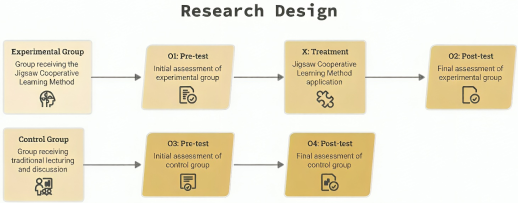
To conduct the study, the researchers chose the quasi-experimental research design, which did not involve random assignment of participants to groups. The selection of this non-randomized design was done because there was no possibility for the researcher to conduct the study using the true experimental research design since the subjects had already been grouped together based on intact classes in the school.
The schematic structure of the research design is clearly explained in
Figure 1 below:
Figure 1. Quasi-Experimental Research Design Blueprint.
6.2. Participants
This study involved students of the higher secondary level studying in a behavior science class. Thirty-five students formed the experimental group, while twenty-eight made up the control group, all of whom were of equal academic standing in higher secondary education.
| [25] | Jagannath, & Dange, K. (2011). Effectiveness of peer-tutoring on English language achievement and nurturing effects. Reflection on Education, 9(1), 06–09. |
[25]
6.3. Research Instruments
For evaluating student progress an objective evaluation framework was designed. The main instrument employed to collect data included a series of multiple-choice quizzes.
1) Evaluation Instrument: Multiple choice quiz.
2) Evaluation Design: Targeted questions per chapter of the curriculum.
3) Chapter Distribution: Eight chapters to be evaluated sequentially.
4) Question Numbers: Eighty total questions throughout the research period.
These questions were specifically constructed based on the objectives of the behavioral science curriculum that is followed in the higher secondary education. This provided validity in terms of what was being measured – namely knowledge gain. Alongside, an attitude survey involving ten questions was carried out towards the end of the treatment phase to measure students’ attitudes towards Jigsaw technique.
| [26] | Korkmaz, & Ozgen. (2012). A validity and reliability study of the Online Cooperative Learning Attitude Scale (OCLAS). Computers & Education, 59(4), 1162–1169. |
[26]
6.4. Experimental Procedure
The study followed a highly structured chronological timeline:
Pre-Intervention Baseline: Just one day before implementing the aforementioned teaching methods, a pre-test valued at 50 marks was conducted on both the experimental group and the control group in order to assess their level of content understanding in a duration of 100 minutes.
Heterogeneous Grouping: To organize the experimental group, the pre-test results of the 35 participants were ordered from highest to lowest. By analyzing the mean, median, and mode of these scores, the researchers divided the class into 7 heterogeneous "home groups" consisting of 5 students each.
Duration and Timeline: The pedagogical intervention spanned an eight-week instructional period, commencing in the first week of November 2015 and concluding in the second week of January 2016. Both groups covered eight identical curriculum chapters.
Pedagogical Treatment: The experimental group received the interactive Jigsaw cooperative learning framework, while the control group was instructed using traditional lecturing and classroom discussion strategies.
Unit Evaluation: Following each unit, students collaborated in class but sat for a 10-item quiz individually. Individual performance scores and team averages were tracked to evaluate personal accountability.
Post-Intervention Evaluation: As soon as the treatment period concluded after eight weeks, the post-test was once again administered to the two groups, whereupon the administration of the attitude and behavioral scales followed.
6.5. Technique of Data Analysis
In order to identify the effect of Jigsaw cooperative learning strategy on higher secondary academic performance, both baseline and experimental mean scores were assessed through an independent samples t-test.
| [33] | Tavakoli, Y., & Soltani, A. 2014. The effect of cooperative learning on students’ social skills in the experimental science course. Journal of Education and Practice. 5 (7), 36-44. |
| [34] | Yaduvanshi, S., & Singh, S. (2019). Fostering achievement of low average, and high-achiever students in biology through structured cooperative learning (STAD method). Education Research International, 2019. |
[33, 34]
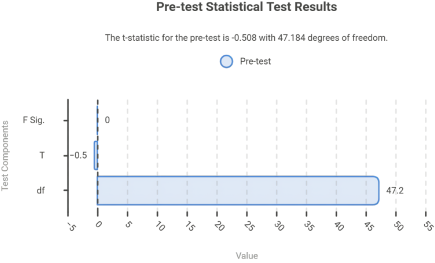
Before applying any treatment, an independent samples t-test was done to test the baseline homogeneity of students’ scores. Since the condition of homogeneity of variance was not met, therefore, “equal variances not assumed” was used for analysis, as shown below:
Figure 2. Independent Samples Test for Baseline Pre-test Scores.
Table 1. Independent Samples Test for Baseline Pre-test Scores.
| Levene’s Test for Equality of Variances | t-test for Equal ity of Means | df |
F Sig. | T |
Pre-test | | | 50 |
Equal variances not assumed | | -0.508 | 47.184 |
From the statistical test performed, it was noted that the value of the obtained t-statistic, which is -0.51, was less than the critical value of the t-test, which is 1.96. From this result, we can conclude that there was no statistically significant difference in the academic knowledge of both groups at the onset of the experiment.
7. Results
7.1. Research Question 1: Impact on Academic Achievement
To evaluate the direct impact of the Jigsaw method compared to traditional lecturing and discussion, post-test descriptive statistics were computed (
Table 2).
Table 2. Post-Test Performance Comparison.
| N | Mean | Std. Deviation | Std. Error Mean |
Post-test | 35 | 82.26 | 2.27 | 0.384 |
28 | 75.36 | 3.465 | 0.654 |
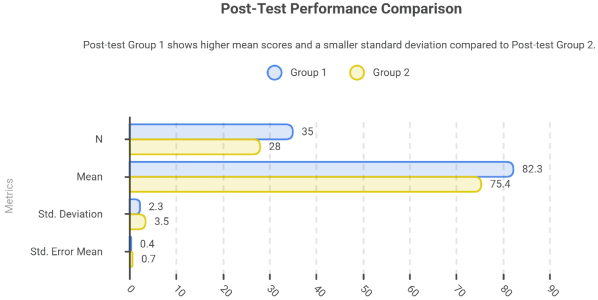
Figure 3. Post-Test Performance Comparison.
This is shown by the data presented in
Table 2. The students in the experimental group taught using Jigsaw strategy had a significantly higher average percentage score (M=82.26%, SD=2.270) compared to the control group taught using conventional lectures and class discussions (M=75.36%, SD=3.465). An independent t-test was conducted to test the null hypothesis.
7.2. Research Question 2: Student Attitudes Toward Cooperative Learning
The second objective was to evaluate the attitudes of higher secondary learners utilizing the Jigsaw method on a 5-point scale.
Table 3. Descriptive Statistics of Student Attitudes.
Metric Range | Composite Mean (M) | Standard Deviation (SD) | Interpretation |
Overall Attitude Profile | 3.77 | 0.86 | Highly Favorable Mindset |
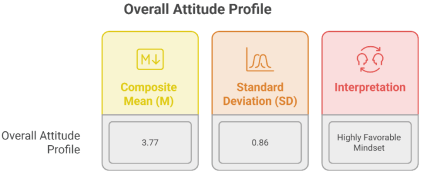
Figure 4. Statistics of Student Attitudes.
Based on the results presented in
Table 3, it is evident that there is an overall average score of attitudes that is equal to 3.77 (SD = 0.86). The high value indicates the fact that students demonstrate positive attitudes towards conformity. Moreover, the highest degree of agreement was observed for items 2, 5, and 7, whereas item 10 was least supported.
7.3. Research Question 3: Evaluation of Cooperative Peer Behaviors
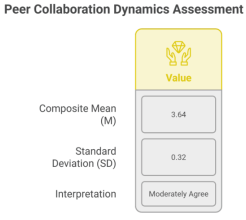
In assessing the true engagement behavior within the structured groups, behavioral evaluation questionnaire was conducted after completion of each curriculum module using an already developed interpretation framework (1.00 -1.80: Slightly Agree | 1.81 – 2.60: Agreed | 2.61-3.40: Neutral | 3.41 – 4.20: Slightly Disagree.
Figure 5. Behavioral Performance and Peer Collaboration Dynamics.
Table 4. Behavioral Performance and Peer Collaboration Dynamics.
Assessment Level | Composite Mean (M) | Standard Deviation (SD) | Interpretation |
Peer Collaboration Dynamics | 3.64 | 0.32 | Moderately Agree |
In this case, the average behavioral mean score for the participants who took part in the higher secondary stage was M = 3.64 (SD = 0.32). Based on the standard classification matrix, it means that the students were performing relatively well in terms of collaboration, helping each other, and group processing. Among all the items in this set, number 5 scored the highest mark while number 9 was the lowest.
Hypothesis
1) Null Hypothesis (H01): There is no significant difference between the achievements of students exposed to the jigsaw cooperative learning approach and the achievement of those exposed to the group discussion approach, taking into consideration their average percentage marks in the achievement test.
2) Test Statistic Used: An independent sample t-test was done with α=0.05 significance level.
Table 5. t-test analysis.
Teaching Strategy | Mean | SD | N | std | t-cal | t-crit | decision |
jigsaw cooperative learning strategy | 82.26 | 0.829 | 35 | 2.86 | 5.907 | 1.96 | Reject H01 |
group discussion strategy | 75.36 | 0.855 | 28 | | | | |
According to the quantitative analysis of the data presented in
Table 5 above, the independent samples
t-test results indicate that the computed t value is much larger than the critical t value at 0.05 level of significance, thus rejecting the null hypothesis. The
tcalculated value for this statistical test is 5.907 while the
t critical value is 1.960. The statistical result shows that the senior secondary students who learned through the jigsaw method had superior performances and obtained better grades compared to those learning through group discussions.
8. Discussion
The results obtained through this experiment clearly reveal that the jigsaw cooperative learning technique has a notable positive impact on the academic performances of higher secondary students. By shifting from teacher-driven instruction techniques to more interactive peer-driven techniques, the senior secondary students managed to master the lessons effectively.
The results generated for the first research question suggest that students who learn using the jigsaw method obtain much better scores in terms of academics as opposed to students who only learn through conventional teaching and discussion techniques. These findings imply that the jigsaw method of instruction may prove extremely effective in cases of larger higher secondary classes, wherein passivity among students is more prevalent. By dividing the topic of lessons taught into different sections and assigning teaching tasks to the peers, classroom apathy will be addressed.
The results provide compelling evidence of the fact that educational research conducted before has proven that structural class collaboration is key to enhancing student academic performance. The higher secondary class students have to analyze the concepts learned within specialized teams of experts and then communicate what they have learned to their home classes. Through this process, they are able to conduct higher-level mental processes.
9. Recommendations for Future Studies
1) Although this empirical study provides useful information about the effectiveness of the Jigsaw method in a higher secondary education setting, it calls for further research on several levels in order to build on these observations. Taking into account the nature of this study and its results, we can recommend for future research to be conducted in the following areas:
2) Replication: In order to explore the extent to which the Jigsaw model works across different geographic locations and types of educational establishments, future research should involve replicating this study in more settings and contexts.
3) Subject Expansion: Longitudinal studies need to be carried out to investigate the impact of the Jigsaw approach on other subjects studied at the higher secondary education level as compared to this particular one.
4) Different Pedagogical Models: As this study was devoted entirely to the implementation of the Jigsaw method, further research could focus on contrasting this particular approach with some other forms of collaborative learning, e.g. Student Teams-Achievement.
5) Divisions or Group Investigation. Diverse Samples: This particular study used relatively small samples; therefore, conducting the same experiment with a larger number of participants may provide further data about demographic variables.
10. Conclusion
Based on the results of the research conducted, it can be said that the introduction of the jigsaw cooperative learning technique is a very effective approach for improving the educational achievements of higher secondary schools. The use of an alternative teaching strategy, switching from conventional teacher-based instruction to an interactive teaching style, helps senior secondary schools avoid the passive state of students and improve their mental activity. Besides the tangible academic success, the proposed model ensures numerous socio-behavioral advantages within the educational process, as it contributes to increasing attention of students and creating a platform where they may express their opinions freely, without facing difficulties caused by the lack of confidence or fear of taking part in discussions. The application of the model will also contribute to developing certain leadership and soft skills among group leaders, while at the same time, creating a comfortable and stress-free atmosphere which encourages interdependence of peers, increases individual responsibility and improves one's attitude towards a particular discipline.
Abbreviations
SD | Standard Deviation |
M | Mean |
(tcalc) | t-statistic |
(tcri) | t-critical Value |
Author Contributions
Saradha Priya: Conceptualization, Data curation, Formal Analysis, Investigation, Methodology, Writing – original draft
Muthukaman Vasimalairaja: Investigation, Supervision
Data Availability Statement
The data supporting the outcome of this research work has been reported in this manuscript.
Conflicts of Interest
The authors declare no conflicts of interest.
References
| [1] |
Aronson, E. (1978). The jigsaw classroom. Sage Publications.
|
| [2] |
Aronson, E., & Patnoe, S. (2011). Cooperation in the classroom: The jigsaw method (3rd ed.). PCCS Books.
|
| [3] |
Barker, L. (2004). The effects of cooperative learning strategies on the academic achievement of secondary school students. Journal of Educational Pedagogy, 14(2), 112–125.
|
| [4] |
Hattie, J. (2009). Visible learning: A synthesis of over 800 meta-analyses relating to achievement. Routledge.
|
| [5] |
Johnson, D. W., & Johnson, R. T. (1999). Learning together and alone: Cooperative, competitive, and individualistic learning (5th ed.). Allyn & Bacon.
|
| [6] |
Johnson, D. W., Johnson, R. T., & Stanne, M. E. (2000). Cooperative learning methods: A meta-analysis. University of Minnesota Press.
|
| [7] |
Kiliç, D. (2008). The effect of the jigsaw technique on learning the concepts of principles and methods of teaching. World Applied Sciences Journal, 4(1), 109–114.
https://idosi.org/wasj/wasj4(s1)/18.pdf
|
| [8] |
Slavin, R. E. (1995). Cooperative learning: Theory, research, and practice (2nd ed.). Allyn & Bacon.
|
| [9] |
Slavin, R. E. (2011). Instruction based on cooperative learning. In R. E. Mayer & P. A. Alexander (Eds.), Handbook of research on learning and instruction (pp. 344–360). Routledge.
|
| [10] |
Şengul, S., & Katrancı, Y. (2012). The effect of jigsaw technique on mathematics achievement and anxiety of students. Procedia - Social and Behavioral Sciences, 47, 858–862.
|
| [11] |
report to the European Commission on improving the quality of teaching and learning in Europe’s higher education institutions (2013). High Level Group on the Modernization of Higher Education.
|
| [12] |
Panitz T (1999) The Motivational Benefits of Cooperative Learning. New Directions for Teaching and Learning, 59-67.
|
| [13] |
Johnson DW (1991) Cooperative Learning: Increasing College Faculty Instructional Productivity.
|
| [14] |
Earl GL (2009) Using Cooperative Learning for a Drug Information As signment. American Journal of Pharmaceutical Education 73-132.
|
| [15] |
Mengduo Q and Xiaoling J (2010) Jigsaw Strategy as a Cooperative Learning Technique: Focusing on the Language Learners. Chinese Journal of Applied Linguistics: 113-125.
|
| [16] |
Tamah Siti M (2007) Jigsaw Technique in Reading Class of Young Learners: Revealing Students’ Interaction. Online submission.
|
| [17] |
Priya, S., & M. Vasimalairaja. 2026. The Impact of Cooperative Learning Strategies on Social Skills and Academic Achievement in Economics Among Higher Secondary School Learners. Asian Journal of Education and Social Studies 52(6): 802-11.
https://doi.org/10.9734/ajess/2026/v52i63134
|
| [18] |
Rachael Khansa & Sarah Khaled 2016. The Impact of Cooperative Learning on Student Achievements in Higher Educational Settings. Educational Research Applications, 1(1): 1-09.
http://doi.org/10.29011/2575-7032/100003
|
| [19] |
Ahmadpanah, M., Soheili, S., Jahangard, L., Bajoghli, H., & Haghighi, M. (2014). Cooperative learning improves social skills and knowledge of science topics in pre-adolescent children in Iran. Journal of Education, Society and Behavioural Science, 4(8), 1029–1037 (p. 11).
|
| [20] |
Ashman, A., & Gillies, R. (Eds.). (2003). Cooperative learning: The social and intellectual outcomes of learning in groups. Routledge (pp. 11-12).
|
| [21] |
Baskaran, D. (2011). Effectiveness of cooperative learning approach (Jigsaw-II with reward) in English the academic achievement of learners in learning social science at the secondary level. Research and Reflection on Education, 9(3), 17–20 (p. 11).
|
| [22] |
Booysen, M. J., & Grosser, M. M. (2008). Enhancing social skills through cooperative learning. The Journal for Transdisciplinary Research in Southern Africa, 4(2), (pp. 11-12).
|
| [23] |
Buchs, C., Wiederkehr, V., Filippou, D., Sommet, N., & Darnon, C. (2015). Structured cooperative learning as a means for improving average achievers’ mathematical learning in fractions: Differential effects on high, average, and low exam performers. Journal of Behavioral Education.
https://doi.org/10.1023/B:JOBE.0000011259.97014.94
|
| [24] |
Ibraheem, T. L. (2011). Effects of two modes of student teams-achievement division strategies on senior secondary school students' learning outcomes in chemical kinetics. Asia-Pacific Forum on Science Learning and Teaching, 12(2), 24–28.
|
| [25] |
Jagannath, & Dange, K. (2011). Effectiveness of peer-tutoring on English language achievement and nurturing effects. Reflection on Education, 9(1), 06–09.
|
| [26] |
Korkmaz, & Ozgen. (2012). A validity and reliability study of the Online Cooperative Learning Attitude Scale (OCLAS). Computers & Education, 59(4), 1162–1169.
|
| [27] |
Kupczynski. (2012). Faculty Perceptions of Cooperative Learning and Traditional Discussion Strategies in Online Courses. Turkish Online Journal of Distance Education, 13(2), 84–95.
|
| [28] |
Law, & Yin-Kum. (2011). The effects of cooperative learning on enhancing Hong Kong fifth graders' achievement goals, autonomous motivation and reading proficiency. Journal of Research in Reading, 34(4), 402–425.
|
| [29] |
Priya, S., & Vasimalairaja, M. (2025). Effectiveness of cooperative learning strategy on social skills and average achievers in economics among higher secondary school students. International Journal of Creative Research Thoughts (IJCRT), 13(9), 313–320.
|
| [30] |
Pushpanjali, B. S., & Sathiyaprakash, C. V. (2011). Effect of co-operative learning on achievement motivation and anxiety. Edutrack, 9(10), 32–35.
|
| [31] |
Sivaram, R. T., & Ramar, R. (2012). Effectiveness of cooperative learning strategy on the achievement of various categories of students in English at the higher secondary level. Research and Reflection on Education, 10(2), pp. 1-12.
|
| [32] |
Stockdale, S. L., & Williams, R. L. (2004). Cooperative learning groups at the college level: Differential effects on high, average, and low exam performers. Teaching Innovations, 28(3), 15–35.
|
| [33] |
Tavakoli, Y., & Soltani, A. 2014. The effect of cooperative learning on students’ social skills in the experimental science course. Journal of Education and Practice. 5 (7), 36-44.
|
| [34] |
Yaduvanshi, S., & Singh, S. (2019). Fostering achievement of low average, and high-achiever students in biology through structured cooperative learning (STAD method). Education Research International, 2019.
|
Cite This Article
-
APA Style
Priya, S., Vasimalairaja, M. (2026). The Impact of Cooperative Learning on Higher Secondary Academic Achievement. American Journal of Applied Psychology, 15(4), 106-114. https://doi.org/10.11648/j.ajap.20261504.14
 Copy
|
Copy
|
 Download
ACS Style
Priya, S.; Vasimalairaja, M. The Impact of Cooperative Learning on Higher Secondary Academic Achievement. Am. J. Appl. Psychol. 2026, 15(4), 106-114. doi: 10.11648/j.ajap.20261504.14
Copy
|
Download
AMA Style
Priya S, Vasimalairaja M. The Impact of Cooperative Learning on Higher Secondary Academic Achievement. Am J Appl Psychol. 2026;15(4):106-114. doi: 10.11648/j.ajap.20261504.14
Copy
|
Download
-
@article{10.11648/j.ajap.20261504.14,
  author = {Saradha Priya and Muthukaman Vasimalairaja},
  title = {The Impact of Cooperative Learning on Higher Secondary Academic Achievement},
  journal = {American Journal of Applied Psychology},
  volume = {15},
  number = {4},
  pages = {106-114},
  doi = {10.11648/j.ajap.20261504.14},
  url = {https://doi.org/10.11648/j.ajap.20261504.14},
  eprint = {https://article.sciencepublishinggroup.com/pdf/10.11648.j.ajap.20261504.14},
  abstract = {Conventional teacher-oriented instructional strategies tend to render higher secondary learner’s passive in the classroom settings, underscoring the significance of interactive methods. Despite the extensive popularity of cooperative learning in education in general, the dearth of empirical evidence concerning the influence of such instructional technique on the academic success of secondary students requires more attention. Therefore, the purpose of this paper was to assess the effects of cooperative learning on the academic success and skill acquisition of senior secondary learners as well as evaluate their attitudes towards the instructional technique. A quasi-experimental, realistic intervention approach was used. The participants comprised two groups, experimental (N=35) and control (N=28), chosen from among higher secondary school students. Prior to intervention, a pretest was performed to gauge the prior knowledge of learners. In turn, the learners of the experimental group were taught through the utilization of Jigsaw strategy of cooperation during the eight-week intervention period. The collection of data involved an academic success test, an attitude questionnaire, and a cooperative learning behavior form. The quantitative results of the analysis suggest that the learners taught in a cooperative way were characterized by higher academic achievements and more success indicators compared to the control group. Moreover, according to the answers to the questionnaire, learners positively viewed the use of Jigsaw strategy as an effective means of promoting interpersonal skills.},
 year = {2026}
}
Copy
|
Download
-
TY  - JOUR
T1  - The Impact of Cooperative Learning on Higher Secondary Academic Achievement
AU  - Saradha Priya
AU  - Muthukaman Vasimalairaja
Y1  - 2026/07/24
PY  - 2026
N1  - https://doi.org/10.11648/j.ajap.20261504.14
DO  - 10.11648/j.ajap.20261504.14
T2  - American Journal of Applied Psychology
JF  - American Journal of Applied Psychology
JO  - American Journal of Applied Psychology
SP  - 106
EP  - 114
PB  - Science Publishing Group
SN  - 2328-5672
UR  - https://doi.org/10.11648/j.ajap.20261504.14
AB  - Conventional teacher-oriented instructional strategies tend to render higher secondary learner’s passive in the classroom settings, underscoring the significance of interactive methods. Despite the extensive popularity of cooperative learning in education in general, the dearth of empirical evidence concerning the influence of such instructional technique on the academic success of secondary students requires more attention. Therefore, the purpose of this paper was to assess the effects of cooperative learning on the academic success and skill acquisition of senior secondary learners as well as evaluate their attitudes towards the instructional technique. A quasi-experimental, realistic intervention approach was used. The participants comprised two groups, experimental (N=35) and control (N=28), chosen from among higher secondary school students. Prior to intervention, a pretest was performed to gauge the prior knowledge of learners. In turn, the learners of the experimental group were taught through the utilization of Jigsaw strategy of cooperation during the eight-week intervention period. The collection of data involved an academic success test, an attitude questionnaire, and a cooperative learning behavior form. The quantitative results of the analysis suggest that the learners taught in a cooperative way were characterized by higher academic achievements and more success indicators compared to the control group. Moreover, according to the answers to the questionnaire, learners positively viewed the use of Jigsaw strategy as an effective means of promoting interpersonal skills.
VL  - 15
IS  - 4
ER  -
Copy
|
Download







 Share This Article
 Twitter
 Linked In
 Facebook