Abstract
Neonatal hyperbilirubinemia is a common neonatal disorder worldwide and represents an important contributor to newborn morbidity, especially in low- and middle-income countries such as Ethiopia. Although multiple primary studies have investigated this condition, nationally representative and updated pooled evidence regarding its magnitude and determinants in Ethiopia is still limited. Methods: A systematic review and meta-analysis were conducted according to the Preferred Reporting Items for Systematic Reviews and Meta-Analyses (PRISMA) guidelines and prospectively registered in the PROSPERO database (registration number: CRD420251108378). A comprehensive search of electronic databases, including PubMed, Google Scholar, Cochrane Library, and Embase, was undertaken to identify eligible studies. Observational studies that reported the prevalence and/or determinants of neonatal hyperbilirubinemia among newborns in Ethiopia were included. The quality of the included studies was assessed using the Joanna Briggs Institute (JBI) critical appraisal tools. Meta-analysis was performed using a random-effects model to estimate the pooled prevalence of neonatal hyperbilirubinemia and the pooled effect estimates of associated factors. Statistical analyses were conducted using STATA version 14. The extent of heterogeneity among studies was evaluated using the I2 statistic, and potential publication bias was assessed through funnel plot inspection and Egger’s statistical test. Results: A total of nine studies involving 2,476 neonates were included in this systematic review and meta-analysis. The pooled prevalence of neonatal hyperbilirubinemia in Ethiopia was 27.77% (95% CI: 21.29-34.26%). The meta-analysis identified several factors significantly associated with neonatal hyperbilirubinemia, including male sex (AOR = 2.10; 95% CI: 1.37-2.83), neonatal sepsis (AOR = 3.01; 95% CI: 1.40-4.61), and prematurity (AOR = 2.24; 95% CI: 1.21-3.27). These findings indicate that male neonates and those with underlying clinical conditions, particularly sepsis and prematurity, had higher odds of developing neonatal hyperbilirubinemia. Conclusion: Evidence suggested that low pooled neonatal hyperbilirubinemia. The findings highlight a significant association between male neonates, neonatal sepsis, and prematurity with neonatal hyperbilirubinemia. Routine early screening and timely management of neonatal hyperbilirubinemia should be strengthened in Ethiopia. Health facilities need adequate phototherapy and laboratory services. Policymakers should prioritize neonatal care resources, and further high-quality community-based research should be conducted.
Keywords
Associated Factors, Neonatal Hyperbilirubinemia, Ethiopia, Systematic Review and Meta-analysis
1. Introduction
Neonatal hyperbilirubinemia, also known as jaundice, is characterized by a yellowish discoloration of body tissues due to the accumulation of excess bilirubin. This accumulation occurs when bilirubin production exceeds the body’s ability to eliminate it, reflecting either increased bilirubin production or impaired bilirubin excretion
| [1] | H. M. Ullah S, Rahman K, “Hyperbilirubinemia in neonates: types, causes, clinical examinations, preventive measures and treat- ments: a narrative review Iran J Public Heal., vol. 32, no. 2, pp. 261-268, 2016,
https://doi.org/10.4314/ejhs.v32i2.6 |
[1]
. Jaundice is among the most frequent medical conditions leading to readmission of newborns during the neonatal period
| [2] | P. C. Richard A, “Lippincott’s Illustrated Review of Biochemistry. New York: Lippincott Williams & Wilkin’s,” 2011. |
[2]
. It is a preventable and treatable clinical condition; however, if left untreated, it can lead to neonatal death. The occurrence of jaundice among neonates during the first week of life is relatively high
. Neonatal hyperbilirubinemia is one of the leading causes of readmission among newborns during the neonatal period
| [1] | H. M. Ullah S, Rahman K, “Hyperbilirubinemia in neonates: types, causes, clinical examinations, preventive measures and treat- ments: a narrative review Iran J Public Heal., vol. 32, no. 2, pp. 261-268, 2016,
https://doi.org/10.4314/ejhs.v32i2.6 |
[1]
.
Delayed presentation or late initiation of treatment may lead to complications of jaundice and can ultimately result in neonatal mortality
| [4] | N. A. W. et al. Brobby, “‘Outcomes of neonatal hyperbilirubinemia and associated factors at a tertiary hospital in Ghana’, BMC Pediatrics, 25(1). Available at:
BMC Pediatr. 25(1), 2025,
https://doi.org/10.1371/journal.pone.0006470 |
[4]
. Despite the presence of risk factors at birth in many cases, the condition remains a major cause of neonatal readmission during the neonatal period
| [5] | C. H. Tampubolon, I. Bagus, E. Utama, and R. Pasaribu, “Description of Risk Factors Affecting Neonatal Jaundice,” vol. 9, no. December, 2024. pp. 175-184
https://doi.org/10.52403/ijshr.20240424 |
[5]
.
Globally, an estimated 2.3 million children died within the first months of life in 2023, with approximately 6,300 neonatal deaths occurring each day. A considerable proportion of neonatal mortality is associated with complications such as jaundice. Nearly 75% of these neonatal deaths occur in South Asia and sub-Saharan Africa
| [6] | UNICEF, “Neonatal mortality rate,” 2024. |
[6]
. In Ethiopia, neonatal mortality and morbidity remain among the highest globally, with more than one-third of all childhood deaths occurring within the first 28 days of life
| [7] | M. Demographic and H. Survey, Mini Demographic and Health Survey 2019. 2019. |
[7]
. Under Sustainable Development Goal 3, countries have committed to reducing the maternal mortality ratio from the current level of about 216 to fewer than 70 deaths per 100,000 live births between 2015 and 2030. Therefore, reducing existing levels of maternal and neonatal mortality in low- and middle-income countries remains a global health priority to be achieved by 2030
| [8] | U. Nations, “Transforming our world: the 2030 agenda for sustainable development,” 2020. |
[8]
.
The incidence of neonatal hyperbilirubinemia in Nepal was 29.3 per 1000 live births
| [9] | et al Scrafford CG, Mullany LC, Katz J, “Incidence of and risk factors for neonatal jaundice among newborns in southern Nepal.,” Trop. Med Int Heal., vol. 2, no. September, 2013. |
[9]
. Regarding the burden of jaundice, approximately 7% to 13% of all neonatal deaths in Bangladesh are attributed to jaundice-related complications
| [10] | et al. Gurley ES, Halder AK, Streatfield PK, “Estimating the burden of maternal and neonatal deaths associated with jaundice in Bangladesh: possible role of hepatitis E infection. Am J Public Health.,” 2012. |
[10]
. Of the total neonatal mortality in Bangladesh, 78% was occurring during the first week of their life
| [10] | et al. Gurley ES, Halder AK, Streatfield PK, “Estimating the burden of maternal and neonatal deaths associated with jaundice in Bangladesh: possible role of hepatitis E infection. Am J Public Health.,” 2012. |
[10]
. Jaundice has been identified as one of the common causes of neonatal mortality, accounting for approximately 6.7% of neonatal deaths in Ghana
| [11] | Tette EM, Nartey ET, Nuertey BD et al., “The pattern of neonatal admissions and mortality at a regional and district hospital in the Upper West Region of Ghana; a cross sectional study. 2020,” PLoS One, 2020,
https://doi.org/10.1016/j.heliyon.2023.e16019 |
[11]
. In Ethiopia, of the total death of neonates at Ayder, about 98.3% occurred during the first week of their life
| [12] | F. Berhe, L. Gebreegziabher, H. G. Mihretu, and A. H. Berhe, “Prevalence and Factors Associated with Neonatal Mortality at Ayder Comprehensive Specialized Hospital, Northern Ethiopia. A Cross-Sectional,” pp. 29-37, 2020. |
[12]
and at in public Hospitals of the Somali Regional State in Eastern Ethiopia, neonatal mortality was 18.6%, equating to a rate of 186 per 1000 live births
| [13] | H. A. Mohamed, Z. Shiferaw, A. Kedir, R. Id, and A. K. Id, “Neonatal mortality and associated factors among neonates admitted to neonatal intensive care unit at public hospitals of Somali Regional State, Eastern Ethiopia: A multicenter retrospective analysis,” vol. 22, no. Ci, pp. 1-16, 2022,
https://doi.org/10.1371/journal.pone.0268648 |
[13]
. In Dil Chora Referral Hospital, Dire Dawa City, Ethiopia, a study found that the neonatal mortality rate was 11.4%
| [14] | G. Thomas, M. Demena, B. Hawulte, A. Eyeberu, and H. Heluf, “Neonatal Mortality and Associated Factors Among Neonates Admitted to the Neonatal Intensive Care Unit of Dil Chora Referral Hospital, Dire Dawa City, Ethiopia, 2021: A Facility-Based Study,” vol. 9, no. February, pp. 1-7, 2022,
https://doi.org/10.3389/fped.2021.793160 |
[14]
.
The determinants of neonatal hyperbilirubinemia were classified as neonatal, obstetric, maternal, and medical factors. Among neonatal and obstetric factors
| [15] | M. Y. Birhanu, A. A. Workineh, Y. Molla, E. Abebaw, A. Arora, and Y. Bazezew, “Rate and predictors of neonatal jaundice in northwest Ethiopia: Prospective cohort study,” J. Multidiscip. Healthc., vol. 14, pp. 447-457, 2021,
https://doi.org/10.2147/JMDH.S298034 |
[15]
. Gestational age, male sex, birth weight, prolonged labor, primiparity, mode of delivery (including normal and oxytocin-assisted delivery), low Apgar score, birth asphyxia, duration of labor, multiple pregnancy, and vacuum extraction were all significantly associated with neonatal hyperbilirubinemia
| [1] | H. M. Ullah S, Rahman K, “Hyperbilirubinemia in neonates: types, causes, clinical examinations, preventive measures and treat- ments: a narrative review Iran J Public Heal., vol. 32, no. 2, pp. 261-268, 2016,
https://doi.org/10.4314/ejhs.v32i2.6 |
| [15] | M. Y. Birhanu, A. A. Workineh, Y. Molla, E. Abebaw, A. Arora, and Y. Bazezew, “Rate and predictors of neonatal jaundice in northwest Ethiopia: Prospective cohort study,” J. Multidiscip. Healthc., vol. 14, pp. 447-457, 2021,
https://doi.org/10.2147/JMDH.S298034 |
| [16] | B. D. Sisay, R. F. Abebe, A. A. Kassie, M. G. Wondimu, and G. A. Kassie, “Determinants of neonatal jaundice among neonates admitted to neonatal intensive care unit in public hospitals of Sidama Region, Sidama, Ethiopia, 2022: an unmatched case-control study,” Pan Afr. Med. J., vol. 45, 2023,
https://doi.org/10.11604/pamj.2023.45.117.40472 |
| [17] | T. Ayalew et al., “Factors associated with neonatal jaundice among neonates admitted at referral hospitals in northeast Ethiopia: a facility-based unmatched case-control study,” BMC Pregnancy Childbirth, vol. 24, no. 1, pp. 1-10 (2024), 2024,
https://doi.org/10.1186/s12884-024-06352-y |
[1, 15-17]
. In addition to the above factors, ABO and Rh incompatibility, neonatal sepsis, low maternal educational status, and maternal blood group O were identified as significant predictors of neonatal hyperbilirubinemia
| [2] | P. C. Richard A, “Lippincott’s Illustrated Review of Biochemistry. New York: Lippincott Williams & Wilkin’s,” 2011. |
| [15] | M. Y. Birhanu, A. A. Workineh, Y. Molla, E. Abebaw, A. Arora, and Y. Bazezew, “Rate and predictors of neonatal jaundice in northwest Ethiopia: Prospective cohort study,” J. Multidiscip. Healthc., vol. 14, pp. 447-457, 2021,
https://doi.org/10.2147/JMDH.S298034 |
| [16] | B. D. Sisay, R. F. Abebe, A. A. Kassie, M. G. Wondimu, and G. A. Kassie, “Determinants of neonatal jaundice among neonates admitted to neonatal intensive care unit in public hospitals of Sidama Region, Sidama, Ethiopia, 2022: an unmatched case-control study,” Pan Afr. Med. J., vol. 45, 2023,
https://doi.org/10.11604/pamj.2023.45.117.40472 |
| [17] | T. Ayalew et al., “Factors associated with neonatal jaundice among neonates admitted at referral hospitals in northeast Ethiopia: a facility-based unmatched case-control study,” BMC Pregnancy Childbirth, vol. 24, no. 1, pp. 1-10 (2024), 2024,
https://doi.org/10.1186/s12884-024-06352-y |
[2, 15-17]
.
Various guidelines and training programs have been developed and implemented to strengthen neonatal intensive care services and reduce neonatal morbidity and mortality. However, despite these efforts and improvements in service delivery, neonatal mortality remains high in Ethiopia
| [19] | F. M. of H. of Ethiopia, “Neonatal Intensive Care Unit (NICU) Training Management Protocol,” no. November, 2021. |
[19]
.
Although several primary studies have assessed neonatal hyperbilirubinemia in different parts of Ethiopia, the findings are inconsistent and regionally fragmented. There is no comprehensive and updated pooled national estimate of the burden and associated factors. Although previous systematic reviews and meta-analyses have estimated the prevalence and associated factors of neonatal hyperbilirubinemia in Ethiopia, important methodological and evidence gaps remain. Earlier reviews included limited studies, showed high unexplained heterogeneity, and lacked comprehensive subgroup and more determinant analyses. Therefore, an updated and methodologically rigorous systematic review and meta-analysis is required to generate nationally representative pooled evidence to inform policy and neonatal health interventions.
2. Methods
2.1. Study Protocol and Reporting
The systematic review and meta-analysis were conducted in accordance with the Preferred Reporting Items for Systematic Reviews and Meta-Analyses (PRISMA) guidelines
| [20] | M. J. Page et al., “PRISMA 2020 explanation and elaboration: updated guidance and exemplars for reporting systematic reviews review findings.,” BMJ, vol. 372: n160, 2021,
https://doi.org/10.1136/bmj.n160 |
[20]
. The eligibility criteria were based on the Joanna Briggs Institute (JBI) 2017 review guidelines
| [21] | Peters, M. D., “The Joanna Briggs Institute reviewers’ manual Methodol. JBI scoping Rev., no. 1, 2015. |
[21]
. The review protocol was developed following PRISMA 2020 standards and registered with the PROSPERO International Prospective Register of Systematic Reviews (ID: CRD420251108378) on July 20, 2025. Reference management was performed using EndNote (version X8) to import, organize, and screen the literature, while Mendeley was used for citation.
2.2. Search Strategies
An extensive search for the study was conducted across various databases including PubMed, Embase, Cochrane Library, Google Scholar, and Web of Science. Initially, studies were broadly searched using the complete title (“prevalence, magnitude, proportion and neonatal hyperbilirubinemia / neonatal jaundice in Ethiopia”). Boolean operators ("neonatal hyperbilirubinemia” OR "newborn/neonatal jaundice/ neonatal hyperbilirubinemia” OR "pathologic jaundice") AND ("Ethiopia") AND ("prevalence" OR "magnitude" OR "burden" OR "incidence") AND ("risk factors" OR "associated factors" OR "determinants" OR "predictors") were used. Besides, reference lists of whole studies were considered to find other lost studies those published in other language. A literature search was conducted from July 01 to January 16, 2026 (
Figure 1).
Figure 1. PRISMA 2020 checklist flow diagram describing the selection of studies for systematic review and meta-analysis.
2.3. Eligibility Criteria
The inclusion and exclusion criteria for this systematic review and meta-analysis were guided by the PICO framework, specifically applying the CoCoPop (Condition, Context, and Population) approach for prevalence studies. This framework was used to define the target population, condition of interest, and contextual setting for study selection.
2.4. Population
The study participants: Neonatal or newborn were included.
Types of studies: Observational: Cross-sectional, and case-control studies with sufficient data to extract prevalence, or odds ratios were considered.
Outcome of interests: The primary studies reported the Studies reporting neonatal hyperbilirubinemia and associated factors/risk factors/determinants of neonatal hyperbilirubinemia were included.
Publication condition: Published and unpublished articles were included
Study area: Studies conducted in Ethiopia.
Publication date: Studies which were conducted in Ethiopia from 2000 to July 2026.
Language: - Published in English, or with English abstract sufficient for data extraction
2.5. Exclusion Criteria
Studies with irrelevant outcome measures, as well as those with incomplete or insufficient outcome data, were excluded from the analysis. In addition, reviews, commentaries, editorials, case reports or case series, qualitative studies, and cohort studies were excluded. Articles without abstracts and/or full texts, duplicate publications, and patient narratives were also removed. Furthermore, studies that did not report outcomes for both exposed and non-exposed groups were excluded after at least two attempts to contact the corresponding authors via email. These exclusions were applied because essential data could not be reliably extracted from such studies.
2.6. Variables and Measurement of the Outcome of Interest
Jaundice, also known as neonatal hyperbilirubinemia, is referred as a yellow discoloration of the body tissue. Sex was categorized as either male or female. Neonatal sepsis was divided into two groups: infected and not infected, Prematurity classified as either yes or no.
2.7. Data Quality Assessment
The identified articles were manually exported into EndNote, where duplicate records were removed. The remaining studies were then screened according to the predefined inclusion and exclusion criteria. The methodological quality of the included studies was assessed using the Joanna Briggs Institute (JBI) critical appraisal checklist to determine their eligibility and overall quality for inclusion in the review
| [21] | Peters, M. D., “The Joanna Briggs Institute reviewers’ manual Methodol. JBI scoping Rev., no. 1, 2015. |
[21]
. The identified articles were manually exported into EndNote, where duplicate records were removed. The remaining studies were then screened according to the predefined inclusion and exclusion criteria. The methodological quality of the included studies was assessed using the Joanna Briggs Institute (JBI) critical appraisal checklist to determine their eligibility and overall quality for inclusion in the review
| [21] | Peters, M. D., “The Joanna Briggs Institute reviewers’ manual Methodol. JBI scoping Rev., no. 1, 2015. |
[21]
.
In summary, studies scoring 50% or above on the quality appraisal checklist were considered to be of high methodological quality. Accordingly, the included studies were selected based on this quality threshold, with scores ranging from 77.8% to 100% (
Table 1). The appraisal outcomes were recorded as Y (Yes), N (No), U (Unclear), and Q (Question), and the final score was determined by summing the number of “Yes” responses. The Joanna Briggs Institute (JBI) checklist comprised nine criteria: (1) appropriateness of the sampling frame for the target population, (2) appropriateness of participant sampling, (3) adequacy of sample size, (4) detailed description of study subjects and setting, (5) sufficiency of data analysis coverage, (6) validity of methods used to identify the condition, (7) reliability and consistency of condition measurement across participants, (8) appropriateness of statistical analysis, and (9) adequacy of response rate and handling of low response rates when applicable.
Table 1. General characteristics of the included cross-sectional studies for the systematic review and meta-analysis.
Authors | Year of publication | JBI’s critical appraisal questions | Overall quality score (100%) | Included |
Q1 | Q2 | Q3 | Q4 | Q5 | Q6 | Q7 | Q8 | Q9 |
Lake et al 2019 22] | 2019 | Y | Y | Y | N | Y | N | Y | Y | Y | 77.78% | √ |
Michael Tamene Helen Girma 2020 23] | 2020 | Y | Y | Y | Y | Y | Y | Y | Y | Y | 100% | √ |
mare Molla et al, 2024 24, 24] | 2024 | Y | Y | Y | Y | Y | N | Y | Y | Y | 88.89% | √ |
Bante et al, 2024 18] | 2024 | Y | Y | Y | Y | Y | Y | Y | Y | Y | 100% | √ |
Bezie et al, 2024 25] | 2024 | Y | Y | Y | Y | Y | Y | Y | Y | Y | 100% | √ |
Abiti, Dedefo and Lemma, 2023 26] | 2023 | Y | Y | Y | Y | Y | N | Y | Y | Y | 88.89% | √ |
Belay G et al, 2023 27] | 2023 | Y | Y | Y | Y | Y | Y | Y | Y | Y | 100% | √ |
Asaye et al, 2023 28] | 2023 | Y | Y | Y | N | Y | N | Y | Y | Y | 77.78% | Y |
Tessema M, 2024 29] | 2024 | Y | Y | Y | Y | Y | N | Y | Y | Y | 88.89% | √ |
2.8. Data Extraction
Data were extracted using a Microsoft Excel spreadsheet. Two separate data extraction formats were used to capture all relevant information required for the analysis. Data extraction was performed independently by two authors (Bacha Merga and Geda Edea) from the included studies. The spreadsheet included variables such as first author name, publication year, study period, study design, study location, study setting, sample size, and the number of cases of neonatal hyperbilirubinemia. For the analysis of associated factors, the extraction form also included details such as author name, publication year, and data for both exposed (risk) and non-exposed (non-risk) groups. Both reviewers independently extracted the data, compared their results, and resolved any discrepancies through discussion and re-examination of the original studies until a consensus was reached (
Table 2).
Table 2. Summary of characteristics of included studies.
Authors | Year of study | Year of publication | study area | Region | study setting | study design | sample | cases |
Lake et al 2019 22] | 2016 | 2019 | Mekelle City Public Hospitals | Tigray | IB | CS | 209 | 78 |
Michael Tamene Helen Girma 2020 23] | 2019 | 2020 | St Paul’s Hospital Millennium Medical College | Addis Ababa | IB | CS | 338 | 45 |
mare Molla et al, 2024 24] | 2021 | 2024 | Specialized Hospitals in Bahir Dar City | Amhara | IB | CS | 340 | 131 |
Bante et al, 2024 18] | 2021 | 2024 | public hospitals of southern Ethiopia | Southern Nation | IB | CS | 417 | 102 |
Bezie et al, 2024 25] | 2021 | 2024 | selected hospitals in the south Gondar | Amhara | IB | IB | 394 | 82 |
Abiti, Dedefo and Lemma, 2023 26] | 2023 | 2023 | Saint Peter Specialized Hospital | Addis Ababa | IB | IB | 142 | 35 |
Belay G et al, 2023 27] | 2021 | 2023 | selected referral hospitals in southwest Oromia | Oromia | IB | IB | 205 | 42 |
Asaye et al, 2023 28] | 2020 | 2023 | Jimma Medical Center | Oromia | IB | IB | 222 | 94 |
Tessema M, 2024 29] | 2020 | 2024 | Dessie Town Public Hospital | Amhara | IB | IB | 209 | 62 |
2.9. Statistical Methods and Analysis
The data extracted in Microsoft Excel were imported into STATA™ version 14 for statistical analysis. A meta-analysis was performed to estimate the pooled prevalence of neonatal hyperbilirubinemia. Heterogeneity among the included studies was assessed using the I
2 statistic, which quantifies the proportion of total variation across studies attributable to heterogeneity rather than chance. An I
2 value of 30%-60% indicates moderate heterogeneity, 50%-90% represents substantial heterogeneity, and 75%-100% reflects considerable heterogeneity
| [30] | R. H. Borenstein M, Higgins JP, Hedges LV, “Basics of meta-analysis: I2 is not an absolute measure of heterogeneity. Res Synth Methods; 8(1): 5-18.,” J. South Asian Fed. Obstet. Gynaecol., vol. 1, no. 8, pp. 5-18, 2017,
https://doi.org/10.5005/jp-journals-10006-1094 |
[30]
.
Hence, a random-effects model was used to estimate the pooled prevalence of neonatal hyperbilirubinemia. Statistical significance was assessed using p-values and 95% confidence intervals. The random-effects model was applied in the presence of heterogeneity, while a fixed-effects model was considered when heterogeneity was absent. Statistical heterogeneity was evaluated using the I2 statistic. Potential sources of heterogeneity were further explored using subgroup analyses and meta-regression. Publication bias was assessed visually using a funnel plot and statistically using Egger’s test, with a p-value < 0.05 indicating significant publication bias. Additionally, sensitivity analysis was performed to examine the influence of individual studies on the overall pooled estimate.
3. Results
A total of 876 published and unpublished studies were identified through a comprehensive search of multiple international databases. All records were managed using EndNote reference manager, where 234 duplicate studies were removed. Subsequently, 642 articles were screened based on titles and abstracts, of which 498 studies were excluded due to irrelevance. A total of 144 full-text articles were assessed for eligibility. Of these, 135 reports were excluded, including 115 studies conducted outside Ethiopia and 20 studies with unclear outcome definitions. Finally, nine studies met the inclusion criteria and were included in the systematic review and meta-analysis.
3.1. Characteristics of Selected Studies
As shown in
Table 1, all included studies were published between 2019 and 2024. In this systematic review and meta-analysis, a total of 2,476 neonates were included to estimate the pooled prevalence of neonatal hyperbilirubinemia in Ethiopia. All included studies were institutional-based cross-sectional designs. The reported prevalence of neonatal hyperbilirubinemia across studies ranged from 13.31% to 42.34%. Nine geographical regions were included in this meta-analysis; one study was from the Tigray region
| [22] | E. A. Lake, G. B. Abera, G. A. Azeze, N. A. Gebeyew, and B. W. Demissie, “Magnitude of Neonatal Jaundice and Its Associated Factor in Neonatal Intensive Care Units of Mekelle City Public Hospitals, Northern Ethiopia,” vol. 2019,
https://doi.org/10.1155/2019/1054943 |
[22]
, one study was from the Southern Nation region
| [18] | A. Bante, M. Ahmed, N. Degefa, S. Shibiru, and M. Yihune, “Neonatal jaundice and associated factors in public hospitals of southern Ethiopia: A multi-center cross-sectional study,” Heliyon, vol. 10, no. 2, p. e24838, 2024,
https://doi.org/10.1016/j.heliyon.2024.e24838 |
[18]
, three studies were from the Amhara region
| [24] | A. M. et Al, “Prevalence and Associated Factors of Jaundice Among Neonates Admitted to Neonatal Intensive Care Units at Public Specialized Hospitals in Bahir,” 2024,
https://doi.org/10.1177/2333794X241286739 |
| [25] | M. Bezie, A. Melkie, S. Biru, M. Haile, and Y. Yimam, “Magnitude of Neonatal Jaundice and Its Predictors among Neonates Admitted in NICUs in Ethiopia: A Facility-Based Cross- Sectional Study,” vol. 12, no. 127, pp. 18921-18930, 2024, https://doi.org/10.22038/ijp.2024.62393.4772 |
| [29] | M. Tessema and W. Z. T. and L. A. M., Hussen Mekonnen, Tsion Alemu, Yohannes Godie, “neonatal intensive care unit of,” no. January, pp. 1-8, 2024,
https://doi.org/10.3389/fped.2024.1288604 |
[24, 25, 29]
. And two study from Addis Ababa city
| [23] | M. T. H. H. Girma, “Prevalence and Contributing Factors of Neonatal Jaundice in Neonatal Intensive Care Unit at St Paul ’ s Hospital Millennium,” vol. 74, pp. 2016-2021, 2020,
https://doi.org/10.7176/JHMN/74-03 |
| [26] | H. Abiti, A. Dedefo, and L. Lemma, “Prevalence and Associated Factors of Hyperbilirubinemia Among Neonates Admitted to Neonatal Intensive Care Unit of Saint Peter Specialized Hospital, Addis Ababa, Ethiopia,” vol. 11, no. 3, pp. 56-63, 2023, https://doi.org/10.11648/j.sjph.20231103.12 |
[23, 26]
. and two study from Oromia
| [27] | G. Belay, A. Gerbi, T. Gebremariam, T. Tilahun, and E. Chimdi, “Heliyon Jaundice and its associated factors among neonates admitted to selected referral hospitals in southwest oromia, Ethiopia: Multi-center cross-sectional study,” Heliyon, vol. 9, no. 5, p. e16019, 2023.
https://doi.org/10.1016/j.heliyon.2023.e16019 |
| [28] | S. Asaye, M. Bekele, A. Getachew, D. Fufa, T. Adugna, and E. Tadasa, “Hyperbilirubinemia and Associated Factors Among Neonates Admitted to the Neonatal Care Unit in Jimma Medical Center,” Clin. Med. Insights Pediatr., vol. 17, p. 77, 2023, https://doi.org/10.1177/11795565231193910 |
[27, 28]
.
3.2. Pooled Neonatal Hyperbilirubinemia
The overall neonatal hyperbilirubinemia in Ethiopia
| [18] | A. Bante, M. Ahmed, N. Degefa, S. Shibiru, and M. Yihune, “Neonatal jaundice and associated factors in public hospitals of southern Ethiopia: A multi-center cross-sectional study,” Heliyon, vol. 10, no. 2, p. e24838, 2024,
https://doi.org/10.1016/j.heliyon.2024.e24838 |
| [22] | E. A. Lake, G. B. Abera, G. A. Azeze, N. A. Gebeyew, and B. W. Demissie, “Magnitude of Neonatal Jaundice and Its Associated Factor in Neonatal Intensive Care Units of Mekelle City Public Hospitals, Northern Ethiopia,” vol. 2019,
https://doi.org/10.1155/2019/1054943 |
| [23] | M. T. H. H. Girma, “Prevalence and Contributing Factors of Neonatal Jaundice in Neonatal Intensive Care Unit at St Paul ’ s Hospital Millennium,” vol. 74, pp. 2016-2021, 2020,
https://doi.org/10.7176/JHMN/74-03 |
| [24] | A. M. et Al, “Prevalence and Associated Factors of Jaundice Among Neonates Admitted to Neonatal Intensive Care Units at Public Specialized Hospitals in Bahir,” 2024,
https://doi.org/10.1177/2333794X241286739 |
| [25] | M. Bezie, A. Melkie, S. Biru, M. Haile, and Y. Yimam, “Magnitude of Neonatal Jaundice and Its Predictors among Neonates Admitted in NICUs in Ethiopia: A Facility-Based Cross- Sectional Study,” vol. 12, no. 127, pp. 18921-18930, 2024, https://doi.org/10.22038/ijp.2024.62393.4772 |
| [26] | H. Abiti, A. Dedefo, and L. Lemma, “Prevalence and Associated Factors of Hyperbilirubinemia Among Neonates Admitted to Neonatal Intensive Care Unit of Saint Peter Specialized Hospital, Addis Ababa, Ethiopia,” vol. 11, no. 3, pp. 56-63, 2023, https://doi.org/10.11648/j.sjph.20231103.12 |
| [27] | G. Belay, A. Gerbi, T. Gebremariam, T. Tilahun, and E. Chimdi, “Heliyon Jaundice and its associated factors among neonates admitted to selected referral hospitals in southwest oromia, Ethiopia: Multi-center cross-sectional study,” Heliyon, vol. 9, no. 5, p. e16019, 2023.
https://doi.org/10.1016/j.heliyon.2023.e16019 |
| [28] | S. Asaye, M. Bekele, A. Getachew, D. Fufa, T. Adugna, and E. Tadasa, “Hyperbilirubinemia and Associated Factors Among Neonates Admitted to the Neonatal Care Unit in Jimma Medical Center,” Clin. Med. Insights Pediatr., vol. 17, p. 77, 2023, https://doi.org/10.1177/11795565231193910 |
| [29] | M. Tessema and W. Z. T. and L. A. M., Hussen Mekonnen, Tsion Alemu, Yohannes Godie, “neonatal intensive care unit of,” no. January, pp. 1-8, 2024,
https://doi.org/10.3389/fped.2024.1288604 |
[18, 22-29]
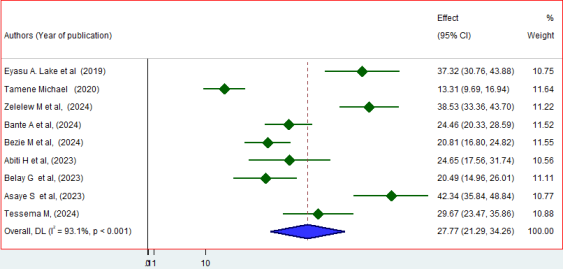
was found to be 27.77% (95% CI: 21.29-34.26) (
Figure 2). The study`s heterogeneity was examined by using the I
2 test, and as a result, significant heterogeneity (
I2 =93.1%, P value
< 0.001) were found (
Figure 2).
Figure 2. Overall pooled estimates of neonatal hyperbilirubinemia in Ethiopia.
3.3. Publication Bias and Heterogeneity
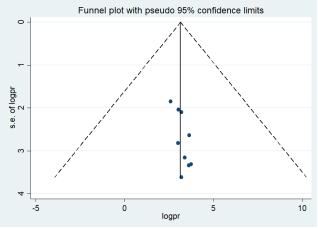
Figure 3. Funnel plot shows the study’s publication bias of neonatal hyperbilirubinemia in Ethiopia. Small-study effects were assessed using Egger’s regression test. The results indicated that there was no evidence of small-study effects among the included studies, as the test was not statistically significant, suggesting the absence of publication bias (p-value = 0.29).
To assess heterogeneity among the included studies, the Cochrane Q test and the I2 statistic, along with their corresponding p-values, were used. Heterogeneity was categorized as none, low, moderate, or high based on I2 values of 0%, 25%, 50%, and 75%, respectively. A random-effects model was applied for the meta-analysis.
The results indicated substantial heterogeneity, with an I
2 value of 93.1% (p < 0.001). Publication bias was also assessed, and visual inspection of the funnel plot showed an asymmetrical distribution of studies. This asymmetry was further evaluated using meta-regression analysis (
Figure 3).
3.4. Subgroup Analysis
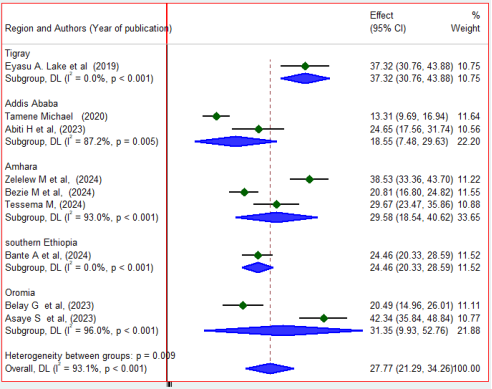
Based on geographical location, subgroup analysis was conducted by region. The results showed that the highest pooled prevalence of neonatal hyperbilirubinemia was observed in the Oromia region at 31.35% (95% CI: 9.93-52.76), followed by the Amhara region at 29.58% (95% CI: 18.54-40.62), and the lowest in Addis Ababa at 18.55% (95% CI: 7.48-29.63) (
Figure 4).
Figure 4. Sub-group analysis of the study by the region of neonatal hyperbilirubinemia in Ethiopia.
3.5. Pooled Associated of Neonatal Hyperbilirubinemia
Due to inconsistencies in how exposures were categorized in relation to neonatal hyperbilirubinemia across the included studies, only some associated factors were eligible for quantitative synthesis, while others were not pooled. From the included studies, three variables—male sex, neonatal sepsis, and prematurity were identified as significant predictors of neonatal hyperbilirubinemia.
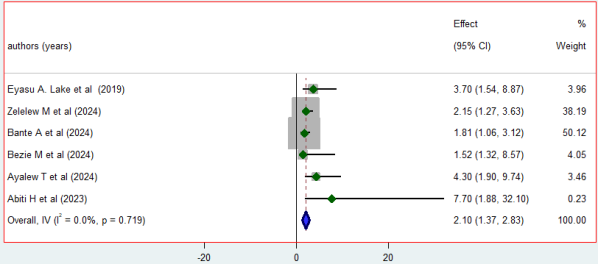
According to the findings of six studies, male neonates were more likely to develop neonatal hyperbilirubinemia compared with female neonates. Thus, the pooled odd ratio showed that male neonates were 2.1 times more likely to develop neonatal hyperbilirubinemia than female neonates (OR = 2.1; 95%CI: 1.37-2.83) (
Figure 5).
Figure 5. Pooled odds ratio for the association between male neonates and neonatal hyperbilirubinemia in Ethiopia.
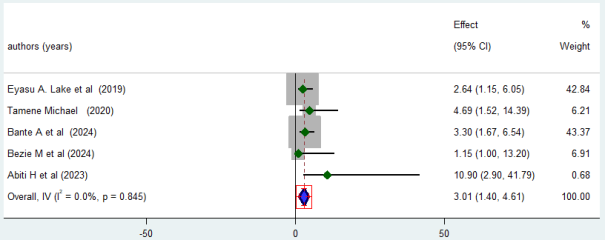
The results of this meta-analysis of five studies indicated that neonatal sepsis was associated with neonatal hyperbilirubinemia. Thus, the pooled odd ratio showed that neonatal sepsis were 3.01 times more likely to develop neonatal hyperbilirubinemia than counterparts (OR = 3.01; 95%CI: 1.4-4.61) (
Figure 6).
Figure 6. Pooled odds ratio for the association between neonatal sepsis and neonatal hyperbilirubinemia in Ethiopia.
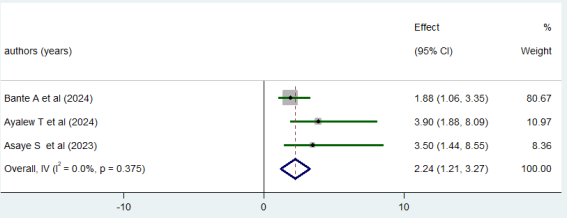
According to the findings of three studies, prematurity was associated with neonatal hyperbilirubinemia. The pooled of odd ratio showed that preterm neonates were 2.24 times more likely neonatal hyperbilirubinemia than term neonates (OR = 2.24; 95%CI: 1.21-3.27) (
Figure 7).
Figure 7. Pooled odds ratio for the association between prematurity and neonatal hyperbilirubinemia in Ethiopia.
4. Discussion
This systematic review and meta-analysis aimed to estimate the pooled prevalence of neonatal hyperbilirubinemia and identify its associated factors in Ethiopia. The findings revealed that the overall pooled prevalence of neonatal hyperbilirubinemia was reported that 27.77% (95% CI: 21.29-34.26). This study reported a higher prevalence compared to a primary study conducted at southwest Oromia, Ethiopia 20.5%
| [31] | M. Publishers and D. Markos, “Determinants of Neonatal Jaundice among Neonates Admitted to Neonatal Intensive Care Unit of Dessie Town Public Hospitals Amhara Region, Ethiopia 2020 Multi Center Cross-Sectional Study,” vol. 6, no. 2, pp. 1-8, 2023. |
[31]
and at St Paul’s Hospital Millennium Medical College, Addis Ababa, Ethiopia 13.3%
| [23] | M. T. H. H. Girma, “Prevalence and Contributing Factors of Neonatal Jaundice in Neonatal Intensive Care Unit at St Paul ’ s Hospital Millennium,” vol. 74, pp. 2016-2021, 2020,
https://doi.org/10.7176/JHMN/74-03 |
[23]
. This variation could be attributed to a variety of factors, including the volume of research conducted (the pooled result), cultural and socioeconomic differences between the nations, and improvements in diagnostic practices may have contributed to the higher reported prevalence. The other justification may be regional disparities in healthcare access and maternal health services may contribute to differences in burden. In areas with limited antenatal care, inadequate early breastfeeding support, or delayed postnatal follow-up, neonates may be at increased risk of developing significant neonatal hyperbilirubinemia. Socioeconomic factors and rural residence may further exacerbate these risks.
Nevertheless, the findings of this systematic review and meta-analysis lower than the results of studies conducted at Mekelle City Public Hospitals, Northern Ethiopia 37.3%
| [22] | E. A. Lake, G. B. Abera, G. A. Azeze, N. A. Gebeyew, and B. W. Demissie, “Magnitude of Neonatal Jaundice and Its Associated Factor in Neonatal Intensive Care Units of Mekelle City Public Hospitals, Northern Ethiopia,” vol. 2019,
https://doi.org/10.1155/2019/1054943 |
[22]
, and at Bahir Dar City, Northwest Ethiopia 38.8%
| [24] | A. M. et Al, “Prevalence and Associated Factors of Jaundice Among Neonates Admitted to Neonatal Intensive Care Units at Public Specialized Hospitals in Bahir,” 2024,
https://doi.org/10.1177/2333794X241286739 |
[24]
. The lower pooled prevalence observed in this study compared to earlier reports may reflect improvements in maternal and neonatal healthcare services in recent years. Ethiopia has implemented several newborn health strategies, including expansion of essential newborn care, strengthening of health extension programs, increased institutional delivery coverage, and improved postnatal follow-up services. These interventions may have enhanced early detection and timely management of neonatal hyperbilirubinemia, thereby reducing its overall burden. Another possible explanation for the reduced prevalence is improved breastfeeding counseling and early initiation of breastfeeding practices. Delayed initiation and poor breastfeeding are known contributors to exaggerated physiological jaundice. Increased awareness among mothers and improved counseling during antenatal and postnatal care may have mitigated these risk factors. The availability of phototherapy units and standardized management protocols in referral and general hospitals may also have contributed to better case management. Early treatment reduces the progression to severe neonatal hyperbilirubinemia, which may influence reported prevalence, particularly in hospital-based studies.
The subgroup analysis by region showed that the highest prevalence of neonatal hyperbilirubinemia was observed in the Oromia Regional State, while the lowest was reported in Addis Ababa City, Ethiopia. This variation may be attributed to differences in access to and quality of maternal and newborn health services across the study areas.
In this meta-analysis, neonatal sepsis, male sex, and prematurity were identified as significant factors of neonatal hyperbilirubinemia. The meta-analysis revealed that the pooled odd ratio showed that Neonates diagnosed with sepsis were significantly more likely to develop jaundice compared to those without infection (OR = 3.01; 95%CI: 1.4-4.61). This finding was similar with primary study conducted at St Paul’s Hospital Millennium Medical College, Addis Ababa, Ethiopia 13.3%
| [23] | M. T. H. H. Girma, “Prevalence and Contributing Factors of Neonatal Jaundice in Neonatal Intensive Care Unit at St Paul ’ s Hospital Millennium,” vol. 74, pp. 2016-2021, 2020,
https://doi.org/10.7176/JHMN/74-03 |
[23]
, and at south Gondar zone, Ethiopia
| [25] | M. Bezie, A. Melkie, S. Biru, M. Haile, and Y. Yimam, “Magnitude of Neonatal Jaundice and Its Predictors among Neonates Admitted in NICUs in Ethiopia: A Facility-Based Cross- Sectional Study,” vol. 12, no. 127, pp. 18921-18930, 2024, https://doi.org/10.22038/ijp.2024.62393.4772 |
[25]
. This association may be explained by sepsis can impair hepatic function, reducing the liver’s ability to conjugate and excrete bilirubin. Additionally, systemic infection may increase hemolysis and disrupt red blood cell stability, leading to elevated bilirubin production. Inflammatory cytokines released during infection can further compromise hepatocellular function and biliary excretion. Moreover, septic neonates often experience poor feeding, dehydration, and metabolic instability, which can exacerbate bilirubin accumulation. This finding highlights the importance of early diagnosis and prompt management of neonatal infections to prevent complications such as severe neonatal hyperbilirubinemia and kernicterus.
This meta-analysis revealed that Male neonates were found to have higher odds of developing neonatal hyperbilirubinemia compared to female neonates (OR = 2.1; 95%CI: 1.37-2.83). This finding is consistent with a primary study conducted at in Bahir Dar City, Northwest Ethiopia
| [24] | A. M. et Al, “Prevalence and Associated Factors of Jaundice Among Neonates Admitted to Neonatal Intensive Care Units at Public Specialized Hospitals in Bahir,” 2024,
https://doi.org/10.1177/2333794X241286739 |
[24]
and at Mekelle City Public Hospitals, Northern Ethiopia
| [22] | E. A. Lake, G. B. Abera, G. A. Azeze, N. A. Gebeyew, and B. W. Demissie, “Magnitude of Neonatal Jaundice and Its Associated Factor in Neonatal Intensive Care Units of Mekelle City Public Hospitals, Northern Ethiopia,” vol. 2019,
https://doi.org/10.1155/2019/1054943 |
[22]
and at referral hospitals in northeast Ethiopia
| [25] | M. Bezie, A. Melkie, S. Biru, M. Haile, and Y. Yimam, “Magnitude of Neonatal Jaundice and Its Predictors among Neonates Admitted in NICUs in Ethiopia: A Facility-Based Cross- Sectional Study,” vol. 12, no. 127, pp. 18921-18930, 2024, https://doi.org/10.22038/ijp.2024.62393.4772 |
[25]
. This could be because suggested that male neonates may have relatively delayed hepatic maturation, leading to reduced activity of the enzyme uridine diphosphate-glucuronosyltransferase (UGT1A1), which is responsible for bilirubin conjugation. The other justification may be due to male neonates are more vulnerable to perinatal stress and oxidative injury, which may increase red blood cell breakdown and bilirubin production. Hormonal differences between male and female neonates may also play a role in bilirubin metabolism.
In addition, this study found that Prematurity was strongly associated with neonatal hyperbilirubinemia. The pooled of odd ratio showed that preterm neonates were 2.24 times more likely neonatal hyperbilirubinemia than term neonates (OR = 2.24; 95%CI: 1.21-3.27). This was congruent with a study conducted at public health facilities in Dessie Town Public Hospitals Amhara Region, Ethiopia
| [31] | M. Publishers and D. Markos, “Determinants of Neonatal Jaundice among Neonates Admitted to Neonatal Intensive Care Unit of Dessie Town Public Hospitals Amhara Region, Ethiopia 2020 Multi Center Cross-Sectional Study,” vol. 6, no. 2, pp. 1-8, 2023. |
[31]
and at referral hospitals in northeast Ethiopia
| [17] | T. Ayalew et al., “Factors associated with neonatal jaundice among neonates admitted at referral hospitals in northeast Ethiopia: a facility-based unmatched case-control study,” BMC Pregnancy Childbirth, vol. 24, no. 1, pp. 1-10 (2024), 2024,
https://doi.org/10.1186/s12884-024-06352-y |
[17]
. This could be because preterm neonates have immature hepatic enzyme systems, particularly reduced UGT1A1 activity, which limits bilirubin conjugation and clearance. The other justification may be due to premature infants often have increased red blood cell turnover and a shorter erythrocyte lifespan, resulting in higher bilirubin production and preterm neonates are also more likely to experience feeding difficulties, delayed meconium passage, and increased enterohepatic circulation of bilirubin, all of which contribute to elevated serum bilirubin levels.
5. Strengths of the Study, Limitations of the Study and Implications of the Study
This review provides updated pooled evidence on neonatal hyperbilirubinemia and its associated factors in Ethiopia. It followed PRISMA guidelines, employed a comprehensive search strategy, and used rigorous quality appraisal tools. The inclusion of subgroup and sensitivity analyses strengthens the reliability of the findings.
Several limitations should be acknowledged all included studies were hospital-based, which may overestimate or underestimate the true community burden. Variation in diagnostic criteria and bilirubin measurement methods could introduce measurement bias. High heterogeneity among studies limits the precision of pooled estimates.
Despite the observed lower prevalence, neonatal hyperbilirubinemia remains a significant clinical concern. Strengthening early screening programs, improving maternal education, ensuring availability of phototherapy, and enhancing neonatal follow-up services are essential. Special attention should be given to preterm and neonatal sepsis, as well as male neonates.
6. Conclusion
In summary, this review highlights that neonatal hyperbilirubinemia was low. The findings highlight a significant association between Sex of neonates, neonatal sepsis, and prematurity with neonatal hyperbilirubinemia. Routine early screening and timely management of neonatal hyperbilirubinemia should be strengthened in Ethiopia. Health facilities need adequate phototherapy and laboratory services. Policymakers should prioritize neonatal care resources, and further high-quality community-based research should be conducted.
Abbreviations
BMI | Body Mass |
Index CI | Confidence Interval |
OR | Odds Ratio |
Acknowledgments
We extend our heartfelt appreciation to the authors of the primary research incorporated into this systematic review and meta-analysis.
Author Contributions
Bacha Merga Chuko: Investigation, Methodology, Project administration, Resources, Software, Supervision, Validation, Visualization, Writing – original draft, Writing – review & editing
Fikru Assefa: Investigation, Methodology, Project administration, Resources, Software, Supervision, Validation, Visualization, Writing – original draft, Writing – review & editing
Nebiyu Taye: Investigation, Methodology, Project administration, Resources, Software, Supervision, Validation, Visualization, Writing – original draft, Writing – review & editing
Zufela Sime: Investigation, Methodology, Project administration, Resources, Software, Supervision, Validation, Visualization, Writing – original draft, Writing – review & editing
Derara Kebata: Investigation, Methodology, Project administration, Resources, Software, Supervision, Validation, Visualization, Writing – original draft, Writing – review & editing
Gada Edea: Formal Analysis, Investigation, Visualization, Writing – original draft, Writing – review & editing
Girma Teferi: Investigation, Methodology, Project administration, Resources, Software, Supervision, Validation, Visualization, Writing – original draft, Writing – review & editing
Shambel Negese: Investigation, Methodology, Project administration, Resources, Software, Supervision, Validation, Visualization, Writing – original draft, Writing – review & editing
Data Availability Statement
The original contributions presented in the study were included in the articles. Material; further inquiries can be directed to the corresponding author based upon reasonable request.
Conflicts of Interest
The authors declare no conflict of interest.
References
| [1] |
H. M. Ullah S, Rahman K, “Hyperbilirubinemia in neonates: types, causes, clinical examinations, preventive measures and treat- ments: a narrative review Iran J Public Heal., vol. 32, no. 2, pp. 261-268, 2016,
https://doi.org/10.4314/ejhs.v32i2.6
|
| [2] |
P. C. Richard A, “Lippincott’s Illustrated Review of Biochemistry. New York: Lippincott Williams & Wilkin’s,” 2011.
|
| [3] |
R. J. Mitra S, “Neonatal jaundice: aetiology, diagnosis and treatment; hmed. 2017.78.12.699,” Br J Hosp Med., no. February, p. 12, 2017,
https://doi.org/10.3389/fepid.2025.1443148
|
| [4] |
N. A. W. et al. Brobby, “‘Outcomes of neonatal hyperbilirubinemia and associated factors at a tertiary hospital in Ghana’, BMC Pediatrics, 25(1). Available at:
BMC Pediatr. 25(1), 2025,
https://doi.org/10.1371/journal.pone.0006470
|
| [5] |
C. H. Tampubolon, I. Bagus, E. Utama, and R. Pasaribu, “Description of Risk Factors Affecting Neonatal Jaundice,” vol. 9, no. December, 2024. pp. 175-184
https://doi.org/10.52403/ijshr.20240424
|
| [6] |
UNICEF, “Neonatal mortality rate,” 2024.
|
| [7] |
M. Demographic and H. Survey, Mini Demographic and Health Survey 2019. 2019.
|
| [8] |
U. Nations, “Transforming our world: the 2030 agenda for sustainable development,” 2020.
|
| [9] |
et al Scrafford CG, Mullany LC, Katz J, “Incidence of and risk factors for neonatal jaundice among newborns in southern Nepal.,” Trop. Med Int Heal., vol. 2, no. September, 2013.
|
| [10] |
et al. Gurley ES, Halder AK, Streatfield PK, “Estimating the burden of maternal and neonatal deaths associated with jaundice in Bangladesh: possible role of hepatitis E infection. Am J Public Health.,” 2012.
|
| [11] |
Tette EM, Nartey ET, Nuertey BD et al., “The pattern of neonatal admissions and mortality at a regional and district hospital in the Upper West Region of Ghana; a cross sectional study. 2020,” PLoS One, 2020,
https://doi.org/10.1016/j.heliyon.2023.e16019
|
| [12] |
F. Berhe, L. Gebreegziabher, H. G. Mihretu, and A. H. Berhe, “Prevalence and Factors Associated with Neonatal Mortality at Ayder Comprehensive Specialized Hospital, Northern Ethiopia. A Cross-Sectional,” pp. 29-37, 2020.
|
| [13] |
H. A. Mohamed, Z. Shiferaw, A. Kedir, R. Id, and A. K. Id, “Neonatal mortality and associated factors among neonates admitted to neonatal intensive care unit at public hospitals of Somali Regional State, Eastern Ethiopia: A multicenter retrospective analysis,” vol. 22, no. Ci, pp. 1-16, 2022,
https://doi.org/10.1371/journal.pone.0268648
|
| [14] |
G. Thomas, M. Demena, B. Hawulte, A. Eyeberu, and H. Heluf, “Neonatal Mortality and Associated Factors Among Neonates Admitted to the Neonatal Intensive Care Unit of Dil Chora Referral Hospital, Dire Dawa City, Ethiopia, 2021: A Facility-Based Study,” vol. 9, no. February, pp. 1-7, 2022,
https://doi.org/10.3389/fped.2021.793160
|
| [15] |
M. Y. Birhanu, A. A. Workineh, Y. Molla, E. Abebaw, A. Arora, and Y. Bazezew, “Rate and predictors of neonatal jaundice in northwest Ethiopia: Prospective cohort study,” J. Multidiscip. Healthc., vol. 14, pp. 447-457, 2021,
https://doi.org/10.2147/JMDH.S298034
|
| [16] |
B. D. Sisay, R. F. Abebe, A. A. Kassie, M. G. Wondimu, and G. A. Kassie, “Determinants of neonatal jaundice among neonates admitted to neonatal intensive care unit in public hospitals of Sidama Region, Sidama, Ethiopia, 2022: an unmatched case-control study,” Pan Afr. Med. J., vol. 45, 2023,
https://doi.org/10.11604/pamj.2023.45.117.40472
|
| [17] |
T. Ayalew et al., “Factors associated with neonatal jaundice among neonates admitted at referral hospitals in northeast Ethiopia: a facility-based unmatched case-control study,” BMC Pregnancy Childbirth, vol. 24, no. 1, pp. 1-10 (2024), 2024,
https://doi.org/10.1186/s12884-024-06352-y
|
| [18] |
A. Bante, M. Ahmed, N. Degefa, S. Shibiru, and M. Yihune, “Neonatal jaundice and associated factors in public hospitals of southern Ethiopia: A multi-center cross-sectional study,” Heliyon, vol. 10, no. 2, p. e24838, 2024,
https://doi.org/10.1016/j.heliyon.2024.e24838
|
| [19] |
F. M. of H. of Ethiopia, “Neonatal Intensive Care Unit (NICU) Training Management Protocol,” no. November, 2021.
|
| [20] |
M. J. Page et al., “PRISMA 2020 explanation and elaboration: updated guidance and exemplars for reporting systematic reviews review findings.,” BMJ, vol. 372: n160, 2021,
https://doi.org/10.1136/bmj.n160
|
| [21] |
Peters, M. D., “The Joanna Briggs Institute reviewers’ manual Methodol. JBI scoping Rev., no. 1, 2015.
|
| [22] |
E. A. Lake, G. B. Abera, G. A. Azeze, N. A. Gebeyew, and B. W. Demissie, “Magnitude of Neonatal Jaundice and Its Associated Factor in Neonatal Intensive Care Units of Mekelle City Public Hospitals, Northern Ethiopia,” vol. 2019,
https://doi.org/10.1155/2019/1054943
|
| [23] |
M. T. H. H. Girma, “Prevalence and Contributing Factors of Neonatal Jaundice in Neonatal Intensive Care Unit at St Paul ’ s Hospital Millennium,” vol. 74, pp. 2016-2021, 2020,
https://doi.org/10.7176/JHMN/74-03
|
| [24] |
A. M. et Al, “Prevalence and Associated Factors of Jaundice Among Neonates Admitted to Neonatal Intensive Care Units at Public Specialized Hospitals in Bahir,” 2024,
https://doi.org/10.1177/2333794X241286739
|
| [25] |
M. Bezie, A. Melkie, S. Biru, M. Haile, and Y. Yimam, “Magnitude of Neonatal Jaundice and Its Predictors among Neonates Admitted in NICUs in Ethiopia: A Facility-Based Cross- Sectional Study,” vol. 12, no. 127, pp. 18921-18930, 2024,
https://doi.org/10.22038/ijp.2024.62393.4772
|
| [26] |
H. Abiti, A. Dedefo, and L. Lemma, “Prevalence and Associated Factors of Hyperbilirubinemia Among Neonates Admitted to Neonatal Intensive Care Unit of Saint Peter Specialized Hospital, Addis Ababa, Ethiopia,” vol. 11, no. 3, pp. 56-63, 2023,
https://doi.org/10.11648/j.sjph.20231103.12
|
| [27] |
G. Belay, A. Gerbi, T. Gebremariam, T. Tilahun, and E. Chimdi, “Heliyon Jaundice and its associated factors among neonates admitted to selected referral hospitals in southwest oromia, Ethiopia: Multi-center cross-sectional study,” Heliyon, vol. 9, no. 5, p. e16019, 2023.
https://doi.org/10.1016/j.heliyon.2023.e16019
|
| [28] |
S. Asaye, M. Bekele, A. Getachew, D. Fufa, T. Adugna, and E. Tadasa, “Hyperbilirubinemia and Associated Factors Among Neonates Admitted to the Neonatal Care Unit in Jimma Medical Center,” Clin. Med. Insights Pediatr., vol. 17, p. 77, 2023,
https://doi.org/10.1177/11795565231193910
|
| [29] |
M. Tessema and W. Z. T. and L. A. M., Hussen Mekonnen, Tsion Alemu, Yohannes Godie, “neonatal intensive care unit of,” no. January, pp. 1-8, 2024,
https://doi.org/10.3389/fped.2024.1288604
|
| [30] |
R. H. Borenstein M, Higgins JP, Hedges LV, “Basics of meta-analysis: I2 is not an absolute measure of heterogeneity. Res Synth Methods; 8(1): 5-18.,” J. South Asian Fed. Obstet. Gynaecol., vol. 1, no. 8, pp. 5-18, 2017,
https://doi.org/10.5005/jp-journals-10006-1094
|
| [31] |
M. Publishers and D. Markos, “Determinants of Neonatal Jaundice among Neonates Admitted to Neonatal Intensive Care Unit of Dessie Town Public Hospitals Amhara Region, Ethiopia 2020 Multi Center Cross-Sectional Study,” vol. 6, no. 2, pp. 1-8, 2023.
|
Cite This Article
-
APA Style
Chuko, B. M., Assefa, F., Taye, N., Sime, Z., Kebata, D., et al. (2026). Systematic Review and Meta-analysis of Neonatal Hyperbilirubinemia in Ethiopia. American Journal of Clinical and Experimental Medicine, 14(4), 61-71. https://doi.org/10.11648/j.ajcem.20261404.12
 Copy
|
Copy
|
 Download
ACS Style
Chuko, B. M.; Assefa, F.; Taye, N.; Sime, Z.; Kebata, D., et al. Systematic Review and Meta-analysis of Neonatal Hyperbilirubinemia in Ethiopia. Am. J. Clin. Exp. Med. 2026, 14(4), 61-71. doi: 10.11648/j.ajcem.20261404.12
Copy
|
Download
AMA Style
Chuko BM, Assefa F, Taye N, Sime Z, Kebata D, et al. Systematic Review and Meta-analysis of Neonatal Hyperbilirubinemia in Ethiopia. Am J Clin Exp Med. 2026;14(4):61-71. doi: 10.11648/j.ajcem.20261404.12
Copy
|
Download
-
@article{10.11648/j.ajcem.20261404.12,
  author = {Bacha Merga Chuko and Fikru Assefa and Nebiyu Taye and Zufela Sime and Derara Kebata and Gada Edea and Girma Teferi and Shambel Negese},
  title = {Systematic Review and Meta-analysis of Neonatal Hyperbilirubinemia in Ethiopia},
  journal = {American Journal of Clinical and Experimental Medicine},
  volume = {14},
  number = {4},
  pages = {61-71},
  doi = {10.11648/j.ajcem.20261404.12},
  url = {https://doi.org/10.11648/j.ajcem.20261404.12},
  eprint = {https://article.sciencepublishinggroup.com/pdf/10.11648.j.ajcem.20261404.12},
  abstract = {Neonatal hyperbilirubinemia is a common neonatal disorder worldwide and represents an important contributor to newborn morbidity, especially in low- and middle-income countries such as Ethiopia. Although multiple primary studies have investigated this condition, nationally representative and updated pooled evidence regarding its magnitude and determinants in Ethiopia is still limited. Methods: A systematic review and meta-analysis were conducted according to the Preferred Reporting Items for Systematic Reviews and Meta-Analyses (PRISMA) guidelines and prospectively registered in the PROSPERO database (registration number: CRD420251108378). A comprehensive search of electronic databases, including PubMed, Google Scholar, Cochrane Library, and Embase, was undertaken to identify eligible studies. Observational studies that reported the prevalence and/or determinants of neonatal hyperbilirubinemia among newborns in Ethiopia were included. The quality of the included studies was assessed using the Joanna Briggs Institute (JBI) critical appraisal tools. Meta-analysis was performed using a random-effects model to estimate the pooled prevalence of neonatal hyperbilirubinemia and the pooled effect estimates of associated factors. Statistical analyses were conducted using STATA version 14. The extent of heterogeneity among studies was evaluated using the I2 statistic, and potential publication bias was assessed through funnel plot inspection and Egger’s statistical test. Results: A total of nine studies involving 2,476 neonates were included in this systematic review and meta-analysis. The pooled prevalence of neonatal hyperbilirubinemia in Ethiopia was 27.77% (95% CI: 21.29-34.26%). The meta-analysis identified several factors significantly associated with neonatal hyperbilirubinemia, including male sex (AOR = 2.10; 95% CI: 1.37-2.83), neonatal sepsis (AOR = 3.01; 95% CI: 1.40-4.61), and prematurity (AOR = 2.24; 95% CI: 1.21-3.27). These findings indicate that male neonates and those with underlying clinical conditions, particularly sepsis and prematurity, had higher odds of developing neonatal hyperbilirubinemia. Conclusion: Evidence suggested that low pooled neonatal hyperbilirubinemia. The findings highlight a significant association between male neonates, neonatal sepsis, and prematurity with neonatal hyperbilirubinemia. Routine early screening and timely management of neonatal hyperbilirubinemia should be strengthened in Ethiopia. Health facilities need adequate phototherapy and laboratory services. Policymakers should prioritize neonatal care resources, and further high-quality community-based research should be conducted.},
 year = {2026}
}
Copy
|
Download
-
TY  - JOUR
T1  - Systematic Review and Meta-analysis of Neonatal Hyperbilirubinemia in Ethiopia
AU  - Bacha Merga Chuko
AU  - Fikru Assefa
AU  - Nebiyu Taye
AU  - Zufela Sime
AU  - Derara Kebata
AU  - Gada Edea
AU  - Girma Teferi
AU  - Shambel Negese
Y1  - 2026/08/06
PY  - 2026
N1  - https://doi.org/10.11648/j.ajcem.20261404.12
DO  - 10.11648/j.ajcem.20261404.12
T2  - American Journal of Clinical and Experimental Medicine
JF  - American Journal of Clinical and Experimental Medicine
JO  - American Journal of Clinical and Experimental Medicine
SP  - 61
EP  - 71
PB  - Science Publishing Group
SN  - 2330-8133
UR  - https://doi.org/10.11648/j.ajcem.20261404.12
AB  - Neonatal hyperbilirubinemia is a common neonatal disorder worldwide and represents an important contributor to newborn morbidity, especially in low- and middle-income countries such as Ethiopia. Although multiple primary studies have investigated this condition, nationally representative and updated pooled evidence regarding its magnitude and determinants in Ethiopia is still limited. Methods: A systematic review and meta-analysis were conducted according to the Preferred Reporting Items for Systematic Reviews and Meta-Analyses (PRISMA) guidelines and prospectively registered in the PROSPERO database (registration number: CRD420251108378). A comprehensive search of electronic databases, including PubMed, Google Scholar, Cochrane Library, and Embase, was undertaken to identify eligible studies. Observational studies that reported the prevalence and/or determinants of neonatal hyperbilirubinemia among newborns in Ethiopia were included. The quality of the included studies was assessed using the Joanna Briggs Institute (JBI) critical appraisal tools. Meta-analysis was performed using a random-effects model to estimate the pooled prevalence of neonatal hyperbilirubinemia and the pooled effect estimates of associated factors. Statistical analyses were conducted using STATA version 14. The extent of heterogeneity among studies was evaluated using the I2 statistic, and potential publication bias was assessed through funnel plot inspection and Egger’s statistical test. Results: A total of nine studies involving 2,476 neonates were included in this systematic review and meta-analysis. The pooled prevalence of neonatal hyperbilirubinemia in Ethiopia was 27.77% (95% CI: 21.29-34.26%). The meta-analysis identified several factors significantly associated with neonatal hyperbilirubinemia, including male sex (AOR = 2.10; 95% CI: 1.37-2.83), neonatal sepsis (AOR = 3.01; 95% CI: 1.40-4.61), and prematurity (AOR = 2.24; 95% CI: 1.21-3.27). These findings indicate that male neonates and those with underlying clinical conditions, particularly sepsis and prematurity, had higher odds of developing neonatal hyperbilirubinemia. Conclusion: Evidence suggested that low pooled neonatal hyperbilirubinemia. The findings highlight a significant association between male neonates, neonatal sepsis, and prematurity with neonatal hyperbilirubinemia. Routine early screening and timely management of neonatal hyperbilirubinemia should be strengthened in Ethiopia. Health facilities need adequate phototherapy and laboratory services. Policymakers should prioritize neonatal care resources, and further high-quality community-based research should be conducted.
VL  - 14
IS  - 4
ER  -
Copy
|
Download

 ,
Fikru Assefa
,
Fikru Assefa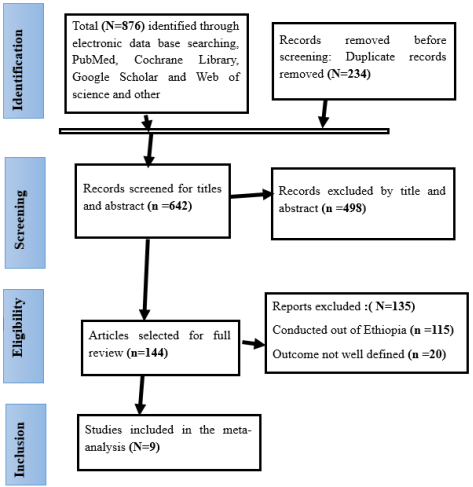



 Share This Article
 Twitter
 Linked In
 Facebook