Review Article | | Peer-Reviewed

Artisanal and Small-Scale Mining, Child Protection and Environmental Education: From Enforcement to Legislative Reform in Niger State, Nigeria.

Received: 10 October 2026     Accepted: 20 October 2026     Published: 31 October 2026
Views:       Downloads:
Abstract

Many mineral-bearing communities in Nigeria depend on artisanal and small-scale mining (ASM) for their livelihoods, but it is still linked to environmental degradation, informal labour, inadequate occupational safeguards, and children’s involvement in hazardous mining activities. The paper examines legislative and educational responses to the problem of child involvement and environmental damage in ASM, with special reference to the September 2026 deaths of 37 suspected illegal miners in the custody of the Nigeria Security and Civil Defense Corps (NSCDC) in Minna, Niger State as a critical case. According to the reports available, many of those killed were minors or adolescents who had been arrested in operations against alleged illegal gold mining in the Wushishi-Lukoto axis. The official investigation into the proximate medical and custodial causes of death has received some explanation, including a suspected disease outbreak, and other accounts raising concerns about crowding and lack of ventilation. The case thus highlights the dangers of illegal mining and the limits of enforcement-led responses that inadequately integrate child protection, due process, health safeguards, family welfare and access to education. The study adopts a qualitative case-study design. The design entails document analysis of Nigerian mining and child-rights legislation, reports from international labour institutions and credible contemporary media accounts. The findings reveal that Nigeria has a strong legal framework that outlaws illegal mining, environmental pollution, exploitative child labour, and hazardous work by children. But enforcement gaps, poverty, school exclusion, insecure livelihoods, limited ASM formalisation and weak interagency coordination undermine implementation. The paper proposes a child-centred responsible-mining framework comprising formalisation of ASM, mandatory school-retention support, community mining education, environmental rehabilitation, child-sensitive law enforcement, and transparent custodial accountability. It finds that durable solutions will require government to go beyond arrests alone and to combine lawful regulation with education, livelihoods, social protection and rights-based environmental governance.

Published in American Journal of Environmental Protection (Volume 15, Issue 5)
DOI 10.11648/j.ajep.20261505.13
Page(s) 169-175
Creative Commons

This is an Open Access article, distributed under the terms of the Creative Commons Attribution 4.0 International License (http://creativecommons.org/licenses/by/4.0/), which permits unrestricted use, distribution and reproduction in any medium or format, provided the original work is properly cited.

Copyright

Copyright © The Author(s), 2026. Published by Science Publishing Group

Keywords

Artisanal and Small-scale Mining, Child Labour, Illegal Mining, Environmental Governance, Niger State, Mining Legislation, Education, Nigeria

1. Introduction
Artisanal and small-scale mining serves as a vital source of employment, subsistence revenue, and local economic engagement in Nigeria's mineral-rich areas. However, when mining is conducted informally, without licenses, inadequately supervised, or organized criminally, it can lead to significant environmental, social, and governance issues. These encompass soil degradation, deforestation, erosion, devastation of agricultural lands, siltation and pollution of water sources, exposure to mercury and other chemicals, unsafe pits and excavations, mining accidents, worker exploitation, financial losses, and the involvement of children in perilous activities. The involvement of children in mining should be acknowledged as an issue beyond mere law enforcement. It illustrates the intersection of domestic poverty, joblessness, inadequate educational access and retention, insecurity, insufficient social safety nets, minimal awareness of mining dangers, and the temptation of immediate financial gain in areas with few formal employment prospects. Children are commonly acknowledged to face hazards in the mining and quarrying industries, including physical injuries, dust exposure, noise pollution, heavy burdens, precarious excavations, machinery risks, chemical agents, extended working hours, exploitation, and disruption of education. The International Labor Organization (ILO) characterizes child labor in artisanal and small-scale gold mining in Nigeria as a significant issue necessitating focused eradication strategies. The demise of 37 alleged illicit miners in the custody of NSCDC in Minna, Niger State, in September 2026 highlighted the pressing nature of the issue. The apprehended individuals were allegedly taken into custody during operations targeting suspected illicit gold-mining locations in the Wushishi-Lukoto region. Reliable accounts suggested that a significant number of the deceased were minors or teenagers. The Governor of Niger State stated that adolescents between the ages of 14 and 18 are engaged in mining activities instead of attending school. The NSCDC initially hinted at the potential for a disease outbreak, whereas additional reports expressed apprehensions regarding overcrowding and inadequate ventilation. Consequently, the determination of the cause of death ought to remain unresolved until the conclusion of a thorough, impartial, and medically rigorous inquiry. The occurrence should not be construed as evidence that the security forces deliberately caused their deaths. It indicates a more extensive institutional crisis: minors allegedly involved in perilous illicit mining; numerous individuals were apprehended after enforcement actions; and the detention setting experienced a mass-casualty incident necessitating stringent accountability. The event must be examined at the convergence of child safeguarding, mining regulation, environmental legislation, public health, criminal justice, and education. The aims of this document are: 1. To assess the ecological and child safeguarding hazards associated with unregulated and illicit artisanal and small-scale mining in Niger State. To examine Nigerian laws pertaining to mining, environmental conservation, child labor, and children's rights. 3. To evaluate the constraints of enforcement-oriented strategies in addressing illicit mining. 4. Advocating for cohesive legislative, educational, environmental, and community-oriented measures to deter children's participation in mining. 5. To extract policy insights from the Minna custody fatalities for child-focused and rights-oriented mining governance.
2. Gold Mining, Livelihood Dependence and Environmental Impacts
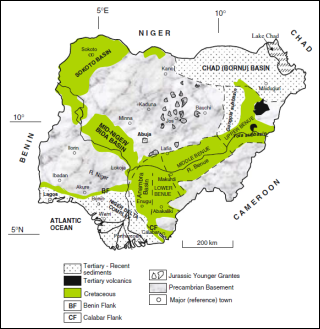
Gold mining activities have been identified as one of the exploration and exploitation endeavours with positive impacts in the nation’s economy by diversifying the economic base of Nigeria especially as it relates to the solid mineral resources. Northcentral Nigeria is rich in mineral resources, which are: Tin-tantalum-niobium, pegmatites, lead-zinc sulphide, coal-lignite, talc, marble, gemstones, gold, columbite, cassiterite, fluorite, lithium, iron-ore, wolframite. Wushishi/Lukoto is part of the Kushaka-Kusheriki schist belt with great mining potential for the country in terms of gold deposits. The regional architecture is characterized by a mix of metasedimentary, metavolcanic, and crystalline basement rocks. The predominant rock types hosting or running adjacent to the gold fields include : (1) Schists and Phyllites: Metasedimentary units (such as mica schist, amphibole schist, and chlorite schist) that act as the regional host fabric (2) Migmatites and Gneisses: Crystalline foundation rocks that form the structural boundaries of the localized supracrustal schist belts (3) Granitic Intrusions: Pan-African granitic plutons and dykes that intruded the basement rocks, providing the heat engines and hydrothermal fluids necessary to drive mineralizing events (Figure 1).
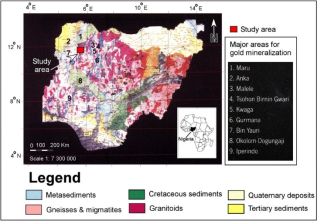
The occurrence of distributed metal concentrations in various schists, protobasins, veins, placers etc of the country has been reported in earlier investigations . The economic development and growth of any nation depend highly on the availability of mineral resources which have wide applications to the economics of any country. But these economic minerals need to be explored and exploited to harness its economics and viabilities for nations economic development. Gold occurs chiefly in quartz veins, in soils in the eluvial and alluvial form, and in stream sediments. Gold-bearing quartz veins are developed in metamorphosed rocks with compositions from semipelitic to pelitic to mafic. The main gold mineralization forms a distinctive exploration pattern (chemical signature) in the overburden and neighboring soil probably via weathering processes. Weathering processes (soils and stream sediments) samples provide data on local hidden mineralization (Figure 2). The origin of the gold-bearing fluid was hypothesised for the soil samples and the residual soil is the geochemical sample that is often used to locate concealed mineralization once a region of economic significance is localized. Deep groundwater movement results in a chemical reaction at the subsurface producing an elemental distribution pattern . Most of these elements occur as isolated elements (e.g. Cu, Ag, Zn, As, Bi, Pb, Sb, Hg, W, Mo. and Se) and are useful markers for the occurrence of gold . But for years now, the practice has been to use conventional approach and inappropriate use of hazardous substances such as mercury, cyanide to leach gold out of the ore during artisanal mining and exploitation and indiscriminate disposal of gangue without sustainable management. Besides, its cost ineffectiveness, despite its wide significance, makes geochemical analyses be greatly challenged . ASM is often characterized by low capital investment, rudimentary tools, hand methods of extraction, informal mineral trading, poor geological knowledge and lack of health, safety and environmental controls. A lot of miners make a living off of it. Informal mining can occur without approved mineral titles, mine plans, environmental permits, technical supervision, rehabilitation plans or occupational-health measures. Nigerian mining laws prohibit the exploration or exploitation of minerals without the appropriate legal authority. The Nigerian Minerals and Mining Act, 2007 vests ownership and control of mineral resources in the Federal Government and provides that no person shall explore or exploit minerals except as provided under the Act. The Act also provides for the establishment of regulatory institutions such as the Mining Cadastre Office (MCO), the Mines Inspectorate Department, the Mines Environmental Compliance Department and the State Mineral Resources and Environmental Management Committees but the socio-economic base of illegal mining must not be concealed. For many communities the household view of mining is that it is an accessible livelihood option requiring little formal education, providing an immediate (if uncertain) cash return and often embedded in family and community networks. Children in economically distressed families may go with the adults to the mining sites, assist in sorting ore, carry materials, wash ore, process minerals, sell food or water at the sites or engage in the actual excavation and recovery of minerals. Artisanal mining that is unregulated and poorly managed can lead to: (a) Land instability and abandoned mine openings and pits. (b) Loss of vegetation cover, and increasing soil erosion. (c) Physical disturbance of streams and wetlands and sedimentation. (d) Sediment, fuel, lubricants, ore processing and chemical use contamination of waterways. (e) Loss of agricultural land and food security. (f) Dust emissions and inhalation exposure (g) Noise, vibration and occupational injuries (i) Not restoring mined out land or backfilling excavations. (j) Increased risk of flooding, water standing on the ground, and harm to children and animals. The Nigerian Minerals and Mining Act, 2007 , provides for environmental protection, mine-land restoration and reclamation, environmental impact assessment, environmental protection and rehabilitation schemes, water pollution and community development agreements. It prohibits pollution of water courses and imposes duties on management and rehabilitation of the environment. However, informal and unauthorized sites usually are not subject to periodic technical inspection and environmental compliance.
Figure 1. Geological Map of Nigeria, .
Figure 2. Map showing major area of gold mineralization in Nigeria .
2.1. Child Labour and Hazardous Mining.
The ILO’s situational analysis on child labour in Nigeria’s artisanal and small-scale gold-mining sector highlights the need for interventions specifically designed to eliminate child labour in ASM. Nigerian child-protection law also establishes strong normative safeguards. The Child Rights Act, 2003, prohibits forced or exploitative labour and prohibits children from employment in industrial undertakings, subject to narrow supervised educational exceptions. Mining and quarrying are generally treated as hazardous activities for children. Nigeria’s child-labour policy context recognizes mining, quarrying, dangerous machinery, heavy loads, unhealthy working environments, and long working hours as conditions associated with hazardous child labour. Accordingly, a child’s participation in mining cannot be normalized merely because it occurs in a family, community, or informal economic context. Nigeria has ratified ILO Convention No. 138 on Minimum Age and Convention No. 182 on the Worst Forms of Child Labour. ILO guidance recognizes that hazardous work includes mining and conditions that endanger the health, safety, or morals of children. In Nigeria, ILO initiatives have promoted responsible gold-mining practices, occupational safety, local stakeholder capacity, and strategies for eliminating child labour in ASM. The participation of children in mining is strongly linked to poverty, household vulnerability, and weak school retention. When families cannot meet the costs of transportation, books, uniforms, meals, or examination fees, children may be withdrawn from school or combine schooling with work. In mining areas, the prospect of immediate income can compete directly with education, even though mining may produce lifelong health risks and limit future employment opportunities. The statement attributed to the Niger State Governor—that many of the deceased were adolescents working in mines rather than attending school—illustrates this education-livelihood tension. The policy response must therefore include practical support that makes school attendance economically realistic. Artisanal and small-scale mining contributes to livelihoods in many Nigerian rural communities. It offers an accessible source of income for people who may lack formal employment, technical skills, or access to capital. However, artisanal mining is frequently characterized by informal labour relations, limited technological capacity, weak environmental safeguards, poor occupational-health practices, unregulated mineral markets, and inadequate enforcement of child-protection laws. The International Labour Organization (ILO) recognizes artisanal and small-scale gold mining as a sector requiring targeted intervention to eliminate child labour in Nigeria. Its situational analysis emphasizes the need to understand the drivers of child involvement in mining and to develop coordinated responses that combine child protection, community education, social protection, formalization of artisanal mining, and improved livelihoods. Child involvement in artisanal mining is often linked to poverty, household economic shocks, adult unemployment, seasonal agricultural income gaps, poor school access, family expectations, and the attraction of immediate income from gold and other minerals. Children may be engaged in activities that communities perceive as minor assistance but which remain hazardous. Such tasks include carrying ore, washing mineralized soil, crushing rocks, transporting water, working near open pits, selling goods at mining sites, and participating in mineral-processing activities. The elimination of child labour in mining therefore requires more than security operations and criminal sanctions. It requires school-retention programmes, financial support for vulnerable households, accessible education, youth skills development, formalization of artisanal mining activities, occupational-safety education, environmental monitoring, and accountability for mine operators, recruiters, financiers, and mineral buyers who benefit from child labour.
2.2. Environmental Impacts of Artisanal Gold Mining in Niger State
One of the most important effects of the poorly regulated artisanal gold mining is environmental degradation. Mining activities may result in vegetation clearance, removal of top soil, soil erosion, land degradation, abandonment of excavations, destruction of farmland, siltation of rivers and streams, generation of dust, loss of biodiversity, deterioration of water quality and contamination by potentially toxic elements These risks are illustrated by evidence from Luku, near Minna in Niger State, evaluated the environmental impacts of artisanal.
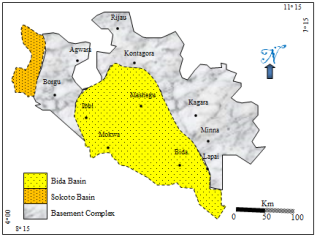
Figure 3. Generalized Geology Map of Niger State.
gold mining through field observation and geochemical analysis of the soil. The authors reported that mining resulted in land degradation, destruction of vegetation, soil erosion and deterioration of water quality. The same study also provided soil concentrations of several trace elements in the mining area, including lead (Pb), arsenic (As), copper (Cu), zinc (Zn), nickel (Ni), manganese (Mn), cadmium (Cd), cobalt (Co), molybdenum (Mo), mercury (Hg), silver (Ag), and zirconium (Zr). The reported mean concentrations were as shown in (Table 1), . They concluded that some of these elements could build up in plants and animals and therefore enter human exposure pathways via food, soil, surface water and groundwater. The environmental implications have direct bearing on children. Children living near informal mining areas may come into contact with dust, contaminated soil, polluted water, open excavations, unstable slopes, abandoned pits, and unsafe ore-processing areas. Environmental degradation may also decrease agricultural productivity and household food security, creating economic pressure on families to engage children in mining-related activities. Child protection considerations should therefore include environmental protection, mine site rehabilitation, providing safe water and restricting hazardous processing activities around homes and schools.
Table 1. Trace-element concentrations reported in mine-area soils at Luku, Minna, Niger State.

Element

Mean concentration

Unit

Lead, Pb

85.73

ppm

Arsenic, As

9.27

ppm

Copper, Cu

56.46

ppm

Zinc, Zn

31.00

ppm

Nickel, Ni

85.55

ppm

Manganese, Mn

283.73

ppm

Cadmium, Cd

1.68

ppm

Cobalt, Co

10.91

ppm

Molybdenum, Mo

0.91

ppm

Mercury, Hg

0.27

ppm

Silver, Ag

0.73

ppm

Zirconium, Zr

143.27

ppm

Source: Adapted from Ako et al.
3. The Minna Case and Enforcement Challenges
Thirty-seven suspected illegal miners died in custody of the Nigeria Security and Civil Defense Corps in Minna, Niger State, in September 2026, highlighting the complex nexus of illegal mining enforcement, child protection, detention standards and public accountability. Contemporary reports indicated the detainees were arrested in connection with suspected illegal gold mining operations in the Wushishi-Lukoto area near Minna. Many of those affected were also said to have been children or adolescents, with some as young as around 14-18 years old . The incident raised questions about age verification, health screening, detention capacity, ventilation, sanitation, access to water, medical response, family notification, due process and child sensitive treatment. As of this report, the immediate cause of death had not been definitively established. Some early reports suggested a possible outbreak of disease, while others raised concerns of overcrowding and inadequate ventilation in custody . Scholarly speaking, it would be wrong to say that the security agency was responsible for the deaths unless such conclusion is arrived at through the final forensic findings or by an independent commission of inquiry, judicial decisions or other authoritative evidence of investigation. The more accurate form is 37 suspected illegal miners died in the custody of the NSCDC and that the circumstances, causes and responsibility required transparent and independent investigation. The case shows that law enforcement action involving minors should be based on principles of child protection. Age-assessment and medical screening should be carried out immediately for children found in mining areas, they should be separated from adult detainees and they should be referred promptly to social-welfare and educational-reintegration services. Enforcement efforts should be particularly focused on adult mine operators, recruiters, financiers, mineral buyers, traffickers and other actors who profit from illegal mining and the exploitation of children.
4. Legal Framework on Mining, Environment and Child Protection
Nigeria has a legal framework that provides for illegal mining, environmental protection, community obligations and child welfare. The Nigerian Minerals and Mining Act, 2007, provides for the federal control of mineral resources and prohibits exploration or exploitation of minerals without lawful authority, . The Act provides for mining titles, small-scale mining leases, environmental compliance, mine inspection, rehabilitation of disturbed land and community-development obligations. One of the Act’s key provisions is that holders of mining leases, small-scale mining leases and quarry leases are required to enter into Community Development Agreements with host communities before they can commence development activities . They can provide mechanisms for mining communities to negotiate support for schools, health facilities, water infrastructure, vocational training, environmental rehabilitation, youth employment and other development priorities. The Child Rights Act, 2003 prohibits the employment of children in industrial undertakings and prohibits the use of forced and exploitative labour by children . In Nigerian policy and international labour standards, mining and quarrying are generally regarded as hazardous activities for children due to the serious threats they pose to health, safety, education and moral development . Recent national policy initiatives also emphasise the need for prevention and rehabilitation rather than enforcement alone. Nigeria’s National Child Labour Policy and Action Plan, 2026-2030, aims to reduce hazardous child labour, improve institutional coordination and strengthen social protection, as well as helping to keep children safe and in school. These policy directions support an integrated approach in mining communities that combines law enforcement and education, family livelihood support, formalisation of artisanal mining and community-based child protection systems.
In line with the New Provision and Constitutional rights guiding the Ministry of Mineral Resources as New Niger Agenda policy of His Excellency, Farmer Governor Mohammed Umaru Bago, and in accordance with the Nigeria minerals and mining Act 2007 and Niger State Laws, the Ministry of Mineral Resources wishes to inform the general public and all mining operators that to be recognized as a registered miner in Niger State, you must satisfy Federal and State requirements. The legal Basis Provision are (a) section 44 (3) of 1999 Constitution and Nigerian Mineral and Mining Act 2007- Vests ownership and control of minerals in Federal Government. (b) Section 19 & 100 of Mining Act 2007- Recognized State role in registration and monitoring. (c) Land Use Act 1978- Vests all land in State Government. (d) Niger State Mineral Resources Development Law-Establishes Ministry of Mineral Resources to regulate mining operations. Following the Reality of the facts a Registered Miner is an individual Cooperative Society or company that has a Federal Government Requirements such as a Corporate Affairs Commission (CAC) Certificate or Co-operative Registration certificate, Valid mining Title from Mining Cadastre office (MCO) in Abuja, which includes: - Exploration Licence (EL) OR Small -Scale Mining Lease (SSML) OR Mining Lease (ML) OR Quary Lease (QL). However, The Registration with the State Ministry of Mineral Resources, State Site Verification and profiling Report, A Valid State operational permit for the Current year and a Payment of approved levies (Haulage Development levy) on the other hand, Signed Community Development Agreement (CDA) with host community, Membership of Miners Association of Nigeria (MAN) Niger State Chapter or Registered cooperative under the Ministry.
5. Conclusion
The deaths of 37 suspected illegal miners in NSCDC custody in Minna, Niger State, is a stark warning of the human cost of illegal mining, of children being put to hazardous work, of weak social protection and of inadequate custodial safeguards. Reports indicate that many of the deceased were children or adolescents and the immediate cause of death is still under investigation. The incident should be a wake-up call for Nigeria to reset how it manages artisanal mining and child protection in mineral-bearing communities. Nigeria already has some important legal foundations in place. For example, the Nigerian Minerals and Mining Act, 2007 prohibits illicit mining and provides for environmental and safety, rehabilitation, inspection and community-governance mechanisms. The Child Rights Act, 2003, prohibits child labour in exploitative conditions and restricts employment of children in industries. Child labour in mining is also considered unacceptable and preventable through ILO programs and international labour standards. The problem is implementation. Arrests and raids may be necessary for illegal mining networks, but they cannot replace a strategy to address poverty, exclusion from education, unsafe environmental practices, informal mineral markets and institutional accountability. Children at mining sites need to be taken out of danger, helped back to school, and protected from further victimisation. Adults who recruit, exploit, finance or profit from child labour must be identified and held accountable. At the same time, mining communities need viable alternatives: safe schools, income support, formalised cooperatives, technical training, rehabilitated land and transparent public institutions. The response to illegal mining in Niger State must therefore be sustainable and blend legislation and education, enforcement and social protection, environmental rehabilitation and livelihood diversification, and accountability and respect for human dignity. Only with such an integrated approach can we reduce environmental damage, eliminate child involvement in mining and prevent future tragedies.
Abbreviations

IL0

International Labour Organization

NSCDC

Nigeria Security and Civil Defense Corps

ASM

Artisanal and Small Scale- Mining

BBC

British Broadcasting Corporation

MCO

Mining Cadastre

ML

Mining Lease

OR

Quarry Lease

EL

Exploration License

MAN

Mining Association of Nigeria

CDA

Community Development Agreement

Author Contributions
Johnson Kayode Ayeni: Conceptualization, Methodology, Writing – review & editing
Jacob Titilope Adeyemo: Resources
Conflicts of Interest
The authors declare no conflicts of interest.
References
[1] Ako, T. A., Onoduku, U. S., Oke, S. A., Adamu, I. A., Ali, S. E., Mamodu, A., & Ibrahim, A. T. (2014). Environmental impact of artisanal gold mining in Luku, Minna, Niger State, North Central Nigeria. Journal of Geosciences and Geomatics, 2(1), 28-37.
[2] Anhaeusser, C. R. 1976 The nature and distribution of Archean gold mineralisation in Southern Africa Mineral Sci. Eng. 8: 16 81.
[3] Antweiler, J. C., & Campbell, W. L. (1982). Gold in exploration geochemistry. Precious metals in the Northern at Bin Yauri, Nigeria. Jour. Afri. Earth Sc. 31: 433 - 449. Blackwell Publishing, 99p.
[4] British Broadcasting Corporation. (2026, September 18). Illegal mining in Niger State: 37 suspects die in Nigerian custody.
[5] Chouti, W. K., Adanve, M., & Mama, D. (2018). Dosage du plomb et du zinc dans les cultures de l’amarante.
[6] Clark, M. E., Archibald, N. J., & Hodgson, C. J. (1986). The structural and metamorphic setting of the Victory gold contamination par les éléments-traces métalliques dans une zone minière du Maroc oriental. C ahiers Cordillera, 10, 33-44.
[7] Darnley, A. G., Bjorklund, A., Bolviken, B., Gustavsson, N., Koval, P. V., Uk, J. P, & Xuejing, X. (1995). A de Porto-Novo. International Journ al of Biological and Chemical Sciences, 12 (5), 2381-2395.
[8] Federal Republic of Nigeria. (2003). Child Rights Act, 2003. Abuja, Nigeria.
[9] Federal Republic of Nigeria. (2007). Nigerian Minerals and Mining Act, 2007, Ministry of Solid Minerals Development, Abuja, Nigeria.
[10] Garba, I. (2002). Late Pan-African Tectonics and Origin of Gold Mineralization and Rare-Metal Pegmatites in the Kushaka Schist Belt, Northwestern Nigeria. Nigerian Journal of Mining and Geology, 38, 1-12.
[11] International Labour Organization. (2023). Child labour in the artisanal and small-scale gold mining (ASGM) sector in Nigeria: A situational analysis. Geneva: ILO.
[12] LeBoutillier, N. (2004). The Baseline Lithogeochemis try of the Metasedimentary Rocks of Cornwall. Unpublished.
[13] Lu, Y., Song, S., Wang, R., Liu, Z., Meng, J., Sweetman, A. J., & Wang, T. (2015). Impacts of soil and water metasedimentary rocks in Cornwall: preliminary data and environmental significance. Geoscience in mine, Kambalda, Western Australia. In Proceedings of gold (Vol. 86, pp. 243-254).
[14] Moon, C. J., Whateley, M. K. G., & Evans A. M. (2006). Introduction of mineral exploration (2nd ed.), Malden:
[15] Smouni, A., Ater, M., Auguy, F., Laplaze, L., El Mzibri, M., Berhada, F., & Doumas, P. (2010). Évaluation de la.
[16] Oyediran, I. A., Nzolang, C., Mupenge, M. P., & Idakwo, S. O. (2020). Structural control and Sn-Ta-Nb pollution on food safety and health risks in China. Environment international, 77, 5-15.
[17] Rasheed, A. I., & Abdulgafar, A. K. (2014). Impacts of artisanal mining on some heavy metals concentration in Surface Water in Kutcheri, Zamfara State North-Western Nigeria. Academic Journal of Interdisciplinary. Vol. 3 No. 7 (2014): Special Issue - November 2014, pp 74-82
[18] Reuters. (2026, September 18). Curfew imposed in Nigerian city after protests over deaths of detained miners. Rollinson, H. R. (2014). Using geochemical data: evaluation, presentation, interpretation. Routledge.
[19] Scott, P. W., Reid, K. S., Shail, R. K., & Scrivener, R. C. (2003). Baseline geochemistry of Devonian low-grade.
[20] Siegel, F. R. (1974). Applied Geochemistry. John Wiley & Sons, New Jersey.
[21] N. G. Obaje: Geology and Mineral Resources of Nigeria, Lec-ture Notes in Earth Sciences 120 (Berlin: Springer, 2009).
Cite This Article
  • APA Style

    Ayeni, J. K., Adeyemo, J. T. (2026). Artisanal and Small-Scale Mining, Child Protection and Environmental Education: From Enforcement to Legislative Reform in Niger State, Nigeria.. American Journal of Environmental Protection, 15(5), 169-175. https://doi.org/10.11648/j.ajep.20261505.13

    Copy | Download

    ACS Style

    Ayeni, J. K.; Adeyemo, J. T. Artisanal and Small-Scale Mining, Child Protection and Environmental Education: From Enforcement to Legislative Reform in Niger State, Nigeria.. Am. J. Environ. Prot. 2026, 15(5), 169-175. doi: 10.11648/j.ajep.20261505.13

    Copy | Download

    AMA Style

    Ayeni JK, Adeyemo JT. Artisanal and Small-Scale Mining, Child Protection and Environmental Education: From Enforcement to Legislative Reform in Niger State, Nigeria.. Am J Environ Prot. 2026;15(5):169-175. doi: 10.11648/j.ajep.20261505.13

    Copy | Download

  • @article{10.11648/j.ajep.20261505.13,
      author = {Johnson Kayode Ayeni and Jacob Titilope Adeyemo},
      title = {Artisanal and Small-Scale Mining, Child Protection and Environmental Education: From Enforcement to Legislative Reform in Niger State, Nigeria.},
      journal = {American Journal of Environmental Protection},
      volume = {15},
      number = {5},
      pages = {169-175},
      doi = {10.11648/j.ajep.20261505.13},
      url = {https://doi.org/10.11648/j.ajep.20261505.13},
      eprint = {https://article.sciencepublishinggroup.com/pdf/10.11648.j.ajep.20261505.13},
      abstract = {Many mineral-bearing communities in Nigeria depend on artisanal and small-scale mining (ASM) for their livelihoods, but it is still linked to environmental degradation, informal labour, inadequate occupational safeguards, and children’s involvement in hazardous mining activities. The paper examines legislative and educational responses to the problem of child involvement and environmental damage in ASM, with special reference to the September 2026 deaths of 37 suspected illegal miners in the custody of the Nigeria Security and Civil Defense Corps (NSCDC) in Minna, Niger State as a critical case. According to the reports available, many of those killed were minors or adolescents who had been arrested in operations against alleged illegal gold mining in the Wushishi-Lukoto axis. The official investigation into the proximate medical and custodial causes of death has received some explanation, including a suspected disease outbreak, and other accounts raising concerns about crowding and lack of ventilation. The case thus highlights the dangers of illegal mining and the limits of enforcement-led responses that inadequately integrate child protection, due process, health safeguards, family welfare and access to education. The study adopts a qualitative case-study design. The design entails document analysis of Nigerian mining and child-rights legislation, reports from international labour institutions and credible contemporary media accounts. The findings reveal that Nigeria has a strong legal framework that outlaws illegal mining, environmental pollution, exploitative child labour, and hazardous work by children. But enforcement gaps, poverty, school exclusion, insecure livelihoods, limited ASM formalisation and weak interagency coordination undermine implementation. The paper proposes a child-centred responsible-mining framework comprising formalisation of ASM, mandatory school-retention support, community mining education, environmental rehabilitation, child-sensitive law enforcement, and transparent custodial accountability. It finds that durable solutions will require government to go beyond arrests alone and to combine lawful regulation with education, livelihoods, social protection and rights-based environmental governance.},
     year = {2026}
    }
    

    Copy | Download

  • TY  - JOUR
    T1  - Artisanal and Small-Scale Mining, Child Protection and Environmental Education: From Enforcement to Legislative Reform in Niger State, Nigeria.
    AU  - Johnson Kayode Ayeni
    AU  - Jacob Titilope Adeyemo
    Y1  - 2026/10/31
    PY  - 2026
    N1  - https://doi.org/10.11648/j.ajep.20261505.13
    DO  - 10.11648/j.ajep.20261505.13
    T2  - American Journal of Environmental Protection
    JF  - American Journal of Environmental Protection
    JO  - American Journal of Environmental Protection
    SP  - 169
    EP  - 175
    PB  - Science Publishing Group
    SN  - 2328-5699
    UR  - https://doi.org/10.11648/j.ajep.20261505.13
    AB  - Many mineral-bearing communities in Nigeria depend on artisanal and small-scale mining (ASM) for their livelihoods, but it is still linked to environmental degradation, informal labour, inadequate occupational safeguards, and children’s involvement in hazardous mining activities. The paper examines legislative and educational responses to the problem of child involvement and environmental damage in ASM, with special reference to the September 2026 deaths of 37 suspected illegal miners in the custody of the Nigeria Security and Civil Defense Corps (NSCDC) in Minna, Niger State as a critical case. According to the reports available, many of those killed were minors or adolescents who had been arrested in operations against alleged illegal gold mining in the Wushishi-Lukoto axis. The official investigation into the proximate medical and custodial causes of death has received some explanation, including a suspected disease outbreak, and other accounts raising concerns about crowding and lack of ventilation. The case thus highlights the dangers of illegal mining and the limits of enforcement-led responses that inadequately integrate child protection, due process, health safeguards, family welfare and access to education. The study adopts a qualitative case-study design. The design entails document analysis of Nigerian mining and child-rights legislation, reports from international labour institutions and credible contemporary media accounts. The findings reveal that Nigeria has a strong legal framework that outlaws illegal mining, environmental pollution, exploitative child labour, and hazardous work by children. But enforcement gaps, poverty, school exclusion, insecure livelihoods, limited ASM formalisation and weak interagency coordination undermine implementation. The paper proposes a child-centred responsible-mining framework comprising formalisation of ASM, mandatory school-retention support, community mining education, environmental rehabilitation, child-sensitive law enforcement, and transparent custodial accountability. It finds that durable solutions will require government to go beyond arrests alone and to combine lawful regulation with education, livelihoods, social protection and rights-based environmental governance.
    VL  - 15
    IS  - 5
    ER  - 

    Copy | Download

Author Information