
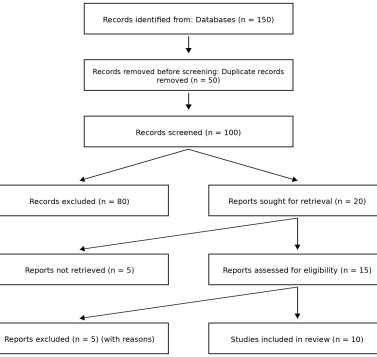
Background: Economic sanctions, embargoes, and blockades are globalization-related policy instruments that reshape cross-border trade, financial flows, and humanitarian access, with downstream effects on health systems. Oral health services are particularly vulnerable because they depend on stable international supply chains for dental materials, local anesthesia, and infection-control consumables. Objectives: To map and synthesize the available evidence on how economic blockades/sanctions affect health systems and oral health, and to derive transferable lessons relevant to Yemen. Methods: A scoping review guided by the Preferred Reporting Items for Systematic reviews and Meta-Analyses extension for Scoping Reviews (PRISMA-ScR) was conducted. Medical Literature Analysis and Retrieval System Online (MEDLINE)/PubMed, Web of Science, Scopus, the World Health Organization Institutional Repository for Information Sharing (WHO IRIS), ReliefWeb, and targeted United Nations (UN)/humanitarian sources were searched from inception to 05 December 2025. Eligible sources included peer-reviewed empirical studies and rigorously produced reports linking sanctions/embargoes/blockades to health-system outcomes and/or oral-health outcomes. Screening and data charting were performed by the author using pre-specified criteria; uncertainties were resolved by inclusion at screening and documented at full text. Results: Of 150 records identified, 50 duplicates were removed before screening. One hundred records were screened; 20 reports were sought for retrieval; 15 were assessed for eligibility; and 10 sources of evidence were included (Cuba, Iraq, Haiti, South Africa, Yemen). Across settings, recurring pathways included constrained imports (medicines, fuel, and clinical consumables), macro-financing shocks, infrastructure degradation, workforce attrition, reduced service availability, and widening inequities. Direct oral-health evidence was sparse, but multiple sources described dental supply disruption, infection-control constraints, and increased unmet need. Conclusions: The health impact of sanctions/blockades is mediated by governance, exemption feasibility, and system resilience. Protecting primary care, prevention, and essential supply chains can buffer harm, whereas fragile systems incur disproportionate losses. For Yemen, priorities include protected medical/dental supply corridors, workable financial/banking channels for exempt goods, integration of essential oral health into humanitarian health packages, and reinforcement of public primary care and prevention.
| Published in | American Journal of Health Policy and Management (Volume 1, Issue 2) |
| DOI | 10.11648/j.ajhpm.20260102.11 |
| Page(s) | 71-76 |
| Creative Commons |
This is an Open Access article, distributed under the terms of the Creative Commons Attribution 4.0 International License (http://creativecommons.org/licenses/by/4.0/), which permits unrestricted use, distribution and reproduction in any medium or format, provided the original work is properly cited. |
| Copyright |
Copyright © The Author(s), 2026. Published by Science Publishing Group |
Globalization, Economic Sanctions, Blockades and Embargoes, Health Systems, Supply Chains, Humanitarian Access, Oral Health, Yemen
Source | Country / period | Design / type | Sanctions/blockade exposure | Key health-system outcomes | Oral-health relevance |
|---|---|---|---|---|---|
Spiegel & Yassi (2004) | Cuba | Policy/case analysis | US embargo | Primary-care orientation; resilience mechanisms | Notes prevention orientation; indirect relevance to oral health |
Drain & Barry (2010) | Cuba | Review/commentary with data | US embargo | Medicine/supply constraints; outcomes paradox | Highlights supply constraints affecting care broadly |
Ali et al. (2000) | Iraq | Cross-sectional survey analysis | UN sanctions (1990s) | Childhood mortality signals; regional differences | No direct oral-health outcomes |
Daponte & Garfield (2000) | Iraq | Demographic analysis | UN sanctions (1990s) | Child mortality estimates; health system deterioration context | No direct oral-health outcomes |
Gibbons & Garfield (1999) | Haiti | Empirical analysis | Embargo (1991–1994) | Nutrition/mortality/service use declines | No direct oral-health outcomes |
Coovadia et al. (2009) | South Africa | Historical/policy analysis | Sanctions within political transition | Health inequities; system reforms post-transition | No direct oral-health outcomes |
Qirbi & Ismail (2017) | Yemen | Health policy & planning case study | Conflict + restrictions affecting imports/access | Facility functionality, workforce, financing constraints | Mentions service constraints relevant to dental care |
Garber et al. (2020) | Yemen | Geospatial analysis | Conflict setting with access constraints | Access to healthcare; facility functionality distribution | Applies to dental service access |
World Bank (2021) | Yemen | Policy note/report | Macroeconomic/import constraints in conflict | Health financing, system gaps, policy priorities | Notes supply and service constraints |
OMCT (2022) | Yemen | Human rights/advocacy report | Economic blockade | Humanitarian access, imports and essential goods constraints | Mentions medical/dental supply impacts (qualitative) |
AACODS | Authority, Accuracy, Coverage, Objectivity, Date and Significance. |
AXIS | Appraisal tool for Cross-Sectional Studies. |
DOI | Digital Object Identifier. |
JBI | Joanna Briggs Institute. |
MEDLINE | Medical Literature Analysis and Retrieval System Online. |
OMCT | World Organisation Against Torture. |
PCC | Population, Concept and Context. |
PRISMA-ScR | Preferred Reporting Items for Systematic Reviews and Meta-Analyses Extension for Scoping Reviews. |
UN | United Nations. |
WHO | World Health Organization. |
WHO IRIS | World Health Organization Institutional Repository for Information Sharing. |
Below is the link to the supplementary material:
| [1] | Pintor MP, et al. The impact of economic sanctions on health and health systems in low- and middle-income countries: a systematic review. BMJ Global Health. 2023; 8: e010968. |
| [2] | Tricco AC, Lillie E, Zarin W, O’Brien KK, Colquhoun H, Levac D, et al. PRISMA Extension for Scoping Reviews (PRISMA-ScR): Checklist and Explanation. Ann Intern Med. 2018; 169(7): 467-473. |
| [3] | Peters MDJ, Godfrey C, McInerney P, Munn Z, Tricco AC, Khalil H. Chapter 10: Scoping reviews. In: Aromataris E, Lockwood C, Porritt K, Pilla B, Jordan Z, editors. JBI Manual for Evidence Synthesis. JBI; 2024. |
| [4] | Downes MJ, Brennan ML, Williams HC, Dean RS. Development of a critical appraisal tool to assess the quality of cross-sectional studies (AXIS). BMJ Open. 2016; 6: e011458. |
| [5] |
Tyndall J. AACODS Checklist. Flinders University; 2010. Available from:
https://fac.flinders.edu.au/dspace/api/core/bitstreams/e94a96eb-0334-4300-8880-c836d4d9a676/content |
| [6] | Spiegel JM, Yassi A. Lessons from the margins of globalization: appreciating the Cuban paradox. J Public Health Policy. 2004; 25(1): 96-121. |
| [7] | Drain PK, Barry M. Fifty years of U.S. embargo: Cuba’s health outcomes and lessons. Science. 2010; 328(5978): 572-573. |
| [8] | Ali MM, Shah IH. Sanctions and childhood mortality in Iraq. Lancet. 2000; 355(9218): 1851-1857. |
| [9] | Daponte BO, Garfield R. The effect of economic sanctions on the mortality of Iraqi children prior to the 1991 Persian Gulf War. Am J Public Health. 2000; 90(4): 546-552. |
| [10] | Gibbons E, Garfield R. The impact of economic sanctions on health and human rights in Haiti, 1991-1994. Am J Public Health. 1999; 89(10): 1499-1504. |
| [11] | Coovadia H, Jewkes R, Barron P, Sanders D, McIntyre D. The health and health system of South Africa: historical roots of current public health challenges. Lancet. 2009; 374(9692): 817-834. |
| [12] | Qirbi N, Ismail SA. Health system functionality in a low-income country in the midst of conflict: the case of Yemen. Health Policy Plan. 2017; 32(6): 911-922. |
| [13] | Garber K, Fox C, Abdalla M, Tatem A, Qirbi N, Lloyd-Braff L, et al. Estimating access to health care in Yemen, a complex humanitarian emergency setting: a descriptive applied geospatial analysis. Lancet Glob Health. 2020; 8(11): e1435- e1443. |
| [14] |
World Bank. Health Sector in Yemen - Policy Note. Washington, DC: World Bank; 2021. Available from:
https://www.worldbank.org/en/country/yemen/publication/health-sector-in-yemen-policy-note |
| [15] |
World Organisation Against Torture (OMCT). Torture in Slow Motion: The Economic Blockade of Yemen and Its Grave Humanitarian Consequences. Geneva: OMCT; 2022. Available from:
https://www.omct.org/site-resources/files/Torture-in-slow-motion_September-2022.pdf |
APA Style
Hafedh, S. M. S. B. (2026). Global Lessons from Economic Blockades: Comparative Impacts on Health Systems with Emphasis on Dental Care in Yemen – A PRISMA-ScR–Guided Scoping Review. American Journal of Health Policy and Management, 1(2), 71-76. https://doi.org/10.11648/j.ajhpm.20260102.11
ACS Style
Hafedh, S. M. S. B. Global Lessons from Economic Blockades: Comparative Impacts on Health Systems with Emphasis on Dental Care in Yemen – A PRISMA-ScR–Guided Scoping Review. Am. J. Health Policy Manag. 2026, 1(2), 71-76. doi: 10.11648/j.ajhpm.20260102.11
@article{10.11648/j.ajhpm.20260102.11,
  author = {Salah Mohammed Salem Bin Hafedh},
  title = {Global Lessons from Economic Blockades: Comparative Impacts on Health Systems with Emphasis on Dental Care in Yemen – A PRISMA-ScR–Guided Scoping Review},
  journal = {American Journal of Health Policy and Management},
  volume = {1},
  number = {2},
  pages = {71-76},
  doi = {10.11648/j.ajhpm.20260102.11},
  url = {https://doi.org/10.11648/j.ajhpm.20260102.11},
  eprint = {https://article.sciencepublishinggroup.com/pdf/10.11648.j.ajhpm.20260102.11},
  abstract = {Background: Economic sanctions, embargoes, and blockades are globalization-related policy instruments that reshape cross-border trade, financial flows, and humanitarian access, with downstream effects on health systems. Oral health services are particularly vulnerable because they depend on stable international supply chains for dental materials, local anesthesia, and infection-control consumables. Objectives: To map and synthesize the available evidence on how economic blockades/sanctions affect health systems and oral health, and to derive transferable lessons relevant to Yemen. Methods: A scoping review guided by the Preferred Reporting Items for Systematic reviews and Meta-Analyses extension for Scoping Reviews (PRISMA-ScR) was conducted. Medical Literature Analysis and Retrieval System Online (MEDLINE)/PubMed, Web of Science, Scopus, the World Health Organization Institutional Repository for Information Sharing (WHO IRIS), ReliefWeb, and targeted United Nations (UN)/humanitarian sources were searched from inception to 05 December 2025. Eligible sources included peer-reviewed empirical studies and rigorously produced reports linking sanctions/embargoes/blockades to health-system outcomes and/or oral-health outcomes. Screening and data charting were performed by the author using pre-specified criteria; uncertainties were resolved by inclusion at screening and documented at full text. Results: Of 150 records identified, 50 duplicates were removed before screening. One hundred records were screened; 20 reports were sought for retrieval; 15 were assessed for eligibility; and 10 sources of evidence were included (Cuba, Iraq, Haiti, South Africa, Yemen). Across settings, recurring pathways included constrained imports (medicines, fuel, and clinical consumables), macro-financing shocks, infrastructure degradation, workforce attrition, reduced service availability, and widening inequities. Direct oral-health evidence was sparse, but multiple sources described dental supply disruption, infection-control constraints, and increased unmet need. Conclusions: The health impact of sanctions/blockades is mediated by governance, exemption feasibility, and system resilience. Protecting primary care, prevention, and essential supply chains can buffer harm, whereas fragile systems incur disproportionate losses. For Yemen, priorities include protected medical/dental supply corridors, workable financial/banking channels for exempt goods, integration of essential oral health into humanitarian health packages, and reinforcement of public primary care and prevention.},
 year = {2026}
}
TY  - JOUR
T1  - Global Lessons from Economic Blockades: Comparative Impacts on Health Systems with Emphasis on Dental Care in Yemen – A PRISMA-ScR–Guided Scoping Review
AU  - Salah Mohammed Salem Bin Hafedh
Y1  - 2026/10/14
PY  - 2026
N1  - https://doi.org/10.11648/j.ajhpm.20260102.11
DO  - 10.11648/j.ajhpm.20260102.11
T2  - American Journal of Health Policy and Management
JF  - American Journal of Health Policy and Management
JO  - American Journal of Health Policy and Management
SP  - 71
EP  - 76
PB  - Science Publishing Group
UR  - https://doi.org/10.11648/j.ajhpm.20260102.11
AB  - Background: Economic sanctions, embargoes, and blockades are globalization-related policy instruments that reshape cross-border trade, financial flows, and humanitarian access, with downstream effects on health systems. Oral health services are particularly vulnerable because they depend on stable international supply chains for dental materials, local anesthesia, and infection-control consumables. Objectives: To map and synthesize the available evidence on how economic blockades/sanctions affect health systems and oral health, and to derive transferable lessons relevant to Yemen. Methods: A scoping review guided by the Preferred Reporting Items for Systematic reviews and Meta-Analyses extension for Scoping Reviews (PRISMA-ScR) was conducted. Medical Literature Analysis and Retrieval System Online (MEDLINE)/PubMed, Web of Science, Scopus, the World Health Organization Institutional Repository for Information Sharing (WHO IRIS), ReliefWeb, and targeted United Nations (UN)/humanitarian sources were searched from inception to 05 December 2025. Eligible sources included peer-reviewed empirical studies and rigorously produced reports linking sanctions/embargoes/blockades to health-system outcomes and/or oral-health outcomes. Screening and data charting were performed by the author using pre-specified criteria; uncertainties were resolved by inclusion at screening and documented at full text. Results: Of 150 records identified, 50 duplicates were removed before screening. One hundred records were screened; 20 reports were sought for retrieval; 15 were assessed for eligibility; and 10 sources of evidence were included (Cuba, Iraq, Haiti, South Africa, Yemen). Across settings, recurring pathways included constrained imports (medicines, fuel, and clinical consumables), macro-financing shocks, infrastructure degradation, workforce attrition, reduced service availability, and widening inequities. Direct oral-health evidence was sparse, but multiple sources described dental supply disruption, infection-control constraints, and increased unmet need. Conclusions: The health impact of sanctions/blockades is mediated by governance, exemption feasibility, and system resilience. Protecting primary care, prevention, and essential supply chains can buffer harm, whereas fragile systems incur disproportionate losses. For Yemen, priorities include protected medical/dental supply corridors, workable financial/banking channels for exempt goods, integration of essential oral health into humanitarian health packages, and reinforcement of public primary care and prevention.
VL  - 1
IS  - 2
ER  -
Department of Orthodontics, Faculty of Dentistry, Sana’a University, Sana’a, Yemen;Faculty of Dentistry, Lebanese International University, Sana’a, Yemen;School of Dental Sciences, Universiti Sains Malaysia, Kota Bharu, Malaysia

Information



 Share This Article
 Twitter
 Linked In
 Facebook
 Copy
Copy Download