
Background and objectives: Antimicrobial resistance among bacterial strains is an emerging problem. Urinary tract infections are one of the most common bacterial infections in humans, both in the hospital and the community settings. Multidrug resistance is seen in Klebsiella which serves as the most common cause of increased morbidity and mortality. The objective of this study was to isolate and evaluate the antimicrobial resistance pattern of Klebsiella pneumoniae from UTI cases in and around southern part of Trivandrum district, Kerala. Materials and Methods: This retrospective work was carried out between December 2024 and September 2025, at the Microbiology diagnostic laboratory, Dr. SM CSI Medical College and Hospital, Karakonam, Trivandrum district, Kerala. 200 cases of Klebsiella pneumoniae culture positive cases of UTI from both inpatients and outpatients were included in the study. Midstream and catheterized urine were collected with proper precautions, as per their clinical conditions. The isolates were obtained by culturing the samples in conventional media and identified as per CLSI guidelines. Antibiotic susceptibility of each of the isolate was performed in Mueller Hinton agar by disc diffusion test and interpreted as per CLSI standards. For quality control, Klebsiella pneumoniae ATCC 13883 strain was utilized. The collected data was entered in MS-Excel and statistical analysis was done using SPSS 17 software and were expressed as percentages. Results: Out of the 200 Klebsiella pneumoniae culture positive cases, >70 age group predominated (26.5%). Nearly two third of the cases were male. 62% of the cases were inpatients. Among the 124 inpatients, female medical ward cases predominated (41.9%) over other wards. There were 54 MDR Klebsiella pneumoniae positive cases, of the total 200 positive cases (27%), under study. Overall, 100% of the Klebsiella pneumoniae isolates were susceptible to the lifesaving drugs like, Colistin and Tigecycline, followed by Meropenem (75%), Cefoperazone/sulbactam (66.5%), Amikacin (63.5%) and Piperacillin/tazobactam (62%), in that order. Conclusion: Our study revealed emergence of MDR Klebsiella pneumoniae among UTI cases, evident by the finding of 27% of the isolates being resistant to all antibiotics used, except, Colistin and Tigecycline. Another important observation was the emergence of gentamicin, being a first line drug, as a more effective drug than the higher antibiotics, against some of the resistant strains isolated (58%).
| Published in | American Journal of Laboratory Medicine (Volume 11, Issue 3) |
| DOI | 10.11648/j.ajlm.20261103.12 |
| Page(s) | 64-71 |
| Creative Commons |
This is an Open Access article, distributed under the terms of the Creative Commons Attribution 4.0 International License (http://creativecommons.org/licenses/by/4.0/), which permits unrestricted use, distribution and reproduction in any medium or format, provided the original work is properly cited. |
| Copyright |
Copyright © The Author(s), 2026. Published by Science Publishing Group |
Antimicrobial Resistance, Klebsiella Pneumoniae, Multidrug Resistance (MDR), UTI
Age group | 0-10 | 11-20 | 21-30 | 31-40 | 41-50 | 51-60 | 61-70 | >70 |
|---|---|---|---|---|---|---|---|---|
No. of isolates | 2 | 2 | 25 | 8 | 21 | 44 | 45 | 53 |
% of isolates | 1% | 1% | 12.5% | 4% | 10.5% | 22% | 22.5% | 26.5% |
Sex | Male | Female |
|---|---|---|
No. isolates | 134 | 66 |
% of isolates | 67% | 33% |
Out-patient | In-patient | |
|---|---|---|
No. of isolates | 76 | 124 |
% of isolates | 38% | 62% |
Ward | MMW | FMW | MSW | FSW | Neuro ward | Ortho ward | Urology ward | Pediatrics ward | Nephrology ward | OBG-W | MICU | CCU | ICU | EM-W |
|---|---|---|---|---|---|---|---|---|---|---|---|---|---|---|
No. | 32 | 52 | 2 | 4 | 4 | 4 | 3 | 1 | 1 | 8 | 7 | 2 | 2 | 2 |
% | 25.8 | 41.9 | 1.6 | 3.2 | 3.2 | 3.2 | 2.4 | 0.8 | 0.8 | 6.4 | 5.6 | 1.6 | 1.6 | 1.6 |
Antibiotic | No. of isolates | % of isolates | |
|---|---|---|---|
Amoxycillin/ | S | 82 | 41 |
Clavulanic acid | R | 118 | 59 |
Gentamicin | S | 116 | 58 |
R | 84 | 42 | |
Cotrimoxazole | S | 93 | 46.5 |
R | 107 | 53.5 | |
Norfloxacin | S | 101 | 50.5 |
R | 99 | 49.5 | |
Nitrofurantoin | S | 72 | 36 |
R | 128 | 64 | |
Cefazolin | S | 71 | 35.5 |
R | 129 | 64.5 | |
Cefuroxime | S | 79 | 39.5 |
R | 121 | 60.5 | |
Ceftriaxone | S | 82 | 41 |
R | 118 | 59 | |
Cefepime | S | 109 | 54.5 |
R | 91 | 45.5 | |
Tobramycin | S | 112 | 56 |
R | 88 | 44 | |
Amikacin | S | 127 | 63.5 |
R | 73 | 36.5 | |
Piperacillin/ | S | 124 | 62 |
Tazobactam | R | 76 | 38 |
Cefoperazone/ | S | 133 | 66.5 |
Sulbactam | R | 67 | 33.5 |
Meropenem | S | 150 | 75 |
R | 50 | 25 | |
Tigecycline | S | 200 | 100 |
R | 0 | 0 | |
Colistin | S | 200 | 100 |
R | 0 | 0 | |
UTI | Urinary Tract Infection |
MDR | Multidrug Resistant |
MDROs | Multidrug Resistant Organisms |
ATCC | American Type Culture Collection |
CLSI | Clinical and Laboratory Standards Institute |
AST | Antimicrobial Susceptibility Testing |
PDR | Pan Drug Resistant |
HAI | Healthcare Associated Infection |
CAI | Community Acquired Infection |
CRKP | Carbapenem Resistant Klebsiella Pneumoniae |
ESBL | Extended Spectrum Beta Lactamase |
K. pneumoniae | Klebsiella pneumoniae |
µg | Microgram |
MMW | Male Medical Ward |
FMW | Female Medical Ward |
MSW | Male Surgical Ward |
FSW | Female Surgical Ward |
OBGW | Obstetrics and Gynecology Ward |
MICU | Medical Intensive Care Unit |
CCU | Critical Care Unit |
ICU | Intensive Care Unit |
EMW | Emergency Medicine Ward |
| [1] | Pezeshki Najafabadi M, Dagoohian A, Rajaie S, Zarkesh-Esfahani SH, Edalati M. Common microbial causes of significant bacteriuria and their antibiotic resistance pattern in the Isfahan Province of Iran. Journal of Chemotherapy. 2018 Nov 17; 30(6-8): 348-53. |
| [2] | Peleg, A. Y., and Hooper, D. C. (2010). Hospital-acquired infections due to gram negative bacteria. N. Engl. J. Med. 362, 1804–1813. |
| [3] | Wang M, Earley M, Chen L, et al.: Clinical outcomes and bacterial characteristics of carbapenem-resistant Klebsiella pneumoniae complex among patients from different global regions (CRACKLE-2): a prospective, multicentre, cohort study. Lancet Infect Dis. 2022, 22: 401-12. |
| [4] | Wang X, Li Q, Kang J, et al.: Mortality risk factors and prognostic analysis of patients with multi-drug resistant Enterobacterales infection. Infect Drug Resist. 2022, 15: 3225-37. |
| [5] | Gorrie CL, Mirčeta M, Wick RR, et al.: Genomic dissection of Klebsiella pneumoniae infections in hospital patients reveals insights into an opportunistic pathogen. Nat Commun. 2022, 13: 3017. |
| [6] | Abera D, Alemu A, Mihret A, Negash AA, Abegaz WE, Cadwell K: Colonization with extended spectrum beta lactamase and carbapenemases producing Enterobacteriaceae among hospitalized patients at the global level: a systematic review and meta-analysis. PLoS One. 2023, 18: e0293528. |
| [7] | Falagas ME, Asimotou CM, Zidrou M, Kontogiannis DS, Filippou C: Global epidemiology and antimicrobial resistance of Klebsiella pneumoniae carbapenemase (KPC)-producing Gram-negative clinical isolates: a review. Microorganisms. 2025, 13: 1697. |
| [8] | Podschun, R., and Ullmann, U. (1998). Klebsiella spp. as nosocomial pathogens: epidemiology, taxonomy, typing methods, and pathogenicity factors. Clin. Microbiol. Rev. 11, 589–603. |
| [9] | Mohd Asri NA, Ahmad S, Mohamud R, et al.: Global prevalence of nosocomial multidrug-resistant Klebsiella pneumoniae: a systematic review and meta-analysis. Antibiotics (Basel). 2021, 10: 1508. |
| [10] | Russo A, Fusco P, Morrone HL, Trecarichi EM, Torti C: New advances in management and treatment of multidrug-resistant Klebsiella pneumoniae. Expert Rev Anti Infect Ther. 2023, 21: 41-55. |
| [11] | Yang J, Zhang K, Ding C, Wang S, Wu W, Liu X: Exploring multidrug-resistant Klebsiella pneumoniae antimicrobial resistance mechanisms through whole genome sequencing analysis. BMC Microbiol. 2023, 23: 245. |
| [12] | Denissen J, Reyneke B, Waso-Reyneke M, Havenga B, Barnard T, Khan S, Khan W: Prevalence of ESKAPE pathogens in the environment: antibiotic resistance status, community-acquired infection and risk to human health. Int J Hyg Environ Health. 2022, 244: 114006. |
| [13] | Gómez M, Valverde A, Del Campo R, Rodríguez JM, Maldonado-Barragán A: Phenotypic and molecular characterization of commensal, community-acquired and nosocomial Klebsiella spp. Microorganisms. 2021, 9: 2344. |
| [14] | Assefa M, Tigabu A, Belachew T, Tessema B: Bacterial profile, antimicrobial susceptibility patterns, and associated factors of community-acquired pneumonia among adult patients in Gondar, Northwest Ethiopia: a cross-sectional study. PLoS One. 2022, 17: e0262956. |
| [15] | Arato V, Raso MM, Gasperini G, Berlanda Scorza F, Micoli F: Prophylaxis and treatment against Klebsiella pneumoniae: current insights on this emerging anti-microbial resistant global threat. Int J Mol Sci. 2021, 22: 4042. |
| [16] | Alharbi MT, Almuhayawi MS, Nagshabandi MK, et al.: Antimicrobial resistance pattern, pathogenicity and molecular properties of hypervirulent Klebsiella pneumonia (hvKp) among hospital-acquired infections in the intensive care unit (ICU). Microorganisms. 2023, 11: 661. |
| [17] | Sharma A, Thakur A, Thakur N, Kumar V, Chauhan A, Bhardwaj N: Changing trend in the antibiotic resistance pattern of Klebsiella pneumoniae isolated from endotracheal aspirate samples of ICU patients of a tertiary care hospital in north India. Cureus. 2023, 15: e36317. |
| [18] | Kaur J, Singh H, Sethi T: Emerging trends in antimicrobial resistance in bloodstream infections: multicentric longitudinal study in India (2017-2022). Lancet Reg Health Southeast Asia. 2024, 26: 100412. |
| [19] | Collee, J. G., Fraser AG, Marmion BP, Simmons A. Mackey & McCartney Practical Medical Microbiology. 14th ed. New Delhi, India: Elsevier; 2006. 1. |
| [20] | Performance Standards for antimicrobial susceptibility testing; Clinical and laboratory standards institute. CLSI 2025; M100 -Ed34. |
| [21] | Tukaram Prabhu K, Kalpana Sadawarte, Namrata Pawar. Antimicrobial Resistance Pattern Of Klebsiella Pneumoniae Isolated In A Tertiary Care Hospital. OSR Journal of Dental and Medical Sciences (IOSR-JDMS). Volume 24, Issue 4 Ser. 4 (April. 2025), PP. 13-17. |
| [22] | Amandeep Kaur Saini, Amandeep Kaur. Antibiogram Of Klebsiella Pneumoniae Isolated From Urine Samples In A Tertiary Care Hospital Of Western Punjab. SSRG Int. J. Med. Sci. 2020; 7(9): 7- 11. |
| [23] | Jalal NA, Al-Ghamdi AM, Momenah AM, Ashgar SS, Bantun F, Bahwerth FS, Hariri SH, Johargy AK, Barhameen AA, Al-Said HM, Faidah H. Prevalence And Antibiogram Pattern Of Klebsiella Pneumoniae In A Tertiary Care Hospital In Makkah, Saudi Arabia: An 11-Year Experience. Antibiotics. 2023; 12(1): 164. |
| [24] | Pramodh K, Thansila LT, Pushpajan KS, Lallu JM. A retrospective analysis of antibiogram on urinary isolates in a tertiary care hospital, Trivandrum, India. Int J Basic Clin Pharmacol 2019; 8: 1273-7. |
| [25] | Panigrahi K, Pathi B, Sahoo J (October 07, 2025) Antimicrobial Susceptibility Profile of Klebsiella pneumoniae Isolates From a Tertiary Care Hospital: A Retrospective Study. Cureus 17(10): e94006. |
| [26] | Suresh Babu L, Jobin S. R. Antimicrobial resistance in pathogens causing urinary tract infections in and around a tertiary care hospital in South Kerala, India. MedPulse Int J Microbiol. May 2020, 14 (2): 06-14. |
APA Style
Babu, S. (2026). Antimicrobial Resistance Pattern of Klebsiella pneumoniae Isolated from UTI Cases in and Around South Trivandrum District, Kerala, India. American Journal of Laboratory Medicine, 11(3), 64-71. https://doi.org/10.11648/j.ajlm.20261103.12
ACS Style
Babu, S. Antimicrobial Resistance Pattern of Klebsiella pneumoniae Isolated from UTI Cases in and Around South Trivandrum District, Kerala, India. Am. J. Lab. Med. 2026, 11(3), 64-71. doi: 10.11648/j.ajlm.20261103.12
AMA Style
Babu S. Antimicrobial Resistance Pattern of Klebsiella pneumoniae Isolated from UTI Cases in and Around South Trivandrum District, Kerala, India. Am J Lab Med. 2026;11(3):64-71. doi: 10.11648/j.ajlm.20261103.12
@article{10.11648/j.ajlm.20261103.12,
  author = {Suresh Babu},
  title = {Antimicrobial Resistance Pattern of Klebsiella pneumoniae Isolated from UTI Cases in and Around South Trivandrum District, Kerala, India},
  journal = {American Journal of Laboratory Medicine},
  volume = {11},
  number = {3},
  pages = {64-71},
  doi = {10.11648/j.ajlm.20261103.12},
  url = {https://doi.org/10.11648/j.ajlm.20261103.12},
  eprint = {https://article.sciencepublishinggroup.com/pdf/10.11648.j.ajlm.20261103.12},
  abstract = {Background and objectives: Antimicrobial resistance among bacterial strains is an emerging problem. Urinary tract infections are one of the most common bacterial infections in humans, both in the hospital and the community settings. Multidrug resistance is seen in Klebsiella which serves as the most common cause of increased morbidity and mortality. The objective of this study was to isolate and evaluate the antimicrobial resistance pattern of Klebsiella pneumoniae from UTI cases in and around southern part of Trivandrum district, Kerala. Materials and Methods: This retrospective work was carried out between December 2024 and September 2025, at the Microbiology diagnostic laboratory, Dr. SM CSI Medical College and Hospital, Karakonam, Trivandrum district, Kerala. 200 cases of Klebsiella pneumoniae culture positive cases of UTI from both inpatients and outpatients were included in the study. Midstream and catheterized urine were collected with proper precautions, as per their clinical conditions. The isolates were obtained by culturing the samples in conventional media and identified as per CLSI guidelines. Antibiotic susceptibility of each of the isolate was performed in Mueller Hinton agar by disc diffusion test and interpreted as per CLSI standards. For quality control, Klebsiella pneumoniae ATCC 13883 strain was utilized. The collected data was entered in MS-Excel and statistical analysis was done using SPSS 17 software and were expressed as percentages. Results: Out of the 200 Klebsiella pneumoniae culture positive cases, >70 age group predominated (26.5%). Nearly two third of the cases were male. 62% of the cases were inpatients. Among the 124 inpatients, female medical ward cases predominated (41.9%) over other wards. There were 54 MDR Klebsiella pneumoniae positive cases, of the total 200 positive cases (27%), under study. Overall, 100% of the Klebsiella pneumoniae isolates were susceptible to the lifesaving drugs like, Colistin and Tigecycline, followed by Meropenem (75%), Cefoperazone/sulbactam (66.5%), Amikacin (63.5%) and Piperacillin/tazobactam (62%), in that order. Conclusion: Our study revealed emergence of MDR Klebsiella pneumoniae among UTI cases, evident by the finding of 27% of the isolates being resistant to all antibiotics used, except, Colistin and Tigecycline. Another important observation was the emergence of gentamicin, being a first line drug, as a more effective drug than the higher antibiotics, against some of the resistant strains isolated (58%).},
 year = {2026}
}
TY  - JOUR
T1  - Antimicrobial Resistance Pattern of Klebsiella pneumoniae Isolated from UTI Cases in and Around South Trivandrum District, Kerala, India
AU  - Suresh Babu
Y1  - 2026/08/24
PY  - 2026
N1  - https://doi.org/10.11648/j.ajlm.20261103.12
DO  - 10.11648/j.ajlm.20261103.12
T2  - American Journal of Laboratory Medicine
JF  - American Journal of Laboratory Medicine
JO  - American Journal of Laboratory Medicine
SP  - 64
EP  - 71
PB  - Science Publishing Group
SN  - 2575-386X
UR  - https://doi.org/10.11648/j.ajlm.20261103.12
AB  - Background and objectives: Antimicrobial resistance among bacterial strains is an emerging problem. Urinary tract infections are one of the most common bacterial infections in humans, both in the hospital and the community settings. Multidrug resistance is seen in Klebsiella which serves as the most common cause of increased morbidity and mortality. The objective of this study was to isolate and evaluate the antimicrobial resistance pattern of Klebsiella pneumoniae from UTI cases in and around southern part of Trivandrum district, Kerala. Materials and Methods: This retrospective work was carried out between December 2024 and September 2025, at the Microbiology diagnostic laboratory, Dr. SM CSI Medical College and Hospital, Karakonam, Trivandrum district, Kerala. 200 cases of Klebsiella pneumoniae culture positive cases of UTI from both inpatients and outpatients were included in the study. Midstream and catheterized urine were collected with proper precautions, as per their clinical conditions. The isolates were obtained by culturing the samples in conventional media and identified as per CLSI guidelines. Antibiotic susceptibility of each of the isolate was performed in Mueller Hinton agar by disc diffusion test and interpreted as per CLSI standards. For quality control, Klebsiella pneumoniae ATCC 13883 strain was utilized. The collected data was entered in MS-Excel and statistical analysis was done using SPSS 17 software and were expressed as percentages. Results: Out of the 200 Klebsiella pneumoniae culture positive cases, >70 age group predominated (26.5%). Nearly two third of the cases were male. 62% of the cases were inpatients. Among the 124 inpatients, female medical ward cases predominated (41.9%) over other wards. There were 54 MDR Klebsiella pneumoniae positive cases, of the total 200 positive cases (27%), under study. Overall, 100% of the Klebsiella pneumoniae isolates were susceptible to the lifesaving drugs like, Colistin and Tigecycline, followed by Meropenem (75%), Cefoperazone/sulbactam (66.5%), Amikacin (63.5%) and Piperacillin/tazobactam (62%), in that order. Conclusion: Our study revealed emergence of MDR Klebsiella pneumoniae among UTI cases, evident by the finding of 27% of the isolates being resistant to all antibiotics used, except, Colistin and Tigecycline. Another important observation was the emergence of gentamicin, being a first line drug, as a more effective drug than the higher antibiotics, against some of the resistant strains isolated (58%).
VL  - 11
IS  - 3
ER  -
Department of Microbiology, Dr. Somervell Memorial CSI Medical College and Hospital, Karakonam, India
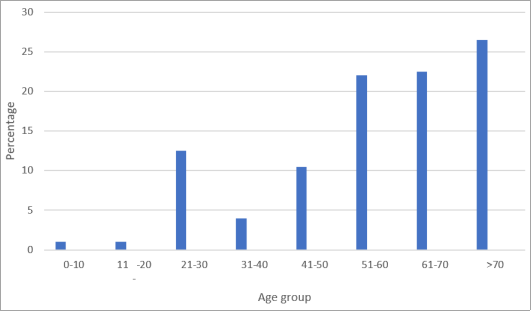
Figure 1. Age wise distribution of Klebsiella pneumoniae isolates in UTI cases (n=200).
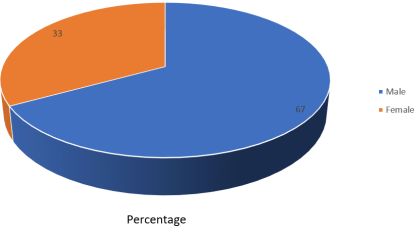
Figure 2. Sex wise distribution of Klebsiella pneumoniae isolates (n=200).
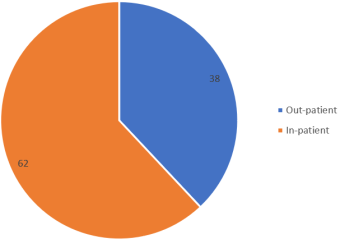
Figure 3. Out-patient and in-patient distribution of Klebsiella pneumoniae isolates (n=200).
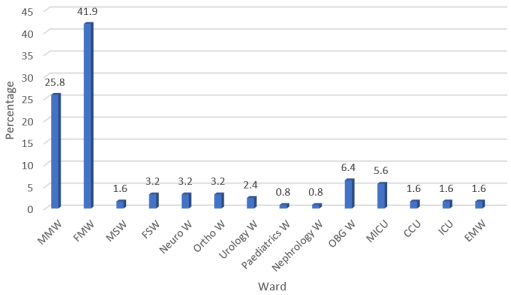
Figure 4. Ward-wise distribution of Klebsiella pneumoniae isolates among in-patients (n=124).
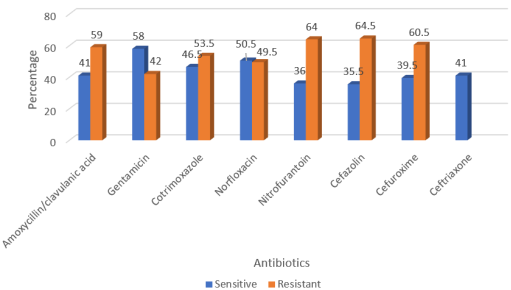
Figure 5. Antibiotic susceptibility pattern of Klebsiella pneumoniae isolates (n=200).
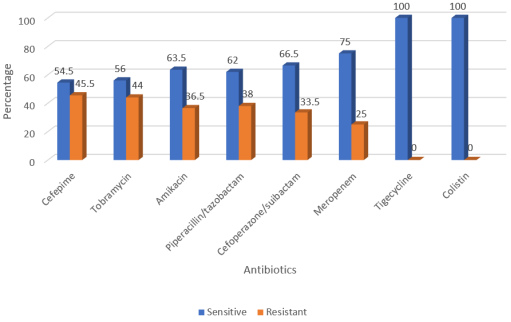
Figure 6. Antibiotic susceptibility pattern of Klebsiella pneumoniae isolates (n=200).

Information


 Share This Article
 Twitter
 Linked In
 Facebook
 Copy
Copy Download