Research Article | | Peer-Reviewed

Exploration of a Multidisciplinary Collaborative Management Model in Transarterial Radioembolization with Yttrium-90 Microspheres for Hepatocellular Carcinoma

Received: 26 January 2026     Accepted: 9 February 2026     Published: 25 February 2026
Views:       Downloads:
Abstract

This is a single-center retrospective observational study. Objective: To evaluate the clinical efficacy and implementation effect of the multidisciplinary collaborative management model in yttrium-90 microsphere radioembolization (Y90-RE) for hepatocellular carcinoma (HCC). Methods: Based on clinical practice, a multidisciplinary team (MDT) consisting of nuclear medicine, interventional vascular surgery, hepatobiliary surgery, radiology, clinical laboratory, nutrition, psychology and nursing teams was established. The responsibilities of each member were clarified, and a full-process standardized protocol covering preoperative assessment, intraoperative collaboration and postoperative management was formulated. Key measures included patient screening and contraindication evaluation, Tc-99m-labeled macroaggregated albumin simulation surgery, Y90 microsphere dose calculation, radiation protection management, nutritional support and psychological intervention. Results: This model standardized Y90-RE and improved treatment efficiency, ensuring the safety and consistency of the treatment process. Through multidisciplinary collaboration, comprehensive perioperative management of patients was effectively achieved, the risk of complications was reduced, and patients’ treatment compliance and rehabilitation quality were improved. Conclusion: The multidisciplinary collaborative management model is crucial to ensuring the perioperative safety and efficacy of Y90-RE for HCC patients and helps improve the standardized application level of this treatment. In the future, the diagnosis and treatment process will be further optimized through data accumulation, and the model will be extended to out-of-hospital continuous management, which also provides a promotable practical paradigm for the individualized and systematic treatment of complex tumor diseases.

Published in American Journal of Nursing Science (Volume 15, Issue 1)
DOI 10.11648/j.ajns.20261501.12
Page(s) 11-18
Creative Commons

This is an Open Access article, distributed under the terms of the Creative Commons Attribution 4.0 International License (http://creativecommons.org/licenses/by/4.0/), which permits unrestricted use, distribution and reproduction in any medium or format, provided the original work is properly cited.

Copyright

Copyright © The Author(s), 2026. Published by Science Publishing Group

Keywords

Multidisciplinary Collaboration, Yttrium-90 Microsphere Radioactive Embolization, Liver Cancer, Interventional Therapy

1. Introduction
HCC is the sixth most common cancer globally, with approximately 7 million new cases and 6 million deaths worldwide each year, ranking as the fourth leading cause of cancer-related deaths. China accounts for 55% of global HCC cases, making it the third most lethal high-incidence tumor in the country . According to the Barcelona Clinic Liver Cancer (BCLC) staging system, patients with very early or early-stage liver cancer are eligible for curative treatments, including surgical resection、liver transplantation and local ablation . However, due to the insidious onset and rapid progression of liver cancer, most patients are diagnosed at an advanced stage, rendering surgical resection or liver transplantation infeasible. For such cases, comprehensive and personalized treatment regimens such as transarterial chemoembolization (TACE) are now predominantly employed .
With the advancement of targeted therapy for HCC, the use of Y90 microspheres for radioactive embolization has emerged as an effective therapeutic approach in recent years. Y90-RE is a technique that uses arterial catheterization to selectively deliver Y90-labeled glass or resin microspheres into tumor tissues, where internal radiation destroys cancer cells . Studies demonstrate that compared to TACE, Y90-RE achieves sustained local control, favorable long-term outcomes, and comparable tumor response and tolerability in liver cancer. It has been proven to be a safe and effective treatment for patients with intermediate-to-metastatic HCC .
While Y90 radioactive microspheres have achieved mature clinical application abroad, domestic research remains scarce regarding management protocols for Y90 microsphere therapy in hepatocellular carcinoma patients. Jia Zhongzhi et al. conducted a retrospective study on preoperative evaluation and postoperative follow-up of Y90-RE for liver malignancies, while Jiang Nan et al. detailed nursing protocols for Y90 microsphere treatment of colon cancer with hepatic metastasis. However, these existing studies focus narrowly on single-discipline aspects and nursing management, lacking comprehensive coverage of treatment management frameworks.
The MDT management model, guided by evidence-based medicine principles and grounded in multicenter randomized clinical trials, represents an innovative approach to managing specific diseases. This framework enhances the standardization, systematicness, and comprehensiveness of medical workflows, serving as a crucial element in elevating overall healthcare quality. Widely adopted in clinical research, particularly in oncology treatment , our hospital has established an MDT team comprising specialists from nuclear medicine, hepatobiliary surgery, and interventional vascular surgery. Through detailed management protocols, we have implemented comprehensive care for patients undergoing Y90-RE therapy for liver cancer, accumulating substantial clinical experience. This report details the formation of the multidisciplinary team, divisional responsibilities, perioperative management protocols and demonstrated outcomes.
2. Content and Methods
2.1. Establish a Y90-RE Treatment Management Team
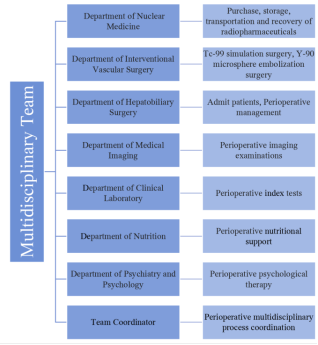
Currently, MDT are widely used in the treatment of esophageal cancer, breast cancer, nasopharyngeal carcinoma, colorectal cancer, liver cancer, and prostate cancer in China. The team members include specialists, primary nurses, team coordinators, rehabilitation doctors, dietitians, psychological counselors, community healthcare workers, patients, and their family members . After reviewing literature and clinical practice, our hospital established a MDT comprising 17 healthcare professionals. The team includes: 1 nuclear medicine specialist and nurse, 1 hepatobiliary specialist and nurse, 2 interventional vascular surgeons and nurses, 1 radiology specialist, 1 laboratory specialist, 1 nutritionist, 1 psychological counselor, and 1 team coordinator.
The team members' primary responsibilities include: (1) Preparation of Y90 radioactive embolization devices, storage, management, and recovery of radioactive drugs by nuclear medicine physicians and nurses;(2) Timely pre-and post-operative imaging follow-up for patients by the medical imaging department; (3) Perioperative hematological testing for patients by the laboratory department;(4) Perioperative management by hepatobiliary and interventional vascular surgeons and nurses;(5) Intraoperative procedures and coordination for Y90 embolization surgeries by interventional vascular surgeons and operating room nurses; (6) Customized nutritional planning and implementation monitoring by dietitians;(7) Real-time psychological assessment and intervention by counselors;(8) Coordination by the interventional ward head nurse, responsible for liaison and coordination of all tasks.
2.2. Multidisciplinary Collaborative Management of Y90-RE Treatment Process for Liver Cancer Patients
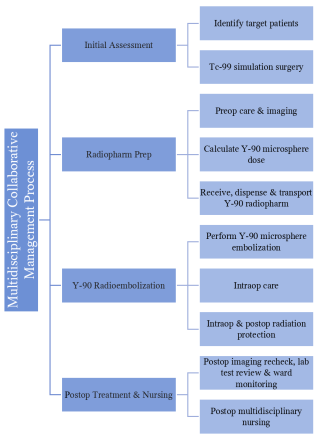
The multidisciplinary collaborative management of Y90-RE therapy involves multiple specialties including interventional vascular surgery, hepatobiliary surgery, medical imaging, nuclear medicine, interventional operating room, nutrition, and psychology. The management process requires close coordination among these departments, with the specific workflow as follows:
2.2.1. Multidisciplinary Assessment of the Patient's Condition
Upon admission to the hepatobiliary ward, hepatobiliary healthcare providers conduct a comprehensive assessment of the patient's condition and treatment tolerance to evaluate the feasibility of Y90 radioembolization therapy. Based on imaging and laboratory test results, they coordinate with the interventional and nuclear medicine departments to perform a preoperative simulated embolization using technetium-99 (Tc-99m) labeled large-molecule albumin, thereby determining the patient's suitability for Y90 radioembolization therapy.
(i). Determine the Patient Who Will Undergo Surgery
The American Society of Medical Physics (ASPM) has approved Y90 therapy for patients with primary or metastatic liver tumors that are inoperable and have a life expectancy of at least 3 months. Contraindications include low liver reserve, elevated bilirubin (2 mg/dl), estimated lung dose exceeding 30 Gy, and uncorrectable extrahepatic deposition . After admission, hepatobiliary surgeons must conduct an initial evaluation. Once eligible candidates are identified, they collaborate with radiology departments to perform preoperative imaging (Triphasic computed tomography (CT) and dynamic magnetic resonance imaging (MRI)), serum chemistry tests, and tumor marker assessments. These evaluations help determine the treatment site and estimate the number of hepatic arteries involved.
(ii). Perform a Simulated Surgery
One to two weeks prior to Y90 radioembolization, interventional vascular surgeons perform a Tc-99m simulation procedure. This intraoperative simulation utilizes Tc-99m labeled large-molecule albumin to model Y90 microsphere embolization, accurately simulating the actual radiation dose distribution in tumor regions. It also involves prophylactic embolization of the hepatic-pulmonary shunt to prevent displacement embolism. Through this simulation workflow, the nuclear medicine department determines the required timeline for the entire series of procedures, including radioactive drug transportation, reception, storage, transfer, and recovery. This process enables the development of a detailed work plan to ensure the successful execution of the surgery.
2.2.2. Preparation for the Improvement of Y90 Microsphere Device in Nuclear Medicine
The Radioembolization Brachytherapy Oncology Consortium (REBOC) states that the disciplines of radiooncology, nuclear medicine, and interventional radiology are all qualified to use Y90 microspheres through training, certification, participation, and contribution to the Y90 microsphere treatment program . At our hospital, the Department of Nuclear Medicine is responsible for the preparation and clinical practice of Y90-RE therapy before and after administration.
(i). Receive Y90 Microspheres
Nuclear medicine professionals must obtain authorization through radioactive isotope operation and safety training to purchase, store, and handle Y90 microsphere injection (3Bq/microsphere). From transportation to the research center until use, the injection is managed and stored by nuclear medicine medical staff. Post-surgery, nuclear medicine department personnel will centrally collect the radioactive drug device.
(ii). Packaging and Processing of Y90 Microspheres
Nuclear medicine operators wear lead-containing personal protective equipment, verify the patient's hospitalization number, name, and medication dosage before proceeding with the transfer process. After the transfer is completed, medical staff will double-check the patient's information, prescription dosage, infusion time, treatment site, and transfer operation details before transporting the device to the interventional surgery room in the interventional department.
(iii). Calculate the Dose of Y90 Microspheres
The ability to accurately predict, plan, and deliver optimal doses to both tumor and non-tumor tissues is the cornerstone of radiotherapy . The 2021 Expert Consensus on Y90 Microsphere Management outlines three primary dose calculation methods: medicalinternalradiationdose (MIRD), patient surface area method, and zonal modeling. MIRD may be adjusted based on clinical experience. Radiation exposure limits are as follows: no more than 80Gy for healthy liver tissue, no more than 70Gy for cirrhotic liver, and no more than 30Gy for lung tissue, ideally below 20 Gy. There is no upper limit for tumor doses .
2.2.3. Interventional Ward Combined with Multiple Departments for Preoperative Evaluation and Preparation
The preoperative assessment and preparation are the prerequisite for the success of the operation. The preoperative assessment and preparation of Y90 microspheres involved the cooperation of multiple departments, such as interventional department, hepatobiliary department, nutrition department and psychology department, so as to complete the preoperative nursing content of patients.
(i). Basic Assessment and Nursing
The attending physician and nurses of the interventional department, working alongside hepatobiliary specialists, conducted a comprehensive assessment of the patient's current medical history, including liver tumor status, prior medical history, and any known allergies. Special attention was paid to identifying potential bleeding or rebleeding risks, with continuous monitoring of vital signs, consciousness, pupil size, and limb strength. The team also evaluated contraindications such as severe bleeding tendencies, critical cardiopulmonary, hepatic and renal dysfunction, shock conditions, and contrast agent allergies, etc.
(ii). Psychological Assessment and Nursing
Patients with advanced liver cancer may experience long-term mental and physical torment due to recurrent symptoms, as well as malignant reactions such as pain and gastrointestinal bleeding, leading to negative emotions such as depression, repression, irritability, and pessimism . Nursing staff should establish a trusting relationship with patients and their families, carefully evaluate the psychological state of patients, and provide detailed information to patients and their families on relevant knowledge.
When patients experience significant negative emotions, psychological intervention can be sought. Psychotherapists use cognitive behavior, nostalgia, and other therapies based on the patient's personalized psychological needs to encourage patients to face surgery and postoperative rehabilitation treatment with a positive attitude.
(iii). Nutritional Assessment and Nursing
Malnutrition runs through the entire course of liver cancer patients, with an incidence rate of up to 80%. Liver cancer patients experience reduced muscle protein consumption and branched chain amino acid oxidation, with protein energy malnutrition being the most common form of malnutrition. Medical staff in the intervention ward should collaborate with nutritionists to conduct routine three-level nutritional diagnosis and assessment of patients' nutritional status, and based on the assessment results, develop personalized nutritional management goals for patients.
(iv). Preoperative Preparation
Y90-RE Interventional Therapy is a high-risk, high-tech surgical procedure, and nursing staff should be aware of this interventional treatment plan and its potential risks, make emergency preparations for possible complications, and make sufficient preoperative preparations. The joint imaging and laboratory departments complete preoperative examinations. Performing another pulse angiography before radioactive microsphere injection can ensure that the non-target blood vessels for preventive embolism remain occluded, and ensure that the position of the catheter during microsphere injection is the same as that determined during diagnostic angiography, to ensure safe and effective injection of radioactive microspheres.
Intervention ward nurses assist doctors in signing self-payment consent forms with patients; Preoperative instructions for patients to purchase fecal and urinary collectors; Inform the patient to refrain from drinking water for 4 hours before surgery; Assist interventional doctors in preparing skin for patients, etc.
(v). Preoperative Knowledge Assessment and Nursing Care for Y90 Microsphere Therapy
Evaluate patients' understanding and acceptance of their disease and the Yttrium-90 microsphere procedure. Conduct preoperative health education to introduce the treatment process and its advantages, explain preoperative precautions, and enhance patient compliance.
2.2.4. Intervention in the Operating Room for Y90-RE and Intraoperative Coordination
Under the guidance of DSA, 99Tcm MAA is injected through hepatic artery catheterization, and potential blood vessels that may cause ectopic shunting are embolized. After injection, the patient needs to be promptly sent to the imaging department according to the workflow, and the imaging doctor verifies it through SPECT examination to calculate the proportion of radioactive active substances reaching the lungs and the dose ratio between tumor tissue and normal tissue, which is used to calculate the radioactivity of Y90 microspheres to be injected . When implanting Yttrium 90 microspheres, the position of the catheter should be as close as possible to the simulated surgery. The supporting nurse should deliver sterile instruments and drugs in an orderly manner according to the surgical process.
During the operation, the patient's vital signs should be closely observed, and the nurse should actively talk to the patient, ask if they feel uncomfortable, and promptly detect any abnormal situations. If patients experience discomfort such as chest tightness and liver pain during surgery, they should promptly notify the doctor for appropriate treatment, briefly explain the reasons, and calm the patient's emotions.
2.2.5. Intervention Ward Combined with Multiple Departments for Radiation Protection and Postoperative Care
After Y90-RE, patients may experience varying degrees of pain, vomiting, and other complications, which can easily lead to various negative emotions such as anxiety and restlessness. They are under tremendous physical and psychological pressure, which in turn reduces their quality of life and affects the postoperative recovery process . Conventional nursing focuses on disease care, with a single form of care and certain limitations. It is easy to overlook psychological, mental, and nutritional care, which makes it difficult to meet the actual nursing needs of patients and the intervention effect is not ideal. Multidisciplinary collaborative nursing brings together the strengths of multiple disciplines to provide patients with comprehensive and systematic nursing interventions, which can more professionally and comprehensively address patients' various needs .
(i). Basic Nursing
After surgery, closely observe changes in the patient's blood pressure, heart rate, breathing, pulse, pupils, and facial expressions. Hepatobiliary or interventional vascular surgeons should contact the imaging and laboratory departments to re-examine CT and liver function indicators for the patient. Timely treatment of patients' pain conditions to ensure smooth urination and defecation.
(ii). Observation and Prevention of Postoperative Complications
Early identification of postoperative complications is crucial. The postoperative side effects of radioactive embolization therapy are relatively mild, with common side effects such as pain, nausea, vomiting, and fever. Patients have good tolerance, but there are still a small number of serious adverse reactions. Therefore, prevention and treatment of specific complications of radioactive embolization are important components of patient care .
Radiation damage to tissues or organs caused by non-target vascular embolism during treatment with Y90 microspheres is usually caused by extrahepatic tissues or organs, such as the lower esophagus, gastrointestinal tract, lungs, or normal liver tissue . Radiation embolism is a well-tolerated tool for treating unresectable primary liver cancer and metastatic diseases. Serious adverse reactions such as radiation-induced liver and lung disease and non-targeted gastrointestinal embolism are worthy of close attention . Therefore, medical staff should strengthen postoperative monitoring of patients and promptly handle any abnormal situations once discovered.
(iii). Psychological Care
Postoperative patients need to strictly restrain themselves, while facing unfamiliar environments and unpredictable surgical outcomes. Patients may experience varying degrees of anxiety, leading to symptoms such as insomnia, lower back pain, and fear and anxiety after treatment, which greatly affects their recovery and health. Nursing staff should provide individualized psychological support and educational explanations. For patients with poor emotions, they can contact a psychotherapist for consultation. Through psychological intervention, the patient's emotions can be stabilized, and tension and fear can be eliminated.
(iv). Nutritional Care
Perioperative nutritional management of patients is closely related to their postoperative recovery. Patients should be given a small amount of warm water and observed for coughing. If there is no coughing reaction, the patient's family should be contacted after 6 hours to receive a liquid diet and given a small amount of feeding; 2-3 days later, give more fresh vegetables and fruits, and consume easily digestible and nutritious coarse fiber foods. Patients with eating difficulties should be given a liquid diet .
(v). Functional Exercise
Y90-RE Therapy After surgery, puncture point compression hemostasis is required. The puncture point should be immobilized for 24 hours, and premature activity is prohibited. After the condition stabilizes, functional exercise should be gradually carried out according to the functional status of the affected limb, from large to small joints, and a reasonable plan should be developed. Active and passive activities should be combined to enhance self-management ability in daily life.
(vi). Radiation Protection Management
Research has shown that patients receiving treatment with Y90 resin microspheres with an activity of less than 3 GBq have a safe radiation dose to their families and the public . There is no need to restrict the patient's activities, but film type radiometers can be placed at the head of the bed or bedside, signs can be placed at the head of the bed, and patients can wear wristbands to indicate the hazards of ionizing radiation. If patients need to change the implantation site/wound dressing, staff should wear gloves, and pregnant women and children under 3 years old should also be restricted from contact for a period of time.
(vii). Verification of Nuclide Distribution
After the treatment, the radiologist will perform PET or SPECT scans to verify the postoperative radionuclide distribution, assess the in vivo distribution of Y90, and calculate the actual absorbed dose of the tumor.
2.3. Effectiveness of Multidisciplinary Collaboration Management
Figure 1. Multidisciplinary Team.
Based on multidisciplinary collaborative management of Y90 radioactive embolization for liver cancer patients, our hospital has made comprehensive preoperative preparations, smooth intraoperative progress, and good postoperative recovery. Multiple studies have shown that disease outcomes are improved when patient care is coordinated by MDT. For example, when patients with hepatocellular carcinoma benefit from treatment plans planned by teams composed of different experts, they are often diagnosed earlier and therefore have a higher proportion of potential curative treatments . Multidisciplinary teams also ensure a higher proportion of patients receive active treatment . Ultimately, interdisciplinary collaborative management improved the survival rate of hepatocellular carcinoma patients in the disease spectrum .
Figure 2. Multidisciplinary Collaborative Management Process.
3. Summary
In conclusion, the multidisciplinary collaborative management model of Y90-RE Therapy can seize the optimal time for the treatment of advanced liver cancer patients, ensuring the effectiveness of radiotherapy and serving as an adjuvant therapy for systemic chemotherapy, lesion ablation or preoperative reduction and stabilization of tumor volume; Y90 microspheres can also be used for consolidation therapy in first-line or second-line systemic chemotherapy, it also exhibits favorable safety and can enhance survival benefits. The application of multidisciplinary collaboration mode in the management of interventional wards for Y90-RE Therapy is of great significance.
Our hospital has made Y90-RE Treatment a routine treatment for liver cancer patients, and has established a complete, efficient, and effective multidisciplinary collaborative workflow. In the future, we will further collect relevant perioperative data, analyze and study the workflow and patient perioperative situation, further refine and optimize the workflow, improve patient satisfaction with treatment, and enhance the effectiveness of treatment.
At the same time, if conditions permit, explore the follow-up study of multidisciplinary cancer patients' hospitalization extension to home outside the hospital, further supplementing the data that reflects the advantages of multidisciplinary collaboration in the management of Y90 Microspheres at home, in order to provide more scientific reference evidence for the perioperative management of Y90 Microspheres.
Abbreviations

HCC

Hepatocellular Carcinoma

Y90

Yttrium-90

Y90-RE

yttrium-90 Microsphere Radioembolization

BCLC

Barcelona Clinic Liver Cancer

TACE

Transarterial Chemoembolization

MDT

Multidisciplinary Team

Tc-99m

Technetium-99

ASPM

The American Society of Medical Physics

REBOC

The Radioembolization Brachytherapy Oncology Consortium

MIRD

Medicalinternalradiationdose

Author Contributions
Yan Zhou: Conceptualization, Writing – original draft, Writing – review & editing
Shuang Zou: Writing – original draft, Writing – review & editing
Jinmei Xiong: Writing – original draft, Writing – review & editing
Jian Han: Validation, Writing – review & editing
Chengzhi Li: Validation, Writing – review & editing
Yang Li: Data curation, Methodology
Yanfang Deng: Resource
Yuyao Liu: Writing – review & editing
Funding
This study was supported by the National Natural Science Foundation of China (Grant No. 62335010), the Science and Technology Projects in Guangzhou (Grant No. 2024A03J1044), the Central Universities Fundamental Research Funds Cultivation Project (Grant No. 21624401), the Scientific Research Projects of Guangdong Provincial Bureau of Traditional Chinese Medicine (Grant No. 20251087) and the Teaching Quality and Teaching Reform Project of Jinan University (Grant No. JG2026039). The authors gratefully acknowledge the above organizations for their financial support and assistance.
Conflicts of Interest
The authors declare no conflicts of interest.
References
[1] Hesketh, R. L., Zhu, A. X., & Oklu, R. (2015). Radiomics and circulating tumor cells: personalized care in hepatocellular carcinoma?. Diagnostic and Interventional Radiology, 21(1), 78-84.
[2] Chen Wanqing, Epidemiology of cancer in China and the current status of prevention and control, Clinical Oncology in China. September 46(14): 749-750.
[3] Saini A, Wallace A, Alzubaidi S, et al. History and Evolution of Yttrium-90 Radioembolization for Hepatocellular Carcinoma [J]. J Clin Med. 2019, 8(1): 55.
[4] Yu CY, Huang PH, Tsang LL, et al. Yttrium-90 Radioembolization as the Major Treatment of Hepatocellular Carcinoma [J]. J Hepatocell Carcinoma. 2023, 10: 17-26.
[5] Hamad A, Aziz H, Kamel IR, et al. Yttrium-90 Radioembolization: Current Indications and Outcomes [J]. J Gastrointest Surg. 2023, 27(3): 604-614.
[6] Gabr A, Kulik L, Mouli S, et al. Liver Transplantation Following Yttrium-90 Radioembolization: 15-Year Experience in 207-Patient Cohort [J]. Hepatology. 2021, 73(3): 998-1010.
[7] Chow R, Jairam MP, Swaminath A, et al. Radiofrequency ablation vs radiation therapy vs transarterial chemoembolization vs yttrium 90 for local treatment of liver cancer - a systematic review and network meta-analysis of survival data [J]. Acta Oncol. 2022, 61(4): 484-494.
[8] Jia Zhongzhi, Zhao Tian, Wang Sini, etc. Series review of radioembolization with yttrium- 90 microspheres (Part II) pre- treatment evaluationand post- treatment follow- up for patients with hepatic malignancy receiving yttrium- 90 microspheresembolization [J]. Journal of Interventional Radiology, 2017, 26(11): 1057-1062.
[9] Jiang Nan, Shao Haibo, Han Xiangjun, etc Nursing care of patients with liver cancer treated with Yttrium 90 radioactive microspheres [J]. Journal of Nursing, 2022, 29(23): 62-64.
[10] Hexia, Linmei, Yangqing, etc The Application Status of Multidisciplinary Collaborative Nursing Model in China [J]. Tianjin Nursing, 2021, 29(03): 375-378.
[11] Zhang Xinmei, Zhu Huifen, Lu Wei, etc. Application of multidisciplinary team collaboration nursing model in patients with pulmonary embolism [J]. Journal of PLA Nursing, 2018, 35(08): 39-43.
[12] Zhu Lijuan Evaluation of the effect of wound team intervention in postoperative pharyngeal fistula care for laryngeal cancer [J]. Chinese Journal of Integrated Traditional Chinese and Western Medicine Otolaryngology, 2020, 28(02): 150-153.
[13] Dezarn WA, Cessna JT, DeWerd LA, et al. American Association of Physicists in Medicine. Recommendations of the American Association of Physicists in Medicine on dosimetry, imaging, and quality assurance procedures for 90Y microsphere brachytherapy in the treatment of hepatic malignancies [J]. Med Phys. 2011, 38(8): 4824-45.
[14] Kennedy A, Nag S, Salem R, et al. Recommendations for radioembolization of hepatic malignancies using yttrium-90 microsphere brachytherapy: a consensus panel report from the radioembolization brachytherapy oncology consortium [J]. Int J Radiat Oncol Biol Phys. 2007, 68(1): 13-23.
[15] Levillain H, Bagni O, Deroose CM, et al. International recommendations for personalised selective internal radiation therapy of primary and metastatic liver diseases with yttrium-90 resin microspheres [J]. Eur J Nucl Med Mol Imaging. 2021, 48(5): 1570-1584.
[16] Song Li, Zou Yinghua. Expert Consensus on Yttrium 90 Microsphere Management [J]. Chinese Journal of Interventional Imaging and Therapy, 2021, 18(06): 321-325.
[17] Yu Biaojun, Wang Xiaoxia, Yang Shilai Research progress on intervention methods for anxiety in patients with primary liver cancer [J]. Nursing Research, 2018, 32(19): 3004-3008.
[18] Kao YH. Dose-response for yttrium-90 resin microsphere radioembolisation [J]. Nucl Med Commun. 2021, 42(3): 345-347.
[19] Tang Huilin, Zhu Zhong, Wan Lingjun, etc The impact of systematic nursing intervention on the psychological and quality of life of patients undergoing primary liver cancer surgery [J]. Chinese Journal of Modern Nursing, 2018, 24(10): 1207-1210.
[20] Geng Han The impact of multidisciplinary collaborative nursing intervention on postoperative rehabilitation and quality of life of patients undergoing liver cancer surgery [J]. Clinical Practice of Integrated Traditional Chinese and Western Medicine, 2020, 20(17): 152-153.
[21] Gil-Alzugaray B, Chopitea A, Iñarrairaegui M, et al. Prognostic factors and prevention of radioembolization-induced liver disease [J]. Hepatology. 2013, 57(3): 1078-87.
[22] Titano JJ, Kim E, Patel RS. Yttrium-90 Complications: Prevention and Management [J]. Tech Vasc Interv Radiol. 2019, 22(2): 87-92.
[23] Laidlaw GL, Johnson GE. Recognizing and Managing Adverse Events in Y-90 Radioembolization [J]. Semin Intervent Radiol. 2021, 38(4): 453-459.
[24] Wei Yao The application effect of individualized nutritional nursing in postoperative patients with liver cancer [J]. Chinese Journal of Traditional Chinese Medicine, 2021, 33(12): 175-177.
[25] Geng Jianhua, Chen Yingmao, Wang Xiaotao, etc Radiological Protection Evaluation of Yttrium [90Y] Resin Microspheres Interventional Therapy [J]. China Journal of Radiation Health, 2021, 30(06): 720-726.
[26] Yopp AC, Mansour JC, Beg MS, et al. Establishment of a multidisciplinary hepatocellular carcinoma clinic is associated with improved clinical outcome [J]. Ann Surg Oncol. 2014, 21(4): 1287-95.
[27] Zhou Yan, Zhou Peiru, Lu Xiaohua, etc Blood glucose management in hospital of diabetes patients with multiple acute and critical diseases under multidisciplinary cooperation [J]. Journal of Nurse Training, 2020, 35(10): 924-928.
[28] Serper M, Taddei TH, Mehta R, et al. Association of Provider Specialty and Multidisciplinary Care With Hepatocellular Carcinoma Treatment and Mortality [J]. Gastroenterology. 2017, 152(8): 1954-1964.
[29] Charriere B, Muscari F, Maulat C, et al. Outcomes of patients with hepatocellular carcinoma are determined in multidisciplinary team meetings [J]. J Surg Oncol. 2017, 115(3): 330-336.
Cite This Article
  • APA Style

    Zhou, Y., Zou, S., Xiong, J., Han, J., Li, C., et al. (2026). Exploration of a Multidisciplinary Collaborative Management Model in Transarterial Radioembolization with Yttrium-90 Microspheres for Hepatocellular Carcinoma. American Journal of Nursing Science, 15(1), 11-18. https://doi.org/10.11648/j.ajns.20261501.12

    Copy | Download

    ACS Style

    Zhou, Y.; Zou, S.; Xiong, J.; Han, J.; Li, C., et al. Exploration of a Multidisciplinary Collaborative Management Model in Transarterial Radioembolization with Yttrium-90 Microspheres for Hepatocellular Carcinoma. Am. J. Nurs. Sci. 2026, 15(1), 11-18. doi: 10.11648/j.ajns.20261501.12

    Copy | Download

    AMA Style

    Zhou Y, Zou S, Xiong J, Han J, Li C, et al. Exploration of a Multidisciplinary Collaborative Management Model in Transarterial Radioembolization with Yttrium-90 Microspheres for Hepatocellular Carcinoma. Am J Nurs Sci. 2026;15(1):11-18. doi: 10.11648/j.ajns.20261501.12

    Copy | Download

  • @article{10.11648/j.ajns.20261501.12,
      author = {Yan Zhou and Shuang Zou and Jinmei Xiong and Jian Han and Chengzhi Li and Yang Li and Yanfang Deng and Yuyao Liu},
      title = {Exploration of a Multidisciplinary Collaborative Management Model in Transarterial Radioembolization with Yttrium-90 Microspheres for Hepatocellular Carcinoma},
      journal = {American Journal of Nursing Science},
      volume = {15},
      number = {1},
      pages = {11-18},
      doi = {10.11648/j.ajns.20261501.12},
      url = {https://doi.org/10.11648/j.ajns.20261501.12},
      eprint = {https://article.sciencepublishinggroup.com/pdf/10.11648.j.ajns.20261501.12},
      abstract = {This is a single-center retrospective observational study. Objective: To evaluate the clinical efficacy and implementation effect of the multidisciplinary collaborative management model in yttrium-90 microsphere radioembolization (Y90-RE) for hepatocellular carcinoma (HCC). Methods: Based on clinical practice, a multidisciplinary team (MDT) consisting of nuclear medicine, interventional vascular surgery, hepatobiliary surgery, radiology, clinical laboratory, nutrition, psychology and nursing teams was established. The responsibilities of each member were clarified, and a full-process standardized protocol covering preoperative assessment, intraoperative collaboration and postoperative management was formulated. Key measures included patient screening and contraindication evaluation, Tc-99m-labeled macroaggregated albumin simulation surgery, Y90 microsphere dose calculation, radiation protection management, nutritional support and psychological intervention. Results: This model standardized Y90-RE and improved treatment efficiency, ensuring the safety and consistency of the treatment process. Through multidisciplinary collaboration, comprehensive perioperative management of patients was effectively achieved, the risk of complications was reduced, and patients’ treatment compliance and rehabilitation quality were improved. Conclusion: The multidisciplinary collaborative management model is crucial to ensuring the perioperative safety and efficacy of Y90-RE for HCC patients and helps improve the standardized application level of this treatment. In the future, the diagnosis and treatment process will be further optimized through data accumulation, and the model will be extended to out-of-hospital continuous management, which also provides a promotable practical paradigm for the individualized and systematic treatment of complex tumor diseases.},
     year = {2026}
    }
    

    Copy | Download

  • TY  - JOUR
    T1  - Exploration of a Multidisciplinary Collaborative Management Model in Transarterial Radioembolization with Yttrium-90 Microspheres for Hepatocellular Carcinoma
    AU  - Yan Zhou
    AU  - Shuang Zou
    AU  - Jinmei Xiong
    AU  - Jian Han
    AU  - Chengzhi Li
    AU  - Yang Li
    AU  - Yanfang Deng
    AU  - Yuyao Liu
    Y1  - 2026/02/25
    PY  - 2026
    N1  - https://doi.org/10.11648/j.ajns.20261501.12
    DO  - 10.11648/j.ajns.20261501.12
    T2  - American Journal of Nursing Science
    JF  - American Journal of Nursing Science
    JO  - American Journal of Nursing Science
    SP  - 11
    EP  - 18
    PB  - Science Publishing Group
    SN  - 2328-5753
    UR  - https://doi.org/10.11648/j.ajns.20261501.12
    AB  - This is a single-center retrospective observational study. Objective: To evaluate the clinical efficacy and implementation effect of the multidisciplinary collaborative management model in yttrium-90 microsphere radioembolization (Y90-RE) for hepatocellular carcinoma (HCC). Methods: Based on clinical practice, a multidisciplinary team (MDT) consisting of nuclear medicine, interventional vascular surgery, hepatobiliary surgery, radiology, clinical laboratory, nutrition, psychology and nursing teams was established. The responsibilities of each member were clarified, and a full-process standardized protocol covering preoperative assessment, intraoperative collaboration and postoperative management was formulated. Key measures included patient screening and contraindication evaluation, Tc-99m-labeled macroaggregated albumin simulation surgery, Y90 microsphere dose calculation, radiation protection management, nutritional support and psychological intervention. Results: This model standardized Y90-RE and improved treatment efficiency, ensuring the safety and consistency of the treatment process. Through multidisciplinary collaboration, comprehensive perioperative management of patients was effectively achieved, the risk of complications was reduced, and patients’ treatment compliance and rehabilitation quality were improved. Conclusion: The multidisciplinary collaborative management model is crucial to ensuring the perioperative safety and efficacy of Y90-RE for HCC patients and helps improve the standardized application level of this treatment. In the future, the diagnosis and treatment process will be further optimized through data accumulation, and the model will be extended to out-of-hospital continuous management, which also provides a promotable practical paradigm for the individualized and systematic treatment of complex tumor diseases.
    VL  - 15
    IS  - 1
    ER  - 

    Copy | Download

Author Information
  • Department of Interventional Vascular Surgery, The First Affiliated Hospital of Jinan University, Guangzhou, China

  • Department of Interventional Vascular Surgery, The First Affiliated Hospital of Jinan University, Guangzhou, China

  • Department of Nuclear Medicine, The First Affiliated Hospital of Jinan University, Guangzhou, China

  • Department of Interventional Vascular Surgery, The First Affiliated Hospital of Jinan University, Guangzhou, China

  • Department of Interventional Vascular Surgery, The First Affiliated Hospital of Jinan University, Guangzhou, China

  • Department of Nutrition, The First Affiliated Hospital of Jinan University, Guangzhou, China

  • Department of Psychiatry and Psychology, The First Affiliated Hospital of Jinan University, Guangzhou, China

  • Department of Oncology, The First Affiliated Hospital of Jinan University, Guangzhou, China