
The growing demand for high-performance and durable construction materials has led to increasing interest in nanotechnology applications in concrete. This study investigates the mechanical properties, microstructural behavior, and structural reliability of high-strength concrete beams (HSCBs) incorporating nanosilica as a partial cement replacement. Experimental investigations were conducted on concrete mixes containing 0%, 3%, 5%, and 7% nanosilica by weight of cement. Material characterization included sieve analysis, specific gravity, water absorption, and density tests for aggregates, while nanosilica was evaluated using SEM/EDX and FTIR to examine its morphology and chemical interactions. Compressive strength tests were performed at 7, 14, 21, and 35 days, and flexural strength tests were conducted on reinforced concrete beams. Results showed significant improvements in both compressive and flexural strengths with nanosilica incorporation, with the optimum performance observed at 5% replacement, achieving up to 18% higher compressive strength than the control mix. Microstructural analysis confirmed enhanced formation of calcium silicate hydrate (C–S–H) gel and pore refinement due to nanosilica’s pozzolanic reactivity and filler effect. Furthermore, structural performance was evaluated using both deterministic design methods and reliability-based analysis (FORM), demonstrating that nanosilica-modified beams achieved higher reliability indices and reduced probabilities of failure. The study concludes that controlled incorporation of nanosilica significantly enhances the strength, durability potential, and structural safety of high-strength concrete beams.
| Published in | Advances in Materials (Volume 15, Issue 3) |
| DOI | 10.11648/j.am.20261503.11 |
| Page(s) | 80-90 |
| Creative Commons |
This is an Open Access article, distributed under the terms of the Creative Commons Attribution 4.0 International License (http://creativecommons.org/licenses/by/4.0/), which permits unrestricted use, distribution and reproduction in any medium or format, provided the original work is properly cited. |
| Copyright |
Copyright © The Author(s), 2026. Published by Science Publishing Group |
Nanosilica, High-strength Concrete, Compressive Strength, Flexural Strength, Microstructure, Reliability Analysis, Form, Pozzolanic Reaction, Structural Safety
SAMPLES | A | B | |
|---|---|---|---|
W1 | Weight of Density Bottle | 600 | 598 |
W2 | Weight of Bottle + Soil | 1763 | 1643 |
W3 | Weight of Bottle + Soil + Water | 2591 | 2518 |
W4 | Weight of Bottle + Water | 1882 | 1870 |
Gs (Specific Gravity) | 2.6 | 2.63 | |
Average Specific Gravity Value | 2.62 | ||
SAMPLES | A | B | |
|---|---|---|---|
W1 | Weight of Density Bottle | 820 | 854 |
W2 | Weight of Bottle + Sample | 2800 | 2884 |
W3 | Weight of Bottle + Sample + Water | 3687 | 3733 |
W4 | Weight of Bottle + Water | 2453 | 2478 |
Gs (Specific Gravity) | 2.7 | 2.62 | |
Average Specific Gravity Value | 2.66 | ||
SAMPLES | A(g) |
|---|---|
Bulk Density (Kg/m3) Sand | 1311 |
Bulk Density (Kg/m3) Granite | 1406 |
Property | Fine Aggregate | Coarse Aggregate | Nanosilica |
|---|---|---|---|
Fineness Modulus (FM) | 2.73 | – | – |
Max. Aggregate Size (mm) | – | 20 | – |
Sand Equivalent (%) | 84 | – | – |
Specific Gravity (Gs) | 2.64 | 2.71 | – |
Moisture Content (%) | 1.2 | 0.8 | – |
SiO2 (wt.%) | – | – | 94.7 |
Al2O3 (wt.%) | – | – | 1.2 |
Fe2O3 (wt.%) | – | – | 0.8 |
CaO (wt.%) | – | – | 1.6 |
MgO (wt.%) | – | – | 0.5 |
Particle Size (nm) | – | – | 50–80 (d50 = 65) |
BET Surface Area (m2/g) | – | – | 178 |
Morphology (SEM) | – | – | Spherical/irregular, dispersed in C–S–H |
Mix ID | % Nanosilica | 7 Days (N/mm2) | 14 Days (N/mm2) | 21 Days (N/mm2) | 35 Days (N/mm2) |
|---|---|---|---|---|---|
Control (C0) | 0% | 32.5 | 41.2 | 47.6 | 53.8 |
NS-3 | 3% | 36.8 | 45.5 | 51.4 | 59.2 |
NS-5 | 5% | 38.6 | 48.9 | 55.7 | 63.5 |
NS-7 | 7% | 34.7 | 44.0 | 50.3 | 57.0 |
Mix ID | % Nanosilica Replacement | Average Flexural Strength (MPa) | % Increase Compared to Control |
|---|---|---|---|
Control | 0% (No Nanosilica) | 5.8 | – |
NS-3 | 3% | 6.5 | +12% |
NS-5 | 5% | 7.1 | +22% |
NS-7 | 7% | 6.7 | +16% |
NS | Nanosilica |
HSC | High-strength Concrete |
Cu | Coefficient of Uniformity |
Cc | Coefficient of Curvature |
FM | Fineness Modulus |
| [1] | Artanti, Lintang & Mustofa, Bisri & Sari, Ribut & Rutama, Dedy. (2024). Comparative study of the use of Ordinary Portland Cement (OPC), Portland Composite Cement (PCC) and Hydraulic Cement (HC) types in high quality concrete with an independent compaction system. E3S Web of Conferences. 479. |
| [2] | Huang, X., Li, S., & Huang, Y. (2016). The application of high strength concrete in tall buildings. Journal of Advanced Concrete Technology, 14(8), 483-489. |
| [3] | Islam, Noushin & Sandanayake, Malindu & Muthukumaran, Shobha & Navaratna, Dimuth. (2024). Review on Sustainable Construction and Demolition Waste Management—Challenges and Research Prospects. Sustainability. 16. 3289. |
| [4] | Mehta, P. K., & Monteiro, P. J. M. (2014). Concrete: Microstructure, properties, and materials (4th ed.). McGraw-Hill Education. |
| [5] | Meyer, C., Tighe, S. L., & Barlow, J. (2019). The evolution of reinforced concrete: A historical perspective. Journal of Materials in Civil Engineering, 31(4), 04019026. |
| [6] | British Standard Code BS 4550: Part1, 1990. |
| [7] | Nedeljković, Marija & Visser, Johanna & Šavija, Branko & Valcke, Siska & Schlangen, Erik. (2021). Use of fine recycled concrete aggregates in concrete: A critical review. Journal of Building Engineering. 38. 102196. |
| [8] | Nedunuri, Aparna & Getachew, Seifemichael & Salman, Muhammad. (2020). Microstructural study of Portland cement partially replaced with fly ash, ground granulated blast furnace slag and silica fume as determined by pozzolanic activity. Construction and Building Materials. 238. |
| [9] | Olugboyega, Oluseye & Ejohwomu, Obuks & Omopariola, Emmanuel & Omoregie, Alohan. (2023). Sustainable Ready-Mixed Concrete (RMC) Production: A Case Study of Five RMC Plants in Nigeria. Sustainability. 15. 8169. |
| [10] | Owaid, Haider & Hamid, Roszilah & Taha, Mohd. (2012). A review of sustainable supplementary cementitious materials as an alternative to all-portland cement mortar and concrete. Australian Journal of Basic and Applied Sciences. 6. 287-303. |
| [11] | Raghav, M., Park, T., Yang, H. M., Lee, S. Y., Karthick, S., & Lee, H. S. (2021). Review of the Effects of Supplementary Cementitious Materials and Chemical Additives on the Physical, Mechanical and Durability Properties of Hydraulic Concrete. Materials (Basel, Switzerland), 14(23), 7270. |
| [12] | Salgado, Fernanda & Silva, Flávio. (2022). Recycled aggregates from construction and demolition waste towards an application on structural concrete: A review. Journal of Building Engineering. 52. 104452. |
| [13] | Schimmoller, V. E. & Holtz, K. & Eighmy, T. Taylor & Wiles, C. & Smith, M. & Malasheskie, G. & Rohrbach, G. J. & Schaftlein, S. & Helms, Gregory & Campbell, R. D. & Deusen, C. H. & Ford, B. & Almborg, J. A.. (2020). Recycled Materials in European Highway Environments: Uses, Technologies, and Policies. |
| [14] | Schmitz, M., et al. (2017). Mechanical properties of carbon nanotube-reinforced skutterudites. Journal of Nanomaterials, 2017, 1-10. |
| [15] |
United Nations Environment Programme. (2019). Global status report on sustainable infrastructure.
https://www.unep.org/resources/report/global-status-report-sustainable-infrastructure |
| [16] | US Department of Transportation. (2000). Recycled materials in European highway environments. Federal Highway Administration. |
| [17] | Vashisth, Amit. (2018). Determination Of Fineness Modulus Of Coarse Aggregates And Fine Aggregate. |
| [18] | Zhang, Y., (2021). The effect of nano-HA on the mechanical properties of cement-based materials. Cement and Concrete Composites, 115, 103-110. |
APA Style
Tobi, O. S., Wasiu, J., Olayinka, I. A., Enoguan, O. D. (2026). Mechanical Performance and Reliability Assessment of Nanosilica-Modified High-Strength Concrete Beams. Advances in Materials, 15(3), 80-90. https://doi.org/10.11648/j.am.20261503.11
ACS Style
Tobi, O. S.; Wasiu, J.; Olayinka, I. A.; Enoguan, O. D. Mechanical Performance and Reliability Assessment of Nanosilica-Modified High-Strength Concrete Beams. Adv. Mater. 2026, 15(3), 80-90. doi: 10.11648/j.am.20261503.11
@article{10.11648/j.am.20261503.11,
  author = {Ooye Steeve Tobi and John Wasiu and Ibrahim Abdulrazaq Olayinka and Osegbowa Douglas Enoguan},
  title = {Mechanical Performance and Reliability Assessment of Nanosilica-Modified High-Strength Concrete Beams},
  journal = {Advances in Materials},
  volume = {15},
  number = {3},
  pages = {80-90},
  doi = {10.11648/j.am.20261503.11},
  url = {https://doi.org/10.11648/j.am.20261503.11},
  eprint = {https://article.sciencepublishinggroup.com/pdf/10.11648.j.am.20261503.11},
  abstract = {The growing demand for high-performance and durable construction materials has led to increasing interest in nanotechnology applications in concrete. This study investigates the mechanical properties, microstructural behavior, and structural reliability of high-strength concrete beams (HSCBs) incorporating nanosilica as a partial cement replacement. Experimental investigations were conducted on concrete mixes containing 0%, 3%, 5%, and 7% nanosilica by weight of cement. Material characterization included sieve analysis, specific gravity, water absorption, and density tests for aggregates, while nanosilica was evaluated using SEM/EDX and FTIR to examine its morphology and chemical interactions. Compressive strength tests were performed at 7, 14, 21, and 35 days, and flexural strength tests were conducted on reinforced concrete beams. Results showed significant improvements in both compressive and flexural strengths with nanosilica incorporation, with the optimum performance observed at 5% replacement, achieving up to 18% higher compressive strength than the control mix. Microstructural analysis confirmed enhanced formation of calcium silicate hydrate (C–S–H) gel and pore refinement due to nanosilica’s pozzolanic reactivity and filler effect. Furthermore, structural performance was evaluated using both deterministic design methods and reliability-based analysis (FORM), demonstrating that nanosilica-modified beams achieved higher reliability indices and reduced probabilities of failure. The study concludes that controlled incorporation of nanosilica significantly enhances the strength, durability potential, and structural safety of high-strength concrete beams.},
 year = {2026}
}
TY  - JOUR
T1  - Mechanical Performance and Reliability Assessment of Nanosilica-Modified High-Strength Concrete Beams
AU  - Ooye Steeve Tobi
AU  - John Wasiu
AU  - Ibrahim Abdulrazaq Olayinka
AU  - Osegbowa Douglas Enoguan
Y1  - 2026/07/17
PY  - 2026
N1  - https://doi.org/10.11648/j.am.20261503.11
DO  - 10.11648/j.am.20261503.11
T2  - Advances in Materials
JF  - Advances in Materials
JO  - Advances in Materials
SP  - 80
EP  - 90
PB  - Science Publishing Group
SN  - 2327-252X
UR  - https://doi.org/10.11648/j.am.20261503.11
AB  - The growing demand for high-performance and durable construction materials has led to increasing interest in nanotechnology applications in concrete. This study investigates the mechanical properties, microstructural behavior, and structural reliability of high-strength concrete beams (HSCBs) incorporating nanosilica as a partial cement replacement. Experimental investigations were conducted on concrete mixes containing 0%, 3%, 5%, and 7% nanosilica by weight of cement. Material characterization included sieve analysis, specific gravity, water absorption, and density tests for aggregates, while nanosilica was evaluated using SEM/EDX and FTIR to examine its morphology and chemical interactions. Compressive strength tests were performed at 7, 14, 21, and 35 days, and flexural strength tests were conducted on reinforced concrete beams. Results showed significant improvements in both compressive and flexural strengths with nanosilica incorporation, with the optimum performance observed at 5% replacement, achieving up to 18% higher compressive strength than the control mix. Microstructural analysis confirmed enhanced formation of calcium silicate hydrate (C–S–H) gel and pore refinement due to nanosilica’s pozzolanic reactivity and filler effect. Furthermore, structural performance was evaluated using both deterministic design methods and reliability-based analysis (FORM), demonstrating that nanosilica-modified beams achieved higher reliability indices and reduced probabilities of failure. The study concludes that controlled incorporation of nanosilica significantly enhances the strength, durability potential, and structural safety of high-strength concrete beams.
VL  - 15
IS  - 3
ER  -
Department of Civil Engineering, Edo State University, Iyamho, Nigeria
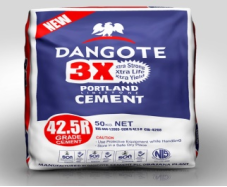
Figure 1. Dangote 3X Cement.
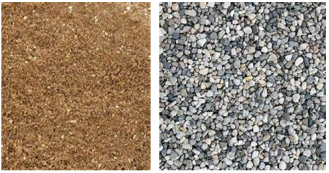
Figure 2. Sand and Granite.
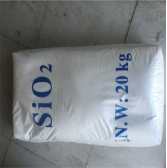
Figure 3. Jute Fibre Used.
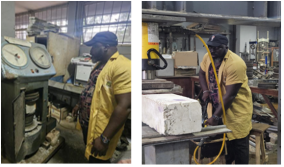
Figure 4. Compressive and Flexural Strength Tests Set- up.
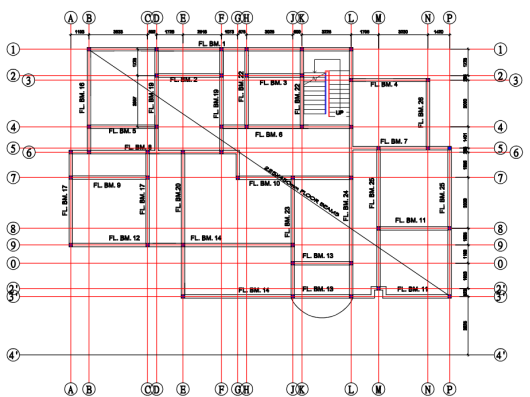
Figure 5. Floor Plan of an office Complex.
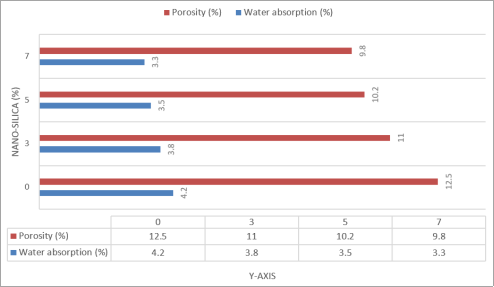
Figure 6. Water Absorption and Porosity of Nano-Silica Content.
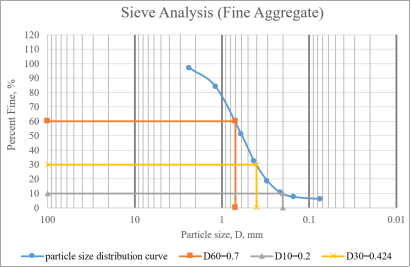
Figure 7. Sieve Analysis Result.
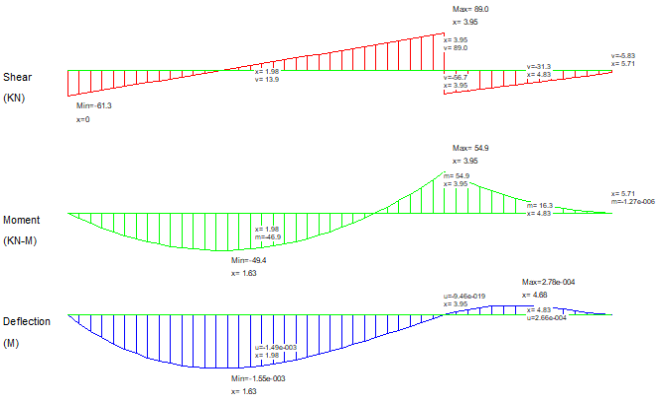
Figure 8. Deflection Result.

Information



 Share This Article
 Twitter
 Linked In
 Facebook
 Copy
Copy Download