3. Research Methods
3.1. Research Approach and Design
This study used a mixed method approach (quantitative and qualitative) to prospect roles and changing aspects of indigenous knowledge as social capital in conflict resolutions of south wollo zone: the case of tehuledere woreda. The study follows a concurrent triangulation strategy in which the researcher was collected both quantitative and qualitative data concurrently and then triangulate the two databases for convergences and differences. The mixing of data from the two approaches was made in the discussion section of the study
| [13] | Creswell, J. W. (2010). Research design: Qualitative, quantitative, and mixed methods approaches (3rd ed.). New Age International. |
[13]
.
3.2. Study Area
Tehuledere Wereda is located in South Wollo, part of the Amhara region in Ethiopia. It lies 430 km from Addis Ababa along the main road to Bahir Dar. The wereda is bordered to the south by Dessie Zuria, to the southwest by Kutaber, to the northwest and north by the Mille River, to the northeast by Were Babu, and to the southeast by Kalu. According to the
| [14] | CSA. (2007). Central Statistical Agency of Ethiopia. Summary and statistical report of the population and housing census: Population size by age and sex. Ethiopia. |
[14]
, Tehuledere has a population of 117,877, representing a 1.14% decline since the 1994 census. This population includes 59,300 men and 57,777 women, with 14,745 (12.51%) residing in urban areas and 103,132 (87.49%) in rural areas.
3.3. Study Population, and Sampling
3.3.1. Target Population
Primary participant: all Households in Tehuledere wereda who are included in the selected kebeles. Tehuledere woreda has 19 rural kebeles and 5 urban kebeles. The researcher selected three rural kebele’s, namely Ketie (05), Weldelulo (04) and Gobeya (012) using purposive sampling techniques. These three rural kebeles have a total households of 1660, 1400, and 1550 respectively (Source: from respective local kebele administrations). The unit of analysis for this study was at household level.
3.3.2. Sampling Techniques
The sample size was decided using CSA sample size determination formula, where N=4610 households in the selected kebeles
| [17] | Kothari, C. R. (2004). Research methodology: Methods and techniques (2nd ed.). New Age International. |
[17]
.
The sample size of the study is determined based on Kothari‘s formula as follow (Kothari, 2004):
Where,
N= Population size
P= Sample proportion on success
n=Sample size
q=1-p
z= the value of the standard variety at a given confidence
e=level of acceptable error (the precision)
Thus, N=4610. p=0.02, z=2.005, & e=0.02
=>
In this study, three kebeles were identified using purposive sampling technique, the reason behind is that these kebeles are potential areas of indigenous knowledge and conflict resolutions and helps the researcher in order to answer the research questions. To select sample households, the list of households was obtained from the three kebele offices and the list served as sampling frame. Then using systematic random sampling (k= N/n, where, k= interval, N= study population, n= sample size), 189 households was selected for the sample survey based on proportional to sample size calculation.
3.4. Method of Data Collection and Instruments
3.4.1. Sample Survey
The study used semi structured questionnaire of the Conflict Resolution Questionnaire (CQR). The CQR is adopted and modified in order to assure the research objectives.
3.4.2. In-depth Interviews
Study used in-depth interviews to collect rich and detailed data from respondents who have back ground information about indigenous knowledge as social capital in managing conflicts. The interview was done with selected individuals like local elders, religious leaders, and influential women who have mediated and settled conflicts through indigenous method.
3.5. Data Analysis Method
Quantitative Data Analysis: The quantitative data was analyzed using descriptive statistical calculations such as mean, frequency, and percentage in order to describe and summarize demographic, and socio-economic characteristics of the data and results was displayed in tables, charts and figures.
Qualitative Data Analysis: For the qualitative data, the study used thematic data analysis techniques that involves identifying or categorizing, analyzing and reporting patterns or themes within the collected data in narration form. The researcher was organize the qualitative data's to generate categories, themes, & patterns, and organizes similar ideas together in order to come with rich and detailed information that complement the quantitative findings.
3.6. Ethical Considerations
Informed consent: study participants were received clear information about purpose, procedures, risks, benefits, voluntary participation, and right to withdraw.
Confidentiality/anonymity: In this study data were anonymized and kept securely to safeguard identities.
4. Data Analysis and Interpretation
4.1. Quantitative Data: Socio-demographic Descriptions of Respondents
4.1.1. Sex of Respondents
Table 1. Sex of respondents.
Variables | Frequency | Percentage |
Male | 180 | 95.2% |
Female | 9 | 4.8% |
Total | 189 | 100% |
Source: Field Survey, 2025
Sex of respondents: As indicated in
Table 1, of the total 194 respondents, 69 (35.6%) were male and the remaining 125 (64.4%) were female. From the above table, it is possible to conclude that the majority of the respondents were female. Therefore, in Tehuledere town, the majority of respondents were male.
4.1.2. Age of Respondents
Table 2. Age of respondents.
Variables | Mean | Median | Mode | Min | Max | Std.devi | Range |
Age of respondents | 61.61 | 61 | 56 | 41 | 74 | 8.38 | 33 |
Source: Field survey, 2025
According to
Table 2, while the average mean age of respondents was 61.61, the most common age for the respondents was 56. The age difference between the maximum and the minimum age is 33. A standard difference of 8.38 showed that there is a moderate age variation around the mean value. The average age of respondents (61.61 years) suggests a population that is predominantly older, which is often associated with wisdom and experience in many indigenous cultures. Elders are typically recognized as key figures in conflict resolution. Their age often commands respect, allowing them to mediate effectively.
4.1.3. Educational Status of Respondents
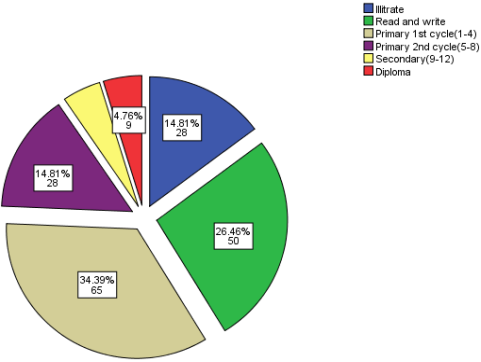
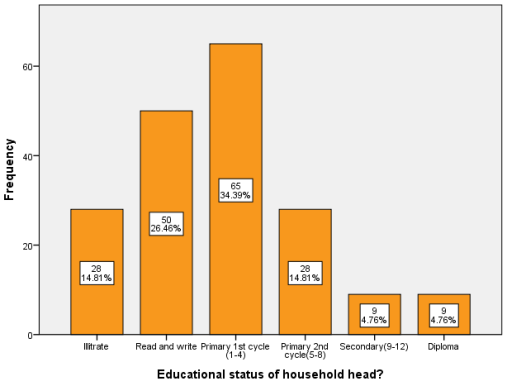
Figure 1. Educational status of respondents.
Educational status of respondents: As shown in
Figure 1, 28 (14.81%) were illiterate, 50 (26.5%) were can read and write, 65 (34.4%) were Primary 1
st cycle (1-4), 28 (14.8%) attended Primary 2
nd cycle (5-8), 9 (4.8%) were achieved secondary school, and the remaining 9 (4.8%) have diploma. Education equips individuals with critical thinking and analytical skills, which are essential for effective conflict resolution. The predominance of respondents with lower educational achievement may impact the strategies employed in resolving disputes, potentially limiting their effectiveness and sustainability.
4.1.4. Marital Status of Respondents
Figure 2. Marital status of respondents.
Marital status of respondents: Based on
Figure 2, 134 (70.9%) were married, 46 (24.3%) were divorced, and only 9 (4.8%) were widowed. A significant majority of the respondents (70.9%) are married, indicating that stable family structures are prevalent in the community. This high percentage of married individuals may influence social dynamics, community cohesion, and collective conflict resolution approaches. Being married often fosters a sense of responsibility and commitment to family unity, which can be instrumental in conflict resolution processes. Married respondents may have a vested interest in maintaining harmony within their families and communities, potentially making them more inclined to participate in and support reconciliation efforts.
The divorce rate stands at 24.3%, which is considerable. This indicates that conflict within marriages exists, which may also parallel broader community conflicts. Understanding the reasons behind these divorces could provide insight into underlying tensions that may impact community relations and conflict resolution strategies.
4.1.5. Religion of Respondents
Table 3. Religion of respondents.
Variables | Frequency | Percentage |
Orthodox | 63 | 33.3% |
Muslim | 122 | 64.6% |
Protestant | 4 | 2.1% |
Total | 189 | 100% |
Source: Field Survey, 2025,
Religion respondents: As shown in
Table 3, concerning religion Respondents’, 63 (33.3%) were Orthodox, and 122 (64.6%) were Muslim, and the remaining 4 (2.2%) were protestant. Therefore, from the above analysis, it is possible to conclude that the majority of Respondents were muslin.
4.1.6. Household Family Size
Table 4. Household family size.
Variables | Mean | Median | Mode | Min | Max | Std.devi | Range |
Age of respondents | 5.4 | 5 | 5 | 3 | 9 | 1.57 | 6 |
Source: Field Survey, 2025
Average family size: Based on
Table 4, the average family size of respondents’ is 5.4, and 5 is the most common family size for respondents with a range of 6 & a standard deviation of 1.57. The average family size is reported to be 5.4, suggesting that families within this community are relatively large. This figure points to potential social dynamics that could influence conflict resolution processes, as larger families often entail complex interpersonal relationships and stronger family ties. With 5 being the most common family size, this indicates a typical family structure within the community. This commonality may lead to shared experiences and values that can strengthen community ties, fostering a collaborative approach to conflict resolution.
The family size shows a range of 6, with a standard deviation of 1.57. This indicates that while most families cluster around the average size, there is some variability. Understanding this variability can help mediators recognize that larger families might have different perspectives and needs in conflict situations compared to smaller ones.
4.1.7. Place of Birth
As one can look from
Table 5, the majority of respondents 160 (84.7%) were born in Tehuledere wereda; the remaining 29 (15.3%) were born in Haik town. The above analysis implies that a significant majority of respondents (84.7%) were born in Tehuledere Wereda indicates strong community ties and local identity. This familiarity with local customs and norms often plays a crucial role in conflict resolution, suggesting a richer cultural heritage and shared values, which can facilitate understanding in conflict situations. When community members have a shared background, they may be more receptive to traditional conflict resolution mechanisms that emphasize restoration and reconciliation.
Table 5. Place of birth.
Variables | Frequency | Percentage |
Tehuledere wereda | 160 | 84.7% |
Haik city | 29 | 15.3% |
Total | 189 | 100% |
Source: Field Survey, 2025
4.1.8. How Long Have You Lived in Tehuledere Wereda
Table 6. How long have you lived in Tehuledere wereda.
Variables | Mean | Median | Mode | Min | Max | Std.devi | Range |
Age of respondents | 52.56 | 52 | 60 | 34 | 67 | 10.25 | 33 |
Source: Field Survey, 2025
As shown in
Table 6, the average mean age of respondents was 52.56, the most common age for the respondents was 60. The age difference between the maximum and the minimum age is 33. A standard difference of 10.25 showed that there is a moderate age variation around the mean value. The median age of 52 implies that half the respondents are older than this age, which may suggest a reliance on the wisdom and experiences of older generations. In many indigenous cultures, elders play a crucial role in conflict resolution, serving as mediators and sources of traditional knowledge. Their perspectives can significantly influence the community's approach to resolving disputes. The range of 33 years indicates a diverse age group within the respondents. While the majority might lean towards the older demographic, the presence of younger individuals. The age distribution can influence how conflicts are perceived and addressed within the community. Older individuals may prioritize traditional methods that emphasize negotiation and reconciliation, while younger members might advocate for integrating more contemporary approaches.
4.2. Quantitative Data: Objective Based Likert Scale Questions
4.2.1. The Common Causes of Conflict in Your Area
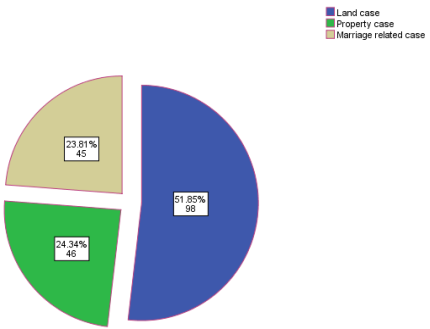
Figure 3. Common causes of conflict.
Common causes of conflict: As shown
Figure 3, The first causes of conflict is related with land case 98 (51.9%), the second cause is property related case 46 (24.3%), and the remaining 45 (23.8%) responded to marriage related cases. The above analysis indicates that disputes over land are the leading cause of conflict, representing 51.9% of cases. This implies that challenges related to land ownership, usage rights, and access are deeply embedded in the community, likely reflecting wider socioeconomic pressures and traditional inheritance practices. Next, property-related conflicts account for 24.3%, revealing notable tensions surrounding material possessions and resources. Marriage-related disputes make up 23.8% of cases, underscoring the importance of interpersonal relationships and family dynamics in conflict situations. Therefore, the finding implies the need for a holistic approach to conflict resolution that considers both material and relational aspects.
4.2.2. Types of Indigenous Knowledge as Social Capital Do People Used to Solve Conflicts in Your Area
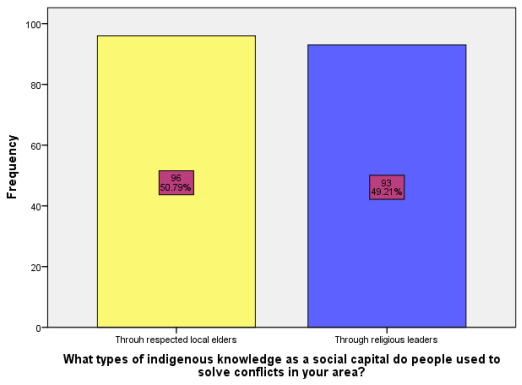
Figure 4. Types of indigenous knowledge to solve conflict.
Types of indigenous knowledge to solve conflict: As shown in
Figure 4, More than half of the respondents 96 (50.8%) responded that the most common types of indigenous knowledge to solve conflict is through respected local elders; the remaining 93 (49.2%) responded to solve conflict through religious leaders. The above analysis indicated that substantial faith on respected local elders as the primary means of conflict resolution, with over half of the respondents (50.8%) identifying elders as the most common source of indigenous knowledge in addressing conflicts. This implies the elders' esteemed role within the community, serving as mediators who utilize cultural wisdom and established traditions to guide resolution processes. On the other hand, nearly half of the respondents (49.2%) specified that religious leaders also play a crucial role in conflict resolution, suggesting a harmonized system where spiritual authority intersects with traditional leadership.
4.2.3. The Forms of Indigenous Knowledge Do People Used to Manage Their Conflict
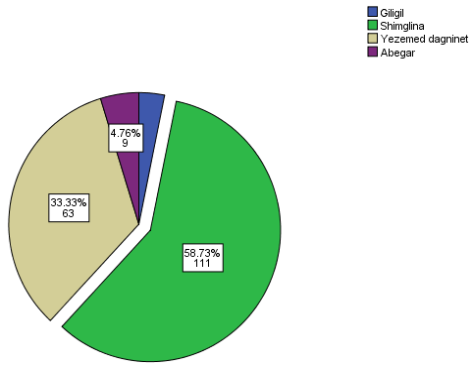
Common forms of conflict management: Based on
Figure 5, the great majority 111 (58.7%) responded that Shimgilina their preferred dispute resolution mechanism; Yezemed dagninet is the second form of conflict management where 63 (33.3%) responded to it; Moreover, 9 (4.8%) responded for Abegar, and only 6 (3.2%) responded for Giligil. Therefore, from the above analysis implies that more than half of the respondents (58.7%) prefer Shimgilina as the primary conflict resolution mechanism This demonstrates the strong cultural value placed on community assemblies, where collective dialogue and consensus-building are central to resolving conflicts. Next to Shimgilina, Yezemed Dagninet is the second most favored method, with 33.3% of respondents identifying it as an effective form of conflict management, signifying that structured negotiations and mediated discussions also hold importance in the community. On the other hand, the less prevalent methods, such as Abegar (4.8%) and Giligil (3.2%), indicate a diminishing role of these practices in contemporary conflict resolution. To generalize, the data reflects a robust reliance on communal methods, particularly Shimgilina, emphasizing the enduring significance of indigenous knowledge and local customs in maintaining social cohesion and effectively addressing disputes within the community.
Figure 5. Which forms of indigenous knowledge do people used to manage their conflict.
4.2.4. I Prefer to Manage Conflict by Using Indigenous Knowledge as Social Capital
Table 7. Preference for indigenous knowledge.
Variables | Frequency | Percentage |
Strongly dis agree | 43 | 22.7% |
Disagree | 13 | 6.9% |
Neither agree nor disagree | 19 | 10% |
Agree | 114 | 60.3% |
Strongly agree | - | - |
Total | 189 | 100% |
Source: Field Survey, 2025
Preference for indigenous knowledge: As
Table 7 indicates, 114 (60.3%) have showed strong preference for managing conflict using indigenous knowledge as social capital, highlighting the effectiveness and cultural relevance of indigenous knowledge in conflict resolution. In contrast, only minorities 44 (22.7%) and 13 (6.9%) responded for strongly dis agrre and dis agree respectively.
The above findings showed a strong dependent on indigenous knowledge as a preferred mechanism for conflict management among respondents (60 implying the perceived effectiveness and cultural significance of indigenous practices in addressing disputes within the community. Inversely, the relatively low rates of disagreement (29.6%) suggest that while some individuals may question or prefer alternative conflict resolution methods, the great majority inclination towards indigenous knowledge reflects its deeply rooted role in social cohesion.
4.2.5. I Gave More Attention for Indigenous Knowledge in Managing Conflict
Table 8. Attention for indigenous knowledge.
Variables | Frequency | Percentage |
Strongly dis agree | 39 | 20.6% |
Disagree | 27 | 14.3% |
Neither agree nor disagree | 28 | 14.8% |
Agree | 91 | 48.1% |
Strongly agree | 4 | 2.1 |
Total | 189 | 100% |
Source: Field Survey, 2025
Attention for indigenous knowledge: Based on
Table 8, 39 (20.6%) of respondents strongly dis agreed, 27 (14.3%) dis agreed, and 28 (14.8%) neither agreed nor dis agreed. Conversely, the great majority or almost half of the respondents 91 (48.1%) agreed and 4 (2.1%) strongly agreed.
The above analysis indicates a positive perception of indigenous knowledge as a tool for conflict management, with 48.1% of respondents expressing agreement with its use, emphasizing the recognition of indigenous practices in addressing disputes, although the relatively high levels of disagreement of 34.9% is a sign of substantial division in opinion regarding their effectiveness. The presence of 14.8% neutral respondents indicates that some individuals might be unsure or uncertain about the role of indigenous knowledge in conflict resolution. Furthermore, the very few who strongly agreed (2.1%) point to a lack of overwhelming enthusiasm for this approaches. Therefore, the findings reflect a complex landscape of opinions on indigenous knowledge in conflict management, showing both its importance and the need for broader consensus and understanding within the community.
4.2.6. Young People Are Strongly Dependent on Their Indigenous Knowledge in Managing Conflict
Table 9. Dependent of young people on their indigenous knowledge.
Variables | Frequency | Percentage |
Strongly dis agree | 47 | 24.9% |
Disagree | 114 | 60.3% |
Neither agree nor disagree | 19 | 10.1% |
Agree | 91 | 48.1% |
Strongly agree | 9 | 4.8 |
Total | 189 | 100% |
Source: Field Survey, 2025
The data presented in
Table 9, 47 (24.9%) responded to strongly dis agreed, 114 (60.3%) were agreed, 19 (10.1%) were neither agreed nor dis agreed, 91 (48.1%) were agreed and few respondents 9 (4.8%) were strongly agreed. The above analysis showed a complex and predominantly skeptical view toward the use of indigenous knowledge in conflict resolution among the young generation. The great majority of respondents (60.3%) disagreed showing a strong opposition to relying on indigenous practices for managing conflicts. This is further compounded by 24.9% of respondents who strongly disagreed, illustrating a considerable segment of the young population that may lack confidence in the effectiveness of these traditional methods. In contrast, only 48.1% agreed, with a mere 4.8% expressing strong agreement, highlighting that support for indigenous knowledge in conflict resolution is not robust. The findings reveal a general reluctance to embrace indigenous practices as primary tools for conflict resolution within the young community, pointing to potential challenges in promoting these traditional methods.
4.2.7. I Believed That Indigenous Knowledge Is Not Changing in Managing Conflicts
Table 10. Changing aspects of indigenous knowledge.
Variables | Frequency | Percentage |
Strongly dis agree | 48 | 25.4 |
Disagree | 113 | 59.8% |
Neither agree nor disagree | 10 | 5.3% |
Agree | 18 | 9.5% |
Strongly agree | - | - |
Total | 189 | 100% |
Source: Field Survey, 2025
Changing aspects of indigenous knowledge: Table 10 shows that 48 (25.4%) responded to strongly dis agreed, 113 (59.8%) dis agreed, 10 (5.3%) neither agreed nor dis agreed, and the remaining 18 (9.5%) responded to agreed. The above analysis highlights a fundamental skepticism regarding the notion that indigenous knowledge is static in managing conflicts. A significant majority of respondents (59.8%) disagreed with the idea that this knowledge remains unchanged, and an additional 25.4% strongly disagreed, indicating a strong consensus that acknowledges the dynamic nature of indigenous practices in conflict resolution. In contrast, only 9.5% agreed with the assertion, suggesting that a mere fraction of the population believes in the permanence of traditional methods. The small percentage (5.3%) of neutral responses reflects a lack of certainty among some individuals. Therefore, it is possible to conclude that the use of indigenous knowledge is changing, responsive to contemporary challenges and situations in conflict management, which points to a recognition of the need for adaptation and change within traditional practices.
4.2.8. I Prefer to Solve Conflicts by Using Our Indigenous Knowledge Rather Than Formal Institutions
Table 11. Preference of indigenous knowledge.
Variables | Frequency | Percentage |
Strongly dis agree | 17 | 9% |
Disagree | 74 | 39.1% |
Neither agree nor disagree | 19 | 10.1% |
Agree | 79 | 41.8% |
Strongly agree | - | - |
Total | 189 | 100% |
Source: Field Survey, 2025
As shown in
Table 11, 17 (9%) strongly dis agreed showing a significant inclination towards the preference for resolving conflicts through indigenous knowledge rather than formal institutions, 75 (39.1%) dis agreed, 19 (10.1%) remains neutral, and the remaining 79 (41.8%) respondents were agreed. The above analysis discloses a convincing dichotomy in the attitudes toward conflict resolution approaches among respondents. With 48.1% expressing disagreement with the idea of relying on formal institutions, a significant number clearly favor indigenous knowledge as a preferable method. This disagreement may imply a broader skepticism towards formal processes, suggesting that these mechanisms are viewed as inadequate or disconnected from the community’s cultural context and lived experiences.
The presence of a neutral stance among 10.1% of respondents indicates uncertainty or a lack of strong opinion, potentially reflecting a gap in understanding the efficacy or relevance of these methods. Conversely, the 41.8% who agree with formal institutions may represent a younger or differing demographic that values systematic conflict resolution. Ultimately, this divergence calls for a deeper examination of the underlying reasons for these preferences, highlighting the need for empowering indigenous approaches while also considering potential integrations with formal mechanisms to create a more holistic framework for conflict resolution.
4.2.9. Indigenous Knowledge’s Are Well Codified and Documented in Our Area/ Wereda
Table 12. Codification &Documentation of indigenous knowledge.
Variables | Frequency | Percentage |
Strongly dis agree | 32 | 16.9% |
Disagree | 122 | 64.6% |
Neither agree nor disagree | 12 | 6.3% |
Agree | 23 | 12.2% |
Strongly agree | - | - |
Total | 189 | 100% |
Source: Field Survey, 2025
Table 12, indicated that 32 (16.9%) respondents, strongly dis agreed, 122 (64.6%) respondents dis agreed, 12 (6.3%) were uncertain, and the remaining 23 (12.2%) respondents agreed. The analysis reveals a dominant uncertainty regarding the codification and documentation of indigenous knowledge in the area, with 64.6% of respondents disagreeing with the assertion that indigenous knowledge is well codified. While, only 12.2% agree, with a mere 6.3% remaining neutral. The significant percentage of strong disagreement (16.9%) further underscores the prevailing sentiment that indigenous knowledge may not be adequately documented. This indicates a potential gap in the preservation and formal recognition of valuable cultural practices and insights within the community.
Therefore, the lack of confidence in the codification of indigenous knowledge suggests that community members may perceive this knowledge as vulnerable to loss or neglect. The overpowering disagreement could reflect concerns about the accessibility and transmission of cultural heritage, indicating that traditional practices and wisdom are not effectively recorded or institutionalized. This situation highlights the necessity for initiatives aimed at preserving and documenting indigenous knowledge, which could strengthen community identity and ensure that these invaluable resources are passed down to future generations.
4.2.10. My Preference to Use Indigenous Knowledge in Managing Conflict Increases from Time to Time
Table 13. Preference to use indigenous knowledge in managing conflict.
Variables | Frequency | Percentage |
Strongly dis agree | 22 | 11.6% |
Disagree | 143 | 75.7% |
Neither agree nor disagree | 13 | 6.9% |
Agree | 11 | 5.8% |
Strongly agree | - | - |
Total | 189 | 100% |
Source: Field Survey, 2025
Table 13, indicates that 22 (11.6%) of respondents showed strong dis agreement, 143 (75.7%) respondents dis agreed, while 13 (6.9%) were showed uncertainty, and the remaining 11 (5.8%) respondents were agreed. The analysis suggests that 75.7% of respondents showed the notion that their preference decreases over time. Only 11.6% of respondents strongly disagree, while 5.8% agree and 6.9% remain neutral.
This overwhelming majority indicates that individuals feel a growing affinity for indigenous approaches, which may reflect a broader societal recognition of the effectiveness and relevance of these practices in conflict resolution over time. This trend may also indicate a desire for more context-specific solutions in conflict resolution. The findings could advocate for the integration of indigenous knowledge into formal conflict management frameworks, fostering a more holistic approach that resonates with community values and experiences.
4.3. Qualitative Data: In-depth Interview
4.3.1. Demographic Back Ground of Participants
Table 14. Demographic back ground of Participants.
No | Kebele | Pseudo Name | Sex | Age | Roles | Date of interview |
1 | Ketie (05) | A | M | 65 | Religious leader | Sep 18, 2025 |
2 | Ketie (05) | B | M | 56 | Elderly leader | Sep 18, 2025 |
3 | Gobeya (012) | C | M | 67 | Edir lider | Sep 19, 2025 |
4 | Gobeya (012) | D | M | 62 | Elderly leader | Sep 19, 2025 |
5 | Weldelulo (04) | E | M | 51 | Religious leader | Sep 25, 225 |
6 | Weldelulo (04) | F | F | 60 | Influential women | Sep 25, 2025 |
7 | Weldelulo (04) | G | F | 67 | Influential women | Sep 26, 2025 |
The above demographic data tells significant insights on the role of local leaders in handling conflicts. A total of seven respondents were participated for the in-depth interviews, of the total, 5 (71.4%) were males and the remaining 2 (29.6%) were females.
4.3.2. Common Causes of Conflict
In response to the above question majority of the respondents agreed that the common causes of conflict in Tehuledere wereda were related to land, properties and family cases such as marriage selection cases.
Land stands out as this really important thing there. It is not just for making money, but also for how people see each other’s status. From what the respondents said, pretty much everyone agrees these disputes are at the center of it all. That part gets a bit messy when you think about how it ties into daily life.
Property theft is another issue that comes up a lot. It is more than losing things, it makes the whole area feel unsafe. Maybe the law is not handling it well enough, or people are not sticking together like they should. I am not totally sure, but it seems to feed into bigger tensions.
Family related conflicts, especially around marriage choices, can turn personal arguments into something that affects everyone. It is interesting how that escalates so quickly. Some might say it is just private stuff, but others see it spilling over. The data points to this as a key area anyway.
4.3.3. Types of Indigenous Knowledge Used as Conflict Prevention Mechanisms Practiced to Settle the Conflicts
In answering this question the great majority of interviewee responded that they solve conflicts using the wisdom of elderly people, local leaders and religious leaders. People interview keep coming back to how they turn to elders and local leaders, plus religious figures, when it comes to sorting out conflicts. It feels like this kind of traditional knowledge is really what holds things together for community stuff and fixing problems.
Relying on these respected people helps keep the social setup strong and gets everyone feeling like they have a part in it. Sort of a shared duty thing. The way they stress wisdom, it seems to point to this deep rooted idea in the culture that elders and leaders have something special that makes talking things out and mediating easier. Not sure if thats everything, but it stands out.
4.3.4. Roles of Indigenous Knowledge as Social Capital in Managing Conflict
Indigenous conflict resolution mechanisms are deep rooted in the local culture, norms and collective responsibility as described by participants. These mechanisms were commonly referred to as ways of restoring peace rather than enforcing punishment and in doing so they have economic social and cultural roles. The in-depth interview implied that ‘indigenous knowledge is not only seen as a conflict resolution tool but also represents a way of maintaining one‘s cultural identity, encouraging social relationships and in addition, improving one‘s economic situation’.
Impact of Cultural continuity: Indigenous conflict resolution is described as allowing for the maintenance of culture, and therefore plurality of identities and sense of community.
Economic Gains: As resolution is arrived at efficiently and amicably, the community will save the expense of formal legal procedures and so can have a more vibrant community economy.
Trust Building is essential for repairing social relationships among members of the community in the resolution of conflicts through culturally resonant means.
4.3.5. Changing Aspects of Indigenous Knowledge as Social Capital in Managing Conflict
In respond to the above question the majority of interviewee replied that there is notable changes in our indigenous knowledge usage particularly the younger generation are becoming less dependent on their indigenous knowledge, they mainly prefer to settle conflict through the formal legal systems. They also added that some of our indigenous knowledge are being endanger of lost as they are not properly codified.
Respondents also expressed concern about the downward trend of the younger generation‘s respect and dependence on local traditional conflict resolution mechanisms. In essence, it is a transition toward formal institutions at the cost of traditional mechanisms.
If we do not respect our elders, respecting our indigenous knowledge, the community ties will eventually break down and we will depend on formal institutions which may or may not be effective for resolving conflict.
4.3.6. Effectiveness of Indigenous Knowledge as with Formal Organizations in Managing Conflict
The majority of the interviewee agreed that if our indigenous knowledge are properly codified, documented and passed from generation to generation they will be much more effective than the formal system in enhancing inclusiveness, holistic understanding, collective healing, empathy and mutual respect, and strengthening community tie and social cohesions.
The interviewees mostly agree that indigenous knowledge could be more effective than formal institutions if appropriately documented and transmitted through generations. This presents a critical tension between traditional and formal systems of justice.
The informants were generally in consensus that indigenous knowledge might outperform formal institutions if securely recorded and handed down, thus raising a final call for clarification in this crucial dilemma between customary and formal justice.
Inclusiveness and Holism: Aboriginal methods are considered inclusive, emphasizing relations rather than adversarial conflicts seen in formal judicial courts.
Solutions for the community: Priority given to returning the peace and not declaring winners and losers preserves community values of caring and respect, and builds social capital.
Appeal of documenting: The call for documentation indicates a need for some contemporary preservation of these traditions to be able to keep them alive and revered.
4.4. Discussions
4.4.1. Indigenous Conflict Resolution and Elders' Role
Dependence on the elders to resolve conflict was very high, with 50.2% of the participants depending on the traditional method to resolve a conflict. This high dependence on the elders to resolve conflicts highlighted not only the dependence but also the importance of the elders playing the critical role of being the focus of authority in the society. This also highlighted the significance of traditional authority, which has also been pointed out by other studies
| [2] | Abbink, J. (2000). Traditional authority in Africa: A key for the analysis of social and political change. |
| [11] | Bøås, M. (2008). Traditional authority and conflict resolution. |
[2, 11]
.
Elderly people in society gain respect not only because of their age factor but because of the accumulated wisdom that they possess in relation to their collective experiences. They play an important stake in conflict resolution because the conflict that is resolved by their efforts is reflective of the values and mores of society in general that focus on corrections in relation to restorative justices concepts.
4.4.2. Gender Dynamics in Conflict Resolution
The data shows there is a marked gender disparity among the sampled populations with only 4.8% of the group consisting of females. There arises a critical question of gender inequality in the representation of people for conflict resolution processes. The study confirms findings produced by research carried out by both Melaku, A. and Zewde, B., which show that the participation of women remains sidelined despite their vital roles in the lives of Ethiopians
| [19] | Melaku, A. (2010). The role of women in conflict resolution in Ethiopia. |
| [27] | Zewde, B. (2000). Gender dynamics in Ethiopian society. |
[19, 27]
.
The dominant representation by older men as mediators may retain patriarchal systems. This may marginalize the input from women regarding their approaches to conflict resolution. Discrimination from decision-making may carry significant undertones, especially regarding the success of the resolution processes. The need to acknowledge the importance of taking note of gender dynamics is essential, especially when involving women’s input regarding approaches to conflict resolution. This may add value to the approach by ensuring that there is a complete appreciation of the different variables within the conflicts, especially those that involve family dynamics.
4.4.3. Causes of Conflict and Management Strategies
Land disputes emerge as a major cause of conflict, with 51.9% of the respondents considering this aspect, followed by conflicts related to property (24.3%), while those associated with marriages come third with 23.8%. These observations appear to be well in tune with previous studies of Aalen, L. and Durie, M., which give considerably more emphasis to the fact that land scarcity and property rights continue to be absolutely fundamental to the sources of tension in Ethiopia
| [1] | Aalen, L. (2006). Ethnicity and political power in Ethiopia. |
| [18] | Marx, A. (2013). Property rights and land disputes in Ethiopia. |
[1, 18]
.
In order to effectively manage conflicts, it is important to understand the drivers of the conflict. It can be concluded that the study results have established the need to manage conflicts holistically, with a view to addressing both material and relational dimensions of the conflict. In order to manage conflicts within the indigenous settings, it would be important to take into consideration the socio-economic vulnerabilities. As postulated by Alemayehu, M., the use of traditional methods, like the Shimgilina method, perpetuates the notion that cohesion within society and involvement of society within the conflict resolution process is essential
| [7] | Alemayehu, M. (2014). Conflict resolution strategies in indigenous practices. |
[7]
.
4.4.4. Indigenous Knowledge and Its Dynamics
On analyzing the results, it appears that the view on indigenous knowledge is complex because 75.7% of respondents felt that the preference for these approaches is declining over the years. It seems to portray that with changing times and with the rising need to address modern-day problems, the usefulness of indigenous approaches might be declining in the views of people. Other authors, Adal, Y. and Tadesse, A., in their earlier research work done on the topic, concluded that with the passage of time and the powerful effect of modernization and globalization on people, the next generations are increasingly showing less concern and faith in indigenous approaches
| [3] | Adal, Y. (2017). Modernization and its impacts on indigenous knowledge in Ethiopia. |
| [23] | Tadesse, A. (2010). Indigenous conflict resolution mechanisms: An overview. |
[3, 23]
.
The dynamic nature of indigenous knowledge indicates that it is not fixed but instead constantly evolving to respond to various developments in society. This acknowledgment of dynamism in indigenous knowledge demonstrates how traditional knowledge systems can be incorporated into formal systems of conflict resolution. Scholars indicate that merging indigenous systems of conflict resolution with modern systems is highly effective in managing conflict. This is because it not only preserves indigenous knowledge systems but is also capable of building resilience to the dynamic nature of society.
The interaction between traditional knowledge and modern developments in the field of conflict resolution in Tehuledere woreda is a testament to the strength of traditional practices as well as the need to evolve. Recognizing the importance of elders in the community, the nuances of gender, and the changing views about traditional knowledge would be helpful in dealing with the issues. The importance of traditional practices in handling conflicts within communities, along with modern methods, is brought out in the findings.
Finally, the situation requires an ongoing dialogue process that considers traditional knowledge but at the same time is attentive to the new socio-cultural realities unfolding. The struggles that surround the enhancement of the representation of gender, the relevance of indigenous practices, and documentation of knowledge are some of the areas which need a collaborative approach by the community, research, and policy sectors. Conflict resolution with varied attitudes toward the issue can be effective and culturally sensitive to promote social cohesion informed by the changing context.





 Share This Article
 Twitter
 Linked In
 Facebook
 Copy
Copy Download