Abstract
Background: Shivering is a common complication of spinal anaesthesia, with an incidence of approximately 50%-60%, and is associated with increased perioperative morbidity. Although several pharmacological agents have been investigated for its antishivering prophylaxis, each has inherent limitations, and the optimal prophylactic agent remains a subject of ongoing debate. This study compared the anti-shivering efficacy of prophylactic intravenous paracetamol, ondansetron, and nefopam in obstetric patients undergoing spinal anaesthesia. Methods: Eligible obstetric patients were randomly allocated into four groups: Group P (paracetamol, n = 16), Group O (ondansetron, n = 16), Group N (nefopam, n = 16), and Group C (normal saline, n = 16). The primary outcome was the incidence of post-spinal shivering. Secondary outcomes included the severity of shivering, incidence of nausea, vomiting, hypotension, and perioperative haemodynamic variables. Continuous variables were analysed using one-way analysis of variance (ANOVA), while categorical variables were analysed using the chi-square test. A p-value of <0.05 was considered statistically significant. Results: No patient in the nefopam group developed shivering. The incidence of shivering was significantly lower in the ondansetron and nefopam groups than in the control group (p < 0.001), with nefopam demonstrating complete prophylaxis. Patients who developed shivering in the ondansetron group predominantly experienced mild-to-moderate shivering, whereas those in the paracetamol and control groups mainly exhibited moderate-to-severe shivering, with the difference being statistically significant. The incidence of nausea, vomiting, hypotension, and the perioperative trends in heart rate, mean arterial pressure, and peripheral oxygen saturation were comparable across all study groups. Conclusion: Prophylactic intravenous nefopam demonstrated the greatest efficacy in preventing post-spinal shivering in obstetric patients undergoing spinal anaesthesia, followed by ondansetron and paracetamol. Nefopam may therefore be considered a superior prophylactic agent for the prevention of post-spinal shivering in this patient population.
Keywords
Nefopam, Ondansetron, Paracetamol, Post-spinal Shivering, Spinal Anaesthesia, Obstetric Patients
1. Introduction
Spinal anaesthesia remains the anaesthetic technique of choice for parturients undergoing lower-segment caesarean section (LSCS) because of its rapid onset, reliable sensory blockade, and favourable maternal and neonatal outcomes
| [1] | Mendonca FT, Crepaldi Junior LC, Gersanti RC, de Araujo KC. Effect of ondansetron on spinal anesthesia-induced hypotension in non-obstetric surgeries: a randomized, double-blind, placebo-controlled trial. Braz J Anesthesiol. 2021; 71(3): 233-240. https://doi.org/10.1016/j.bjane.2020.12.028 |
[1]
. However, despite these advantages, it is commonly associated with complications such as hypotension, bradycardia, and post-spinal shivering
| [2] | Kim AY, Kweon TD, Kim M, Lee HI, Lee YJ, Lee KY. Comparison of meperidine and nefopam for prevention of shivering during spinal anesthesia. Korean J Anesthesiol. 2013; 64(3): 229-233. https://doi.org/10.4097/kjae.2013.64.3.229 |
[2]
.
Shivering is an involuntary, rhythmic, oscillatory muscular activity that occurs as a physiological response to hypothermia and serves to increase metabolic heat production
| [3] | Mohamed HS. Dexmedetomidine versus nefopam for the management of post-spinal anesthesia shivering: a randomized double-blind controlled study. Egypt J Anaesth. 2015; 31(4): 315-320. https://doi.org/10.1016/j.egja.2015.06.004 |
| [4] | Amsalu H, Zemedkun A, Regasa T, Adamu Y. Evidence-based guideline on prevention and management of shivering after spinal anaesthesia in resource-limited settings: a review. Int J Gen Med. 2022; 15: 6985-6998.
https://doi.org/10.2147.IJGM.S370439 |
[3, 4]
. Following spinal anaesthesia, the reported incidence of shivering ranges from 50% to 60%
| [2] | Kim AY, Kweon TD, Kim M, Lee HI, Lee YJ, Lee KY. Comparison of meperidine and nefopam for prevention of shivering during spinal anesthesia. Korean J Anesthesiol. 2013; 64(3): 229-233. https://doi.org/10.4097/kjae.2013.64.3.229 |
| [4] | Amsalu H, Zemedkun A, Regasa T, Adamu Y. Evidence-based guideline on prevention and management of shivering after spinal anaesthesia in resource-limited settings: a review. Int J Gen Med. 2022; 15: 6985-6998.
https://doi.org/10.2147.IJGM.S370439 |
[2, 4]
. Although its exact pathophysiology remains incompletely understood, several mechanisms have been proposed, including redistribution of core body heat secondary to peripheral vasodilation below the level of the block, uninhibited spinal reflexes, increased sympathetic activity, and postoperative pain
| [5] | Sharma MK, Mishra D, Goel N. Efficacy of ondansetron and palonosetron in prevention of shivering under spinal anesthesia: a prospective randomized double-blind study in patients undergoing elective LSCS. J Anaesthesiol Clin Pharmacol. 2021; 37: 63-66. https://doi.org/10.4103/joacp.JOACP_215_18 |
| [6] | Badawy AA, Mokhtar AM. The role of ondansetron in prevention of post-spinal shivering in obstetric patients: a double-blind randomized controlled trial. Egypt J Anaesth. 2017; 33: 29-33. https://doi.org/10.1016/j.egja.2016.12.004 |
| [7] | Chowdhury AN, Lohar SK, Ray AK, Baruah A. Comparison of intravenous ondansetron and tramadol for control of shivering during spinal anaesthesia: a prospective observer-blind study. Int J Contemp Med Res. 2018; 5(12): L7-L11.
https://doi.org/10.21276/ijcmr.2018.5.12.15 |
[5-7]
.
Post-spinal shivering is more than a source of patient discomfort. It significantly increases metabolic rate, oxygen consumption, and carbon dioxide production, thereby predisposing patients to myocardial ischaemia, hypoxaemia, and lactic acidosis. In addition, shivering may aggravate postoperative pain, impair wound healing, and interfere with electrocardiographic, pulse oximetry, and non-invasive blood pressure monitoring, making perioperative management more challenging
| [3] | Mohamed HS. Dexmedetomidine versus nefopam for the management of post-spinal anesthesia shivering: a randomized double-blind controlled study. Egypt J Anaesth. 2015; 31(4): 315-320. https://doi.org/10.1016/j.egja.2015.06.004 |
| [4] | Amsalu H, Zemedkun A, Regasa T, Adamu Y. Evidence-based guideline on prevention and management of shivering after spinal anaesthesia in resource-limited settings: a review. Int J Gen Med. 2022; 15: 6985-6998.
https://doi.org/10.2147.IJGM.S370439 |
| [8] | Meng L, Wang X, Qu W, Liu M, Wang Y. Nefopam for the prevention of perioperative shivering: a meta-analysis of randomized controlled trials. BMC Anesthesiol. 2015; 15: 87. https://doi.org/10.1186/s12871-015-0068-y |
[3, 4, 8]
. Consequently, effective prevention of perioperative shivering remains an important component of quality obstetric anaesthetic care.
Both pharmacological and non-pharmacological strategies have been employed to prevent perioperative shivering. Non-pharmacological measures include warming intravenous fluids, forced-air warming devices, radiant heat, and optimization of operating room ambient temperature. Pharmacological agents that have demonstrated varying degrees of efficacy include pethidine, tramadol, dexamethasone, low-dose ketamine, clonidine, nefopam, ondansetron, and paracetamol.
Nefopam is a centrally acting, non-opioid, non-sedative analgesic with established anti-shivering properties
| [3] | Mohamed HS. Dexmedetomidine versus nefopam for the management of post-spinal anesthesia shivering: a randomized double-blind controlled study. Egypt J Anaesth. 2015; 31(4): 315-320. https://doi.org/10.1016/j.egja.2015.06.004 |
| [8] | Meng L, Wang X, Qu W, Liu M, Wang Y. Nefopam for the prevention of perioperative shivering: a meta-analysis of randomized controlled trials. BMC Anesthesiol. 2015; 15: 87. https://doi.org/10.1186/s12871-015-0068-y |
[3, 8]
. Its thermoregulatory effect is thought to result from inhibition of the synaptic reuptake of serotonin, noradrenaline, and dopamine, thereby lowering the shivering threshold through central thermoregulatory pathways
| [8] | Meng L, Wang X, Qu W, Liu M, Wang Y. Nefopam for the prevention of perioperative shivering: a meta-analysis of randomized controlled trials. BMC Anesthesiol. 2015; 15: 87. https://doi.org/10.1186/s12871-015-0068-y |
[8]
. Ondansetron, a selective 5-hydroxytryptamine type-3 (5-HT
3) receptor antagonist widely used for the prevention of postoperative nausea and vomiting, has also been shown to reduce the incidence of shivering following both spinal and general anaesthesia
| [6] | Badawy AA, Mokhtar AM. The role of ondansetron in prevention of post-spinal shivering in obstetric patients: a double-blind randomized controlled trial. Egypt J Anaesth. 2017; 33: 29-33. https://doi.org/10.1016/j.egja.2016.12.004 |
[6]
. Although its precise mechanism remains unclear, it is believed to exert its anti-shivering effect through modulation of serotonergic pathways within the preoptic anterior hypothalamus, the principal centre for thermoregulation
| [6] | Badawy AA, Mokhtar AM. The role of ondansetron in prevention of post-spinal shivering in obstetric patients: a double-blind randomized controlled trial. Egypt J Anaesth. 2017; 33: 29-33. https://doi.org/10.1016/j.egja.2016.12.004 |
[6]
.
Paracetamol reduces shivering by lowering the hypothalamic thermoregulatory set point through central inhibition of prostaglandin synthesis, thereby decreasing the threshold for shivering
| [9] | Gholami AS, Hadavi M. Prophylactic intravenous paracetamol for prevention of shivering after general anesthesia in elective cesarean section. J Obstet Anaesth Crit Care. 2016; 6: 81-85. https://doi.org/10.4103/2249-4472.191601 |
[9]
.
Previous studies comparing pharmacological agents for the prevention of post-spinal shivering have reported inconsistent findings. Anup et al
| [7] | Chowdhury AN, Lohar SK, Ray AK, Baruah A. Comparison of intravenous ondansetron and tramadol for control of shivering during spinal anaesthesia: a prospective observer-blind study. Int J Contemp Med Res. 2018; 5(12): L7-L11.
https://doi.org/10.21276/ijcmr.2018.5.12.15 |
[7]
demonstrated that tramadol was more effective than ondansetron, whereas Ramadan et al
| [10] | Ramadan M, Abdel-Razek A, El-Kardawy S, Farouk I. The effect of nefopam, ondansetron, or meperidine in preventing post-anesthetic shivering. AJAIC. 2005; 8(1): 76-84. |
[10]
reported that meperidine was superior to both nefopam and ondansetron. In contrast, Lakhe et al
| [11] | Lakhe G, Adhikari KM, Khatri K, Maharjan A, Bajracharya A, Khana H. Prevention of shivering during spinal anesthesia: comparison between tramadol, ketamine and ondansetron. J Nepal Med Assoc. 2017; 56(208): 39-43.
https://doi.org/10.31729/jnma.3377 |
[11]
found that ondansetron, low-dose ketamine, and tramadol produced comparable anti-shivering effects following spinal anaesthesia.
Despite these reports, evidence directly comparing the prophylactic anti-shivering efficacy of intravenous ondansetron, nefopam, and paracetamol remains limited. To the best of our knowledge, no previous study has directly compared these three agents in obstetric patients undergoing caesarean section under spinal anaesthesia. Therefore, this study aimed to compare the prophylactic anti-shivering effects of intravenous ondansetron, nefopam, and paracetamol in parturients undergoing elective caesarean section under spinal anaesthesia.
2. Subjects and Methods
This prospective, randomized, double-blind, controlled comparative study was conducted at the Federal Teaching Hospital Owerri following approval from the institution's Human Research and Ethics Committee. It was registered with Pan Africa Clinical Trial Registry with number PACTR202604906314523. Written informed consent was obtained from all participants before enrolment.
A total of 64 ASA physical status II and III parturients aged 20-40 years who were scheduled for elective caesarean section under spinal anaesthesia were recruited for the study. Patients were excluded if they declined participation, had a body mass index (BMI) ≥35 kg/m2, had a known hypersensitivity to any of the study medications, required conversion to general anaesthesia, or had emotional or psychiatric disorders that could interfere with study participation or assessment.
2.1. Randomization and Blinding
Participants were randomly allocated into four equal groups (n = 16 each) using a sealed opaque-envelope randomization technique: Group O: Ondansetron 4 mg intravenously, Group N: Nefopam 0.15 mg/kg intravenously, Group P: Paracetamol 1 g intravenously, Group C: Control (100 mL normal saline). Each study drug was diluted to a total volume of 100 mL and administered intravenously over an appropriate period, 10 minutes before induction of spinal anaesthesia. Both the participants and the investigators responsible for data collection and outcome assessment were blinded to treatment allocation throughout the study.
2.2. Anaesthetic Technique
Standard anaesthetic monitoring, including electrocardiography, non-invasive blood pressure measurement, pulse oximetry, and heart rate monitoring, was instituted before commencement of the procedure. Spinal anaesthesia was performed at either the L3-L4 or L4-L5 intervertebral space using a 27-gauge pencil-point spinal needle. Following confirmation of free flow of cerebrospinal fluid, 2 mL of 0.5% hyperbaric bupivacaine was administered intrathecally under aseptic conditions. Following the block, patients were positioned supine with left uterine displacement to minimize aortocaval compression. Operating room temperature was maintained at approximately 22°C throughout the procedure, and supplemental oxygen at 2-5 L/min was administered via face mask.
2.3. Data Collection
Heart rate (HR), mean arterial pressure (MAP), and peripheral oxygen saturation (SpO2) were recorded at baseline, every 5 minutes during the first 15 minutes following spinal anaesthesia, and subsequently at 15-minute intervals until completion of surgery. Shivering was assessed using the validated Crossley and Mahajan five-point grading scale. The primary outcome measure was the incidence of post-spinal shivering. Secondary outcome measures included the onset and severity of shivering, haemodynamic changes, and drug-related adverse effects.
2.4. Sample Size Determination
The sample size was calculated using WINPEPI software (Version 11.65) based on the findings of Lakhe et al.
| [11] | Lakhe G, Adhikari KM, Khatri K, Maharjan A, Bajracharya A, Khana H. Prevention of shivering during spinal anesthesia: comparison between tramadol, ketamine and ondansetron. J Nepal Med Assoc. 2017; 56(208): 39-43.
https://doi.org/10.31729/jnma.3377 |
[11]
, who reported a mean onset of shivering of 21 ± 1.15 minutes in the ondansetron group and 13 ± 9.62 minutes in the control group. Assuming a study power of 90%, a 95% confidence level, and a type I error (α) of 0.05, the minimum required sample size was estimated to be 16 participants per group, giving a total sample size of 64 patients.
2.5. Statistical Analysis
Data were analysed using IBM Satistical Package for Social Sciences (SPSS) Statistics version 25.0 (IBM Corp., Armonk, NY, USA). Continuous variables were tested for normality and presented as mean ± standard deviation (SD) or median (interquartile range), as appropriate. Comparisons of normally distributed continuous variables among the four groups were performed using one-way analysis of variance (ANOVA), while the independent-samples t-test was used for comparisons between two groups. Non-normally distributed variables were analysed using the Kruskal-Wallis test for multiple-group comparisons and the Mann-Whitney U test with Bonferroni correction for pairwise comparisons. Categorical variables were analysed using the Chi-square test or Fisher's exact test where appropriate. A two-tailed p-value <0.05 was considered statistically significant.
3. Results
A total of 64 parturients completed the study, with 16 participants allocated to each of the four study groups. There were no protocol deviations or withdrawals.
3.1. Baseline Characteristics
The demographic characteristics and surgical profiles of the participants were comparable across the four groups. There were no statistically significant differences in age, body mass index (BMI), or duration of surgery (all
p > 0.05), indicating that the study groups were well matched at baseline (
Table 1).
Table 1. Comparison of the demographic variables and surgery profile of the patients among the groups.
Variable | Paracetamol | Ondansetron | Nefopam | Control | F | P value |
Age | 31.44±4.38 | 29.88±6.32 | 29.19±5.61 | 31.06±6.90 | 0.503 | 0.68 |
BMI | 31.44±3.28 | 30.69±3.05 | 30.31±3.44 | 30.81±3.44 | 0.320 | 0.81 |
Duration of surgery | 52.00±8.96 | 58.25±11.24 | 55.94±10.92 | 57.81±12.55 | 1.054 | 0.446 |
3.2. Incidence of Post-Spinal Shivering
The incidence of post-spinal shivering differed significantly among the study groups (
p < 0.001). Shivering occurred in all patients (100%) in the control group, compared with 15 patients (93.8%) in the paracetamol group, 5 patients (31.3%) in the ondansetron group, and none of the patients (0%) in the nefopam group (
Table 2).
Table 2. Comparison of the incidence of shivering between the groups.
Variable | Paracetamol | Ondansetron | Nefopam | Control | Pvalue |
Incidence of Shivering | 15 (93.5%) | 5 (31.3%) | 0 (0%) | 16 (100%) | 0.000 |
Odds ratio | 0.9375 | 0.028 | 0.0 | | |
3.3. Onset of Shivering
There was a statistically significant difference in the onset of shivering among the study groups (Kruskal-Wallis test,
p < 0.001). Pairwise comparisons with Bonferroni correction demonstrated that prophylactic administration of nefopam and ondansetron significantly prevented or delayed the onset of shivering compared with paracetamol (both
p = 0.003). No statistically significant difference was observed between the paracetamol and control groups (
p > 0.05) (
Tables 3 and 4).
Table 3. Comparison of the Onset of Shivering among the groups1.
Variable | Paracetamol | Ondansetron | Nefopam | Control | Statistic | Pvalue |
Onset of Action | 24.5 (19.25, 32.75) | 0.0 (0.0, 14.0) | 0.0 (0.0, 0.0) | 22.5 (22.0, 23.75) | 38.345 | <0.000 |
Table 4. Comparison of the Onset of Shivering among the groups.
Variable | Paracetamol | Ondansetron | Nefopam |
Mean Rank | 17.84 | 10.72 | 0.0 |
Mann-whitney u | 106.500 | 35.500 | 0.00 |
P value | 0.423 | 0.000 | 0.000 |
P value with Bonferroni correction | 1.269 | 0.003* | 0.003* |
* significant
3.4. Severity of Shivering
The severity of post-spinal shivering varied significantly among the study groups (
p < 0.001). No patient in the nefopam group developed shivering. In the ondansetron group, shivering was predominantly mild to moderate, whereas patients in the paracetamol group experienced mainly moderate-to-severe shivering. In contrast, severe shivering predominated in the control group, with most patients experiencing Grade 3 or Grade 4 shivering (
Table 5).
Table 5. Comparison of the degree of shivering between the groups.
Degree of Shivering | Paracetamol | Ondansetron | Nefopam | Control | Pvalue |
0 | 1 (6.3%) | 11 (68.8%) | 16 (100%) | 0 (0%) | 0.000 |
1 | 2 (12.5%) | 1 (6.3%) | 0 (0%) | 0 (0%) |
2 | 6 (37.5%) | 4 (25%) | 0 (0%) | 1 (6.3%) |
3 | 7 (43.8%) | 0 (0%) | 0 (0%) | 10 (62.5%) |
4 | 0 (0%) | 0 (0%) | 0 (0%) | 5 (31.3%) |
Grades 1 &2 are mild and moderate shivering, grades 3 &4 are severe shivering.
3.5. Adverse Effects
The incidences of nausea, vomiting, and hypotension were comparable among the four groups, with no statistically significant differences observed (
p > 0.05). Overall, all three study medications were well tolerated, and no serious drug-related adverse events were recorded during the study period (
Table 6).
Table 6. Comparison of the side effects between the groups.
Variable | Paracetamol | Ondansetron | Nefopam | Control | P value |
Nausea | 6 (37.5) | 2 (12.5%) | 2 (12.5%) | 4 (25%) | 0.26 |
Vomiting | 3 (18.8%) | 1 (6.3%) | 0 (0%) | 1 (6.3%) | 0.25 |
Hypotension | 1 (6.3%) | 5 (31.3%) | 3 (18.8%) | 5 (31.3%) | 0.26 |
3.6. Haemodynamic Parameters
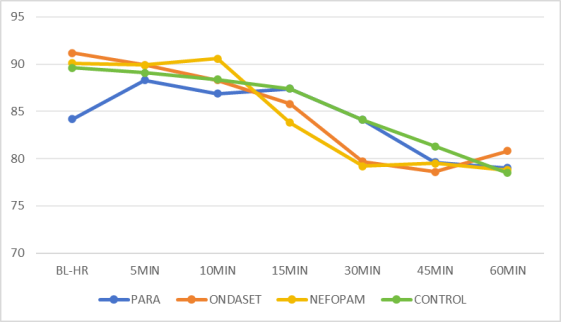
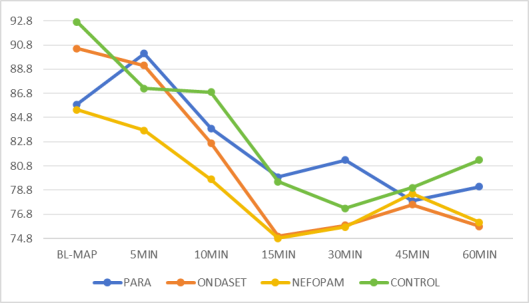
The trends in heart rate and mean arterial pressure remained comparable throughout the intraoperative period among all study groups. No statistically significant intergroup differences were observed at any measurement point (
p > 0.05), indicating that the study medications did not adversely affect haemodynamic stability (
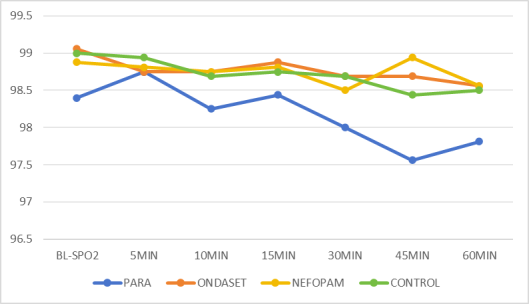
Figures 1 and 2). Similarly, peripheral oxygen saturation remained stable throughout the perioperative period, with no significant differences observed among the four groups (
Figure 3).
Figure 1. Comparison of the trend of the mean pulse rate over time among the groups.
Figure 2. The trend of the mean MAP over time between the groups.
Figure 3. Comparison of the trend of the mean SPO2 between the study groups.
4. Discussion
The present study demonstrated that prophylactic administration of ondansetron, nefopam, and paracetamol reduced the incidence and severity of post-spinal shivering in parturients undergoing elective caesarean section under spinal anaesthesia. Among the three agents evaluated, nefopam exhibited the greatest prophylactic anti-shivering efficacy, followed by ondansetron, while paracetamol showed the least effectiveness.
No patient in the nefopam group developed post-spinal shivering, whereas shivering occurred in 31.3%, 93.8%, and 100% of patients in the ondansetron, paracetamol, and control groups, respectively. These findings demonstrate the superior efficacy of nefopam in preventing post-spinal shivering. Furthermore, the calculated odds ratio suggests that prophylactic ondansetron markedly reduced the likelihood of shivering compared with the control group, whereas paracetamol offered only minimal protection.
The findings of the present study are consistent with those reported by Tohme et al.
| [12] | Tohme J, Chehade J, Abou Zied H, Mattar R, Naccache N, Jabbour K, et al. Prevention of shivering after spinal anaesthesia: ondansetron versus nefopam—a prospective randomized controlled trial. Braz J Anesthesiol. 2025; 75(5): 844650.
https://doi.org/10.1016/j.bjane.2025.844650 |
[12]
and Lakhe et al.
| [11] | Lakhe G, Adhikari KM, Khatri K, Maharjan A, Bajracharya A, Khana H. Prevention of shivering during spinal anesthesia: comparison between tramadol, ketamine and ondansetron. J Nepal Med Assoc. 2017; 56(208): 39-43.
https://doi.org/10.31729/jnma.3377 |
[11]
, both of whom demonstrated superior anti-shivering efficacy with nefopam and ondansetron. However, unlike Tohme et al.
| [12] | Tohme J, Chehade J, Abou Zied H, Mattar R, Naccache N, Jabbour K, et al. Prevention of shivering after spinal anaesthesia: ondansetron versus nefopam—a prospective randomized controlled trial. Braz J Anesthesiol. 2025; 75(5): 844650.
https://doi.org/10.1016/j.bjane.2025.844650 |
[12]
who reported a 16% incidence of shivering in the nefopam group, no episode of shivering was observed among patients who received nefopam in the present study. This difference may be attributable to methodological variations between the studies. Tohme et al. used either hyperbaric or isobaric bupivacaine without clearly specifying the dose administered, whereas the present study employed a standardized dose of 2 mL of 0.5% hyperbaric bupivacaine. Hyperbaric bupivacaine provides a more predictable spread of sensory blockade than the isobaric formulation and may therefore influence the occurrence of post-spinal shivering
| [13] | Sng L, Han NLR, Leong WL, Sultana R, Siddiqui FJ, Assam PN, et al. Hyperbaric versus isobaric bupivacaine for spinal anaesthesia for elective caesarean section. Anaesthesia. 2018; 73: 499-511. https://doi.org/10.1111/anae.14084 |
[13]
.
Another possible explanation for this discrepancy relates to the timing of nefopam administration. In the study by Tohme et al.,
| [12] | Tohme J, Chehade J, Abou Zied H, Mattar R, Naccache N, Jabbour K, et al. Prevention of shivering after spinal anaesthesia: ondansetron versus nefopam—a prospective randomized controlled trial. Braz J Anesthesiol. 2025; 75(5): 844650.
https://doi.org/10.1016/j.bjane.2025.844650 |
[12]
nefopam was administered 30 minutes before spinal anaesthesia, whereas in the present study it was given 10 minutes before the block. Considering the relatively rapid onset and limited duration of action of nefopam, administration closer to the time of spinal anaesthesia may have optimized its prophylactic effect
.
The incidence of shivering observed in the ondansetron group was comparable to that reported by Lakhe et al.,
| [11] | Lakhe G, Adhikari KM, Khatri K, Maharjan A, Bajracharya A, Khana H. Prevention of shivering during spinal anesthesia: comparison between tramadol, ketamine and ondansetron. J Nepal Med Assoc. 2017; 56(208): 39-43.
https://doi.org/10.31729/jnma.3377 |
[11]
probably because both studies employed similar dosing regimens. In contrast, Majeed et al.
| [15] | Majeed A, Venkateswarlu G. Prevention of post-spinal anaesthesia shivering in lower abdominal surgeries: a randomized controlled study between mirtazapine and dexamethasone. Saudi J Med. 2016; 1(3): 87-94.
https://doi.org/10.36348/sjm.2016.v01i03.007 |
[15]
reported that paracetamol substantially reduced the incidence of post-spinal shivering. The higher incidence observed in the present study may reflect differences in study populations. While Majeed et al. investigated non-obstetric female patients, the present study was conducted exclusively among obstetric patients. Pregnancy is associated with physiological changes that influence the spread of intrathecal local anaesthetic, potentially increasing the likelihood of post-spinal shivering
| [13] | Sng L, Han NLR, Leong WL, Sultana R, Siddiqui FJ, Assam PN, et al. Hyperbaric versus isobaric bupivacaine for spinal anaesthesia for elective caesarean section. Anaesthesia. 2018; 73: 499-511. https://doi.org/10.1111/anae.14084 |
[13]
.
The incidence of shivering in the control group was 100%, which is higher than the 50-60% incidence commonly reported following neuraxial anaesthesia
| [2] | Kim AY, Kweon TD, Kim M, Lee HI, Lee YJ, Lee KY. Comparison of meperidine and nefopam for prevention of shivering during spinal anesthesia. Korean J Anesthesiol. 2013; 64(3): 229-233. https://doi.org/10.4097/kjae.2013.64.3.229 |
| [4] | Amsalu H, Zemedkun A, Regasa T, Adamu Y. Evidence-based guideline on prevention and management of shivering after spinal anaesthesia in resource-limited settings: a review. Int J Gen Med. 2022; 15: 6985-6998.
https://doi.org/10.2147.IJGM.S370439 |
[2, 4]
. Nevertheless, similar incidences have been reported by Majeed et al.
| [15] | Majeed A, Venkateswarlu G. Prevention of post-spinal anaesthesia shivering in lower abdominal surgeries: a randomized controlled study between mirtazapine and dexamethasone. Saudi J Med. 2016; 1(3): 87-94.
https://doi.org/10.36348/sjm.2016.v01i03.007 |
[15]
. These findings further emphasize the profound disruption of thermoregulation caused by spinal anaesthesia, primarily through peripheral vasodilatation and redistribution of core body heat.
The present study also demonstrated that nefopam was significantly more effective than both ondansetron and paracetamol in preventing and delaying the onset of post-spinal shivering. These findings are consistent with those of Lakhe et al.
| [11] | Lakhe G, Adhikari KM, Khatri K, Maharjan A, Bajracharya A, Khana H. Prevention of shivering during spinal anesthesia: comparison between tramadol, ketamine and ondansetron. J Nepal Med Assoc. 2017; 56(208): 39-43.
https://doi.org/10.31729/jnma.3377 |
[11]
. Although Lakhe et al. reported their data using mean ± standard deviation, whereas the present study employed median and interquartile range because of the non-normal distribution of the data, both studies reached similar conclusions regarding the superior prophylactic efficacy of nefopam. This consistency strengthens the validity of the present findings despite differences in statistical methodology.
With regard to shivering severity, no patient in the nefopam group developed shivering, while shivering in the ondansetron group was predominantly mild to moderate. In contrast, moderate-to-severe shivering was common in the paracetamol group, and severe shivering predominated in the control group. Consequently, clinically significant shivering requiring intervention occurred most frequently in the control and paracetamol groups. These observations are broadly consistent with the findings of Nallam et al.
| [16] | Nallam SR, Cherukuru K, Sateesh G. Efficacy of intravenous ondansetron for prevention of post-spinal shivering during lower segment cesarean section: a double-blinded randomized trial. Anesth Essays Res. 2017; 11: 508-513.
https://doi.org/10.4103/aer.AER2617 |
[16]
, who reported predominantly mild shivering among patients receiving ondansetron. The higher proportion of clinically significant shivering observed in the present study may be explained by the lower ondansetron dose (4 mg) compared with the 8 mg dose used by Nallam et al. Previous studies have suggested a dose-dependent anti-shivering effect of ondansetron, which may account for this difference
| [17] | Kelsaka E, Baris S, Karakaya D, Sarihasan B. Comparison of ondansetron and meperidine for prevention of shivering in patients undergoing spinal anesthesia. Reg Anesth Pain Med. 2006; 31: 40-45. https://doi.org/10.1016/j.rapm.2005.10.010 |
| [18] | Powell RM, Buggy DJ. Ondansetron given before induction of anesthesia reduces shivering after general anesthesia. Anesth Analg. 2000; 90: 1423-1427.
https://doi.org/10.1097/00000539-200006000-00032 |
| [19] | Tie H, Su G, He K, Liang S, Yuan H, Mou J. Efficacy and safety of ondansetron in preventing post-anesthesia shivering: a meta-analysis of randomized controlled trials. BMC Anesthesiol. 2014; 14: 12. |
[17-19]
.
Similarly, Esmat et al.
| [20] | Esmat IM, Mohamed MM, Abdelaal WA, El-Hariri HM, Ashoor TM. Post-spinal anaesthesia shivering in lower abdominal and lower limb surgeries: a randomized controlled comparison between paracetamol and dexamethasone. BMC Anesthesiol. 2021; 21: 262.
https://doi.org/10.1186/s12871-021-01483-7 |
[20]
reported substantially lower rates of clinically significant shivering following prophylactic paracetamol administration than those observed in the present study. This discrepancy may again be explained by differences in patient populations, as their study included non-obstetric surgical patients, whereas the present investigation was limited to obstetric patients. Pregnancy-related physiological changes may increase susceptibility to post-spinal shivering by influencing the extent of sympathetic blockade and thermoregulatory responses
| [13] | Sng L, Han NLR, Leong WL, Sultana R, Siddiqui FJ, Assam PN, et al. Hyperbaric versus isobaric bupivacaine for spinal anaesthesia for elective caesarean section. Anaesthesia. 2018; 73: 499-511. https://doi.org/10.1111/anae.14084 |
[13]
.
The incidence of nausea, vomiting, and hypotension did not differ significantly among the four groups, although nausea and vomiting occurred more frequently in the paracetamol and control groups, while hypotension was more common among patients who received ondansetron. These findings differ from those of Tohme et al.,
| [12] | Tohme J, Chehade J, Abou Zied H, Mattar R, Naccache N, Jabbour K, et al. Prevention of shivering after spinal anaesthesia: ondansetron versus nefopam—a prospective randomized controlled trial. Braz J Anesthesiol. 2025; 75(5): 844650.
https://doi.org/10.1016/j.bjane.2025.844650 |
[12]
who reported higher incidences of nausea and vomiting in the nefopam group. Such differences may reflect variations in drug dosage and patient characteristics between the two studies. Pharmacologically, Nefopam inhibits the reuptake of serotonin, noradrenaline, and dopamine, and exhibits α₂-adrenergic and non-competitive NMDA receptor antagonist activity, leading to sympathomimetic and anticholinergic effects that reduce the likelihood of hypotension
. Conversely, Ondansetron, a selective 5-HT₃ receptor antagonist, effectively reduces the incidence of nausea and vomiting
| [24] | Bilotta F, Pietropaoli P, Sanità R, Liberatori G, Rosa G. Nefopam and tramadol for the prevention of shivering during neuraxial anesthesia. Reg Anesth Pain Med. 2002; 27: 380-384. https://doi.org/10.1053/rapm.2002.33563 |
[24]
.
Haemodynamic variables, including heart rate, mean arterial pressure, and peripheral oxygen saturation, remained stable throughout the perioperative period in all study groups. These findings are consistent with previous studies demonstrating that nefopam, ondansetron, and paracetamol do not significantly compromise haemodynamic stability when administered prophylactically during spinal anaesthesia
| [20] | Esmat IM, Mohamed MM, Abdelaal WA, El-Hariri HM, Ashoor TM. Post-spinal anaesthesia shivering in lower abdominal and lower limb surgeries: a randomized controlled comparison between paracetamol and dexamethasone. BMC Anesthesiol. 2021; 21: 262.
https://doi.org/10.1186/s12871-021-01483-7 |
| [25] | Sajedi P, Yaraghi A, Moseli HA. Efficacy of ondansetron for prevention of post-anesthetic shivering: a randomized double-blind comparison with meperidine. Anesth Analg. 2008; 106(2): 406-409. |
| [26] | Kranke P, Eberhart LH, Roewer N, Tramèr MR. Pharmacological treatment of post-anesthetic shivering: a quantitative systematic review of randomized controlled trials. Anesth Analg. 2002; 94(2): 453-460. |
[20, 25, 26]
.
Collectively, the findings of the present study support previous evidence that ondansetron reduces post-spinal shivering through modulation of central serotonergic pathways, whereas the superior efficacy of nefopam is likely attributable to its inhibition of central monoamine reuptake and its direct effects on thermoregulatory pathways
| [11] | Lakhe G, Adhikari KM, Khatri K, Maharjan A, Bajracharya A, Khana H. Prevention of shivering during spinal anesthesia: comparison between tramadol, ketamine and ondansetron. J Nepal Med Assoc. 2017; 56(208): 39-43.
https://doi.org/10.31729/jnma.3377 |
| [26] | Kranke P, Eberhart LH, Roewer N, Tramèr MR. Pharmacological treatment of post-anesthetic shivering: a quantitative systematic review of randomized controlled trials. Anesth Analg. 2002; 94(2): 453-460. |
| [27] | Ikeda T, Sessler DI, Tayefeh F, Negishi C, Turakhia M, Marder D. Mechanism of anti-shivering effects of meperidine in humans. Anesthesiology. 1997; 86(5): 1046-1054. |
| [28] | Turhanoglu S, Karamanlioglu B, Pamukçu Z, et al. The effects of paracetamol on postoperative shivering after spinal anesthesia. Anesth Analg. 2005; 100(3): 873-877. |
[11, 26-28]
. Although paracetamol demonstrated comparatively lower efficacy, it still offers practical advantages because of its favourable safety profile, wide availability, and affordability, making it a reasonable option in resource-limited settings where access to alternative agents may be limited.
The present study has some limitations. It was conducted at a single centre with a relatively modest sample size, which may limit the generalisability of the findings. In addition, continuous core temperature monitoring was not performed, precluding direct assessment of perioperative thermal changes. Future multicentre studies with larger sample sizes and continuous temperature monitoring are recommended to validate these findings and further define the comparative effectiveness of these pharmacological agents.
5. Conclusion
Prophylactic intravenous ondansetron, nefopam, and paracetamol reduced the incidence and severity of post-spinal shivering in parturients undergoing elective caesarean section under spinal anaesthesia, with nefopam demonstrating the greatest prophylactic anti-shivering efficacy, followed by ondansetron, while paracetamol offered a more modest but safe and accessible alternative, however, larger multicentre randomized controlled trials are needed to confirm these comparative benefits and safety profiles.
Abbreviations
ANOVA | Analysis of Variance |
BMI | Body Mass Index |
HR | Heart Rate |
5-HT3 | Hydroxytryptamine Type 3 |
LSCS | Lower Segment Caesarean Section |
MAP | Mean Arterial Pressure |
SPO2 | Peripheral Oxygen Saturation |
SPSS | Satistical Package for Social Sciences |
SD | Standard Deviation |
Acknowledgments
We acknowledge Mrs Uchenna Anokwute for her technical support for this work.
Author Contributions
Iheanyi Ihunanya Anokwute: Conceptualization, Data curation, Formal Analysis, Investigation, Methodology, Project administration, Resources, Supervision, Validation, Writing – original draft
Alex Maduakolam Oham: Conceptualization, Data curation, Methodology, Resources, Supervision, Writing – original draft, Writing – review & editing
Ebe Kalu: Data curation, Investigation, Methodology, Resources, Supervision, Writing – original draft, Writing – review & editing
Chukwuma Grant Madubuko: Data curation, Investigation, Methodology, Project administration, Resources, Writing – original draft, Writing – review & editing
Olumide Samuel Agunbiade: Data curation, Investigation, Resources, Supervision, Writing – original draft, Writing – review & editing
Timothy Okechukwu Ogbuagu: Data curation, Methodology, Project administration, Resources, Writing – original draft, Writing – review & editing
Data Availability Statement
The data is made available from the corresponding author upon reasonable request.
Conflicts of Interest
The authors declare no conflicts of interest.
References
| [1] |
Mendonca FT, Crepaldi Junior LC, Gersanti RC, de Araujo KC. Effect of ondansetron on spinal anesthesia-induced hypotension in non-obstetric surgeries: a randomized, double-blind, placebo-controlled trial. Braz J Anesthesiol. 2021; 71(3): 233-240.
https://doi.org/10.1016/j.bjane.2020.12.028
|
| [2] |
Kim AY, Kweon TD, Kim M, Lee HI, Lee YJ, Lee KY. Comparison of meperidine and nefopam for prevention of shivering during spinal anesthesia. Korean J Anesthesiol. 2013; 64(3): 229-233.
https://doi.org/10.4097/kjae.2013.64.3.229
|
| [3] |
Mohamed HS. Dexmedetomidine versus nefopam for the management of post-spinal anesthesia shivering: a randomized double-blind controlled study. Egypt J Anaesth. 2015; 31(4): 315-320.
https://doi.org/10.1016/j.egja.2015.06.004
|
| [4] |
Amsalu H, Zemedkun A, Regasa T, Adamu Y. Evidence-based guideline on prevention and management of shivering after spinal anaesthesia in resource-limited settings: a review. Int J Gen Med. 2022; 15: 6985-6998.
https://doi.org/10.2147.IJGM.S370439
|
| [5] |
Sharma MK, Mishra D, Goel N. Efficacy of ondansetron and palonosetron in prevention of shivering under spinal anesthesia: a prospective randomized double-blind study in patients undergoing elective LSCS. J Anaesthesiol Clin Pharmacol. 2021; 37: 63-66.
https://doi.org/10.4103/joacp.JOACP_215_18
|
| [6] |
Badawy AA, Mokhtar AM. The role of ondansetron in prevention of post-spinal shivering in obstetric patients: a double-blind randomized controlled trial. Egypt J Anaesth. 2017; 33: 29-33.
https://doi.org/10.1016/j.egja.2016.12.004
|
| [7] |
Chowdhury AN, Lohar SK, Ray AK, Baruah A. Comparison of intravenous ondansetron and tramadol for control of shivering during spinal anaesthesia: a prospective observer-blind study. Int J Contemp Med Res. 2018; 5(12): L7-L11.
https://doi.org/10.21276/ijcmr.2018.5.12.15
|
| [8] |
Meng L, Wang X, Qu W, Liu M, Wang Y. Nefopam for the prevention of perioperative shivering: a meta-analysis of randomized controlled trials. BMC Anesthesiol. 2015; 15: 87.
https://doi.org/10.1186/s12871-015-0068-y
|
| [9] |
Gholami AS, Hadavi M. Prophylactic intravenous paracetamol for prevention of shivering after general anesthesia in elective cesarean section. J Obstet Anaesth Crit Care. 2016; 6: 81-85.
https://doi.org/10.4103/2249-4472.191601
|
| [10] |
Ramadan M, Abdel-Razek A, El-Kardawy S, Farouk I. The effect of nefopam, ondansetron, or meperidine in preventing post-anesthetic shivering. AJAIC. 2005; 8(1): 76-84.
|
| [11] |
Lakhe G, Adhikari KM, Khatri K, Maharjan A, Bajracharya A, Khana H. Prevention of shivering during spinal anesthesia: comparison between tramadol, ketamine and ondansetron. J Nepal Med Assoc. 2017; 56(208): 39-43.
https://doi.org/10.31729/jnma.3377
|
| [12] |
Tohme J, Chehade J, Abou Zied H, Mattar R, Naccache N, Jabbour K, et al. Prevention of shivering after spinal anaesthesia: ondansetron versus nefopam—a prospective randomized controlled trial. Braz J Anesthesiol. 2025; 75(5): 844650.
https://doi.org/10.1016/j.bjane.2025.844650
|
| [13] |
Sng L, Han NLR, Leong WL, Sultana R, Siddiqui FJ, Assam PN, et al. Hyperbaric versus isobaric bupivacaine for spinal anaesthesia for elective caesarean section. Anaesthesia. 2018; 73: 499-511.
https://doi.org/10.1111/anae.14084
|
| [14] |
Visintainer C. Nefopam: a muscle relaxant with a rapid onset of action. Updated November 20, 2022. Accessed July 23, 2026.
https://www.carrievisintainer.com/nefopam-a-muscle-relaxeant-with-a-rapid-onset-of-action/
|
| [15] |
Majeed A, Venkateswarlu G. Prevention of post-spinal anaesthesia shivering in lower abdominal surgeries: a randomized controlled study between mirtazapine and dexamethasone. Saudi J Med. 2016; 1(3): 87-94.
https://doi.org/10.36348/sjm.2016.v01i03.007
|
| [16] |
Nallam SR, Cherukuru K, Sateesh G. Efficacy of intravenous ondansetron for prevention of post-spinal shivering during lower segment cesarean section: a double-blinded randomized trial. Anesth Essays Res. 2017; 11: 508-513.
https://doi.org/10.4103/aer.AER2617
|
| [17] |
Kelsaka E, Baris S, Karakaya D, Sarihasan B. Comparison of ondansetron and meperidine for prevention of shivering in patients undergoing spinal anesthesia. Reg Anesth Pain Med. 2006; 31: 40-45.
https://doi.org/10.1016/j.rapm.2005.10.010
|
| [18] |
Powell RM, Buggy DJ. Ondansetron given before induction of anesthesia reduces shivering after general anesthesia. Anesth Analg. 2000; 90: 1423-1427.
https://doi.org/10.1097/00000539-200006000-00032
|
| [19] |
Tie H, Su G, He K, Liang S, Yuan H, Mou J. Efficacy and safety of ondansetron in preventing post-anesthesia shivering: a meta-analysis of randomized controlled trials. BMC Anesthesiol. 2014; 14: 12.
|
| [20] |
Esmat IM, Mohamed MM, Abdelaal WA, El-Hariri HM, Ashoor TM. Post-spinal anaesthesia shivering in lower abdominal and lower limb surgeries: a randomized controlled comparison between paracetamol and dexamethasone. BMC Anesthesiol. 2021; 21: 262.
https://doi.org/10.1186/s12871-021-01483-7
|
| [21] |
Fuller RW, Snoddy HD. Evaluation of nefopam as a monoamine uptake inhibitor in vivo in mice. Neuropharmacology. 1993; 32: 995-999.
https://10.1016/0023-3908(93)90064-a
|
| [22] |
Rosland JH, Hole K. The effect of nefopam and its enantiomers on the uptake of 5-hydroxytryptamine, noradrenaline and dopamine in crude rat brain synaptosomes. J Pharm Pharmacol. 1990; 42: 437-438.
https://doi.org/10.1111/j.2042-7158.1990.tb06587.x
|
| [23] |
Gray AM, Nevinson MJ, Sewell RD. The involvement of opioidergic and noradrenergic mechanisms in nefopam antinociception. Eur J Pharmacol. 1999; 365: 149-157.
https://doi.org/10.1016/S0014-2999(98)00837-1
|
| [24] |
Bilotta F, Pietropaoli P, Sanità R, Liberatori G, Rosa G. Nefopam and tramadol for the prevention of shivering during neuraxial anesthesia. Reg Anesth Pain Med. 2002; 27: 380-384.
https://doi.org/10.1053/rapm.2002.33563
|
| [25] |
Sajedi P, Yaraghi A, Moseli HA. Efficacy of ondansetron for prevention of post-anesthetic shivering: a randomized double-blind comparison with meperidine. Anesth Analg. 2008; 106(2): 406-409.
|
| [26] |
Kranke P, Eberhart LH, Roewer N, Tramèr MR. Pharmacological treatment of post-anesthetic shivering: a quantitative systematic review of randomized controlled trials. Anesth Analg. 2002; 94(2): 453-460.
|
| [27] |
Ikeda T, Sessler DI, Tayefeh F, Negishi C, Turakhia M, Marder D. Mechanism of anti-shivering effects of meperidine in humans. Anesthesiology. 1997; 86(5): 1046-1054.
|
| [28] |
Turhanoglu S, Karamanlioglu B, Pamukçu Z, et al. The effects of paracetamol on postoperative shivering after spinal anesthesia. Anesth Analg. 2005; 100(3): 873-877.
|
Cite This Article
-
APA Style
Anokwute, I. I., Oham, A. M., Kalu, E., Madubuko, C. G., Agunbiade, O. S., et al. (2026). Intravenous Ondansetron, Nefopam, and Paracetamol for Prevention of Post-Spinal Shivering During Caesarean Section: A Randomized, Controlled, Double-blind Study. International Journal of Anesthesia and Clinical Medicine, 14(2), 145-153. https://doi.org/10.11648/j.ijacm.20261402.14
 Copy
|
Copy
|
 Download
ACS Style
Anokwute, I. I.; Oham, A. M.; Kalu, E.; Madubuko, C. G.; Agunbiade, O. S., et al. Intravenous Ondansetron, Nefopam, and Paracetamol for Prevention of Post-Spinal Shivering During Caesarean Section: A Randomized, Controlled, Double-blind Study. Int. J. Anesth. Clin. Med. 2026, 14(2), 145-153. doi: 10.11648/j.ijacm.20261402.14
Copy
|
Download
AMA Style
Anokwute II, Oham AM, Kalu E, Madubuko CG, Agunbiade OS, et al. Intravenous Ondansetron, Nefopam, and Paracetamol for Prevention of Post-Spinal Shivering During Caesarean Section: A Randomized, Controlled, Double-blind Study. Int J Anesth Clin Med. 2026;14(2):145-153. doi: 10.11648/j.ijacm.20261402.14
Copy
|
Download
-
@article{10.11648/j.ijacm.20261402.14,
  author = {Iheanyi Ihunanya Anokwute and Alex Maduakolam Oham and Ebe Kalu and Chukwuma Grant Madubuko and Olumide Samuel Agunbiade and Timothy Okechukwu Ogbuagu},
  title = {Intravenous Ondansetron, Nefopam, and Paracetamol for Prevention of Post-Spinal Shivering During Caesarean Section: A Randomized, Controlled, Double-blind Study},
  journal = {International Journal of Anesthesia and Clinical Medicine},
  volume = {14},
  number = {2},
  pages = {145-153},
  doi = {10.11648/j.ijacm.20261402.14},
  url = {https://doi.org/10.11648/j.ijacm.20261402.14},
  eprint = {https://article.sciencepublishinggroup.com/pdf/10.11648.j.ijacm.20261402.14},
  abstract = {Background: Shivering is a common complication of spinal anaesthesia, with an incidence of approximately 50%-60%, and is associated with increased perioperative morbidity. Although several pharmacological agents have been investigated for its antishivering prophylaxis, each has inherent limitations, and the optimal prophylactic agent remains a subject of ongoing debate. This study compared the anti-shivering efficacy of prophylactic intravenous paracetamol, ondansetron, and nefopam in obstetric patients undergoing spinal anaesthesia. Methods: Eligible obstetric patients were randomly allocated into four groups: Group P (paracetamol, n = 16), Group O (ondansetron, n = 16), Group N (nefopam, n = 16), and Group C (normal saline, n = 16). The primary outcome was the incidence of post-spinal shivering. Secondary outcomes included the severity of shivering, incidence of nausea, vomiting, hypotension, and perioperative haemodynamic variables. Continuous variables were analysed using one-way analysis of variance (ANOVA), while categorical variables were analysed using the chi-square test. A p-value of Results: No patient in the nefopam group developed shivering. The incidence of shivering was significantly lower in the ondansetron and nefopam groups than in the control group (p Conclusion: Prophylactic intravenous nefopam demonstrated the greatest efficacy in preventing post-spinal shivering in obstetric patients undergoing spinal anaesthesia, followed by ondansetron and paracetamol. Nefopam may therefore be considered a superior prophylactic agent for the prevention of post-spinal shivering in this patient population.},
 year = {2026}
}
Copy
|
Download
-
TY  - JOUR
T1  - Intravenous Ondansetron, Nefopam, and Paracetamol for Prevention of Post-Spinal Shivering During Caesarean Section: A Randomized, Controlled, Double-blind Study
AU  - Iheanyi Ihunanya Anokwute
AU  - Alex Maduakolam Oham
AU  - Ebe Kalu
AU  - Chukwuma Grant Madubuko
AU  - Olumide Samuel Agunbiade
AU  - Timothy Okechukwu Ogbuagu
Y1  - 2026/08/24
PY  - 2026
N1  - https://doi.org/10.11648/j.ijacm.20261402.14
DO  - 10.11648/j.ijacm.20261402.14
T2  - International Journal of Anesthesia and Clinical Medicine
JF  - International Journal of Anesthesia and Clinical Medicine
JO  - International Journal of Anesthesia and Clinical Medicine
SP  - 145
EP  - 153
PB  - Science Publishing Group
SN  - 2997-2698
UR  - https://doi.org/10.11648/j.ijacm.20261402.14
AB  - Background: Shivering is a common complication of spinal anaesthesia, with an incidence of approximately 50%-60%, and is associated with increased perioperative morbidity. Although several pharmacological agents have been investigated for its antishivering prophylaxis, each has inherent limitations, and the optimal prophylactic agent remains a subject of ongoing debate. This study compared the anti-shivering efficacy of prophylactic intravenous paracetamol, ondansetron, and nefopam in obstetric patients undergoing spinal anaesthesia. Methods: Eligible obstetric patients were randomly allocated into four groups: Group P (paracetamol, n = 16), Group O (ondansetron, n = 16), Group N (nefopam, n = 16), and Group C (normal saline, n = 16). The primary outcome was the incidence of post-spinal shivering. Secondary outcomes included the severity of shivering, incidence of nausea, vomiting, hypotension, and perioperative haemodynamic variables. Continuous variables were analysed using one-way analysis of variance (ANOVA), while categorical variables were analysed using the chi-square test. A p-value of Results: No patient in the nefopam group developed shivering. The incidence of shivering was significantly lower in the ondansetron and nefopam groups than in the control group (p Conclusion: Prophylactic intravenous nefopam demonstrated the greatest efficacy in preventing post-spinal shivering in obstetric patients undergoing spinal anaesthesia, followed by ondansetron and paracetamol. Nefopam may therefore be considered a superior prophylactic agent for the prevention of post-spinal shivering in this patient population.
VL  - 14
IS  - 2
ER  -
Copy
|
Download

 ,
Alex Maduakolam Oham,
Ebe Kalu,
Chukwuma Grant Madubuko,
Olumide Samuel Agunbiade,
Timothy Okechukwu Ogbuagu
,
Alex Maduakolam Oham,
Ebe Kalu,
Chukwuma Grant Madubuko,
Olumide Samuel Agunbiade,
Timothy Okechukwu Ogbuagu


 Share This Article
 Twitter
 Linked In
 Facebook