3. Research Methodology
3.1. Research Design
This study employs qualitative multimodal discourse analysis to examine HIV/AIDS awareness posters as complex semiotic texts. The research adopts Kress and van Leeuwen's
| [12] | Kress, G., & van Leeuwen, T. (2006). Reading images: The grammar of visual design (2nd ed.). Routledge. |
[12]
framework for visual grammar, supplemented by van Leeuwen's
| [25] | van Leeuwen, T. (2005). Introducing social semiotics. Routledge. |
[25]
work on colour as semiotic mode and Bateman's
| [2] | Bateman, J. A. (2008). Multimodality and genre: A foundation for the systematic analysis of multimodal documents. Palgrave Macmillan. |
[2]
approach to spatial organisation. This framework enables systematic analysis of how visual, textual, and spatial resources interact to construct meaning within health communication materials.
3.2. Methodology and Corpus Selection
This study employs purposive sampling to select seven HIV/AIDS awareness posters for multimodal discourse analysis. The selection criteria prioritised posters that: (1) demonstrate varied semiotic approaches (photographic realism, symbolic representation, illustrative design), (2) target diverse audiences (general public, at-risk populations, specific demographic groups), (3) originate from different organisational contexts (governmental health agencies, international NGOs, community-based advocacy organisations), and (4) employ distinct rhetorical strategies (empowerment narratives, medical information dissemination, stigma confrontation, behavioural change promotion). Posters were sourced from publicly available health communication archives and organisational repositories, ensuring accessibility for analysis. This purposive selection strategy enables systematic comparison across communicative approaches whilst acknowledging that findings derive from this specific corpus. The study does not claim statistical representativeness of all HIV/AIDS awareness materials; rather, it offers in-depth qualitative analysis of how diverse semiotic strategies operate within this genre. Generalisations should be understood as identifying potential patterns and mechanisms rather than universal characteristics of HIV/AIDS poster communication.
The analytical framework applies Kress and van Leeuwen's
| [12] | Kress, G., & van Leeuwen, T. (2006). Reading images: The grammar of visual design (2nd ed.). Routledge. |
[12]
grammar of visual design, systematically examining: (1) representational structures (narrative vs. conceptual representations, depicted participants, visual metaphors), (2) interactive dimensions (gaze, social distance, perspective, modality), and (3) compositional features (information value through spatial placement, salience through size and contrast, framing through visual boundaries). For each poster, the analysis proceeds through descriptive cataloguing of semiotic resources, examination of inter-modal relationships, and interpretation of potential meanings and ideological implications. Throughout, the analysis distinguishes between observable semiotic features (what is present in the text) and interpretive claims about meaning effects (how features might be understood), recognising that actual audience reception involves complex negotiations between textual affordances and reader resources.
It is important to note that this study analyses posters as texts-in-themselves, examining their semiotic construction and potential meaning affordances. The research does not include empirical audience reception studies, behavioural impact assessments, or cross-cultural interpretation analysis. Claims about 'effectiveness' refer to semiotic sophistication and alignment with established health communication principles rather than measured behavioural outcomes. Generalisations extend only to similar poster-based health communication materials employing comparable multimodal strategies, not to HIV/AIDS communication universally or to different media forms (video, digital interactive content, etc.).
By analysing the interplay between typography, colour, imagery, layout, and linguistic content, this research seeks to illuminate the mechanisms through which HIV/AIDS posters communicate complex health information and potentially influence public perception. The findings contribute to theoretical understanding of multimodal communication while offering practical insights for public health practitioners designing awareness campaigns.
3.3. Analytical Procedure
The analytical procedure followed a systematic three-stage process for each poster:
1) Representational Analysis: Examination of what is depicted (participants, objects, settings), how narrative or conceptual processes are represented, and what visual metaphors are employed.
2) Interactive Analysis: Investigation of how posters position viewers through gaze direction, social distance (intimate, personal, social), perspective (eye-level, high, low angle), and modality markers (realism indicators).
3) Compositional Analysis: Evaluation of information value through spatial placement (left-right, top-bottom, centre-margin), salience through size and contrast, and framing through visual boundaries and colour use.
Following this systematic cataloguing of semiotic resources, intersemiotic relationships were examined. This shows how visual and verbal elements interact to create complementary, contradictory, or elaborative meanings. Finally, interpretive analysis considered potential ideological implications of design choices. It is however acknowledged that actual audience reception depends on viewers' cultural backgrounds, prior knowledge, and interpretive frameworks, These are factors beyond textual analysis.
3.4. Scope and Limitations
This study analyses posters as texts, examining their semiotic construction and potential meaning affordances. The research does not include empirical audience reception studies, behavioural impact assessments, or cross-cultural interpretation analysis. Claims about 'effectiveness' refer to semiotic sophistication and alignment with established health communication principles rather than measured behavioural outcomes. Generalisations extend to similar poster-based health communication materials employing comparable multimodal strategies, not to HIV/AIDS communication universally or to different media forms.
4. Data Analysis
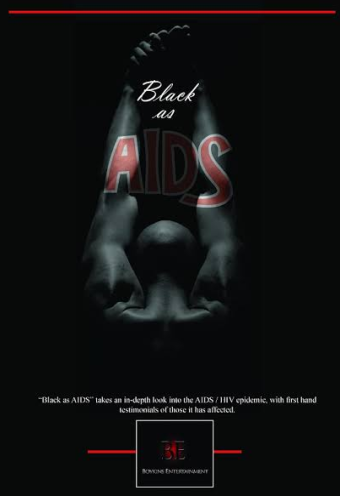
This poster employs a stark visual metaphor that demands careful analysis. The composition centers on a dark-skinned figure in a vulnerable, crouched position against a black background, creating what Kress and van Leeuwen
| [12] | Kress, G., & van Leeuwen, T. (2006). Reading images: The grammar of visual design (2nd ed.). Routledge. |
[12]
term high modality through realistic photographic representation. The typography combines cursive script for "Black as" with bold, three-dimensional lettering for "AIDS" in red—a colour carrying multiple semiotic associations with danger, blood, and the iconic AIDS ribbon
.
The spatial arrangement positions the text centrally over the human figure, creating an intersemiotic relationship where the body becomes literally marked by the disease name. This visual strategy reflects what van Leeuwen
| [25] | van Leeuwen, T. (2005). Introducing social semiotics. Routledge. |
[25]
identifies as symbolic attribution, where visual elements carry abstract meanings beyond their literal representation. The red horizontal line at the top functions as a framing device, drawing the eye downward through the composition
| [2] | Bateman, J. A. (2008). Multimodality and genre: A foundation for the systematic analysis of multimodal documents. Palgrave Macmillan. |
[2]
.
From an interpretive perspective informed by critical discourse analysis, this poster's approach raises significant ideological concerns. The visual metaphor linking race directly to disease potentially reinforces stigmatising discourses that Treichler
| [23] | Treichler, P. A. (1999). How to have theory in an epidemic: Cultural chronicles of AIDS. Duke University Press. |
[23]
documented in her analysis of AIDS as an "epidemic of signification." Rather than challenging prevailing stigma, the design choices may inadvertently perpetuate associations between blackness and disease that have historically marginalised affected communities
| [13] | Lupton, D. (1994). Medicine as culture: Illness, disease and the body in Western societies. SAGE Publications. |
[13]
. The vulnerable bodily positioning combined with the racial framing contradicts contemporary best practices emphasising empowerment rather than victimisation
| [21] | Stephenson, N., & Jadhav, S. (2010). 'I wouldn't know what to say': Identity, empathy and the constitution of subjectivity in response to HIV prevention campaigns. Culture, Health & Sexuality, 12(1), 73-86.
https://doi.org/10.1080/13691050903272308 |
[21]
.
Figure 1. "Black as AIDS" (Poster 1).
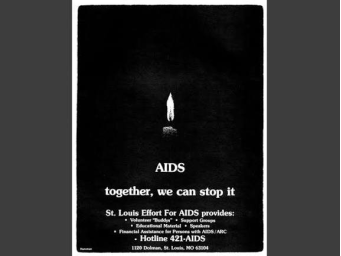
Figure 2. "Together, We Can Stop It" (Poster 2).
This poster demonstrates a minimalist approach to HIV/AIDS communication. The composition features a white candle flame against a black background, functioning as a powerful visual metaphor for hope, remembrance, and collective action. The stark contrast between light and dark creates what Kress and van Leeuwen
| [12] | Kress, G., & van Leeuwen, T. (2006). Reading images: The grammar of visual design (2nd ed.). Routledge. |
[12]
describe as salience through tonal differentiation, designed to draw viewer attention to the central symbolic element.
The typography employs white sans-serif font that supports legibility against the dark background while creating visual cohesion with the candle flame. The message "together, we can stop it" positions audiences as empowered agents capable of collective action, reflecting the shift toward more positive messaging that Stephenson and Jadhav
| [21] | Stephenson, N., & Jadhav, S. (2010). 'I wouldn't know what to say': Identity, empathy and the constitution of subjectivity in response to HIV prevention campaigns. Culture, Health & Sexuality, 12(1), 73-86.
https://doi.org/10.1080/13691050903272308 |
[21]
identified in contemporary HIV/AIDS communication. This representational strategy can be read as constructing viewers not as vulnerable victims but as active participants in disease prevention.
The spatial organization creates a clear reading path from the visual metaphor downward to the organizational information, demonstrating effective information hierarchy
| [2] | Bateman, J. A. (2008). Multimodality and genre: A foundation for the systematic analysis of multimodal documents. Palgrave Macmillan. |
[2]
. The inclusion of multiple service offerings—volunteer opportunities, support groups, educational material, and speakers—communicates what appears to be a comprehensive approach to HIV/AIDS response beyond simply providing medical information. This multimodal integration of visual symbolism with practical resources exemplifies how effective health communication combines emotional resonance with actionable information
| [27] | Houts, P. S., Doak, C. C., Doak, L. G., & Loscalzo, M. J. (2006). The role of pictures in improving health communication: A review of research on attention, comprehension, recall, and adherence. Patient Education and Counseling, 61(2), 173-190.
https://doi.org/10.1016/j.pec.2005.05.004 |
[27]
.
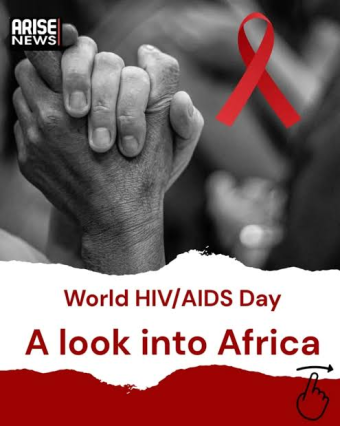
Figure 3. "World HIV/AIDS Day: A Look into Africa" (Poster 3).
This poster employs several powerful semiotic resources. The central image features clasped hands photographed in black and white, creating what Kress and van Leeuwen
| [12] | Kress, G., & van Leeuwen, T. (2006). Reading images: The grammar of visual design (2nd ed.). Routledge. |
[12]
term a demand picture through the direct gesture toward viewers. The monochromatic treatment of the hands contrasts sharply with the vibrant red AIDS ribbon, creating salience through colour modulation
.
The clasped hands function as a visual metaphor for solidarity, support, and human connection—directly challenging the isolation and stigma historically associated with HIV/AIDS (though actual viewer interpretation depends on cultural context and prior knowledge) especially in Africa
| [22] | Sturken, M. (1997). Tangled memories: The Vietnam War, the AIDS epidemic, and the politics of remembering. University of California Press. |
[22]
. The deliberate desaturation of the photograph (a formal choice) focuses attention on human connection rather than individual identity, potentially avoiding the problematic racial associations present in Poster 1 while still acknowledging the disproportionate impact on African communities through the textual message.
The red ribbon serves as an instantly recognisable symbol carrying decades of advocacy history and meaning
| [22] | Sturken, M. (1997). Tangled memories: The Vietnam War, the AIDS epidemic, and the politics of remembering. University of California Press. |
[22]
. Its placement in the upper right creates visual balance while functioning as what van Leeuwen
| [25] | van Leeuwen, T. (2005). Introducing social semiotics. Routledge. |
[25]
describes as a symbolic attribute—an element carrying meaning beyond its literal representation..
The interactive element indicated by the hand cursor icon suggests digital engagement, reflecting how contemporary health communication extends beyond static posters to encompass participatory platforms (Djonov & van Leeuwen, 2018). This multimodal integration of traditional visual advocacy symbols with digital affordances demonstrates the evolution of HIV/AIDS communication in networked environments.
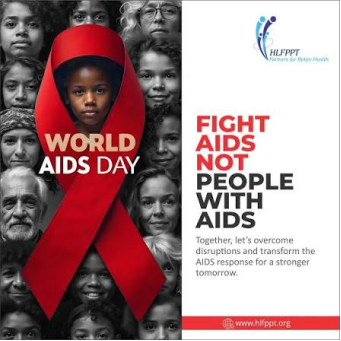
Figure 4. "Fight AIDS Not People with AIDS" (Poster 4).
This poster presents perhaps the most sophisticated multimodal composition among the analysed materials. The background consists of a photographic collage featuring diverse faces—varying in age, gender, and ethnicity—all rendered in black and white. This visual strategy humanises those affected by HIV/AIDS while emphasizing the epidemic's universal reach across demographic boundaries
.
The central red AIDS ribbon provides symbolic meaning and compositional focus. The vibrant colour creating maximum salience against the monochromatic background
. The ribbon's overlay upon the human faces creates intersemiotic meaning where the symbol and the people become visually integrated, suggesting that AIDS awareness must center on human dignity and rights rather than abstracted medical discourse
| [5] | Caple, H., & Knox, J. S. (2021). Multimodal analysis and digital technology. In C. Thurlow, C. Dürscheid, & F. Diémoz (Eds.), Visualizing digital discourse: Interactional, institutional and ideological perspectives (pp. 91-108). De Gruyter Mouton. |
[5]
.
The typography employs a clear hierarchy with "WORLD AIDS DAY" in bold text, followed by the powerful imperative statement "FIGHT AIDS NOT PEOPLE WITH AIDS." This linguistic choice directly confronts stigma and discrimination, positioning the disease and not the individuals affected, as the appropriate target of public health efforts
| [20] | Pham, T. H. (2022). Multimodal critical discourse analysis of HIV/AIDS awareness campaigns in Southeast Asia: Ideology, gender, and representation. Discourse & Society, 33(2), 245-264. https://doi.org/10.1177/09579265211052384 |
[20]
. The message construction reflects what Stephenson and Jadhav
| [21] | Stephenson, N., & Jadhav, S. (2010). 'I wouldn't know what to say': Identity, empathy and the constitution of subjectivity in response to HIV prevention campaigns. Culture, Health & Sexuality, 12(1), 73-86.
https://doi.org/10.1080/13691050903272308 |
[21]
identify as a human rights framing that challenges the moralistic and punitive approaches characterising earlier AIDS communication.
The tagline creates further empowerment: the phrase positions collective action as central to effective response, aligning with contemporary public health messaging emphasising community solidarity and systemic transformation rather than individual blame
| [15] | Noar, S. M., Benac, C. N., & Harris, M. S. (2007). Does tailoring matter? Meta-analytic review of tailored print health behaviour change interventions. Psychological Bulletin, 133(4), 673-693. https://doi.org/10.1037/0033-2909.133.4.673 |
[15]
. The organizational branding maintains visibility without overwhelming the human-centered message, demonstrating effective balance between institutional presence and advocacy goals —though empirical audience research would be needed to confirm reception.
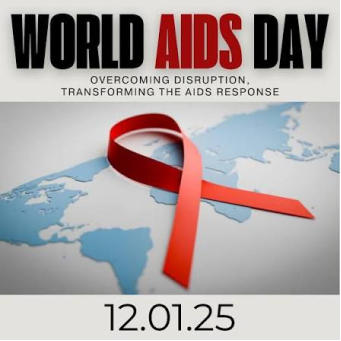
Figure 5. "World AIDS Day: Overcoming Disruption" (Poster 5).
This poster employs global visual metaphors to communicate the pandemic's worldwide scope. The central image features a three-dimensional red ribbon positioned over a world map rendered in blue tones, creating clear symbolic representation of HIV/AIDS as a global health challenge. And indeed, no continent of the world is free from this pandemic. The ribbon's dimensional rendering provides depth and materiality, making the symbol more visually prominent
| [12] | Kress, G., & van Leeuwen, T. (2006). Reading images: The grammar of visual design (2nd ed.). Routledge. |
[12]
.
The typography demonstrates clear information hierarchy with "WORLD AIDS DAY" split between black and red colouring, drawing attention to "AIDS" through colour contrast
| [2] | Bateman, J. A. (2008). Multimodality and genre: A foundation for the systematic analysis of multimodal documents. Palgrave Macmillan. |
[2]
. The subtitle frames the challenge through the lens of resilience and transformation rather than crisis and fear, reflecting the evolution toward more hopeful messaging in HIV/AIDS communication
| [13] | Lupton, D. (1994). Medicine as culture: Illness, disease and the body in Western societies. SAGE Publications. |
[13]
.
The inclusion of a specific date (12.01.25) provides temporal specificity while the clean, minimalist design enhances accessibility across diverse audiences. The light background creates high contrast with the text, enhancing readability. This is an important consideration for health materials intended for populations with varying literacy levels
| [4] | Bezemer, J., & Kress, G. (2019). Multimodality, learning and communication: A social semiotic frame. Routledge. |
[4]
. The spatial organization guides the viewer's eye from the event identification through the visual symbolism to the specific date, creating a logical reading path that combines awareness-raising with actionable information about when engagement can occur.
Figure 6. "Semen Kit" (Poster 6).
This poster represents a targeted approach to specific at-risk populations, specifically addressing men who have sex with men (MSM). The visual composition features a smiling sailor holding a condom, with background imagery showing intimate male contact. This direct representation of same-sex relationships challenges the heteronormative assumptions that Nascimento and Bezerra
identified as common in sexual health communication.
The typography playfully integrates "semen" and "kit" through creative spacing and layout, using wordplay to address a serious health topic while maintaining engagement. The tagline employs frank, colloquial language that acknowledges actual sexual practices without euphemism or ‘medicalised’ terminology. This linguistic choice reflects research showing that effective sexual health communication must speak directly to audience experiences using language communities actually employ
.
The nautical imagery carries cultural coding related to masculinity and maritime tradition while simultaneously acknowledging that sailors, as mobile populations, face particular HIV vulnerability. However, the poster's visual representation also raises questions about stereotyping through its reliance on specific cultural imagery to represent gay male sexuality. The composition demonstrates the challenge of creating targeted messaging that acknowledges community-specific risks without reinforcing limiting stereotypes
| [20] | Pham, T. H. (2022). Multimodal critical discourse analysis of HIV/AIDS awareness campaigns in Southeast Asia: Ideology, gender, and representation. Discourse & Society, 33(2), 245-264. https://doi.org/10.1177/09579265211052384 |
[20]
.
The attribution to "Gay Men Fighting AIDS" establishes source credibility within the community being addressed, reflecting the importance of community-based organizations in HIV/AIDS prevention
| [22] | Sturken, M. (1997). Tangled memories: The Vietnam War, the AIDS epidemic, and the politics of remembering. University of California Press. |
[22]
. This organizational positioning creates trust through insider status while the Wellcome Images attribution suggests institutional support and legitimacy.
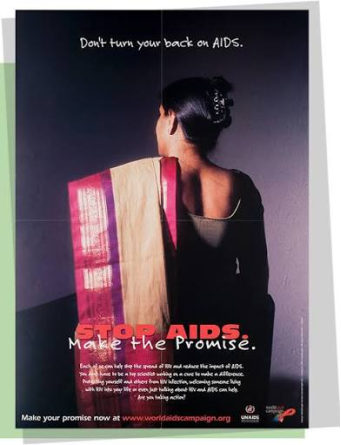
Figure 7. "Don't Turn Your Back on AIDS" (Poster 7).
This poster employs a powerful visual metaphor through its central image: a figure shown from behind, literally turning their back to the viewer. The composition creates what Kress and van Leeuwen
| [12] | Kress, G., & van Leeuwen, T. (2006). Reading images: The grammar of visual design (2nd ed.). Routledge. |
[12]
describe as an offer picture, where the subject does not engage directly with the viewer but presents a situation for contemplation. The turned back becomes a visual representation of denial, avoidance, and the social abandonment of those affected by HIV/AIDS. But in this case, the blame is on those who turn their back on people suffering from HIV/AIDS. This poster ultimately condemns such action. This is common in African settings where the whole family members turn their backs on anyone who contacts and suffers from HIV/AIDS in the family.
The colour palette combines dark tones with pink highlighting on what appears to be informational material, creating visual interest while directing attention to the prevention message. The typography employs handwritten-style font for "Don't turn your back on AIDS," creating a personal, intimate tone that contrasts with institutional health messaging
.
The phrase "Make the Promise" positioned prominently in the lower composition transforms the poster from simple awareness-raising to a call for committed action. This linguistic framing constructs viewers as as moral agents capable of making and keeping promises, positioning HIV/AIDS response as an ethical obligation rather than merely a health concern
| [5] | Caple, H., & Knox, J. S. (2021). Multimodal analysis and digital technology. In C. Thurlow, C. Dürscheid, & F. Diémoz (Eds.), Visualizing digital discourse: Interactional, institutional and ideological perspectives (pp. 91-108). De Gruyter Mouton. |
[5]
. The inference is to commit viewers into promising never to turn their backs on sufferers of HIV/AIDS. The detailed body text provides specific behavioural guidance while acknowledging the reality of living with HIV, demonstrating the integration of medical information with human dignity frameworks.
The organizational attribution to the World AIDS Campaign establishes global scope while the URL provides a pathway for continued engagement beyond the poster itself. This multimodal integration of visual metaphor, persuasive language, practical information, and digital connectivity demonstrates sophisticated understanding of how multiple semiotic resources must work together to achieve communication goals
| [3] | Bateman, J. A., Wildfeuer, J., & Hiippala, T. (2017). Multimodality: Foundations, research and analysis—A problem-oriented introduction. De Gruyter Mouton. |
[3]
.
4.1. Findings and Analysis
This section presents findings organised according to the three research questions, analysing each poster systematically before synthesising patterns across the corpus.
4.1.1. Research Question 1: Utilisation of Multiple Semiotic Modes
The first research question investigates how HIV/AIDS posters utilise multiple semiotic modes to convey health messages. Analysis reveals systematic deployment of visual, textual, chromatic, and spatial resources across all seven posters.
(i). Figure 1: "Black as AIDS" This poster employs photographic realism (high modality) featuring a dark-skinned figure in vulnerable positioning against black background. Typography combines cursive script for 'Black as' with bold three-dimensional lettering for 'AIDS' in red—a colour carrying associations with danger, blood, and the AIDS ribbon. Spatial arrangement positions text centrally over the human figure, creating symbolic attribution where the body becomes marked by disease nomenclature. The red horizontal line functions as framing device, directing visual attention downward through the composition.
(ii). Figure 2: "Together, We Can Stop It" This poster demonstrates minimalist approach featuring white candle flame against black background—a visual metaphor for hope and collective action. Stark tonal contrast creates salience, drawing attention to the central symbolic element. Typography employs white sans-serif font maintaining legibility whilst creating visual cohesion with the flame. The spatial organisation establishes clear reading path from visual metaphor to organisational information.
(iii). Figure 3: "World HIV/AIDS Day: A Look into Africa" Central image features clasped hands in black and white photography, creating demand picture through direct gesture. Monochromatic treatment contrasts with vibrant red AIDS ribbon, creating salience through colour modulation. The composition employs symbolic representation (hands as solidarity) whilst incorporating interactive digital affordances (cursor icon).
(iv). Figure 4: "Fight AIDS Not People with AIDS" Photographic collage featuring diverse faces in black and white, humanising those affected whilst emphasising universal reach. Central red ribbon provides symbolic focus against monochromatic background. Typography employs clear hierarchy with imperative statement directly confronting stigma.
(v). Synthesis: Semiotic Mode Utilisation
Across all posters, visual modes dominate compositional space, with imagery serving as primary meaning-carrier. Colour operates symbolically, particularly red (danger, blood, AIDS ribbon) and black/white contrasts (seriousness, universality). Typography functions hierarchically, establishing information priority through size, weight, and colour. Spatial organisation creates reading paths directing viewer attention through strategic placement. The interplay demonstrates that HIV/AIDS poster communication depends fundamentally on orchestrated deployment of multiple semiotic resources working simultaneously.
4.1.2. Research Question 2: Visual-Textual Relationships
The second research question examines relationships between visual and textual elements in constructing persuasive narratives. Analysis identifies three primary intersemiotic relationships: complementarity, elaboration, and tension.
Complementarity occurs when visual and verbal elements reinforce similar meanings. Poster 2 demonstrates this through alignment between candle flame (visual metaphor for hope) and verbal message 'Together, we can stop it' (collective empowerment). The modes work in concert, with neither redundant nor contradictory.
Elaboration appears when one mode provides specific information the other lacks. Poster 4's visual collage (diverse faces) elaborates the verbal imperative 'Fight AIDS Not People' by visually demonstrating the human diversity affected, whilst text provides explicit anti-stigma directive not immediately apparent from imagery alone.
Tension emerges in Poster 1, where empowering verbal message potentially contradicts vulnerable visual positioning and problematic racial framing. This modal contradiction may undermine intended message effectiveness, demonstrating that successful HIV/AIDS communication requires careful attention to intersemiotic alignment.
4.1.3. Research Question 3: Design Choices and Discourse
The third research question investigates how design choices reflect or challenge prevailing discourses surrounding HIV/AIDS. Analysis reveals both perpetuation and contestation of dominant narratives.
Challenging stigma: Posters 2 and 4 explicitly confront stigmatising discourses through empowering frameworks. Poster 4's imperative 'Fight AIDS Not People' directly repositions the disease rather than individuals as appropriate target, whilst diverse facial representation challenges marginalising visual conventions. These choices align with contemporary human rights approaches to HIV/AIDS communication.
Perpetuating problematic associations: From an interpretive perspective, Poster 1's direct linkage between racial identity and disease nomenclature risks reinforcing stigmatising associations historically used to marginalise affected communities. The vulnerable bodily positioning contradicts contemporary emphasis on empowerment and agency.
Representing diversity: Several posters (3, 4, 6) demonstrate intentional representation of diverse populations, challenging homogenising assumptions about HIV/AIDS. Poster 6's direct representation of same-sex relationships contestsnormative frameworks, whilst Poster 3's focus on Africa acknowledges disproportionate impact without stigmatising imagery.
This multimodal discourse analysis of seven HIV/AIDS awareness posters demonstrates that effective health communication requires sophisticated orchestration of multiple semiotic resources working in strategic integration. The analysis confirms that contemporary meaning-making extends beyond language to encompass visual, spatial, chromatic, and typographic dimensions that interact to construct complex messages. HIV/AIDS posters function not as simple information carriers but as intricate multimodal texts where design choices shape how audiences understand disease, risk, identity, and appropriate response.
Posters demonstrate significant variation in navigating the complex challenges characterizing HIV/AIDS communication. The most effective materials employ empowering frameworks, construct audiences as capable agents, utilise culturally resonant symbolism whilst avoiding stereotyping, explicitly challenge stigma, represent diverse communities with dignity, create clear information hierarchies, and achieve intersemiotic complementarity between visual and verbal elements.
Conversely, less effective materials demonstrate modal contradictions where visual and verbal elements work at cross-purposes, potentially stigmatizing representations that mark bodies with disease, fear-based approaches emphasizing threat over agency, and insufficient attention to accessibility across diverse literacy levels. These problematic approaches highlight how health communication can inadvertently reproduce the very stigma, fear, and marginalization it ostensibly aims to combat when designers fail to critically examine the ideological implications of semiotic choices.
The analysis contributes to multimodal theory by demonstrating how the frameworks developed by Kress and van Leeuwen
| [12] | Kress, G., & van Leeuwen, T. (2006). Reading images: The grammar of visual design (2nd ed.). Routledge. |
[12]
, Bateman
| [2] | Bateman, J. A. (2008). Multimodality and genre: A foundation for the systematic analysis of multimodal documents. Palgrave Macmillan. |
[2]
, van Leeuwen
| [25] | van Leeuwen, T. (2005). Introducing social semiotics. Routledge. |
[25]
, and subsequent scholars provide robust analytical tools for understanding complex visual health texts. The research extends existing multimodal scholarship on health communication
| [5] | Caple, H., & Knox, J. S. (2021). Multimodal analysis and digital technology. In C. Thurlow, C. Dürscheid, & F. Diémoz (Eds.), Visualizing digital discourse: Interactional, institutional and ideological perspectives (pp. 91-108). De Gruyter Mouton. |
| [9] | Hiippala, T. (2021). An overview of research within the Genre and Multimodality framework. Discourse, Context & Media, 42, 100518. https://doi.org/10.1016/j.dcm.2021.100518 |
| [14] | Nascimento, R. G., & Bezerra, F. A. S. (2020). Multimodal analysis of sexual health campaigns: Visual representation and social inclusion. Social Semiotics, 30(4), 512-529.
https://doi.org/10.1080/10350330.2019.1625308 |
| [16] | Olowu Ayodeji and Susan O. Akinkurolere. (2015). ‘Multimodal Discourse Analysis of Selected Advertisement of Malaria Drugs’. English Review: Journal of English Education. 3(2).
https://journal.uniku.ac.id/index.php/ERJEE/article/view/205 |
| [17] | Olowu, Ayodeji (2022) ‘Nigeria 2015 Presidential Election: a Multimodal Discourse Interpretations of Selected Cartoons of TELL’s Newsmagazine. KIU Journal of Education (KJED). Volume 2, issue 1, pp 35-42.
https://kjed.kiu.ac.ug/article-view.php?i=12&t=nigeria-2015-presidential-election-a-multimodal-discourse-interpretations-of-selected-cartoons-of-tell%27s-news-magazine |
| [18] | Oyebode, O., & Unuabonah, F. (2020). Multimodal analysis of COVID-19 public health posters. Visual Communication Quarterly, 27(4), 188-203.
https://doi.org/10.1080/15551393.2020.1832138 |
| [20] | Pham, T. H. (2022). Multimodal critical discourse analysis of HIV/AIDS awareness campaigns in Southeast Asia: Ideology, gender, and representation. Discourse & Society, 33(2), 245-264. https://doi.org/10.1177/09579265211052384 |
[5, 9, 14, 16-18, 20]
by providing detailed analysis of how specific design choices in HIV/AIDS materials construct meaning, invoke ideologies, and potentially potentially influence public perception and behaviour.
Practically, the findings offer valuable insights for public health practitioners, graphic designers, and communication specialists developing HIV/AIDS awareness campaigns and by extension public health campaigns. Effective materials require moving beyond aesthetic considerations to understand how semiotic resources function grammatically, culturally, and ideologically. Designers must critically examine whether visual representations empower or victimize, whether linguistic framing constructs agency or passivity, whether colour symbolism activates intended associations, whether spatial organization creates accessible reading paths, and whether modal elements work in complementarity or contradiction.
The research also highlights the importance of cultural competence and community engagement in health communication design. Materials must resonate with specific cultural contexts, employ imagery and language communities recognize and value, and avoid reproducing stereotypes even when targeting particular demographic groups. The tension between acknowledging community-specific risks and avoiding stigmatizing representations requires careful navigation through participatory design processes involving affected communities in material development
| [22] | Sturken, M. (1997). Tangled memories: The Vietnam War, the AIDS epidemic, and the politics of remembering. University of California Press. |
| [5] | Caple, H., & Knox, J. S. (2021). Multimodal analysis and digital technology. In C. Thurlow, C. Dürscheid, & F. Diémoz (Eds.), Visualizing digital discourse: Interactional, institutional and ideological perspectives (pp. 91-108). De Gruyter Mouton. |
[22, 5]
.
Several limitations warrant acknowledgment. This analysis examined seven posters representing particular historical moments, geographic contexts, and communication strategies. Different materials from other regions, time periods, or target audiences might yield different findings. The analysis focused on static poster texts without examining actual audience reception, interpretation, or behavioural impacts. Future research employing reception studies, audience interviews, or behavioural outcome measures could complement this textual analysis by investigating how diverse audiences actually interpret and respond to these multimodal messages
| [15] | Noar, S. M., Benac, C. N., & Harris, M. S. (2007). Does tailoring matter? Meta-analytic review of tailored print health behaviour change interventions. Psychological Bulletin, 133(4), 673-693. https://doi.org/10.1037/0033-2909.133.4.673 |
[15]
.
Additionally, the study analyzed posters as isolated texts rather than examining their function within broader communication campaigns or their interaction with other media platforms. As Djonov and van Leeuwen
| [6] | Djonov, E., & van Leeuwen, T. (2018). Social media as semiotic technology and social practice: The case of ResearchGate's design and its potential to transform social practice. Social Semiotics, 28(5), 641-664. https://doi.org/10.1080/10350330.2017.1412376 |
[6]
demonstrate, contemporary health communication increasingly operates across multiple platforms where meanings emerge from intertextual and intermedial relationships. Future research could examine how poster materials interact with digital media, community organizing, clinical communication, and policy advocacy within comprehensive HIV/AIDS response strategies.
The evolution of HIV/AIDS communication from fear-based, stigmatizing approaches toward empowering, human rights-oriented frameworks demonstrates how health messaging both reflects and shapes cultural attitudes toward disease and affected communities. As medical advances transform HIV/AIDS from fatal diagnosis to manageable chronic condition, communication materials must evolve to emphasize testing, treatment adherence, viral suppression, and the possibility of living full lives with HIV. This requires moving beyond awareness-raising toward more sophisticated messaging addressing treatment literacy, stigma reduction, and health system navigation
| [21] | Stephenson, N., & Jadhav, S. (2010). 'I wouldn't know what to say': Identity, empathy and the constitution of subjectivity in response to HIV prevention campaigns. Culture, Health & Sexuality, 12(1), 73-86.
https://doi.org/10.1080/13691050903272308 |
[21]
.
The multimodal perspective proves essential for understanding and improving HIV/AIDS communication because these materials inherently depend on integration of visual, verbal, spatial, and chromatic resources. Analyzing language alone provides insufficient understanding of how posters communicate; examining images without attending to typography, colour, and composition proves equally inadequate. Only through comprehensive multimodal analysis can researchers and practitioners understand the complex semiotic work these materials perform and design more effective health communication that achieves intended persuasive, informational, and empowering goals
| [3] | Bateman, J. A., Wildfeuer, J., & Hiippala, T. (2017). Multimodality: Foundations, research and analysis—A problem-oriented introduction. De Gruyter Mouton. |
[3]
.
Ultimately, this research demonstrates that HIV/AIDS awareness posters represent sites where medical knowledge, cultural values, social power relations, design expertise, and advocacy goals converge to create meaning. The semiotic choices embedded in these materials—which colours to employ, which bodies to represent, which words to emphasize, which spatial organizations to create—carry profound implications for how publics understand HIV/AIDS, how affected communities experience recognition or marginalization, and how societies respond to ongoing epidemic challenges. Critical multimodal analysis illuminates these dimensions, contributing to more ethical, effective, and empowering health communication practices that honor the dignity and agency of all people while advancing crucial public health objectives.
The study's contribution extends beyond HIV/AIDS communication to broader health promotion contexts. The analytical frameworks and findings offer insights applicable to diverse health topics requiring sensitive, culturally appropriate, multimodal communication strategies. As visual communication becomes increasingly central to public health practice, understanding how multiple semiotic modes interact to construct meaning, shape attitudes, and potentially influence behaviours becomes essential for all health communication practitioners. This research provides both theoretical frameworks and practical insights advancing that crucial understanding, demonstrating how rigorous multimodal analysis can improve health communication effectiveness.
4.2. Synthesis and Implications
The multimodal analysis of these seven posters reveals significant variation in communication strategies, ideological positioning, and effectiveness. These posters demonstrate sophisticated orchestration of visual metaphors, empowering linguistic choices, and clear information architecture that Djonov and Zhao
| [6] | Djonov, E., & van Leeuwen, T. (2018). Social media as semiotic technology and social practice: The case of ResearchGate's design and its potential to transform social practice. Social Semiotics, 28(5), 641-664. https://doi.org/10.1080/10350330.2017.1412376 |
[6]
identify as characteristic of effective health communication. These materials challenge stigma through dignified human representation, employ culturally resonant symbolism like the red ribbon, and construct audiences as empowered agents rather than passive victims.
Conversely, poster 1 demonstrates how design choices can inadvertently reinforce the very stigma they presumably aim to combat. The literal marking of black bodies with disease language perpetuates racialised associations that public health efforts should actively dismantle
| [23] | Treichler, P. A. (1999). How to have theory in an epidemic: Cultural chronicles of AIDS. Duke University Press. |
[23]
. This poster significantly associates the disease with black coloured race. This finding underscores the importance of critically examining not just what health messages say, but how visual and linguistic elements combine to construct particular understandings of disease, risk, and identity
.
The analysis confirms that effective HIV/AIDS posters require careful integration of multiple semiotic modes working in complementarity rather than contradiction. Colour symbolism, typographic hierarchy, visual metaphors, spatial organization, and linguistic framing must align to create coherent messages that inform, persuade, and empower audiences
| [28] | Ventola, E., & Moya, A. J. (2020). Multimodality and aesthetics. Routledge. |
[28]
. The red AIDS ribbon emerges across multiple posters as a powerful unifying symbol carrying decades of advocacy meaning, demonstrating how established visual codes can efficiently communicate complex ideas when properly deployed
| [22] | Sturken, M. (1997). Tangled memories: The Vietnam War, the AIDS epidemic, and the politics of remembering. University of California Press. |
[22]
. This red ribbon has over time become synonymous with HIV/AIDS.
These findings carry significant implications for public health practitioners designing awareness campaigns. Understanding how audiences interpret the interaction between visual and verbal elements enables more strategic communication design that achieves intended persuasive and informational goals while avoiding unintended stigmatisation
| [15] | Noar, S. M., Benac, C. N., & Harris, M. S. (2007). Does tailoring matter? Meta-analytic review of tailored print health behaviour change interventions. Psychological Bulletin, 133(4), 673-693. https://doi.org/10.1037/0033-2909.133.4.673 |
[15]
. The multimodal perspective advanced by Kress and van Leeuwen
| [12] | Kress, G., & van Leeuwen, T. (2006). Reading images: The grammar of visual design (2nd ed.). Routledge. |
[12]
and elaborated by subsequent scholars provides essential analytical tools for evaluating and improving health communication materials in an increasingly visual communication landscape.
4.3. Colour Symbolism and Emotional Resonance
Across the analysed posters, colour emerges as a primary semiotic resource carrying significant communicative weight. The ubiquitous use of red ccolour in the AIDS ribbon, typography, and highlighting creates what Kress and van Leeuwen
term "affective meaning" through cultural colour associations. Red simultaneously signifies danger, urgency, blood, passion, and solidarity, functioning as a polysemic symbol that operates differently depending on its compositional context and combination with other semiotic modes.
The strategic deployment of monochrome versus colour creates hierarchies of attention and meaning. Posters 3, 4, and 5 employ desaturated photography contrasted with vibrant red elements, directing viewer focus toward symbolic representations while de-emphasizing individual characteristics
| [2] | Bateman, J. A. (2008). Multimodality and genre: A foundation for the systematic analysis of multimodal documents. Palgrave Macmillan. |
[2]
. This chromatic strategy serves dual purposes: creating visual salience for key messages while potentially avoiding the problematic racial coding evident in Poster 1. The black-and-white treatment of human subjects emphasises shared humanity and collective experience rather than demographic difference, aligning with contemporary anti-stigma frameworks
| [5] | Caple, H., & Knox, J. S. (2021). Multimodal analysis and digital technology. In C. Thurlow, C. Dürscheid, & F. Diémoz (Eds.), Visualizing digital discourse: Interactional, institutional and ideological perspectives (pp. 91-108). De Gruyter Mouton. |
[5]
.
The darkness characterising several posters (particularly 1, 2, and 8) creates somber emotional tones consistent with the seriousness of the health threat. However, this tonal choice risks reinforcing associations between HIV/AIDS and death, fear, and hopelessness that characterised earlier panic-driven campaigns
| [13] | Lupton, D. (1994). Medicine as culture: Illness, disease and the body in Western societies. SAGE Publications. |
[13]
. The tension between communicating appropriate seriousness and avoiding counterproductive fear appeals represents an ongoing challenge in HIV/AIDS communication that these materials navigate with varying success.
4.4. Typography as Meaning-Maker
Typographic choices across the posters reveal strategic decisions about authority, accessibility, and audience relationship. The prevalence of bold, sans-serif fonts (particularly in posters 2, 3, 4, 5, and 6) creates what van Leeuwen
| [25] | van Leeuwen, T. (2005). Introducing social semiotics. Routledge. |
[25]
identifies as "institutional voice". This is a typography that conveys authority, clarity, and official health communication. This contrasts markedly with the handwritten-style font in Poster 7, which creates intimacy and personal connection, positioning the message as coming from a concerned peer rather than an impersonal institution
.
The capitalisation strategies employed across posters merit attention. Full capitalisation in "WORLD AIDS DAY" and "FIGHT AIDS NOT PEOPLE WITH AIDS" (Poster 5) creates visual emphasis while conveying urgency and importance through what Bateman
| [2] | Bateman, J. A. (2008). Multimodality and genre: A foundation for the systematic analysis of multimodal documents. Palgrave Macmillan. |
[2]
terms "typographic loudness." This capitalisation strategy serves to amplify key messages within the overall composition, ensuring these elements achieve primacy in viewer attention hierarchies.
The integration of text with visual elements demonstrates varying levels of sophistication. Poster 1's placement of "AIDS" directly over the human figure creates problematic visual fusion between identity and disease, while Poster 5's strategic positioning of text around—rather than on—human faces maintains the dignity and agency of represented individuals. These compositional choices reflect underlying ideological assumptions about the relationship between people and disease that Pham
| [20] | Pham, T. H. (2022). Multimodal critical discourse analysis of HIV/AIDS awareness campaigns in Southeast Asia: Ideology, gender, and representation. Discourse & Society, 33(2), 245-264. https://doi.org/10.1177/09579265211052384 |
[20]
identifies as central to HIV/AIDS discourse construction.
4.5. Visual Metaphors and Symbolic Representation
The posters employ diverse metaphorical strategies to represent HIV/AIDS and appropriate responses. The candle in Poster 2 invokes remembrance, hope, and vigil traditions, creating emotional resonance through culturally familiar symbolism
| [12] | Kress, G., & van Leeuwen, T. (2006). Reading images: The grammar of visual design (2nd ed.). Routledge. |
[12]
. The clasped hands in Posters 3 function as metonymic representation of solidarity, support, and human connection
| [22] | Sturken, M. (1997). Tangled memories: The Vietnam War, the AIDS epidemic, and the politics of remembering. University of California Press. |
[22]
.
The turned back in Poster 7 represents perhaps the most conceptually sophisticated visual metaphor, transforming bodily orientation into symbolic commentary on social abandonment and denial. This visual strategy demonstrates what Forceville
| [8] | Forceville, C. (2008). Metaphor in pictures and multimodal representations. In R. W. Gibbs, Jr. (Ed.), The Cambridge handbook of metaphor and thought (pp. 462-482). Cambridge University Press. |
[8]
terms "pictorial metaphor," where concrete visual elements represent abstract concepts through structured mapping. The metaphor operates on multiple levels: individual denial of personal risk, social abandonment of affected communities, and political neglect of the epidemic
.
The AIDS ribbon achieves iconic status across multiple posters, functioning as what Peirce
| [19] | Peirce, C. S. (1931-1958). Collected papers of Charles Sanders Peirce (Vols. 1-8, C. Hartshorne, P. Weiss, & A. W. Burks, Eds.). Harvard University Press. |
[19]
would classify as a symbol. This is a sign whose meaning derives from social convention rather than visual resemblance. The ribbon's evolution from activism symbol to universal awareness marker demonstrates how visual elements can accumulate layers of meaning through historical and consistent use and cultural circulation
| [22] | Sturken, M. (1997). Tangled memories: The Vietnam War, the AIDS epidemic, and the politics of remembering. University of California Press. |
[22]
. Its presence immediately signals HIV/AIDS context while invoking decades of advocacy history, community organizing, and social movement activity.
4.6. Representation of Human Subjects
The visual representation of human bodies and faces across the posters carries profound implications for how audiences understand their relationship to HIV/AIDS. Poster 5's diverse demographic representation challenges the narrow associations linking HIV/AIDS exclusively to particular communities, instead presenting the epidemic as affecting humanity broadly
. This inclusive representational strategy counters the stigmatizing discourses Treichler
| [23] | Treichler, P. A. (1999). How to have theory in an epidemic: Cultural chronicles of AIDS. Duke University Press. |
[23]
documSented, where AIDS became constructed as disease of marginalized "others."
However, the representations also reveal tensions in how to depict affected communities without reinforcing stereotypes or creating voyeuristic dynamics. The vulnerable bodily positioning in Poster 1 risks reproducing what Lupton
| [13] | Lupton, D. (1994). Medicine as culture: Illness, disease and the body in Western societies. SAGE Publications. |
[13]
critiques as the "victimization" of people living with HIV, constructing them as passive sufferers rather than empowered agents. Conversely, the smiling sailor in Poster 6 presents positive representation but potentially relies on stereotypical cultural imagery in ways that may limit rather than expand understanding of diverse gay male experiences
| [20] | Pham, T. H. (2022). Multimodal critical discourse analysis of HIV/AIDS awareness campaigns in Southeast Asia: Ideology, gender, and representation. Discourse & Society, 33(2), 245-264. https://doi.org/10.1177/09579265211052384 |
[20]
.
The decision in several posters to show hands without faces (Posters 3) or backs without frontal identity (Poster 7) navigates the challenge of depicting HIV-affected communities without exposing individuals to potential stigma or privacy violations. This partial representation strategy maintains human presence and emotional connection while protecting anonymity, reflecting ethical considerations in health communication imagery
| [28] | Ventola, E., & Moya, A. J. (2020). Multimodality and aesthetics. Routledge. |
[28]
.
4.7. Linguistic Framing and Discursive Positioning
The verbal text accompanying visual elements constructs particular subject positions and relationships between audiences and HIV/AIDS. The imperative constructions prevalent across posters ("Fight AIDS," "Don't turn your back," "Make the promise") create direct address that Fairclough
| [7] | Fairclough, N. (2003). Analysing discourse: Textual analysis for social research. Routledge. |
[7]
identifies as constructing audiences as capable agents obligated to act. This linguistic strategy contrasts sharply with earlier AIDS communication emphasizing victimhood and vulnerability, instead positioning viewers as empowered participants in collective response
| [21] | Stephenson, N., & Jadhav, S. (2010). 'I wouldn't know what to say': Identity, empathy and the constitution of subjectivity in response to HIV prevention campaigns. Culture, Health & Sexuality, 12(1), 73-86.
https://doi.org/10.1080/13691050903272308 |
[21]
.
The framing of AIDS as collective challenge requiring unified action ("together, we can stop it," "overcoming disruption, transforming the AIDS response") reflects what Djonov and Zhao
| [6] | Djonov, E., & van Leeuwen, T. (2018). Social media as semiotic technology and social practice: The case of ResearchGate's design and its potential to transform social practice. Social Semiotics, 28(5), 641-664. https://doi.org/10.1080/10350330.2017.1412376 |
[6]
term "solidarity discourse," constructing HIV/AIDS as shared social problem rather than individual moral failure. This discursive shift carries significant ideological implications, relocating responsibility from individuals to communities and institutions while challenging victim-blaming narratives that have historically characterized AIDS discourse
| [23] | Treichler, P. A. (1999). How to have theory in an epidemic: Cultural chronicles of AIDS. Duke University Press. |
[23]
.
Notably, several posters explicitly name and challenge stigma through direct linguistic intervention. Poster 5's command to "Fight AIDS Not People with AIDS" makes stigma visible and positions it as inappropriate, directly confronting discriminatory attitudes through clear prohibitive language. This explicit anti-stigma messaging represents a significant evolution in HIV/AIDS communication, acknowledging that social attitudes constitute barriers to effective response requiring direct address
| [5] | Caple, H., & Knox, J. S. (2021). Multimodal analysis and digital technology. In C. Thurlow, C. Dürscheid, & F. Diémoz (Eds.), Visualizing digital discourse: Interactional, institutional and ideological perspectives (pp. 91-108). De Gruyter Mouton. |
[5]
.






 Share This Article
 Twitter
 Linked In
 Facebook
 Copy
Copy Download