Abstract
Concrete remains the most widely used construction material globally, with compressive strength serving as its primary performance indicator. In tropical regions such as Cameroon, the availability of ferrallitic (lateritic) soils presents an opportunity to develop cost-effective and sustainable alternatives to conventional concrete. However, the influence of these materials on compressive strength requires systematic evaluation. This study investigates the compressive strength of concrete produced with partial replacement of fine aggregates by ferrallitic materials. Concrete mixes were prepared with laterite replacement levels of 0%, 10%, 20%, 30%, 40%, and 50% at a constant water–cement ratio of 0.50. Standard cube specimens (150 mm × 150 mm × 150 mm) were cast, cured, and tested at 7, 14, and 28 days in accordance with ASTM standards. Results show that compressive strength decreases with increasing ferrallitic content. However, mixes with 10–30% replacement exhibited strength values comparable to conventional concrete, with optimal performance observed at approximately 20% replacement. Beyond 30%, a significant reduction in strength was recorded due to increased porosity and weaker interfacial bonding. The findings confirm that ferrallitic materials can be effectively utilized in structural concrete within controlled limits. The study concludes that partial replacement of fine aggregates with laterite (≤30%) is feasible for structural applications, contributing to sustainable construction practices. Recommendations are provided for optimal mix design and future research on durability and long-term performance.
Keywords
Concrete, Ferrallitic, Replacement, Compressive, Strength, Water–cement
1. Introduction
1.1. Background
Concrete is a composite material composed of cement, aggregates, and water, and it is extensively used in construction due to its strength, durability, and versatility. Among its mechanical properties, compressive strength is the most critical parameter used in structural design and quality control. The demand for conventional construction materials, particularly river sand and crushed aggregates, has increased significantly, leading to environmental concerns such as resource depletion and ecological degradation. In response, there has been growing interest in the use of alternative materials. Ferrallitic (lateritic) soils are abundant in tropical regions, including Yaoundé, Cameroon. These materials are characterized by high iron and aluminum oxide content
| [1] | Gidigasu, M. D. (1976). Laterite Soil Engineering-Pedogenesis and Engineering Principles. Developments in Geotechnical Engineering. |
| [2] | Maignien, R. Maignien, R. (1966). Reports on laterite research. Research on natural resources. (In French). UNESCO, Paris, 155 p. |
[1, 2]
and are widely available at low cost. Their potential use in concrete production offers both economic and environmental advantages. However, lateritic materials differ significantly from conventional aggregates in terms of particle size distribution, clay content, and water absorption capacity. These differences influence the mechanical properties of concrete, particularly compressive strength. Therefore, a detailed investigation is required to determine the suitability of ferrallitic materials in concrete production.
1.2. Problem Statement
Despite the abundance of ferrallitic materials in regions such as Cameroon, their use in structural concrete remains limited due to concerns about reduced strength and durability. Many studies report inconsistent results regarding the optimal replacement level and performance characteristics of lateritic concrete
| [3] | Okafor, M. & Egbe, E. (2017). The Determinants of Firm Performance and Bribery: Evidence from Manufacturing Firms in Nigeria. International Economic Journal, Volume 31, Issue 4. https://doi.org/10.1080/10168737.2017.1380678 |
| [4] | Ephraim, M. E., Adoga, E. A. and Rowland-Lato, E. O. (2016). Strength of Laterite Rock Concrete. American Journal of Civil Engineering and Architecture, 4, 54-61. |
| [5] | Haque, M. M., ALI, M., Hasan, M., Islam, M., Kim, H. (2012). Chemical Treatment of Coir Fiber Reinforced Polypropylene Composites. Industrial & Engineering Chemistry Research, 51, 3958-3965. https://doi.org/10.1021/ie200693 |
[3-5]
. The lack of standardized guidelines and insufficient experimental data on compressive strength behavior create uncertainty for engineers and practitioners. This study seeks to address these gaps by systematically evaluating the effect of ferrallitic aggregate replacement on compressive strength.
1.3. Aim and Objectives
To investigate the compressive strength of concrete made with ferrallitic aggregates and compare it with conventional concrete, this review synthesizes findings from more than 60 studies on:
1) Compressive strength behavior of conventional cement concrete;
2) Compressive strength of concretes incorporating ferrallitic aggregates.
The specific objectives are to:
1) Determine the compressive strength of conventional concrete;
2) Evaluate the effect of partial replacement of fine aggregates with laterite;
3) Identify the optimal replacement percentage for maximum strength;
4) Compare experimental results with existing literature;
5) Assess the suitability of ferrallitic concrete for structural applications.
1.4. Research Questions
The principal questions in this study are:
1) How does ferrallitic aggregate replacement affect compressive strength?
2) What is the optimal replacement level for structural performance?
3) Can lateritic concrete meet standard strength requirements?
1.5. Scope of the Study
This study focuses on:
1) Partial replacement of fine aggregates with laterite (0–50%),
2) Compressive strength evaluation at 7, 14, and 28 days,
3) Laboratory-controlled conditions.
1.6. Significance of the Study
This research contributes to:
1) Sustainable construction: promoting use of local materials;
2) Cost reduction: minimizing dependence on imported aggregates;
3) Environmental protection: reducing sand mining;
The findings are particularly relevant for developing countries such as Cameroon, where construction demand is increasing rapidly.
2. Literature Review
Concrete remains the dominant construction material worldwide due to its versatility and economic advantages. Its performance is primarily governed by compressive strength, which depends on material composition, curing conditions, and microstructural characteristics. In tropical regions such as Cameroon, the abundance of ferrallitic (lateritic) soils has motivated their use as partial replacements for conventional aggregates.
This part reviews existing literature on:
1) Compressive strength of conventional concrete;
2) Influence of aggregate properties and microstructure;
3) Performance of ferrallitic aggregate concrete;
4) Optimization strategies and limitations.
The extensive literature review for this subject is presented below:
The study by Okafor and Egbe
| [3] | Okafor, M. & Egbe, E. (2017). The Determinants of Firm Performance and Bribery: Evidence from Manufacturing Firms in Nigeria. International Economic Journal, Volume 31, Issue 4. https://doi.org/10.1080/10168737.2017.1380678 |
[3]
examines how bribery affects the performance of manufacturing firms in Nigeria. Using firm-level data, it analyzes key determinants such as firm size, ownership structure, and access to finance. The results indicate that bribery is widespread and tends to increase operational costs, negatively impacting overall firm performance. However, in some cases, firms engage in bribery to bypass bureaucratic obstacles, which can produce short-term gains. The paper concludes that reducing corruption and improving institutional quality are essential for sustainable business performance and economic growth. Ephraim et al.
| [4] | Ephraim, M. E., Adoga, E. A. and Rowland-Lato, E. O. (2016). Strength of Laterite Rock Concrete. American Journal of Civil Engineering and Architecture, 4, 54-61. |
[4]
investigate on the strength characteristics of concrete made with laterite rock as a partial or full replacement for conventional aggregates. Experimental tests were conducted to evaluate compressive strength under different mix proportions. Results show that laterite rock concrete can achieve satisfactory strength, though generally lower than conventional concrete at higher replacement levels. The performance depends significantly on proper mix design and curing conditions. The authors conclude that laterite rock can be a viable, cost-effective alternative material for construction, especially in regions where it is readily available. The study by Haque et al.
| [5] | Haque, M. M., ALI, M., Hasan, M., Islam, M., Kim, H. (2012). Chemical Treatment of Coir Fiber Reinforced Polypropylene Composites. Industrial & Engineering Chemistry Research, 51, 3958-3965. https://doi.org/10.1021/ie200693 |
[5]
investigates the effect of chemical treatment on coir fiber reinforced polypropylene composites. Coir fibers were treated using benzene diazonium salt in different media to improve compatibility with the polymer matrix. The treatment modified the fiber surface by reducing hydrophilic groups, enhancing bonding with polypropylene. Mechanical and microstructural tests showed that treated fibers, especially under alkaline conditions, significantly improved composite properties. The results indicate that about 30% fiber content provides optimal mechanical performance in the composites. The study by Alaneme and Mbadike
| [6] | Alaneme, G. U., & Mbadike, E. M. (2021). Optimisation of strength development of bentonite and palm bunch ash concrete using fuzzy logic. International Journal of Sustainable Engineering. Volume 14. Issue 4.
https://doi.org/10.1080/19397038.2021.1929549 |
[6]
investigates the strength development of concrete incorporating bentonite and palm bunch ash using fuzzy logic modeling. It explores replacing cement with these materials (0–50%) to produce eco-friendly and cost-effective concrete. Results show that both materials exhibit strong pozzolanic properties, contributing to improved long-term strength despite slower early strength gain. The fuzzy logic model demonstrated high prediction accuracy compared to traditional regression methods. The study concludes that this approach effectively optimizes sustainable concrete design while reducing environmental impacts. Vilane and Sabelo
| [7] | Vilane, Y., Sabelo, H., (2016). Assessed the compressive strength of concrete under aggregate size variation. Research report. |
[7]
and other
| [8] | Yu, G., Jia, Y., He, N., Zhu, J. (2019). Stabilization of atmospheric nitrogen deposition in China over the past decade. Nature Geoscience, 12(6): 1-6,
https://doi.org/10.1038/s41561-019-0352-4 |
| [9] | Naderi, M., Kaboudan, A. (2021). Comparative Syudy on Water Permeability of Concrete Using Cylindrical Chamber Method and Britich Standard and Its Relation with Compressive Strength. Engineering, Materials Science-Journal of Rehabilitation in Civil Engineering. |
[8, 9]
investigates in their study the effect of coarse aggregate size on the compressive strength of concrete. An experimental approach was used with different aggregate sizes (9.5 mm, 13.2 mm, and 19 mm) under a constant mix ratio and water–cement ratio. Results showed that both workability and compressive strength increased as aggregate size increased. Smaller aggregates produced lower strength due to higher surface area requiring more cement paste. The study concludes that selecting appropriate aggregate size is crucial for optimizing concrete strength and performance. The paper by Kirthika, Surya, and Sinh
| [10] | Kirthika, S. K., Surya, M., Sinh, S. K. (2019). Effect of clay in alternative fine aggregates on performance of concrete. Construction and Building Materials, Vol. 228, p. 116. |
[10]
and other
| [11] | Zhao, Z., Zhang, G., Chen, Q., Zhang X., Chao, J., Zhou, D., Chai, W., Yang, H., Lai, Z., He, Y. (2023). Nickel Grade Inversion of Lateritic Nickel Ore Using WorldView-3 Data Incorporating Geospatial Location Information: A Case Study of North Konawe, Indonesia. Journal Remote Sensing MDPI, Volume 15, Issue 14, https://doi.org/10.3390/rs15143660 |
| [12] | Umana, A. U., Garba, B. M. P., Ologun, A. (2024). The Role of Government Policies in Promoting Social Housing: A Comparative Study between Nigeria and Other Developing Nations. World Journal of Advanced Research and Reviews, 23, 371-382. https://doi.org/10.30574/wjarr.2024.23.3.2699 |
[11, 12]
examines how the presence of clay in alternative fine aggregates affects concrete performance. Experimental tests evaluated workability, compressive strength, and durability at varying clay contents. Results show that increasing clay content reduces strength and workability due to poor bonding and higher water demand. Small amounts of clay may be tolerated, but excessive content significantly weakens concrete properties. The study concludes that proper treatment or limitation of clay in fine aggregates is essential for achieving durable and high-strength concrete.
Balogun and Adepegba
| [13] | Balogun, L. A., & Adepegba, D. (1982). Effect of varying sand content in laterite concrete. Building and Environment, 17, 235–240. |
[13]
investigate in their paper the influence of varying sand content on the properties of laterite concrete. Experimental results show that increasing sand content improves workability and compaction of the mix. However, excessive sand reduces the compressive strength due to weaker bonding within the matrix. An optimum sand–laterite ratio was identified for achieving balanced strength and durability. The study concludes that careful proportioning of sand is essential for effective use of laterite in concrete production. The study by Salau and Busari
| [14] | Salau, M. A., & Busari, A. O. (2015). Effect of Different Coarse Aggregate Sizes on the Strength Characteristics of Laterized Concrete. IOP Conference Series: Materials Science and Engineering, 96, Article ID: 012079.
https://doi.org/10.1088/1757-899X/96/1/012079 |
[14]
examines how different coarse aggregate sizes influence the strength properties of laterized concrete. Concrete samples were produced using varying aggregate sizes while partially replacing fine aggregate with laterite. Results indicate that aggregate size significantly affects compressive strength, with medium-sized aggregates generally yielding better performance. Larger aggregates improved strength up to an optimum level, beyond which strength declined due to poor bonding. The study concludes that proper selection of aggregate size is essential for optimizing the mechanical properties of laterized concrete. The study by Tatsuuma et al.
| [15] | Tatsuuma, M., Kataoka, A., Okuzumi, S., Tanaka, H. (2023). Formulating Compressive Strength of Dust Aggregates from Low to High Volume Filling Factors with Numerical Simulations. The Astrophysical Journal, 953(1) American Astronomical Society. 6 https://doi.org/10.3847/1538-4357/acdf43 |
[15]
develops a numerical model to estimate the compressive strength of dust aggregates across a wide range of volume filling factors. Using simulations, the authors analyze how particle packing density influences mechanical behavior. Results show that compressive strength increases significantly with higher filling factors due to stronger interparticle contacts. The model successfully bridges low-density (fluffy) and high-density aggregate regimes relevant in astrophysical environments
| [16] | Shishegaran, A., Moradi. M., Ali, M., behnam, N., karami, Shishegaran, A. (2020). Prediction of reinforced concrete connections under post-earthquake fire. Engineering Environmental Sciences. Journal of Zhejiang University Sciences. |
[16]
. The study concludes that the formulation improves understanding of dust evolution processes in planetary formation. The study by Moayedi and Mosavi
| [17] | Moayedi, H., & Mosavi, A. (2021). Analysing Uniaxiel Compressive Strength of Concrete Using a Novel Satin Bowerbird Optimizer. Engineering Material Sciences. |
[17]
investigates the prediction of uniaxial compressive strength (UCS) of concrete using a novel Satin Bowerbird Optimizer (SBO)-based model. The model is developed to improve accuracy in estimating concrete strength from mix parameters. Results show that the SBO approach outperforms several traditional machine learning and regression methods in predictive performance. High correlation between predicted and experimental UCS values confirms the reliability of the model
| [18] | Liu, C., Qiu, Z., Zhang, S., Yan, L., Miao, J., Zheng C. (2024). Experimental Study on Dynamic Bond Behavior Between Reinforcement and Concrete under Fire. ASCE, Journal of Mater. Civ. Eng., 36(6): 04024140. |
[18]
. The study concludes that SBO is an effective optimization tool for modeling concrete strength behavior in engineering applications. The study by Jaseem et al.
| [19] | Jaseem, A. C., Muhammed Shuhail, M. C., Muhammed Mirshad, P., Mubeen, T. P., Vidyadhar, N. (2020). Partial replacement of coarse aggredate by using crushed laterite stones in concrete. International Research Journal of Engineering and Technology (IRJET) e-ISSN: 2395-0056 Volume: 07 Issue: 07. |
[19]
investigates the partial replacement of conventional coarse aggregate with crushed laterite stones in concrete. Experimental mixes were prepared with varying replacement levels to assess workability and compressive strength. Results show that concrete with moderate levels of crushed laterite maintains acceptable strength, though strength gradually decreases as replacement percentage increases. The study also notes improved local material utilization and reduced construction costs when laterite is incorporated
| [20] | Ukpata, O. J., Desmond, E., Nwajei, E., Godwin, S., Georges, U., Wadiegwu, A., Obeten, N. O., Bamidele, C. O. (2024). Effects of aggregate sizes on the performance of laterized concrete. Scientific Reports volume 14, Article number: 448. |
[20]
. It concludes that crushed laterite can be a viable alternative coarse aggregate for low to medium strength concrete applications. Udoeyo et al.
| [21] | Udoeyo, F. F., Brooks, R., Udo-Inyang, P., and Iwuji, C. (2010). Residual Compressive Strength of Laterized Concrete Subjected to Elevated Temperatures. Research Journal of Applied Sciences, Engineering and Technology 2(3): 262-267. ISSN: 2040-7467. |
[21]
examines the residual compressive strength of laterized concrete when exposed to elevated temperatures. Concrete specimens containing laterite as partial sand replacement were subjected to heating at different temperature levels. Results indicate that compressive strength decreases progressively as temperature increases due to moisture loss and microstructural degradation. However, laterized concrete retains reasonable residual strength at moderate temperatures compared to conventional concrete. The study concludes that laterized concrete can perform adequately under thermal stress, making it suitable for certain structural applications with fire exposure considerations. Yetounde et al.
| [22] | Yetounde, O. A., Sulaiman, O. K., Abiodun, F., Akintoye, O. O. (2026). Mechanical properties of reinforced laterized concrete with metakaolin partialy replacing cement. Discover Concrete and Cement Journal, volume 2, article number 2. |
[22]
investigates in their study the mechanical properties of reinforced laterized concrete incorporating metakaolin as a partial replacement for cement. Experimental tests were conducted to evaluate compressive strength, tensile strength, and flexural behavior at varying replacement levels. Results show that moderate inclusion of metakaolin significantly enhances strength and durability due to improved pozzolanic reactions and denser microstructure. However, excessive replacement leads to reduced workability and marginal strength decline. The study concludes that metakaolin can effectively improve the performance of laterized concrete when used at optimal proportions. The study by Ogunleye
reviews innovations and applications of laterized concrete in sustainable construction practices. It highlights the use of laterite as a partial replacement for conventional fine aggregates to reduce environmental impact and material costs. Findings show that properly proportioned laterized concrete can achieve satisfactory mechanical performance for low to medium strength applications. The review also notes improvements in sustainability due to reduced reliance on river sand and cement consumption. The study concludes that laterized concrete is a viable green construction material when mix design is properly optimized.
Yaragal et al.
| [24] | Yaragal, S. C., Basavana Gowda, S. N. and Rajasekaran, C. (2019). Characterization and Performance of Processed Lateritic Fine Aggregates in Cement Mortars and Concretes. Construction and Building Materials, 200, 10-25.
https://doi.org/10.1016/j.conbuildmat.2018.12.072 |
[24]
investigates the use of processed lateritic fine aggregates in cement mortars and concrete. The researchers evaluated physical, chemical, and mechanical properties after processing laterite to improve its suitability as fine aggregate. Results show that processed laterite significantly enhances workability and achieves satisfactory compressive strength when used at optimal replacement levels. However, high replacement ratios lead to reduced strength and durability compared to conventional sand
| [25] | Lasisi, F., & Osunade, J. A. (1984). Strength characteristics of lateritic aggregates. Engineering Geology, 19, 95–104. |
[25]
. The study concludes that processed lateritic aggregates can be effectively used in construction when properly treated and proportioned. The study by Lekshmy and Anup
| [26] | Lekshmy, R., & Anup, J. (2016). Experimental Investigation on Strength Parameters of Laterised Concrete after Adding Silica Fume. International Journal of Science and Research (IJSR). Volume 5, Issue 6, pp. 1579-1583. |
[26]
investigates the effect of adding silica fume on the strength properties of laterised concrete. Experimental mixes were prepared with varying percentages of silica fume replacing cement in laterite-based concrete. Results show that the inclusion of silica fume significantly improves compressive, tensile, and flexural strength due to enhanced pozzolanic activity and denser microstructure. However, excessive silica fume content leads to reduced workability. The study concludes that silica fume is an effective additive for improving the mechanical performance of laterised concrete at optimal replacement levels. Bentz
reviews the early-age properties of cement-based materials, focusing on hydration, setting, and strength development. It highlights how factors such as water–cement ratio, temperature, and admixtures influence early microstructure formation. Results from various studies show that controlling internal moisture and temperature gradients can significantly reduce early-age cracking. The review also discusses the role of supplementary cementitious materials in modifying early hydration behavior. The paper concludes that understanding early-age processes is essential for improving durability and long-term performance of cement-based systems. The study by Alexander
examines how aggregate properties influence the compressive strength of concrete. It focuses on characteristics such as aggregate strength, texture, shape, and grading, and their interaction with the cement paste. Results show that aggregate strength becomes critical in high-strength concrete, where failure can shift from paste to aggregate
| [29] | Aïtcin, P.-C. (2000). High-performance concrete. E&FN Spon. |
[29]
. The study also finds that rough and angular aggregates improve bonding and overall strength compared to smooth particles. It concludes that optimizing aggregate properties is essential for achieving desired concrete performance and durability. The study by Wu et al.
investigates how different types of coarse aggregates affect the mechanical properties of concrete. Various aggregate types were tested under controlled mix conditions to evaluate compressive strength and elastic behavior. Results show that aggregate type significantly influences concrete strength due to differences in stiffness, surface texture, and bond characteristics with cement paste. Stronger and rough-textured aggregates generally produce higher compressive strength and better load transfer. The study concludes that selecting appropriate coarse aggregate is crucial for optimizing concrete mechanical performance. Zhou et al.
examines how coarse aggregate influences the fracture properties of concrete. Experiments were conducted to assess crack propagation, fracture energy, and stress–strain behavior using different aggregate types. Results indicate that coarse aggregate properties significantly affect fracture toughness, with stronger and rough-textured aggregates improving resistance to crack growth
| [32] | Abrams, D. A. (1918). Design of concrete mixture. Structural Materials Research Laboratory, Vol. 1, Lewis Institute, Chicago. |
[32]
. The study also shows that aggregate size and stiffness modify the fracture process zone in concrete. It concludes that coarse aggregate plays a key role in controlling concrete fracture behavior and overall structural performance.
The book properties of concrete by Neville
| [33] | Neville, A. M. (2011). Properties of Concrete. Pearson, Editor- 846 p. |
| [34] | Neville, A. M. (1995). Properties of concrete (4th ed.). |
[33, 34]
is a comprehensive reference on the behavior and characteristics of concrete materials. It explains how concrete properties such as strength, durability, workability, and elasticity are influenced by mix composition and constituent materials. The text synthesizes experimental findings and practical knowledge on factors like water–cement ratio, curing, and aggregate properties. It also highlights long-term performance issues such as creep, shrinkage, and cracking. The book concludes that a proper understanding of material interactions is essential for designing durable and high-performance concrete structures. The book concrete: microstructure, properties, and materials by Mehta and Monteiro
| [35] | Mehta, P. K. & Monteiro, P. J. M. (2014). Concrete: Microstructure, Properties, and Materials. McGraw Hill Professional, 675 p. |
[35]
provides an in-depth analysis of concrete behavior from microstructure to macroscopic performance. It explains how cement hydration, pore structure, and interfacial transition zones govern strength and durability. The authors synthesize research showing that reducing porosity and optimizing supplementary cementitious materials improve long-term performance. The text also discusses durability issues such as chemical attack, shrinkage, and cracking. It concludes that understanding concrete at the microstructural level is essential for developing sustainable and high-performance construction materials. Rao
proposes a generalized form of Abrams’ law to better describe the relationship between water–cement ratio and concrete compressive strength. It extends the classical empirical model by incorporating additional material and mix parameters that influence strength development. Results show that the generalized equation provides a more accurate prediction of concrete strength across a wider range of mix conditions. The model improves correlation between experimental and predicted values compared to the original Abrams’ law. The study concludes that the generalized approach enhances the reliability of strength prediction in concrete mix design. The ACI Committee 211
| [37] | ACI Committee 211 (2002). Standard Practice for Selecting Proportions for Normal, Heavyweight, and Mass Concrete (ACI 211.1-91). |
[37]
document provides standardized guidelines for proportioning normal, heavyweight, and mass concrete mixtures. It outlines procedures for selecting suitable materials and determining optimal mix ratios based on required strength, durability, and workability. The method incorporates parameters such as water–cement ratio, aggregate characteristics, and desired slump to achieve target performance. Results from its application show improved consistency and reliability in concrete mix design across different construction conditions. The practice concludes that following a systematic proportioning approach ensures efficient, durable, and high-quality concrete production. The ASTM C39/C39M-21
| [38] | ASTM C39/C39M-21 (2023). Standard Test Method for Compressive Strength of Cylindrical Concrete Specimens. |
[38]
standard defines the procedure for determining the compressive strength of cylindrical concrete specimens. It specifies sample preparation, curing conditions, dimensions, and testing procedures using a compression testing machine. The method ensures consistent loading rates to obtain reliable and comparable strength results. Results from this standardized test are widely used to evaluate concrete quality and structural performance. The standard concludes that uniform testing procedures are essential for accurate assessment of concrete compressive strength
| [39] | Lydon, F. D (1982). Concrete mix design. London, |
[39]
. Scrivener et al.
review the characteristics of the interfacial transition zone (ITZ) between cement paste and aggregates in concrete. It explains that the ITZ is a weak, porous region formed due to wall effects and particle packing differences during hydration. Results from microstructural analyses show that the ITZ has higher porosity and larger crystal formations compared to the bulk cement paste. This zone significantly influences concrete strength, durability, and fracture behavior. The study concludes that improving ITZ quality is key to enhancing overall concrete performance. Thomas
| [41] | Thomas, M. (2007). Optimizing supplementary cementitious materials. Cement and Concrete Research, 37, 144–154. |
[41]
examines how supplementary cementitious materials (SCMs) can be optimized to improve concrete performance. It discusses materials such as fly ash, slag, and silica fume and their influence on hydration and microstructure development. Results show that appropriate SCM combinations enhance strength, durability, and resistance to chemical attack while reducing cement consumption. However, performance depends strongly on replacement levels and material compatibility. The study concludes that optimizing SCM use is essential for producing sustainable and high-performance concrete. Olanipekun et al.
in their study compare the performance of concrete made with laterite sand and conventional river sand. Experimental tests were conducted to evaluate workability, density, and compressive strength. Results show that laterite sand concrete has slightly lower strength but acceptable performance for certain structural applications. It also demonstrates improved cost-effectiveness and local material utilization. The study concludes that laterite sand can be a viable alternative to river sand when properly proportioned in concrete mix design. The study by Adepegba
| [43] | Adepegba, D. (1975). Study of laterite concrete. Building Science, 10, 145–152. |
[43]
investigates the use of laterite as a partial replacement for conventional sand in concrete production. Experimental tests were carried out to assess strength and workability characteristics of laterite concrete at different mix proportions. Results show that increasing laterite content reduces compressive strength but improves material availability and cost efficiency. The study identifies an optimum replacement level where acceptable structural performance is still achieved. It concludes that laterite concrete can be used for low-cost construction when properly proportioned and controlled. Salau and Busari
examines in their study the effect of incorporating laterite fines as partial replacement of sand in concrete. Experimental tests were conducted to evaluate workability, density, and compressive strength at different replacement levels. Results indicate that small proportions of laterite fines improve particle packing and can slightly enhance strength, while higher contents reduce workability and compressive strength. The performance depends strongly on the percentage of laterite used and proper mix design. The study concludes that laterite fines can be used in concrete production when carefully controlled for optimal performance.
The study by Yang et al.
| [45] | Yang, K.-H., Mun, J.-H., & Cho, M.-S. (2015). Strength properties of eco-concrete. Construction and Building Materials, 78, 1–9. |
[45]
investigates the strength properties of eco-concrete made with environmentally friendly materials such as industrial by-products. Experimental tests were conducted to evaluate compressive, tensile, and flexural strength under different mix compositions. Results show that eco-concrete can achieve comparable strength to conventional concrete when optimized proportions and supplementary cementitious materials are used. However, strength development may vary depending on curing conditions and material combinations. The study concludes that eco-concrete is a viable sustainable alternative with satisfactory mechanical performance for structural applications. The study by Diamond
provides a visual and descriptive overview of the microstructure of cement paste and concrete. It explains the formation of hydration products such as calcium silicate hydrate (C–S–H) and their role in binding aggregates. The paper highlights how pore structure, unhydrated cement particles, and the interfacial transition zone affect concrete performance. Observations show that microstructural features strongly influence strength, durability, and permeability
| [47] | Mehta, P. K. (1986). Concrete: Structure, properties, and materials. |
[47]
. The study concludes that understanding cement microstructure is essential for interpreting and improving concrete behavior. The study by Poon et al.
| [48] | Poon, C. S., Kou, S. C., & Lam, L. (2006). Use of recycled aggregates. Cement and Concrete Research, 36, 193–201. |
[48]
investigates the use of recycled aggregates in concrete production as a sustainable alternative to natural aggregates. Experimental tests were conducted to evaluate workability, strength, and durability of concrete containing different proportions of recycled aggregates. Results show that recycled aggregate concrete generally has lower compressive strength and higher water absorption compared to conventional concrete. However, performance can be significantly improved through proper processing and mix design adjustments. The study concludes that recycled aggregates can be effectively used in concrete, supporting sustainable construction practices. Adesanya and Raheem
| [49] | Adesanya, D. A., & Raheem, A. A. (2009). Laterite concrete strength optimization. Journal of Materials in Civil Engineering, 21, 178–183. |
[49]
investigate the optimization of compressive strength in laterite concrete. Experimental mixes were prepared with varying proportions of laterite replacing fine aggregate to determine the best performance level. Results show that concrete strength increases up to an optimum laterite content, after which further replacement leads to strength reduction. The improvement at optimal levels is attributed to better particle packing and reduced voids. The study concludes that careful proportioning of laterite can produce structurally adequate and cost-effective concrete. Alaneme and Mbadike
investigate in their paper the mechanical properties of laterized concrete with partial replacement of fine aggregates by laterite. Experimental tests were carried out to evaluate compressive strength, tensile strength, and flexural behavior at different replacement levels. Results show that increasing laterite content reduces strength, but acceptable performance is achieved at moderate replacement ratios. The study also notes improved sustainability and cost reduction due to the use of locally available materials. It concludes that laterized concrete can be effectively used for low to medium strength structural applications when properly designed. The Siddique
paper investigates the performance of high-volume fly ash (HVFA) concrete as a sustainable alternative to conventional Portland cement concrete. Experimental results show that early-age strength is lower due to slower pozzolanic reactions, but long-term compressive strength improves significantly. The use of fly ash enhances workability and reduces heat of hydration, making it suitable for mass concrete applications. Durability properties such as resistance to chloride penetration and sulfate attack are also improved. The study concludes that HVFA concrete is a viable eco-friendly material when properly designed for long-term performance. The study by Wild et al.
| [52] | Wild, S., Khatib, J. M., & Jones, A. (1996). Relative strength of metakaolin concrete. Cement and Concrete Research, 26, 1537–1544. |
[52]
examines the effect of metakaolin on the strength development of concrete. Experimental mixes with varying metakaolin replacement levels were tested for compressive strength at different curing ages. Results show that metakaolin significantly enhances both early and long-term strength compared to ordinary Portland cement concrete. The improvement is attributed to its high pozzolanic reactivity and pore refinement in the microstructure. The study concludes that metakaolin is an effective supplementary cementitious material for producing high-strength and durable concrete. Basheer
| [53] | Basheer, P. A. M. (2001). Permeability and durability of concrete. Construction and Building Materials, 15, 345–354. |
[53]
reviews the relationship between permeability and durability of concrete. It explains how pore structure, cracking, and microstructural connectivity influence the movement of water, gases, and harmful ions. Results from various studies show that lower permeability significantly improves resistance to chloride ingress, carbonation, and freeze–thaw damage. The paper emphasizes the role of mix design, curing, and supplementary cementitious materials in reducing permeability. It concludes that controlling concrete permeability is essential for ensuring long-term durability and structural performance. The study by Olutoge
| [54] | Olutoge, F. A. (2010). Laterized concrete performance. Materials and Design, 31, 3535–3540. |
[54]
investigates the performance characteristics of laterized concrete with partial replacement of sand by laterite. Experimental tests were conducted to evaluate compressive strength, workability, and density at different replacement levels. Results show that increasing laterite content reduces compressive strength, although acceptable strength is achieved at moderate replacement ratios. The study also notes improved material availability and cost reduction benefits. It concludes that laterized concrete is suitable for low to medium strength construction when properly proportioned. The study by Oti et al.
| [55] | Oti, J. E., Kinuthia, J. M., & Bai, J. (2009). Engineering properties of unfired clay bricks. Engineering Geology, 107, 130–139. |
[55]
investigates the engineering properties of unfired clay masonry bricks as a sustainable alternative to fired bricks. Experimental tests were conducted to evaluate compressive strength, durability, and water absorption under different mix compositions. Results show that stabilizers such as lime and cement significantly improve strength and reduce water sensitivity. The bricks achieve acceptable mechanical performance for low-cost construction when properly stabilized and compacted. The study concludes that unfired clay bricks are environmentally friendly and viable for sustainable building applications. Meddah et al.
| [56] | Meddah, M. S., Zitouni, S., & Belâabes, S. (2010). Effect of content and particle size distribution. Construction and Building Materials, 24, 505–511. |
[56]
examine how aggregate content and particle size distribution affect concrete properties. Experimental mixes were prepared with varying grading and proportions to evaluate workability and compressive strength
| [57] | Mindess, S., Young, J. F., & Darwin, D. (2003). Concrete (2nd ed.). Prentice Hall. |
[57]
. Results show that well-graded aggregates improve packing density, leading to higher strength and better workability. Poor grading or excessive fines reduce performance due to increased voids or water demand. The study concludes that optimizing particle size distribution is essential for producing high-quality and durable concrete. The study by Ennings
develops a conceptual model for the microstructure of calcium silicate hydrate (C–S–H) in cement paste. It describes C–S–H as a porous, layered nanostructure that governs the mechanical and transport properties of concrete. The model explains how variations in density and packing influence stiffness, strength, and permeability. Results from microstructural analyses support the existence of distinct C–S–H phases with different physical characteristics. The study concludes that understanding C–S–H nanostructure is essential for predicting and improving concrete performance. The detailed results of this extensive literature review are presented and analyzed below.
2.1. Compressive Strength of Conventional Concrete
2.1.1. Water–cement Ratio Effect
The relationship between compressive strength and water–cement ratio is fundamental in concrete technology. Abrams
| [32] | Abrams, D. A. (1918). Design of concrete mixture. Structural Materials Research Laboratory, Vol. 1, Lewis Institute, Chicago. |
[32]
established that strength decreases as water content increases due to rising porosity. This relationship has been validated and extended by Neville
| [33] | Neville, A. M. (2011). Properties of Concrete. Pearson, Editor- 846 p. |
| [34] | Neville, A. M. (1995). Properties of concrete (4th ed.). |
[33, 34]
and Mehta & Monteiro
| [35] | Mehta, P. K. & Monteiro, P. J. M. (2014). Concrete: Microstructure, Properties, and Materials. McGraw Hill Professional, 675 p. |
[35]
. Strength reduction with increasing water–cement ratio is attributed to capillary void formation and reduced matrix density
| [32] | Abrams, D. A. (1918). Design of concrete mixture. Structural Materials Research Laboratory, Vol. 1, Lewis Institute, Chicago. |
| [33] | Neville, A. M. (2011). Properties of Concrete. Pearson, Editor- 846 p. |
| [34] | Neville, A. M. (1995). Properties of concrete (4th ed.). |
| [35] | Mehta, P. K. & Monteiro, P. J. M. (2014). Concrete: Microstructure, Properties, and Materials. McGraw Hill Professional, 675 p. |
| [36] | Rao, G. A. (2001). Generalization of Abrams’ law. Cement and Concrete Research, 31, 495–502.
https://doi.org/10.1016/S0008-8846(00)00473-2 |
| [37] | ACI Committee 211 (2002). Standard Practice for Selecting Proportions for Normal, Heavyweight, and Mass Concrete (ACI 211.1-91). |
| [38] | ASTM C39/C39M-21 (2023). Standard Test Method for Compressive Strength of Cylindrical Concrete Specimens. |
| [39] | Lydon, F. D (1982). Concrete mix design. London, |
[32-39]
.
2.1.2. Aggregate Properties
Aggregates constitute about 70–80% of concrete volume and significantly influence compressive strength.
1) Stiff aggregates induce higher strength
2) Poor grading induce increased voids
3) Weak aggregates induce failure initiation
Many studies confirm that aggregate mineralogy and grading strongly affect mechanical performance
| [28] | Alexander, M. G. (1996). The influence of aggregate properties on concrete strength. Materials and Structures, 29, 325–331. https://doi.org/10.1007/BF02485988 |
| [30] | Wu, K.-R., Chen, B., Yao, W., & Zhang, D. (2001). Effect of coarse aggregate type on mechanical properties. Cement and Concrete Research, 31, 1421–1425.
https://doi.org/10.1016/S0008-8846(01)00599-3 |
| [31] | Zhou, F. P., Lydon, F. D., & Barr, B. I. G. (1995). Effect of coarse aggregate on fracture properties. Cement and Concrete Research, 25, 177–186.
https://doi.org/10.1016/0008-8846(94)00128-J |
[28, 30, 31]
.
2.1.3. Interfacial Transition Zone (ITZ)
The ITZ is a thin region between cement paste and aggregate where:
1) Porosity is higher,
2) Bonding is weaker,
Research by Scrivener et al.
shows that, the ITZ governs crack initiation and propagation, thus controlling compressive strength.
2.1.4. Strength Development over Time
Concrete strength increases with curing age due to hydration reactions forming calcium silicate hydrate (C-S-H). Hydration leads to progressive densification of the microstructure and improved strength
| [27] | Bentz, D. P. (2008). A review of early-age properties of cement-based materials. Cement and Concrete Research, 38, 196–204. https://doi.org/10.1016/j.cemconres.200709.005 |
| [34] | Neville, A. M. (1995). Properties of concrete (4th ed.). |
[27, 34]
.
2.2. Ferrallitic Concrete
2.2.1. Characteristics of Lateritic Materials
According to Gidigasu
| [1] | Gidigasu, M. D. (1976). Laterite Soil Engineering-Pedogenesis and Engineering Principles. Developments in Geotechnical Engineering. |
[1]
, lateritic soils are rich in iron and aluminum oxides and are widely available in tropical regions. These soils are characterized in high clay content, variable grading and higher water demand.
Figure 1, shows the various of ferrallitic soils observed in cameroon.
Figure 1. Various of ferrallitic soils observed in cameroon.
2.2.2. Effect of Laterite Replacement
Studies consistently show that laterite can replace fine aggregates up to a certain limit without significant strength loss
| [10] | Kirthika, S. K., Surya, M., Sinh, S. K. (2019). Effect of clay in alternative fine aggregates on performance of concrete. Construction and Building Materials, Vol. 228, p. 116. |
| [14] | Salau, M. A., & Busari, A. O. (2015). Effect of Different Coarse Aggregate Sizes on the Strength Characteristics of Laterized Concrete. IOP Conference Series: Materials Science and Engineering, 96, Article ID: 012079.
https://doi.org/10.1088/1757-899X/96/1/012079 |
| [42] | Olanipekun, E. A., Olusola, K. O., & Ata, O. (2006). Comparative study of concrete with laterite sand. Building and Environment, 41, 297–301. https://doi.org/10.1016/j.buildenv.2005.01.029 |
| [43] | Adepegba, D. (1975). Study of laterite concrete. Building Science, 10, 145–152. |
[10, 14, 42, 43]
.
Table 1 present the effect of laterite replacement on strength.
Table 1. Effect of laterite replacement on strength.
Replacement (%) | Strength Behavior | Supporting studies |
0 – 10 | No significant change | Olanipekun et al. 42] |
10 - 30 | Optimal performance | Salau & Busari 14] |
30 - 50 | Strength reduction | Kirthika & Singh 10] |
> 50 | Poor performance | Adepegba 43] |
2.2.3. Mechanisms of Strength Reduction
Strength reduction is mainly due to poor bonding and increased void content
| [5] | Haque, M. M., ALI, M., Hasan, M., Islam, M., Kim, H. (2012). Chemical Treatment of Coir Fiber Reinforced Polypropylene Composites. Industrial & Engineering Chemistry Research, 51, 3958-3965. https://doi.org/10.1021/ie200693 |
| [10] | Kirthika, S. K., Surya, M., Sinh, S. K. (2019). Effect of clay in alternative fine aggregates on performance of concrete. Construction and Building Materials, Vol. 228, p. 116. |
[5, 10]
, at high replacement levels, these phenomenon are observed:
1) Increased porosity;
2) Weak ITZ;
3) Clay interference.
2.2.4. Improvement Techniques
Many improvement techniques repported in the literature, use of Supplementary Cementitious Materials (SCMs). Fly ash, metakaolin improve strength and reduce porosity
| [41] | Thomas, M. (2007). Optimizing supplementary cementitious materials. Cement and Concrete Research, 37, 144–154. |
[41]
. In the case of processing laterite, washing removes clay and grading improves packing
| [6] | Alaneme, G. U., & Mbadike, E. M. (2021). Optimisation of strength development of bentonite and palm bunch ash concrete using fuzzy logic. International Journal of Sustainable Engineering. Volume 14. Issue 4.
https://doi.org/10.1080/19397038.2021.1929549 |
| [11] | Zhao, Z., Zhang, G., Chen, Q., Zhang X., Chao, J., Zhou, D., Chai, W., Yang, H., Lai, Z., He, Y. (2023). Nickel Grade Inversion of Lateritic Nickel Ore Using WorldView-3 Data Incorporating Geospatial Location Information: A Case Study of North Konawe, Indonesia. Journal Remote Sensing MDPI, Volume 15, Issue 14, https://doi.org/10.3390/rs15143660 |
[6, 11]
.
Figure 2 and
Figure 3, show the strength vs laterite replacement. The peak strength is optimal at 20–25% replacement and decline beyond 30%.
The equation (
1) present the quadratic correlation obtained. The regression model shows an excellent fit to the experimental data. The coefficient of determination (R
2 = 0.9981) indicates that 99.81% of the variation in concrete compressive strength is explained by laterite content. The negative coefficients of both the linear and quadratic terms indicate that increasing the percentage of laterite leads to a reduction in compressive strength. In addition, the negative quadratic term suggests that the rate of strength reduction becomes more pronounced and higher laterite contents. Overall, the model demonstrates a very strong relationship between laterite replacement content and concrete compressive strength, and the quadratic equation accurately represents the experimental behavior of the concrete mixture.
Figure 3. Compressive strength vs conventional concrete and laterite replacemen.
 (1)
(1) 3. Materials and Methodod
This part describes the materials, experimental procedures, and analytical methods used to investigate the compressive strength of conventional concrete and ferrallitic (lateritic) aggregate concrete. The methodology is designed in line with standard practices recommended by American Concrete Institute and ASTM standards.
3.1. Cement
Ordinary Portland Cement (OPC) conforming to ASTM C150 was used. The cement type corresponds to general-purpose construction applications.
3.2. Fine and Coarse Aggregates
Two types of fine aggregates were used, river sand (control) and lateritic (ferrallitic) soil sourced locally in many country. Crushed aggregates with nominal size 20 mm was recurented used. The properties tested are:
1) Particle size distribution
2) Specific gravity
3) Moisture content
3.3. Water and Admixtures
Potable water free from impurities was used for mixing and curing. Superplasticizers may be used to improve workability at low water–cement ratios.
3.4. Mix Design and Specimen Preparation
Concrete mixes were designed using the DOE method.
Table 2 present the mix proportions currently used in the studies investigated.
Concrete was mixed manually or mechanically. Standard cube specimens (150 mm × 150 mm × 150 mm) (
Figure 4-c) or cylindrical specimens (160 mm × 3200 mm), compacted using a vibrating table and demolded after 24 hours were cast, cured, and tested at 7, 14, and 28 days in accordance with ASTM standards.
Table 2. Mix Proportions.
Mix ID | Laterite (%) | Cement | Sand | Laterite | Coarse Aggregate | w/c |
M0 | 0 | 1 | 2 | 0 | 4 | 0.5 |
M10 | 10 | 1 | 1.8 | 0.2 | 4 | 0.5 |
M20 | 20 | 1 | 1.6 | 0.4 | 4 | 0.5 |
M30 | 30 | 1 | 1.4 | 0.6 | 4 | 0.5 |
M40 | 40 | 1 | 1.2 | 0.8 | 4 | 0.5 |
M50 | 50 | 1 | 1.0 | 1.0 | 4 | 0.5 |
3.5. Curing and Testing Procedures
Specimens were cured in water at 20–25°C for: 7 days, 14 days and 28 days and compressive strength resistance were conducted using a compression testing (
Figure 4-a and b) machine in accordance with ASTM C39
| [37] | ACI Committee 211 (2002). Standard Practice for Selecting Proportions for Normal, Heavyweight, and Mass Concrete (ACI 211.1-91). |
| [38] | ASTM C39/C39M-21 (2023). Standard Test Method for Compressive Strength of Cylindrical Concrete Specimens. |
[37, 38]
(equation (
2)):
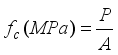 (2)
(2) Where: fc = compressive strength (MPa), P = failure load (N), and A = cross-sectional area (mm²).
The data analysis was conducted for evaluation of the Mean strength calculated for each mix, and the Standard deviation has been determined concerning strength vs laterite (%).
Figure 4. a and b) Failure of cylindrical specimen in compression test; c) Standard cube specimens (150 mm × 150 mm × 150 mm).
4. Results
The comparative summary of studies with authors investigated in this study have been presented in this section (
Tables 4 to 9). Multicriteria results are presented with comparative tables of compressive strength results from many studies. The Legend adopted in theses tables is:
1) LS = Lateritic Sand
2) LA = Lateritic Aggregate
3) CR = Compressive Strength
4) w/c = Water–cement ratio
Tables 3 and 4, show the comparative summary of studies with authors and condensed works per country concerning concrete compressive strength at 28 days including laterite replacement.
Table 3 highlights the different percentages of laterite replacement used in concrete formulation according many authors. Based on this table, the laterite content in the mixtures ranges from 0 to 50%, while the water-to-cement ratios vary from 0.35 to 0.65. The compressive strength after 28 days gradually decreases with the increase in the percentage of laterite replacement, particularly beyond 25%. It is also noteworthy that the water-to-cement ratio increases with the increase in laterite content, thereby causing a reduction in the compressive strength in the concrete. In the
Table 4, the mix proportions used in the concrete formulations vary from 1: 2: 4, 1: 6, M30 and M45 including M60. This means that the constituent material proportions are follows: 1 part cement, 2 parts fine aggregates, 4 parts coarse aggregates for the 1: 2: 4 mix proportion; and 1 part cement, 6 parts coarse aggregates for the 1: 6. The M30 or other indicate the laterite replacement percentage of in the aggregate in the lateritic concrete.
Table 3. Comparative summary of studies with authors.
Autror | Material type | Laterite replacement (%) | W/C ratio | 28-days compressive resistance (MPa) | Trend | Key findings |
Abrams 32] | conventional | 0 | 0.35 – 0.60 | 20 - 50 | increase | Established W/C-strength law |
Neville 33] | conventional | 0 | 0.40 – 0.65 | 25 - 60 | increase | Strength controlled by prorosity |
Mehta & Montero 35] | conventional | 0 | 0.35 – 0.55 | 30 - 60 | increase | ITZ governs strength |
Gidigasu 1] | Lateritic soil | 10 - 30 | 0.45 – 0.60 | 20 - 40 | = | Laterite variable at low% |
Okafor & Egbe 3] | LS concrete | 10 - 20 | 0.50 – 0.60 | 18 - 35 | Slight decrease | Acceptable structural use |
Ephraim & Adoga 4] | LS concrete | 20 - 30 | 0.50 – 0.65 | 15 - 30 | decrease | Strength decrease gradually |
Salau & Busari 14, 44] | LS concrete | 10 - 30 | 0.45 – 0.60 | 20 - 38 | = | Optimal at 25% replacement |
Alaneme & Mbadike 6] | LS + additives | 20 - 30 | 0.40 – 0.55 | 25 - 45 | increase | SCM improves strength |
Haque et al. 5] | Laterite mix | 30 - 50 | 0.50 – 0.65 | 12 - 28 | Decrease gradually | High replacement reduces strength |
Vilane & Sabelo 7] | Laterite aggregate | 10 - 40 | 0.45 – 0.60 | 18 - 36 | Decrease | Coarse laterite reduces stiffness |
Zhao et al. 11] | Processed laterite | 20 - 50 | 0.40 – 0.55 | 22 - 48 | = | Processing improves performance |
Yang et al. 45] | Laterite concrete | 10 - 30 | 0.45 – 0.55 | 25 - 42 | = | Good structural performance |
Kirthika et al. 10] | LS concrete | 0 - 40 | 0.50 – 0.65 | 15 - 35 | decrease | Linear reduction trend |
Naderi & Kaboudan 9] | Modified concrete | - | – | 20 - 50 | - | Strength prediction models |
Yu et al. 8] | Aggregate variation | - | – | 25 - 55 | increase | Aggregate grading critical |
Table 4. Summary works per country.
Author/Journal | Year | Country | Mix proportion | Laterite (%) | w/c | 28-days Strength (MPa) |
Alexander et al. 28] | 1996 | UK | 1: 2: 4 | 0 - 30 | 0.55 | 22-38 |
Okafor & Egbe 3] | 2007 | Nigeria | 1: 6 | 0 - 50 | 0.5 | 2 – 6 (blocks) |
Ephraim & Adoga 4] | 2018 | Nigeria | 1: 2: 4 | 0 - 50 | 0.5 – 0.7 | 15 - 32 |
Rajapriya & vijayan | 2020 | india | M30/M45 | 0 - 100 | 0.4 – 0.55 | 25 - 50 |
Materials today Proc Study | 2020 | India | M30 | 0 - 100 | 0.45 | 30 - 48 |
Salau, & Busari 44] | 2006 | Nigeria | 1: 2: 4 | 0 - 100 | 0.56 | 20 - 35 |
Adepegba 43] | 1975 | UK | 1: 2: 4 | 100 | 0.55 | 24 vs 28 (control) |
Fakorede et al. | 2019 | Nigeria | 1: 2: 4 | 10 - 30 | 0.55 | 18 - 33 |
Neville; Mehta; ACI | - | Global | Various | 0 | 0.35 – 0.60 | 25 - 60 |
Okafor; Salau; Gigigasu | - | Nigeria/Ghana | 1: 2: 4 | 10 - 30 | 0.45 – 0.60 | 20 - 40 |
Ephraim; Kirthika | - | Africa/India | 1: 2: 4 | 20 - 50 | 0.5 – 0.65 | 15 - 30 |
Haque; Vilane | - | Asia/Africa | Various | 30 - 60 | 0.5 – 0.70 | 10 - 28 |
Alaneme; Zhao | - | Global | Modified | 10 - 30 | 0.4 – 0.55 | 25 - 48 |
4.1. Fundamental Relationship: Water–cement Ratio vs Strength
Figure 5. Compressive strength vs water–cement ratio.
Compressive strength is inversely proportional to the water–cement ratio. The compressive strength of concrete decreases with increasing water–cement ratio due to increased porosity (Abrams
| [32] | Abrams, D. A. (1918). Design of concrete mixture. Structural Materials Research Laboratory, Vol. 1, Lewis Institute, Chicago. |
[32]
; Neville
| [33] | Neville, A. M. (2011). Properties of Concrete. Pearson, Editor- 846 p. |
| [34] | Neville, A. M. (1995). Properties of concrete (4th ed.). |
[33, 34]
; Mehta & Monteiro
| [35] | Mehta, P. K. & Monteiro, P. J. M. (2014). Concrete: Microstructure, Properties, and Materials. McGraw Hill Professional, 675 p. |
[35]
; Rao
).
Figure 5, shows the Strength (
fc) vs water–cement ratio (w/c). In this Figure, the equation (
3) present the correlation obtained. The exponential regression model indicates that the compressive strength of concrete decreases exponentially with an increase in the water-to-cement ratio. The negative exponent reflects the strong sensitivity of concrete strength to variations in the water/cement ratio. The coefficient of determination (R
2 = 0.8983) shows a strong correlation indicating that approximately 89.83% of the variation in compressive strength is explained by the water/cement ratio. The behavior is consistent with the classical Abram’s law
| [32] | Abrams, D. A. (1918). Design of concrete mixture. Structural Materials Research Laboratory, Vol. 1, Lewis Institute, Chicago. |
[32]
which states that increasing the water content leads to higher porosity and consequently lower concrete strength.
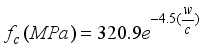 (3)
(3) 4.2. Role of Aggregate Properties
Aggregate type, grading, and stiffness significantly influence compressive strength. The mechanical properties of concrete are strongly affected by aggregate characteristics, particularly stiffness and grading
| [28] | Alexander, M. G. (1996). The influence of aggregate properties on concrete strength. Materials and Structures, 29, 325–331. https://doi.org/10.1007/BF02485988 |
| [30] | Wu, K.-R., Chen, B., Yao, W., & Zhang, D. (2001). Effect of coarse aggregate type on mechanical properties. Cement and Concrete Research, 31, 1421–1425.
https://doi.org/10.1016/S0008-8846(01)00599-3 |
| [31] | Zhou, F. P., Lydon, F. D., & Barr, B. I. G. (1995). Effect of coarse aggregate on fracture properties. Cement and Concrete Research, 25, 177–186.
https://doi.org/10.1016/0008-8846(94)00128-J |
| [39] | Lydon, F. D (1982). Concrete mix design. London, |
[28, 30, 31, 39]
.
4.3. Interfacial Transition Zone (ITZ) Controls Strength
The interfacial transition zone (ITZ) between aggregate and cement paste is typically the weakest region, controlling crack propagation and ultimate strength
| [19] | Jaseem, A. C., Muhammed Shuhail, M. C., Muhammed Mirshad, P., Mubeen, T. P., Vidyadhar, N. (2020). Partial replacement of coarse aggredate by using crushed laterite stones in concrete. International Research Journal of Engineering and Technology (IRJET) e-ISSN: 2395-0056 Volume: 07 Issue: 07. |
| [40] | Scrivener, K. L., Crumbie, A. K., & Laugesen, P. (2004). The interfacial transition zone (ITZ) between cement paste and aggregate in concrete. Interface Science, 12, 411–421.
https://doi.org/10.1023/B:INTS.0000042339.92990.4c |
| [46] | Diamond, S. (1986). The microstructure of cement paste and concrete—A visual primer. Cement and Concrete Composites, 8, 23–29. https://doi.org/10.1016/0958-9465(86)90015-1 |
[19, 40, 46]
.
4.4. Strength Development with Curing Time
Concrete strength increases with curing time as hydration products progressively densify the microstructure (
; Neville
| [33] | Neville, A. M. (2011). Properties of Concrete. Pearson, Editor- 846 p. |
[33]
; Mehta
| [47] | Mehta, P. K. (1986). Concrete: Structure, properties, and materials. |
[47]
).
4.5. Feasibility of Lateritic Materials
Lateritic soils can be used as partial replacements for fine aggregates with acceptable structural performance (Gidigasu
| [1] | Gidigasu, M. D. (1976). Laterite Soil Engineering-Pedogenesis and Engineering Principles. Developments in Geotechnical Engineering. |
[1]
; Balogun & Adepegba
| [13] | Balogun, L. A., & Adepegba, D. (1982). Effect of varying sand content in laterite concrete. Building and Environment, 17, 235–240. |
[13]
; Poon et al.
| [48] | Poon, C. S., Kou, S. C., & Lam, L. (2006). Use of recycled aggregates. Cement and Concrete Research, 36, 193–201. |
[48]
).
4.6. Optimal Replacement Level (10–30%)
Optimal performance of laterized concrete is typically achieved (
Table 6) at replacement levels between 20% and 30%
| [3] | Okafor, M. & Egbe, E. (2017). The Determinants of Firm Performance and Bribery: Evidence from Manufacturing Firms in Nigeria. International Economic Journal, Volume 31, Issue 4. https://doi.org/10.1080/10168737.2017.1380678 |
| [14] | Salau, M. A., & Busari, A. O. (2015). Effect of Different Coarse Aggregate Sizes on the Strength Characteristics of Laterized Concrete. IOP Conference Series: Materials Science and Engineering, 96, Article ID: 012079.
https://doi.org/10.1088/1757-899X/96/1/012079 |
| [32] | Abrams, D. A. (1918). Design of concrete mixture. Structural Materials Research Laboratory, Vol. 1, Lewis Institute, Chicago. |
| [33] | Neville, A. M. (2011). Properties of Concrete. Pearson, Editor- 846 p. |
| [49] | Adesanya, D. A., & Raheem, A. A. (2009). Laterite concrete strength optimization. Journal of Materials in Civil Engineering, 21, 178–183. |
[3, 14, 32, 33, 49]
.
4.7. Strength Reduction at High Replacement (>30–40%)
Compressive strength decreases significantly when laterite content exceeds 30–40% due to increased porosity and weak bonding
| [5] | Haque, M. M., ALI, M., Hasan, M., Islam, M., Kim, H. (2012). Chemical Treatment of Coir Fiber Reinforced Polypropylene Composites. Industrial & Engineering Chemistry Research, 51, 3958-3965. https://doi.org/10.1021/ie200693 |
| [10] | Kirthika, S. K., Surya, M., Sinh, S. K. (2019). Effect of clay in alternative fine aggregates on performance of concrete. Construction and Building Materials, Vol. 228, p. 116. |
| [43] | Adepegba, D. (1975). Study of laterite concrete. Building Science, 10, 145–152. |
[5, 10, 43]
.
4.8. Influence of Clay Content and Water Demand
The presence of clay minerals in lateritic soils increases water demand and reduces workability
| [26] | Lekshmy, R., & Anup, J. (2016). Experimental Investigation on Strength Parameters of Laterised Concrete after Adding Silica Fume. International Journal of Science and Research (IJSR). Volume 5, Issue 6, pp. 1579-1583. |
| [44] | Salau, M. A., & Busari, A. O. (2006). Effects of laterite fines on concrete. Construction and Building Materials, 20, 130–135. https://doi.org/10.1016/j.conbuildmat.2005.02.005 |
[26, 44]
.
4.9. Effect of Processing Lateritic Aggregates and Durability Considerations
Processing lateritic aggregates significantly improves compressive strength by reducing impurities (
Table 7) and enhancing particle packing
| [11] | Zhao, Z., Zhang, G., Chen, Q., Zhang X., Chao, J., Zhou, D., Chai, W., Yang, H., Lai, Z., He, Y. (2023). Nickel Grade Inversion of Lateritic Nickel Ore Using WorldView-3 Data Incorporating Geospatial Location Information: A Case Study of North Konawe, Indonesia. Journal Remote Sensing MDPI, Volume 15, Issue 14, https://doi.org/10.3390/rs15143660 |
| [50] | Alaneme, K. K., & Mbadike, E. M. (2020). Mechanical properties of laterized concrete. Journal of Materials Research and Technology, 9, 11139–11148.
https://doi.org/10.1016/j.jmrt.2020.07.042 |
[11, 50]
. Durability of laterized concrete is generally lower than conventional concrete due to higher permeability (Neville
| [34] | Neville, A. M. (1995). Properties of concrete (4th ed.). |
[34]
and Basheer
| [53] | Basheer, P. A. M. (2001). Permeability and durability of concrete. Construction and Building Materials, 15, 345–354. |
[53]
).
4.10. Effect of Supplementary Cementitious Materials and Modern Prediction Models (AI/ML)
Table 5. Parameter based comparison with authors.
Parameter | Conventional (Neville, Mehta) 33-35] | Ferrallitic low (%) (Okafor, Salau) 3, 14] | Ferrallitic high (%) (Haque, Ephraim) 4, 5] |
Density (kg/m3) | 2300 - 2500 | 2100 - 2400 | 1800-2200 |
Workability | High | Moderate | Low |
Water demand | normal | Slightly higher | High |
7-day strength (%) | 60 – 70% | 55 – 65% | 40 – 55% |
28-day strength | 30 – 60 MPa | 20 – 45 MPa | 10 -30 MPa |
Durability | High (Neville) | Moderate (Salau) | Lower (Haque) |
ITZ quality | Strong (Mehta) | Moderate | Weak |
Supplementary cementitious materials enhance compressive strength through pozzolanic reactions and pore refinement
| [41] | Thomas, M. (2007). Optimizing supplementary cementitious materials. Cement and Concrete Research, 37, 144–154. |
| [51] | Siddique, R. (2004). Performance characteristics of high-volume fly ash concrete. Cement and Concrete Research, 34, 487–493. https://doi.org/10.1016/j.cemconres.2003.09.002 |
| [52] | Wild, S., Khatib, J. M., & Jones, A. (1996). Relative strength of metakaolin concrete. Cement and Concrete Research, 26, 1537–1544. |
[41, 51, 52]
. Machine learning techniques have demonstrated high accuracy in predicting compressive strength of concrete (Shishegaran
| [16] | Shishegaran, A., Moradi. M., Ali, M., behnam, N., karami, Shishegaran, A. (2020). Prediction of reinforced concrete connections under post-earthquake fire. Engineering Environmental Sciences. Journal of Zhejiang University Sciences. |
[16]
and Moayedi & Mosavi
| [17] | Moayedi, H., & Mosavi, A. (2021). Analysing Uniaxiel Compressive Strength of Concrete Using a Novel Satin Bowerbird Optimizer. Engineering Material Sciences. |
[17]
).
The results presented in
Table 5 shows that: the density decreases as the proportion on ferrallitic aggregates increases. This indicates that ferrallitic aggregate are generally lighter and more porous than conventional aggregates. The ferrallitic materials contain higher porosity, lower specific gravity, more fine particles and clay content. The characteristics reduce the overall unit weight of the concrete. Workability decreases with increasing ferrallitic aggregate content. Ferrallitic aggregates absorb more water, possess rough and irregular surfaces and contain fine particles (clay). The required mixing water increases as ferrallitic aggregate content increases. The absorb part of the mixing water, leaving less free water for cement hydration and workability. Ferrallitic aggregates are more absorbent because of higher porosity, clay minerals and larger surface area. In the 7-day compressive strength consideration, early-age strength development decreases with increasing ferrallitic aggregate replacement. The reduction may result from:
1) weaker aggregate-cement bond,
2) high water absorption,
3) reduced compaction due to lower workability,
4) presence of clay impurities.
The hydration process may also be less efficient because part of the mixing water is absorbed by the aggregates. The 28-day ultimate compressive strength decreases as ferrallitic aggregate replacement increases. The strength reduction is associated with:
1) lower mechanical strength of ferrallitic aggregates,
2) weaker interfacial transition zone,
3) increased porosity,
4) higher water demand,
5) possible clay contamination.
Globally, the experimental results in
Table 5 indicate that, partial replacement of conventional aggregates with ferrallitic aggregates influences the physical and mechanical behavior of concrete. While increasing ferrallitic content reduces density, workability, compressive strength, and durability, low replacement ratios still provide satisfactory performance for several construction application. Therefore, ferrallitic aggregates present a viable sustainable alternative for concrete production in Cameroon, particularly for economical and environmentally friendly construction.
Table 6. Influence of laterite replacement with authors.
Replacement (%) | Strength range at 28-days (MPa) | Relative strength (%) | Authors | Interpretation |
0 | 30 - 50 | 100% | Abrams, Neville 32-34] | Control concrete |
10 | 28 - 48 | 95 – 98% | Okafor & Egbe 3] | Minimal effect |
20 | 25 - 45 | 85 – 95% | Salau &Busari 14] | Optimal range |
30 | 22 - 40 | 75 – 90% | Ephraim & Adoga 4] | Upper safe limit |
40 | 18 - 32 | 60 – 75% | Haque et al. 5] | Strength reduction begins |
50 | 12 - 28 | 50 – 65% | Kirthika et al. 10] | Significant loss |
>60 | < 20 | < 50% | Adepegba 43] | Not recommended |
This research contributes significantly to sustainable construction by encouraging the use of locally available ferrallitic aggregate as partial replacement for conventional aggregates in concrete production. Cameroon possesses large deposits of ferrallitic materials across many regions. Using these materials:
1) reduces reliance on scarce conventional river sand and crushed stone,
2) promotes valorization of indigenous construction materials,
3) supports development of locally adapted construction technologies.
This study demonstrate acceptable compressive strength (
Tables 3, 4, 6 and 9) performance in concrete for lateritic replacement aggregate. Ferrallitic aggregate concrete become:
1) a sustainable alternative for low and medium strength structural application,
2) suitable for rural housing, pavements, blocks, and non-critical structural elements.
Table 7. Effect of processing and additives.
Modification | Strength Effect | Mechanism |
Washing laterite | Increase to 5 – 15% | Removes clay inpurety |
Sieving/grading | Increase to 10 – 20% | Improves packing density |
Heat treatment | Increase | Reduce moisture sensitivity |
Fly ash addition | Increase to 10 – 25% | Pozzolanic reaction |
Metakaolin | Increase to 15 – 30% | Refines pore structure |
Superplasticizer | Increase indirectly | Reduces W/C ratio |
Table 8. Key Findings in this study review.
Factor | Influence on strength | Consistency accross studies |
Water-cement ratio | Strong inverse relationship | Very high |
Laterite content | Negative beyong 30% | Very high |
Aggregate grading | Strong positive effect | High |
Curing time | Strength increases with age | Very high |
Processing of laterite | Improves strength | High |
Use of SCMs (Supplementary Cementitious Materials) | Enhances strength significantly | High |
Table 9. Aggregated from this study review.
Laterite replacement (%) | Mean strength (MPa) at 28-days | Standard deviation | min | max | Sample size number |
0 | 42.5 | 8.2 | 25 | 60 | 60 |
10 | 40.1 | 7.5 | 28 | 55 | 48 |
20 | 36.8 | 6.9 | 25 | 50 | 45 |
30 | 32.5 | 6.5 | 22 | 45 | 42 |
40 | 27.3 | 5.8 | 18 | 38 | 35 |
50 | 21.6 | 5.2 | 12 | 32 | 30 |
>=60 | 16.8 | 4.5 | 8 | 25 | 25 |
This supports sustainable infrastructures development using materials naturally available within Cameroon. In other the reduction of transportation energy with imported of distant aggregate require:
1) quarrying,
2) long-distance transportation,
3) fuel consumption.
Using nearby ferrallitic materials minimizes transportation distance, thereby lowering energy consumption and reduction carbon emissions associated with material haulage. Ferrallitic aggregates provide an economically viable substitute for conventional aggregates. These conventional aggregate often involve quarry extraction costs, crushing operations, transportation expenses and importation in some regions. The ferrallitic materials are often readily available, cheaper to obtain locally and accessible in rural areas. Therefore, replacing part of conventional aggregates reduced overall concrete production costs.
The most important environmental contributions of this research is the reduction of excessive natural sand production. Excessive sand mining causes riverbank erosion, habitat destruction, lowering of water tables, sediments imbalance and increased flooding risks. By partially replacement sand with ferrallitic aggregates, the research helps reduce pressure on natural river ecosystems. Natural sand and gravel are non-renewable resources on the human timescale. Using the ferrallitic materials conserves conventional aggregate reserves, promotes responsible resource management and extends the lifespan of natural quarries. Sand quarrying and aggregate extraction often lead to deforestation, dust pollution, landscape degradation and biodiversity loss. Local ferrallitic material utilization may reduce the need intensive quarrying activities.
5. Discussion
This section interprets the results in light of the reviewed literature, focusing on compressive strength behavior of conventional and ferrallitic concrete.
5.1. Influence of Water–cement Ratio
The results confirm that compressive strength decreases with increasing water–cement ratio. This aligns with classical theory established by Abrams
| [32] | Abrams, D. A. (1918). Design of concrete mixture. Structural Materials Research Laboratory, Vol. 1, Lewis Institute, Chicago. |
[32]
and later validated by Neville
| [33] | Neville, A. M. (2011). Properties of Concrete. Pearson, Editor- 846 p. |
| [34] | Neville, A. M. (1995). Properties of concrete (4th ed.). |
[33, 34]
and Mehta
| [35] | Mehta, P. K. & Monteiro, P. J. M. (2014). Concrete: Microstructure, Properties, and Materials. McGraw Hill Professional, 675 p. |
[35]
. In the
Figure 5, the exponential regression model indicates that the compressive strength of concrete decreases exponentially with an increase in the water-to-cement ratio. The negative exponent reflects the strong sensitivity of concrete strength to variations in the water/cement ratio. The coefficient of determination (R
2 = 0.8983) shows a strong correlation indicating that approximately 89.83% of the variation in compressive strength is explained by the water/cement ratio. The behavior is consistent with the classical Abram’s law
| [32] | Abrams, D. A. (1918). Design of concrete mixture. Structural Materials Research Laboratory, Vol. 1, Lewis Institute, Chicago. |
[32]
which states that increasing the water content leads to higher porosity and consequently lower concrete strength.
The reduction in strength is attributed to:
1) Increased capillary pores
2) Reduced density
This observation is consistent with findings reported by Rao
.
5.2. Effect of Lateritic Aggregate Replacement
5.2.1. Low Replacement Levels (10–30%)
The results show that compressive strength remains relatively high at low laterite content. This agrees with Salau & Busari
| [14] | Salau, M. A., & Busari, A. O. (2015). Effect of Different Coarse Aggregate Sizes on the Strength Characteristics of Laterized Concrete. IOP Conference Series: Materials Science and Engineering, 96, Article ID: 012079.
https://doi.org/10.1088/1757-899X/96/1/012079 |
| [44] | Salau, M. A., & Busari, A. O. (2006). Effects of laterite fines on concrete. Construction and Building Materials, 20, 130–135. https://doi.org/10.1016/j.conbuildmat.2005.02.005 |
[14, 44]
and Adesanya & Raheem
| [49] | Adesanya, D. A., & Raheem, A. A. (2009). Laterite concrete strength optimization. Journal of Materials in Civil Engineering, 21, 178–183. |
[49]
.
The acceptable performance is due to:
1) Adequate bonding
2) Sufficient cement paste coverage
5.2.2. High Replacement Levels (>30%)
A significant reduction in strength is observed beyond 30% replacement (
Table 10). This is consistent with Kirthika & Singh
| [10] | Kirthika, S. K., Surya, M., Sinh, S. K. (2019). Effect of clay in alternative fine aggregates on performance of concrete. Construction and Building Materials, Vol. 228, p. 116. |
[10]
and Adepegba
| [43] | Adepegba, D. (1975). Study of laterite concrete. Building Science, 10, 145–152. |
[43]
.
Table 10. Comparison with literature.
Replacement (%) | This study | Literature range | Agreement |
20 | High strength | 25 – 45 MPa | Good |
30 | Moderate | 22 – 40 MPa | Good |
50 | Low | 12 – 30 MPa | Good |
5.3. Role of ITZ in Ferrallitic Concrete
The weaker performance of lateritic concrete is linked to ITZ characteristics (higher porosity weak adhesion). This agrees with Scrivener et al.
, who identified ITZ as the weakest zone in concrete.
5.4. Effect of Aggregate Properties
This results in reduced strength, consistent with findings by Alexander
and Wu et al.
. Lateritic aggregates exhibit:
1) Lower stiffness
2) Higher fines content
5.5. Improvement Strategies
5.5.1. Use of SCMs
The incorporation of pozzolanic materials improves strength and durability (Siddique,
; and Thomas,
| [41] | Thomas, M. (2007). Optimizing supplementary cementitious materials. Cement and Concrete Research, 37, 144–154. |
[41]
).
5.5.2. Processing Lateritic Materials
Processing techniques such as washing and grading improve performance, as reported by Alaneme & Mbadike
.
5.6. Overall Synthesis
Figures 2 and 3, show the comparative strength behavior of the materials. Conventional concrete give a highest strength. Lateritic at 20–25% replacement give a comparable result and significant reduction is observed beyond 40%.
5.7. Implications for Practice
Lateritic concrete is suitable for low to medium-strength application structures and sustainable construction
| [54] | Olutoge, F. A. (2010). Laterized concrete performance. Materials and Design, 31, 3535–3540. |
| [55] | Oti, J. E., Kinuthia, J. M., & Bai, J. (2009). Engineering properties of unfired clay bricks. Engineering Geology, 107, 130–139. |
| [56] | Meddah, M. S., Zitouni, S., & Belâabes, S. (2010). Effect of content and particle size distribution. Construction and Building Materials, 24, 505–511. |
| [57] | Mindess, S., Young, J. F., & Darwin, D. (2003). Concrete (2nd ed.). Prentice Hall. |
| [58] | Ennings, H. M. (2000). A model for the microstructure of calcium silicate hydrate in cement paste. Cement and Concrete Research, 30, 101–116.
https://doi.org/10.1016/S0008-8846(99)00201-5 |
[54-58]
. It is not recommended for high-strength structural elements without modification. Ferrallitic concrete requires proper mix optimization and material processing to improve desirable performance
| [59] | Hoth, J. B., Zoa, A., Elat, E., Kamdem A., Amba, J. C. (2025). A Review on the Influence of Formulation Parameters on the Mechanical Performance of Soil Concrete. Wiley, Advances in Materials Science and Engineering, Volume 2025, Article ID 1768895, 20 p. https://doi.org/10.1155/amse/1768895 |
[59]
.
5.8. Limitations and Research Gaps
The limitations of ferrallitic soil and research gaps are:
1) Limited long-term durability studies,
2) Variability in laterite composition,
3) Lack of standard specifications,
4) Reduced workability.
5.9. Advantages of Ferrallitic Aggregates
The main advantages of ferrallitic aggregates are low cost-effective, locally available, environmentally sustainable. Globally, the findings confirm that ferrallitic materials can partially replace conventional aggregates without compromising compressive strength when used within optimal limits. However, proper mix design and material processing are essential to achieve desirable performance.
6. Conclusion Recommendations
6.1. Conclusion
This study investigated the compressive strength of concrete incorporating ferrallitic aggregates:
1) Compressive strength decreases with increasing water–cement ratio, confirming classical theory
| [31] | Zhou, F. P., Lydon, F. D., & Barr, B. I. G. (1995). Effect of coarse aggregate on fracture properties. Cement and Concrete Research, 25, 177–186.
https://doi.org/10.1016/0008-8846(94)00128-J |
| [32] | Abrams, D. A. (1918). Design of concrete mixture. Structural Materials Research Laboratory, Vol. 1, Lewis Institute, Chicago. |
| [33] | Neville, A. M. (2011). Properties of Concrete. Pearson, Editor- 846 p. |
| [34] | Neville, A. M. (1995). Properties of concrete (4th ed.). |
[31-34]
.
2) Lateritic materials can replace fine aggregates up to 30% without significant strength loss.
3) Optimal performance occurs between 20–25% replacements, where strength remains within structural limits.
4) Beyond 30%, strength decreases significantly due to:
a) Increased porosity
b) Weak interfacial bonding
5) Processing lateritic materials improves performance.
The incorporation of ferrallitic aggregates in concrete production presents a promising pathway toward sustainable construction in Cameroon by promoting the utilization of locally available materials, reducing construction construction costs associated with imported aggregates, machines mining for extraction stone aggregates and mitigating environmental degradation caused by excessive sand mining. The research investigated in this paper supports the transition toward:
1) sustainable construction practices,
2) environmentally responsible material use,
3) economic efficiency in concrete production,
4) local resource valorization in Cameroon.
The compressive strength results in this paper prove satisfactory ferrallitic aggregate concrete and become practical solution for low-cost housing, sustainable infrastructure, and eco-friendly construction technologies in tropical regions.
6.2. Recommendations
6.2.1. Practical Recommendations
The practical recommendations are:
1) Use laterite up to 30% replacement for structural concrete
2) Apply proper grading and washing
3) Use admixtures to improve workability
4) Promote local materials in construction
5) Encourage sustainable building practices in Cameroon
6.2.2. Research Recommendations and Futur
The reasearch futur are based on the:
1) Study long-term durability;
2) Investigate high-performance lateritic concrete;
3) Develop standard specifications.
Abbreviations
ASTM | American Society on Testing Materials |
C–S–H | Calcium Silicate Hydrate |
DOE | Department of Environment |
HVFA | High-volume Fly Ash |
ITZ | The Interfacial Transition Zone |
OPC | Ordinary Portland Cement |
SBO | Satin Bowerbird Optimizer |
SCMs | Supplementary Cementitious Materials |
UCS | Uniaxial Compressive Strength |
Author Contributions
Beyeme Olinga Richard: Conceptualization, Data curation, Formal Analysis, Funding acquisition, Investigation, Methodology, Resources, Software, Validation, Visualization, Writing – original draft, Writing – review & editing
Bodol Momha Merlin: Conceptualization, Data curation, Formal Analysis, Funding acquisition, Methodology, Software, Validation, Visualization, Writing – review & editing
Zoa Ambassa: Conceptualization, Data curation, Formal Analysis, Funding acquisition, Methodology, Project administration, Software, Supervision, Validation, Visualization, Writing – review & editing
Amba Jean Chills: Funding acquisition, Methodology, Project administration, Software, Supervision, Validation, Visualization, Writing – review & editing
Data Availability Statement
The data and material used to support the findings of this study are included within the article.
Conflicts of Interest
The authors confirm that there are no conflicts of interest associated with this publication and there has been no significant financial support for this work that could have influenced its outcome.
References
| [1] |
Gidigasu, M. D. (1976). Laterite Soil Engineering-Pedogenesis and Engineering Principles. Developments in Geotechnical Engineering.
|
| [2] |
Maignien, R. Maignien, R. (1966). Reports on laterite research. Research on natural resources. (In French). UNESCO, Paris, 155 p.
|
| [3] |
Okafor, M. & Egbe, E. (2017). The Determinants of Firm Performance and Bribery: Evidence from Manufacturing Firms in Nigeria. International Economic Journal, Volume 31, Issue 4.
https://doi.org/10.1080/10168737.2017.1380678
|
| [4] |
Ephraim, M. E., Adoga, E. A. and Rowland-Lato, E. O. (2016). Strength of Laterite Rock Concrete. American Journal of Civil Engineering and Architecture, 4, 54-61.
|
| [5] |
Haque, M. M., ALI, M., Hasan, M., Islam, M., Kim, H. (2012). Chemical Treatment of Coir Fiber Reinforced Polypropylene Composites. Industrial & Engineering Chemistry Research, 51, 3958-3965.
https://doi.org/10.1021/ie200693
|
| [6] |
Alaneme, G. U., & Mbadike, E. M. (2021). Optimisation of strength development of bentonite and palm bunch ash concrete using fuzzy logic. International Journal of Sustainable Engineering. Volume 14. Issue 4.
https://doi.org/10.1080/19397038.2021.1929549
|
| [7] |
Vilane, Y., Sabelo, H., (2016). Assessed the compressive strength of concrete under aggregate size variation. Research report.
|
| [8] |
Yu, G., Jia, Y., He, N., Zhu, J. (2019). Stabilization of atmospheric nitrogen deposition in China over the past decade. Nature Geoscience, 12(6): 1-6,
https://doi.org/10.1038/s41561-019-0352-4
|
| [9] |
Naderi, M., Kaboudan, A. (2021). Comparative Syudy on Water Permeability of Concrete Using Cylindrical Chamber Method and Britich Standard and Its Relation with Compressive Strength. Engineering, Materials Science-Journal of Rehabilitation in Civil Engineering.
|
| [10] |
Kirthika, S. K., Surya, M., Sinh, S. K. (2019). Effect of clay in alternative fine aggregates on performance of concrete. Construction and Building Materials, Vol. 228, p. 116.
|
| [11] |
Zhao, Z., Zhang, G., Chen, Q., Zhang X., Chao, J., Zhou, D., Chai, W., Yang, H., Lai, Z., He, Y. (2023). Nickel Grade Inversion of Lateritic Nickel Ore Using WorldView-3 Data Incorporating Geospatial Location Information: A Case Study of North Konawe, Indonesia. Journal Remote Sensing MDPI, Volume 15, Issue 14,
https://doi.org/10.3390/rs15143660
|
| [12] |
Umana, A. U., Garba, B. M. P., Ologun, A. (2024). The Role of Government Policies in Promoting Social Housing: A Comparative Study between Nigeria and Other Developing Nations. World Journal of Advanced Research and Reviews, 23, 371-382.
https://doi.org/10.30574/wjarr.2024.23.3.2699
|
| [13] |
Balogun, L. A., & Adepegba, D. (1982). Effect of varying sand content in laterite concrete. Building and Environment, 17, 235–240.
|
| [14] |
Salau, M. A., & Busari, A. O. (2015). Effect of Different Coarse Aggregate Sizes on the Strength Characteristics of Laterized Concrete. IOP Conference Series: Materials Science and Engineering, 96, Article ID: 012079.
https://doi.org/10.1088/1757-899X/96/1/012079
|
| [15] |
Tatsuuma, M., Kataoka, A., Okuzumi, S., Tanaka, H. (2023). Formulating Compressive Strength of Dust Aggregates from Low to High Volume Filling Factors with Numerical Simulations. The Astrophysical Journal, 953(1) American Astronomical Society. 6
https://doi.org/10.3847/1538-4357/acdf43
|
| [16] |
Shishegaran, A., Moradi. M., Ali, M., behnam, N., karami, Shishegaran, A. (2020). Prediction of reinforced concrete connections under post-earthquake fire. Engineering Environmental Sciences. Journal of Zhejiang University Sciences.
|
| [17] |
Moayedi, H., & Mosavi, A. (2021). Analysing Uniaxiel Compressive Strength of Concrete Using a Novel Satin Bowerbird Optimizer. Engineering Material Sciences.
|
| [18] |
Liu, C., Qiu, Z., Zhang, S., Yan, L., Miao, J., Zheng C. (2024). Experimental Study on Dynamic Bond Behavior Between Reinforcement and Concrete under Fire. ASCE, Journal of Mater. Civ. Eng., 36(6): 04024140.
|
| [19] |
Jaseem, A. C., Muhammed Shuhail, M. C., Muhammed Mirshad, P., Mubeen, T. P., Vidyadhar, N. (2020). Partial replacement of coarse aggredate by using crushed laterite stones in concrete. International Research Journal of Engineering and Technology (IRJET) e-ISSN: 2395-0056 Volume: 07 Issue: 07.
|
| [20] |
Ukpata, O. J., Desmond, E., Nwajei, E., Godwin, S., Georges, U., Wadiegwu, A., Obeten, N. O., Bamidele, C. O. (2024). Effects of aggregate sizes on the performance of laterized concrete. Scientific Reports volume 14, Article number: 448.
|
| [21] |
Udoeyo, F. F., Brooks, R., Udo-Inyang, P., and Iwuji, C. (2010). Residual Compressive Strength of Laterized Concrete Subjected to Elevated Temperatures. Research Journal of Applied Sciences, Engineering and Technology 2(3): 262-267. ISSN: 2040-7467.
|
| [22] |
Yetounde, O. A., Sulaiman, O. K., Abiodun, F., Akintoye, O. O. (2026). Mechanical properties of reinforced laterized concrete with metakaolin partialy replacing cement. Discover Concrete and Cement Journal, volume 2, article number 2.
|
| [23] |
Ogunleye, E. (2023). Innovations and applications of laterized concrete in sustainable construction. Global Journal of Engineering and Technology Advances, 16(03), 107–120.
https://doi.org/10.30574/gjeta.2023.16.3.0175
|
| [24] |
Yaragal, S. C., Basavana Gowda, S. N. and Rajasekaran, C. (2019). Characterization and Performance of Processed Lateritic Fine Aggregates in Cement Mortars and Concretes. Construction and Building Materials, 200, 10-25.
https://doi.org/10.1016/j.conbuildmat.2018.12.072
|
| [25] |
Lasisi, F., & Osunade, J. A. (1984). Strength characteristics of lateritic aggregates. Engineering Geology, 19, 95–104.
|
| [26] |
Lekshmy, R., & Anup, J. (2016). Experimental Investigation on Strength Parameters of Laterised Concrete after Adding Silica Fume. International Journal of Science and Research (IJSR). Volume 5, Issue 6, pp. 1579-1583.
|
| [27] |
Bentz, D. P. (2008). A review of early-age properties of cement-based materials. Cement and Concrete Research, 38, 196–204.
https://doi.org/10.1016/j.cemconres.200709.005
|
| [28] |
Alexander, M. G. (1996). The influence of aggregate properties on concrete strength. Materials and Structures, 29, 325–331.
https://doi.org/10.1007/BF02485988
|
| [29] |
Aïtcin, P.-C. (2000). High-performance concrete. E&FN Spon.
|
| [30] |
Wu, K.-R., Chen, B., Yao, W., & Zhang, D. (2001). Effect of coarse aggregate type on mechanical properties. Cement and Concrete Research, 31, 1421–1425.
https://doi.org/10.1016/S0008-8846(01)00599-3
|
| [31] |
Zhou, F. P., Lydon, F. D., & Barr, B. I. G. (1995). Effect of coarse aggregate on fracture properties. Cement and Concrete Research, 25, 177–186.
https://doi.org/10.1016/0008-8846(94)00128-J
|
| [32] |
Abrams, D. A. (1918). Design of concrete mixture. Structural Materials Research Laboratory, Vol. 1, Lewis Institute, Chicago.
|
| [33] |
Neville, A. M. (2011). Properties of Concrete. Pearson, Editor- 846 p.
|
| [34] |
Neville, A. M. (1995). Properties of concrete (4th ed.).
|
| [35] |
Mehta, P. K. & Monteiro, P. J. M. (2014). Concrete: Microstructure, Properties, and Materials. McGraw Hill Professional, 675 p.
|
| [36] |
Rao, G. A. (2001). Generalization of Abrams’ law. Cement and Concrete Research, 31, 495–502.
https://doi.org/10.1016/S0008-8846(00)00473-2
|
| [37] |
ACI Committee 211 (2002). Standard Practice for Selecting Proportions for Normal, Heavyweight, and Mass Concrete (ACI 211.1-91).
|
| [38] |
ASTM C39/C39M-21 (2023). Standard Test Method for Compressive Strength of Cylindrical Concrete Specimens.
|
| [39] |
Lydon, F. D (1982). Concrete mix design. London,
|
| [40] |
Scrivener, K. L., Crumbie, A. K., & Laugesen, P. (2004). The interfacial transition zone (ITZ) between cement paste and aggregate in concrete. Interface Science, 12, 411–421.
https://doi.org/10.1023/B:INTS.0000042339.92990.4c
|
| [41] |
Thomas, M. (2007). Optimizing supplementary cementitious materials. Cement and Concrete Research, 37, 144–154.
|
| [42] |
Olanipekun, E. A., Olusola, K. O., & Ata, O. (2006). Comparative study of concrete with laterite sand. Building and Environment, 41, 297–301.
https://doi.org/10.1016/j.buildenv.2005.01.029
|
| [43] |
Adepegba, D. (1975). Study of laterite concrete. Building Science, 10, 145–152.
|
| [44] |
Salau, M. A., & Busari, A. O. (2006). Effects of laterite fines on concrete. Construction and Building Materials, 20, 130–135.
https://doi.org/10.1016/j.conbuildmat.2005.02.005
|
| [45] |
Yang, K.-H., Mun, J.-H., & Cho, M.-S. (2015). Strength properties of eco-concrete. Construction and Building Materials, 78, 1–9.
|
| [46] |
Diamond, S. (1986). The microstructure of cement paste and concrete—A visual primer. Cement and Concrete Composites, 8, 23–29.
https://doi.org/10.1016/0958-9465(86)90015-1
|
| [47] |
Mehta, P. K. (1986). Concrete: Structure, properties, and materials.
|
| [48] |
Poon, C. S., Kou, S. C., & Lam, L. (2006). Use of recycled aggregates. Cement and Concrete Research, 36, 193–201.
|
| [49] |
Adesanya, D. A., & Raheem, A. A. (2009). Laterite concrete strength optimization. Journal of Materials in Civil Engineering, 21, 178–183.
|
| [50] |
Alaneme, K. K., & Mbadike, E. M. (2020). Mechanical properties of laterized concrete. Journal of Materials Research and Technology, 9, 11139–11148.
https://doi.org/10.1016/j.jmrt.2020.07.042
|
| [51] |
Siddique, R. (2004). Performance characteristics of high-volume fly ash concrete. Cement and Concrete Research, 34, 487–493.
https://doi.org/10.1016/j.cemconres.2003.09.002
|
| [52] |
Wild, S., Khatib, J. M., & Jones, A. (1996). Relative strength of metakaolin concrete. Cement and Concrete Research, 26, 1537–1544.
|
| [53] |
Basheer, P. A. M. (2001). Permeability and durability of concrete. Construction and Building Materials, 15, 345–354.
|
| [54] |
Olutoge, F. A. (2010). Laterized concrete performance. Materials and Design, 31, 3535–3540.
|
| [55] |
Oti, J. E., Kinuthia, J. M., & Bai, J. (2009). Engineering properties of unfired clay bricks. Engineering Geology, 107, 130–139.
|
| [56] |
Meddah, M. S., Zitouni, S., & Belâabes, S. (2010). Effect of content and particle size distribution. Construction and Building Materials, 24, 505–511.
|
| [57] |
Mindess, S., Young, J. F., & Darwin, D. (2003). Concrete (2nd ed.). Prentice Hall.
|
| [58] |
Ennings, H. M. (2000). A model for the microstructure of calcium silicate hydrate in cement paste. Cement and Concrete Research, 30, 101–116.
https://doi.org/10.1016/S0008-8846(99)00201-5
|
| [59] |
Hoth, J. B., Zoa, A., Elat, E., Kamdem A., Amba, J. C. (2025). A Review on the Influence of Formulation Parameters on the Mechanical Performance of Soil Concrete. Wiley, Advances in Materials Science and Engineering, Volume 2025, Article ID 1768895, 20 p.
https://doi.org/10.1155/amse/1768895
|
Cite This Article
-
APA Style
Richard, B. O., Merlin, B. M., Ambassa, Z., Chills, A. J. (2026). Multicriteria Review of the Compressive Strength Behavior of the Cement Concrete and Concrete with Ferrallitic Aggregate Replacement. Journal of Civil, Construction and Environmental Engineering, 11(3), 61-79. https://doi.org/10.11648/j.jccee.20261103.12
 Copy
|
Copy
|
 Download
ACS Style
Richard, B. O.; Merlin, B. M.; Ambassa, Z.; Chills, A. J. Multicriteria Review of the Compressive Strength Behavior of the Cement Concrete and Concrete with Ferrallitic Aggregate Replacement. J. Civ. Constr. Environ. Eng. 2026, 11(3), 61-79. doi: 10.11648/j.jccee.20261103.12
Copy
|
Download
AMA Style
Richard BO, Merlin BM, Ambassa Z, Chills AJ. Multicriteria Review of the Compressive Strength Behavior of the Cement Concrete and Concrete with Ferrallitic Aggregate Replacement. J Civ Constr Environ Eng. 2026;11(3):61-79. doi: 10.11648/j.jccee.20261103.12
Copy
|
Download
-
@article{10.11648/j.jccee.20261103.12,
  author = {Beyeme Olinga Richard and Bodol Momha Merlin and Zoa Ambassa and Amba Jean Chills},
  title = {Multicriteria Review of the Compressive Strength Behavior of the Cement Concrete and Concrete with Ferrallitic Aggregate Replacement},
  journal = {Journal of Civil, Construction and Environmental Engineering},
  volume = {11},
  number = {3},
  pages = {61-79},
  doi = {10.11648/j.jccee.20261103.12},
  url = {https://doi.org/10.11648/j.jccee.20261103.12},
  eprint = {https://article.sciencepublishinggroup.com/pdf/10.11648.j.jccee.20261103.12},
  abstract = {Concrete remains the most widely used construction material globally, with compressive strength serving as its primary performance indicator. In tropical regions such as Cameroon, the availability of ferrallitic (lateritic) soils presents an opportunity to develop cost-effective and sustainable alternatives to conventional concrete. However, the influence of these materials on compressive strength requires systematic evaluation. This study investigates the compressive strength of concrete produced with partial replacement of fine aggregates by ferrallitic materials. Concrete mixes were prepared with laterite replacement levels of 0%, 10%, 20%, 30%, 40%, and 50% at a constant water–cement ratio of 0.50. Standard cube specimens (150 mm × 150 mm × 150 mm) were cast, cured, and tested at 7, 14, and 28 days in accordance with ASTM standards. Results show that compressive strength decreases with increasing ferrallitic content. However, mixes with 10–30% replacement exhibited strength values comparable to conventional concrete, with optimal performance observed at approximately 20% replacement. Beyond 30%, a significant reduction in strength was recorded due to increased porosity and weaker interfacial bonding. The findings confirm that ferrallitic materials can be effectively utilized in structural concrete within controlled limits. The study concludes that partial replacement of fine aggregates with laterite (≤30%) is feasible for structural applications, contributing to sustainable construction practices. Recommendations are provided for optimal mix design and future research on durability and long-term performance.},
 year = {2026}
}
Copy
|
Download
-
TY  - JOUR
T1  - Multicriteria Review of the Compressive Strength Behavior of the Cement Concrete and Concrete with Ferrallitic Aggregate Replacement
AU  - Beyeme Olinga Richard
AU  - Bodol Momha Merlin
AU  - Zoa Ambassa
AU  - Amba Jean Chills
Y1  - 2026/06/12
PY  - 2026
N1  - https://doi.org/10.11648/j.jccee.20261103.12
DO  - 10.11648/j.jccee.20261103.12
T2  - Journal of Civil, Construction and Environmental Engineering
JF  - Journal of Civil, Construction and Environmental Engineering
JO  - Journal of Civil, Construction and Environmental Engineering
SP  - 61
EP  - 79
PB  - Science Publishing Group
SN  - 2637-3890
UR  - https://doi.org/10.11648/j.jccee.20261103.12
AB  - Concrete remains the most widely used construction material globally, with compressive strength serving as its primary performance indicator. In tropical regions such as Cameroon, the availability of ferrallitic (lateritic) soils presents an opportunity to develop cost-effective and sustainable alternatives to conventional concrete. However, the influence of these materials on compressive strength requires systematic evaluation. This study investigates the compressive strength of concrete produced with partial replacement of fine aggregates by ferrallitic materials. Concrete mixes were prepared with laterite replacement levels of 0%, 10%, 20%, 30%, 40%, and 50% at a constant water–cement ratio of 0.50. Standard cube specimens (150 mm × 150 mm × 150 mm) were cast, cured, and tested at 7, 14, and 28 days in accordance with ASTM standards. Results show that compressive strength decreases with increasing ferrallitic content. However, mixes with 10–30% replacement exhibited strength values comparable to conventional concrete, with optimal performance observed at approximately 20% replacement. Beyond 30%, a significant reduction in strength was recorded due to increased porosity and weaker interfacial bonding. The findings confirm that ferrallitic materials can be effectively utilized in structural concrete within controlled limits. The study concludes that partial replacement of fine aggregates with laterite (≤30%) is feasible for structural applications, contributing to sustainable construction practices. Recommendations are provided for optimal mix design and future research on durability and long-term performance.
VL  - 11
IS  - 3
ER  -
Copy
|
Download

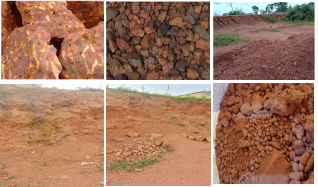
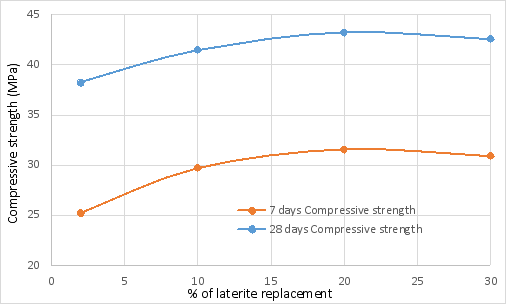
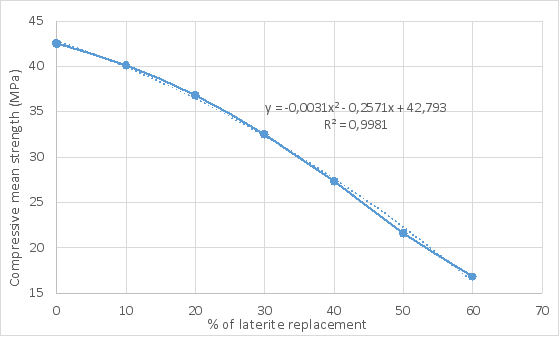
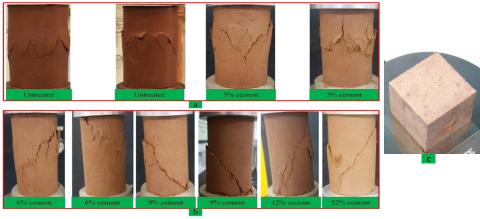
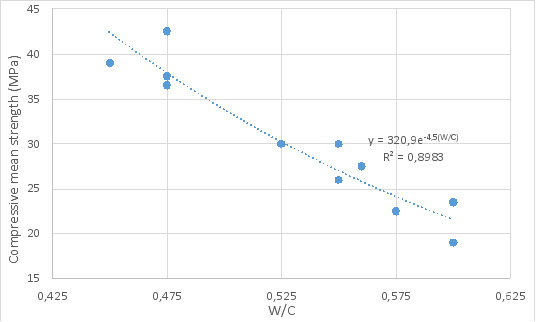




 Share This Article
 Twitter
 Linked In
 Facebook