
Concrete quality management is essential for ensuring the structural safety, durability, and long-term performance of concrete structures. Traditionally, quality assurance (QA) and quality control (QC) of concrete rely on periodic inspections, laboratory testing, and manual documentation. However, these conventional methods often provide delayed feedback and limited insight into in-situ concrete behaviour, particularly for time-sensitive parameters such as compressive strength development and early-age plastic shrinkage cracking. This study aims to examine how Information and Communication Technologies (ICTs) are transforming concrete quality monitoring and management by synthesising existing research on QA/QC practices, assessing technological contributions to monitoring compressive strength and plastic shrinkage, and identifying barriers to ICT adoption in practice. A mixed-methods systematic literature review was conducted using the Preferred Reporting Items for Systematic Reviews and Meta-Analyses (PRISMA) framework to ensure transparency and methodological rigour. A structured search strategy was applied across major scientific databases, guided by predefined inclusion and exclusion criteria. From an initial pool of 2,426 studies retrieved from multiple academic databases, successive filtering based on publication year (2014-2025), subject area, and thematic relevance to concrete quality management reduced the number of eligible studies to 425. Following title, abstract, and full-text screening, 69 articles met the inclusion criteria and were analysed using both bibliometric and content analysis methods to identify key research trends, themes, and developments in concrete quality management. Findings show that IoT-based sensing systems, when integrated with Building Information Modelling (BIM) and Digital Twin (DT) platforms, significantly improve the capacity for real-time monitoring of temperature, humidity, and curing conditions, thereby improving the management of early-age strength development and reducing the risk of cracking. These technologies strengthen QA and QC processes through proactive quality management, early detection of adverse conditions, and enhanced decision-making during construction. Despite these benefits, adoption remains limited due to data reliability issues, system interoperability challenges, skill gaps, organisational readiness, and the absence of standardised regulatory frameworks. The study recommends further validation of ICT tools under real construction conditions, development of standardised sensor calibration and data integration frameworks, and capacity-building initiatives to support broader implementation of ICT-enabled concrete quality monitoring systems.
| Published in | Journal of Civil, Construction and Environmental Engineering (Volume 11, Issue 4) |
| DOI | 10.11648/j.jccee.20261104.14 |
| Page(s) | 185-202 |
| Creative Commons |
This is an Open Access article, distributed under the terms of the Creative Commons Attribution 4.0 International License (http://creativecommons.org/licenses/by/4.0/), which permits unrestricted use, distribution and reproduction in any medium or format, provided the original work is properly cited. |
| Copyright |
Copyright © The Author(s), 2026. Published by Science Publishing Group |
Compressive Strength, Plastic Shrinkage, Building Information Modelling, Concrete Quality Management, Digital Twin, Quality Assurance, Quality Control
Journal | Number of Retrieved Articles |
|---|---|
10th Austroads Bridge Conference | 1 |
Acta IMEKO | 1 |
Advances in Civil Engineering | 1 |
Advances in Geotechnics and Structural Engineering | 1 |
AI in civil engineering | 1 |
AIMS Materials Science | 1 |
Ain Shams Engineering Journal, | 1 |
American Journal of Science, Engineering and Technology | 1 |
Applied Sciences | 2 |
Arabian Journal for Science and Engineering | 1 |
Automation in Construction | 1 |
Buildings | 6 |
Case Studies in Construction Materials | 1 |
Cement and Concrete Composites | 1 |
Civil Eng | 1 |
Concrete international | 1 |
Construction and Building Materials | 3 |
CUNY Academic works. | 1 |
Developments in the Built Environment | 1 |
Digital Twin | 1 |
Discover Civil Engineering | 1 |
Engineering Sciences | 1 |
Eurasian Physical Technical Journal | 1 |
Heliyon. | 1 |
Innovative infrastructure solutions | 1 |
International Journal of Concrete Structures and Materials | 1 |
International Journal of Engineering Research in Africa | 1 |
International Journal of Technical & Scientific Research Engineering | 1 |
Journal of building pathology and rehabilitation | 1 |
Journal of Civil Engineering and Management | 1 |
Journal of Construction Engineering | 1 |
Journal of Engineering and Applied Science | 1 |
Journal of Information Technology in Construction | 1 |
Journal of infrastructure systems | 1 |
Journal of King Saud University - Engineering Sciences | 1 |
Materials | 4 |
Materials and Structures | 1 |
Materials Sciences and Applications | 1 |
Nigerian Journal of Engineering | 1 |
Nordic Concrete Research | 1 |
Open Journal of Civil Engineering | 1 |
Others | 3 |
Proceedings in civil engineering | 1 |
Sensors | 5 |
SSRN Electronic Journal. | 1 |
Structural Health Monitoring | 1 |
Sustainability | 3 |
The Fifteenth International Conference on Construction in the 21st Century | 1 |
UNIZIK Journal of Engineering and Applied Sciences | 1 |
World Journal of Advanced Engineering Technology and Sciences | 1 |
QA Stage | Key Focus Area | Key Author(s) | Main Findings | QA Implication |
|---|---|---|---|---|
Selection of cementitious materials | Cement composition and strength development | [17, 20, 24] | Selection of cementitious materials improves compressive strength and reduces permeability by >50% | Material selection directly enhances durability. |
Water quality verification | Mixing water properties | [18, 25, 26] | Hard/impure water reduces strength; pH, conductivity affect hydration of cement. | Water quality must be controlled as a QA input parameter. |
Fine aggregates selection | Sand grading and impurities | [27-29] | Angularity and silt content significantly affect strength (up to 44% variation). | Strict aggregate quality control is essential in QA. |
Chemical admixtures selection | Workability and durability enhancement. | [26, 30] | Admixtures improve strength but are highly sensitive to mix conditions. | Admixture selection must be context-specific. |
Mix design verification | Trial mixes and calibration. | [31, 32] | Site-specific trial mixes reduce variability. | QA must include pre-production verification. |
Production control | Water-cement ratio and batching accuracy. | [2, 33-35] | Real-time monitoring improves mix consistency. | QA must integrate digital monitoring tools. |
Workmanship | Placement and compaction quality. | [36-38] | Poor vibration causes segregation and strength loss | Controlled workmanship is a key QA factor. |
QC Stage | Key Focus Area | Key Authors | Methods/Tools | Key Findings | QC Implication |
|---|---|---|---|---|---|
Material testing | Pre-production verification | [16-18, 21-23, 32, 39, 40, 43] | Sieve analysis, testing of mixing water and admixtures, trial mixes. | Variability in supplier specifications necessitates routine material testing. | Mandatory pre-testing required. |
Reinforcement & formwork inspection | Pre-placement inspection | [19, 41, 44] | 3D Point Cloud Data Capturing | Automation improves accuracy | Digital inspection reduces human error. |
Placement control | Vibration & compaction monitoring. | [42] | Field monitoring. | Poor vibration increases permeability. | QC must control vibration and compaction parameters. |
Fresh concrete testing | Slump/workability | [52-56] | Slump test, stereovision systems. | Manual slump testing is inconsistent. | Automated slump monitoring improves reliability |
Non-destructive testing (NDT) | Post-placement inspection | [45-51] | Ultrasonic, rebound hammer, thermography, Finite Element Analysis, Image processing | NDT makes early defect detection possible. | Post-placement QC uses non-destructive inspections to detect defects and verify concrete durability and performance. |
Mechanical testing | Strength verification | [20, 57-61] | Compression, tensile, permeability tests | Mechanical testing verifies compressive, tensile, and flexural strength, while additional durability tests assess long-term concrete performance under aggressive conditions. | Mechanical testing verifies structural compliance and assesses the long-term durability performance of concrete. |
Barrier Category | Key Barriers | Authors |
|---|---|---|
Digital Data Collection & Processing | Limited field validation, unreliable sensor data in real conditions, environmental interference, high computational demands, and challenges in real-time data fusion and prediction. | [4, 6, 10, 58, 62, 70, 72]. |
System Integration & Information Flow | Fragmented systems, poor interoperability, inconsistent sensor protocols, weak feedback loops, limited cloud integration into workflows, and data security/cost constraints. | [4, 6, 10, 63, 64, 67, 72]. |
Skill & Organisational Readiness | Limited digital skills, low technical readiness, reliance on manual methods, and insufficient ability to interpret real-time IoT data. | [4, 6, 68, 71, 72] . |
Policy & Regulatory Gaps | Lack of standards, certification systems, governance frameworks, and construction codes for ICT and IoT adoption in construction. | [10-12, 65, 66] . |
Overall Barrier | ICT adoption remains limited due to combined technical, organisational, and regulatory constraints, preventing large-scale and industry - wide adoption. | [4, 6, 10-12, 58, 62, 63, 64, 65, 66, 68, 67, 70, 72] |
ASTM | American Society for Testing and Materials |
BIM | Building Information Modeling |
ICT | Information and Communication Technology |
IoT | Internet of Things |
JSON | JavaScript Object Notation |
MSD | Multi-sensory Devices |
PRISMA | Preferred Reporting Items for Systematic Reviews and Meta-Analyses |
QA | Quality Assurance |
QC | Quality Control |
TCP | Transmission Control Protocol |
| [1] | Andrews - Phaedonos, F. (2017) Ensuring quality and durability in concrete construction for major infrastructure. 10th Austroads Bridge Conference, Melbourne, Australia. |
| [2] | NRMCA.(2022) Quality control guide for ready mixed concrete producers. Alexandria. |
| [3] |
Walters Jr, C. O. (2024) Quality Assurance and Quality Control for Reinforced Concrete Inspections. CUNY Academic works. Available online at:
https://academicworks.cuny.edu/ny_pubs/1147/ (Accessed: 19 May, 2026). |
| [4] | John, S. T., Philip, M. S., Agarwal, S., Sarkar, P. and Davis, R. (2023) IoT-enabled real-time monitoring system for plastic shrinkage of concrete. Journal of infrastructure systems, 29 (3). |
| [5] | Miller, D., Ho, N., Talebian, N and Javanbakht, Z. (2023) Real‐time monitoring of early‐age compressive strength of concrete using an IoT‐enabled monitoring system: an investigative study. Innovative infrastructure solutions, 8(2). |
| [6] | Luo, H., Lin, L., Chen, K., Antwi-Afari, M. F., and Chen, L.(2022) Digital technology for quality management in construction: A review and future research directions. Developments in the Built Environment, 12, 1 - 10. |
| [7] | Huo, H., Ji, Y., Xie, K., and Lu, Y. (2023) Design and Application of Intelligent Construction Quality Inspection System Based on BIM-RFID. Advances in Civil Engineering, 3, 1 - 13. |
| [8] | Iqbal, F., Ahmed, S., Tariq, M. A. B., Waqas, H. A., Al-Ammar, E. A., Wabaidur, S. M., and Fawad, M, (2024) BIM-IoT integration for remote real-time concrete compressive strength monitoring. Ain Shams Engineering Journal, 15(7). |
| [9] | Afzal, M., Li, R. Y. M., Shoaib, M., Ayyub, M., Tagliabue, L., Bilal, M., Ghafoor, H., and Manta, O. (2023) Delving into the Digital Twin developments and applications in the construction industry: A PRISMA Approach. Sustainability, 15, 1 - 37. |
| [10] | Lim, Y. Y., Smith, S. T., Padilla, R. V. and Soh, C. K. (2019) Monitoring of concrete curing using the electromechanical impedance technique: review and path forward. Structural Health Monitoring, 20(2), 1 - 33. |
| [11] | Waqar A., Shafiq N., Othman I., Alsulamy S. H., Alshehri A. M., Falqi I. I.(2024) Deterrents to the IoT for smart buildings and infrastructure development: A partial least square modeling approach. Heliyon. 10; 10(10): e31035. |
| [12] | Baek, S., Lee, K., and Kim, S. (2023) Development of Real-Time Monitoring System Based on IoT Technology for Curing Compound Application Process during Cement Concrete Pavement Construction. Sensors. 23. 8187. |
| [13] | Page MJ, McKenzie JE, Bossuyt PM, Boutron I, Hoffmann TC, Mulrow CD, Shamseer L, Tetzlaff JM, Akl EA, Brennan SE, Chou R, Glanville J, Grimshaw JM, Hróbjartsson A, Lalu MM, Li T, Loder EW, Mayo-Wilson E, McDonald S, McGuinness LA, Stewart LA, Thomas J, Tricco AC, Welch VA, Whiting P, Moher D. (2021) The PRISMA 2020 statement: an updated guideline for reporting systematic reviews. BMJ. 2021 Mar 29; 372: n71. |
| [14] | Chigbu, U. E., Atiku, S. O., and Du Plessis, C. C. (2023). The Science of Literature Reviews: Searching, Identifying, Selecting, and Synthesising. Publications, 11(1), 2. |
| [15] | Shaheen N, Shaheen A, Ramadan A, Hefnawy MT, Ramadan A, Ibrahim IA, Hassanein ME, Ashour ME, Flouty O. Appraising systematic reviews: a comprehensive guide to ensuring validity and reliability. Front Res Metr Anal. 2023 Dec 21; 8: 1268045. |
| [16] | Tara L. C., Fick, G. J., and Innis., A. (2021) Quality Control for Concrete Paving: A Tool for Agency and Industry. National Concrete Pavement Technology Center. Iowa. |
| [17] | Tunc, E. T. (2024) Strength and Durability of Superplasticizer Concrete Based on Different Component Parameters: An Experimental and Statistical Study. Arabian Journal for Science and Engineering, 50, 1649–1664. |
| [18] | Moses, M. K., Nsahlai, N. L., Penka B. J. and Fru C. P. (2024) Analysis of the influence of water qualities on the strength of concrete. Journal of Engineering and Applied Science, 71. |
| [19] | Wu, K., Prieto, S. A., Mengiste, E., and García de Soto, B. (2024) Automated Quality Inspection of Formwork Systems Using 3D Point Cloud Data. Buildings, 14(4), 1177, 1 - 23. |
| [20] | Ivanchev, I. (2022) Investigation with Non-Destructive and Destructive Methods for Assessment of Concrete Compressive Strength. Applied Sciences, 12(23), 12172, 1 - 22. |
| [21] |
TRB. 2018. Glossary of Transportation Construction Quality Assurance Terms. 7th Edition. Transportation Research Circular E-C235. Transportation Research Board, Washington, DC. Available at:
http://onlinepubs.trb.org/onlinepubs/circulars/ec235.pdf (Accessed: 4 January, 2026). |
| [22] | Chu, V. T. H., Bui, V. D., and Nguyen, T. V. (2023) Effect of Combining the Aggregate Grading with Cementitious Composition on Mechanical Properties of Ultra-High Performance Concrete. Buildings, 13(1), 248. |
| [23] | Demissie, B. A., and Werkineh, A. B. (2020) Assessment on the Quality of Concrete Materials Used in Building Construction Projects: A Case Study in Assosa University. American Journal of Science, Engineering and Technology, 5(1), 25-32. |
| [24] | Abutaqa, A., Mohsen, M., Aburumman, M., Senouci, A., Taha, R., Maherzi, W., and Qtiashat, D. (2024). Eco-Sustainable Cement: Natural Volcanic Tuffs’ Impact on Concrete Strength and Durability. Buildings. 2024; 14(9): 2902. |
| [25] | Awoyera, P. O., Awobayikun, O., Gobinath, R., Ugwu, E. I. (2020) Rheological, Mineralogical and Strength Variability of Concrete due to Construction Water Impurities. International Journal of Engineering Research in Africa, 48, 78 - 91 |
| [26] | Ammar, M. A., Amin Chegenizadeh, A., Budihardjo, M. A., and Nikraz, H. (2024) The Effects of Crystalline Admixtures on Concrete Permeability and Compressive Strength: A Review. Buildings, 14(9), 1 - 36. |
| [27] | Wu, J., Shen, W., Zhao, D., Wu, M., Yu, Z., Zhao, Z., Li, Z., Wu, D., and Sun, J. (2022) Particle Characterization of Manufactured Sand and Its Influence on Concrete Properties. Materials, 15(13), 4593, 1 - 20. |
| [28] | Kandiyoh, G. E., Sengkey, S., Slat, V and Peginusa, S. (2023). Analysis of 25 MPa quality concrete compressive strength with variations in sand zones. World Journal of Advanced Engineering Technology and Sciences, 10 (2), 82 - 87. |
| [29] | Ngugi, H. N., Mutuku, R. N., and Gariy, Z. A. (2014) Effects of Sand Quality on Compressive Strength of Concrete: A Case of Nairobi County and Its Environs, Kenya. Open Journal of Civil Engineering, 4 (3), 255-273., |
| [30] | Wang, X. H., Fang, Z. C., and Zheng, L. (2024). Effect of dose and types of the water reducing admixtures and superplasticizers on concrete strength and durability behaviour: a review. Journal of Civil Engineering and Management, 30(1), 33-48. |
| [31] | Yahya I. A., Abdulhameed A. U., Tumba M. L., and Ayuba T. B.. (2025). Investigating mix ratios by ume batching for performance specification of in-situ concrete works. UNIZIK Journal of Engineering and Applied Sciences, 4(1)., 1486 - 1492. |
| [32] | Basu, D., Mushtaq, S. M., Sharma, S., Tripathi., S. (2024) Enhancing Quality Control in the Mix Design of High-Strength Concrete Using a Capacity-Based Approach. International Journal of Concrete Structures and Materials 18, 1 - 19. |
| [33] | Olugboyega, O., Ejohwomu, O., Omopariola, E. D., and Omoregie, A. (2023) Sustainable Ready-Mixed Concrete (RMC) Production: A Case Study of Five RMC Plants in Nigeria. Sustainability, 15(10), 8169. |
| [34] | Robertson, J. B., and Ley, M. T. (2020) Determining the water to cement ratio of fresh concrete by evaporation. Construction and Building Materials, 242. |
| [35] | Park, J., Song, H., and Hajin Choi, H., (2022) Estimation of water-to-cement ratio in cementitious materials using electrochemical impedance spectroscopy and artificial neural networks. Construction and Building Materials, 350. |
| [36] | Chai, M., Hu, C., and Cheng, M. (2023). Study on the Effect of Vibrating Process on the Compactness of Slipform Concrete. Applied Sciences, 13(14), 8421, 1 - 17. |
| [37] | Valente, A. M., Gonçalves, A., Balayssac, Balayssac, J., Yssorche-Cubaynes, M., and Costa, A., (2023) On the role of compaction in disputes over the quality of the supplied concrete. Materials and Structures, 56, 1 - 17. |
| [38] | Widayanto, E., Soehardjono, A., Wisnumurti, W., and Zacoeb, A. (2020) A The effect of vibropressing compaction process on the compressive strength based concrete paving blocks. AIMS Materials Science, 7(3), 203-216. |
| [39] | Idiata, D. J., Ngozi, K. O., and Osagie, E. K (2024) Evaluation of the Compressive Strength of Locally Available Fine Aggregates Around Usen Locality. Nigerian Journal of Engineering, 31(2), 80 - 90. |
| [40] | Mohe, N. S., Shewalul, Y. Q., and Agon, E. C. (2022) Experimental investigation on mechanical properties of concrete using different sources of water for mixing and curing concrete. Case Studies in Construction Materials, 16, 1 - 14. |
| [41] | Yuan, X., Zhengxuan, L., Xiaochen, Z., Lina, L., Shun, L., Shuai, Z., and Zhang, G. (2025) China Construction 4.0: A Smart Framework for High-Quality, High-Efficiency, and Sustainable Building Development. SSRN Electronic Journal. |
| [42] | Gao, X., Zhang, J., and Su, Y. (2019) Influence of vibration-induced segregation on mechanical property and chloride ion permeability of concrete with variable rheological performance. Construction and Building Materials, 194, 24-31. |
| [43] | Ferraris, C. F., Billberg, P., Ferron, R., Feys, D., Hu, J., Kawashima, S., Koehler, E., Sonebi, M., Tanesi, J and Tregge, N. (2017) Role of Rheology in Achieving Successful Concrete Performance. Concrete international. |
| [44] | Calcagni, M. T., Salerno, G., Martarelli, M., Schlenger, J. U., Hassan, T., Heinikainen, R., Borrmann, A., Fies, B., and. Revel, G. M (2025) Concrete defect identification and measurement in buildings. Acta IMEKO, 14(3), 1-11. |
| [45] | Zhao G., Zhang D., Zhang L., and Wang B. (2018) Detection of Defects in Reinforced Concrete Structures Using Ultrasonic Nondestructive Evaluation with Piezoceramic Transducers and the Time Reversal Method. Sensors (Basel), 18(12): 4176, 1 - 14. |
| [46] | Kim, J., Cho, Y., Lee, J., and Kim, Y. H. (2022) Defect Detection and Characterization in Concrete Based on FEM and Ultrasonic Techniques. Materials, 15(22), 8160, 1 - 19. |
| [47] | Yang, F., Zeng, X., Xia, Q., Yang, L., Cai, H., and Cheng, C. (2025) Early Detection and Analysis of Cavity Defects in Concrete Columns Based on Infrared Thermography and Finite Element Analysis. Materials, 18(7), 1686, 1 - 26. |
| [48] | Shalaby, Y. M., Badawy, M., Ebrahim, G. A. and Abdelalim, A. M. (2024) Condition assessment of concrete structures using automated crack detection method for different concrete surface types based on image processing. Discover Civil Engineering, 1. |
| [49] | Karla, H., Danner, T., and Geiker, M. R. (2020) Non-destructive Test Methods for Corrosion Detection in Reinforced Concrete Structures. Nordic Concrete Research, 62(1), |
| [50] | Pfändler, P., Bodie, K., Crotta, G., Pantic, M., Siegwart, R., Angst, U. (2024) Non-destructive corrosion inspection of reinforced concrete structures using an autonomous flying robot. Automation in Construction, 158, 1 - 18. |
| [51] | Jonbi. (2022) Repair Methods and Applications to overcome Honeycomb, Cold Joint and Cracks in Concrete. International Journal of Technical & Scientific Research Engineering, 5(5), 20 - 26. |
| [52] | Hoang, N. and Pham, A. (2016) Estimating Concrete Workability Based on Slump Test with Least Squares Support Vector Regression. Journal of Construction Engineering, 1 - 8, |
| [53] | Ivanov, G., Hrischev, L., and Rostovsky, I. (2025). Study of the Consistency of Fresh Concrete by Slump Test and Flow Table Test – Focus on Lateral Pressure on Formwork. Engineering Sciences, 61(4). 27-42. |
| [54] | Kim, J. H., and Park, M. (2018). Visualization of Concrete Slump Flow Using the Kinect Sensor. Sensors, 18(3), 1 - 16. |
| [55] | Ojala, T., and Punkki, J. (2024). Estimating the Workability of Concrete with a Stereovision Camera during Mixing. Sensors, 24(14), Article 4472. |
| [56] | Yucel, B., Azhar, S., Anwar, R. M. I., and Ahmad, W. (2025). AI-Driven Concrete Testing: Designing a Deep Learning Model for Accurate Workability (Slump) Assessment. Conference: The Fifteenth International Conference on Construction in the 21st Century (CITC-15) At: Rabat, Morocco. |
| [57] | Miano, A., Ebrahimian, H., Jalayer, F., and Prota, A. (2023). Reliability Estimation of the Compressive Concrete Strength Based on Non-Destructive Tests. Sustainability, 15(19), 14644, 1 - 19. |
| [58] | Akinpelu, M., Odeyemi, S. O, Olafusi, O. S., and Muhammed, F. Z.(2019) Evaluation of splitting tensile and compressive strength relationship of self-compacting concrete. Journal of King Saud University - Engineering Sciences, 31(1), 19-25. |
| [59] | Nilimaa, J., and Nilforoush, R. (2023) A Direct Tensile Strength Testing Method for Concrete from Existing Structures. Civil Eng, 4(1), 333-344. |
| [60] | Bediako, M. (2024) Superplasticized vs. Conventional Concrete: A Comparative Review. Materials Sciences and Applications, 15, 271-284. |
| [61] | Cheng, S., Shen, L., Chen, W., Zhu, H., You, P., and Chen, L. (2024) Mechanical Properties and Chloride Penetration Resistance of Concrete Combined with Ground Granulate Blast Furnace Slag and Macro Synthetic Fiber. Materials, 17(19), 4735. |
| [62] | Kim, S., Jung, D., Kim, J., and Mu, J. (2024) Study on Early Age Concrete’s Compressive Strengths in Unmanaged Curing Condition Using IoT-BasedMaturity Monitoring. Buildings, 14(3) 1 - 15. |
| [63] | Mechtcherine, V., Buswell, R., Kloft, H., Bos, F. P., Hack, N., Wolfs, R., Sanjayan, J., Nematollahi, B., Ivaniuk, E., Neef, T. (2021) Integrating reinforcement in digital fabrication with concrete: A review and classification framework. Cement and Concrete Composites, 119. |
| [64] | Nandhini, K. and Karthikeyan, J. (2021) The early‑age prediction of concrete strength using maturity models: a review. Journal of building pathology and rehabilitation, 6(1), 1 - 10. |
| [65] | Arabshahi M., Wang D., Sun J., Rahnamayiezekavat P., Tang W., Wang Y., and Wang X. (2021) Review on Sensing Technology Adoption in the Construction Industry. Sensors (Basel). Dec 12; 21(24): 8307. |
| [66] | Su, S., Zhong, R. Y. and Jiang, Y. (2022) Digital twin and its applications in the construction industry: A state-of-art systematic review. Digital Twin, 2(15), 1 - 13. |
| [67] | John, T. S., Philip, M., Singhal, A., Sarkar, P., and Davis, R. (2021) Development of Real-Time Monitoring System for Early Age Cementitious Materials. Advances in Geotechnics and Structural Engineering, 143, 461 - 469. |
| [68] | Jahangir, M. F., Schultz, C. P. L., and Kamari, A. (2024) A Review Of Drivers And Barriers Of Digital Twin Adoption In Building Project Development Processes. Journal of Information Technology in Construction, 29, 141 - 178. |
| [69] | Utepov, Y., Tolkynbayev, T. A., Aniskin, A., Akhazhanov, S., Zharassov, S., Tulebekova, A. S., and Akishev, M. (2022) Assembling a multisensory device for monitoring and assessing concrete curing conditions. Eurasian Physical Technical Journal, 19(1), 90 - 98. |
| [70] | Haist, M., Schack, T., Coenen, M., Vogel, C., Beyer, D., and Heipke, C. (2023) Concrete 4.0 ‐ Sustainable concrete construction with digital quality control. Proceedings in civil engineering, 6, 1555 - 1562. |
| [71] | Pittri, H., Godawatte, G. A. G. R., Esangbedo, O. P., Antwi-Afari, P., and Bao, Z. (2025). Exploring Barriers to the Adoption of Digital Technologies for Circular Economy Practices in the Construction Industry in Developing Countries: A Case of Ghana. Buildings, 15(7), 1090. |
| [72] | Lee, S., and Skibniewski, M. J. (2022) Automated monitoring and warning solution for concrete placement and vibration workmanship quality issues. AI in civil engineering, 1(1). |
| [73] | Toyin, J., and Sattineni, A. (2025) Innovative Approaches to QA/QC in Construction: Current State. CIB Conferences. 1. |
| [74] | Güray, T. (2025) Digitalisation of Quality Management Systems in Construction Industry: A Conceptual Exploration. Journal of International Architectural Sciences, 2(2), 128 - 135. |
| [75] | Souza, L. A. L. d., Melo, F. J. C. d., Sobral, E. F. M., Guimarães Junior, D. S., Cruz, T. V. d. Q. F. d., Gusmão, A. D., Gusmão, C., and Lafayette, K. P. V. (2025) Barriers and Drivers in the Construction Industry: Impacts of Industry 4.0 Enabling Technologies on Sustainability 4.0. Buildings, 15(20), 3760. |
| [76] | Kumar, V., Feng, Z., Paes, D., Lovreglio, R. (2025) What are the Government’s Efforts to Transform the Construction Industry? Comparing the Digital Transformation Roadmaps from the UK, Singapore, and New Zealand. In: Jelodar, M. B., Lovreglio, R., Feng, Z., Paes, D., Kumar, V., Siriwardana, C. (eds) Creating Capacity and Capability: Embracing Advanced Technologies and Innovations for Sustainable Future in Building Education and Practice. AUBEA 2023. Lecture Notes in Civil Engineering, 564. Springer, Singapore. |
APA Style
Bweupe, A. S., Mwiya, B., Hamunzala, B. (2026). Digital Transformation of Concrete Quality Management: A Systematic Review of Advances and Challenges. Journal of Civil, Construction and Environmental Engineering, 11(4), 185-202. https://doi.org/10.11648/j.jccee.20261104.14
ACS Style
Bweupe, A. S.; Mwiya, B.; Hamunzala, B. Digital Transformation of Concrete Quality Management: A Systematic Review of Advances and Challenges. J. Civ. Constr. Environ. Eng. 2026, 11(4), 185-202. doi: 10.11648/j.jccee.20261104.14
@article{10.11648/j.jccee.20261104.14,
  author = {Arthur Siwilanji Bweupe and Balimu Mwiya and Bennie Hamunzala},
  title = {Digital Transformation of Concrete Quality Management:
A Systematic Review of Advances and Challenges},
  journal = {Journal of Civil, Construction and Environmental Engineering},
  volume = {11},
  number = {4},
  pages = {185-202},
  doi = {10.11648/j.jccee.20261104.14},
  url = {https://doi.org/10.11648/j.jccee.20261104.14},
  eprint = {https://article.sciencepublishinggroup.com/pdf/10.11648.j.jccee.20261104.14},
  abstract = {Concrete quality management is essential for ensuring the structural safety, durability, and long-term performance of concrete structures. Traditionally, quality assurance (QA) and quality control (QC) of concrete rely on periodic inspections, laboratory testing, and manual documentation. However, these conventional methods often provide delayed feedback and limited insight into in-situ concrete behaviour, particularly for time-sensitive parameters such as compressive strength development and early-age plastic shrinkage cracking. This study aims to examine how Information and Communication Technologies (ICTs) are transforming concrete quality monitoring and management by synthesising existing research on QA/QC practices, assessing technological contributions to monitoring compressive strength and plastic shrinkage, and identifying barriers to ICT adoption in practice. A mixed-methods systematic literature review was conducted using the Preferred Reporting Items for Systematic Reviews and Meta-Analyses (PRISMA) framework to ensure transparency and methodological rigour. A structured search strategy was applied across major scientific databases, guided by predefined inclusion and exclusion criteria. From an initial pool of 2,426 studies retrieved from multiple academic databases, successive filtering based on publication year (2014-2025), subject area, and thematic relevance to concrete quality management reduced the number of eligible studies to 425. Following title, abstract, and full-text screening, 69 articles met the inclusion criteria and were analysed using both bibliometric and content analysis methods to identify key research trends, themes, and developments in concrete quality management. Findings show that IoT-based sensing systems, when integrated with Building Information Modelling (BIM) and Digital Twin (DT) platforms, significantly improve the capacity for real-time monitoring of temperature, humidity, and curing conditions, thereby improving the management of early-age strength development and reducing the risk of cracking. These technologies strengthen QA and QC processes through proactive quality management, early detection of adverse conditions, and enhanced decision-making during construction. Despite these benefits, adoption remains limited due to data reliability issues, system interoperability challenges, skill gaps, organisational readiness, and the absence of standardised regulatory frameworks. The study recommends further validation of ICT tools under real construction conditions, development of standardised sensor calibration and data integration frameworks, and capacity-building initiatives to support broader implementation of ICT-enabled concrete quality monitoring systems.},
 year = {2026}
}
TY  - JOUR
T1  - Digital Transformation of Concrete Quality Management:
A Systematic Review of Advances and Challenges
AU  - Arthur Siwilanji Bweupe
AU  - Balimu Mwiya
AU  - Bennie Hamunzala
Y1  - 2026/07/17
PY  - 2026
N1  - https://doi.org/10.11648/j.jccee.20261104.14
DO  - 10.11648/j.jccee.20261104.14
T2  - Journal of Civil, Construction and Environmental Engineering
JF  - Journal of Civil, Construction and Environmental Engineering
JO  - Journal of Civil, Construction and Environmental Engineering
SP  - 185
EP  - 202
PB  - Science Publishing Group
SN  - 2637-3890
UR  - https://doi.org/10.11648/j.jccee.20261104.14
AB  - Concrete quality management is essential for ensuring the structural safety, durability, and long-term performance of concrete structures. Traditionally, quality assurance (QA) and quality control (QC) of concrete rely on periodic inspections, laboratory testing, and manual documentation. However, these conventional methods often provide delayed feedback and limited insight into in-situ concrete behaviour, particularly for time-sensitive parameters such as compressive strength development and early-age plastic shrinkage cracking. This study aims to examine how Information and Communication Technologies (ICTs) are transforming concrete quality monitoring and management by synthesising existing research on QA/QC practices, assessing technological contributions to monitoring compressive strength and plastic shrinkage, and identifying barriers to ICT adoption in practice. A mixed-methods systematic literature review was conducted using the Preferred Reporting Items for Systematic Reviews and Meta-Analyses (PRISMA) framework to ensure transparency and methodological rigour. A structured search strategy was applied across major scientific databases, guided by predefined inclusion and exclusion criteria. From an initial pool of 2,426 studies retrieved from multiple academic databases, successive filtering based on publication year (2014-2025), subject area, and thematic relevance to concrete quality management reduced the number of eligible studies to 425. Following title, abstract, and full-text screening, 69 articles met the inclusion criteria and were analysed using both bibliometric and content analysis methods to identify key research trends, themes, and developments in concrete quality management. Findings show that IoT-based sensing systems, when integrated with Building Information Modelling (BIM) and Digital Twin (DT) platforms, significantly improve the capacity for real-time monitoring of temperature, humidity, and curing conditions, thereby improving the management of early-age strength development and reducing the risk of cracking. These technologies strengthen QA and QC processes through proactive quality management, early detection of adverse conditions, and enhanced decision-making during construction. Despite these benefits, adoption remains limited due to data reliability issues, system interoperability challenges, skill gaps, organisational readiness, and the absence of standardised regulatory frameworks. The study recommends further validation of ICT tools under real construction conditions, development of standardised sensor calibration and data integration frameworks, and capacity-building initiatives to support broader implementation of ICT-enabled concrete quality monitoring systems.
VL  - 11
IS  - 4
ER  -
Department of Civil and Environmental Engineering, University of Zambia, Lusaka, Zambia
Biography: Arthur Siwilanji Bweupe is a Civil/Structural Engineer and PhD candidate in Construction Management at the University of Zambia, where he also obtained his Master of Engineering (MEng) in Construction Management in 2024. He earned his Bachelor of Engineering (BEng) in Civil Engineering from Belgorod State Technological University named after V.G. Shukhov, Russia, in 2018. He currently serves as Civil Engineer – Quality Control, heading the Quality Control Department for a civil engineering contractor operating in the mining sector across the Katanga region, in the Democratic Republic of Congo. His research explores real-time digital monitoring of concrete quality, focusing on compressive strength and plastic shrinkage cracking. It addresses challenges in ICT adoption, applies machine learning for predictive analysis, and evaluates the impact of these technologies on quality management.
Research Fields: Concrete Technology, Concrete Quality, Construction Quality, Building Information Modelling, Information Communication Technology in Construction, Construction Engineering

Department of Civil and Environmental Engineering, University of Zambia, Lusaka, Zambia
Biography: Balimu Mwiya is a Senior Lecturer in the School of Engineering at the University of Zambia where she obtained her Doctor of Philosophy (PhD) and Master of Engineering (MEng) in Construction Management. She is also a holder of the Bachelor of Science (BSc) in Building from the Copperbelt University. She also holds an Associate Degree in Software Engineering from the University of Advancing Computer Technology, Tempe, Arizona, USA. Dr. Mwiya is a Registered Quantity Surveyor and a member of the Surveyors Institute of Zambia, as well as a Registered Engineer and a Fellow of the Engineering Institution of Zambia. Her research interests span construction operations and productivity, cost engineering, and technology integration in construction.
Research Fields: Cost Engineering, Building Science, Construction Operations and Productivity, Building Information Modelling, Quality Management

Department of Civil and Environmental Engineering, University of Zambia, Lusaka, Zambia;Department of Engineering, Mulungushi University, Kabwe, Zambia
Biography: Bennie Hamunzala is a Lecturer at Mulungushi University, Zambia, and a holder of a Doctor of Philosophy (PhD) in Civil Engineering from Hokkaido University, Japan, where his research focused on developing methods to estimate the construction years of road bridges using remote sensing techniques to support infrastructure management and deterioration assessment. He earned his Master of Science (MSc) in Civil and Architectural Engineering from KTH Royal Institute of Technology, Sweden, specializing in Structural and Bridge Engineering, and a Bachelor of Engineering (BEng) in Civil and Environmental Engineering from the University of Zambia. Dr. Hamunzala’s research interests include infrastructure design and management, structural and bridge engineering, sustainable construction solutions, and the application of advanced technologies such as remote sensing for infrastructure assessment and decision-making.
Research Fields: Bridge Engineering, Structural Engineering, Construction Engineering, Concrete Structures, Infrastructure design and management

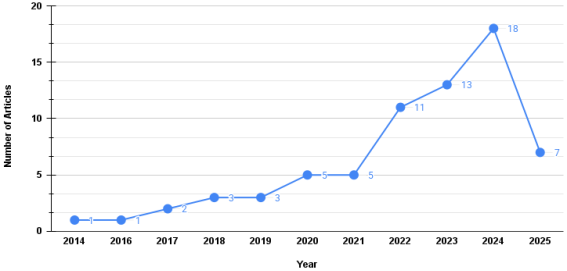
Figure 1. Distribution of retrieved articles from 2014 to 2025.
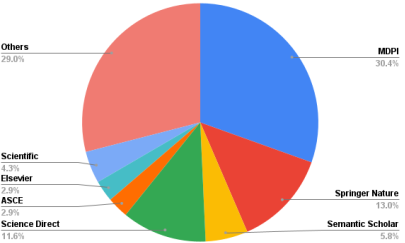
Figure 2. Distribution of Search Databases/publishers.
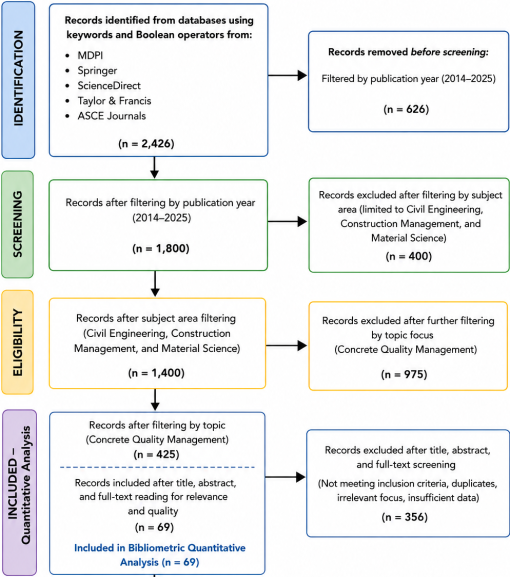
Figure 3. PRISMA flow diagram for bibliometric quantitative analysis.
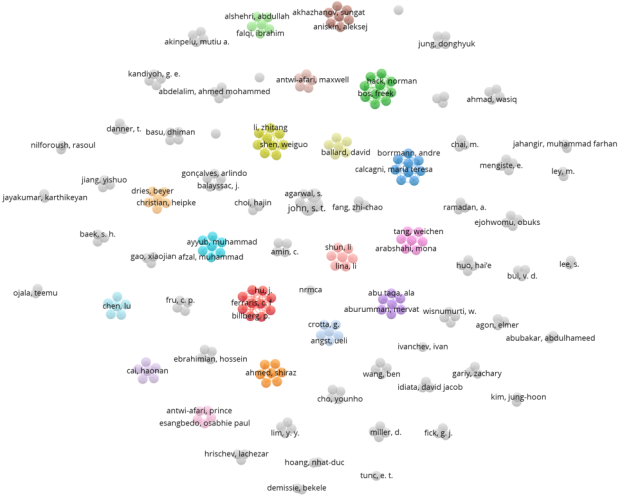
Figure 4. Network and clusters of co-authors of concrete quality management research.
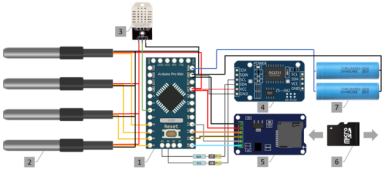
Figure 5. Architecture of proposed MSD.
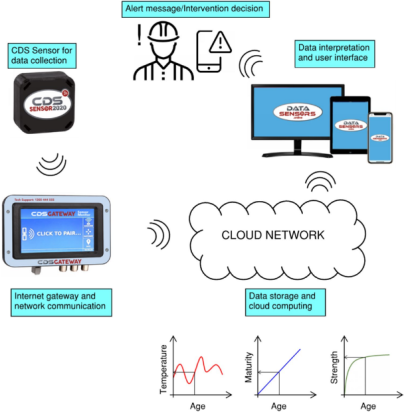
Figure 6. IoT framework of the developed real-time monitoring system.
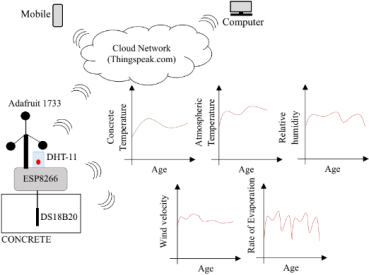
Figure 7. Schematic representation of proposed System 1.
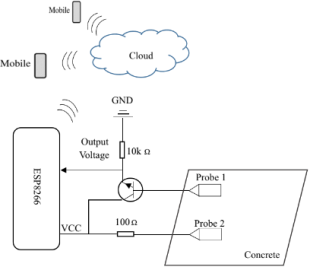
Figure 8. Schematic representation of proposed System 2.

Information



 Share This Article
 Twitter
 Linked In
 Facebook
 Copy
Copy Download