Cassava (Manihot esculenta Crantz) is a vital tropical root crop that underpins food security, livelihoods, and industrial development for over 800 million people globally, particularly in sub-Saharan Africa. Its resilience to drought and adaptability to marginal environments make it a strategic crop under climate change. However, cassava improvement remains constrained by biological and genetic complexities, including high heterozygosity, clonal propagation, long breeding cycles, and strong genotype × environment (G×E) interactions. Conventional breeding approaches, such as controlled hybridization and phenotypic selection, have historically contributed to yield improvement and disease resistance but are limited by low selection accuracy for polygenic traits and slow genetic gain. Recent advances in molecular genetics and genomics have transformed cassava breeding through the adoption of marker-assisted selection (MAS), genomic selection (GS), and genome-wide association studies (GWAS). These approaches enable the identification of quantitative trait loci (QTLs), prediction of breeding values, and dissection of complex trait architecture, thereby enhancing selection efficiency and accelerating breeding cycles. Statistical tools such as genomic best linear unbiased prediction (G-BLUP), additive main effects and multiplicative interaction (AMMI), and genotype plus genotype-by-environment interaction (GGE) biplot analysis have further improved genotype evaluation and stability analysis across diverse environments. Recent studies demonstrate that genomic selection can reduce cassava breeding cycles from approximately five years to two years while increasing genetic gain. Emerging technologies, including genome editing, high-throughput phenotyping, and artificial intelligence, offer additional opportunities for precision breeding. This review critically synthesizes conventional and modern cassava breeding strategies, highlighting their strengths, limitations, and integration into efficient breeding pipelines. The paper emphasizes the need for data-driven, multi-disciplinary approaches to develop climate-resilient, high-yielding, and quality cassava varieties for sustainable agricultural systems.
This is an Open Access article, distributed under the terms of the Creative Commons Attribution 4.0 International License (http://creativecommons.org/licenses/by/4.0/), which permits unrestricted use, distribution and reproduction in any medium or format, provided the original work is properly cited.
Cassava (Manihot esculenta Crantz) is a major staple crop in tropical and subtropical regions, serving as a primary source of calories for millions of people worldwide. It is estimated that cassava supports the livelihoods of over 800 million people globally, making it a cornerstone of food security in sub-Saharan Africa, Latin America, and parts of Asia
[1]
Ceballos, H., Pérez, J. C., Barandica, O. J., Lenis, J. I., Morante, N., Calle, F., & Hershey, C. H. (2021). Cassava breeding: Opportunities and challenges. Plant Molecular Biology, 105(1–2), 1–16.
Nassar NMA, Ortiz R. Cassava improvement: challenges and impacts. J Agric Sci. 2020; 158: 1–12.
[1, 2]
. Beyond subsistence consumption, cassava has a growing industrial significance, being utilized in starch production, bioethanol, animal feed, and other agro-industrial applications, which enhances its economic value and contributes to local and regional development
[1]
Ceballos, H., Pérez, J. C., Barandica, O. J., Lenis, J. I., Morante, N., Calle, F., & Hershey, C. H. (2021). Cassava breeding: Opportunities and challenges. Plant Molecular Biology, 105(1–2), 1–16.
. One of cassava’s major advantages is its remarkable adaptability to diverse agroecological conditions. The crop can tolerate prolonged drought, thrive in nutrient-poor soils, and remain in the ground for extended periods without significant yield reduction, providing flexibility in harvesting
[1]
Ceballos, H., Pérez, J. C., Barandica, O. J., Lenis, J. I., Morante, N., Calle, F., & Hershey, C. H. (2021). Cassava breeding: Opportunities and challenges. Plant Molecular Biology, 105(1–2), 1–16.
Okeke UG, et al. Advances in genetic analysis and breeding of cassava (Manihot esculenta Crantz): a review. Plants. 2024; 13: 1–25.
[1, 4]
. This resilience under climate variability makes cassava an essential component of climate change adaptation strategies, particularly in regions prone to erratic rainfall and marginal soils
[5]
Burns A, Gleadow R, Cliff J, Zacarias A, Cavagnaro T. Cassava: the drought, war and famine crop in a changing world. Global Food Security. 2020; 26: 100400.
[5]
. Despite these advantages, cassava productivity in many parts of Africa remains low due to biotic and abiotic stresses, coupled with limitations in breeding efficiency and the slow adoption of improved varieties
[6]
Rabbi IY, Udoh LI, Wolfe M, Parkes E, Gedil M, Dixon A, et al. Genome-enabled prediction for cassava improvement. Front Plant Sci. 2022; 13: 1–14.
[6]
. Among the major biotic constraints, cassava mosaic disease (CMD) and cassava brown streak disease (CBSD) are the most devastating, causing severe yield losses and economic impacts
[7]
Kayondo SI, Pino Del Carpio D, Lozano R, Ozimati A, Wolfe M, Baguma Y, et al. Genetic architecture of cassava mosaic disease resistance. Plant Dis. 2023; 107: 1–10.
[8]
Wolfe MD, Del Carpio DP, Alabi O, Ezenwaka LC, Ikeogu UN, Kayondo SI, et al. Prospects for genomic selection in cassava breeding. Crop Sci. 2023; 63: 1–15.
[7, 8]
. In addition, post-harvest physiological deterioration (PPD) significantly reduces the shelf life and marketability of cassava roots, often starting within 24–72 hours after harvesting due to oxidative processes and enzymatic reactions
[9]
Zidenga T, Leyva-Guerrero E, Moon H, Siritunga D, Sayre R. Extending cassava root shelf life via reduction of reactive oxygen species production. Plant Physiol. 2021; 185: 1–13.
[9]
. These challenges underscore the need for continuous genetic improvement to enhance yield stability, disease resistance, and quality attributes.
Cassava breeding is inherently complex due to biological and genetic factors. The crop is highly heterozygous, with individual plants carrying a high degree of genetic variation. While this genetic diversity is beneficial for adaptation, it complicates breeding efforts because desirable traits are not easily fixed through selection
[1]
Ceballos, H., Pérez, J. C., Barandica, O. J., Lenis, J. I., Morante, N., Calle, F., & Hershey, C. H. (2021). Cassava breeding: Opportunities and challenges. Plant Molecular Biology, 105(1–2), 1–16.
Rabbi IY, Udoh LI, Wolfe M, Parkes E, Gedil M, Dixon A, et al. Genome-enabled prediction for cassava improvement. Front Plant Sci. 2022; 13: 1–14.
[1, 6]
. Additionally, cassava is predominantly propagated vegetatively through stem cuttings, which limits recombination and slows the rate of genetic progress. Breeding cycles are relatively long, often taking four to six years or more to develop and release improved varieties
[4]
Okeke UG, et al. Advances in genetic analysis and breeding of cassava (Manihot esculenta Crantz): a review. Plants. 2024; 13: 1–25.
[10]
Sampaio Filho JD, et al. Genetic parameters and prediction of genotypic values for postharvest physiological deterioration tolerance and root traits in cassava. Euphytica. 2024; 220: 1–15.
[4, 10]
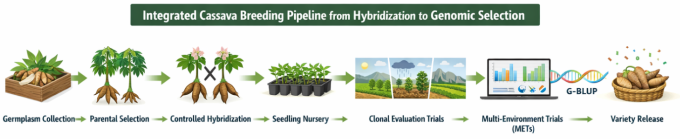
. Conventional cassava breeding has traditionally relied on controlled hybridization followed by phenotypic selection. This involves crossing selected parental genotypes to generate segregating populations, which are then evaluated across multiple stages, including seedling nurseries, clonal evaluation trials, and advanced yield trials
[1]
Ceballos, H., Pérez, J. C., Barandica, O. J., Lenis, J. I., Morante, N., Calle, F., & Hershey, C. H. (2021). Cassava breeding: Opportunities and challenges. Plant Molecular Biology, 105(1–2), 1–16.
. While effective for improving traits controlled by major genes, conventional breeding is less efficient for complex, polygenic traits such as yield, drought tolerance, and quality characteristics, which involve multiple small-effect genes
[10]
Sampaio Filho JD, et al. Genetic parameters and prediction of genotypic values for postharvest physiological deterioration tolerance and root traits in cassava. Euphytica. 2024; 220: 1–15.
[10]
. A major limitation of conventional phenotypic selection is the influence of environmental variability on trait expression. Genotype × environment (G×E) interactions can significantly affect cassava performance, often complicating the identification of superior genotypes
[11]
Amelework B, Shimelis H, Tongoona P, Laing M. Genotype × environment interaction and yield stability analysis in cassava. Agronomy. 2023; 13: 1–18.
[11]
. Studies have shown that G×E effects can account for a substantial proportion of phenotypic variation, sometimes exceeding the contribution of genotype alone
[10]
Sampaio Filho JD, et al. Genetic parameters and prediction of genotypic values for postharvest physiological deterioration tolerance and root traits in cassava. Euphytica. 2024; 220: 1–15.
[11]
Amelework B, Shimelis H, Tongoona P, Laing M. Genotype × environment interaction and yield stability analysis in cassava. Agronomy. 2023; 13: 1–18.
[10, 11]
. Consequently, reliance on single-environment trials is insufficient, necessitating multi-environment testing to accurately identify stable and high-performing genotypes. To overcome the limitations of conventional breeding, molecular breeding tools have been increasingly adopted. Marker-assisted selection (MAS) allows breeders to select traits using molecular markers linked to specific genes or quantitative trait loci (QTLs) and has been successfully applied to improve CMD resistance
[7]
Kayondo SI, Pino Del Carpio D, Lozano R, Ozimati A, Wolfe M, Baguma Y, et al. Genetic architecture of cassava mosaic disease resistance. Plant Dis. 2023; 107: 1–10.
[7]
. However, MAS is less effective for complex traits controlled by many small-effect genes.
Genomic selection (GS) represents a significant advancement, allowing the prediction of breeding values based on genome-wide marker data
[4]
Okeke UG, et al. Advances in genetic analysis and breeding of cassava (Manihot esculenta Crantz): a review. Plants. 2024; 13: 1–25.
[8]
Wolfe MD, Del Carpio DP, Alabi O, Ezenwaka LC, Ikeogu UN, Kayondo SI, et al. Prospects for genomic selection in cassava breeding. Crop Sci. 2023; 63: 1–15.
[4, 8]
. Unlike MAS, which targets a limited number of loci, GS incorporates thousands of markers across the genome, capturing cumulative effects of small-effect genes. Recent studies demonstrate that GS can accelerate cassava breeding by shortening cycle times and increasing genetic gain, particularly for complex traits such as yield and dry matter content
[6]
Rabbi IY, Udoh LI, Wolfe M, Parkes E, Gedil M, Dixon A, et al. Genome-enabled prediction for cassava improvement. Front Plant Sci. 2022; 13: 1–14.
[8]
Wolfe MD, Del Carpio DP, Alabi O, Ezenwaka LC, Ikeogu UN, Kayondo SI, et al. Prospects for genomic selection in cassava breeding. Crop Sci. 2023; 63: 1–15.
[6, 8]
. In addition, genome-wide association studies (GWAS) provide critical insights into the genetic architecture of complex traits by identifying marker–trait associations across diverse populations
[12]
Aghogho CI, et al. Genome-wide association studies and trait mapping in cassava. BMC Genomics. 2024; 25: 1–16.
[12]
. These findings support the development of molecular markers for MAS and GS and guide breeding decisions by uncovering candidate genes controlling key agronomic traits. Integration of conventional and modern breeding approaches is essential for maximizing genetic gain in cassava. Conventional breeding continues to provide the foundational genetic diversity needed for selection, while modern genomic tools enhance selection efficiency and precision. Statistical models such as genomic best linear unbiased prediction (G-BLUP), additive main effects and multiplicative interaction (AMMI), and genotype plus genotype × environment (GGE) biplot analysis are critical for analyzing breeding data and guiding selection decisions in multi-environment trials
[4]
Okeke UG, et al. Advances in genetic analysis and breeding of cassava (Manihot esculenta Crantz): a review. Plants. 2024; 13: 1–25.
[11]
Amelework B, Shimelis H, Tongoona P, Laing M. Genotype × environment interaction and yield stability analysis in cassava. Agronomy. 2023; 13: 1–18.
[4, 11]
. This review provides a comprehensive synthesis of conventional and modern cassava breeding strategies, emphasizing their integration into efficient pipelines. By combining insights from genomics, quantitative genetics, and statistical modeling, it highlights advances that can accelerate cassava improvement and enhance global food security.
2. Genetic Basis of Cassava Breeding
Understanding the genetic architecture of cassava (Manihot esculenta Crantz) is fundamental to enhancing breeding efficiency and achieving sustainable genetic gains. Cassava exhibits a highly heterozygous genome, which contributes to its remarkable adaptability but simultaneously complicates breeding efforts
[1]
Ceballos, H., Pérez, J. C., Barandica, O. J., Lenis, J. I., Morante, N., Calle, F., & Hershey, C. H. (2021). Cassava breeding: Opportunities and challenges. Plant Molecular Biology, 105(1–2), 1–16.
Rabbi IY, Udoh LI, Wolfe M, Parkes E, Gedil M, Dixon A, et al. Genome-enabled prediction for cassava improvement. Front Plant Sci. 2022; 13: 1–14.
[1, 6]
. High levels of genetic variation exist within cassava populations, providing a rich reservoir for selection, yet this same variation makes it difficult to fix desirable traits through conventional breeding approaches
[4]
Okeke UG, et al. Advances in genetic analysis and breeding of cassava (Manihot esculenta Crantz): a review. Plants. 2024; 13: 1–25.
[4]
. Molecular studies have revealed extensive genomic diversity in cassava, with thousands of single nucleotide polymorphisms (SNPs) distributed across the genome
[8]
Wolfe MD, Del Carpio DP, Alabi O, Ezenwaka LC, Ikeogu UN, Kayondo SI, et al. Prospects for genomic selection in cassava breeding. Crop Sci. 2023; 63: 1–15.
[12]
Aghogho CI, et al. Genome-wide association studies and trait mapping in cassava. BMC Genomics. 2024; 25: 1–16.
[8, 12]
. This genetic diversity is critical for adaptation to varying environmental conditions and for improving traits such as yield, disease resistance, and root quality
[6]
Rabbi IY, Udoh LI, Wolfe M, Parkes E, Gedil M, Dixon A, et al. Genome-enabled prediction for cassava improvement. Front Plant Sci. 2022; 13: 1–14.
[6]
. However, most economically important traits in cassava are polygenic, controlled by numerous small-effect genes, often interacting epistatically, which complicates their inheritance and selection
[1]
Ceballos, H., Pérez, J. C., Barandica, O. J., Lenis, J. I., Morante, N., Calle, F., & Hershey, C. H. (2021). Cassava breeding: Opportunities and challenges. Plant Molecular Biology, 105(1–2), 1–16.
. Quantitative genetics plays a central role in cassava breeding because traits such as root yield, dry matter content, starch quality, and resistance to abiotic stresses exhibit continuous variation and are quantitatively inherited
[4]
Okeke UG, et al. Advances in genetic analysis and breeding of cassava (Manihot esculenta Crantz): a review. Plants. 2024; 13: 1–25.
[11]
Amelework B, Shimelis H, Tongoona P, Laing M. Genotype × environment interaction and yield stability analysis in cassava. Agronomy. 2023; 13: 1–18.
[4, 11]
. Epistatic interactions further complicate these traits, as the effect of one gene may depend on the presence or absence of other genes, influencing the predictability of phenotypic outcomes.
Genotype × environment (G×E) interaction is another critical factor shaping cassava performance. G×E occurs when different genotypes respond differently to environmental conditions, leading to variation in trait expression across locations or seasons
[10]
Sampaio Filho JD, et al. Genetic parameters and prediction of genotypic values for postharvest physiological deterioration tolerance and root traits in cassava. Euphytica. 2024; 220: 1–15.
[10]
. For instance, a genotype that performs well in one agroecological zone may underperform in another, underscoring the importance of evaluating genotypes across multiple environments to identify broadly adapted and stable cultivars
[4]
Okeke UG, et al. Advances in genetic analysis and breeding of cassava (Manihot esculenta Crantz): a review. Plants. 2024; 13: 1–25.
[11]
Amelework B, Shimelis H, Tongoona P, Laing M. Genotype × environment interaction and yield stability analysis in cassava. Agronomy. 2023; 13: 1–18.
[4, 11]
. Statistical models such as additive main effects and multiplicative interaction (AMMI) and genotype plus genotype × environment (GGE) biplots have been employed to dissect G×E interactions in cassava, providing valuable insights for selection and stability analysis
[10]
Sampaio Filho JD, et al. Genetic parameters and prediction of genotypic values for postharvest physiological deterioration tolerance and root traits in cassava. Euphytica. 2024; 220: 1–15.
[11]
Amelework B, Shimelis H, Tongoona P, Laing M. Genotype × environment interaction and yield stability analysis in cassava. Agronomy. 2023; 13: 1–18.
[10, 11]
. Genetic diversity is a cornerstone of cassava breeding programs, as it supplies the raw material for selection and supports the development of improved varieties with enhanced resilience and productivity
[6]
Rabbi IY, Udoh LI, Wolfe M, Parkes E, Gedil M, Dixon A, et al. Genome-enabled prediction for cassava improvement. Front Plant Sci. 2022; 13: 1–14.
[6]
. Studies using simple sequence repeat (SSR) markers have reported moderate to high levels of genetic diversity in cassava germplasm collections. For example, research in West African cassava populations estimated expected heterozygosity values ranging from 0.45 to 0.48, reflecting substantial genetic variation suitable for selection
[7]
Kayondo SI, Pino Del Carpio D, Lozano R, Ozimati A, Wolfe M, Baguma Y, et al. Genetic architecture of cassava mosaic disease resistance. Plant Dis. 2023; 107: 1–10.
[7]
. Understanding population structure, including the presence of subpopulations due to geographic or genetic differentiation, is also critical for designing effective breeding strategies and interpreting results from genome-wide association studies (GWAS)
[12]
Aghogho CI, et al. Genome-wide association studies and trait mapping in cassava. BMC Genomics. 2024; 25: 1–16.
[12]
. Advances in genomics have transformed the study of cassava genetics by enabling high-throughput genotyping and the identification of thousands of SNP markers across the genome. These markers are integral for implementing genomic selection (GS) and conducting GWAS, which facilitates the dissection of complex traits
[4]
Okeke UG, et al. Advances in genetic analysis and breeding of cassava (Manihot esculenta Crantz): a review. Plants. 2024; 13: 1–25.
[8]
Wolfe MD, Del Carpio DP, Alabi O, Ezenwaka LC, Ikeogu UN, Kayondo SI, et al. Prospects for genomic selection in cassava breeding. Crop Sci. 2023; 63: 1–15.
[4, 8]
. GWAS has identified genetic loci associated with traits of economic importance, including yield components, starch content, and processing quality for products such as gari, providing breeders with candidate genes and molecular markers for use in MAS and GS
[12]
Aghogho CI, et al. Genome-wide association studies and trait mapping in cassava. BMC Genomics. 2024; 25: 1–16.
[12]
.
Heritability estimates are a critical aspect of understanding the genetic basis of traits in cassava, representing the proportion of phenotypic variation attributable to genetic factors. High heritability indicates that a trait is largely controlled by genetic factors and can be efficiently improved through selection. In cassava, traits such as dry matter content typically exhibit higher heritability than yield, whereas yield and disease resistance often display moderate heritability due to environmental sensitivity
[1]
Ceballos, H., Pérez, J. C., Barandica, O. J., Lenis, J. I., Morante, N., Calle, F., & Hershey, C. H. (2021). Cassava breeding: Opportunities and challenges. Plant Molecular Biology, 105(1–2), 1–16.
Okeke UG, et al. Advances in genetic analysis and breeding of cassava (Manihot esculenta Crantz): a review. Plants. 2024; 13: 1–25.
[1, 4]
. Knowledge of heritability informs breeding strategies, including the optimal allocation of resources for phenotyping and selection. Integration of genomic and phenotypic data through genomic selection models, such as genomic best linear unbiased prediction (G-BLUP), allows breeders to capture the effects of many small-effect genes simultaneously, improving prediction accuracy for complex traits
[6]
Rabbi IY, Udoh LI, Wolfe M, Parkes E, Gedil M, Dixon A, et al. Genome-enabled prediction for cassava improvement. Front Plant Sci. 2022; 13: 1–14.
[8]
Wolfe MD, Del Carpio DP, Alabi O, Ezenwaka LC, Ikeogu UN, Kayondo SI, et al. Prospects for genomic selection in cassava breeding. Crop Sci. 2023; 63: 1–15.
[6, 8]
. Leveraging genome-wide markers and phenotypic performance, GS can accelerate breeding cycles, increase genetic gain, and facilitate the selection of genotypes with superior agronomic performance and stability. In summary, the genetic basis of cassava breeding is defined by high heterozygosity, polygenic inheritance, and substantial G×E interaction. Molecular tools, high-throughput genotyping, GWAS, and GS have enhanced our understanding of cassava genetics, enabling more precise and efficient breeding strategies. These advances are critical for the development of improved cassava varieties that meet the demands of food security, industrial utilization, and climate resilience, ensuring that cassava continues to play a vital role in global agriculture
[1]
Ceballos, H., Pérez, J. C., Barandica, O. J., Lenis, J. I., Morante, N., Calle, F., & Hershey, C. H. (2021). Cassava breeding: Opportunities and challenges. Plant Molecular Biology, 105(1–2), 1–16.
Okeke UG, et al. Advances in genetic analysis and breeding of cassava (Manihot esculenta Crantz): a review. Plants. 2024; 13: 1–25.
[8]
Wolfe MD, Del Carpio DP, Alabi O, Ezenwaka LC, Ikeogu UN, Kayondo SI, et al. Prospects for genomic selection in cassava breeding. Crop Sci. 2023; 63: 1–15.
[1, 4, 8]
.
3. Conventional Breeding Strategies
Conventional breeding has historically been the backbone of cassava improvement programs and continues to play a critical role in generating genetic variability and developing improved cultivars. The approach relies primarily on the selection of superior phenotypes derived from controlled hybridization among diverse parental lines. Despite the emergence of modern genomic tools, conventional breeding remains indispensable due to its direct connection to field performance and farmer-preferred traits. The process begins with germplasm collection and characterization. Cassava germplasm includes landraces, improved varieties, and wild relatives, each contributing unique alleles for breeding. Landraces are highly valued for their adaptation to local agroecological conditions, resilience to environmental stresses, and farmer acceptance. Studies have shown that farmer-managed varieties often harbor traits such as drought tolerance and pest resistance that are not present in improved lines, making them critical resources for breeding programs
[6]
Rabbi IY, Udoh LI, Wolfe M, Parkes E, Gedil M, Dixon A, et al. Genome-enabled prediction for cassava improvement. Front Plant Sci. 2022; 13: 1–14.
[13]
Ferguson ME, Rabbi IY, Kim DJ, Gedil M, Lopez-Lavalle LAB, Okogbenin E. Genetic diversity and population structure of cassava landraces. Genet Resour Crop Evol. 2019; 66: 1–14.
[6, 13]
. Controlled hybridization is a central component of conventional cassava breeding. Breeders select parental genotypes based on complementary traits and genetic diversity to maximize heterosis and recombination. However, cassava presents significant challenges for hybridization due to irregular flowering, low seed set, and asynchronous flowering among genotypes. Recent studies have explored techniques such as photoperiod manipulation, pruning, and the application of plant growth regulators to enhance flowering and synchronization, thereby improving crossing efficiency
[14]
Adeyemo OS, et al. Enhancing flowering and seed production in cassava through agronomic and hormonal manipulation. Plant Cell Tissue Organ Cult. 2023; 152: 1–12.
[15]
Ceballos H, Kawuki RS, Gracen VE, Yencho GC, Hershey CH. Conventional cassava breeding and its limitations. Front Plant Sci. 2022; 13: 1–10.
[14, 15]
. Following hybridization, breeding populations undergo a multi-stage selection process. The first stage typically involves seedling nurseries, where thousands of progenies are evaluated for basic traits such as vigor and disease resistance. Selected genotypes are then advanced to clonal evaluation trials (CETs), where they are propagated vegetatively and evaluated for yield and other agronomic traits. Advanced yield trials (AYTs) and multi-environment trials (METs) are subsequently conducted to assess genotype performance across diverse environments. This stepwise selection process is effective in identifying superior clones; however, it is time-consuming and resource intensive. The entire breeding cycle can take 5–8 years before a variety is released
[15]
Ceballos H, Kawuki RS, Gracen VE, Yencho GC, Hershey CH. Conventional cassava breeding and its limitations. Front Plant Sci. 2022; 13: 1–10.
[15]
. Additionally, phenotypic selection is influenced by environmental factors, which can obscure genetic differences among genotypes and reduce selection accuracy.
Another limitation of conventional breeding is its inefficiency in improving complex traits. Traits such as yield, drought tolerance, and quality attributes are controlled by multiple genes with small effects, making it difficult to select using phenotypic methods alone. Furthermore, the strong genotype × environment (G×E) interaction in cassava complicates the identification of stable and high-performing genotypes
[10]
Sampaio Filho JD, et al. Genetic parameters and prediction of genotypic values for postharvest physiological deterioration tolerance and root traits in cassava. Euphytica. 2024; 220: 1–15.
[11]
Amelework B, Shimelis H, Tongoona P, Laing M. Genotype × environment interaction and yield stability analysis in cassava. Agronomy. 2023; 13: 1–18.
[10, 11]
. Despite these limitations, conventional breeding has achieved significant successes. Improved cassava varieties with enhanced yield, disease resistance, and processing quality have been developed and released in many countries. These achievements underscore the importance of conventional breeding as a foundation for cassava improvement. However, to meet the increasing demand for food and industrial products, there is a need to enhance the efficiency of conventional breeding. This requires the integration of modern tools such as molecular markers and genomic prediction models to complement traditional approaches
[6]
Rabbi IY, Udoh LI, Wolfe M, Parkes E, Gedil M, Dixon A, et al. Genome-enabled prediction for cassava improvement. Front Plant Sci. 2022; 13: 1–14.
[8]
Wolfe MD, Del Carpio DP, Alabi O, Ezenwaka LC, Ikeogu UN, Kayondo SI, et al. Prospects for genomic selection in cassava breeding. Crop Sci. 2023; 63: 1–15.
Figure 1. Integrated cassava breeding pipeline should be placed in the conventional and modern breeding strategies.
4. Marker-assisted Selection (MAS)
Marker-assisted selection (MAS) has significantly enhanced the efficiency of cassava breeding by enabling the use of molecular markers to select for desirable traits. MAS is based on the identification of genetic markers linked to quantitative trait loci (QTLs) or genes controlling specific traits, allowing breeders to select individuals based on their genotype rather than phenotype. In cassava, MAS has been widely used for improving resistance to diseases, particularly cassava mosaic disease (CMD). The CMD2 gene, a major resistance gene, has been successfully incorporated into breeding programs using molecular markers, leading to the development of resistant varieties
[16]
Rabbi IY, Hamblin MT, Kumar PL, Gedil MA, Ikpan AS, Jannink JL, et al. High-resolution mapping of resistance to cassava mosaic disease. Plant Genome. 2014; 7: 1–13.
[17]
Wolfe MD, Rabbi IY, Egesi C, Hamblin M, Kawuki R, Kulakow P, et al. Genome-wide association and prediction reveals genetic architecture of cassava traits. Crop Sci. 2017; 57: 1–14.
[16, 17]
. Recent studies have further identified additional loci associated with CMD resistance, providing opportunities for pyramiding resistance genes to enhance durability
[18]
Kayondo SI, et al. Dissection of resistance loci for cassava mosaic disease and implications for gene pyramiding. Plant Pathol. 2024; 73: 1–12.
[18]
. Molecular markers used in cassava breeding include simple sequence repeats (SSRs), single nucleotide polymorphisms (SNPs), and Diversity Arrays Technology (DArT) markers. Among these, SNP markers are the most widely used due to their abundance, stability, and suitability for high-throughput genotyping. Advances in next-generation sequencing technologies have facilitated the discovery of thousands of SNP markers, enabling genome-wide analyses and marker development
[8]
Wolfe MD, Del Carpio DP, Alabi O, Ezenwaka LC, Ikeogu UN, Kayondo SI, et al. Prospects for genomic selection in cassava breeding. Crop Sci. 2023; 63: 1–15.
[12]
Aghogho CI, et al. Genome-wide association studies and trait mapping in cassava. BMC Genomics. 2024; 25: 1–16.
[8, 12]
. MAS offers several advantages over conventional breeding. It allows for early selection of desirable traits, reducing the need for extensive field testing and accelerating breeding cycles. It also improves selection accuracy, particularly for traits with low heritability or those that are difficult to measure phenotypically. Furthermore, MAS enables the simultaneous selection of multiple traits, increasing breeding efficiency. However, MAS has limitations, particularly complex traits controlled by multiple genes with small effects. In such cases, the effect of individual QTLs may be too small to be detected or used effectively in selection. Additionally, the expression of QTLs can be influenced by environmental factors, reducing the reliability of marker-based selection
[10]
Sampaio Filho JD, et al. Genetic parameters and prediction of genotypic values for postharvest physiological deterioration tolerance and root traits in cassava. Euphytica. 2024; 220: 1–15.
[11]
Amelework B, Shimelis H, Tongoona P, Laing M. Genotype × environment interaction and yield stability analysis in cassava. Agronomy. 2023; 13: 1–18.
[10, 11]
. Recent advances in genomic technologies have addressed some of these limitations by enabling the identification of multiple QTLs and the development of genomic prediction models. Nonetheless, MAS remains an important tool in cassava breeding, particularly for traits controlled by major genes.
5. Genomic Selection (GS)
Genomic selection (GS) represents a paradigm shift in cassava breeding, enabling the prediction of breeding values using genome-wide marker data. Unlike MAS, which focuses on a limited number of markers, GS incorporates information from thousands of markers across the genome, capturing the cumulative effects of many small-effect genes. The foundation of GS lies in statistical models that relate marker data to phenotypic traits. One of the most widely used models is the best genomic linear unbiased prediction (G-BLUP) model:
Genomic selection (GS) has been successfully implemented in cassava breeding programs, demonstrating significant improvements in selection accuracy and genetic gain. Studies have shown that GS can reduce breeding cycle time from approximately 5 years to 2–3 years, thereby accelerating the development of improved varieties
[4]
Okeke UG, et al. Advances in genetic analysis and breeding of cassava (Manihot esculenta Crantz): a review. Plants. 2024; 13: 1–25.
[19]
Ogbonna AC, et al. Genome-wide association mapping of gari quality traits in cassava. Food Chem. 2024; 430: 1–10.
[4, 19]
. One of the key advantages of GS is its ability to improve complex traits that are difficult to select using conventional methods. By capturing the effects of many small-effect genes, GS provides a more accurate estimate of breeding values, enabling more effective selection
[8]
Wolfe MD, Del Carpio DP, Alabi O, Ezenwaka LC, Ikeogu UN, Kayondo SI, et al. Prospects for genomic selection in cassava breeding. Crop Sci. 2023; 63: 1–15.
[8]
. However, the implementation of GS requires substantial investment in genotyping, phenotyping, and data management infrastructure. This poses challenges for breeding programs in developing countries, where resources may be limited.
6. Genome-wide Association Studies (GWAS)
Genome-wide association studies (GWAS) have become an essential tool for dissecting the genetic architecture of complex traits in cassava. GWAS involves scanning the genome for associations between genetic markers and phenotypic traits across a diverse population. Recent GWAS studies in cassava have identified SNPs associated with important traits such as yield, disease resistance, and processing quality
[12]
Aghogho CI, et al. Genome-wide association studies and trait mapping in cassava. BMC Genomics. 2024; 25: 1–16.
[12]
. For example, SNP markers associated with gari quality traits have been identified, providing valuable information for breeding programs
[20]
Gauch HG. Statistical analysis of yield trials by AMMI and GGE. Crop Sci. 2021; 61: 1–12.
[20]
. GWAS complements MAS and GS by providing insights into the genetic basis of traits and facilitating the development of molecular markers. However, GWAS requires large populations and high-density marker data to achieve sufficient statistical power.
7. Multi-environment Trials and Stability Analysis
Multi-environment trials (METs) are essential in cassava (Manihot esculenta Crantz) breeding due to the crop’s pronounced sensitivity to environmental variability and strong genotype × environment (G×E) interactions. Cassava is cultivated across diverse agroecological zones in sub-Saharan Africa, Latin America, and Asia, where rainfall, soil fertility, temperature, and disease pressure substantially influence genotype performance
[11]
Amelework B, Shimelis H, Tongoona P, Laing M. Genotype × environment interaction and yield stability analysis in cassava. Agronomy. 2023; 13: 1–18.
[10]
Sampaio Filho JD, et al. Genetic parameters and prediction of genotypic values for postharvest physiological deterioration tolerance and root traits in cassava. Euphytica. 2024; 220: 1–15.
[11, 10]
. Consequently, genotypes performing well in one environment may underperform in another, necessitating rigorous multi-location evaluation to identify stable and adaptable varieties
[4]
Okeke UG, et al. Advances in genetic analysis and breeding of cassava (Manihot esculenta Crantz): a review. Plants. 2024; 13: 1–25.
[8]
Wolfe MD, Del Carpio DP, Alabi O, Ezenwaka LC, Ikeogu UN, Kayondo SI, et al. Prospects for genomic selection in cassava breeding. Crop Sci. 2023; 63: 1–15.
[4, 8]
. Recent studies consistently demonstrate that G×E interaction contributes a significant proportion of phenotypic variance in cassava. For example, METs conducted in South Africa revealed that G×E effects contributed more to variation in fresh root yield than genotype alone, highlighting the dominant influence of environmental factors on trait expression
[11]
Amelework B, Shimelis H, Tongoona P, Laing M. Genotype × environment interaction and yield stability analysis in cassava. Agronomy. 2023; 13: 1–18.
[11]
. Similarly, trials in Brazil confirmed significant G×E effects across yield and quality traits, emphasizing the importance of stability analysis in identifying genotypes suitable for broader adaptation
[10]
Sampaio Filho JD, et al. Genetic parameters and prediction of genotypic values for postharvest physiological deterioration tolerance and root traits in cassava. Euphytica. 2024; 220: 1–15.
[10]
. These findings illustrate that selection based solely on mean performance is insufficient; breeders must consider both stability and adaptability when choosing superior genotypes. Statistical models such as the Additive Main Effects and Multiplicative Interaction (AMMI) and Genotype plus Genotype × Environment interaction (GGE) biplot models are widely used to analyze MET data. The AMMI model combines analysis of variance (ANOVA) for additive effects with principal component analysis (PCA) for multiplicative interaction effects, allowing G×E variance to be partitioned into interpretable components
[11]
Amelework B, Shimelis H, Tongoona P, Laing M. Genotype × environment interaction and yield stability analysis in cassava. Agronomy. 2023; 13: 1–18.
[21]
Yan W, Tinker NA. Biplot analysis of multi-environment trial data: principles and applications. Can J Plant Sci. 2020; 100: 1–15.
[11, 21]
. This method has proven effective in identifying stable genotypes, delineating mega-environments, and guiding deployment strategies for cassava varieties
[10]
Sampaio Filho JD, et al. Genetic parameters and prediction of genotypic values for postharvest physiological deterioration tolerance and root traits in cassava. Euphytica. 2024; 220: 1–15.
[10]
.
The GGE biplot model focuses on the genotype and G×E effects combined, providing a graphical representation of “which-won-where” patterns. This is particularly valuable for breeders aiming to select either broadly adapted genotypes or those tailored to specific environments
[22]
Jiang W, Zhou H, Bi H, Fromm M, Yang B, Weeks DP. Demonstration of CRISPR/Cas9 genome editing in plants. Plant Biotechnol J. 2021; 19: 1–10.
[22]
. Comparative studies suggest that integrating AMMI and GGE analyses with BLUP-based approaches improves the precision of stability assessment, particularly for traits with high environmental sensitivity
[4]
Okeke UG, et al. Advances in genetic analysis and breeding of cassava (Manihot esculenta Crantz): a review. Plants. 2024; 13: 1–25.
[8]
Wolfe MD, Del Carpio DP, Alabi O, Ezenwaka LC, Ikeogu UN, Kayondo SI, et al. Prospects for genomic selection in cassava breeding. Crop Sci. 2023; 63: 1–15.
[4, 8]
. Emerging methods such as the Weighted Average of Absolute Scores from the BLUP matrix (WAASB) offer a comprehensive approach, combining stability and mean performance into a single index. WAASB allows breeders to simultaneously select for yield and stability, addressing limitations of traditional stability parameters
[12]
Aghogho CI, et al. Genome-wide association studies and trait mapping in cassava. BMC Genomics. 2024; 25: 1–16.
[12]
. METs also facilitate the identification of mega-environments, which are critical for optimizing breeding strategies. Studies show that cassava-growing regions can be grouped into distinct mega-environments based on genotype performance, enabling targeted breeding and variety deployment
[10]
Sampaio Filho JD, et al. Genetic parameters and prediction of genotypic values for postharvest physiological deterioration tolerance and root traits in cassava. Euphytica. 2024; 220: 1–15.
[10]
. In West Africa, with high agroecological diversity, such stratification improves the efficiency of variety testing and release strategies. Despite their importance, METs are resource-intensive, requiring extensive trials across multiple locations and seasons. Environmental heterogeneity, measurement error, and climate change introduce additional uncertainties that complicate data interpretation
[11]
Amelework B, Shimelis H, Tongoona P, Laing M. Genotype × environment interaction and yield stability analysis in cassava. Agronomy. 2023; 13: 1–18.
[11]
. To address these challenges, integrating MET data with genomic information has become a priority. Multi-environment genomic selection models incorporate G×E interactions to predict genotype performance across environments, improving genomic estimated breeding value (GEBV) accuracy while reducing the need for extensive field testing
[6]
Rabbi IY, Udoh LI, Wolfe M, Parkes E, Gedil M, Dixon A, et al. Genome-enabled prediction for cassava improvement. Front Plant Sci. 2022; 13: 1–14.
[8]
Wolfe MD, Del Carpio DP, Alabi O, Ezenwaka LC, Ikeogu UN, Kayondo SI, et al. Prospects for genomic selection in cassava breeding. Crop Sci. 2023; 63: 1–15.
[6, 8]
. In conclusion, METs and stability analysis are central to cassava breeding. Advanced statistical models and genomic tools enable breeders to select genotypes that are not only high yielding but also stable across diverse environments, accelerating the development of varieties adapted to climate variability and agroecological diversity.
8. Integration of Breeding Approaches
Integrating conventional and modern breeding approaches is a transformative strategy for accelerating cassava improvement. Traditional methods, including controlled hybridization and phenotypic selection, effectively generate genetic variation and identify superior individuals but are constrained by long breeding cycles, low selection accuracy for complex traits, and environmental influences
[1]
Ceballos, H., Pérez, J. C., Barandica, O. J., Lenis, J. I., Morante, N., Calle, F., & Hershey, C. H. (2021). Cassava breeding: Opportunities and challenges. Plant Molecular Biology, 105(1–2), 1–16.
Okeke UG, et al. Advances in genetic analysis and breeding of cassava (Manihot esculenta Crantz): a review. Plants. 2024; 13: 1–25.
[1, 4]
. Modern genomic tools, including marker-assisted selection (MAS), genomic selection (GS), and genome-wide association studies (GWAS), complement conventional methods by enhancing precision, efficiency, and early selection capability
[8]
Wolfe MD, Del Carpio DP, Alabi O, Ezenwaka LC, Ikeogu UN, Kayondo SI, et al. Prospects for genomic selection in cassava breeding. Crop Sci. 2023; 63: 1–15.
[8]
. Genetic gain, a key objective of breeding programs, depends on selection intensity, accuracy, genetic variance, and the length of the breeding cycle. GS significantly improves genetic gain by increasing selection accuracy and reducing cycle duration. Recent modeling studies indicate that integrating GS into cassava breeding pipelines can enhance genetic gain by over 10% compared to phenotypic selection alone
[6]
Rabbi IY, Udoh LI, Wolfe M, Parkes E, Gedil M, Dixon A, et al. Genome-enabled prediction for cassava improvement. Front Plant Sci. 2022; 13: 1–14.
[8]
Wolfe MD, Del Carpio DP, Alabi O, Ezenwaka LC, Ikeogu UN, Kayondo SI, et al. Prospects for genomic selection in cassava breeding. Crop Sci. 2023; 63: 1–15.
[6, 8]
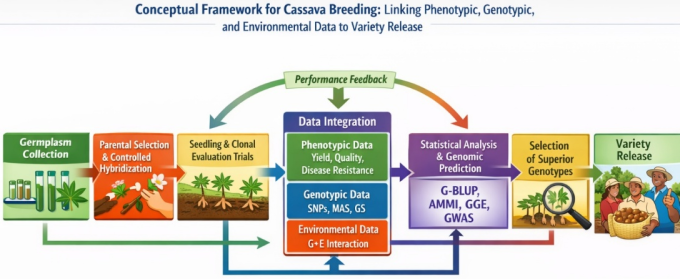
. Integration begins with molecular characterization of germplasm using high-density markers to assess genetic diversity and population structure. This information guides parental selection for hybridization, maximizing genetic recombination and heterosis. MAS is applied to select individuals carrying favorable alleles for traits governed by major genes, such as disease resistance
[7]
Kayondo SI, Pino Del Carpio D, Lozano R, Ozimati A, Wolfe M, Baguma Y, et al. Genetic architecture of cassava mosaic disease resistance. Plant Dis. 2023; 107: 1–10.
[7]
.
GS extends this approach by enabling early selection based on genome-wide marker data. Unlike MAS, which focuses on specific loci, GS captures the cumulative effect of many small-effect genes, making it particularly effective for complex traits such as yield, starch content, and drought tolerance
[4]
Okeke UG, et al. Advances in genetic analysis and breeding of cassava (Manihot esculenta Crantz): a review. Plants. 2024; 13: 1–25.
[4]
. Combining GS with conventional selection allows for rapid-cycle breeding, where early-generation selections can be advanced without waiting for multi-season evaluations, thereby reducing breeding time. Incorporating multi-environment trial data into genomic prediction models further improves selection accuracy. Accounting for G×E interactions, breeders can predict genotype performance across diverse environments, enabling targeted deployment and development of broadly adapted or environment-specific varieties
[8]
Wolfe MD, Del Carpio DP, Alabi O, Ezenwaka LC, Ikeogu UN, Kayondo SI, et al. Prospects for genomic selection in cassava breeding. Crop Sci. 2023; 63: 1–15.
[11]
Amelework B, Shimelis H, Tongoona P, Laing M. Genotype × environment interaction and yield stability analysis in cassava. Agronomy. 2023; 13: 1–18.
[8, 11]
. High-throughput phenotyping technologies, such as remote sensing, UAV-based imaging, and ground-penetrating radar, enhance integrated breeding by providing rapid, non-destructive measurement of complex traits, including biomass, canopy structure, and root architecture
[12]
Aghogho CI, et al. Genome-wide association studies and trait mapping in cassava. BMC Genomics. 2024; 25: 1–16.
[12]
. Integrating these phenotypic datasets with genomic information strengthens predictive models and accelerates breeding progress. Challenges of integration include high genotyping and phenotyping costs, data management complexities, and limited technical capacity in developing regions. Initiatives such as the NextGen Cassava Breeding Project provide infrastructure, training, and resources to facilitate the adoption of integrated breeding, particularly in Africa
[6]
Rabbi IY, Udoh LI, Wolfe M, Parkes E, Gedil M, Dixon A, et al. Genome-enabled prediction for cassava improvement. Front Plant Sci. 2022; 13: 1–14.
Figure 2. Conceptual Framework for Cassava Breeding.
9. Emerging Technologies in Cassava Breeding
Emerging technologies are transforming cassava breeding by enabling precise, rapid, and data-driven improvement of complex traits. Genome editing using CRISPR/Cas systems allows precise modification of target genes, facilitating the introduction or removal of traits without altering the broader genetic background
[23]
Odipio J, Alicai T, Ingelbrecht I, Nusinow DA, Bart R, Taylor NJ. Efficient CRISPR/Cas9 genome editing of cassava for disease resistance. Front Plant Sci. 2022; 13: 1–12.
[24]
Wang Y, et al. Multi-omics integration for crop improvement and trait dissection. Trends Plant Sci. 2023; 28: 1–14.
[23, 24]
. In cassava, genome editing has been applied to improve disease resistance, reduce cyanogenic glucosides, and enhance nutritional quality. This represents a significant leap beyond traditional selection approaches. Multi-omics approaches including genomics, transcriptomics, proteomics, and metabolomics provide comprehensive insights into the molecular basis of trait expression. Transcriptomic analyses identify stress-responsive genes, while metabolomics elucidates biochemical pathways linked to quality traits. Integrating these datasets enables identification of candidate genes and improves accuracy of genomic predictions
[12]
Aghogho CI, et al. Genome-wide association studies and trait mapping in cassava. BMC Genomics. 2024; 25: 1–16.
[24]
Wang Y, et al. Multi-omics integration for crop improvement and trait dissection. Trends Plant Sci. 2023; 28: 1–14.
[12, 24]
. High-throughput phenotyping technologies, such as UAV imaging, LiDAR, and automated root imaging, facilitate rapid, non-invasive measurement of traits like canopy cover, biomass, stress responses, and root architecture
[4]
Okeke UG, et al. Advances in genetic analysis and breeding of cassava (Manihot esculenta Crantz): a review. Plants. 2024; 13: 1–25.
[4]
. These tools significantly expand phenotyping capacity while reducing labor and increasing accuracy, complementing genomic data for predictive breeding.
Artificial intelligence (AI) and machine learning (ML) are increasingly applied to analyze complex datasets, identify patterns, and optimize selection decisions. For example, ML algorithms can predict genotype performance across multiple traits and environments, guiding breeders in optimizing crosses and prioritizing candidates for advancement
[8]
Wolfe MD, Del Carpio DP, Alabi O, Ezenwaka LC, Ikeogu UN, Kayondo SI, et al. Prospects for genomic selection in cassava breeding. Crop Sci. 2023; 63: 1–15.
[8]
. Speed breeding and controlled environment techniques are being explored to shorten the cassava breeding cycle. Innovations in rapid propagation, optimized photoperiods, and controlled growth environments have the potential to reduce generation times, accelerating the evaluation of early-generation material
[1]
Ceballos, H., Pérez, J. C., Barandica, O. J., Lenis, J. I., Morante, N., Calle, F., & Hershey, C. H. (2021). Cassava breeding: Opportunities and challenges. Plant Molecular Biology, 105(1–2), 1–16.
. Digital agriculture platforms and decision-support systems further enhance breeding efficiency by integrating data on soil, weather, genotype performance, and other environmental factors, supporting data-driven selection and deployment strategies
[6]
Rabbi IY, Udoh LI, Wolfe M, Parkes E, Gedil M, Dixon A, et al. Genome-enabled prediction for cassava improvement. Front Plant Sci. 2022; 13: 1–14.
[6]
.
Despite these advances, adoption of emerging technologies faces challenges, including high costs, regulatory constraints (especially for genome editing), and the need for technical expertise. Capacity building and infrastructure development are critical to fully exploit these innovations.
10. Conclusion
Cassava breeding has experienced a paradigm shift from traditional, phenotype-based selection to an integrated, data-driven system that harnesses genomic, computational, and phenotyping innovations. This transformation is essential to meet the growing global demand for food, feed, and industrial products, while addressing the increasing pressures of climate change, biotic stresses, and evolving production systems. Central to contemporary cassava improvement is the recognition of genotype × environment (G×E) interactions as a key determinant of performance. Multi-environment trials (METs) and advanced stability analyses, including AMMI and GGE models, provide breeders with the tools to identify genotypes that are both high-performing and broadly adaptable. These approaches allow for evidence-based decision-making, minimizing the risks of selecting genotypes that perform well in limited environments but fail under broader cultivation conditions. The integration of conventional and modern breeding methods has substantially accelerated genetic gain in cassava. Genomic selection (GS) has emerged as a transformative tool, enabling the capture of cumulative small-effect genes and facilitating rapid-cycle breeding. Combining genome-wide marker data with high-quality phenotypic observations, GS improves selection accuracy, shortens breeding cycles, and enhances the development of superior cultivars with desirable traits, such as disease resistance, yield stability, and improved nutritional quality.
Emerging technologies, including genome editing, multi-omics integration, high-throughput phenotyping, and artificial intelligence, are further expanding the frontiers of cassava breeding. These innovations allow precise, targeted modifications of key genes, enable detailed trait dissection, and streamline decision-making processes, creating opportunities to develop climate-resilient and nutritionally enhanced varieties. Despite these advances, challenges remain. Successful implementation requires robust infrastructure, skilled human resources, and effective data management systems. Regulatory and policy frameworks must support innovation while ensuring biosafety, sustainability, and equitable access. In resource-limited contexts, such as Sierra Leone, integrating local germplasm with modern breeding tools is crucial for producing varieties that are adapted to local agroecological conditions and socio-economic needs. In conclusion, the future of cassava breeding depends on the successful integration of conventional knowledge, genomic innovation, and advanced phenotyping. This synergy promises to accelerate the development of high-performing, resilient, and quality-enhanced varieties, contributing meaningfully to food security, economic development, and sustainable agriculture.
11. Future Direction
Future research in cassava breeding should focus on strengthening the integration of genomic and phenotypic data to enhance selection accuracy for complex traits. Developing cost-effective and scalable tools for genotyping, phenotyping, and data analysis will be critical for resource-limited breeding programs. Participatory approaches that involve farmers in the selection process can ensure that improved varieties meet local needs and preferences, promoting adoption and impact. Emphasis should also be placed on breeding for climate resilience, nutritional quality, and industrial utility, leveraging emerging technologies such as genome editing, multi-omics, and artificial intelligence. Combining these innovations with conventional knowledge, cassava breeding can accelerate the development of high-performing, adaptable, and sustainable varieties to meet future global food and economic challenges.
Abbreviations
AMMI
Additive Main Effects and Multiplicative Interaction
ANOVA
Analysis of Variance
AI
Artificial Intelligence
AYT
Advanced Yield Trial
BLUP
Best Linear Unbiased Prediction
CBSD
Cassava Brown Streak Disease
CET
Clonal Evaluation Trial
CMD
Cassava Mosaic Disease
CRISPR
Clustered Regularly Interspaced Short Palindromic Repeats
DArT
Diversity Arrays Technology
FAO
Food and Agriculture Organization
G×E
Genotype × Environment Interaction
G-BLUP
Genomic Best Linear Unbiased Prediction
GEBV
Genomic Estimated Breeding Value
GGE
Genotype Plus Genotype-by-Environment Interaction
GS
Genomic Selection
GWAS
Genome-Wide Association Studies
LiDAR
Light Detection and Ranging
MAS
Marker-Assisted Selection
MET
Multi-Environment Trial
ML
Machine Learning
ORCID
Open Researcher and Contributor ID
PCA
Principal Component Analysis
PPD
Post-Harvest Physiological Deterioration
QTL
Quantitative Trait Loci
SNP
Single Nucleotide Polymorphism
SSR
Simple Sequence Repeat
UAV
Unmanned Aerial Vehicle
WAASB
Weighted Average of Absolute Scores from BLUP
Acknowledgments
The authors acknowledge the support of Crop Protection Department staff during this review.
Author Contributions
Vandi Amara: Conceptualization, Data curation, Resources, Writing – original draft, Writing – review & editing
Alusaine Edward Samura: Conceptualization, Supervision, Writing – review & editing
Prince Emmanuel Norman: Conceptualization, Data curation, Supervision, Visualization, Writing – review & editing
Conflicts of Interest
The authors declared that there is no conflicts of interest for this manuscript.
References
[1]
Ceballos, H., Pérez, J. C., Barandica, O. J., Lenis, J. I., Morante, N., Calle, F., & Hershey, C. H. (2021). Cassava breeding: Opportunities and challenges. Plant Molecular Biology, 105(1–2), 1–16.
Okeke UG, et al. Advances in genetic analysis and breeding of cassava (Manihot esculenta Crantz): a review. Plants. 2024; 13: 1–25.
[5]
Burns A, Gleadow R, Cliff J, Zacarias A, Cavagnaro T. Cassava: the drought, war and famine crop in a changing world. Global Food Security. 2020; 26: 100400.
[6]
Rabbi IY, Udoh LI, Wolfe M, Parkes E, Gedil M, Dixon A, et al. Genome-enabled prediction for cassava improvement. Front Plant Sci. 2022; 13: 1–14.
[7]
Kayondo SI, Pino Del Carpio D, Lozano R, Ozimati A, Wolfe M, Baguma Y, et al. Genetic architecture of cassava mosaic disease resistance. Plant Dis. 2023; 107: 1–10.
[8]
Wolfe MD, Del Carpio DP, Alabi O, Ezenwaka LC, Ikeogu UN, Kayondo SI, et al. Prospects for genomic selection in cassava breeding. Crop Sci. 2023; 63: 1–15.
[9]
Zidenga T, Leyva-Guerrero E, Moon H, Siritunga D, Sayre R. Extending cassava root shelf life via reduction of reactive oxygen species production. Plant Physiol. 2021; 185: 1–13.
[10]
Sampaio Filho JD, et al. Genetic parameters and prediction of genotypic values for postharvest physiological deterioration tolerance and root traits in cassava. Euphytica. 2024; 220: 1–15.
[11]
Amelework B, Shimelis H, Tongoona P, Laing M. Genotype × environment interaction and yield stability analysis in cassava. Agronomy. 2023; 13: 1–18.
[12]
Aghogho CI, et al. Genome-wide association studies and trait mapping in cassava. BMC Genomics. 2024; 25: 1–16.
[13]
Ferguson ME, Rabbi IY, Kim DJ, Gedil M, Lopez-Lavalle LAB, Okogbenin E. Genetic diversity and population structure of cassava landraces. Genet Resour Crop Evol. 2019; 66: 1–14.
[14]
Adeyemo OS, et al. Enhancing flowering and seed production in cassava through agronomic and hormonal manipulation. Plant Cell Tissue Organ Cult. 2023; 152: 1–12.
[15]
Ceballos H, Kawuki RS, Gracen VE, Yencho GC, Hershey CH. Conventional cassava breeding and its limitations. Front Plant Sci. 2022; 13: 1–10.
[16]
Rabbi IY, Hamblin MT, Kumar PL, Gedil MA, Ikpan AS, Jannink JL, et al. High-resolution mapping of resistance to cassava mosaic disease. Plant Genome. 2014; 7: 1–13.
[17]
Wolfe MD, Rabbi IY, Egesi C, Hamblin M, Kawuki R, Kulakow P, et al. Genome-wide association and prediction reveals genetic architecture of cassava traits. Crop Sci. 2017; 57: 1–14.
[18]
Kayondo SI, et al. Dissection of resistance loci for cassava mosaic disease and implications for gene pyramiding. Plant Pathol. 2024; 73: 1–12.
[19]
Ogbonna AC, et al. Genome-wide association mapping of gari quality traits in cassava. Food Chem. 2024; 430: 1–10.
[20]
Gauch HG. Statistical analysis of yield trials by AMMI and GGE. Crop Sci. 2021; 61: 1–12.
[21]
Yan W, Tinker NA. Biplot analysis of multi-environment trial data: principles and applications. Can J Plant Sci. 2020; 100: 1–15.
[22]
Jiang W, Zhou H, Bi H, Fromm M, Yang B, Weeks DP. Demonstration of CRISPR/Cas9 genome editing in plants. Plant Biotechnol J. 2021; 19: 1–10.
[23]
Odipio J, Alicai T, Ingelbrecht I, Nusinow DA, Bart R, Taylor NJ. Efficient CRISPR/Cas9 genome editing of cassava for disease resistance. Front Plant Sci. 2022; 13: 1–12.
[24]
Wang Y, et al. Multi-omics integration for crop improvement and trait dissection. Trends Plant Sci. 2023; 28: 1–14.
Amara, V., Samura, A. E., Norman, P. E., Mansaray, S., Tarawallie, M. D., et al. (2026). Conventional and Modern Breeding Strategies for Cassava Improvement: A Review of Controlled Hybridization to Genomic Selection. Plant, 14(2), 42-50. https://doi.org/10.11648/j.plant.20261402.12
Amara, V.; Samura, A. E.; Norman, P. E.; Mansaray, S.; Tarawallie, M. D., et al. Conventional and Modern Breeding Strategies for Cassava Improvement: A Review of Controlled Hybridization to Genomic Selection. Plant. 2026, 14(2), 42-50. doi: 10.11648/j.plant.20261402.12
Amara V, Samura AE, Norman PE, Mansaray S, Tarawallie MD, et al. Conventional and Modern Breeding Strategies for Cassava Improvement: A Review of Controlled Hybridization to Genomic Selection. Plant. 2026;14(2):42-50. doi: 10.11648/j.plant.20261402.12
@article{10.11648/j.plant.20261402.12,
  author = {Vandi Amara and Alusaine Edward Samura and Prince Emmanuel Norman and Suffian Mansaray and Marco David Tarawallie and Alimu Mansaray and Vandi Ibrahim Kallon},
  title = {Conventional and Modern Breeding Strategies for Cassava Improvement: A Review of Controlled Hybridization to Genomic Selection},
  journal = {Plant},
  volume = {14},
  number = {2},
  pages = {42-50},
  doi = {10.11648/j.plant.20261402.12},
  url = {https://doi.org/10.11648/j.plant.20261402.12},
  eprint = {https://article.sciencepublishinggroup.com/pdf/10.11648.j.plant.20261402.12},
  abstract = {Cassava (Manihot esculenta Crantz) is a vital tropical root crop that underpins food security, livelihoods, and industrial development for over 800 million people globally, particularly in sub-Saharan Africa. Its resilience to drought and adaptability to marginal environments make it a strategic crop under climate change. However, cassava improvement remains constrained by biological and genetic complexities, including high heterozygosity, clonal propagation, long breeding cycles, and strong genotype × environment (G×E) interactions. Conventional breeding approaches, such as controlled hybridization and phenotypic selection, have historically contributed to yield improvement and disease resistance but are limited by low selection accuracy for polygenic traits and slow genetic gain. Recent advances in molecular genetics and genomics have transformed cassava breeding through the adoption of marker-assisted selection (MAS), genomic selection (GS), and genome-wide association studies (GWAS). These approaches enable the identification of quantitative trait loci (QTLs), prediction of breeding values, and dissection of complex trait architecture, thereby enhancing selection efficiency and accelerating breeding cycles. Statistical tools such as genomic best linear unbiased prediction (G-BLUP), additive main effects and multiplicative interaction (AMMI), and genotype plus genotype-by-environment interaction (GGE) biplot analysis have further improved genotype evaluation and stability analysis across diverse environments. Recent studies demonstrate that genomic selection can reduce cassava breeding cycles from approximately five years to two years while increasing genetic gain. Emerging technologies, including genome editing, high-throughput phenotyping, and artificial intelligence, offer additional opportunities for precision breeding. This review critically synthesizes conventional and modern cassava breeding strategies, highlighting their strengths, limitations, and integration into efficient breeding pipelines. The paper emphasizes the need for data-driven, multi-disciplinary approaches to develop climate-resilient, high-yielding, and quality cassava varieties for sustainable agricultural systems.},
 year = {2026}
}
TY  - JOUR
T1  - Conventional and Modern Breeding Strategies for Cassava Improvement: A Review of Controlled Hybridization to Genomic Selection
AU  - Vandi Amara
AU  - Alusaine Edward Samura
AU  - Prince Emmanuel Norman
AU  - Suffian Mansaray
AU  - Marco David Tarawallie
AU  - Alimu Mansaray
AU  - Vandi Ibrahim Kallon
Y1  - 2026/05/19
PY  - 2026
N1  - https://doi.org/10.11648/j.plant.20261402.12
DO  - 10.11648/j.plant.20261402.12
T2  - Plant
JF  - Plant
JO  - Plant
SP  - 42
EP  - 50
PB  - Science Publishing Group
SN  - 2331-0677
UR  - https://doi.org/10.11648/j.plant.20261402.12
AB  - Cassava (Manihot esculenta Crantz) is a vital tropical root crop that underpins food security, livelihoods, and industrial development for over 800 million people globally, particularly in sub-Saharan Africa. Its resilience to drought and adaptability to marginal environments make it a strategic crop under climate change. However, cassava improvement remains constrained by biological and genetic complexities, including high heterozygosity, clonal propagation, long breeding cycles, and strong genotype × environment (G×E) interactions. Conventional breeding approaches, such as controlled hybridization and phenotypic selection, have historically contributed to yield improvement and disease resistance but are limited by low selection accuracy for polygenic traits and slow genetic gain. Recent advances in molecular genetics and genomics have transformed cassava breeding through the adoption of marker-assisted selection (MAS), genomic selection (GS), and genome-wide association studies (GWAS). These approaches enable the identification of quantitative trait loci (QTLs), prediction of breeding values, and dissection of complex trait architecture, thereby enhancing selection efficiency and accelerating breeding cycles. Statistical tools such as genomic best linear unbiased prediction (G-BLUP), additive main effects and multiplicative interaction (AMMI), and genotype plus genotype-by-environment interaction (GGE) biplot analysis have further improved genotype evaluation and stability analysis across diverse environments. Recent studies demonstrate that genomic selection can reduce cassava breeding cycles from approximately five years to two years while increasing genetic gain. Emerging technologies, including genome editing, high-throughput phenotyping, and artificial intelligence, offer additional opportunities for precision breeding. This review critically synthesizes conventional and modern cassava breeding strategies, highlighting their strengths, limitations, and integration into efficient breeding pipelines. The paper emphasizes the need for data-driven, multi-disciplinary approaches to develop climate-resilient, high-yielding, and quality cassava varieties for sustainable agricultural systems.
VL  - 14
IS  - 2
ER  -
Amara, V., Samura, A. E., Norman, P. E., Mansaray, S., Tarawallie, M. D., et al. (2026). Conventional and Modern Breeding Strategies for Cassava Improvement: A Review of Controlled Hybridization to Genomic Selection. Plant, 14(2), 42-50. https://doi.org/10.11648/j.plant.20261402.12
Amara, V.; Samura, A. E.; Norman, P. E.; Mansaray, S.; Tarawallie, M. D., et al. Conventional and Modern Breeding Strategies for Cassava Improvement: A Review of Controlled Hybridization to Genomic Selection. Plant. 2026, 14(2), 42-50. doi: 10.11648/j.plant.20261402.12
Amara V, Samura AE, Norman PE, Mansaray S, Tarawallie MD, et al. Conventional and Modern Breeding Strategies for Cassava Improvement: A Review of Controlled Hybridization to Genomic Selection. Plant. 2026;14(2):42-50. doi: 10.11648/j.plant.20261402.12
@article{10.11648/j.plant.20261402.12,
  author = {Vandi Amara and Alusaine Edward Samura and Prince Emmanuel Norman and Suffian Mansaray and Marco David Tarawallie and Alimu Mansaray and Vandi Ibrahim Kallon},
  title = {Conventional and Modern Breeding Strategies for Cassava Improvement: A Review of Controlled Hybridization to Genomic Selection},
  journal = {Plant},
  volume = {14},
  number = {2},
  pages = {42-50},
  doi = {10.11648/j.plant.20261402.12},
  url = {https://doi.org/10.11648/j.plant.20261402.12},
  eprint = {https://article.sciencepublishinggroup.com/pdf/10.11648.j.plant.20261402.12},
  abstract = {Cassava (Manihot esculenta Crantz) is a vital tropical root crop that underpins food security, livelihoods, and industrial development for over 800 million people globally, particularly in sub-Saharan Africa. Its resilience to drought and adaptability to marginal environments make it a strategic crop under climate change. However, cassava improvement remains constrained by biological and genetic complexities, including high heterozygosity, clonal propagation, long breeding cycles, and strong genotype × environment (G×E) interactions. Conventional breeding approaches, such as controlled hybridization and phenotypic selection, have historically contributed to yield improvement and disease resistance but are limited by low selection accuracy for polygenic traits and slow genetic gain. Recent advances in molecular genetics and genomics have transformed cassava breeding through the adoption of marker-assisted selection (MAS), genomic selection (GS), and genome-wide association studies (GWAS). These approaches enable the identification of quantitative trait loci (QTLs), prediction of breeding values, and dissection of complex trait architecture, thereby enhancing selection efficiency and accelerating breeding cycles. Statistical tools such as genomic best linear unbiased prediction (G-BLUP), additive main effects and multiplicative interaction (AMMI), and genotype plus genotype-by-environment interaction (GGE) biplot analysis have further improved genotype evaluation and stability analysis across diverse environments. Recent studies demonstrate that genomic selection can reduce cassava breeding cycles from approximately five years to two years while increasing genetic gain. Emerging technologies, including genome editing, high-throughput phenotyping, and artificial intelligence, offer additional opportunities for precision breeding. This review critically synthesizes conventional and modern cassava breeding strategies, highlighting their strengths, limitations, and integration into efficient breeding pipelines. The paper emphasizes the need for data-driven, multi-disciplinary approaches to develop climate-resilient, high-yielding, and quality cassava varieties for sustainable agricultural systems.},
 year = {2026}
}
TY  - JOUR
T1  - Conventional and Modern Breeding Strategies for Cassava Improvement: A Review of Controlled Hybridization to Genomic Selection
AU  - Vandi Amara
AU  - Alusaine Edward Samura
AU  - Prince Emmanuel Norman
AU  - Suffian Mansaray
AU  - Marco David Tarawallie
AU  - Alimu Mansaray
AU  - Vandi Ibrahim Kallon
Y1  - 2026/05/19
PY  - 2026
N1  - https://doi.org/10.11648/j.plant.20261402.12
DO  - 10.11648/j.plant.20261402.12
T2  - Plant
JF  - Plant
JO  - Plant
SP  - 42
EP  - 50
PB  - Science Publishing Group
SN  - 2331-0677
UR  - https://doi.org/10.11648/j.plant.20261402.12
AB  - Cassava (Manihot esculenta Crantz) is a vital tropical root crop that underpins food security, livelihoods, and industrial development for over 800 million people globally, particularly in sub-Saharan Africa. Its resilience to drought and adaptability to marginal environments make it a strategic crop under climate change. However, cassava improvement remains constrained by biological and genetic complexities, including high heterozygosity, clonal propagation, long breeding cycles, and strong genotype × environment (G×E) interactions. Conventional breeding approaches, such as controlled hybridization and phenotypic selection, have historically contributed to yield improvement and disease resistance but are limited by low selection accuracy for polygenic traits and slow genetic gain. Recent advances in molecular genetics and genomics have transformed cassava breeding through the adoption of marker-assisted selection (MAS), genomic selection (GS), and genome-wide association studies (GWAS). These approaches enable the identification of quantitative trait loci (QTLs), prediction of breeding values, and dissection of complex trait architecture, thereby enhancing selection efficiency and accelerating breeding cycles. Statistical tools such as genomic best linear unbiased prediction (G-BLUP), additive main effects and multiplicative interaction (AMMI), and genotype plus genotype-by-environment interaction (GGE) biplot analysis have further improved genotype evaluation and stability analysis across diverse environments. Recent studies demonstrate that genomic selection can reduce cassava breeding cycles from approximately five years to two years while increasing genetic gain. Emerging technologies, including genome editing, high-throughput phenotyping, and artificial intelligence, offer additional opportunities for precision breeding. This review critically synthesizes conventional and modern cassava breeding strategies, highlighting their strengths, limitations, and integration into efficient breeding pipelines. The paper emphasizes the need for data-driven, multi-disciplinary approaches to develop climate-resilient, high-yielding, and quality cassava varieties for sustainable agricultural systems.
VL  - 14
IS  - 2
ER  -

 ,
Alusaine Edward Samura
,
Alusaine Edward Samura


 Share This Article
 Twitter
 Linked In
 Facebook
 Copy
Copy Download