Abstract
This paper analyzes the role of scientific research valorization in supporting local sustainable development in Algeria, with a particular focus on the contribution of research institutions to innovation, technology transfer, and applied solutions. The study examines how scientific outputs are translated into operational technologies through structured collaborations between research centers, industry, and public stakeholders. The analysis is based on qualitative case studies involving the environmental research activities of the Centre de Recherche en Technologies des Semi-Conducteurs pour l’Énergétique (CRTSE). Three representative case studies are presented to illustrate different pathways of research valorization. These include the development of a solar sludge dryer integrated into a Living Lab framework under the Partnership for Research and Innovation in the Mediterranean Area (PRIMA)-funded Mara-Mediterra project for afforestation and land restoration, a hybrid membrane-based pilot system designed to optimize water chemistry for enhanced oil recovery in collaboration with the national oil company Sonatrach, and a pilot-scale ultrafiltration unit for tertiary treatment of urban wastewater developed in partnership with the AMENHYD group. The selected cases address priority sectors in Algeria, including water management, land restoration, energy, and environmental protection.Data for the analysis were obtained from project reports, experimental results, institutional documentation, and interactions with research and industrial partners. The paper documents the development stages of each innovation, from scientific conception to pilot-scale validation, and highlights the mechanisms enabling effective knowledge transfer. The findings provide an overview of how applied research contributes to sustainable development objectives by supporting technological innovation, strengthening local capacities, and facilitating collaboration between research institutions and socio-economic actors.
|
Published in
|
Science Development (Volume 7, Issue 2)
|
|
DOI
|
10.11648/j.scidev.20260702.15
|
|
Page(s)
|
97-102 |
|
Creative Commons
|

This is an Open Access article, distributed under the terms of the Creative Commons Attribution 4.0 International License (http://creativecommons.org/licenses/by/4.0/), which permits unrestricted use, distribution and reproduction in any medium or format, provided the original work is properly cited.
|
|
Copyright
|
Copyright © The Author(s), 2026. Published by Science Publishing Group
|
Keywords
Algeria, Scientific Valorization, Innovation, Research and Development, Technology Transfer, Environmental Research
1. Introduction
Algeria, a country rich in natural resources and scientific potential, has been actively engaged in fostering innovation and technological advancement. This paper delves into the realm of research valorization in Algeria, highlighting significant achievements and collaborative efforts aimed at promoting sustainable development and economic growth
| [1] | Bouazza Elamine Zemri. Green Growth in Algeria: Balancing Industry and Environment for Sustainable Economic Development. January 2024.Dirassat Journal Economic Issue 10(1): 717-740. https://doi.org/10.34118/djei.v15i1.3713 |
| [2] | Boudir Imene. The Impact of Natural Resources on environmental Development in Algeria. Journal of Economics, Management, and Business Sciences. Volume 17, Numéro 2, Pages 345-357. 2024-12-20. |
[1, 2]
.
Incubators are playing a pivotal role in nurturing innovative projects and facilitating the creation of startups and small and medium enterprises (SMEs). These specialized environments provide entrepreneurs with the necessary resources, mentorship, and support to transform their ideas into viable businesses. Algeria's commitment to fostering innovation is evident in the proliferation of incubators across the country, which have contributed to the emergence of a dynamic entrepreneurial ecosystem
| [3] | Khaldoon A. Mourad, and Helen Avery. The Sustainability of Post-Conflict Development: The Case of Algeria. Sustainability 2019, 11, 3036; https://doi.org/10.3390/su11113036 |
| [4] | Fouzi Tahar Abderzag, Abderrezek Hamza, Mohamed Amin Chakroun. Assessing Algerian government support for sustainable development goals: A study from 2000 to 2022. April 2024, International Journal of ADVANCED AND Applied Sciences 11(4): 128-138.
https://doi.org/10.21833/ijaas.2024.04.015 |
[3, 4]
.
The Centre de Recherche en Technologie des Semi-Conducteurs (CRTSE) has also made substantial contributions to research valorization. CRTSE's participation through its researchers in close collaboration with the AMENHYD group in the PRIMA funded “Safeguarding the livelihood of rural communities and the environment in the Mediterranean through Nature-based Solutions” project demonstrates its commitment to addressing societal challenges and leveraging technological advancements for sustainable development.
Despite these efforts, the mechanisms through which Algerian research institutions convert scientific findings into operational technologies remain insufficiently documented. This gap highlights the need for a clearer understanding of how research valorization is implemented in practice
| [5] | Redha Younes Bouacida. The national innovation system and the difficulty of integrating the higher education system for science and technology in Algeria. Revue d’economie industrielle. 168(45-79), 2019. |
[5]
.
Local collaboration has been instrumental in driving innovation and promoting economic growth. Partnerships between academic institutions, research centres, and industrial entities have led to the realization of significant projects. The collaboration between the CRTSE and Sonatrach (National Oil Company) on a desalination pilot project for chemical enhanced oil recovery (EoR) exemplifies the potential of such partnerships to address industry-specific challenges and contribute to technological advancements.
Furthermore, the collaboration with the AMENHYD Group on ultrafiltration for tertiary treatment of urban wastewater highlights the importance of sustainable water management and the role of technology in addressing environmental concerns.
The central research question addressed in this paper is:
How do research institutions—specifically CRTSE—translate scientific outputs into applied innovations that support sustainable development in Algeria?
The objective of this study is to analyze CRTSE’s scientific valorization ecosystem and demonstrate, through documented case studies, how research outcomes are effectively operationalized into technological solutions.
The Living Lab in Algeria, established through the PRIMA funded Mara-Mediterra project, in which researchers from CRTSE are involved by providing scientific expertise and technology transfer to the AMENHYD group, serves as another example of CRTSE's commitment to sustainable development. The implementation of a Living Lab for micro-ecosystem based afforestation, utilizing sludge and treated wastewater from Djelfa's domestic wastewater treatment plant, demonstrates the potential of innovative approaches to address environmental challenges and promote sustainable land use practices.
The CRTSE Environmental Research Team has been actively involved in research dissemination through various events, including open days on research valorization (July 3-4, 2024), a thematic workshop on emerging technologies for air and water treatment (May 30-June 1, 2023), a webinar on desalination and non-conventional water sources (September 19, 2024), an intensive course on solar-driven desalination and water purification (March 25-26, 2019), and a study day on green hydrogen (November 15, 2021). Additionally, the team has recently applied to host the 2026 AMSIC Congress in Algeria, showcasing their commitment to advancing research and promoting knowledge exchange in the field of environmental science and technology.
By addressing the above research question and presenting three structured case studies, this paper aims to contribute to a better understanding of how research institutions such as CRTSE can effectively bridge the gap between scientific research and real-world applications, thereby supporting national priorities in water, energy, environment, and sustainable development
| [5] | Redha Younes Bouacida. The national innovation system and the difficulty of integrating the higher education system for science and technology in Algeria. Revue d’economie industrielle. 168(45-79), 2019. |
| [6] | Hichem Kadri. Development Security in Algeria: Reality, Challenges, and Perspective. Journal of Security & Strategic Affairs. 01(14-34), 2023. |
| [7] | Blanco, G., H. de Coninck, L. Agbemabiese, E. H. Mbaye Diagne, L. Diaz Anadon, Y. S. Lim, W. A. Pengue, A. D. Sagar, T. Sugiyama, K. Tanaka, E. Verdolini, J. Witajewski-Baltvilks, 2022: Innovation, technology development and transfer. In IPCC, 2022: Climate Change 2022: Mitigation of Climate Change. Contribution of Working Group III to the Sixth Assessment Report of the Intergovernmental Panel on Climate Change [P. R. Shukla, J. Skea, R. Slade, A. Al Khourdajie, R. van Diemen, D. McCollum, M. Pathak, S. Some, P. Vyas, R. Fradera, M. Belkacemi, A. Hasija, G. Lisboa, S. Luz, J. Malley, (eds.)]. Cambridge University Press, Cambridge, UK and New York, NY, USA.
https://doi.org/10.1017/9781009157926.018 |
[5-7]
.
2. Methodological Approach
This study adopts a qualitative case study methodology to examine how the Centre de Recherche en Technologies des Semi-Conducteurs pour l’Énergétique (CRTSE) translates scientific knowledge into applied technological innovations. Given the applied, multi-actor, and context-dependent nature of research valorization, the case study approach is particularly appropriate for understanding real-world dynamics, technology development pathways, and the mechanisms that enable research–industry collaboration.
2.1. Case Study Selection
The cases presented in this paper were selected because they represent mature examples of CRTSE’s contribution to environmental innovation and because they align with national priorities in water management, land restoration, and energy transition. Each case involves direct participation of CRTSE researchers in technology design, laboratory development, or pilot-scale validation. The technologies selected also offer clear potential for transfer to industrial partners, as demonstrated by collaborations with institutions such as Sonatrach, AMENHYD, the National Sanitation Office (ONA), and the General Directorate of Forests (DGF). Furthermore, these three cases were chosen due to the availability of sufficient technical documentation, experimental results, and stakeholder feedback, allowing for robust analysis. Together, the solar sludge dryer, the hybrid membrane system for enhanced oil recovery, and the pilot ultrafiltration unit illustrate a diversified yet coherent set of research valorization pathways
| [8] | M. Adjadj, N. Drouiche, S. Fortas, W. Zanndouche, R. Khacheba, A. Hamani, N. Benmouhoub. Use of an innovative-based solution of wastewater reuse for the large-scale reforestation and afforstation process of the green dam in Algeria. Environment the for Desalination. Energy and Water Clean. 2023 May 26–22. Cyprus, Limassol, Hotel Parklane. |
[8]
.
3.2. Data Collection
The documentation of these case studies draws on several complementary sources. Technical project reports generated under the PRIMA programme and national R&D funding provided detailed information on design specifications, performance indicators, and implementation stages. Laboratory and pilot-scale experimental records supplied technical data on process parameters and operational results. Informal discussions and structured consultations with CRTSE researchers and industrial partners contributed insights into decision-making, constraints, and collaborative dynamics. Additional information was extracted from scientific articles, conference presentations, and research dissemination materials produced by the CRTSE Environmental Research Team. Finally, field observations made during pilot testing and coordination meetings were used to contextualize the technologies within their operational settings. The integration of these sources ensures a comprehensive and triangulated reconstruction of each innovation pathway
| [9] | Chemil, M., Zizi, Z., Drouiche, N. et al. Water treatment technology performance for chemical enhanced oil recovery: modeling, simulation and optimization. Appl Water Sci 11, 145 (2021). https://doi.org/10.1007/s13201-021-01476-4 |
[9]
.
3.3. Analytical Framework
The analysis conducted for this paper follows a structured approach aimed at understanding how scientific work progresses toward technological application. For each case, the research-to-innovation sequence was reconstructed by examining the initial scientific problem addressed, the development stages leading from conceptual design to prototype, and the subsequent phases of pilot-scale experimentation and technical validation. Particular attention was paid to the roles and interactions of research teams, industrial partners, and institutional stakeholders, in order to identify how knowledge was transferred and how co-development processes unfolded. The potential impacts of each innovation were then assessed in terms of their contribution to sustainable development goals, their relevance for national strategic priorities, and their capacity for replication or scale-up in Algerian environmental and industrial contexts.
3.4. Purpose of the Methodological Approach
This methodological design allows for a nuanced understanding of how CRTSE operationalizes research valorization. By documenting real-world cases and analyzing their development trajectories, the study provides insights into the mechanisms that bridge scientific production and societal application. It also highlights the conditions that enable successful collaboration between research institutions and industry, and it identifies lessons that can inform future strategies for strengthening Algeria’s innovation ecosystem in the fields of water, energy, and environmental sustainability.
3. Case Studies
3.1. Nature-Based Solutions Living Lab for Rural Sustainability (PRIMA Mara-Mediterra Project)
CRTSE has played a significant role in the PRIMA funded Mara-Mediterra research project, contributing to the development of innovative solutions for sustainable land management and environmental conservation. One of the key contributions of CRTSE has been the concept design and development of a solar dryer for sludge resulting from the treatment of urban wastewater by conventional activated sludge (CAS) of Djelfa’s WWTP. This solar dryer is being utilized within the Living Lab led by the Amenhyd Group in Algeria
| [10] | R.Khacheba· A Lounis, N. Drouiche, T.Hartani, F.Z. Bouras Chekired. Integrating the Nexus approach in sludge management: co-composting wastewater sludge and green waste for enhanced forestry. International Journal of Environmental Science and Technology (2026) 23: 180 |
[10]
.
The Mara-Mediterra project aims to address the challenges faced by Algeria's flagship Green Dam project of afforestation, including soil degradation and the adverse effects of climate change. By fostering collaboration among various stakeholders, including the National Sanitation Office (ONA), the General Directorate of Forests (DGF), AMENHYD, and CRTSE, the project seeks to develop innovative agro-ecological solutions
| [11] | MARA-MED Project Consortium. About the Project. Available from: https://mara-mediterra.com/about-the-project/ [Accessed 29 January 2026]. |
| [12] | Orabi Salem Mohamed, Setti M’hammed, Alouat Mohamed, Chinoune Saad. The Green Dam in Algeria: From an Ambitious Project in 1971 to an Environmental Rehabilitation Strategy in 2023, Djelfa Province as a Model. Journal of Information Systems Engineering and Management 2025, 10(4). |
| [13] | SAIFI, Merdas, BOULGHOBRA, Nouar and FATTOUM, Lakhdari. Thee Green Dam in Algeria as a tool to combat desertification. GRF Davos Planet@Risk, Volume 3, Number 1, Special Issue on the 5th IDRC Davos 2014, March 2015. |
[11-13]
.
The new approach adopted in the project involves creating artificial micro-ecosystems around each tree planted in the experimental afforestation site at Djelfa. This approach integrates renewable energy sources, the valorization of wastewater treatment by-products, and digital monitoring tools. The solar dryer designed by CRTSE is a crucial component of this integrated system, contributing to the sustainable management of wastewater sludge and the promotion of circular economy principles
.
3.2. Optimizing Water Chemistry for Enhanced Oil Recovery: A Hybrid Pilot System
The CRTSE Environmental Research team, in collaboration with Sonatrach, conducted a research project to develop a hybrid pilot system for treating brackish water for use in enhanced oil recovery (EOR). The project, funded by the National Directorate of Scientific Research and Technological Development (DGRSDT), aimed to optimize water chemistry for more efficient and cost-effective EoR operations.
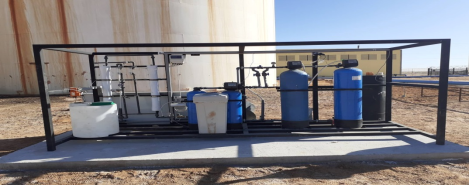
The developed system, shown in
Figure 1, combines reverse osmosis, nanofiltration, and ion exchange resins to remove impurities from brackish water, including salts, dissolved solids, and organic matter. This multi-stage treatment process is essential for ensuring that the injected water meets the specific requirements of EoR processes, which can vary depending on the reservoir characteristics and the type of chemicals used.
By optimizing water chemistry, CRTSE researchers were able to improve the effectiveness of polymer and surfactant floods. Polymers are used to increase the viscosity of injected water, which helps to displace oil from the reservoir. Surfactants reduce the interfacial tension between oil and water, making it easier to recover oil. Both polymers and surfactants are sensitive to water quality, and the presence of impurities can reduce their effectiveness.
In addition to improving the effectiveness of EoR processes, CRTSE's research also focused on reducing costs. The hybrid pilot system developed in this project is designed to be energy-efficient and minimize the use of chemicals. By optimizing water treatment, CRTSE researchers were able to reduce the amount of chemicals required for EoR operations, resulting in significant cost savings.
The pilot system was successfully tested on-site and demonstrated its ability to produce water of the desired quality. This success validates the feasibility of the technology and its potential for widespread application in the oil and gas industry.
The research conducted in this project has also resulted in scientific publications and conference presentations. CRTSE researchers have shared their findings with the broader scientific community through peer-reviewed articles and presentations at international conferences. This dissemination of knowledge has contributed to the advancement of water treatment technologies and their application in the oil and gas industry.
This research project has important implications for the oil and gas industry. By developing innovative water treatment solutions, CRTSE is contributing to sustainable oil production and environmental stewardship. The hybrid pilot system developed in this project can be adapted to other EoR applications, and the research findings can inform future water management strategies in the oil and gas sector.
Figure 1. Integrated Membrane Process for EoR Application.
3.3. Assessing the Pilot Scale Ultrafiltration System for Urban Wastewater Tertiary Treatment
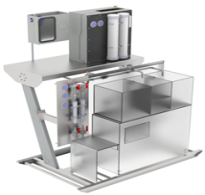
The successful development of a pilot-scale ultrafiltration system for tertiary treating urban wastewater, conducted in collaboration with the AMENHYD group and CRTSE, demonstrates the potential of this technology in producing high-quality water suitable for alkaline electrolysis. As shown in
Figure 2, the system effectively removed contaminants from the wastewater, contributing to a more sustainable approach to wastewater treatment and supporting the growth of the green hydrogen industry. The positive results from the pilot-scale study pave the way for scaling up the system, conducting field trials, and exploring commercialization opportunities.
Furthermore, the pilot-scale ultrafiltration system offers several potential benefits for the green hydrogen industry. By effectively removing contaminants from wastewater, it provides a high-quality water source suitable for alkaline electrolysis, improving process efficiency and reducing energy consumption. Reusing treated wastewater for hydrogen production helps alleviate water scarcity issues and promotes a circular economy. Additionally, the system can potentially reduce the cost of hydrogen production and create jobs in related industries. Furthermore, hydrogen produced through this process can help decarbonize various sectors and improve overall water quality.
Figure 2. Schematic Diagram of the Pilot-Scale Ultrafiltration System.
4. Conclusion
This paper has provided an overview of the research valorization landscape at CRTSE, highlighting the environmental research team's significant contributions to fostering innovation, promoting sustainable development, and strengthening local collaborations. Through its participation in international research programmes, collaborations with industrial partners, and active engagement in research dissemination, the CRTSE has demonstrated its commitment to bridging the gap between scientific research and practical applications.
The case studies presented in this paper illustrate the practical impact of CRTSE's research efforts. The development of innovative solutions for sustainable land management and water treatment, as showcased in the PRIMA funded Mara-Mediterra project and the hybrid pilot system for enhanced oil recovery, respectively, highlight the potential of research to address societal and industrial challenges.
The success of these initiatives underscores the importance of fostering collaboration between academic institutions, research centres, and industrial entities. Such partnerships can lead to the development of practical solutions, promote technology transfer, and contribute to economic growth.
In conclusion, CRTSE's research valorization efforts are making a valuable contribution to Algeria's scientific and technological advancement. By focusing on sustainable development, addressing environmental challenges, and promoting innovation, CRTSE is helping to position Algeria as a leader in the field of research and technology.
Acknowledgments
We would like to express our sincere gratitude to the General Directorate of Scientific Research and Technological Development (DGRSDT), as well as to our industrial partners, the AMNEHYD Group and the National Oil Company (Sonatrach), for their invaluable support of our research and development efforts. Their generous contributions have been instrumental in enabling CRTSE’s environmental research team to make significant progress in our work.
Abbreviations
CRTSE | Semiconductor Technology Research Center for Energy |
PRIMA | Partnership for Research and Innovation in the Mediterranean Area |
AMSIC | African Membrane Society |
Sonatrach | Algeria's State-owned, Fully Integrated Oil and Gas Company |
ONA | National Sanitation Office |
EoR | Chemical Enhanced Oil Recovery |
DGF | General Directorate of Forests |
CAS | Conventional Activated Sludge |
DGRSDT | National Directorate of Scientific Research and Technological Development |
Author Contributions
Nadjib Drouiche: Conceptualization, Methodology, Investigation, Data curation, Formal analysis, Validation, Visualization, Resources, Writing – original draft, Writing – review & editing
Conflicts of Interest
The author declares that he has no known competing financial interests or personal relationships that could have influenced the work reported in this paper.
References
| [1] |
Bouazza Elamine Zemri. Green Growth in Algeria: Balancing Industry and Environment for Sustainable Economic Development. January 2024.Dirassat Journal Economic Issue 10(1): 717-740.
https://doi.org/10.34118/djei.v15i1.3713
|
| [2] |
Boudir Imene. The Impact of Natural Resources on environmental Development in Algeria. Journal of Economics, Management, and Business Sciences. Volume 17, Numéro 2, Pages 345-357. 2024-12-20.
|
| [3] |
Khaldoon A. Mourad, and Helen Avery. The Sustainability of Post-Conflict Development: The Case of Algeria. Sustainability 2019, 11, 3036;
https://doi.org/10.3390/su11113036
|
| [4] |
Fouzi Tahar Abderzag, Abderrezek Hamza, Mohamed Amin Chakroun. Assessing Algerian government support for sustainable development goals: A study from 2000 to 2022. April 2024, International Journal of ADVANCED AND Applied Sciences 11(4): 128-138.
https://doi.org/10.21833/ijaas.2024.04.015
|
| [5] |
Redha Younes Bouacida. The national innovation system and the difficulty of integrating the higher education system for science and technology in Algeria. Revue d’economie industrielle. 168(45-79), 2019.
|
| [6] |
Hichem Kadri. Development Security in Algeria: Reality, Challenges, and Perspective. Journal of Security & Strategic Affairs. 01(14-34), 2023.
|
| [7] |
Blanco, G., H. de Coninck, L. Agbemabiese, E. H. Mbaye Diagne, L. Diaz Anadon, Y. S. Lim, W. A. Pengue, A. D. Sagar, T. Sugiyama, K. Tanaka, E. Verdolini, J. Witajewski-Baltvilks, 2022: Innovation, technology development and transfer. In IPCC, 2022: Climate Change 2022: Mitigation of Climate Change. Contribution of Working Group III to the Sixth Assessment Report of the Intergovernmental Panel on Climate Change [P. R. Shukla, J. Skea, R. Slade, A. Al Khourdajie, R. van Diemen, D. McCollum, M. Pathak, S. Some, P. Vyas, R. Fradera, M. Belkacemi, A. Hasija, G. Lisboa, S. Luz, J. Malley, (eds.)]. Cambridge University Press, Cambridge, UK and New York, NY, USA.
https://doi.org/10.1017/9781009157926.018
|
| [8] |
M. Adjadj, N. Drouiche, S. Fortas, W. Zanndouche, R. Khacheba, A. Hamani, N. Benmouhoub. Use of an innovative-based solution of wastewater reuse for the large-scale reforestation and afforstation process of the green dam in Algeria. Environment the for Desalination. Energy and Water Clean. 2023 May 26–22. Cyprus, Limassol, Hotel Parklane.
|
| [9] |
Chemil, M., Zizi, Z., Drouiche, N. et al. Water treatment technology performance for chemical enhanced oil recovery: modeling, simulation and optimization. Appl Water Sci 11, 145 (2021).
https://doi.org/10.1007/s13201-021-01476-4
|
| [10] |
R.Khacheba· A Lounis, N. Drouiche, T.Hartani, F.Z. Bouras Chekired. Integrating the Nexus approach in sludge management: co-composting wastewater sludge and green waste for enhanced forestry. International Journal of Environmental Science and Technology (2026) 23: 180
|
| [11] |
MARA-MED Project Consortium. About the Project. Available from:
https://mara-mediterra.com/about-the-project/
[Accessed 29 January 2026].
|
| [12] |
Orabi Salem Mohamed, Setti M’hammed, Alouat Mohamed, Chinoune Saad. The Green Dam in Algeria: From an Ambitious Project in 1971 to an Environmental Rehabilitation Strategy in 2023, Djelfa Province as a Model. Journal of Information Systems Engineering and Management 2025, 10(4).
|
| [13] |
SAIFI, Merdas, BOULGHOBRA, Nouar and FATTOUM, Lakhdari. Thee Green Dam in Algeria as a tool to combat desertification. GRF Davos Planet@Risk, Volume 3, Number 1, Special Issue on the 5th IDRC Davos 2014, March 2015.
|
| [14] |
Ramzi Benzihia, Yacine Kouba, György Szabó, Gábor Négyesi and Behnam Ata. Monitoring the Spatiotemporal Evolution of the Green Dam in Djelfa Province, Algeria.Sustainability2021, 13(14), 7953;
https://doi.org/10.3390/su13147953
|
| [15] |
MARA-MED Project Consortium. Meeting up in Algeria. Available from:
https://mara-mediterra.com/news/meeting-up-in-algeria/
[Accessed 24 December 2025].
|
Cite This Article
-
APA Style
Drouiche, N. (2026). Valorization of Research for Local Sustainable Development in Algeria: Perspectives and Case Studies. Science Development, 7(2), 97-102. https://doi.org/10.11648/j.scidev.20260702.15
 Copy
|
Copy
|
 Download
ACS Style
Drouiche, N. Valorization of Research for Local Sustainable Development in Algeria: Perspectives and Case Studies. Sci. Dev. 2026, 7(2), 97-102. doi: 10.11648/j.scidev.20260702.15
Copy
|
Download
AMA Style
Drouiche N. Valorization of Research for Local Sustainable Development in Algeria: Perspectives and Case Studies. Sci Dev. 2026;7(2):97-102. doi: 10.11648/j.scidev.20260702.15
Copy
|
Download
-
@article{10.11648/j.scidev.20260702.15,
  author = {Nadjib Drouiche},
  title = {Valorization of Research for Local Sustainable Development in Algeria: Perspectives and Case Studies},
  journal = {Science Development},
  volume = {7},
  number = {2},
  pages = {97-102},
  doi = {10.11648/j.scidev.20260702.15},
  url = {https://doi.org/10.11648/j.scidev.20260702.15},
  eprint = {https://article.sciencepublishinggroup.com/pdf/10.11648.j.scidev.20260702.15},
  abstract = {This paper analyzes the role of scientific research valorization in supporting local sustainable development in Algeria, with a particular focus on the contribution of research institutions to innovation, technology transfer, and applied solutions. The study examines how scientific outputs are translated into operational technologies through structured collaborations between research centers, industry, and public stakeholders. The analysis is based on qualitative case studies involving the environmental research activities of the Centre de Recherche en Technologies des Semi-Conducteurs pour l’Énergétique (CRTSE). Three representative case studies are presented to illustrate different pathways of research valorization. These include the development of a solar sludge dryer integrated into a Living Lab framework under the Partnership for Research and Innovation in the Mediterranean Area (PRIMA)-funded Mara-Mediterra project for afforestation and land restoration, a hybrid membrane-based pilot system designed to optimize water chemistry for enhanced oil recovery in collaboration with the national oil company Sonatrach, and a pilot-scale ultrafiltration unit for tertiary treatment of urban wastewater developed in partnership with the AMENHYD group. The selected cases address priority sectors in Algeria, including water management, land restoration, energy, and environmental protection.Data for the analysis were obtained from project reports, experimental results, institutional documentation, and interactions with research and industrial partners. The paper documents the development stages of each innovation, from scientific conception to pilot-scale validation, and highlights the mechanisms enabling effective knowledge transfer. The findings provide an overview of how applied research contributes to sustainable development objectives by supporting technological innovation, strengthening local capacities, and facilitating collaboration between research institutions and socio-economic actors.},
 year = {2026}
}
Copy
|
Download
-
TY  - JOUR
T1  - Valorization of Research for Local Sustainable Development in Algeria: Perspectives and Case Studies
AU  - Nadjib Drouiche
Y1  - 2026/06/02
PY  - 2026
N1  - https://doi.org/10.11648/j.scidev.20260702.15
DO  - 10.11648/j.scidev.20260702.15
T2  - Science Development
JF  - Science Development
JO  - Science Development
SP  - 97
EP  - 102
PB  - Science Publishing Group
SN  - 2994-7154
UR  - https://doi.org/10.11648/j.scidev.20260702.15
AB  - This paper analyzes the role of scientific research valorization in supporting local sustainable development in Algeria, with a particular focus on the contribution of research institutions to innovation, technology transfer, and applied solutions. The study examines how scientific outputs are translated into operational technologies through structured collaborations between research centers, industry, and public stakeholders. The analysis is based on qualitative case studies involving the environmental research activities of the Centre de Recherche en Technologies des Semi-Conducteurs pour l’Énergétique (CRTSE). Three representative case studies are presented to illustrate different pathways of research valorization. These include the development of a solar sludge dryer integrated into a Living Lab framework under the Partnership for Research and Innovation in the Mediterranean Area (PRIMA)-funded Mara-Mediterra project for afforestation and land restoration, a hybrid membrane-based pilot system designed to optimize water chemistry for enhanced oil recovery in collaboration with the national oil company Sonatrach, and a pilot-scale ultrafiltration unit for tertiary treatment of urban wastewater developed in partnership with the AMENHYD group. The selected cases address priority sectors in Algeria, including water management, land restoration, energy, and environmental protection.Data for the analysis were obtained from project reports, experimental results, institutional documentation, and interactions with research and industrial partners. The paper documents the development stages of each innovation, from scientific conception to pilot-scale validation, and highlights the mechanisms enabling effective knowledge transfer. The findings provide an overview of how applied research contributes to sustainable development objectives by supporting technological innovation, strengthening local capacities, and facilitating collaboration between research institutions and socio-economic actors.
VL  - 7
IS  - 2
ER  -
Copy
|
Download





 Share This Article
 Twitter
 Linked In
 Facebook