1. Introduction
Over the past two decades, the auditing profession has undergone substantial transformation driven largely by growing regulatory scrutiny and heightened litigation risks. These developments were prompted by a series of major corporate scandals, financial misstatements, and global economic crises—such as the collapses of Enron, WorldCom, Wirecard, and Carillion—which severely undermined investor confidence in financial reporting
| [15] | Velte, P. (2021). The link between corporate governance and corporate financial misconduct: A review of archival studies and implications for future research. Review of Managerial Science. https://doi.org/10.1007/s11301-021-00244-7 |
[15]
. In response, regulators and standard-setting bodies across the world introduced tighter oversight mechanisms, more detailed audit requirements, and enhanced enforcement procedures aimed at restoring public trust and strengthening the integrity of financial disclosure systems
| [13] | Castillo-Merino, D., Garcia-Blandon, J., & Rodríguez-Perez, G. (2022). Effects of the 2014 European reform on audit activity, audit outcomes, and the audit market: The auditors’ view. Meditari Accountancy Research.
https://doi.org/10.1108/MEDAR-07-2022-1746 |
[13]
. Multiple regulatory bodies, including the Public Company Accounting Oversight Board (PCAOB), the International Auditing and Assurance Standards Board (IAASB), and national regulatory agencies, have implemented reforms designed to improve transparency, reliability, and comparability of financial statements. These reforms include periodic updates to International Financial Reporting Standards (IFRS), more comprehensive audit documentation requirements, expanded responsibilities for auditors regarding fraud detection, and rigorous inspections of audit firms
| [17] | Celestin, M. (2020). The effect of regulatory changes on auditing standards: How global compliance rules are reshaping the audit profession. International Journal of Accounting Studies. https://doi.org/10.5281/zenodo.15056642 |
[17]
. While these initiatives are intended to enhance audit quality, they have also resulted in increased administrative burden, higher compliance costs, and expanded professional responsibilities for auditors. Auditors must now maintain more detailed evidence, demonstrate deeper professional skepticism, and apply more advanced analytical procedures than ever before
| [1] | Sawaya, C., Al Maalouf, N. J., Hanoun, R., & Rakwi, M. (2025). Impact of auditor independence, expertise, and industry experience on financial reporting quality. Applied Management Review. https://doi.org/10.1016/j.apmrv.2025.100357 |
[1]
.
Parallel to regulatory developments, litigation risks have also escalated significantly. Around the world, auditors face increasing exposure to lawsuits arising from alleged audit failures, misstatements, or inadequate detection of fraud. Courts and stakeholders often expect auditors to function as financial “watchdogs,” placing substantial legal and reputational pressure on audit firms
. As litigation cases become more frequent and costly, auditors have become more conscious of their potential liability. This increased threat of litigation has shaped auditor behavior, frequently resulting in more conservative decision-making, stricter client assessments, and the adoption of defensive auditing strategies
| [16] | Velte, P. (2022). The impact of external auditors on firms’ financial restatements: A review of archival studies and implications for future research. Review of Managerial Science.
https://doi.org/10.1007/s11301-022-00264-x |
[16]
. In some jurisdictions, the threat of legal action has contributed to rising audit fees, reduced willingness to accept high-risk clients, and significant increases in professional indemnity insurance costs for audit firms
| [10] | Shehadeh, A., Nassar, M. D., Shrouf, H., & Sharairi, M. H. (2024). How audit fees impact earnings management in service companies on the Amman Stock Exchange through audit committee characteristics. International Journal of Financial Studies, 12(2). https://doi.org/10.3390/ijfs12020032 |
[10]
. The interaction between regulatory requirements and litigation pressures forms a complex environment in which auditors must operate. On one hand, strong regulation and potential liability help protect stakeholders by encouraging auditors to maintain high standards of professional skepticism and due care
| [14] | Noureldeen, E., Elsayed, M., Elamer, A. A., & Ye, J. (2024). Two-tier board characteristics and expanded audit reporting: Evidence from China. Review of Quantitative Finance and Accounting. https://doi.org/10.1007/s11156-024-01256-6 |
[14]
. On the other hand, excessive regulatory demands combined with fear of litigation may create unintended consequences, such as reduced auditor independence, increased stress and burnout among practitioners, and the prioritization of compliance over value-adding audit insights
| [4] | Said, K., & Khasharmeh, H. (2014). Auditors’ perceptions on the impact of mandatory audit firm rotation on auditor independence: Evidence from Bahrain. Journal of Accounting and Taxation, 6(1). https://doi.org/10.5897/JAT2013.0127 |
[4]
. This dual influence has made the profession more challenging, particularly for small and medium audit firms that often lack the financial and human resources needed to cope with intensified oversight
| [11] | Akuoko-Sarpong, R., Gyasi, S. T., & Affram, H. (2024). Audit quality and its determinants: Factors influencing audit quality, including auditor independence, firm size, and the regulatory environment. International Journal of Innovative Science and Research Technology.
https://doi.org/10.38124/ijisrt/IJISRT24AUG1058 |
[11]
.
Despite growing academic and professional interest in this topic, existing research remains fragmented, with studies focusing on different regulatory environments, litigation systems, and audit market structures. Findings often vary based on industry, jurisdiction, and firm size, making it difficult to draw uniform conclusions about the overall effects of these pressures on auditors. Some studies highlight positive effects, such as improved audit quality and reduced financial misreporting
| [2] | Alkhalaileh, R., Alshurafat, H., Ananzeh, H., & Al Amosh, H. (2024). The impact of external auditors with forensic accounting competencies on auditee firm performance. Heliyon, e32099. https://doi.org/10.1016/j.heliyon.2024.e32099 |
[2]
, while others emphasize negative implications like increased costs, decreased auditor autonomy, and rising barriers to entry in the audit market
| [7] | Martinez, A. L., Brasil, C. V., do Amaral, A. C. F., Soares, L. R., & Pinheiro, L. E. T. (2025). The tax litigation–auditor change nexus: Strategic rotation patterns in Brazil’s hyper-litigious environment. Revista de Administração Contemporânea. https://doi.org/10.5902/1983465992051 |
[7]
. Given this fragmentation, there is a clear need for a comprehensive synthesis of available research to deepen understanding of how regulatory and litigation pressures jointly shape the auditing landscape. This systematic literature review aims to consolidate and analyze evidence published between 2010 and 2025, offering a coherent and structured examination of how these forces influence auditor behavior, audit procedures, professional judgment, and the broader auditing profession. By integrating findings from multiple contexts and methodological approaches, this review provides valuable insights into the current state of knowledge and highlights areas where further research is needed to support policy development and professional practice
| [5] | Akinninyi, P. E. (2025). Audit regulatory frameworks and corporate reporting quality. Journal of Accounting and Financial Management, 11(6), 1–17.
https://doi.org/10.56201/jafm.vol.11.no6.2025.pg1.17 |
| [6] | Shbeilat, M. K., & Alqatamin, R. M. (2022). Challenges and forward-looking roles of forensic accounting in combating money laundering: Evidence from the developing market. Journal of Governance & Regulation, 11(3).
https://doi.org/10.22495/jgrv11i3art10 |
[5, 6]
. This study makes several important contributions to auditing literature. First, unlike prior review studies that tend to examine regulatory pressures and litigation risk in isolation, this systematic literature review provides an integrated analysis of how these two forces jointly shape auditor behavior, audit quality, and professional judgment. By synthesizing evidence on both regulatory oversight and legal liability within a single analytical framework, the study offers a more comprehensive understanding of the complex environment in which auditors operate. Second, the review covers a 15-year period (2010–2025), capturing major regulatory reforms, enforcement developments, and litigation trends following global corporate scandals and financial crises. This temporal scope allows the study to identify evolving patterns and longer-term implications that are not fully addressed in earlier reviews. Third, the study extends the literature by systematically comparing findings across developed and emerging markets, highlighting how differences in institutional settings, enforcement strength, and legal systems influence the impacts of regulation and litigation on auditors. Finally, by identifying key research gaps related to geographical coverage, longitudinal evidence, small and medium-sized audit firms, and digital transformation, this review provides clear directions for future research and offers practical insights for regulators, standard setters, and audit practitioners seeking to balance audit quality enhancement with auditor sustainability.
2. Research Methodology
This study adopted a Systematic Literature Review (SLR) research design to identify, evaluate, and synthesize existing scholarly evidence on the regulatory and litigation challenges affecting auditors. The SLR approach was selected because it provides a transparent, rigorous, and replicable framework for reviewing a large body of academic literature and for identifying dominant themes, methodological trends, and research gaps
. Given the fragmented and sometimes inconsistent findings in prior studies on audit regulation, litigation risk, and audit quality, an SLR was considered particularly appropriate for generating an integrated and structured understanding of the topic
| [13] | Castillo-Merino, D., Garcia-Blandon, J., & Rodríguez-Perez, G. (2022). Effects of the 2014 European reform on audit activity, audit outcomes, and the audit market: The auditors’ view. Meditari Accountancy Research.
https://doi.org/10.1108/MEDAR-07-2022-1746 |
[13]
. The review process was guided by the Preferred Reporting Items for Systematic Reviews and Meta-Analyses (PRISMA) framework, which enhanced objectivity and methodological rigor in the identification, screening, eligibility assessment, and inclusion of relevant studies. To identify suitable literature, a comprehensive search was conducted across four major academic databases: Scopus, Google Scholar, ScienceDirect, and Emerald Insight. These databases were selected due to their extensive coverage of high-quality, peer-reviewed journals in accounting, auditing, finance, and regulatory research
| [4] | Said, K., & Khasharmeh, H. (2014). Auditors’ perceptions on the impact of mandatory audit firm rotation on auditor independence: Evidence from Bahrain. Journal of Accounting and Taxation, 6(1). https://doi.org/10.5897/JAT2013.0127 |
[4]
. The search strategy employed a combination of standalone and compound keywords, including
audit regulation,
litigation risk,
auditor liability,
audit quality,
compliance burden, and
audit oversight. Boolean operators such as AND and OR applied to refine and expand search results where necessary. The search was restricted to studies published between 2010 and 2025 to ensure that the review captured contemporary regulatory developments and litigation environments relevant to the auditing profession
| [15] | Velte, P. (2021). The link between corporate governance and corporate financial misconduct: A review of archival studies and implications for future research. Review of Managerial Science. https://doi.org/10.1007/s11301-021-00244-7 |
[15]
.
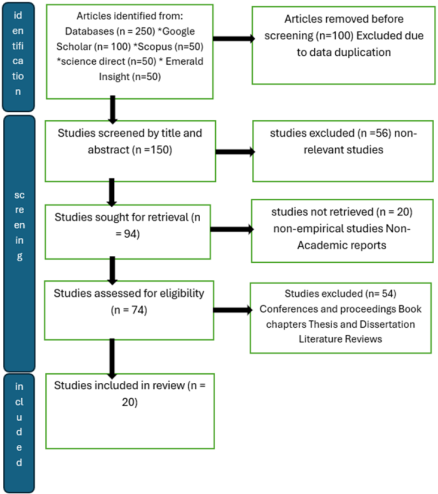
Figure 1. A PRISMA diagram.
The study applied clearly defined inclusion and exclusion criteria to ensure relevance and academic rigor. Included studies were required to be written in English, published in peer-reviewed academic journals, and directly focused on auditors, regulatory frameworks, litigation exposure, or audit quality. Excluded materials comprised non-English publications, non-academic reports, commentaries, editorials, conference proceedings, book chapters, theses, and studies not directly related to the core research objectives
| [11] | Akuoko-Sarpong, R., Gyasi, S. T., & Affram, H. (2024). Audit quality and its determinants: Factors influencing audit quality, including auditor independence, firm size, and the regulatory environment. International Journal of Innovative Science and Research Technology.
https://doi.org/10.38124/ijisrt/IJISRT24AUG1058 |
[11]
. Duplicate records identified across databases were removed prior to screening. Following the PRISMA process, an initial total of 250 articles were identified. After removing 100 duplicate records, 150 studies were screened based on titles and abstracts, resulting in the exclusion of 56 non-relevant studies. Subsequently, 94 studies were sought for full-text retrieval, of which 20 studies were excluded due to non-empirical focus or non-academic content. A further 54 studies were excluded during the eligibility assessment stage because they consisted of conference papers, book chapters, dissertations, or literature reviews. Ultimately, 20 empirical journal articles met all inclusion criteria and were retained for final analysis.
Figure 1 presents a detailed PRISMA flow diagram summarizing this selection process.
The final set of studies was analyzed using a thematic analysis approach. This method enabled the systematic extraction, coding, and organization of key findings across the selected literature. The extracted data were categorized into major analytical themes, including regulatory impacts on audit practices, the effects of litigation risk on auditor behavior, and the combined influence of regulatory and legal pressures on audit quality and professional judgment
. This approach facilitated cross-study comparison, identification of recurring patterns, and recognition of divergent findings across different regulatory and institutional contexts. Additionally, thematic analysis supported the identification of significant research gaps, particularly with respect to developing economies, small and medium-sized audit firms, and the long-term effects of regulatory and litigation changes
| [6] | Shbeilat, M. K., & Alqatamin, R. M. (2022). Challenges and forward-looking roles of forensic accounting in combating money laundering: Evidence from the developing market. Journal of Governance & Regulation, 11(3).
https://doi.org/10.22495/jgrv11i3art10 |
[6]
. Overall, the methodological approach adopted in this study ensured a comprehensive, systematic, and reliable synthesis of existing knowledge on regulatory and litigation challenges in auditing, thereby strengthening the validity and replicability of the review findings
| [2] | Alkhalaileh, R., Alshurafat, H., Ananzeh, H., & Al Amosh, H. (2024). The impact of external auditors with forensic accounting competencies on auditee firm performance. Heliyon, e32099. https://doi.org/10.1016/j.heliyon.2024.e32099 |
[2]
.
Table 1. Summary of Reviewed Articles (20 Studies).
No. | Author(s) & Year | Context / Country | Purpose of Study | Method / Data | Key Findings Relevant to Regulation & Litigation Challenges |
1 | | [1] | Sawaya, C., Al Maalouf, N. J., Hanoun, R., & Rakwi, M. (2025). Impact of auditor independence, expertise, and industry experience on financial reporting quality. Applied Management Review. https://doi.org/10.1016/j.apmrv.2025.100357 |
[1] | Lebanon | Examine how independence, expertise, and industry experience affect reporting quality | Empirical, survey + archival | Strong regulatory expectations improve audit quality; expertise reduces litigation exposure |
2 | | [2] | Alkhalaileh, R., Alshurafat, H., Ananzeh, H., & Al Amosh, H. (2024). The impact of external auditors with forensic accounting competencies on auditee firm performance. Heliyon, e32099. https://doi.org/10.1016/j.heliyon.2024.e32099 |
[2] | Jordan | Assess forensic competence of auditors and firm performance | Quantitative | Forensic capabilities strengthen compliance and reduce fraud risk; increases regulatory burden |
3 | | [3] | Groves, L., Vecchione, B., Metcalf, J., Strait, A., & Kennedy, A. (2024). Auditing work: Exploring the New York City algorithmic bias audit regime. Proceedings of the ACM Conference. https://doi.org/10.1145/3630106.3658959 |
[3] | USA (NYC) | Evaluate algorithmic audit regulations | Case-based analysis | New regulations increase auditors’ compliance workload and liability exposure |
4 | | [4] | Said, K., & Khasharmeh, H. (2014). Auditors’ perceptions on the impact of mandatory audit firm rotation on auditor independence: Evidence from Bahrain. Journal of Accounting and Taxation, 6(1). https://doi.org/10.5897/JAT2013.0127 |
[4] | Bahrain | Study perceptions of mandatory audit firm rotation | Survey | Rotation enhances independence but increases cost and administrative burden |
5 | | Nigeria | Link regulatory frameworks with corporate reporting quality | Archival | Strict regulation improves reporting quality but increases compliance costs |
6 | | [6] | Shbeilat, M. K., & Alqatamin, R. M. (2022). Challenges and forward-looking roles of forensic accounting in combating money laundering: Evidence from the developing market. Journal of Governance & Regulation, 11(3).
https://doi.org/10.22495/jgrv11i3art10 |
[6] | Jordan | Identify forensic accounting role in AML | Survey | Stronger regulation increases auditors’ responsibility and workload |
7 | | [7] | Martinez, A. L., Brasil, C. V., do Amaral, A. C. F., Soares, L. R., & Pinheiro, L. E. T. (2025). The tax litigation–auditor change nexus: Strategic rotation patterns in Brazil’s hyper-litigious environment. Revista de Administração Contemporânea. https://doi.org/10.5902/1983465992051 |
[7] | Brazil | Examine tax litigation and auditor changes | Archival | High litigation risk leads to auditor switching and conservative behavior |
8 | | [8] | Odinaka, N., Okolo, C. H., Chima, O. K., & Adeyelu, O. O. (2025). Strategic use of audit analytics in high-growth markets: Bridging energy infrastructure with financial forensics for regulatory integrity. Financial Accounting Research Journal, 7(3). https://doi.org/10.51594/farj.v7i3 |
[8] | Nigeria | Use of audit analytics in high-risk markets | Empirical | Technology improves compliance but increases cost and regulatory complexity |
9 | | [9] | Adejumo, A. P., & Ogburie, C. P. (2025). Forensic accounting in financial fraud detection: Trends and challenges. International Journal of Scientific Research and Applications, 14(3). https://doi.org/10.30574/ijsra.2025.14.3.0815 |
[9] | Global | Forensic accounting trends | Review | Increased fraud cases lead to stricter regulation and higher auditor liability |
10 | | [10] | Shehadeh, A., Nassar, M. D., Shrouf, H., & Sharairi, M. H. (2024). How audit fees impact earnings management in service companies on the Amman Stock Exchange through audit committee characteristics. International Journal of Financial Studies, 12(2). https://doi.org/10.3390/ijfs12020032 |
[10] | Jordan | Link audit fees, committee characteristics, and earnings management | Quantitative | High litigation risk increases audit fees; stronger committees reduce risk |
11 | | [11] | Akuoko-Sarpong, R., Gyasi, S. T., & Affram, H. (2024). Audit quality and its determinants: Factors influencing audit quality, including auditor independence, firm size, and the regulatory environment. International Journal of Innovative Science and Research Technology.
https://doi.org/10.38124/ijisrt/IJISRT24AUG1058 |
[11] | Ghana | Determine drivers of audit quality | Survey | Regulatory environment significantly shapes audit quality; compliance burden increases |
12 | | Australia | Explore litigation risk & auditor choice | Archival | Higher litigation environments push firms to choose Big 4 auditors |
13 | | [13] | Castillo-Merino, D., Garcia-Blandon, J., & Rodríguez-Perez, G. (2022). Effects of the 2014 European reform on audit activity, audit outcomes, and the audit market: The auditors’ view. Meditari Accountancy Research.
https://doi.org/10.1108/MEDAR-07-2022-1746 |
[13] | EU | Evaluate 2014 EU audit reforms | Survey | Regulation increases workload and improves audit transparency |
14 | | [14] | Noureldeen, E., Elsayed, M., Elamer, A. A., & Ye, J. (2024). Two-tier board characteristics and expanded audit reporting: Evidence from China. Review of Quantitative Finance and Accounting. https://doi.org/10.1007/s11156-024-01256-6 |
[14] | China | Expanded audit reporting under two-tier boards | Archival | New rules increase documentation requirements and accountability |
15 | | [15] | Velte, P. (2021). The link between corporate governance and corporate financial misconduct: A review of archival studies and implications for future research. Review of Managerial Science. https://doi.org/10.1007/s11301-021-00244-7 |
[15] | Global | Corporate governance & misconduct review | Review | Weak governance increases litigation risk and regulatory scrutiny |
16 | | [16] | Velte, P. (2022). The impact of external auditors on firms’ financial restatements: A review of archival studies and implications for future research. Review of Managerial Science.
https://doi.org/10.1007/s11301-022-00264-x |
[16] | Global | External auditors & financial restatements | Systematic Review | Strong regulation reduces restatements; litigation risk increases independence |
17 | | [17] | Celestin, M. (2020). The effect of regulatory changes on auditing standards: How global compliance rules are reshaping the audit profession. International Journal of Accounting Studies. https://doi.org/10.5281/zenodo.15056642 |
[17] | Global | Regulatory changes on auditing standards | Theoretical | Global reforms raise administrative costs and stress among auditors |
18 | | Global | Review audit research developments following Sarbanes–Oxley reforms | Literature review | Regulatory reforms enhance audit quality and independence but increase compliance costs and litigation exposure for auditors |
19 | | [21] | Knechel, W. R., Vanstraelen, A., & Zerni, M. (2014). Litigation risk, financial reporting, and auditing: A survey of the literature. Accounting and Business Research, 44(2), 137–175.
https://doi.org/10.1080/00014788.2013.867433 |
[21] | Global | Synthesize literature on litigation risk, financial reporting, and auditing | Survey of archival and empirical studies | Litigation risk significantly influences auditor conservatism, audit effort, and client acceptance decisions; heightened legal exposure increases audit costs and risk aversion |
20 | | [18] | Chen, J. Z., Cussatt, M., & Huang, L. (2025). How does Big 4 auditor style impact the comparability of disaggregated performance statement components? Journal of Accounting and Public Policy. https://doi.org/10.1016/j.jaccpubpol.2025.107373 |
[18] | USA | Big 4 audit style & comparability | Archival | Regulatory pressure pushes firms to adopt consistent, standardized audit processes |
For the article: “The Impacts of Regulatory and Litigation Challenges on Auditors: A Systematic Literature Review”
3. Results
Analysis of the twenty selected studies reveals consistent evidence that regulatory pressures, heightened litigation risk, and evolving audit standards significantly influence auditor judgment, audit quality, and professional skepticism. Most studies agree that regulatory tightening enhances transparency but simultaneously increases compliance costs and auditor workload. The literature also shows a growing trend toward advanced audit technologies and forensic-oriented skills as responses to litigation threats. While the majority of articles identify positive effects of regulations on reporting quality, several highlight unintended consequences such as defensive auditing, reduced professional autonomy, and risk-averse decision-making. Overall, the reviewed evidence demonstrates that the interaction between regulatory frameworks and litigation environments continues to shape auditors’ independence, behaviour, and audit outcomes.
3.1. Impact of Regulatory Challenges on Auditors
3.2. Increased Compliance Burden
The reviewed literature consistently indicated that the wave of regulatory reforms introduced globally has significantly expanded the compliance responsibilities placed on auditors. Modern auditing regulations are more comprehensive and require auditors to adhere to highly detailed standards, leaving little room for flexibility
| [17] | Celestin, M. (2020). The effect of regulatory changes on auditing standards: How global compliance rules are reshaping the audit profession. International Journal of Accounting Studies. https://doi.org/10.5281/zenodo.15056642 |
[17]
. As a result, auditors must document every stage of the audit process meticulously to demonstrate compliance during inspections or reviews. This includes preparing detailed working papers, maintaining audit trails, and justifying key professional judgments
| [13] | Castillo-Merino, D., Garcia-Blandon, J., & Rodríguez-Perez, G. (2022). Effects of the 2014 European reform on audit activity, audit outcomes, and the audit market: The auditors’ view. Meditari Accountancy Research.
https://doi.org/10.1108/MEDAR-07-2022-1746 |
[13]
. In addition to documentation, the frequency and intensity of external inspections—by bodies such as PCAOB, the Financial Reporting Council (FRC), and national oversight authorities—have increased. Auditors must therefore prepare extensively for these inspections, which adds further workload beyond regular audit tasks
| [15] | Velte, P. (2021). The link between corporate governance and corporate financial misconduct: A review of archival studies and implications for future research. Review of Managerial Science. https://doi.org/10.1007/s11301-021-00244-7 |
[15]
. Audit firms are also required to continuously update their internal quality control systems to align with evolving regulations. This includes developing new policies, updating audit software, and ensuring staff training is conducted regularly
| [1] | Sawaya, C., Al Maalouf, N. J., Hanoun, R., & Rakwi, M. (2025). Impact of auditor independence, expertise, and industry experience on financial reporting quality. Applied Management Review. https://doi.org/10.1016/j.apmrv.2025.100357 |
[1]
. Overall, the combined effect of these requirements has not only increased the time and effort needed to complete audit engagements but has also transformed how audits are planned, executed, and reviewed. Many audit firms report operational strain, especially smaller firms that lack the logistical and financial capacity to keep up with frequent regulatory changes
| [11] | Akuoko-Sarpong, R., Gyasi, S. T., & Affram, H. (2024). Audit quality and its determinants: Factors influencing audit quality, including auditor independence, firm size, and the regulatory environment. International Journal of Innovative Science and Research Technology.
https://doi.org/10.38124/ijisrt/IJISRT24AUG1058 |
[11]
.
3.3. Audit Quality Improvements
A significant portion of the reviewed studies concluded that increased regulatory oversight has positively influenced audit quality. Regulations that emphasize transparency, accountability, and rigorous audit procedures have compelled auditors to adopt more thorough and standardized audit methodologies
| [7] | Martinez, A. L., Brasil, C. V., do Amaral, A. C. F., Soares, L. R., & Pinheiro, L. E. T. (2025). The tax litigation–auditor change nexus: Strategic rotation patterns in Brazil’s hyper-litigious environment. Revista de Administração Contemporânea. https://doi.org/10.5902/1983465992051 |
[7]
. This has contributed to fewer material misstatements, improved detection of irregularities, and enhanced reliability of financial reports. Regulators’ emphasis on professional skepticism has particularly strengthened auditors’ critical assessment of management assertions
| [14] | Noureldeen, E., Elsayed, M., Elamer, A. A., & Ye, J. (2024). Two-tier board characteristics and expanded audit reporting: Evidence from China. Review of Quantitative Finance and Accounting. https://doi.org/10.1007/s11156-024-01256-6 |
[14]
. This reduces the likelihood of auditors accepting explanations without sufficient evidence. Stricter regulatory inspections have also forced audit firms to maintain better internal controls and quality monitoring systems, such as peer reviews and second partner reviews
| [16] | Velte, P. (2022). The impact of external auditors on firms’ financial restatements: A review of archival studies and implications for future research. Review of Managerial Science.
https://doi.org/10.1007/s11301-022-00264-x |
[16]
. However, the extent of audit quality improvement varies across countries. Developed markets tend to show more substantial improvements because enforcement is stronger and audit firms have access to advanced tools such as data analytics and forensic audit software
| [8] | Odinaka, N., Okolo, C. H., Chima, O. K., & Adeyelu, O. O. (2025). Strategic use of audit analytics in high-growth markets: Bridging energy infrastructure with financial forensics for regulatory integrity. Financial Accounting Research Journal, 7(3). https://doi.org/10.51594/farj.v7i3 |
[8]
. In contrast, developing economies face challenges such as weak enforcement and limited resources, which hinder full compliance with regulatory expectations
| [9] | Adejumo, A. P., & Ogburie, C. P. (2025). Forensic accounting in financial fraud detection: Trends and challenges. International Journal of Scientific Research and Applications, 14(3). https://doi.org/10.30574/ijsra.2025.14.3.0815 |
[9]
. Despite these variations, the overall trend supports the conclusion that regulatory reforms have elevated the baseline quality of audit practices globally
| [2] | Alkhalaileh, R., Alshurafat, H., Ananzeh, H., & Al Amosh, H. (2024). The impact of external auditors with forensic accounting competencies on auditee firm performance. Heliyon, e32099. https://doi.org/10.1016/j.heliyon.2024.e32099 |
[2]
.
3.4. Financial Implications
Financial implications emerged as one of the most pressing concerns across the reviewed studies. Implementing new regulatory requirements often comes with significant costs. Audit firms are required to invest in modern audit tools and technology, such as automated audit software, risk assessment tools, and secure data-management systems
. These technologies are expensive, particularly for small and medium-sized firms. Additionally, firms must allocate funds for continuous professional development to ensure auditors understand new standards and can apply them appropriately
| [4] | Said, K., & Khasharmeh, H. (2014). Auditors’ perceptions on the impact of mandatory audit firm rotation on auditor independence: Evidence from Bahrain. Journal of Accounting and Taxation, 6(1). https://doi.org/10.5897/JAT2013.0127 |
[4]
. Such training programs add financial strain, especially when regulatory updates are frequent. In response to increased expenditure, many firms raise their audit fees to compensate, although smaller firms often face resistance from clients
| [10] | Shehadeh, A., Nassar, M. D., Shrouf, H., & Sharairi, M. H. (2024). How audit fees impact earnings management in service companies on the Amman Stock Exchange through audit committee characteristics. International Journal of Financial Studies, 12(2). https://doi.org/10.3390/ijfs12020032 |
[10]
. In some regions, these financial pressures have led to greater market concentration, with large audit firms dominating the industry and smaller firms being forced into mergers or exiting the market altogether
| [3] | Groves, L., Vecchione, B., Metcalf, J., Strait, A., & Kennedy, A. (2024). Auditing work: Exploring the New York City algorithmic bias audit regime. Proceedings of the ACM Conference. https://doi.org/10.1145/3630106.3658959 |
[3]
.
3.5. Psychological and Professional Stress
Regulatory pressure does not only affect audit processes; it also has a significant psychological impact on auditors. The heightened expectations from regulators mean that auditors must work under tighter timelines and face greater scrutiny for their decisions, especially in jurisdictions where litigation risks are high
. This environment creates a sense of constant pressure, as auditors fear making errors that could lead to regulatory penalties or reputational damage
| [15] | Velte, P. (2021). The link between corporate governance and corporate financial misconduct: A review of archival studies and implications for future research. Review of Managerial Science. https://doi.org/10.1007/s11301-021-00244-7 |
[15]
. Studies report that auditors often experience long working hours, particularly during peak seasons when regulatory deadlines must be met, contributing to fatigue, burnout, and decreased job satisfaction
| [6] | Shbeilat, M. K., & Alqatamin, R. M. (2022). Challenges and forward-looking roles of forensic accounting in combating money laundering: Evidence from the developing market. Journal of Governance & Regulation, 11(3).
https://doi.org/10.22495/jgrv11i3art10 |
[6]
. Frequent regulatory updates also produce uncertainty and anxiety, as auditors must continually adapt and update their knowledge
| [2] | Alkhalaileh, R., Alshurafat, H., Ananzeh, H., & Al Amosh, H. (2024). The impact of external auditors with forensic accounting competencies on auditee firm performance. Heliyon, e32099. https://doi.org/10.1016/j.heliyon.2024.e32099 |
[2]
. Knowing that their work will be critically examined by regulators or inspectors adds an additional layer of professional stress, which in the long term may negatively affect decision-making and professional judgment
| [1] | Sawaya, C., Al Maalouf, N. J., Hanoun, R., & Rakwi, M. (2025). Impact of auditor independence, expertise, and industry experience on financial reporting quality. Applied Management Review. https://doi.org/10.1016/j.apmrv.2025.100357 |
[1]
. High levels of stress also contribute to increased staff turnover, especially among younger auditors, making it harder for firms to retain experienced staff
| [11] | Akuoko-Sarpong, R., Gyasi, S. T., & Affram, H. (2024). Audit quality and its determinants: Factors influencing audit quality, including auditor independence, firm size, and the regulatory environment. International Journal of Innovative Science and Research Technology.
https://doi.org/10.38124/ijisrt/IJISRT24AUG1058 |
[11]
.
Table 2. Summary of Regulatory Challenges Faced by Auditors.
Regulatory Challenge | Description |
Increased Compliance Burden | Comprehensive regulations demand extensive documentation, frequent inspections, and continuous updates to quality control systems. |
Audit Quality Improvements | Enhanced oversight increases professional skepticism, standardization, and reliability of financial reporting. |
Financial Implications | High costs for technology, training, and compliance lead to increased audit fees and market concentration. |
Psychological and Professional Stress | Tight deadlines, high expectations, and frequent regulatory changes cause fatigue, burnout, anxiety, and staff turnover. |
3.5.1. Conservative Audit Behavior
Litigation risk was found to have a major influence on auditors’ decision-making processes. When auditors perceive a high likelihood of being sued due to financial misstatements, they adopt conservative audit strategies
. These strategies include applying stricter verification procedures, increasing sample sizes, demanding more detailed explanations from management, and hesitating to accept estimates or judgments without solid supporting evidence. While conservative auditing reduces the risk of audit failure and protects auditors from lawsuits, it also increases audit time and may strain relationships with clients
| [16] | Velte, P. (2022). The impact of external auditors on firms’ financial restatements: A review of archival studies and implications for future research. Review of Managerial Science.
https://doi.org/10.1007/s11301-022-00264-x |
[16]
.
Clients sometimes perceive conservative auditors as overly skeptical or intrusive, particularly when they challenge management judgments or demand additional documentation. This tension may compromise cooperation during the audit process. Nevertheless, conservative auditing is seen as a rational response to a legal environment where auditors can face severe consequences—including financial penalties and reputational damage—if they fail to identify material misstatements
| [6] | Shbeilat, M. K., & Alqatamin, R. M. (2022). Challenges and forward-looking roles of forensic accounting in combating money laundering: Evidence from the developing market. Journal of Governance & Regulation, 11(3).
https://doi.org/10.22495/jgrv11i3art10 |
[6]
.
3.5.2. Higher Audit Fees
The reviewed studies consistently indicate that litigation risk contributes to higher audit fees. To minimize the likelihood of legal disputes, auditors expand the scope of their work, conduct additional procedures, and adopt more robust evidence-gathering techniques
| [10] | Shehadeh, A., Nassar, M. D., Shrouf, H., & Sharairi, M. H. (2024). How audit fees impact earnings management in service companies on the Amman Stock Exchange through audit committee characteristics. International Journal of Financial Studies, 12(2). https://doi.org/10.3390/ijfs12020032 |
[10]
. These additional requirements naturally lead to increased audit hours and costs. Furthermore, audit firms face raising insurance premiums for professional liability coverage when litigation risks are high, and these premiums must be factored into audit pricing models
| [1] | Sawaya, C., Al Maalouf, N. J., Hanoun, R., & Rakwi, M. (2025). Impact of auditor independence, expertise, and industry experience on financial reporting quality. Applied Management Review. https://doi.org/10.1016/j.apmrv.2025.100357 |
[1]
. In industries such as banking, pharmaceuticals, and technology—where financial reporting risks are inherently higher—clients tend to pay more for audit services because auditors must assume greater legal responsibility
| [7] | Martinez, A. L., Brasil, C. V., do Amaral, A. C. F., Soares, L. R., & Pinheiro, L. E. T. (2025). The tax litigation–auditor change nexus: Strategic rotation patterns in Brazil’s hyper-litigious environment. Revista de Administração Contemporânea. https://doi.org/10.5902/1983465992051 |
[7]
. Higher audit fees are therefore not purely profit-driven but reflect the increased cost and risk associated with performing audits in litigious environments
| [15] | Velte, P. (2021). The link between corporate governance and corporate financial misconduct: A review of archival studies and implications for future research. Review of Managerial Science. https://doi.org/10.1007/s11301-021-00244-7 |
[15]
.
3.5.3. Reduced Willingness to Retain High-Risk Clients
Auditors are increasingly selective about the clients they accept or retain, especially when litigation risks are elevated. High-risk clients—such as those with weak internal controls, frequent regulatory sanctions, complex financial structures, or past restatements—are often avoided
. Auditors fear that working with such clients increases the likelihood of financial misstatements going undetected, which could expose them to legal action. This cautious approach is particularly evident among smaller audit firms that lack strong legal support or the financial reserves needed to withstand legal battles
| [11] | Akuoko-Sarpong, R., Gyasi, S. T., & Affram, H. (2024). Audit quality and its determinants: Factors influencing audit quality, including auditor independence, firm size, and the regulatory environment. International Journal of Innovative Science and Research Technology.
https://doi.org/10.38124/ijisrt/IJISRT24AUG1058 |
[11]
. However, even large firms have become more careful, often conducting rigorous client acceptance assessments before engagement
| [3] | Groves, L., Vecchione, B., Metcalf, J., Strait, A., & Kennedy, A. (2024). Auditing work: Exploring the New York City algorithmic bias audit regime. Proceedings of the ACM Conference. https://doi.org/10.1145/3630106.3658959 |
[3]
. While disengaging from high-risk clients helps auditors protect themselves, it creates a market problem: some companies may find it difficult to secure qualified auditors, reducing audit market competition and leaving certain industries underserved
| [16] | Velte, P. (2022). The impact of external auditors on firms’ financial restatements: A review of archival studies and implications for future research. Review of Managerial Science.
https://doi.org/10.1007/s11301-022-00264-x |
[16]
.
Table 3. Summary of Litigation Challenges Faced by Auditors.
Litigation Challenge | Description |
Conservative Audit Behavior | Increased sample sizes, rigorous verification, and reluctance to accept estimates to avoid legal risk. |
Higher Audit Fees | Expanded procedures, increased audit hours, and higher insurance premiums due to litigation risk. |
Reduced Willingness to Retain High-risk Clients | Avoidance of clients with weak controls, regulatory sanctions, or complex reporting structures. |
3.5.4. Combined Effects of Regulation and Litigation on Audit Quality
The interaction between regulatory pressure and litigation risk creates a complex environment that significantly influences audit quality and auditor behavior. While stronger regulation and heightened legal accountability encourage auditors to apply more rigorous procedures and maintain higher levels of professional skepticism, these pressures may also generate unintended consequences such as defensive auditing, reduced professional flexibility, and increased occupational stress
| [2] | Alkhalaileh, R., Alshurafat, H., Ananzeh, H., & Al Amosh, H. (2024). The impact of external auditors with forensic accounting competencies on auditee firm performance. Heliyon, e32099. https://doi.org/10.1016/j.heliyon.2024.e32099 |
| [14] | Noureldeen, E., Elsayed, M., Elamer, A. A., & Ye, J. (2024). Two-tier board characteristics and expanded audit reporting: Evidence from China. Review of Quantitative Finance and Accounting. https://doi.org/10.1007/s11156-024-01256-6 |
[2, 14].
The reviewed studies indicate that the combined effects of regulation and litigation shape both the effectiveness and sustainability of modern audit practice, particularly as auditors attempt to balance compliance requirements with professional judgment under increasing scrutiny
| [13] | Castillo-Merino, D., Garcia-Blandon, J., & Rodríguez-Perez, G. (2022). Effects of the 2014 European reform on audit activity, audit outcomes, and the audit market: The auditors’ view. Meditari Accountancy Research.
https://doi.org/10.1108/MEDAR-07-2022-1746 |
| [15] | Velte, P. (2021). The link between corporate governance and corporate financial misconduct: A review of archival studies and implications for future research. Review of Managerial Science. https://doi.org/10.1007/s11301-021-00244-7 |
[13, 15].
3.5.5 Audit Quality Improvement
Most studies agree that when regulatory requirements and litigation risks operate simultaneously, the result is generally improved audit quality. Auditors become more vigilant, apply more thorough procedures, and exercise higher levels of professional skepticism
| [1] | Sawaya, C., Al Maalouf, N. J., Hanoun, R., & Rakwi, M. (2025). Impact of auditor independence, expertise, and industry experience on financial reporting quality. Applied Management Review. https://doi.org/10.1016/j.apmrv.2025.100357 |
[1]
. The dual pressure ensures that auditors remain accountable both to regulators and to the legal system, thereby enhancing the credibility of financial statements
| [2] | Alkhalaileh, R., Alshurafat, H., Ananzeh, H., & Al Amosh, H. (2024). The impact of external auditors with forensic accounting competencies on auditee firm performance. Heliyon, e32099. https://doi.org/10.1016/j.heliyon.2024.e32099 |
[2]
. This combined effect strengthens investor confidence and improves the overall functioning of capital markets
| [14] | Noureldeen, E., Elsayed, M., Elamer, A. A., & Ye, J. (2024). Two-tier board characteristics and expanded audit reporting: Evidence from China. Review of Quantitative Finance and Accounting. https://doi.org/10.1007/s11156-024-01256-6 |
[14]
.
3.5.6. Reduced Auditor Independence and Increased Stress
Despite the benefits to audit quality, several studies caution that excessive regulatory and legal pressures may undermine auditor independence. Under these conditions, auditors may prioritize strict compliance and risk avoidance over sound professional judgment
| [15] | Velte, P. (2021). The link between corporate governance and corporate financial misconduct: A review of archival studies and implications for future research. Review of Managerial Science. https://doi.org/10.1007/s11301-021-00244-7 |
[15]
. Instead of evaluating each audit situation flexibly, auditors may adhere rigidly to checklists or regulatory guidelines to shield themselves from criticism
| [13] | Castillo-Merino, D., Garcia-Blandon, J., & Rodríguez-Perez, G. (2022). Effects of the 2014 European reform on audit activity, audit outcomes, and the audit market: The auditors’ view. Meditari Accountancy Research.
https://doi.org/10.1108/MEDAR-07-2022-1746 |
[13]
. This compliance-driven mindset also intensifies stress levels, as auditors feel trapped between regulatory expectations and the fear of litigation. The resulting psychological pressure contributes to burnout, dissatisfaction, and eventual exit from the profession
| [6] | Shbeilat, M. K., & Alqatamin, R. M. (2022). Challenges and forward-looking roles of forensic accounting in combating money laundering: Evidence from the developing market. Journal of Governance & Regulation, 11(3).
https://doi.org/10.22495/jgrv11i3art10 |
[6]
. High turnover disrupts audit continuity, reduces institutional knowledge, and weakens the expertise available within audit firms
| [11] | Akuoko-Sarpong, R., Gyasi, S. T., & Affram, H. (2024). Audit quality and its determinants: Factors influencing audit quality, including auditor independence, firm size, and the regulatory environment. International Journal of Innovative Science and Research Technology.
https://doi.org/10.38124/ijisrt/IJISRT24AUG1058 |
[11]
.
3.5.7. Adoption of Defensive Auditing Practices
Under the combined effects of regulation and litigation, many audit firms increasingly rely on defensive auditing practices. This means that auditors prioritize actions that demonstrate compliance and protect them from liability rather than providing meaningful insights to clients
| [8] | Odinaka, N., Okolo, C. H., Chima, O. K., & Adeyelu, O. O. (2025). Strategic use of audit analytics in high-growth markets: Bridging energy infrastructure with financial forensics for regulatory integrity. Financial Accounting Research Journal, 7(3). https://doi.org/10.51594/farj.v7i3 |
[8]
. For example, auditors may focus heavily on documentation, standardized checklists, and routine procedures at the expense of professional judgment and value-added services
| [9] | Adejumo, A. P., & Ogburie, C. P. (2025). Forensic accounting in financial fraud detection: Trends and challenges. International Journal of Scientific Research and Applications, 14(3). https://doi.org/10.30574/ijsra.2025.14.3.0815 |
[9]
. While defensive auditing reduces personal and legal risks, it limits the potential benefits that audits can offer to clients, such as strategic recommendations, process improvements, or risk-management advice. Over time, this shift may reduce the perceived value of auditing as a profession and weaken the auditor–client relationship
| [16] | Velte, P. (2022). The impact of external auditors on firms’ financial restatements: A review of archival studies and implications for future research. Review of Managerial Science.
https://doi.org/10.1007/s11301-022-00264-x |
[16]
.
Table 4. Combined Effects of Regulation and Litigation on Audit Quality.
Combined Effect | Description |
Audit Quality Improvement | Dual pressure from regulators and legal systems increases accountability and enhances credibility of financial statements. |
Reduced Auditor Independence & Increased Stress | Excessive pressure pushes auditors to rigid compliance rather than professional judgment, leading to burnout and turnover. |
Adoption of Defensive Auditing Practices | Focus on documentation and checklists over value-added insights, weakening auditor–client relationships. |
4. Research Gaps Identified
Despite the growing body of literature examining regulatory and litigation challenges in the auditing profession, several notable research gaps remain unaddressed. These gaps highlight areas where further empirical inquiry is necessary to strengthen the global understanding of how regulatory and legal pressures shape auditing practices. One of the most prominent gaps concerns the limited geographical representation within existing studies. Much of the current research is heavily concentrated in North America, Europe, and Australia, leaving regions such as Africa, Asia, and South America significantly underrepresented
| [21] | Knechel, W. R., Vanstraelen, A., & Zerni, M. (2014). Litigation risk, financial reporting, and auditing: A survey of the literature. Accounting and Business Research, 44(2), 137–175.
https://doi.org/10.1080/00014788.2013.867433 |
[21]
. These regions possess distinct economic structures, regulatory environments, and institutional characteristics that may influence how auditors experience and respond to regulatory and litigation pressures. The scarcity of research from these areas limits the generalizability of existing findings and restricts the ability to compare auditing dynamics across diverse socio-economic and regulatory contexts. Expanding research to include these regions would provide a more holistic and globally balanced understanding of the auditing landscape
. Another critical gap lies in the lack of longitudinal studies that examine the long-term effects of regulatory reforms and litigation risks. The majority of studies reviewed adopt cross-sectional or short-term designs, capturing auditor responses at a single point in time
| [18] | Chen, J. Z., Cussatt, M., & Huang, L. (2025). How does Big 4 auditor style impact the comparability of disaggregated performance statement components? Journal of Accounting and Public Policy. https://doi.org/10.1016/j.jaccpubpol.2025.107373 |
[18]
. However, regulatory changes and shifts in litigation environments often produce effects that unfold gradually. For instance, the behavioural, financial, and structural impacts of major regulatory reforms may only become fully evident after several years. Without longitudinal research, it is challenging to determine whether observed changes in audit quality, auditor behaviour, or firm performance are temporary reactions or sustained outcomes. Long-term studies are therefore essential to assess the persistence, evolution, and cumulative influence of regulatory and litigation pressures
| [21] | Knechel, W. R., Vanstraelen, A., & Zerni, M. (2014). Litigation risk, financial reporting, and auditing: A survey of the literature. Accounting and Business Research, 44(2), 137–175.
https://doi.org/10.1080/00014788.2013.867433 |
[21]
.
A further gap exists in the limited attention given to small and medium-sized audit firms. Existing research overwhelmingly focuses on the Big Four and other large international firms, which generally possess greater financial resources, advanced technologies, and robust internal quality control mechanisms
. In contrast, smaller firms operate under tighter resource constraints and may face disproportionate challenges in meeting complex regulatory requirements or absorbing litigation costs. Yet, the literature provides little insight into how these firms navigate increasing regulatory demands, the extent to which they experience financial strain, or whether these pressures influence market exit, mergers, or reductions in service offerings
| [21] | Knechel, W. R., Vanstraelen, A., & Zerni, M. (2014). Litigation risk, financial reporting, and auditing: A survey of the literature. Accounting and Business Research, 44(2), 137–175.
https://doi.org/10.1080/00014788.2013.867433 |
[21]
Addressing this gap is vital, as small and medium-sized firms constitute a significant portion of the global audit market and play a crucial role in maintaining competition, accessibility, and diversity within the profession.
Finally, there is a growing need for studies that examine the interaction between regulatory oversight, litigation risk, and emerging audit environments shaped by regulatory inspections and enforcement mechanisms. Prior research indicates that regulatory inspections, such as those conducted by oversight bodies, can significantly alter how litigation risk influences audit quality and auditor behavior
| [19] | Chen, M., Moul, C., & Reffett, A. (2025). Do PCAOB inspections change the effect of litigation risk on audit quality? The International Journal of Accounting, 60(1).
https://doi.org/10.1142/S1094406024500197 |
[19]
However, existing studies have not sufficiently explored how these interactions evolve over time or across different institutional settings. Investigating these issues is increasingly important as regulatory scrutiny intensifies and legal accountability becomes a central concern in modern auditing.
Therefore, the identified research gaps underscore the need for broader geographic representation, more longitudinal evidence, deeper exploration of small audit firm experiences, and enhanced examination of the interaction between regulation and litigation risk. Addressing these gaps will enrich academic discourse and support the development of more effective and globally relevant regulatory and professional frameworks in auditing
| [19] | Chen, M., Moul, C., & Reffett, A. (2025). Do PCAOB inspections change the effect of litigation risk on audit quality? The International Journal of Accounting, 60(1).
https://doi.org/10.1142/S1094406024500197 |
| [21] | Knechel, W. R., Vanstraelen, A., & Zerni, M. (2014). Litigation risk, financial reporting, and auditing: A survey of the literature. Accounting and Business Research, 44(2), 137–175.
https://doi.org/10.1080/00014788.2013.867433 |
[19, 21]
.
Table 5. Summary of Identified Research Gaps.
Research Gap | Description |
Limited Geographical Representation | Over-reliance on studies from North America, Europe, and Australia, with minimal representation from Africa, Asia, and South America. |
Lack of Longitudinal Studies | Most research is short-term; long-term effects of reforms remain unclear. |
Limited Focus on Small and Medium Audit Firms | Existing literature focuses mainly on large firms, ignoring SMEs’ unique regulatory and financial challenges. |
Inadequate Research on Digital Transformation and Regulation | Little exploration of how AI, analytics, and blockchain intersect with regulatory frameworks and legal liability. |
5. Discussion
This systematic literature review provides a critical synthesis of how regulatory and litigation pressures jointly and independently shape auditor behaviour, audit quality, and professional judgment. While prior studies often examine these pressures in isolation, the findings of this review demonstrate that their effects are interdependent and context specific. Overall, the evidence confirms that regulatory and litigation mechanisms play a central role in strengthening audit quality, yet they simultaneously generate significant operational, economic, and human capital challenges that may undermine the long-term sustainability of the auditing profession. Rather than producing uniformly positive outcomes, regulatory and litigation pressures generate trade-offs between compliance, professional judgment, audit efficiency, and auditor well-being. These trade-offs vary across firm size, jurisdiction, enforcement strength, and institutional capacity, underscoring the need for a more nuanced interpretation of regulatory effectiveness.
5.1. Regulatory Pressure and Audit Practice
The findings indicate that increased regulatory oversight consistently elevates auditors’ compliance burden, confirming that modern audit practice has become increasingly intensive documentation. Consistent with
| [17] | Celestin, M. (2020). The effect of regulatory changes on auditing standards: How global compliance rules are reshaping the audit profession. International Journal of Accounting Studies. https://doi.org/10.5281/zenodo.15056642 |
[17]
and
| [13] | Castillo-Merino, D., Garcia-Blandon, J., & Rodríguez-Perez, G. (2022). Effects of the 2014 European reform on audit activity, audit outcomes, and the audit market: The auditors’ view. Meditari Accountancy Research.
https://doi.org/10.1108/MEDAR-07-2022-1746 |
[13]
, regulatory reforms have shifted audit work toward procedural conformity and inspection readiness. While this shift enhances accountability and traceability, it also constrains professional discretion and intensifies time pressure, particularly during regulatory inspections
| [15] | Velte, P. (2021). The link between corporate governance and corporate financial misconduct: A review of archival studies and implications for future research. Review of Managerial Science. https://doi.org/10.1007/s11301-021-00244-7 |
[15]
. This suggests that regulation improves audit quality primarily through standardization rather than through the enhancement of professional judgment.
Importantly, the review reveals that the impact of regulatory pressure is uneven across audit firms. Smaller audit firms face disproportionate challenges in adapting to complex regulatory requirements due to limited financial, technological, and human resources
| [11] | Akuoko-Sarpong, R., Gyasi, S. T., & Affram, H. (2024). Audit quality and its determinants: Factors influencing audit quality, including auditor independence, firm size, and the regulatory environment. International Journal of Innovative Science and Research Technology.
https://doi.org/10.38124/ijisrt/IJISRT24AUG1058 |
[11]
. This finding highlights a structural imbalance within the audit market, where regulatory frameworks implicitly favor large firms with greater compliance capacity. Although regulatory oversight strengthens audit quality through improved skepticism, standardized methodologies, and internal controls
| [7] | Martinez, A. L., Brasil, C. V., do Amaral, A. C. F., Soares, L. R., & Pinheiro, L. E. T. (2025). The tax litigation–auditor change nexus: Strategic rotation patterns in Brazil’s hyper-litigious environment. Revista de Administração Contemporânea. https://doi.org/10.5902/1983465992051 |
| [17] | Celestin, M. (2020). The effect of regulatory changes on auditing standards: How global compliance rules are reshaping the audit profession. International Journal of Accounting Studies. https://doi.org/10.5281/zenodo.15056642 |
[7, 17]
, its effectiveness is strongly moderated by national enforcement mechanisms and institutional capacity. As noted by
| [9] | Adejumo, A. P., & Ogburie, C. P. (2025). Forensic accounting in financial fraud detection: Trends and challenges. International Journal of Scientific Research and Applications, 14(3). https://doi.org/10.30574/ijsra.2025.14.3.0815 |
[9]
, differences between developed and developing economies indicate that regulation alone is insufficient to guarantee consistent audit quality improvements without complementary investments in infrastructure and professional capacity.
5.2. Litigation Risk and Auditor Behaviour
The review further demonstrates that litigation risk exerts a powerful influence on auditor behaviour, primarily by encouraging conservative and defensive auditing practices. In line with
and
| [16] | Velte, P. (2022). The impact of external auditors on firms’ financial restatements: A review of archival studies and implications for future research. Review of Managerial Science.
https://doi.org/10.1007/s11301-022-00264-x |
[16]
, auditors respond to heightened legal exposure by expanding audit procedures, increasing evidence thresholds, and adopting risk-averse decision-making strategies. While such conservatism reduces the likelihood of audit failure, it also introduces efficiency costs and may weaken auditor–client relationships through prolonged engagements and increased audit rigidity. The relationship between litigation risk and audit pricing identified in this review reinforces the findings of
| [10] | Shehadeh, A., Nassar, M. D., Shrouf, H., & Sharairi, M. H. (2024). How audit fees impact earnings management in service companies on the Amman Stock Exchange through audit committee characteristics. International Journal of Financial Studies, 12(2). https://doi.org/10.3390/ijfs12020032 |
[10]
and
| [1] | Sawaya, C., Al Maalouf, N. J., Hanoun, R., & Rakwi, M. (2025). Impact of auditor independence, expertise, and industry experience on financial reporting quality. Applied Management Review. https://doi.org/10.1016/j.apmrv.2025.100357 |
[1]
, showing that legal exposure is transferred to clients through higher audit fees. Increased professional indemnity insurance costs and expanded audit scope further amplify this effect. Moreover, the reluctance to engage with high-risk clients—particularly among smaller firms—represents a defensive market response that may reduce audit service availability in complex sectors
| [3] | Groves, L., Vecchione, B., Metcalf, J., Strait, A., & Kennedy, A. (2024). Auditing work: Exploring the New York City algorithmic bias audit regime. Proceedings of the ACM Conference. https://doi.org/10.1145/3630106.3658959 |
[3]
. This behaviour contributes to market concentration and may limit competition, echoing concerns raised by
| [16] | Velte, P. (2022). The impact of external auditors on firms’ financial restatements: A review of archival studies and implications for future research. Review of Managerial Science.
https://doi.org/10.1007/s11301-022-00264-x |
[16]
regarding reduced access to high-quality audits in high-risk environments.
5.3. Combined Effects on Audit Quality and Professional Judgment
When regulatory and litigation pressures operate simultaneously, the evidence suggests a complex dual effect on audit quality and professional judgment. On one hand, combined pressures reinforce auditor diligence, accountability, and reporting credibility by incentivizing heightened skepticism and procedural rigor
| [2] | Alkhalaileh, R., Alshurafat, H., Ananzeh, H., & Al Amosh, H. (2024). The impact of external auditors with forensic accounting competencies on auditee firm performance. Heliyon, e32099. https://doi.org/10.1016/j.heliyon.2024.e32099 |
| [14] | Noureldeen, E., Elsayed, M., Elamer, A. A., & Ye, J. (2024). Two-tier board characteristics and expanded audit reporting: Evidence from China. Review of Quantitative Finance and Accounting. https://doi.org/10.1007/s11156-024-01256-6 |
[2, 14]
. On the other hand, excessive regulatory and legal demands may unintentionally undermine auditor independence by promoting rule-based compliance over judgment-based decision-making
| [13] | Castillo-Merino, D., Garcia-Blandon, J., & Rodríguez-Perez, G. (2022). Effects of the 2014 European reform on audit activity, audit outcomes, and the audit market: The auditors’ view. Meditari Accountancy Research.
https://doi.org/10.1108/MEDAR-07-2022-1746 |
[13]
.
The emergence of defensive auditing practices identified in this review supports the concerns raised by
| [8] | Odinaka, N., Okolo, C. H., Chima, O. K., & Adeyelu, O. O. (2025). Strategic use of audit analytics in high-growth markets: Bridging energy infrastructure with financial forensics for regulatory integrity. Financial Accounting Research Journal, 7(3). https://doi.org/10.51594/farj.v7i3 |
[8]
, who argue that audits risk becoming checklist-driven exercises rather than value-enhancing assurance services. Such practices may satisfy regulatory expectations while diminishing the informational value of audits for stakeholders. Furthermore, the widespread evidence of increased stress, burnout, and workload pressures
| [6] | Shbeilat, M. K., & Alqatamin, R. M. (2022). Challenges and forward-looking roles of forensic accounting in combating money laundering: Evidence from the developing market. Journal of Governance & Regulation, 11(3).
https://doi.org/10.22495/jgrv11i3art10 |
| [11] | Akuoko-Sarpong, R., Gyasi, S. T., & Affram, H. (2024). Audit quality and its determinants: Factors influencing audit quality, including auditor independence, firm size, and the regulatory environment. International Journal of Innovative Science and Research Technology.
https://doi.org/10.38124/ijisrt/IJISRT24AUG1058 |
[6, 11]
raises serious concerns about the profession’s long-term sustainability. Persistent human capital strain can lead to high turnover, loss of institutional knowledge, and declining audit quality over time. Collectively, these findings suggest that while regulatory and litigation pressures are effective tools for safeguarding audit quality, their design and implementation require careful calibration. Without supportive frameworks that balance oversight with professional judgment and auditor well-being, intensified regulation and litigation risk may generate unintended consequences that ultimately weaken the auditing profession.
5.4. Future Research Directions
Based on these findings, future research should prioritize four key directions. First, more empirical studies are needed in underrepresented regions—particularly Africa, Asia, and South America—to improve the global relevance of audit research. Second, longitudinal research designs would help capture the long-term behavioural and structural effects of regulatory reforms. Third, greater focus on small and medium-sized audit firms is essential to understand how regulation and litigation influence market competition and firm survival. Finally, as digital technologies increasingly shape audit practice, future studies should examine how regulatory frameworks adapt to AI-driven auditing and the associated legal risks.
7. Recommendations
Based on the findings of this review, several recommendations can be proposed to strengthen both auditing practice and regulatory design:
1) Develop Balanced Regulatory Frameworks:
Regulators should aim to design policies that uphold audit quality while minimizing unnecessary administrative complexity. Streamlining documentation requirements and providing clearer guidance can reduce compliance burden without compromising oversight effectiveness.
2) Support Small and Medium-Sized Audit Firms:
Targeted policy interventions—such as subsidies for technology adoption, simplified reporting frameworks, or capacity-building programs—could help smaller firms manage compliance costs and remain competitive in the market.
3) Enhance Auditor Well-Being and Training:
Audit firms should invest in mental health programs, workload management strategies, and continuous professional development. Strengthening auditor resilience can reduce burnout and improve decision-making quality.
4) Promote Research in Emerging Markets:
Academic researchers and professional bodies should prioritize studies that capture the experiences of auditors in Africa, Asia, and South America to build a more globally representative evidence base.
5) Integrate Technology with Regulation:
Regulators must update standards to address digital auditing tools, artificial intelligence, and data analytics. Clear frameworks will guide auditors in applying technology responsibly while managing new forms of risk.
By implementing these recommendations, stakeholders can create a more supportive, adaptive, and forward-looking auditing environment that simultaneously upholds audit quality and sustains the well-being and professional integrity of auditors.





 Share This Article
 Twitter
 Linked In
 Facebook
 Copy
Copy Download