
The study utilizes both descriptive and analytical methods to evaluate the significance of agriculture in relation to GDP contribution, sectoral expansion, land utilization, crop production and livestock development, agricultural financing, and marketing frameworks. The results indicate that while the proportion of agriculture in GDP has steadily decreased due to a shift towards industrial and service sectors, the broader agricultural sector, including crop production, livestock, and fisheries, remains vital for ensuring food security, providing rural employment, and alleviating poverty. Agriculture’s share of GDP declined from about 17% in 2010 to 11.16% in 2024, while its growth rate decreased from 3.26% in FY2019 to 2.61% in FY2023, reflecting an ongoing structural transformation of the economy rather than a loss of the sector’s economic importance. Production trends, however, are not uniform across commodities. Wheat production increased by 7.7% in FY2023 compared with FY2022, while summer and winter vegetable production increased from 13.5 and 31.3 lakh MT in FY2020 to 17.0 and 36.7 lakh MT in FY2023, respectively. Livestock populations also showed generally increasing trends during FY2019-FY2023. Nonetheless, obstacles such as limited land availability, vulnerable ecosystems, market inefficiencies, climate change, and regional inequalities continue to constrain agricultural performance. Regional assessments further reveal substantial variation in salinity, flooding, soil degradation, inadequate irrigation, limited access to quality seeds, insufficient credit, and weak marketing infrastructure across divisions. At the same time, technological advancement, agricultural diversification, climate-resilient practices, value-chain development, and improved market linkages provide important opportunities for future growth. Government strategies emphasizing sustainable resource management, productivity enhancement, stronger supply chains, and institutional support can therefore play a critical role in addressing these constraints. In summary, the findings indicate that agriculture remains an important component of Bangladesh’s economy, and its modernization, strengthening of resilience, and integration with industry and trade will be critical for maintaining inclusive growth and achieving long-term development objectives.
| Published in | Science Discovery Agriculture (Volume 1, Issue 4) |
| DOI | 10.11648/j.sda.20260104.14 |
| Page(s) | 172-187 |
| Creative Commons |
This is an Open Access article, distributed under the terms of the Creative Commons Attribution 4.0 International License (http://creativecommons.org/licenses/by/4.0/), which permits unrestricted use, distribution and reproduction in any medium or format, provided the original work is properly cited. |
| Copyright |
Copyright © The Author(s), 2026. Published by Science Publishing Group |
Agriculture, Economic Development, GDP Contribution, Food Security, Rural Employment, Bangladesh
Investment type | FY20 | FY21 | FY22 | FY23 | FY24 (p) |
|---|---|---|---|---|---|
Total | 31.31 | 31.02 | 32.05 | 30.95 | 30.98 |
Private | 24.02 | 23.70 | 24.52 | 24.18 | 23.51 |
Public | 7.29 | 7.32 | 7.53 | 6.77 | 7.47 |
Indicators | FY 19 | FY20 | FY21 | FY22 | FY23 |
|---|---|---|---|---|---|
Share in GDP (%) | 12.56 | 12.52 | 12.07 | 11.61 | 11.20 |
Growth Rate (%) | 3.26 | 3.42 | 3.17 | 3.05 | 2.61 |
Industrial origin sector | 2015-16 | 2016-17 | 2017-18 | 2018-19 | 2019-20 | 2020-21 | 2021-22 | 2022-23* |
|---|---|---|---|---|---|---|---|---|
A. Agriculture | 279505 | 301167 | 329380 | 353443 | 380446 | 410661 | 445531 | 486315 |
1. Agriculture, forestry, and fishing | 279505 | 301167 | 329380 | 353443 | 380446 | 410661 | 445531 | 486315 |
a) Crops & horticulture | 138280 | 148669 | 162333 | 173378 | 186116 | 199631 | 215365 | 236869 |
b) Animal Farming | 46655 | 49516 | 53186 | 56290 | 59715 | 63293 | 67399 | 73571 |
c) Forest and related services | 37188 | 39864 | 43563 | 46639 | 50399 | 55916 | 63748 | 68204 |
d) Fishing | 57382 | 63118 | 70298 | 77136 | 84216 | 91822 | 99020 | 107672 |
Industrial origin sector | 2015-16 | 2016-17 | 2017-18 | 2018-19 | 2019-20 | 2020-21 | 2021-22 | 2022-23* |
|---|---|---|---|---|---|---|---|---|
A. Agriculture | 14.06 | 13.62 | 13.14 | 12.56 | 12.52 | 12.07 | 11.61 | 11.20 |
1. Agriculture, forestry, and fishing | 14.06 | 13.62 | 13.14 | 12.56 | 12.52 | 12.07 | 11.61 | 11.20 |
a) Crops & horticulture | 6.96 | 6.68 | 6.39 | 6.04 | 5.96 | 5.70 | 5.46 | 5.25 |
b) Animal Farming | 2.35 | 2.26 | 2.17 | 2.07 | 2.06 | 1.98 | 1.91 | 1.85 |
c) Forest and related services | 1.87 | 1.84 | 1.81 | 1.76 | 1.78 | 1.75 | 1.72 | 1.70 |
d) Fishing | 2.89 | 2.84 | 2.77 | 2.70 | 2.71 | 2.64 | 2.53 | 2.41 |
Year | FY2019 | FY2020 | FY2021 |
|---|---|---|---|
Total | 36465 | 36465 | 36465 |
Forest | 6363 | 6363 | 6363 |
Not available for cultivation | 8364 | 8284 | 8312 |
Culturable waste | 639 | 671 | 700 |
Current fallow | 1126 | 1066 | 1118 |
Single cropped | 5271 | 5216 | 5260 |
Double cropped | 10065 | 10194 | 10166 |
Triple cropped | 4594 | 4613 | 4594 |
Quadruple Cropp | 43 | 56 | 53 |
Net cropped | 19973 | 20081 | 19972 |
Gross cropped | 39357 | 39678 | 39493 |
Fiscal Year | Area (‘000 acres) | Production (“000 m ton) | Import (‘000 m ton) | Yield (ton/acre) | Share of import of total domestic production |
|---|---|---|---|---|---|
FY19 | 816 | 1017 | 5629 | 1.25 | 554.0 |
FY20 | 821 | 1029 | 6435 | 1.34 | 317.2 |
FY21 | 878 | 1299 | 5343 | 1.48 | 492.4 |
FY22 | 778 | 1086 | 4012 | 1.40 | 369.4 |
FY23 | 783 | 1170 | 1912 | 1.49 | |
Average changes in five years | -1.9 | 1.3 | -11.6 | 3.5 |
Fiscal Years | Vegetables (summer) | Vegetables (winter) |
|---|---|---|
FY20 | 13.5 | 31.3 |
FY21 | 14.0 | 32.7 |
FY22 | 15.5 | 34.5 |
FY23 | 17.0 | 36.7 |
Annual average growth | 6.5 | 4.3 |
Types | Fruits | FY20 | FY21 | FY22 | FY23 | Annual average growth rate |
|---|---|---|---|---|---|---|
Temporary | Banana (Ripe) | 8.2 | 8.3 | 8.0 | 8.4 | 0.7 |
Watermelon | 2.5 | 3.5 | 5.5 | 5.6 | 29.5 | |
Pineapple | 2.2 | 2.1 | 2.1 | 2.0 | -2.4 | |
Water Fruit | 0.0 | 0.0 | 0.0 | 0.0 | 19.2 | |
Strawberry | 0.0 | 0.0 | 0.0 | 0.0 | 28.7 | |
Permanent | Mango | 12.2 | 12.1 | 12.1 | 14.8 | 5.3 |
Jackfruit | 10.0 | 11.0 | 10.5 | 10.6 | 1.5 | |
Green Coconut | 4.5 | 4.4 | 4.6 | 4.6 | 0.6 | |
Guava | 2.3 | 2.4 | 2.4 | 2.6 | 3.3 | |
Ripe Papaya | 1.3 | 1.3 | 1.5 | 1.5 | 2.8 | |
Lichi | 0.8 | 0.9 | 0.9 | 1.0 | 7.3 | |
Lime & Lemon | 0.6 | 0.8 | 1.0 | 1.0 | 17.7 |
Fiscal Year | Cattle | Buffalo | Sheep | Goat | Chicken | Duck |
|---|---|---|---|---|---|---|
FY19 | 242.4 | 14.9 | 35.4 | 262.7 | 2893 | 578 |
FY20 | 243.9 | 14.9 | 36.1 | 264.4 | 2966 | 597 |
FY21 | 245.5 | 15 | 36.8 | 266 | 3041 | 617 |
FY22 | 247 | 15.1 | 37.5 | 267.7 | 3118 | 638 |
FY23 | 248.6 | 15.2 | 38.3 | 269.5 | 3197 | 660 |
Annual | ||||||
Average Growth Rate | 0.5 | 0.4 | 1.6 | 0.5 | 2.1 | 2.9 |
Fiscal Year | Target | Disbursement | Recovery | Balance |
|---|---|---|---|---|
2016-17 | 17550.00 | 20998.70 | 18841.16 | 39047.57 |
2017-18 | 20400.00 | 21393.55 | 21503.12 | 40601.11 |
2018-19 | 21800.00 | 23616.25 | 23734.32 | 42974.29 |
2019-20 | 24124.00 | 22749.03 | 21245.24 | 45592.86 |
2020-21 | 26292.00 | 25511.35 | 27123.90 | 45939.80 |
2021-22 | 28391.00 | 28834.21 | 27463.41 | 49802.28 |
2022-23 | 30911.00 | 21066.51 | 20985.53 | 51234.84 |
Name of item | Market | 2018 | 2019 | 2020 | 2021 | 2022 |
|---|---|---|---|---|---|---|
RICE | ||||||
Rice (Coarse) | Retail | 7 | 9 | 54 | 5 | 6 |
Rice (Medium) | Retail | 5 | 6 | 6 | 6 | 5 |
Rice (Thin) | Retail | 6 | 6 | -7 | 6 | 5 |
CROPS | ||||||
Wheat | Wholesale | 8 | 7 | 4 | -7 | -21 |
Retail | 9 | 8 | 12 | 11 | 5 | |
Maize Crop | Wholesale | 9 | 0 | 4 | -16 | 0 |
Retail | 16 | 17 | 21 | 14 | 9 | |
Tomato | Wholesale | 40 | 19 | 2 | 2 | 8 |
Retail | 24 | 23 | 23 | 26 | 25 | |
Lentil | Wholesale | 29 | 21 | 32 | 32 | 22 |
Retail | 11 | 11 | 7 | 6 | 8 | |
Potato | Wholesale | 5 | 5 | 7 | 11 | -14 |
Retail | 25 | 27 | 17 | 19 | 22 | |
SPICES | ||||||
Onion | Wholesale | 5 | 5 | 7 | 11 | -14 |
Retail | 17 | 13 | 12 | 12 | 15 | |
Garlic | Wholesale | 10 | -21 | 25 | 32 | -36 |
Retail | 24 | 16 | 15 | 11 | 21 | |
Ginger | Wholesale | 7 | -2 | 37 | 14 | -33 |
Retail | 18 | 15 | 2 | 15 | 23 | |
Turmeric | Wholesale | 7 | 9 | 9 | 11 | -3 |
Retail | 13 | 10 | 11 | 11 | 10 | |
Coriander | Wholesale | 11 | 9 | 8 | 10 | -7 |
Retail | 24 | 16 | 16 | 15 | 25 | |
Mustard (Oil Seed) | Wholesale | 4 | 1 | 7 | -9 | 1 |
Retail | 18 | 23 | 18 | 17 | 8 | |
Share (in percent) | ||||||||||||||||
Sector | 1985-86 | 1990-91 | 1995-96 | 2000-01 | 2005-06 | 2010-11 | 2013-14 | 2014-15 | 2016-17 | 2017-18 | 2018-19 | 2019-20 | 2020-21 | 2021-22 | 2022-23* | |
Agriculture | 31.15 | 29.23 | 25.68 | 25.03 | 19.01 | 18.01 | 16.50 | 16.00 | 13.62 | 13.14 | 12.56 | 12.52 | 12.07 | 11.61 | 11.20 | |
Industry | 19.13 | 21.04 | 24.87 | 26.20 | 25.40 | 27.38 | 29.55 | 30.42 | 32.98 | 33.85 | 34.99 | 34.94 | 36.01 | 36.92 | 37.56 | |
Service | 49.73 | 49.73 | 49.45 | 48.77 | 55.59 | 54.61 | 53.15 | 53.58 | 53.40 | 53.01 | 52.45 | 52.54 | 51.92 | 51.48 | 51.24 | |
Total | 100.00 | 100.00 | 100.00 | 100.00 | 100.00 | 100.00 | 100.00 | 100.00 | 100.00 | 100.00 | 100.00 | 100.00 | 100.00 | 100.00 | 100.00 | |
Growth (in percent) | ||||||||||||||||
Agriculture | 3.31 | 2.23 | 3.10 | 3.14 | 5.50 | 4.46 | 4.37 | 3.33 | 3.20 | 3.54 | 3.26 | 3.42 | 3.17 | 3.05 | 2.61 | |
Industry | 6.72 | 4.57 | 6.98 | 7.45 | 9.80 | 9.02 | 8.16 | 9.67 | 8.27 | 10.20 | 11.63 | 3.61 | 10.29 | 9.86 | 8.18 | |
Service | 4.10 | 3.28 | 3.96 | 5.53 | 6.60 | 6.22 | 5.62 | 5.80 | 6.37 | 6.55 | 6.88 | 3.93 | 5.73 | 6.26 | 5.84 | |
GDP (At producer prices) | 3.34 | 3.24 | 4.47 | 5.41 | 7.18 | 6.64 | 6.15 | 6.54 | 6.54 | 7.34 | 8.01 | 3.76 | 7.00 | 7.17 | 6.33 | |
Constraints | Opportunities |
|---|---|
1. Saline soil and saline river water hinder crop productivity in the region | Adoption of saline tolerant crops and crop varieties and management practices Adoption of CA (conservation agriculture) Scope of organic farming in ghers Excavation of canal for storage of rain water (policy) |
2. Farmers use unbalanced dose of fertilizers | Impart farmer’s training and field demonstration Scaling of ICT tools |
3. Paucity of soft loan for spice crop cultivation. | Provision of enough credit at low- interest rate for spice crop farmers |
4. Lack of seed storage facilities (cocoons) and seed drying equipment (during monsoon season) | Ensuring supply of sufficient cocoons and seed drying equipment to seed- producing groups |
5. Shortage of seeds of wheat blast and rice blast-resistant varieties | Strategy to enhance seed availability (policy issue) Develop blast resistant rice and wheat varieties |
Constraints | Opportunities |
|---|---|
1. Low soil pH | Liming of acid soils having pH below 5.0, at 1 t/ha dololime |
2. Low soil organic matter | Conservation Agriculture (CA) practice Legume based crop rotation |
3. Fallow land during rabi season | Cultivation of pulses e.g. chickpea, lentil, etc. |
4. Pest and disease infestation of mango | Adoption of preventive and control measures |
5. Lack of farmers’ awareness regarding modern crop production technologies | Arrangement of pertinent training and block demonstration (policy issue) |
Constraints | Opportunities |
|---|---|
1. Climate vulnerabilities - consequences as tidal surge, cyclones etc. | Development and use of climate smart technologies |
2. Poor management of polders and sluicegates | Management of polders and sluicegates by coastal community (policy) |
3. Soil and water salinity | Establish rain water harvest reservoir and excavation of canals for sweet water conservation, and irrigation (policy) Adoption of salt tolerant varieties |
4. Low cropping intensity | Adoption of short duration salt tolerant crops, relay cropping (e.g. T. Aman rice - Grasspea) Potato, garlic and sunflower cultivation under zero tillage system Maize and sunflower cultivation through dibbling |
5. Lack of farmers’ awareness and capacity building | Enhance capacity building and awareness of the coastal farmers by training and field demonstration |
Constraints | Opportunities |
|---|---|
1. Long dry season, poor irrigation system, and limited surface water in hilly areas | Watershed management Drip irrigation, sprinkler irrigation, mulching film etc. Growing spices (zinger, turmeric, bayleaf, cinnamon, black pepper etc.) in fringe lands using surface water irrigation from creaks and streams |
2. Low cropping intensity (129%) and low crop yield in hilly areas | Breeding HYVs crops varieties for jhum cultivation Growing short duration vegetables Grow fruits (mango, citrus, papaya etc.) and vegetables in higher traced land and hill slopes |
3. Soil erosion in hilly areas | Promote Village Community Forest (VCF) in the hilly areas Improve jhum cultivation or find alternate to jhum cultivation |
4. Poor marketing facilities in hilly areas | Establish fruit processing plant unit with cool chamber facilities Establish community based agriculture marketing system Establishment of improved market linkage |
5. Salinity in coastal areas (Feni, Noakhali, Laksmipur, Cox’s Bazar) | Development and adoption of salt tolerant varieties and management practices |
Constraints | Opportunities |
|---|---|
1. Low cropping intensity with two crops based cropping pattern | Increase cropping intensity Boro - Fallow - T. Aman rice can be replaced by Mustard - Boro -T. Aman rice |
2. Ignorance of farmers on modern farming systems | Promoting modern farming practices e.g. CA |
3. Low availability of quality seeds | Strategy development for promoting availability of quality seed |
4. Minimum irrigation facility with minimum number of irrigation pumps | Expand Government subsidy on irrigation pump (policy issue) Increase irrigation pumps, with subsidy on diesel and provide electricity in char areas (policy issue) |
5. Inadequate cold storage facility | Establish cold storage with government loan at minimum interest (policy) |
Constraints | Opportunities |
|---|---|
1. Low cropping intensity with two crops based cropping pattern | Increase cropping intensity by inclusion of a new crop in the pattern (example, Boro - Fallow - T. Aman rice to be replaced by Mustard - Boro -T. Aman rice) |
2. Flash flood in April affects Boro crop and Seasonal flood damages different crops | Early transplantation of Boro rice, preferably in December Promote sac gardening technology Promote floating garden and Sorjan farming |
3. Cold injury in Boro season | Development of rice varieties with cold tolerance tarits |
4. Lack of sufficient credit facilities | Strengthen loan support with a small interest from credit organizations (policy issue) PPP (Public-Private Partnership) efforts to be paid for resource allocation |
5. Soil erosion in hilly areas | Contour planting Establish agroforestry/horticulture, no tilling on slopes, grow hedge plants eg, leguminous shrubs/trees across the slopes |
Constraints | Opportunities |
|---|---|
1. Low soil pH in 30% land (Haluaghat) | Application of dololime to correct soil pH |
Rice-Fallow-Rice is the dominant cropping system | Inclusion of mustard or legume after harvest of short duration T. Aman rice Introduction of Conservation Agriculture (CA) practice, which will allow the second crop after T. Aman harvest |
3. Drought in char land during rabi season | Cultivation of low water requiring crops Cultivation of dry seeded rice (DSR) Expansion of irrigation facilities |
4. Low water holding capacity (WHC) of light textured soils | Use of biochar to increase water holding capacity) Cultivation of green manure (GM) crops |
5. Riverbank erosion | Use of soil erosion mats or blankets (made of stabilization fabric) |
Constraints | Opportunities |
|---|---|
1. Medium cropping intensity (199%); | Promote cultivation of short duration crops and varieties Encourage multiple cropping, inter- cropping, relay cropping and mixed cropping |
2. Industrial discharge (effluent) polluting land and crops | Industries must follow the government rules for management (policy) Recycling of water discharge for use in urban agriculture. |
3. Pest (insect and disease) infestation | Develop and use of pest tolarant crop varieties Use of bio-pesticides and bio-rational based IPM system |
4. Scarcity of HYV quality seeds | BADC should be pro-active for increasing seed availability (policy issue) |
5. Non-judicial use of fertilizers | Farmers’ awareness could be improved through training and use of social media |
ADB | Asian Development Bank |
ANR | Agriculture and Natural Resources |
BADC | Bangladesh Agricultural Development Corporation |
BARC | Bangladesh Agricultural Research Council |
BBS | Bangladesh Bureau of Statistics |
BDT | Bangladeshi Taka |
CA | Conservation Agriculture |
COVID-19 | Coronavirus Disease 2019 |
CPD | Centre for Policy Dialogue |
DAM | Department of Agricultural Marketing |
DLS | Department of Livestock Services |
DSR | Dry Seeded Rice |
FPMU | Food Planning and Monitoring Unit |
FY | Fiscal Year |
FYP | Five-Year Plan |
GDP | Gross Domestic Product |
GM | Green Manure |
GNI | Gross National Income |
HVC | High-Value Crops |
HYV/HYVs | High-Yielding Variety/High-Yielding Varieties |
ICT | Information and Communication Technology |
IMF | International Monetary Fund |
IPM | Integrated Pest Management |
MoA | Ministry of Agriculture |
MoP | Ministry of Planning |
MPS | Monetary Policy Statement |
MT | Metric Tons |
PPP | Public-Private Partnership |
SRDI | Soil Resource Development Institute |
UNEP | United Nations Environment Programme |
USD | United States Dollar |
VCF | Village Community Forest |
WHC | Water Holding Capacity |
| [1] |
ADB. 2024. “Asian Development Outlook: April 2024.” Manila: Asian Development Bank.
https://www.adb.org/sites/default/files/publication/957856/asian-development-outlook-april-2024.pdf |
| [2] |
Asian Development Bank. 2023. Bangladesh: Climate-Resilient Inclusive Development Program (Subprogram 1). Manila: Asian Development Bank.
https://www.adb.org/sites/default/files/project-documents/56253/56253-001-rrp-en.pdf |
| [3] | Akter, M., and M. M. R. Sarker. 2021. “Impacts of Climate Factors Influencing Rice Production in Bangladesh.” International Journal of Environment and Climate Change 11(1): 43-52. |
| [4] | Asian Development Bank. 2024. “Asian Development Outlook Supplement: Growth Prospects Soften for Developing Asia.” |
| [5] | Bangladesh Bank. 2023. “Annual Report 2023.” |
| [6] | BARC. 2023. “Research Priorities in Bangladesh Agriculture.” Project Implementation Unit-BARC, National Agricultural Technology Program-Phase II Project, Bangladesh Agricultural Research Council, Dhaka, Bangladesh. |
| [7] | BBS. 2020. Yearbook of Agricultural Statistics-2020. 32nd series. Planning Division, Ministry of Planning, Dhaka, Bangladesh. |
| [8] | BBS. 2023a. Labour Force Survey 2022 Bangladesh. Dhaka: Bangladesh Bureau of Statistics. |
| [9] | BBS. 2023b. Yearbook of Agricultural Statistics-2022. Bangladesh Bureau of Statistics. |
| [10] | BBS. 2024. Yearbook of Agricultural Statistics-2023. Bangladesh Bureau of Statistics. |
| [11] | Bokhtiar, S. M., S. Samsuzzaman, M. Jahiruddin, and G. M. Panaullah, eds. 2023. Agricultural Development for Fragile Ecosystems in Bangladesh. |
| [12] |
Centre for Policy Dialogue. 2023. “CPD Budget Dialogue 2023: An Analysis of the National Budget for FY2023-24.” [PowerPoint]. Dhaka: Centre for Policy Dialogue.
https://cpd.org.bd/resources/2023/06/Presentation-CPD-Budget-Dialogue-2023.pdf |
| [13] | Centre for Policy Dialogue. 2024a. State of the Bangladesh Economy in FY2024 (Third Reading). |
| [14] | Centre for Policy Dialogue. 2024b. An Analysis of the National Budget for FY 2024-25. |
| [15] | DAM. 2022. “Annual Report 2021-2022.” Department of Agricultural Marketing. |
| [16] |
DLS. 2024. “Livestock Economy.” Department of Livestock Services.
https://dls.gov.bd/site/page/22b1143b-9323-44f8-bfd8-647087828c9b/Livestock-Economy |
| [17] | Finance Division, Ministry of Finance, Government of the People’s Republic of Bangladesh. 2023. Bangladesh Economic Review 2023. |
| [18] | Finance Division, Ministry of Finance, Government of the People’s Republic of Bangladesh. 2024. Bangladesh Economic Review 2024. |
| [19] | FPMU. 2024. FPMU Database. Food Planning and Monitoring Unit. |
| [20] | Haq, I., M. Khan, S. Chakma, et al. 2024. “Determinants of Household Adoption of Clean Energy with Its Rural-Urban Disparities in Bangladesh.” Scientific Reports 14: 2356. |
| [21] |
IMF. 2024. World Economic Outlook - Steady but Slow: Resilience amid Divergence. Washington DC: International Monetary Fund.
https://www.imf.org/en/Publications/WEO/Issues/2024/04/16/world-economic-outlook-april-2024 |
| [22] | Ministry of Agriculture, Bangladesh. 2018. National Agricultural Policy 2018. |
| [23] | Ministry of Planning, Bangladesh. 2018. Bangladesh Delta Plan 2100: A Long-term Integrated Techno-Economic Plan for Water Resources Management. |
| [24] | Ministry of Planning, Bangladesh. 2020. Making Vision 2041 a Reality: Perspective Plan of Bangladesh 2021-2041. |
| [25] | Parvin, M. M., and M. M. R. Sarker. 2021. “Economic Analysis of Tomato Production in Cumilla and Rangpur Districts of Bangladesh.” International Journal of Agricultural Economics 6(4): 193-197. |
| [26] | Sarker, M. M. R., and A. N. Fagun. 2021. “COVID-19, Food Security, Food Prices and Urban-Rural Interrelationship for Sustainable Food and Nutritional Security: A Study on Dhaka City.” International Journal of Agricultural Economics 6(1): 47 |
| [27] | Sarker, M. M. R., M. Khan, M. M. Parvin, and S. Islam. 2022b. “Economic Impact of COVID-19 on Different Groups of Peoples in South Asia: Evidence from Bangladesh.” Journal of Health and Environmental Research 8(1): 43-46. |
| [28] | Sarker, M. M. R., Khan, M., Parvin, M. M., Jury, F. H., & Fagun, A. N. 2022c. Determinants of Adoption of Climate-Smart Agriculture Technologies in Rice Production in Bangladesh. American Journal of Environmental Protection, 11(4), 97-102. |
| [29] | Sarker, M. M. R., Jannat, S., Mohanta, A. R., & Anjum, R. 2025. Food and nutrition security in Bangladesh: Trends, challenges, and policy interventions. European Journal of Nutrition & Food Safety, 17(10), 93-112. |
| [30] | Sarker, M. M. R., M. J. Aleen, and T. Datta. 2025a. “Agricultural Transformation and Its Contribution to Economic Development in South Asian and African Countries.” Asian Journal of Advances in Agricultural Research 25(1): 19-31. |
| [31] | Sarker, M. M. R., Aleen, M. J., & Datta, T. 2025b. Productivity of food and self-sufficiency in rice production in Bangladesh. Economics World, 12(3), 214-226. |
| [32] | Sarker, M. M. R., Nishat, N. I., Parvin, M. M. and Fagun, A. N. 2021. Determinants of Fertility Trend at District, Divisional, and Regional Levels and Policy Implication for Poverty Alleviation. International Journal of Health Economics and Policy. Vol. 6, No. 3, 2021, pp. 92-99. |
| [33] | Soil Resource Development Institute. 2010. “Saline Soils of Bangladesh.” Ministry of Agriculture, Bangladesh. |
| [34] |
Statista. 2021. “Bangladesh: Share of Economic Sectors in the Gross Domestic Product (GDP) from 2011 to 2021.”
https://www.statista.com/statistics/438359/share-of-economic-sectors-in-the-gdp-in-bangladesh/ |
| [35] | Titumir, R. A. M. 2021. “Agriculture in Bangladesh.” In Numbers and Narratives in Bangladesh’s Economic Development, 33-61. Springer Singapore. |
| [36] | United Nations Environment Programme. 2021. Frontiers 2021: Emerging Issues in the Global Environment. |
| [37] |
World Bank. 2024. Bangladesh Development Update: April 2024. Washington, DC: World Bank.
https://thedocs.worldbank.org/en/doc/f6dd176b982714b6e3b00d7ac672a0ab-0310012024/ |
| [38] | World Bank. 2025. Bangladesh Development Update: Strong Economic and Fiscal Reforms Will Help Bangladesh Sustain Growth amid Global Uncertainty. |
APA Style
Sarker, M. M. R., Jannat, S., Tamanna, S., Mohanta, A. R., Himany, M. U. (2026). The Role of Agriculture in Driving Economic Growth in Bangladesh: Trends and Prospects. Science Discovery Agriculture, 1(4), 172-187. https://doi.org/10.11648/j.sda.20260104.14
ACS Style
Sarker, M. M. R.; Jannat, S.; Tamanna, S.; Mohanta, A. R.; Himany, M. U. The Role of Agriculture in Driving Economic Growth in Bangladesh: Trends and Prospects. Sci. Discov. Agric. 2026, 1(4), 172-187. doi: 10.11648/j.sda.20260104.14
@article{10.11648/j.sda.20260104.14,
  author = {Md Mizanur Rahman Sarker and Sumaia Jannat and Sanjida Tamanna and Arpita Rani Mohanta and Momena Ulfat Himany},
  title = {The Role of Agriculture in Driving Economic Growth in Bangladesh: Trends and Prospects},
  journal = {Science Discovery Agriculture},
  volume = {1},
  number = {4},
  pages = {172-187},
  doi = {10.11648/j.sda.20260104.14},
  url = {https://doi.org/10.11648/j.sda.20260104.14},
  eprint = {https://article.sciencepublishinggroup.com/pdf/10.11648.j.sda.20260104.14},
  abstract = {The study utilizes both descriptive and analytical methods to evaluate the significance of agriculture in relation to GDP contribution, sectoral expansion, land utilization, crop production and livestock development, agricultural financing, and marketing frameworks. The results indicate that while the proportion of agriculture in GDP has steadily decreased due to a shift towards industrial and service sectors, the broader agricultural sector, including crop production, livestock, and fisheries, remains vital for ensuring food security, providing rural employment, and alleviating poverty. Agriculture’s share of GDP declined from about 17% in 2010 to 11.16% in 2024, while its growth rate decreased from 3.26% in FY2019 to 2.61% in FY2023, reflecting an ongoing structural transformation of the economy rather than a loss of the sector’s economic importance. Production trends, however, are not uniform across commodities. Wheat production increased by 7.7% in FY2023 compared with FY2022, while summer and winter vegetable production increased from 13.5 and 31.3 lakh MT in FY2020 to 17.0 and 36.7 lakh MT in FY2023, respectively. Livestock populations also showed generally increasing trends during FY2019-FY2023. Nonetheless, obstacles such as limited land availability, vulnerable ecosystems, market inefficiencies, climate change, and regional inequalities continue to constrain agricultural performance. Regional assessments further reveal substantial variation in salinity, flooding, soil degradation, inadequate irrigation, limited access to quality seeds, insufficient credit, and weak marketing infrastructure across divisions. At the same time, technological advancement, agricultural diversification, climate-resilient practices, value-chain development, and improved market linkages provide important opportunities for future growth. Government strategies emphasizing sustainable resource management, productivity enhancement, stronger supply chains, and institutional support can therefore play a critical role in addressing these constraints. In summary, the findings indicate that agriculture remains an important component of Bangladesh’s economy, and its modernization, strengthening of resilience, and integration with industry and trade will be critical for maintaining inclusive growth and achieving long-term development objectives.},
 year = {2026}
}
TY  - JOUR
T1  - The Role of Agriculture in Driving Economic Growth in Bangladesh: Trends and Prospects
AU  - Md Mizanur Rahman Sarker
AU  - Sumaia Jannat
AU  - Sanjida Tamanna
AU  - Arpita Rani Mohanta
AU  - Momena Ulfat Himany
Y1  - 2026/11/09
PY  - 2026
N1  - https://doi.org/10.11648/j.sda.20260104.14
DO  - 10.11648/j.sda.20260104.14
T2  - Science Discovery Agriculture
JF  - Science Discovery Agriculture
JO  - Science Discovery Agriculture
SP  - 172
EP  - 187
PB  - Science Publishing Group
SN  - 3142-8495
UR  - https://doi.org/10.11648/j.sda.20260104.14
AB  - The study utilizes both descriptive and analytical methods to evaluate the significance of agriculture in relation to GDP contribution, sectoral expansion, land utilization, crop production and livestock development, agricultural financing, and marketing frameworks. The results indicate that while the proportion of agriculture in GDP has steadily decreased due to a shift towards industrial and service sectors, the broader agricultural sector, including crop production, livestock, and fisheries, remains vital for ensuring food security, providing rural employment, and alleviating poverty. Agriculture’s share of GDP declined from about 17% in 2010 to 11.16% in 2024, while its growth rate decreased from 3.26% in FY2019 to 2.61% in FY2023, reflecting an ongoing structural transformation of the economy rather than a loss of the sector’s economic importance. Production trends, however, are not uniform across commodities. Wheat production increased by 7.7% in FY2023 compared with FY2022, while summer and winter vegetable production increased from 13.5 and 31.3 lakh MT in FY2020 to 17.0 and 36.7 lakh MT in FY2023, respectively. Livestock populations also showed generally increasing trends during FY2019-FY2023. Nonetheless, obstacles such as limited land availability, vulnerable ecosystems, market inefficiencies, climate change, and regional inequalities continue to constrain agricultural performance. Regional assessments further reveal substantial variation in salinity, flooding, soil degradation, inadequate irrigation, limited access to quality seeds, insufficient credit, and weak marketing infrastructure across divisions. At the same time, technological advancement, agricultural diversification, climate-resilient practices, value-chain development, and improved market linkages provide important opportunities for future growth. Government strategies emphasizing sustainable resource management, productivity enhancement, stronger supply chains, and institutional support can therefore play a critical role in addressing these constraints. In summary, the findings indicate that agriculture remains an important component of Bangladesh’s economy, and its modernization, strengthening of resilience, and integration with industry and trade will be critical for maintaining inclusive growth and achieving long-term development objectives.
VL  - 1
IS  - 4
ER  -
Department of Agricultural Statistics, Sher-e-Bangla Agricultural University, Dhaka, Bangladesh
Department of Agricultural Statistics, Sher-e-Bangla Agricultural University, Dhaka, Bangladesh
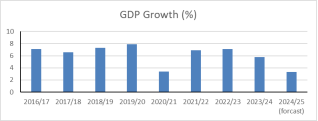
Figure 1. GDP growth of Bangladesh (in percent) [38].
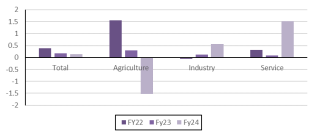
Figure 2. Employment elasticity of GDP [13].
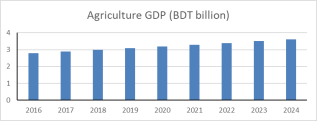
Figure 3. Bangladesh GDP From Agriculture [10].
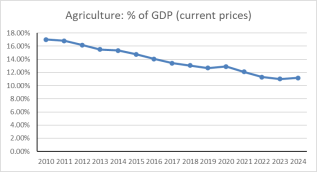
Figure 4. Trends in the contribution of GDP in Bangladesh agriculture in current prices [7, 34].
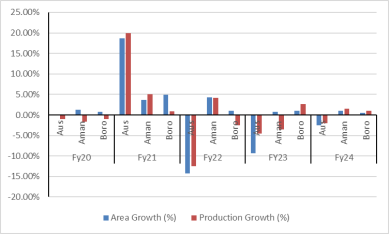
Figure 5. Growth rate in production and area of cultivation of rice (yearly% changes) [19].
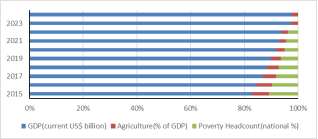
Figure 6. Bangladesh’s Gross Domestic Product, Agriculture, and Poverty, 2015-2024 [38].
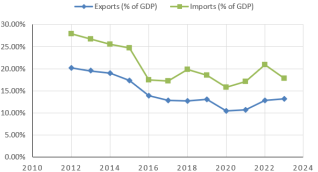
Figure 7. Export and import of goods and services (% of GDP) in Bangladesh over the last 12 years [37].
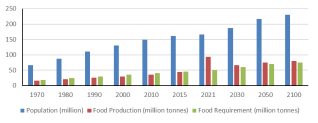
Figure 8. Population versus food production requirement up to 2100 [36].

Information



 Share This Article
 Twitter
 Linked In
 Facebook

 Copy
 Download