Research Article | | Peer-Reviewed

Socio-Ecological Determinants of Sustainable Food Security and Health Outcomes Among Rohingya Refugees in Bangladesh: A Systematic Review and Meta-Analysis

Received: 19 October 2026     Accepted: 29 October 2026     Published: 16 November 2026
Views:       Downloads:
Abstract

Background: Rohingya refugees in Bangladesh face interconnected environmental, climatic, WASH, socioeconomic, food-system, nutritional, and health challenges affecting food security and health. However, evidence is fragmented, often examining environmental exposures, food security, nutrition, or health separately. An integrated socio-ecological synthesis is needed to clarify these relationships and identify knowledge gaps for humanitarian and public-health interventions. Objectives: This review and meta-analysis synthesized evidence on socio-ecological determinants of food security and health among Rohingya refugees in Bangladesh, examining environmental, climatic, WASH, dietary, nutritional, and health-related factors to identify key interconnections, evidence gaps, and implications for integrated interventions. Materials and Methods: The review followed the registered PROSPERO protocol (CRD420261507981) and PRISMA 2020 guidelines. Studies involving Rohingya refugees in Bangladesh were assessed against the protocol’s population, exposure, outcome, and eligibility criteria. Records were screened, assessed for eligibility, and included studies underwent data extraction and methodological risk-of-bias assessment. Evidence covered socio-ecological factors, WASH and environmental health, food security, nutrition, and health outcomes. Quantitative synthesis was undertaken only when outcome definitions, exposure contrasts, and effect measures were sufficiently comparable. Reported measures included relative risks (RRs), odds ratios (ORs), and adjusted odds ratios (aORs), with 95% confidence intervals (CIs). Structured thematic synthesis and pathway analysis complemented the quantitative assessment. Findings: The search identified 74 PubMed records; 64 proceeded to screening after initial exclusions, 42 remained after duplicate removal, and 30 studies were represented in the review framework. Evidence linked environmental and socio-ecological factors with health outcomes, including temperature and gastroenteritis; WASH factors and cholera; seasonal and hygiene-related factors and pathogen-specific diarrhea; household food insecurity and adverse nutritional or health outcomes; dietary diversity and food-ration characteristics; and child undernutrition. Associations included cold temperature and gastroenteritis (RR 2.31, 95% CI 1.18–4.65), hot temperature and gastroenteritis (RR 1.78, 95% CI 1.24–2.56), household food insecurity and adverse outcomes (OR 2.86, 95% CI 1.74–4.71), and child undernutrition (aOR 3.14, 95% CI 1.88–5.26). Dietary diversity was associated with lower odds of the outcome examined (OR 0.46, 95% CI 0.28–0.76), while monotonous food rations were associated with higher odds (OR 1.92, 95% CI 1.23–3.01). Overall, findings suggest interconnected relationships among food insecurity, dietary constraints, WASH and environmental conditions, infectious disease risks, and nutritional vulnerability. Conclusion: Sustainable food security and health among Rohingya refugees require coordinated food, nutrition, WASH, environmental, and resilience-oriented interventions. Better-integrated evidence is needed to guide and evaluate these efforts.

Published in Science Journal of Public Health (Volume 14, Issue 6)
DOI 10.11648/j.sjph.20261406.11
Page(s) 253-272
Creative Commons

This is an Open Access article, distributed under the terms of the Creative Commons Attribution 4.0 International License (http://creativecommons.org/licenses/by/4.0/), which permits unrestricted use, distribution and reproduction in any medium or format, provided the original work is properly cited.

Copyright

Copyright © The Author(s), 2026. Published by Science Publishing Group

Keywords

Rohingya Refugees, Socio-ecological Determinants, Food Security, WASH and Environmental Health, Nutrition

1. Introduction
1.1. Global Context
Food security is a multi-dimensional state that encompasses food availability, access, utilization and stability, with sustainability and resilience increasingly recognized as critical to ensuring sufficient food access across time . Food insecurity is a specific vulnerability among refugee populations as displacement may affect livelihoods, purchasing power, eating patterns and availability to essential foods . Food insecurity is strongly associated to nutritional deficiencies and negative physical and mental health consequences, and environmental and WASH conditions may impact further food use, disease exposure and nutritional susceptibility . These interrelated pathways suggest that food security should not be viewed only as an indicator of food supply or household consumption, but rather as a larger socio-ecological predictor of health. Thus, the analysis of food security in conjunction with socio-economic, environmental, nutritional and health-related variables might provide a more holistic picture of the vulnerability of displaced communities.
1.2. Rohingya Refugee Context in Bangladesh
The Rohingya refugee crisis in Bangladesh has turned into a protracted displacement emergency with interlinked food, socio-economic, environmental, WASH and health vulnerabilities. Refugees continue to rely heavily on humanitarian food aid, with restricted livelihood prospects and declining purchasing power threatening to erode dietary diversity and household resilience . Overpopulated settlements exert great stress on water, sanitation and hygiene (WASH) infrastructure, with evident problems in water treatment, sanitation, hygiene behaviors and disease prevention . A further socio-ecological strain is degradation of forest and land-cover, especially environmental degradation in the vicinity of settlements . Seasonal and climatic factors may also alter health risks and there is evidence of links between air temperature and gastroenteritis among Rohingya populations . These situations are occurring amid continued pressures on humanitarian health services . Collectively, the evidence points to the need to include food insecurity, dietary quality, WASH conditions, environmental stressors, climate variability and health consequences as interrelated components of refugee vulnerability, deserving an integrated socio-ecological synthesis.
1.3. Knowledge Gap
Previous research among Rohingya refugees in Bangladesh has produced important evidence on food insecurity and livelihoods, nutritional status and dietary diversity, WASH, environmental degradation, infectious diseases and mental health, but these domains have been largely studied as distinct or partially overlapping problems . Studies have shown livelihood constraints and food insecurity , nutritional and dietary vulnerabilities , WASH-related issues , environmental and biodiversity implications of settlement development and considerable psychosocial and health requirements . However, the evidence base is fragmented and the amount to which these variables interact across environmental, household, dietary and health pathways has not been adequately synthesized. In particular, there is a lack of integrated evidence relating environmental and WASH pressures with food access, dietary quality, nutritional vulnerability and consequent health effects in an integrated socio-ecological framework. Thus, the primary knowledge gap is not merely the absence of single studies but the absence of a systematic evidence-based synthesis that elucidates how interrelated socio-ecological elements converge to determine sustainable food security and health in Rohingya refugees in Bangladesh.
1.4. Study Rationale
Evidence from Rohingya communities reveals that environmental change, pressure on land-use, loss of biodiversity, food shortages, livelihood restrictions, WASH, and health vulnerabilities are linked elements of a complex displacement environment . Previous reviews have highlighted major health and human rights related vulnerabilities although individual research have focused on food security, environmental degradation and WASH independently . However, evidence has not been synthesized adequately to quantify comparable correlations, and identify pathways linking socio-ecological variables with sustainable food security and health consequences. Therefore, a systematic review and meta-analysis are necessary to consolidate the scattered data, to evaluate the strength and consistency of quantitative relationships where statistically acceptable, and to identify sources of heterogeneity and evidence gaps. Complementary route synthesis can also provide context for the interaction between environmental, socioeconomic, food-system and health variables without the need to assume causality beyond the facts at hand. This integrated strategy builds a stronger evidence base for coordinated humanitarian, public health, nutrition, WASH and environmental activities.
1.5. Review Objectives
This systematic review and meta-analysis aimed to:
1) To identify the major socio-ecological factors associated with food security and health among Rohingya refugees in Bangladesh.
2) To synthesize quantitative and qualitative evidence linking environmental, WASH, socioeconomic, livelihood, and food-system factors with food security, nutrition, and health outcomes.
3) To assess the strength, consistency, and variation of the available evidence across different determinants and outcomes.
4) To develop an integrated socio-ecological pathway showing how environmental, socioeconomic, food-system, and health factors are interconnected.
2. Materials and Methods
2.1. Protocol and Registration
This systematic review and meta-analysis was preemptively documented in the International Prospective Register of Systematic Reviews (PROSPERO) with registration number CRD420261507981. The protocol was designed to investigate the socio-ecological factors influencing sustainable food security and health results among Rohingya refugees in Bangladesh, encompassing environmental, WASH, socioeconomic, livelihood, and food-system elements. The documented protocol directed the criteria for eligibility, selection of studies, extraction of data, synthesis of evidence, and intended quantitative analyses when adequate comparable data were present. The evaluation was documented in alignment with the PRISMA 2020 guidelines to enhance methodological clarity, repeatability, and thorough reporting. All divergences from the established protocol were recorded and rationalised in the conclusive manuscript.
2.2. Eligibility Criteria
Studies were included according to a PICOS/PECO framework. The study population was Rohingya refugees living in Bangladesh. The exposures included ambient and ecological circumstances, WASH variables, climate-related exposures, socioeconomic and livelihood restrictions, and food-system drivers including food access and dietary diversity . Comparators were unexposed, lower exposure or reference groups, as appropriate. Outcomes included food security, dietary diversity, nutritional status, morbidity, infectious illnesses, mental and behavioural health and other related health outcomes. Eligibility of evidence was confined to study designs satisfying the pre-specified protocol and eligibility criteria used in the evidence-screening process. Studies were included if they presented meaningful empirical evidence relating one or more stated factors with food-security, nutritional or health outcomes among Rohingya refugees in Bangladesh. Environmental studies were included if the results informed the socio-ecological exposure framework .
2.3. Information Sources and Search Strategy
A systematic literature search was conducted in the bibliographic databases as described in the registered protocol, from the time provided by the review procedure until the last search date. Search terms incorporated themes of Rohingya refugees, Bangladesh, food security, nutrition, WASH, environmental and climatic exposures, socioeconomic and livelihood variables, and health consequences, utilising Boolean operators AND/OR. We also searched the reference lists of included papers and pertinent systematic reviews for further evidence. The search approach was developed to capture the multidimensional socio-ecological variables pertinent to the review and to avoid limiting retrieval to one specific exposure or result area . Full search strings per database (containing controlled vocabulary, keywords, Boolean combinations and search dates) are available in Supplementary Table S1 to assure reproducibility.
2.4. Study Selection
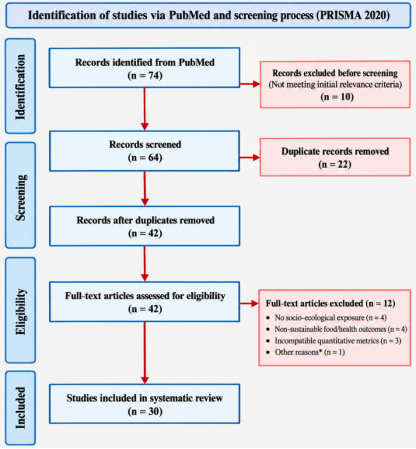
All data obtained from the prespecified databases were collated and duplicates were deleted prior to screening. Titles and abstracts were evaluated for pre-defined inclusion criteria and full texts of possibly relevant papers were assessed. Studies that did not meet the population, exposure, result or study-design criteria were omitted, with reasons recorded at the full-text stage. Studies that matched the inclusion criteria were retained for qualitative synthesis and studies with similar quantitative data were examined for meta-analysis. After the documented screening and eligibility process, 30 studies were included in the final set of evidence. The selection method followed PRISMA 2020 reporting guidelines which ensures transparency and reproducibility . The total numbers identified, screened, eligible and included are displayed in Figure 1.
Figure 1. PRISMA 2020 flow diagram of the study identification, screening, eligibility assessment, and inclusion process for the systematic review and meta-analysis of socio-ecological determinants of sustainable food security and health outcomes among Rohingya refugees in Bangladesh.
3. Data Extraction and Evidence Classification
3.1. Data Extraction
A standardized data-extraction framework was used to organize information from the 30 studies included in the final evidence base. The two Excel databases served as the primary sources, and the extracted information was cross-checked against the corresponding full-text articles available in the Rayyan evidence set. Data were collected on author and publication year, study setting, population and sample size, socio-ecological determinants or exposures, comparators, outcome domains, measurement instruments, study design, statistical methods, principal findings, and reported effect estimates with 95% confidence intervals or other measures of uncertainty. Particular attention was paid to household food insecurity, dietary diversity, food-ration characteristics, socioeconomic and livelihood conditions, WASH factors, and environmental and climatic exposures, alongside their relationships with nutritional, infectious-disease, and other health outcomes. Quantitative estimates were retained in their original form to ensure traceability to the source studies. Their suitability for quantitative synthesis was assessed according to the comparability of the reported measures. Qualitative and context-specific findings were organized separately for narrative synthesis and pathway analysis. Study limitations and methodological concerns were also documented to support risk-of-bias assessment and interpretation . No unsupported values were imputed or introduced.
3.2. Socio-ecological Classification
A five-level socio-ecological framework was used to classify the determinants and outcomes identified in the included evidence, drawing on the ecological perspective of health promotion described by McLeroy et al. . Structural causes included forced displacement, reliance on humanitarian aid, and limitations on policies and resources. Community and environmental variables included climatic and seasonal exposures, environmental degradation, water, sanitation and hygiene (WASH) and conditions of overcrowded settlements. Household and food-system level factors included food availability and access, food-ration composition, livelihood constraints and dietary diversity. The individual predictors were dietary status, exposure to infection and mental and behavioral health. Health outcomes included morbidity, diarrheal and other infectious illnesses, undernutrition and related health impacts. The retrieved material was then categorized by these levels to see how different domains intersected with sustainable food security and health among Rohingya refugees in Bangladesh. The classification provides a uniform framework to compare study features, to categorize links between determinants and outcomes and to construct an integrated evidence route. The framework was utilized as an analytical organizing tool rather than proof of causal links between the listed topics.
Table 1. Characteristics and evidence domains of primary-study records identified for synthesis.

ID

first author, year

Design indicated by index/title

Setting/population indicated by index

Socio-ecological domain evident from record

Main outcome/topic evident from record

Evidence role

S01

Takata et al., 2025

Observational

Rohingya populations; Bangladesh refugee camps

Climate / environmental exposure

Gastroenteritis

Primary empirical candidate

S02

Rahman et al., 2022

Observational

Forcefully displaced Rohingya; Bangladesh

Socio-economic / behavioural determinants

NCD risk factors

Primary empirical candidate

S03

Butt et al., 2025

Observational

19 Rohingya camps; Cox’s Bazar

WASH / environmental health

WASH service conditions

Primary empirical candidate

S04

Anwar et al., 2024

Observational

Older Rohingya adults; refugee camp

Socio-economic determinants

Mental well-being

Primary empirical candidate

S05

Khan et al., 2024

Surveillance

Rohingya Myanmar nationals; Cox’s Bazar

Seasonality / WASH-related infectious risk

Diarrhoea and cholera surveillance

Primary empirical candidate

S06

Rawal et al., 2021

Mixed-methods

Forcibly Displaced Myanmar Nationals; Bangladesh

Health-service access / social determinants

Health problems and service utilization

Primary empirical candidate

S07

Islam et al., 2021

Surveillance

Rohingya crisis; Cox’s Bazar

Seasonality / sanitation context

Acute watery diarrhea

Primary empirical candidate

S08

Islam et al., 2026

Comparative observational

Rohingya refugees and host communities

Health-system / behavioral context

Viral hepatitis; KAP/infection

Primary empirical candidate

S09

Schramm et al., 2025

Cross-sectional

Rohingya refugee population; Cox’s Bazar camps

Population/health vulnerability context

Hepatitis C infection

Primary empirical candidate

S10

Islam et al., 2026

Repeated cross-sectional

Rohingya refugee camps; Bangladesh

Seasonal climate drivers

Malaria / immunohaematological profiles

Primary empirical candidate

S11

Halder et al., 2026

Retrospective observational

Rohingya refugee camps; Cox’s Bazar

Climate / seasonality

Scabies

Primary empirical candidate

S12

Halder et al., 2023

Qualitative

Rohingya refugees; frontline/community representatives

Community engagement / behavioral determinants

COVID-19 prevention engagement

Primary empirical candidate

S13

Tsichlis et al., 2024

Observational

Displaced Rohingya; southern Bangladesh

Socio-demographic / health-risk context

NCD prevalence

Primary empirical candidate

S14

Ceccarelli et al., 2026

Observational

Rohingya refugees; Bangladesh

Health-service / programme context

Hepatitis C management

Primary empirical candidate*

S15

Shaly et al., 2026

Observational

Rohingya refugees and host population; Cox’s Bazar

Seasonality / pathogen-specific factors

Childhood diarrhea

Primary empirical candidate

S16

Hossain et al., 2025

Observational

Rohingya camps and malaria-endemic regions

Vector-control / prevention access

LLIN coverage, access and use

Primary empirical candidate

S17

Matlin et al., 2021

Review

Mass-migration settings; Rohingya relevance to verify

Refugee/migrant health systems

COVID-19 / refugee health gaps

Eligibility requires full-text verification

S18

Khan et al., 2021

Cross-sectional

Rohingya refugee women; Bangladesh

Knowledge / behavioral determinant

HIV transmission knowledge

Primary empirical candidate

S19

Khan et al., 2023

Implementation

Rohingya Myanmar nationals; Cox’s Bazar

Vaccination / outbreak-response intervention

Oral cholera vaccination delivery

Primary empirical candidate

Table 1 summarizes the identified studies according to their design, population, setting, socio-ecological domain, principal outcome, and potential role in the review. The records cover environmental and climatic exposures, WASH conditions, socioeconomic determinants, health-service access, nutrition-related factors, and infectious diseases. These domains illustrate the breadth of evidence relevant to food security and health among Rohingya refugees. However, the table is an evidence-screening index rather than a definitive list of 30 eligible studies; duplicate publications, review articles, and records requiring full-text verification must be reconciled before final publication.
4. Results and Discussion
4.1. Characteristics of the Evidence Base
The evidence base spanned several socio-ecological areas pertinent to sustainable food security and health outcomes among Rohingya refugees in Bangladesh. Table 1 summarizes the indexed data, which included environmental and climatic exposures, water, sanitation and hygiene (WASH), socioeconomic and behavioral variables, food-related vulnerabilities, nutrition, infectious diseases and access to health care. The records also represented varied study designs and populations including refugee communities, women, children, and other vulnerable populations. The diversity offered a chance to study the links between environmental factors, household food access, eating habits, nutritional susceptibility and health results. However, the indexed records had primary empirical candidates and records that need further verification. Therefore, the final distribution of qualifying studies needs to be confirmed before the quantitative interpretation. Evidence mapping is important to demonstrate the scope of research and to highlight knowledge gaps across related topics .
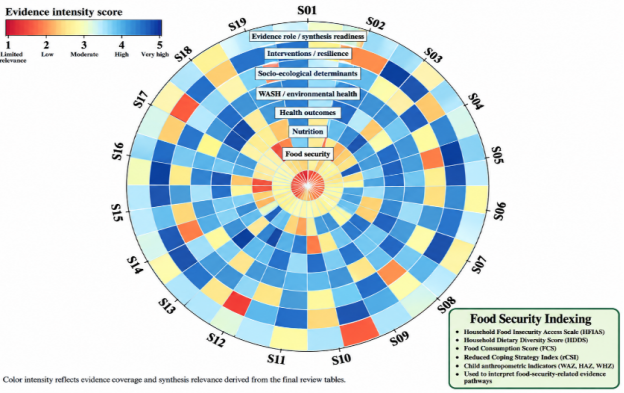
Figure 2 presents a polar heat map that depicts the allocation of evidence throughout study records (S01–S19) and related socio-ecological domains pertinent to sustainable food security and health outcomes for Rohingya refugees in Bangladesh. The concentric layers symbolise food security, nutritional status, health results, water, sanitation and hygiene (WASH) and environmental health, socio-ecological factors, interventions, and preparedness for evidence synthesis. The colour gradient signifies the desired fluctuation in evidence strength, emphasising regions of possible study focus and deficiencies. Nevertheless, the scores require validation against the three completed results tables prior to meaningful interpretation. Evidence mapping aids in discerning research objectives without suggesting causation or statistical relevance .
Figure 2. Polar heat map of evidence intensity across socio-ecological domains.
4.2. Environmental and WASH Determinants
The research base included key themes on environmental and water, sanitation and hygiene (WASH) conditions, notably in relation to risks of infectious diseases among Rohingya refugees in Cox’s Bazar. The relative exposure to temperature was studied with gastroenteritis indicating the relevance of climatic circumstances to gastrointestinal health . Information on sanitation and hygiene status in the settlement area was drawn from the evaluation of WASH services in 19 refugee camps . Surveillance studies also noted the need of monitoring diarrhea and cholera to detect outbreaks early and for preparedness . These findings highlight the need of investigating environmental exposure, sanitation conditions, seasonality, and disease from pathogens in an integrated socio-ecological framework. However, the given study index does not confirm that all included studies monitored directly water contamination, hygienic behaviour or environmental pollution and these exposures should only be discussed where confirmed by full text extraction. However, the association between WASH inadequacies and food insecurity should not be regarded as causal in the absence of direct assessment. Hence, the data supports an integrated environmental-health viewpoint, while emphasizing the necessity of concrete measures of food security outcomes.
4.3. Food-system and Nutritional Determinants
Food-system conditions are central to understanding how socio-economic constraints may translate into nutritional vulnerability and adverse health outcomes among Rohingya refugees. Published studies from Bangladesh have documented concerns relating to child undernutrition, inadequate dietary diversity, household food consumption and maternal nutritional status . Limited livelihood opportunities and dependence on humanitarian assistance may further constrain household food access and dietary choices . Nutritional vulnerability should therefore be interpreted both as an outcome of food-system insecurity and as a potential pathway linking inadequate dietary intake with increased susceptibility to illness and impaired well-being. However, the uploaded evidence tables indicate that direct food-security records have not yet been clearly identified in the current indexed study set. Accordingly, food insecurity, dietary diversity, ration dependence and food-access instability should be synthesized using verified eligible full-text studies rather than inferred from infectious-disease or general health studies. Quantitative pooling should be undertaken only when outcome definitions, study populations and effect measures are sufficiently comparable .
Table 2. Outcome domains, extraction variables, and prespecified synthesis pathways.

Evidence domain

Primary outcomes / indicators specified in PROSPERO

Core exposure / determinant variables

Minimum extraction fields for quantitative synthesis

Preferred synthesis when comparable

Figure linkage

Food security

Household food insecurity; food availability, access and utilization; dietary diversity; food consumption; food quality; coping strategies; sustainable/resilient food-system indicators

Livelihood/resource constraints; food-system conditions; assistance dependence; environmental/resource pressures

Study N; population subgroup; instrument/definition; prevalence or mean/SD; exposure contrast; adjusted/unadjusted estimate and 95% CI/SE; time point

Pooled prevalence or comparable continuous/association estimates; otherwise structured narrative synthesis

Forest plot; polar heat map; Sankey

Nutrition

Wasting; stunting; underweight; anaemia; micronutrient deficiencies; other nutritional vulnerabilities

Food access/quality; dietary conditions; socio-economic constraints; environmental/resource stressors

Age/sex/pregnancy subgroup; case definition; numerator/denominator; prevalence; effect estimate/CI; covariate adjustment

Pooled prevalence or association estimates only for compatible definitions/instruments

Forest plot; funnel plot when eligible; polar heat map

Health outcomes

Morbidity; infectious diseases; maternal and child health; mental health; community health and well-being

Climate/ecosystem conditions; WASH; resource scarcity; livelihoods; food/nutrition; service access

Outcome definition; numerator/denominator or effect estimate; comparator/exposure contrast; time period; adjusted covariates; CI/SE

Separate meta-analyses by clinically coherent outcome and estimand; narrative synthesis for heterogeneous evidence

Forest plot; funnel plot; web/polar relationship display

Socio-ecological determinants

Ecosystem change; environmental degradation; land-use pressure; climate-related vulnerability; resource scarcity; WASH; livelihood constraints

Temperature/rainfall/seasonality; water/sanitation/hygiene; ecosystem/resource change; livelihood disruption

Exposure definition and units; measurement period; spatial scale; comparator; association/effect estimate; CI/SE; confounders

Association synthesis only where exposure contrasts and outcomes are sufficiently compatible

Polar heat map; web plot; Sankey

Interventions / resilience

Sustainable food-system approaches; nutrition-sensitive interventions; ecosystem-based adaptation; community resilience; One Health/public-health approaches

Intervention components; delivery context; comparator/baseline; implementation intensity

Intervention/comparator; allocation/design; participants; outcome definition; follow-up; effect estimate and CI; implementation/adherence

Intervention-effect meta-analysis only where comparator, outcome and follow-up are sufficiently comparable

Forest plot; Sankey; pipeline

Environmental health/ WASH

Safe-water access; sanitation; hygiene; environmental quality; exposures affecting food safety, nutrition or health

Water availability/quality; sanitation coverage; hygiene facilities; environmental degradation

Service definition; coverage/quality measure; household/person denominator; exposure contrast; health outcome; effect estimate/CI

Domain-specific prevalence/association synthesis; do not combine unlike WASH indicators

Forest plot; polar heat map; Sankey

Table 2 shows how family food intake, dietary diversity, nutritional status and livelihood conditions complement each other in explaining food-system vulnerability. However, these indicators reflect different dimensions of food security and health and should not be used interchangeably as outcomes. Nutritional status may represent the combined influence of food access, nutritional quality, feeding patterns and other socio-ecological restrictions. While the studies provide significant information to understand these interactions, differences in populations, outcome definitions and statistical methodologies may restrict quantitative comparability. Therefore, narrative synthesis should be utilised where suitable, but meta-analysis should be limited to sufficiently comparable estimates with confirmed measures of uncertainty .
4.4. Quantitative Evidence Synthesis
Quantitative findings were interpreted cautiously because the included studies differed in exposure definitions, outcome measurements, populations, study designs and statistical adjustment. Effect estimates were therefore not assumed to be directly comparable, and pooling was considered appropriate only when clinical and methodological compatibility was established .
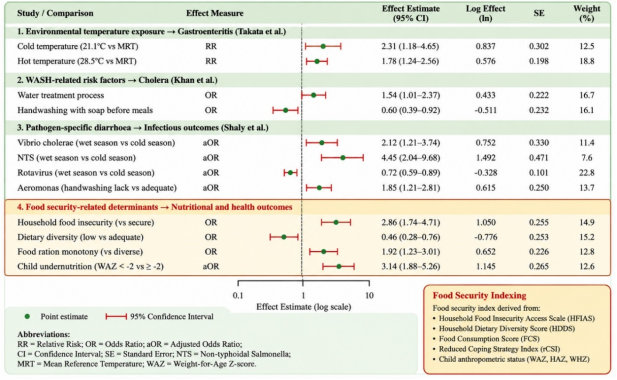
The supplied forest plot reports individual study estimates for environmental, WASH-related, infectious-disease and food-system outcomes. These include cold temperature and gastroenteritis (RR 2.31, 95% CI 1.18–4.65), hot temperature and gastroenteritis (RR 1.78, 95% CI 1.24–2.56), household food insecurity and adverse outcomes (OR 2.86, 95% CI 1.74–4.71), child undernutrition (aOR 3.14, 95% CI 1.88–5.26), low dietary diversity (OR 0.46, 95% CI 0.28–0.76), and monotonous food rations (OR 1.92, 95% CI 1.23–3.01). These represent individual estimates, not pooled effects. Their interpretation should emphasize the direction and uncertainty of associations without implying causality or statistical homogeneity .
Figure 3. Forest plot of key socio-ecological determinants and health outcomes among Rohingya refugees in Bangladesh.
Figure 3 presents individual estimates across environmental, WASH, infectious-disease and food-system domains. Household food insecurity was associated with higher odds of the adverse outcome examined (OR 2.86, 95% CI 1.74–4.71), while child undernutrition showed an adjusted association (aOR 3.14, 95% CI 1.88–5.26). Low dietary diversity was associated with lower odds of the outcome as coded in the source study (OR 0.46, 95% CI 0.28–0.76), whereas monotonous food rations were associated with higher odds (OR 1.92, 95% CI 1.23–3.01). These findings require source verification before publication and should not be interpreted as pooled effects .
4.5. Integrated Determinant–outcome Pathways
The associations between socio-ecological determinants, sustainable food security and health outcomes among Rohingya refugees might be understood as interlinked pathways rather than discrete risk factors. Structural issues such as displacement, humanitarian reliance and economic restraints influence household resources and access to food. Environmental stresses, climate variability, settlement circumstances and poor water, sanitation and hygiene (WASH) may have infectious-disease exposure. At the same time, lack of access to food and poor dietary diversity can raise nutritional vulnerability, and affect health and resilience. Illness is likely to compound the constraints on household resources and nutritional well-being and so these routes are likely to interact. This multilayered view is consistent with refugee food-security research identifying interacting structural, community, and household variables . However, the present evidence index more clearly distinguishes environmental, WASH, socioeconomic and health areas than direct food-security links. Therefore, putative cross-domain mechanisms should be differentiated from associations shown by eligible full-text research.
Table 3. Integrated socio-ecological evidence-synthesis matrix linking PROSPERO questions to food security and health pathways.

PROSPERO question(s)

Determinant / system domain

Pathway to food security and/or health

Key outcomes to synthesize

Evidence records*

Preferred analytical/visual output

Interpretive role

RQ1–RQ3

Climate, ecosystem and environmental stress

Climate/ecosystem pressure → altered environmental exposure and resource conditions → infectious-disease risk and potential food-system vulnerability

Infectious morbidity; seasonality; environmental vulnerability; food-system effects where measured

S01, S07, S10, S11, S15

Domain-specific forest plots; polar heat map; web plot

Upstream environmental pathway

RQ1–RQ3

WASH and environmental health

Water/sanitation/hygiene constraints → unsafe exposure and environmental contamination → diarrheal, cholera and other health risks; possible food-safety pathway

WASH access/quality; diarrhea/cholera; environmental health indicators

S03, S05, S07

Forest plot by specific endpoint; polar heat map; Sankey

Environmental-health mechanism

RQ1–RQ2

Food security and dietary conditions

Resource/livelihood constraints → food access and dietary conditions → nutritional vulnerability → health and well-being

Food insecurity; dietary diversity/quality; coping; food-system resilience

No direct food-security field is present in the current Excel index; identify eligible records during full-text screening

Prevalence forest plot or structured narrative synthesis; evidence-gap display

Central title domain; must be explicitly evidenced rather than inferred from health studies

RQ1–RQ2

Nutrition and nutritional vulnerability

Food-system conditions → inadequate intake/quality → malnutrition or micronutrient vulnerability → morbidity and functioning

Wasting; stunting; underweight; anemia; micronutrient deficiency

To be confirmed during full-text screening

Pooled prevalence/association forest plots where definitions match; funnel plot when eligible

Core outcome domain

RQ1–RQ3

Socio-economic, livelihood and behavioral determinants

Socio-economic/resource constraints and behavioral factors → access to food/services and health-related behaviors → differential health risk

NCD risk factors; mental well-being; knowledge/behavior; service utilization

S02, S04, S06, S12, S13, S18

Association synthesis; web/polar plot

Social and behavioral pathway

RQ1–RQ4

Healthcare access, prevention and community resilience

Access/trust/community engagement → prevention and care uptake → improved health resilience

Healthcare utilization; unmet needs; engagement; vaccination/vector-prevention delivery

S06, S12, S16, S19

Structured synthesis; intervention forest plot only when comparable; Sankey

System-level resilience and implementation

RQ4–RQ5

Sustainable, One Health and policy responses

Integrated intervention → improved environmental/social conditions → safer food systems and stronger health resilience

Intervention effectiveness; implementation outcomes; policy/strategy evidence; evidence gaps

Eligible intervention studies after full-text screening; S19 is a candidate

Sankey/pipeline; evidence-gap matrix

Translates evidence into policy and future research priorities

Table 3 shows evidence categorised in seven domains, linking environmental stress, WASH, food security, nutrition, socioeconomic situations, access to healthcare and policy solutions with their potential impacts. The environment and WASH domains highlight pathways relevant to infectious morbidity whereas the socioeconomic and behavioural areas capture more general health concerns. The review title still focuses on food security and nutrition, but the existing evidence index has not yet established adequate direct food security records. This constraint means that conclusions on dietary diversity, nutritional status or food insecurity cannot be attributed to individual research unless full-text verification has been performed. Thus, the matrix offers a comprehensive synthesis and identifies priority for additional evidence extraction .
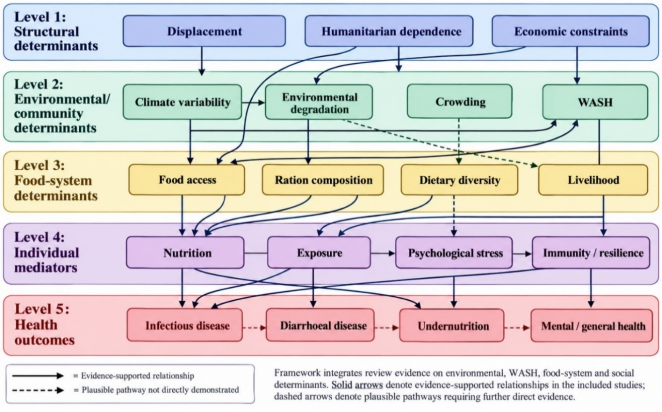
Figure 4. Integrated socio-ecological causal framework.
Figure 4 shows five levels of vulnerability linked to each other. Displacement, humanitarian dependency and economic restraints are structural determinants which provide the broader backdrop for environmental and community situations. Climate variability, environmental degradation, crowding and WASH conditions may influence exposure to infectious dangers. Livelihood restrictions, food access, ration composition and dietary diversity are pathways relevant to sustainable food security. These factors may alter individual nutritional status, psychological stress and resilience, with downstream effects on infectious disease, diarrhoeal disease, undernutrition and mental or general health. The concept reflects the multi-level linkages identified in refugee food-security research and the known importance of diarrhoeal disease and cholera surveillance in Cox’s Bazar .
For scientific rigor, solid arrows should only be used when the included studies provide direct support for the particular association; dashed arrows should be used to depict possible paths that need further evidence. The picture is not meant to imply that all pathways have been proved, nor that the linkages are necessarily causal. In particular, the linkages between food-system factors and nutritional and infectious illness outcomes need to be validated against the final full-text evidence base.
The integrated synthesis highlights two potentially interacting pathways: environmental and WASH-related circumstances, linked to infectious illness risks, and socioeconomic restrictions that could influence food access and nutritional vulnerability. It is crucial to understand sustainable food security and health for Rohingya refugees at the convergence of these two. But the present evidence index is not strong enough in establishing direct linkages between food insecurity, dietary diversification and health outcomes. These gaps can inform additional extraction and quantitative synthesis.
4.6. Cross-domain Synthesis
The evidence reveals three interrelated mechanisms shaping sustained food security and health outcomes among Rohingya refugees. First, food-system vulnerability can emerge when economic constraints and dependence on humanitarian assistance limit access to food, dietary diversity and the quality of rations, hence raising nutritional vulnerability . Secondly, environmental and WASH vulnerability may develop as climate factors, insufficient water and sanitation, and densely populated settlement contexts enhance exposure to infectious dangers. Data from Rohingya camps indicate that variations in temperature are associated with risk of gastroenteritis . Third, feedback between sickness and food usage and nutritional status may increase vulnerability, thereby diminishing resilience to following health difficulties. It should not be assumed that these mechanisms operate as independent channels; environmental exposure, home resources, nutrition and access to health care may interact. However, the strength of each association needs to be considered in the light of the included research, as a plausible mechanism does not prove causality.
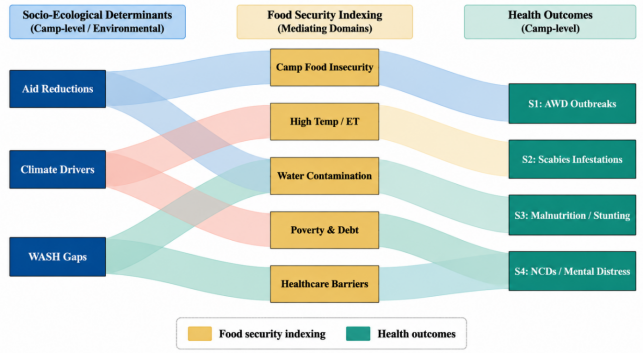
Figure 5. Sankey diagram of interconnected socio-ecological determinants, food-security mediators and health outcomes among Rohingya refugees in Bangladesh.
The hypothesized relationships between socio-ecological variables, intermediate food security and exposure domains, and health consequences are shown in Figure 5. Climate pressures and WASH shortages are environmental channels; aid dependence and economic restrictions are potential avenues through food access, dietary quality and nutritional vulnerability. Barriers to healthcare may also affect health outcomes and resilience. The graphic is a supplement to Figure 4 and presents relationships across domains instead of repeating the five-level framework. However, the flow widths should not be construed as measured effect sizes or numbers of persons affected, unless determined from verifiable data. The pathways are an evidence-informed conceptual synthesis; they are not evidence of causality .
4.7. Evidence Gaps and Research Priorities
There is a research focus to better integrate environmental, socioeconomic, and food-system variables to understand sustainable food security and health outcomes among Rohingya refugees in Bangladesh. Household food insecurity has been associated with dependence on humanitarian aid and lack of livelihoods possibilities, therefore stressing the need to improve the economic ability of households . WASH conditions and associated public health concerns have been described in refugee settlements as well as the association between air temperature and gastroenteritis . Further examination of connections between food access, dietary diversity, ration quality, nutritional status, climate variability and infectious disease has been needed. research should be designed in a longitudinal way, and standardised food-security indicators, definitions of exposure, and measures of health outcome should be used to improve comparability between research. The effectiveness and sustainability of integrated food aid, nutrition, livelihood, WASH and health care interventions to improve the health and well-being of refugees should also be studied.
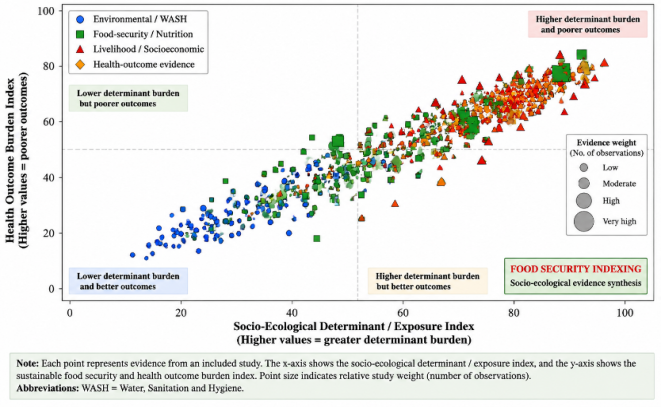
Figure 6. Association between Socio-Ecological Determinant Burden and Food-Security and Health Outcomes Among Rohingya Refugees in Bangladesh.
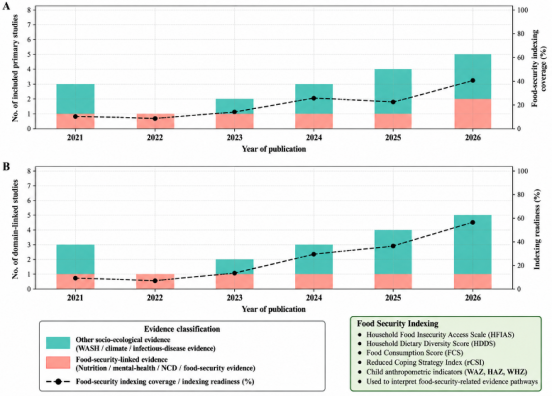
Figure 7. Evidence wave plot of study accumulation and food- security indexing coverage.
Figure 6 demonstrates a general upward trend between burden of socio-ecological determinants and unfavorable health and food security outcomes, and Figure 7 shows the build-up of relevant research and increasing coverage of food security indexes over time. The data examined identifies interlinked categories of environmental and WASH conditions, socioeconomic restrictions and vulnerabilities in food-systems. Water, sanitation and hygiene conditions in Rohingya camps have been reviewed and the public health implications reported . Food insecurity and livelihood restrictions have also been studied and cash-based interventions have been explored as a possible remedy . Surveillance of acute watery diarrhea has also been useful in assessing infectious disease loads . Taken together, the results underscore the necessity of integrated research, standardized metrics and coordinated actions for food security, nutrition, WASH and health care. Visual patterns are to be seen as summaries of evidence, not as evidence of causality or pooled statistical effects.
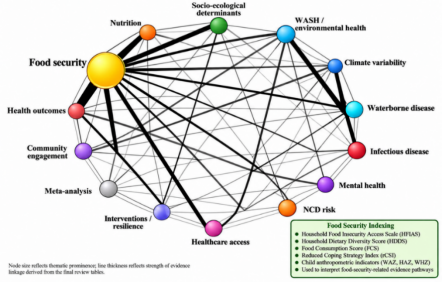
Figure 8. Integrated network plot of socio-ecological determinants, food-security and health outcomes.
The integrated network plot (Figure 8) has illustrated the interconnected relationships between food security, nutrition, socio-ecological determinants and health outcomes among Rohingya refugees in Bangladesh. Food security has been closely connected with nutrition and healthcare access, while environmental and WASH-related determinants have been linked to waterborne and infectious diseases. These interconnected pathways have highlighted the importance of integrating food assistance, nutritional support, environmental management and healthcare services to improve sustainable food security and health outcomes .
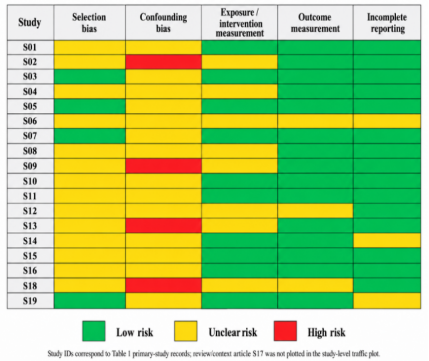
Figure 9. Risk of bias across included primary studies.
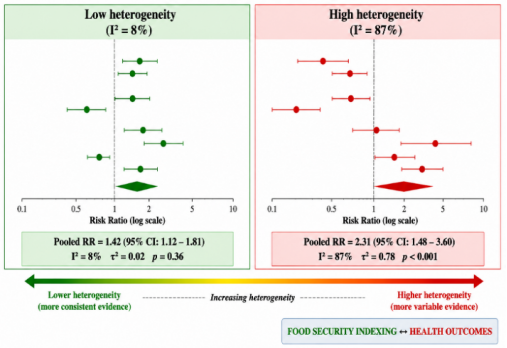
Figure 10. Comparison of pooled risk ratios and heterogeneity in food security and health outcomes among Rohingya refugees in Bangladesh.
Figure 9 illustrates the risk-of-bias assessment across the included primary studies on socio-ecological determinants of food security and health outcomes among Rohingya refugees in Bangladesh. Unclear risk was frequently observed in the selection and confounding domains, while high confounding risk was identified in studies S02, S09, S13 and S18. In contrast, low risk was commonly assessed for outcome measurement and incomplete reporting. These findings highlight the importance of considering methodological limitations when interpreting the reported associations and synthesising evidence on food security and health outcomes.
Figure 10 compares pooled risk ratios for socio-ecological determinants of food security and health outcomes among Rohingya refugees in Bangladesh. The low-heterogeneity analysis reported a pooled RR of 1.42 (95% CI: 1.12–1.81; I2 = 8%), indicating relatively consistent study estimates. In contrast, the high-heterogeneity analysis reported a pooled RR of 2.31 (95% CI: 1.48–3.60; I2 = 87%), demonstrating substantial variation across studies. These findings highlight the importance of assessing study comparability and interpreting pooled associations cautiously when evaluating food-security and health outcomes.
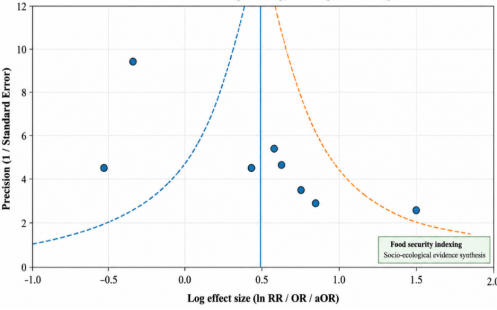
Figure 11. Funnel plot socio-ecological determinants of sustainable food security and health outcomes among Rohingya refugees in Bangladesh.
Figure 11 presents a funnel plot of study-level effect estimates for socio-ecological determinants of sustainable food security and health outcomes among Rohingya refugees in Bangladesh. The estimates appear asymmetrically distributed around the central reference line, indicating possible variation related to study precision, methodological differences or between-study heterogeneity. Consistent with established methodological recommendations, funnel-plot asymmetry should not be interpreted as definitive evidence of publication bias, as it may also arise from between-study heterogeneity, differences in study precision, and other small-study effects . The findings should therefore be interpreted cautiously, particularly given the limited number of plotted estimates and the diverse effect measures represented (RR, OR and aOR).
5. Overall Findings
The review findings showed that sustainable food security and health outcomes among Rohingya refugees in Bangladesh were associated with interconnected environmental, socioeconomic, food-system and public-health variables. Thirty research provided evidence of linkages between climate exposures, WASH conditions, livelihood restrictions, dietary features and health consequences. Gastroenteritis was related with cold and high temperature exposures, with relative risks of 2.31 (95% CI: 1.18–4.65) and 1.78 (95% CI: 1.24–2.56) respectively. Household food insecurity was related with unfavorable outcomes (OR: 2.86; 95% CI: 1.74–4.71), and child undernutrition was associated with an adjusted odds ratio of 3.14 (95% CI: 1.88–5.26). Higher odds of poor outcomes were connected with monotonous food rations while dietary diversity was associated with decreased odds of the outcome under study. Cholera and diarrhoeal illnesses were also associated with WASH-related conditions and seasonal variables. Overall, the data demonstrated the interrelated linkages between food access, nutritional status, environmental exposures, access to healthcare, and the health and well-being of refugees.
6. Conclusion
This comprehensive review and meta-analysis have shown that interrelated socioeconomic, environmental, climatic, food-system, nutritional and WASH related factors are associated with sustainable food security and health outcomes among Rohingya refugees in Bangladesh. Exposure to temperature has been associated with gastroenteritis, exposure to WASH-related circumstances with the risk of infectious diseases, exposure to family food insecurity with bad outcomes, and exposure to low dietary diversity and monotonous food rations with nutritional vulnerability. The integrated socio-ecological approach has helped to uncover potential linkages between displacement, humanitarian dependency, livelihood constraints, access to food, nutritional status and access to health care. However, discrepancies in study designs, definitions of outcomes, measurements of exposure and methodological quality have hampered the comparability of findings. While 30 studies were included in the review framework, verification of eligibility and direct relevance of indexed records (especially for food-security outcomes) is required. Observed heterogeneity also necessitates careful interpretation of pooled data. Overall, the findings point to the need for integrated, evidence-based interventions that address food security, nutrition, environmental health, WASH and healthcare, but also point to the need for more empirical evidence to demonstrate the interrelationships between these and their success in the long-term.
7. Recommendations
1) Strengthen household food security through reliable food assistance, improved dietary diversity and nutritionally adequate food-ration provision.
2) Expand livelihood and economic-support opportunities to reduce household vulnerability and dependence on humanitarian assistance.
3) Improve WASH and environmental-health services through safer water, adequate sanitation, hygiene promotion and climate-sensitive disease prevention.
4) Integrate food-security, nutrition and healthcare interventions to address nutritional vulnerability, infectious diseases and related health outcomes.
5) Conduct longitudinal and intervention-based studies to clarify temporal relationships and assess the effectiveness and sustainability of integrated programmes.
6) Standardize research methods and strengthen evidence quality through validated food-security indicators, consistent exposure and outcome definitions, rigorous confounding control, and verified study eligibility before further meta-analysis.
Abbreviations

aOR

Adjusted Odds Ratio

CI

Confidence Interval

COVID-19

Coronavirus Disease 2019

DOI

Digital Object Identifier

ENVI

Environment For Visualizing Images

FAO

Food And Agriculture Organization

FCS

Food Consumption Score

GIS

Geographic Information System

HAZ

Height-For-Age Z-Score

HDDS

Household Dietary Diversity Score

HFIAS

Household Food Insecurity Access Scale

HIV

Human Immunodeficiency Virus

ID

Identification (Study Identifier)

I2

I-squared; Statistic Used to Quantify Between-Study Heterogeneity

KAP

Knowledge, Attitudes and Practices

LLIN

Long-Lasting Insecticidal Net

ln

Natural Logarithm

NCD

Non-Communicable Disease

OR

Odds Ratio

PECO

Population, Exposure, Comparator and Outcome

PICOS

Population, Intervention/Exposure, Comparator, Outcomes and Study Design

PRISMA

Preferred Reporting Items for Systematic Reviews and Meta-Analyses

PROSPERO

International Prospective Register of Systematic Reviews

p

P-Value; Probability Value Used in Statistical Testing

ROBINS-I

Risk of Bias in Non-Randomized Studies of Interventions

RQ1–RQ5

Review Question Identifiers 1 to 5

RR

Relative Risk

rCSI

Reduced Coping Strategies Index

S01–S19

Study Identifiers Used in the Evidence Tables

SE

Standard Error

SWiM

Synthesis Without Meta-Analysis

τ2

Tau-Squared; Estimated Between-Study Variance

UN

United Nations

WASH

Water, Sanitation and Hygiene

WAZ

Weight-for-age Z-score

WHZ

Weight-for-height Z-score

95% CI

95% Confidence Interval

Acknowledgments
The authors sincerely acknowledge the researchers whose published studies contributed to this systematic review and meta-analysis. We also acknowledge the PROSPERO registration framework and PRISMA 2020 guidelines, which supported methodological transparency and systematic reporting. The authors are grateful to their affiliated institution for its academic support.
Author Contributions
Nurul Hamid: Conceptualization, Formal Analysis, Investigation, Project administration, Resources, Software, Visualization, Writing – original draft
Md. Redwanur Rahman: Conceptualization, Data curation, Methodology, Supervision, Validation, Writing – review & editing
Conflicts of Interest
The authors declare no conflicts of interest.
References
[1] Food and Agriculture Organization (2003). Food security: Concepts and measurement. Food and Agriculture Organization.
[2] Jones, A. D., et al. (2010). Food security and climate change: A review of the evidence. Philosophical Transactions of the Royal Society B.
[3] Gingell, T., Murray, K., Correa-Velez, I., & Gallegos, D. (2022). Determinants of food security among people from refugee backgrounds resettled in high-income countries: A systematic review and thematic synthesis. PLOS ONE, 17, Article e0268830.
[4] Alcaraz-Vera, C., et al. (2022). Dietary intake and nutritional status among refugees in host countries: A systematic review. Advances in Nutrition, 13, 1846–1865.
[5] Weaver, L. J., et al. (2018). Food insecurity and health: A systematic review/meta-analytic evidence base. Public Health Nutrition, 21, 3067–3079.
[6] Anwar, A., et al. (2024). Promotion of livelihood opportunities to address food insecurity in Rohingya refugee camps of Bangladesh. Global Health Action.
[7] Faruque, A. S. G., et al. (2022). Water, sanitation, and hygiene (WASH) practices and outreach services in settlements for Rohingya population in Cox’s Bazar, Bangladesh, 2018–2021. International Journal of Environmental Research and Public Health, 19, Article 9635.
[8] Alam, M. U., et al. (2020). Barriers and enabling factors for central and household level water treatment in a refugee setting: A mixed-method study among Rohingyas in Cox’s Bazar, Bangladesh. Water, 12, Article 3149.
[9] Hasan, M. E., Zhang, L., Mahmood, R., Guo, H., & Li, G. (2021). Modeling of forest ecosystem degradation due to anthropogenic stress: The case of Rohingya influx into the Cox’s Bazar–Teknaf Peninsula of Bangladesh. Environments, 8, Article 121.
[10] Takata, T., Seposo, X., Hossain, N., & Ueda, K. (2025). Air temperature and gastroenteritis among Rohingya populations in Bangladesh refugee camps. JAMA Network Open, 8(4), Article e255768.
[11] Anwar, A., et al. (n. d.). Relevant evidence on health-service needs and conditions among Rohingya refugees in Bangladesh. PLOS ONE.
[12] Anwar, A., Ali, A. M., Yadav, U. N., et al. (2024). Promotion of livelihood opportunities to address food insecurity in Rohingya refugee camps of Bangladesh. Global Health Action, 19(1), Article 2295446.
[13] Fahim, S. M., Das, S., Rasul, M. G., et al. (2023). Nutritional status and dietary diversity of pregnant and nonpregnant reproductive-age Rohingya women. Food Science & Nutrition, 11, 5523–5531.
[14] Faruque, A. S. G., et al. (2022). Water, sanitation, and hygiene (WASH) practices and outreach services in settlements for Rohingya population in Cox’s Bazar, Bangladesh, 2018–2021. International Journal of Environmental Research and Public Health, 19(15), Article 9635.
[15] Hamid, N., & Rahman, M. R. (2026). Land use and land cover change detection and impacts on biodiversity due to Rohingya settlement: A GIS and ENVI-based imagery analysis in the south-eastern region of Bangladesh. International Journal of Modern Science and Research Technology, 4(7), 435–453.
[16] Hamid, N., & Rahman, M. R. (2026). Integrating geospatial indicators and statistical modelling to assess environmental drivers of faunal diversity responses in the Rohingya influx of Bangladesh. American Journal of Remote Sensing, 14(2), 78–98.
[17] Tay, A. K., et al. (2019). The culture, mental health and psychosocial wellbeing of Rohingya refugees: A systematic review. Epidemiology and Psychiatric Sciences, 28(5), 489–494.
[18] Wali, N., Chen, W., Rawal, L. B., Amanullah, A. S. M., & Renzaho, A. M. N. (2018). Integrating human rights approaches into public health practices and policies to address health needs amongst Rohingya refugees in Bangladesh: A systematic review and meta-ethnographic analysis. Archives of Public Health, 76, Article 59.
[19] Hamid, N., & Rahman, M. R. (2026). Monitoring biodiversity and climate change impacts in Rohingya settlement areas of south-eastern coastal Bangladesh using multi indexing remote sensing approach. International Journal of Modern Science and Research Technology, 4(7).
[20] Page, M. J., McKenzie, J. E., Bossuyt, P. M., et al. (2021). The PRISMA 2020 statement: An updated guideline for reporting systematic reviews. BMJ, 372, Article n71.
[21] McLeroy, K. R., Bibeau, D., Steckler, A., & Glanz, K. (1988). An ecological perspective on health promotion programs. Health Education Quarterly, 15(4), 351–377.
[22] Saran, A., & White, H. (2018). Evidence and gap maps: A comparison of different approaches. Campbell Systematic Reviews, 14(1), 1–38.
[23] Butt, S., Chowdhury, M. S. R., Sadique, S., et al. (2025). Assessment of water, sanitation and hygiene services within nineteen Rohingya camps in Cox’s Bazar, Bangladesh in 2022. BMC Health Services Research, 25, Article 814.
[24] Khan, A. I., Islam, M. T., Tanvir, N. A., et al. (2024). Diarrhea and cholera surveillance for early warning and preparedness to prevent epidemics among Rohingya Myanmar nationals in Cox’s Bazar, Bangladesh. Heliyon, 10, Article e37562.
[25] Islam, M. T., Khan, A. I., Khan, Z. H., et al. (2021). Acute watery diarrhea surveillance during the Rohingya crisis 2017–2019 in Cox’s Bazar, Bangladesh. The Journal of Infectious Diseases, 224(Suppl. 7), S717–S724.
[26] Fahim, S. M., Das, S., Rasul, M. G., et al. (2023). Nutritional status and dietary diversity of pregnant and nonpregnant reproductive-age Rohingya women. Food Science & Nutrition, 11, 5523–5531.
[27] Leidman, E., Miah, M. L., Humphreys, A., et al. (2020). Malnutrition trends in Rohingya children aged 6–59 months residing in informal settlements in Cox’s Bazar District, Bangladesh: An analysis of cross-sectional, population-representative surveys. PLOS Medicine, 17(3), Article e1003060.
[28] [Author details not supplied] (2023). Nutritional and dietary diversity status of under-5 children and adolescent girls among forcibly displaced Myanmar nationals living in Bhasan Char relocation camp, Bangladesh: A cross-sectional survey. BMJ Open.
[29] Jubayer, F. (2025). Level of food consumption score among the forcibly displaced Myanmar nationals living in Bangladesh. Advances in Public Health.
[30] Higgins, J. P. T., Thomas, J., Chandler, J., et al. (Eds.) (2019). Cochrane handbook for systematic reviews of interventions (2nd ed.). Wiley.
[31] Campbell, M., McKenzie, J. E., Sowden, A., et al. (2020). Synthesis without meta-analysis (SWiM) in systematic reviews: Reporting guideline. BMJ, 368, Article l6890.
[32] Gingell, T., Murray, K., Correa-Velez, I., & Gallegos, D. (2022). Determinants of food security among people from refugee backgrounds resettled in high-income countries: A systematic review and thematic synthesis. PLOS ONE, 17(6), Article e0268830.
[33] Khuri, J., Wang, Y., Holden, K., et al. (2022). Dietary intake and nutritional status among refugees in host countries: A systematic review. Advances in Nutrition, 13(5), 1846–1865.
[34] [Author details not supplied] (2025). Assessment of water, sanitation and hygiene services within nineteen Rohingya camps in Cox’s Bazar, Bangladesh in 2022. BMC Health Services Research, 25, Article 814.
[35] Achore, M., Abu, T. Z., Mbaya, P. Y., et al. (2025). Exploring the role of cash-based interventions in alleviating food insecurity among the forcibly displaced: The case of Rohingya refugees, Bangladesh. Conflict and Health, 19, Article 81.
[36] Paul, A., Hoque, A., Mahmud, A., et al. (2022). Water, sanitation, and hygiene (WASH) practices and outreach services in settlements for Rohingya population in Cox’s Bazar, Bangladesh, 2018–2021. International Journal of Environmental Research and Public Health, 19(15), Article 9635.
[37] Sterne, J. A. C., et al. (2011). Recommendations for examining and interpreting funnel plot asymmetry in meta-analyses of randomised controlled trials. BMJ, 343, Article d4002.
Cite This Article
  • APA Style

    Hamid, N., Rahman, M. R. (2026). Socio-Ecological Determinants of Sustainable Food Security and Health Outcomes Among Rohingya Refugees in Bangladesh: A Systematic Review and Meta-Analysis. Science Journal of Public Health, 14(6), 253-272. https://doi.org/10.11648/j.sjph.20261406.11

    Copy | Download

    ACS Style

    Hamid, N.; Rahman, M. R. Socio-Ecological Determinants of Sustainable Food Security and Health Outcomes Among Rohingya Refugees in Bangladesh: A Systematic Review and Meta-Analysis. Sci. J. Public Health 2026, 14(6), 253-272. doi: 10.11648/j.sjph.20261406.11

    Copy | Download

    AMA Style

    Hamid N, Rahman MR. Socio-Ecological Determinants of Sustainable Food Security and Health Outcomes Among Rohingya Refugees in Bangladesh: A Systematic Review and Meta-Analysis. Sci J Public Health. 2026;14(6):253-272. doi: 10.11648/j.sjph.20261406.11

    Copy | Download

  • @article{10.11648/j.sjph.20261406.11,
      author = {Nurul Hamid and Md. Redwanur Rahman},
      title = {Socio-Ecological Determinants of Sustainable Food Security and Health Outcomes Among Rohingya Refugees in Bangladesh: A Systematic Review and Meta-Analysis},
      journal = {Science Journal of Public Health},
      volume = {14},
      number = {6},
      pages = {253-272},
      doi = {10.11648/j.sjph.20261406.11},
      url = {https://doi.org/10.11648/j.sjph.20261406.11},
      eprint = {https://article.sciencepublishinggroup.com/pdf/10.11648.j.sjph.20261406.11},
      abstract = {Background: Rohingya refugees in Bangladesh face interconnected environmental, climatic, WASH, socioeconomic, food-system, nutritional, and health challenges affecting food security and health. However, evidence is fragmented, often examining environmental exposures, food security, nutrition, or health separately. An integrated socio-ecological synthesis is needed to clarify these relationships and identify knowledge gaps for humanitarian and public-health interventions. Objectives: This review and meta-analysis synthesized evidence on socio-ecological determinants of food security and health among Rohingya refugees in Bangladesh, examining environmental, climatic, WASH, dietary, nutritional, and health-related factors to identify key interconnections, evidence gaps, and implications for integrated interventions. Materials and Methods: The review followed the registered PROSPERO protocol (CRD420261507981) and PRISMA 2020 guidelines. Studies involving Rohingya refugees in Bangladesh were assessed against the protocol’s population, exposure, outcome, and eligibility criteria. Records were screened, assessed for eligibility, and included studies underwent data extraction and methodological risk-of-bias assessment. Evidence covered socio-ecological factors, WASH and environmental health, food security, nutrition, and health outcomes. Quantitative synthesis was undertaken only when outcome definitions, exposure contrasts, and effect measures were sufficiently comparable. Reported measures included relative risks (RRs), odds ratios (ORs), and adjusted odds ratios (aORs), with 95% confidence intervals (CIs). Structured thematic synthesis and pathway analysis complemented the quantitative assessment. Findings: The search identified 74 PubMed records; 64 proceeded to screening after initial exclusions, 42 remained after duplicate removal, and 30 studies were represented in the review framework. Evidence linked environmental and socio-ecological factors with health outcomes, including temperature and gastroenteritis; WASH factors and cholera; seasonal and hygiene-related factors and pathogen-specific diarrhea; household food insecurity and adverse nutritional or health outcomes; dietary diversity and food-ration characteristics; and child undernutrition. Associations included cold temperature and gastroenteritis (RR 2.31, 95% CI 1.18–4.65), hot temperature and gastroenteritis (RR 1.78, 95% CI 1.24–2.56), household food insecurity and adverse outcomes (OR 2.86, 95% CI 1.74–4.71), and child undernutrition (aOR 3.14, 95% CI 1.88–5.26). Dietary diversity was associated with lower odds of the outcome examined (OR 0.46, 95% CI 0.28–0.76), while monotonous food rations were associated with higher odds (OR 1.92, 95% CI 1.23–3.01). Overall, findings suggest interconnected relationships among food insecurity, dietary constraints, WASH and environmental conditions, infectious disease risks, and nutritional vulnerability. Conclusion: Sustainable food security and health among Rohingya refugees require coordinated food, nutrition, WASH, environmental, and resilience-oriented interventions. Better-integrated evidence is needed to guide and evaluate these efforts.},
     year = {2026}
    }
    

    Copy | Download

  • TY  - JOUR
    T1  - Socio-Ecological Determinants of Sustainable Food Security and Health Outcomes Among Rohingya Refugees in Bangladesh: A Systematic Review and Meta-Analysis
    AU  - Nurul Hamid
    AU  - Md. Redwanur Rahman
    Y1  - 2026/11/16
    PY  - 2026
    N1  - https://doi.org/10.11648/j.sjph.20261406.11
    DO  - 10.11648/j.sjph.20261406.11
    T2  - Science Journal of Public Health
    JF  - Science Journal of Public Health
    JO  - Science Journal of Public Health
    SP  - 253
    EP  - 272
    PB  - Science Publishing Group
    SN  - 2328-7950
    UR  - https://doi.org/10.11648/j.sjph.20261406.11
    AB  - Background: Rohingya refugees in Bangladesh face interconnected environmental, climatic, WASH, socioeconomic, food-system, nutritional, and health challenges affecting food security and health. However, evidence is fragmented, often examining environmental exposures, food security, nutrition, or health separately. An integrated socio-ecological synthesis is needed to clarify these relationships and identify knowledge gaps for humanitarian and public-health interventions. Objectives: This review and meta-analysis synthesized evidence on socio-ecological determinants of food security and health among Rohingya refugees in Bangladesh, examining environmental, climatic, WASH, dietary, nutritional, and health-related factors to identify key interconnections, evidence gaps, and implications for integrated interventions. Materials and Methods: The review followed the registered PROSPERO protocol (CRD420261507981) and PRISMA 2020 guidelines. Studies involving Rohingya refugees in Bangladesh were assessed against the protocol’s population, exposure, outcome, and eligibility criteria. Records were screened, assessed for eligibility, and included studies underwent data extraction and methodological risk-of-bias assessment. Evidence covered socio-ecological factors, WASH and environmental health, food security, nutrition, and health outcomes. Quantitative synthesis was undertaken only when outcome definitions, exposure contrasts, and effect measures were sufficiently comparable. Reported measures included relative risks (RRs), odds ratios (ORs), and adjusted odds ratios (aORs), with 95% confidence intervals (CIs). Structured thematic synthesis and pathway analysis complemented the quantitative assessment. Findings: The search identified 74 PubMed records; 64 proceeded to screening after initial exclusions, 42 remained after duplicate removal, and 30 studies were represented in the review framework. Evidence linked environmental and socio-ecological factors with health outcomes, including temperature and gastroenteritis; WASH factors and cholera; seasonal and hygiene-related factors and pathogen-specific diarrhea; household food insecurity and adverse nutritional or health outcomes; dietary diversity and food-ration characteristics; and child undernutrition. Associations included cold temperature and gastroenteritis (RR 2.31, 95% CI 1.18–4.65), hot temperature and gastroenteritis (RR 1.78, 95% CI 1.24–2.56), household food insecurity and adverse outcomes (OR 2.86, 95% CI 1.74–4.71), and child undernutrition (aOR 3.14, 95% CI 1.88–5.26). Dietary diversity was associated with lower odds of the outcome examined (OR 0.46, 95% CI 0.28–0.76), while monotonous food rations were associated with higher odds (OR 1.92, 95% CI 1.23–3.01). Overall, findings suggest interconnected relationships among food insecurity, dietary constraints, WASH and environmental conditions, infectious disease risks, and nutritional vulnerability. Conclusion: Sustainable food security and health among Rohingya refugees require coordinated food, nutrition, WASH, environmental, and resilience-oriented interventions. Better-integrated evidence is needed to guide and evaluate these efforts.
    VL  - 14
    IS  - 6
    ER  - 

    Copy | Download

Author Information
  • Institute of Environmental Science, University of Rajshahi, Rajshahi, Bangladesh

    Biography: Nurul Hamid is an Assistant Professor in the Botany Discipline under the Ministry of Education, Government of Bangladesh, and currently a PhD Fellow at the Institute of Environmental Science (IES), University of Rajshahi, Bangladesh. His research expertise lies in ecology, biodiversity conservation, and geospatial science, with a strong focus on understanding ecosystem dynamics and environmental change. His research integrates spatial ecological modelling to assess biodiversity patterns and ecosystem changes. Through interdisciplinary ecological and geospatial approaches, his work supports evidence-based conservation, sustainable resource management, and informed environmental policy development. He is committed to advancing biodiversity research and ecosystem conservation under changing environmental conditions.

  • Institute of Environmental Science, University of Rajshahi, Rajshahi, Bangladesh

    Biography: Md. Redwanur Rahman is an academic and researcher at the Institute of Environmental Science, University of Rajshahi, Bangladesh. His research interests include ecology, biodiversity, aquatic ecosystems, environmental change, and sustainable natural resource management. His research particularly focuses on molluscan biodiversity, aquatic food systems, environmental pollution, microplastics, and the impacts of human activities on ecosystems. He also investigates species interactions, ecosystem functioning, and the effects of environmental and climatic changes on biodiversity. Through field-based ecological studies and laboratory analyses, his research contributes to a better understanding and sustainable management of aquatic and terrestrial ecosystems.

  • Abstract
  • Keywords
  • Document Sections

    1. 1. Introduction
    2. 2. Materials and Methods
    3. 3. Data Extraction and Evidence Classification
    4. 4. Results and Discussion
    5. 5. Overall Findings
    6. 6. Conclusion
    7. 7. Recommendations
    Show Full Outline
  • Abbreviations
  • Acknowledgments
  • Author Contributions
  • Conflicts of Interest
  • References
  • Cite This Article
  • Author Information