
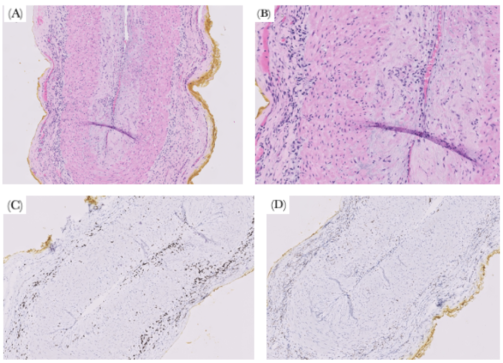
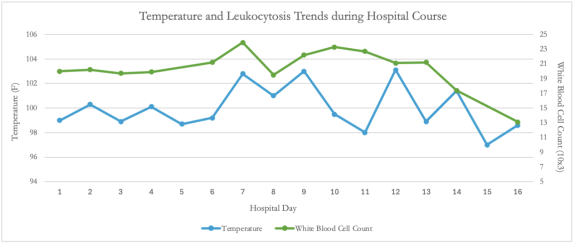
Background: Fever of unknown origin (FUO) in elderly patients presents a major diagnostic challenge due to its broad differential diagnosis and frequently nonspecific clinical manifestations. Although infections, malignancies, and connective tissue diseases are common etiologies, atypical presentations of vasculitis remain an underrecognized cause of persistent fever. Giant cell arteritis classically presents with headache, jaw claudication, and visual symptoms; however, a subset of patients may present solely with constitutional symptoms, leading to delayed diagnosis and increased risk of irreversible complications. We report a rare case of biopsy-confirmed non-giant-cell temporal arteritis presenting as prolonged FUO without cranial symptoms despite markedly elevated inflammatory markers and an extensive negative infectious and malignancy evaluation. Case Report: An 85-year-old female presented with several weeks of low-grade fever and fatigue, without associated headache, jaw claudication, or visual deficits. Initial laboratory workup was pertinent for leukocytosis and markedly elevated inflammatory markers (ESR/CRP). Extensive workup, including blood cultures, urinalysis, chest and abdominal CT imaging, transthoracic echocardiography, tuberculosis testing, and autoimmune serologies, was unrevealing. Multiple courses of empiric broad-spectrum antibiotics provided no symptom relief. Due to persistent elevation of ESR and CRP, and in the absence of an identifiable source, an autoimmune etiology such as temporal arteritis was higher on the differential. A temporal artery biopsy was subsequently performed and showed features consistent with non-giant cell arteritis. High-dose corticosteroid therapy was initiated, leading to rapid resolution of her fever and constitutional symptoms, as well as normalization of white blood cell count. Conclusion: This case highlights the importance of considering temporal arteritis in elderly patients with persistent fever of unknown origin, markedly elevated ESR and CRP, and unrevealing infectious or malignant workup, even in the absence of classic cranial manifestations. It also emphasizes the diagnostic value of temporal artery biopsy in atypical presentations and expands the limited literature describing biopsy-confirmed non-giant-cell arteritis presenting primarily as FUO. Key clinical message: Non-giant cell temporal arteritis should be considered in elderly patients with fever of unknown origin and markedly elevated inflammatory markers even in the absence of classic cranial symptoms. Early recognition and prompt corticosteroid therapy can lead to rapid clinical improvement and prevent irreversible complications such as vision loss and vascular ischemia.
| Published in | Clinical Medicine Research (Volume 15, Issue 5) |
| DOI | 10.11648/j.cmr.20261505.12 |
| Page(s) | 75-80 |
| Creative Commons |
This is an Open Access article, distributed under the terms of the Creative Commons Attribution 4.0 International License (http://creativecommons.org/licenses/by/4.0/), which permits unrestricted use, distribution and reproduction in any medium or format, provided the original work is properly cited. |
| Copyright |
Copyright © The Author(s), 2026. Published by Science Publishing Group |
Fever of Unknown Origin, Non-Giant Cell Arteritis, Arteritis, Temporal Arteritis, Autoimmune Conditions
Lab | Value | Normal Range | Units |
|---|---|---|---|
Glucose | 109 | 70-100 | mg/dL |
Sodium | 135 | 136-145 | meq/L |
Potassium | 4.9 | 3.5-5.3 | meq/L |
BUN | 19 | 8-27 | mg/dL |
Creatinine | 1.27 | 0.60-1.60 | mg/dL |
Alkaline phosphatase | 152 | 34-130 | U/L |
Aspartate aminotransferase | 49 | 0-40 | U/L |
Alanine aminotransferase | 27 | 0-68 | U/L |
Bilirubin, total | 1 | 0-1.1 | mg/dL |
Hemoglobin | 12 | 12-16 | g/dL |
White blood cell count | 20 | 4.5-11 | 103/μL |
Lab | Value | Normal Range | Units |
|---|---|---|---|
Erythrocyte sedimentation rate | >120 | 0-30 | mm/h |
C-reactive protein | 466.3 | 0-3.2 | mg/L |
Ferritin | 1202.86 | 8-252 | ng/mL |
FUO | Fever of Uknown Origin |
GCA | Giant Cell Arteritis |
| [1] | Jiang Z, Ji H, Dong J. Temporal artery biopsy for suspected giant cell arteritis: a mini review. Indian J Ophthalmol. 2023; 71(10): 3299–3304. |
| [2] | Kumar V, Abbas AK, Aster JC. Robbins and Cotran Pathologic Basis of Disease. 10th ed. Philadelphia: Elsevier; 2020. p. 511–513. |
| [3] | Weyand CM, Goronzy JJ. Giant-cell arteritis and polymyalgia rheumatica. N Engl J Med. 2014; 371(1): 52–63. |
| [4] | Williams J, Bellamy R. Fever of unknown origin. Clin Med (Lond). 2008; 8(5): 526–530. |
| [5] | Zhou L, Luneau K, Weyand CM, Biousse V, Newman NJ, Grossniklaus HE. Clinicopathologic correlations in giant cell arteritis: a retrospective study of 107 cases. Ophthalmology. 2009; 116(8): 1574–1580. |
| [6] | Lipsky BA, Weitz DC. Corticosteroid-induced adverse events in adults: frequency, screening, and prevention. Drugs. 2010; 70(10): 1329–1345. |
| [7] | Salvarani C, Cantini F, Hunder GG. Polymyalgia rheumatica and giant-cell arteritis. Lancet. 2008; 372(9634): 234–245. |
| [8] | Stagnaro, Chiara, et al. “Misdiagnosis of Giant Cell Arteritis Presenting as Fever of Unknown Origin.” ACR Meeting Abstracts, American College of Rheumatology, 2014. |
| [9] | Hansen ME, Springer J, Byram K. Diagnostic and Therapeutic Challenges of Vasculitis. Can J Cardiol. 2026; 38(5): 623-633. |
| [10] | Kronbichler A, Bajema IM, Bruchfeld A, Kirsztajn GM, Stone JH. Review Diagnosis and management of ANCA-associated vasculitis. Lancet. 2023; 403(10427): 683-698. |
| [11] | Ponte C, Grayson PC, Robson JC, et al. 2022 American College of Rheumatology / EULAR classification criteria for giant cell arteritis. 2022: 1647-1653. |
| [12] | Jennette, J. Charles, et al. “2012 Revised International Chapel Hill Consensus Conference Nomenclature of Vasculitides.” Arthritis & Rheumatism, vol. 65, no. 1, 2013, pp. 1–11. Wiley Online Library. |
| [13] | Ford JA, Gewurz D, Gewurz-singer O. Tocilizumab in giant cell arteritis: an update for the clinician. 2023: 135-140. |
| [14] | Caplan AS, Mecoli CA, Micheletti RG. Prophylaxis Against Pneumocystis Pneumonia. JAMA. 2023; 330(19): 1908–1909. |
| [15] | Ford JA, Gewurz D, Gewurz-singer O. Tocilizumab in giant cell arteritis: an update for the clinician. 2023: 135-140. |
APA Style
Dubakula, V. V., Muthyala, S. D., Kudlak, M., Vohra, S., Yousuf, T. (2026). A Diagnostic Challenge: Giant Cell Arteritis Presenting as Fever of Unknown Origin. Clinical Medicine Research, 15(5), 75-80. https://doi.org/10.11648/j.cmr.20261505.12
ACS Style
Dubakula, V. V.; Muthyala, S. D.; Kudlak, M.; Vohra, S.; Yousuf, T. A Diagnostic Challenge: Giant Cell Arteritis Presenting as Fever of Unknown Origin. Clin. Med. Res. 2026, 15(5), 75-80. doi: 10.11648/j.cmr.20261505.12
@article{10.11648/j.cmr.20261505.12,
  author = {Vishnu Vandana Dubakula and Sai Deepak Muthyala and Megan Kudlak and Sameera Vohra and Tauqeer Yousuf},
  title = {A Diagnostic Challenge: Giant Cell Arteritis Presenting as Fever of Unknown Origin},
  journal = {Clinical Medicine Research},
  volume = {15},
  number = {5},
  pages = {75-80},
  doi = {10.11648/j.cmr.20261505.12},
  url = {https://doi.org/10.11648/j.cmr.20261505.12},
  eprint = {https://article.sciencepublishinggroup.com/pdf/10.11648.j.cmr.20261505.12},
  abstract = {Background: Fever of unknown origin (FUO) in elderly patients presents a major diagnostic challenge due to its broad differential diagnosis and frequently nonspecific clinical manifestations. Although infections, malignancies, and connective tissue diseases are common etiologies, atypical presentations of vasculitis remain an underrecognized cause of persistent fever. Giant cell arteritis classically presents with headache, jaw claudication, and visual symptoms; however, a subset of patients may present solely with constitutional symptoms, leading to delayed diagnosis and increased risk of irreversible complications. We report a rare case of biopsy-confirmed non-giant-cell temporal arteritis presenting as prolonged FUO without cranial symptoms despite markedly elevated inflammatory markers and an extensive negative infectious and malignancy evaluation. Case Report: An 85-year-old female presented with several weeks of low-grade fever and fatigue, without associated headache, jaw claudication, or visual deficits. Initial laboratory workup was pertinent for leukocytosis and markedly elevated inflammatory markers (ESR/CRP). Extensive workup, including blood cultures, urinalysis, chest and abdominal CT imaging, transthoracic echocardiography, tuberculosis testing, and autoimmune serologies, was unrevealing. Multiple courses of empiric broad-spectrum antibiotics provided no symptom relief. Due to persistent elevation of ESR and CRP, and in the absence of an identifiable source, an autoimmune etiology such as temporal arteritis was higher on the differential. A temporal artery biopsy was subsequently performed and showed features consistent with non-giant cell arteritis. High-dose corticosteroid therapy was initiated, leading to rapid resolution of her fever and constitutional symptoms, as well as normalization of white blood cell count. Conclusion: This case highlights the importance of considering temporal arteritis in elderly patients with persistent fever of unknown origin, markedly elevated ESR and CRP, and unrevealing infectious or malignant workup, even in the absence of classic cranial manifestations. It also emphasizes the diagnostic value of temporal artery biopsy in atypical presentations and expands the limited literature describing biopsy-confirmed non-giant-cell arteritis presenting primarily as FUO. Key clinical message: Non-giant cell temporal arteritis should be considered in elderly patients with fever of unknown origin and markedly elevated inflammatory markers even in the absence of classic cranial symptoms. Early recognition and prompt corticosteroid therapy can lead to rapid clinical improvement and prevent irreversible complications such as vision loss and vascular ischemia.},
 year = {2026}
}
TY  - JOUR
T1  - A Diagnostic Challenge: Giant Cell Arteritis Presenting as Fever of Unknown Origin
AU  - Vishnu Vandana Dubakula
AU  - Sai Deepak Muthyala
AU  - Megan Kudlak
AU  - Sameera Vohra
AU  - Tauqeer Yousuf
Y1  - 2026/11/16
PY  - 2026
N1  - https://doi.org/10.11648/j.cmr.20261505.12
DO  - 10.11648/j.cmr.20261505.12
T2  - Clinical Medicine Research
JF  - Clinical Medicine Research
JO  - Clinical Medicine Research
SP  - 75
EP  - 80
PB  - Science Publishing Group
SN  - 2326-9057
UR  - https://doi.org/10.11648/j.cmr.20261505.12
AB  - Background: Fever of unknown origin (FUO) in elderly patients presents a major diagnostic challenge due to its broad differential diagnosis and frequently nonspecific clinical manifestations. Although infections, malignancies, and connective tissue diseases are common etiologies, atypical presentations of vasculitis remain an underrecognized cause of persistent fever. Giant cell arteritis classically presents with headache, jaw claudication, and visual symptoms; however, a subset of patients may present solely with constitutional symptoms, leading to delayed diagnosis and increased risk of irreversible complications. We report a rare case of biopsy-confirmed non-giant-cell temporal arteritis presenting as prolonged FUO without cranial symptoms despite markedly elevated inflammatory markers and an extensive negative infectious and malignancy evaluation. Case Report: An 85-year-old female presented with several weeks of low-grade fever and fatigue, without associated headache, jaw claudication, or visual deficits. Initial laboratory workup was pertinent for leukocytosis and markedly elevated inflammatory markers (ESR/CRP). Extensive workup, including blood cultures, urinalysis, chest and abdominal CT imaging, transthoracic echocardiography, tuberculosis testing, and autoimmune serologies, was unrevealing. Multiple courses of empiric broad-spectrum antibiotics provided no symptom relief. Due to persistent elevation of ESR and CRP, and in the absence of an identifiable source, an autoimmune etiology such as temporal arteritis was higher on the differential. A temporal artery biopsy was subsequently performed and showed features consistent with non-giant cell arteritis. High-dose corticosteroid therapy was initiated, leading to rapid resolution of her fever and constitutional symptoms, as well as normalization of white blood cell count. Conclusion: This case highlights the importance of considering temporal arteritis in elderly patients with persistent fever of unknown origin, markedly elevated ESR and CRP, and unrevealing infectious or malignant workup, even in the absence of classic cranial manifestations. It also emphasizes the diagnostic value of temporal artery biopsy in atypical presentations and expands the limited literature describing biopsy-confirmed non-giant-cell arteritis presenting primarily as FUO. Key clinical message: Non-giant cell temporal arteritis should be considered in elderly patients with fever of unknown origin and markedly elevated inflammatory markers even in the absence of classic cranial symptoms. Early recognition and prompt corticosteroid therapy can lead to rapid clinical improvement and prevent irreversible complications such as vision loss and vascular ischemia.
VL  - 15
IS  - 5
ER  -
Baylor Scott & White Health Round Rock Internal Medicine Residency, BSW Round Rock, Round Rock, USA
Texas A&M Naresh K. Vashisht College of Medicine, Texas A&M University, Round Rock, USA
Baylor Scott & White Health Round Rock Internal Medicine Residency, BSW Round Rock, Round Rock, USA
Baylor Scott & White Health Round Rock Internal Medicine Department, BSW Round Rock, Round Rock, USA
Baylor Scott & White Health Round Rock Internal Medicine Department, BSW Round Rock, Round Rock, USA

Information


 Share This Article
 Twitter
 Linked In
 Facebook

 Copy
 Download