
With forecasts for 2025, this comprehensive analysis report looks at Sri Lanka's hospitality industry from 2019 to 2024. The report provides an overview of market trends, opportunities, challenges, and key industry segments. Government programs, rising business travel, and tourism have all contributed to Sri Lanka's hospitality sector's recent notable expansion. The sector is anticipated to directly contribute billions of dollars to the Gross Domestic Product (GDP) by 2025. Given the substantial contribution of tourism to Sri Lanka's GDP and employment, it is susceptible to various crises, necessitating accurate forecasting of visitor arrivals. The study's main contributions are the identification of Sri Lankan tourist destinations and the provision of insightful and creative viewpoints on them. According to this study, foreign visitors are expected to generate over $100 billion in revenue in the future. In order to improve sustainability, the industry is also putting policies like renewable energy, green building standards, and energy efficiency into place. Additionally, domestic travel is significant; over a million domestic trips are anticipated in the future. Finally, a greater proportion of people are expected to travel online in the future, indicating that the market for online travel will continue to grow. This research predicts data for the nation between 2019 and 2024, as well as forecasts for 2025 using Excel software and gives Sri Lankan destinations and detailed information on hotels and other rooms. This one is very important for indoor/outdoor, local, and foreign tourists. Finally, the finding validates the need for government involvement in promoting and increasing international tourism demand to attain sustainable growth and development in the industry.
| Published in | International Journal of Economy, Energy and Environment (Volume 11, Issue 3) |
| DOI | 10.11648/j.ijeee.20261103.12 |
| Page(s) | 59-73 |
| Creative Commons |
This is an Open Access article, distributed under the terms of the Creative Commons Attribution 4.0 International License (http://creativecommons.org/licenses/by/4.0/), which permits unrestricted use, distribution and reproduction in any medium or format, provided the original work is properly cited. |
| Copyright |
Copyright © The Author(s), 2026. Published by Science Publishing Group |
Sri Lanka Tourism Industry, Hotels, Online Travel and Domestic Tourism, Challenges, Opportunities
Indicator | 2019 | 2020 | 2021 | 2022 | 2023 | 2024 | 2025 |
|---|---|---|---|---|---|---|---|
GDP ($ billions) | 89.02 | 84.30 | 88.61 | 74.59 | 83.72 | 98.96 | 106.42 |
GDP Growth Rate (%) | -0.2 | -4.6 | 4.2 | -7.3 | -2.3 | 5.0 | 4.9 |
Inflation Rate (%) | 3.53 | 6.15 | 6.0 | 45.2 | 17.4 | 1.24 | 5.5 |
Population (millions) | 21.803 | 21.919 | 22.156 | 22.181 | 22.037 | 23.103 | 23.230 |
2014 | 2015 | 2016 | 2017 | 2018 | 2019 | 2020 | 2021 | 2022 | 2023 | 2024 | 2025 | |
|---|---|---|---|---|---|---|---|---|---|---|---|---|
January | 146,575 | 156,246 | 194,280 | 219,360 | 238,924 | 244,239 | 228,434 | 1,682 | 82,327 | 102,545 | 208,253 | 252,761 |
February | 141,878 | 165,541 | 197,697 | 197,517 | 235,618 | 252,033 | 207,507 | 3,366 | 96,507 | 107,639 | 218,350 | 240,217 |
March | 133,048 | 157,051 | 192,841 | 188,076 | 233,382 | 244,328 | 71,370 | 4,581 | 106,500 | 125,495 | 209,181 | 229,298 |
April | 112,631 | 122,217 | 136,367 | 160,249 | 180,429 | 166,975 | 0 | 4,168 | 62,980 | 105,498 | 148,867 | 174,608 |
May | 90,046 | 113,529 | 125,044 | 121,891 | 129,466 | 37,802 | 0 | 1,497 | 30,207 | 83,309 | 112,128 | 132,919 |
June | 103,175 | 115,467 | 118,038 | 123,351 | 146,828 | 63,072 | 0 | 1,614 | 32,856 | 100,388 | 113,470 | 138,241 |
July | 133,971 | 175,804 | 209,351 | 205,482 | 217,829 | 115,701 | 0 | 2,429 | 47,293 | 143,039 | 187,810 | 200,244 |
August | 140,319 | 166,610 | 186,288 | 190,928 | 200,359 | 143,587 | 0 | 5,040 | 37,760 | 136,405 | 164,609 | 198,235 |
September | 105,535 | 143,374 | 148,499 | 145,077 | 149,087 | 108,575 | 0 | 13,547 | 29,802 | 111,938 | 122,140 | 148,673 |
October | 121,576 | 132,280 | 150,419 | 152,429 | 153,123 | 118,743 | 0 | 22,771 | 42,026 | 109,199 | 135,907 | |
November | 119,727 | 144,147 | 167,217 | 167,511 | 195,582 | 176,984 | 0 | 44,294 | 59,759 | 151,496 | 184,158 | |
December | 178,672 | 206,114 | 224,791 | 244,536 | 253,169 | 241,663 | 393 | 89,506 | 91,961 | 210,352 | 248,592 | |
1,527,153 | 1,798,380 | 2,050,832 | 2,116,407 | 2,333,796 | 1,913,702 | 507,704 | 194,495 | 719,978 | 1,487,303 | 2,053,465 | 1,368,288 |
Year | Licensed Establishments | Total Rooms |
|---|---|---|
2019 | 2,620 | 40,365 |
2020 | 3,019 | 42,750 |
2021 | 3,656 | 47,337 |
2022 | 3,823 | 48,120 |
2023 | 4,346 | 53,229 |
2024 | 4,390 | 53,378 |
2025 | 4,638 | 56,702 |
Province | Number of rooms up to June 2025 | Number of rooms up to June 2024 |
|---|---|---|
Central Province | 9,437 | 8,771 |
Eastern Province | 2,749 | 2,526 |
North Central Province | 2,505 | 2,355 |
North Western Province | 2,235 | 2,093 |
Northern Province | 1,071 | 1,068 |
Sabaragamuwa Province | 1,472 | 1,395 |
Southern Province | 14,536 | 13,716 |
Uva Province | 2,773 | 2,738 |
Western Province | 19,924 | 18,716 |
Total number of rooms | 56,702 | 53,378 |
Star category | Number of rooms up to June |
|---|---|
One | 1,802 |
Two | 2,029 |
Three | 2,821 |
Four | 3,834 |
Five | 6,603 |
Total | 17,089 |
Segment | Total Rooms | Place |
|---|---|---|
Guest house | 209 | Kandy |
170 | Negombo | |
26 | Colombo | |
173 | Ella | |
162 | Galle | |
150 | Nuwara Eliya | |
128 | Anuradapura | |
90 | Trincomalee | |
30 | Haputale | |
78 | Sigiriya | |
167 | Hikkaduwa | |
214 | Mirissa | |
8 | Pasikuda | |
11 | Matale | |
11 | Mount Lavinia | |
63 | Jaffna District | |
65 | Yala National Park | |
Ayurvedic hotels | 29 | Amangalla-Galle Fort |
42 | Anantara Peace Haven- Tangalla | |
30 | Water Garden Sigiriya | |
39 | Cape Weligama | |
Boutique Hotels | 5 | Maya Tangalle |
9 | The Flame Tree Estate & Hotel -Kandy | |
5 | Shiva Sunrise Resort -Hikkaduwa | |
6 | Vanina Villas -Matara | |
17 | Karpaha Sands -Pasikuda | |
11 | Kurulu Bay -Ahangama | |
14 | Villa Thamburu -Bentota | |
5 | Plantation House -Hikkaduwa | |
7 | Nyne Hotels Rock Villa -Bentota | |
4 | UYANA Boutique Hotel and Retreat ADULTS ONLY -Ahangama | |
3 | Lake View Villa -Mirissa | |
5 | Elysium Unawatuna | |
28 | Wild Coast Tented Lodge - Relais and Chateaux - All Inclusive -Yala | |
16 | Buckingham Place -Tangalle | |
9 | Aathma Colombo House -Colombo | |
10 | The Glenrock Wellness Nature Resort -Belihul Oya | |
7 | Villa SPACE -Unawatuna | |
6 | Lagoon gate Tangalle Resort -Tangalle | |
7 | Ravana Garden -Ambalantota | |
10 | Kayaam House - Ayurveda & Wellness - Tangalle |
Destination |
|---|
Anuradapura: The city is located on the banks of the historic Malwathu Oya in the North Central Province, 205 kilometers (127 miles) north of the present-day capital of Colombo. Being a UNESCO World Heritage Site and one of Sri Lanka's former capitals, Anuradhapura is unquestionably worth a visit, particularly for those with an interest in history, archaeology, and Buddhism. It is well-known for the remarkably intact remnants of the ancient Lankan civilization. You can find a famous sacred Bodhi tree, old buildings, temples, a large archaeological site rich in history, and impressive stupas like Ruwanwelisaya, Thuparamaya, Lovamahapaya, Abhayagiri Dagaba, Jetavanarama, Mirisaveti Stupa, and Lankarama. |
Arugambay: Located on the Indian Ocean in the arid region of Sri Lanka's southeast coast, Arugam Bay is well-known for its reliable waves and variety of surf spots suitable for surfers of all abilities. The bay is 320 kilometers east of the city of Colombo. It is a well-liked surfing and vacation spot. The months of April through September are roughly when the surf season is at its height. In addition to surfing, tourists can explore neighboring attractions like the Pottuvil Lagoon, the wildlife-rich Kumana National Park, and historic locations like the Kidumbigala Monastery. With a variety of activities like yoga, fresh seafood, and unusual experiences like crocodile spotting at the nearby Crocodile Rock, the area offers a lively yet serene atmosphere. |
Adam's Peak: Adam's Peak is a 2,243-meter (7,359-foot) conical mountain in central Sri Lanka that rises above the surrounding range and resembles a pyramid. Adam's Peak is surrounded by a tropical rainforest, including the Peak Wilderness Sanctuary, which was declared a conservation area in 1940. Adam's Peak is 129.4 kilometers east of the city of Colombo. The tea estates surrounding the sanctuary keep the elephant population isolated from the lowlands. The three main rivers that emerge from Adam's Peak in Sri Lanka are the Kalu, Walawe, and Kelani. The abundance of garnets, rubies, and sapphires in the gneiss rock of the peak is well known. Buddhism, Hinduism, Christianity, and Islam all hold the Sri Pada in high regard. Every year, a large number of pilgrims from all religions come to the peak. |
Batticola: The city is a significant commercial hub and home to Sri Lanka's Eastern University. Located on an island, it is 111 kilometers (69 miles) south of Trincomalee on the east coast. A well-liked vacation spot, Pasikudah is located 35 km (22 mi) northwest and features flat, warm-water shallow lagoons and beaches all year round. When all is said and done, Batticaloa is well worth the trip, especially for those who enjoy the outdoors and want to explore a lesser-known Sri Lankan area. It provides unique cultural experiences, opportunities to interact with hospitable locals, and stunning natural beauty, including its famous beaches and lagoon. Though less popular than other Sri Lankan tourist spots, its charm lies in its tranquility, rich biodiversity, and opportunity to see the nation from a new perspective. |
Bentota: Travelers looking for stunning beaches, water sports, natural experiences like river safaris and turtle sanctuaries, and cultural outings to nearby temples and estates like Lunuganga Estate should definitely consider Bentota. It is a tranquil yet interesting location on Sri Lanka's southwest coast, combining resort conveniences with tranquil natural features. Additionally, Bentota offers Ayurveda, an age-old medical practice. Bentota is well-known for producing toddy, an alcoholic beverage made from coconut nectar. It is roughly 56 kilometers (35 miles) north of Galle and 65 kilometers (40 miles) south of Colombo. |
Beruwala: Beruwala is situated 60 kilometers (37 miles) south of Colombo on Sri Lanka's southwest coast. Visitors can enjoy a wide range of tourist attractions in Beruwala, from historical sites and picturesque landscapes to frightful religious statues and temples. One of the most charming beaches on the southwest coast is Beruwala, which boasts golden sands and a turquoise ocean. Founded by Arab traders in the eighth century AD, it marks the location of the island's first Muslim settlement. |
Hambantota Bundala national Park: In 2005, UNESCO designated the national park a biosphere reserve, making it Sri Lanka's fourth biosphere reserve. Situated 245 kilometers (152 miles) southeast of Colombo is the national park. A fantastic chance to witness some incredible wildlife and bird species in the southern region of Sri Lanka is provided by Bundala National Park Safari. Don't pass up this opportunity to see one of the most well-known bird species that spends the winter here: the Greater Flamingo. Significant numbers of elephants, turtles, marsh and estuarine crocodiles, and other animals, such as leopards, can also be found in the park. Bundala National Park, which stretches east of Hambantota along the coast, is perfect for those seeking instant gratification because it offers flamingos, giant squirrels, elephants, and eight-foot crocs during a four-hour jeep ride. During the dry season (December to May), visitors have the best chance of seeing wildlife on afternoon safaris. |
Colombo: Colombo is the lively capital of Sri Lanka, this city captivates visitors with its rich tapestry of history, culture, and modernity. Through this Colombo tourism, you can explore bustling markets and colonial-era architecture, tranquil temples and vibrant street food stalls. Situated on the west coast of the island, just south of the Kelani River, Colombo is a principal port on the Indian Ocean. It has one of the largest artificial harbours in the world and handles the majority of Sri Lanka’s foreign trade. |
Dambulla: Dambulla is located 72 kilometers (45 miles) north of Kandy, 43 kilometers (27 miles) north of Matale, and 148 kilometers (92 miles) northeast of Colombo. The city's main attractions are the Rangiri Dambulla International Stadium and Sri Lanka's largest and best-preserved cave temple complex. The city also boasts the Iron Wood Forest, also known as Namal Uyana, and the largest rose quartz mountain range in South Asia. Located north of Kandy, Dambulla is a town built around a vast isolated rock mass and is a UNESCO World Heritage Site. The most recent archaeological site of significant historical importance discovered in Dambulla is the Ibbankatuwa prehistoric burial site near the Dhambulla cave temple complexes. The words "Ulla," which means fountain, and "Damba," which means rock, were combined to create the name "Dambulla." |
Ella: At an elevation of 1,041 meters above sea level, Ella is located in the Badulla District of Uva Province, about 200 kilometers east of Colombo. Ella, which is only 8 km from Bandarawela, boasts some of the most breathtaking views. The region is rich in biodiversity, with a wide variety of plants and animals. Entering the Grand Ella Motel's (formerly the Ella Rest House) garden gives you a taste of Ella's breathtaking scenery. It feels as though you are standing on the edge of the world, with everything around you seemingly vanishing at your feet. A few of the locations in Ella are the Ella Gap, Ravana Ella Falls, Little Adam's Peak, and Bambaragala Peak, in addition to the numerous other delightful walks with breathtaking views. |
Galle: Galle is a town located 119 kilometers from Colombo on the southwest coast of Sri Lanka. The main river is the Gin Ganga, which originates in Gongala Kanda and flows past the villages of Neluwa, Nagoda, Baddegama, Thelikada, and Wakwella before ending at Ginthota, where it meets the sea. The longest bridge in Sri Lanka is the Wakwella Bridge. Galle is well-known for its Dutch Fort, the largest European colonial fortress still standing in Asia and a UNESCO World Heritage Site. In addition, the region is well-known for its natural harbor, Old Town's colonial charm, the Galle Lighthouse, and as a location to learn about Sri Lankan history and culture. |
Hambanthota: A rural town in Sri Lanka's southeast coastal region is called Hambantota. In Sri Lanka's Southern Province, it serves as the capital of the Hambantota District as well. There are 241 kilometers separating Colombo and Hambantota. There are 126 kilometers of highway. The Hambantota International Port, a significant transshipment hub in the Indian Ocean, and the city's abundant natural attractions, including Ridiyagama Safari Park, Yala National Park, Kumana National Park, and Bundala National Park, which is renowned for its biodiversity, wildlife, and birds, are what make Hambantota famous. Along with historical landmarks and hot springs, the area offers agrotourism attractions such as the Agro Technology Park and the Dry Zone Botanic Gardens. |
Hikkaduwa: Hikkaduwa is located on Sri Lanka's south coast. About 20 kilometers northwest of Galle, in the Southern Province, is where you can find it. Hikkaduwa's beach and corals are its main draws. The impacted villages were Rathgama, Kahawa, Paraliya, Dodanduwa, and Telwatta. The location is on the well-known Galle road, which runs from Colombo to Galle. It is 129.5 miles away. Hikkaduwa is regarded as a worthwhile destination, particularly for tourists drawn to the vibrant beach atmosphere, water sports, and marine life. It provides great diving and snorkeling at its Coral Sanctuary, chances to see sea turtles, well-known surf spots, and easy access to other sites like the city of Galle and the Sea Turtle Hatchery. |
Horton Place: Horton National Park is located in Sri Lanka's highlands. It is located in the central highlands at a height of over 2,000 meters, and because of its elevation, the climate there is significantly colder and windier than in Sri Lanka's lowlands. The drive from Colombo to Horton Plains, which is about 183 to 210 km away, can take 4 to 5 hours via the Ohiya entrance or 4 hours via the Pattipola entrance. In 2010, UNESCO designated it as a Natural Heritage site. The park is full of stunning forests and waterfalls and is well-known for its endemic species of plants and animals. World's End in Sri Lanka is Horton Plains' most well-known attraction. |
Jaffna: The capital of Sri Lanka's Northern Province is Jaffna. Depending on the mode of transportation, the trip from Colombo to Jaffna can take anywhere from seven to eight hours by train and six to seven hours by bus. The quickest option is flying, which takes about an hour and fifteen minutes. The road distance between Jaffna and Colombo is 394.8 km. The city of Jaffna is located in Sri Lanka's northern region. With its elaborate gopuram tower and golden arches, Nallur Kandaswamy is a massive Hindu temple. The Portuguese constructed the star-shaped Jaffna Fort along the coast in the 17th century, and the Dutch and British later took it over. |
Kalkuda: On the eastern coast of Sri Lanka, Kalkudah Beach is a calm and immaculate beach that is well-known for its golden sand, calm waters that are shielded by an offshore reef, and peaceful atmosphere. Kalkudah Beach, which is roughly 35 kilometers northwest of Batticaloa and the more crowded Passekudah Beach, provides a tranquil haven with chances for swimming, snorkeling, and beach walks. Kalkudah Beach is well-known for its wide stretch of golden sand and pristine waters. Swimming, tanning, and taking leisurely walks along the shore are all made possible by the beach's shallow and calm waters. A tranquil diversion from busier tourist destinations is offered by the beach's comparatively unspoiled nature. |
Kalpitiya: Despite its natural beauty, the western peninsular area of KALPITIYA in the Puttalam district of Sri Lanka is remarkably untouched by tourism. With the small close-knit fishing community dominating the lives of the local people, visitors can get a real insight into working life away from the city. After watching the night fishing boats return in the morning, a visit to one of the fish markets offers the opportunity to choose the evening meal direct from the fresh catch! Leisurely boat rides up the lagoon and canoe trips down the river are a pleasant way of exploring the coastline, |
Kandy: Kandy in Sinhala, pronounced is the English name for the city of Maha Nuvara (Senkadagalapura) in the centre of Sri Lanka. It is the capital of the Central Province and Kandy District. It lies in the midst of hills in the Kandy Valley which crosses an area of tropical plantations, mainly tea. Kandy is one of the most scenic cities in Sri Lanka. Kandy is of both an administrative and religious city. It is the capital of the Central Province and also of the administrative district of Kandy. |
Katunayake: Katunayake a town is situated on the west coast of the island of Sri Lanka near Negombo and close to the commercial capital of Colombo. It is the site of Bandaranaike International Airport, the primary international air gateway to Sri Lanka. With the change of government in 1977 and the introduction of the open economy policy a large area was allocated to create a free trade zone. This created a large amount of job opportunities for the local youth and has contributed substantially towards the country's economy. |
Kitulgala: Kitulgala is a small town in the west of Sri Lanka. It is in the wet zone rainforest, which gets two monsoons each year, and is one of the wettest places in the country. Nevertheless, it comes alive in the first three months of the year, especially in February, the driest month. The Academy Award-winning "The Bridge on the River Kwai" was filmed on the Kelani River near Kitulgala, although nothing remains now except the concrete foundations for the bridge Kitulgala is also a base for white-water rafting, which starts a few kilometres upstream. |
Knuckles Mountain: The Knuckles Mountain Range lies in central Sri Lanka, north-east of the city of Kandy. The range takes its name from a series of recumbent folds and peaks in the west of the massif which resemble the knuckles of clenched fist when viewed from certain locations in the Kandy District. Whilst this name was assigned by early British surveyors, the Sinhalese residents have traditionally referred to the area as Dumbara Kanduvetiya meaning mist-laden mountain range (Cooray, 1984). The entire area is characterised by its striking landscapes often robed in thick layers of cloud but in addition to its aesthetic value the range is of great scientific interest. It is a climatic microcosm of the rest of Sri Lanka. |
Mannar: The natural beauty, distinctive cultural landmarks, and varied wildlife of Mannar are its main draws for tourists. In addition to Adam's Bridge, visitors can see rare baobab trees, religious sites like the Shrine of Our Lady of Madhu, historical forts, and a variety of birds in sanctuaries. |
Matara: Matara historically belongs to the area called Ruhana, one of the three kingdoms in Sri Lanka (Thun Sinhalaya). First Indians who arrived to the island country according to the Mahawansa settled in the area, along the banks of Nilwala river. Matara was ruled by Sinhala kings for thousands of years and this is evident by the ancient temples and shrines built by them such as temples in Dondra (Devinuwara) and Weherahena. The temple in the middle of the town is also built by ancient kings and now it is a very popular sacred place among the Buddhists in the area. In 16th and 18th centuries Matara was ruled by Portuguese and Dutch respectively. |
Minneriya: Minneriya is a small town in Sri Lanka, and is famous for two things, for the great Minneriya lake build by King Mahasen and for the Minneriya wildlife sanctuary which is a hot spot for safari lovers because of the abandons of Elephants. Furthermore it is situated near Habarana which have some high class hotels for tourists and some famous world heritage sites like Anuradhapura, Polonnaruwa and Sigiriya which are relatively close to Minneriya. |
Nigombo: Negombo is a town of about 65,000, approximately 37 km north of Colombo, in Sri Lanka. It is located at the mouth of the Negombo lagoon, about 7 km from the Bandaranaike International Airport. Negombo has a small port, and its economy is mainly based on tourism and its centuries-old fishing industry, though it also produces cinnamon, ceramics, and brass ware. |
Nilaweli: Nilaveli is a coastal resort town located about 20 km North-West of Trincomalee, Trincomalee District, Sri Lanka. It used to be a popular tourist destination. |
Nuwaraeliya: Nuwara Eliya meaning "city on the plain (table land)" or "city of light", is a town in Sri Lanka. It is located at an altitude of 1,868 m (6,128 ft) in the central highlands and is considered one of the most important locations for Tea production in Sri Lanka. The town is overlooked by Pidurutalagala, the highest mountain in Sri Lanka. |
Pasikuda: Pasikudah or Pasikuda is a coastal resort town located about 35 kilometers northwest of Batticaloa, Batticaloa District, Sri Lanka. It used to be a popular tourist destination, Pasikudah and Kalkudah are located few km apart. |
Pinnawala: The Pinnewela Elephant Orphanage is situated northwest of the town of Kegalle, halfway between the present capital Colombo and the ancient royal residence Kandy in the hills of central Sri Lanka. It was established in 1975 by the Sri Lanka wildlife department in a 25-acre coconut property near the Maha Oya river. The orphanage was originally founded in order to afford care and protection to the many orphaned elephants found in the jungle. As of 2008, there are about 84 elephants. |
Polonnaruwa: The second most ancient of Sri Lanka's kingdoms, Polonnaruwa was first declared the capital city by King Vijayabahu I, who defeated the Chola invaders in 1070 CE to reunite the country once more under a local leader. |
Puttalam: The history of this dry zone district goes back to the arrival of North Indian Prince Vijaya, 2500 years ago in Tammanna in the coastal belt above Puttalam. This happened when his vessel was washed ashore. Thonigala the homeland of Kuweni is deep in the district. The name "Puttalam" may be a modification of in Tamil Uppuththalam, i.e, Uppu means Salt and Thalam means the place where salt production. So finally the name came Puttalam. |
Ratnapura: Ratnapura is the name of the provincial capital of Sabaragamuwa Province of Sri Lanka and the Ratnapura District in which the town is situated. Some say the modern name is derived from the Portuguese name Rapadura for jaggery, the palm candy produced traditionally in this region, but the more common explanation in Sri Lanka is that it comes from the Sinhala "ratna" meaning gems and "pura" meaning city. Ratnapura is also spelled as Rathnapura. Located some 101 km south east of Colombo, it is the centre of a long-established industry of precious stone mining including rubies, sapphires, and other gems. Apart from gem mining, the town is known for rice and fruit cultivations. |
Sigiriya: Sigiriya (Lion's rock) is an ancient rock fortress and castle/palace ruin situated in the central Matale District of Sri Lanka, surrounded by the remains of an extensive network of gardens, reservoirs, and other structures. It is a popular tourist destination, also known for its ancient paintings (frescos), very similar to those in the Ajanta Caves of India. The Sigiraya was built during the reign of King Kassapa I (AD 477 – 495), and it is one of the seven World Heritage Sites of Sri Lanka. |
Sinharaja: Sinharaja Forest Reserve is a national park in Sri Lanka. It is of international significance and has been designated a Biosphere Reserve. The Sinharaja (Lion King) Rain Forest is a world heritage site and is arguably the most important site in Sri-Lanka and is internationally important for its biodiversity. With its unique and rich ecosystem, Sinharaja is one of the best places to see wildlife and isolate yourself from the world. |
Trincomalee: Trincomalee is a port city on the east coast of Sri Lanka, about 110 miles northeast of Kandy. Trincomalee is a historic port city on the northeast coast of Sri Lanka, renowned for its large natural harbor, tranquil beaches like Uppuveli and Nilaveli, and significant cultural sites such as Fort Frederick and the Koneswaram Temple. The area is a popular tourist destination for activities like whale watching and diving at nearby Pigeon Island National Park, offering a mix of diverse marine life, ancient history, and tropical beauty. |
Unawatuna: Unawatuna is a beach resort, located on the southern coast of Sri Lanka. Unawatuna is a popular tourist destination in Sri Lanka, known for its picturesque beach and vibrant atmosphere. Described as most wonderful beach location by the nature, Unawatuna is one of the best Scuba Diving Locations in Sri Lanka. Futhermore, you can enjoy the beach, Scuba Diving, Surfing and Sea Food in Sri Lankan Style. The Jungle Beach, Roomassagla Hills, Kathaluwa Temple, Galle Fort are interesting places to visit. |
Weligama: Weligama is a fishing town in Matara district on the southern coast of Sri Lanka. It is most famous for its distinct stilt fishermen and an off shore islet known as Taprobane, where a dream house of French Count de Maunay was built. Weligama Beach, located on the southern coast of Sri Lanka, is a picturesque and laid-back destination known for its golden sandy shoreline and stunning ocean views. The beach is ideal for swimming, surfing, and other water sports. |
Wilpattu National Park: Wilpattu National Park is a year-round destination for wildlife safaris. The unique feature of this park is the existence of “Willus” (Natural lakes) - Natural, sand-rimmed water basins or depressions that fill with rainwater. The best time to visit Wilpattu National Park for optimal wildlife sightings is during the dry season, from February to October, as animals gather around limited water sources, increasing their visibility. The most popular time to visit is during the May to September dry season. The north eastern monsoon brings rainfall from October until December, after which the reserve is lush, green and beautiful – great clouds of butterflies are a highlight at the beginning of the year. Sloth bears love feasting on the intoxicating fruits of the palu trees in season between May and July, and therefore sightings are optimal at this time. The best wildlife sightings are early morning and evening, so be prepared to wake up early. |
Yala National Park: Yala was designated as a wildlife sanctuary in 1900, along with Wilpattu, designated in 1938, as the first two designated national parks in Sri Lanka. Much of the reserve is parkland, but it also contains jungle, beaches, freshwater lakes and rivers and scrubland. The park is best known for its variety of wildlife and is important conservation of Sri Lankan elephants, Sri Lankan leopards and including a wider range of birds. However, an afternoon safari can also be successful, particularly during the dry season, as animals move toward watering holes and cooler spots before dusk. The "best" time depends on the season and your personal preference, with many choosing a full-day safari to maximize wildlife viewing opportunities |
Mirissa: Mirissa, on the south coast of Sri Lanka, is the best place to go whale watching from December to April. It is located in the Matara District of the Southern Province. It is situated about 150 kilometers south of Colombo at an elevation of 4 meters above sea level. The beach and nightlife of Mirissa make it a popular tourist destination. |
Lighthouse*: The Sri Lanka Ports Authority is in charge of running and maintaining the Galle Lighthouse, also called Pointe de Galle Light, which is an onshore lighthouse located in Galle, Sri Lanka. It is the oldest light station in Sri Lanka. |
Udawalawa: Known for its large number of wild Asian elephants, Udawalawe National Park is a major national park in Sri Lanka, and the town serves as the primary entry point. Around 160 kilometers (99 miles) from Colombo, the Udawalawe National Park is the nearest national park. |
Wasgomuwa: By road, Wasgamuwa is roughly 225 kilometers (140 miles) from Colombo, making the trip take four to five hours. The route and traffic conditions can affect the precise travel time. The animals are far more erratic. Mammals that live in this national park include the black-naped hare, sambar, sloth bear, golden jackal, wild boar, wild buffalo, rusty-spotted cat, fishing cat, and leopard. |
Kaudulla: Located in the Polonnaruwa district of Sri Lanka's north central province, Kaudulla National Park is 190 kilometers away from Colombo. In addition to giving the elephants more space in the wild, Kaudulla National Park opened in 2002 and connected to the elephant corridor that runs south between Minneriya and Wasgomuwa National Parks. Somawathiya National Park is also connected to the east by Kaudulla. |
Galoya: Walking safaris and jeep safaris are also offered in addition to boat safaris. It's also one of the best places in Sri Lanka to see the Veddas, the native population. Additionally, Gal Oya is the ideal option for those who wish to explore less traveled routes. There are 225 kilometers separating Galoya and Colombo. (via Trincomalee, Kurunegala, and Ambepussa; 4h 22m). |
Angammedilla: One of Sri Lanka's more recent national parks is Angammedilla National Park. At first, Angammedilla was part of the Minneriya-Girithale forest reserve. The park was established primarily to safeguard Parakrama Samudra's drainage basin. Additionally, Angammedilla protects the water sources in Sudu Kanda (Sinhala for "White Hill"), the drainage basins of the Minneriya and Girithale irrigation tanks, as well as the wildlife and habitats of the nearby forests. It is situated in the Polonnaruwa District, 225 kilometers from Colombo. |
Galways Land: Within the boundaries of Nuwara Eliya, Sri Lanka, lies Galway's Land National Park, a small national park. Two of the most important birding locations in Sri Lanka, according to the Field Ornithology Group of Sri Lanka, are Galway's Land and the Victoria Park of Nuwara Eliya. Galway's Land is home to roughly 30 native bird species and 20 rare migratory bird species. The park boasts valuable floral species of both native and foreign origin in addition to its avifauna. |
Lahugala: Lahugala is a small town in the Ampara District of Sri Lanka's Eastern Province. Pothuvil town is located on the main road between Colombo and Baticaloa, approximately 14 kilometers (8.7 miles) away. Since the Anuradhapura era, people have lived in Sri Lanka's Lahugala region, which was a part of the Kingdom of Ruhuna. One of Sri Lanka's most important elephant habitats is Lahugala Kitulana National Park. |
Pigeon Island: Enjoy the serene turquoise waters and shimmering coral gardens while strolling along the white sands of Pigeon Island, a little-known gem off the east coast of Sri Lanka. Just one kilometer from Nilaveli, this marine national park is a veritable gold mine of natural wonders. The island's stunning sandy strip, encircled by lush hills, welcomes visitors. Under its waters is a beautiful coral reef that is home to hundreds of reef fish and colorful corals such as Faviddae and Mussidae. |
Sevana Eth Athuru: Neither the ETH's website nor public booking websites provide the official price for the Elephant Transit Home (ETH) in Udawalawe. There is no publicly stated admission fee, and entry is frequently covered as part of a larger safari or tour package, even though you can watch the elephants being fed three times a day at specific times. It takes roughly 4.5 hours to travel from Colombo to the Udawalawe Elephant Transit Home (Eth Athuru Sevana), though some sources put the time closer to 3 hours and 17 minutes. Traffic and the precise location in Colombo from which you are leaving can affect the travel time. |
Kalawewa: In addition to being a national park with a significant tusker population, Kalawewa is well-known for its ancient engineering wonder, the Kala Wewa reservoir, which was constructed by King Dhatusena in the fifth century. The park was created in 2015 and is a popular destination for people interested in history, engineering, and nature. It is also a wonderful place to see wildlife, especially its large herds of elephants. Kalawewa is 3 hours, 51 minutes (183 km) away from Colombo. |
Girithale: The small Sri Lankan city of Giritale is located in the Polonnaruwa District. Elephant and buffalo herds are known to call the nearby bush forests and the Minneriya-Giritale Sanctuary home, and they are also home to various birds. The area's natural beauty and proximity to Polonnaruwa, Sri Lanka's historic capital, make it a popular tourist destination. It is located on the main road that leads to Batticaloa and Polonnaruwa from Colombo. In neighboring villages, tourists can take in the warmth of Sri Lankan hospitality, learn about local crafts, and experience traditional rural life. |
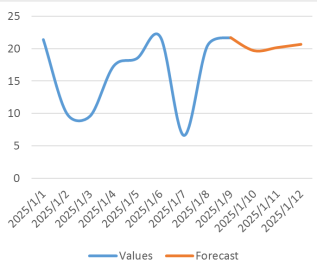
Month | Number of tourists (2024) | Number of tourists (2025) | Percentage change (25/24) | Forecast (Percentage change) | Number of tourists (2025- Forecast) |
|---|---|---|---|---|---|
January | 208,253 | 252,761 | 21.4 | - | - |
February | 218,350 | 240,217 | 10 | - | - |
March | 209,181 | 229,298 | 9.6 | - | - |
April | 148,867 | 174,608 | 17.3 | - | - |
May | 112,128 | 132,919 | 18.5 | - | - |
June | 113,470 | 138,241 | 21.8 | - | - |
July | 187,810 | 200,244 | 6.6 | - | - |
August | 164,609 | 198,235 | 20.4 | - | - |
September | 122,140 | 148,673 | 21.7 | - | - |
October | 135,910 | - | - | 19.68721 | 162,663 |
November | 184,159 | - | - | 20.1776 | 221,317 |
December | 248,592 | - | - | 20.6679 | 299,971 |
SLTDA | Sri Lanka Tourism Development Authority |
GDP | Gross Domestic Product |
| [1] | Athukorala, P. (1998). Trade policy Reforms and industrial restructuring in Sri Lanka Trade Policy Issues in Asian Development: Routledge. |
| [2] | Brau, R., Di Liberto, A., & Pigliaru, F. Tourism and development: A recent phenomenon built on old (Institutional) roots? The World Economy, 2011, 34(3), 444-472. |
| [3] | Due, E. (1980). Tourism and development examining the case of Sri Lanka. (Unbublished M. A. Thesis), McMaster University (Canada), Canada. |
| [4] | Fernando, S., Bandara, J. S., Smith, C. Tourism in Sri Lanka. In M. C. Hall & S. J. Page (Eds.), The Routledge Handbook of Tourism in Asia 2016, (pp. 251-264). Abingdon, Oxon, UK: Routledge. |
| [5] | Fernando, S., Bandara, J., Liyanaarachch, S., Jayathilaka, R., Smith, C. Political violence and volatility in international tourist arrivals: the case of Sri Lanka. Tourism Analysis, 2013a, 18(5), 575-586. |
| [6] | Fernando, S., Bandara, J., Smith, C. Regaining missed opportunities: the role of tourism in post-war development in Sri Lanka. Asia Pacific Journal of Tourism Research, 18(7), 2013b, 685-711. |
| [7] | Fernando, S. Managing the Post-War Tourism Development in Sri Lanka. International Journal of Business and Social Science, 2016, 7(11), 90-100. |
| [8] | Fernando, S. Tourism in Sri Lanka and a computable general equilibrium (CGE) analysis of the effects of post-war tour-ism boom. Nymphenburger Str. 86, 2017, 80636 München, Germany: GRIN Verlag. |
| [9] | Nordin, S., 2005. Tourism of tomorrow. Ostersund, Sweden Eur. Tour. Res. |
| [10] | May, M., & Hill, S. B. (2004). Unpacking aviation futures. Retrieved from |
| [11] | Mihalic, T. Tourism and Economic Development Issues. In R. Sharpley & D. Telfer, J. (Eds.), Tourism and Development. Concepts and Issues, 2014. (2nd ed., pp. 77-117). |
| [12] | Ministry of Tourism Development and Christian Religious Affairs, 2017. Strategic Plan 2017-2020. |
| [13] | Monthly Report in Central Bank of Sri Lanka, 2020-2025. |
| [14] |
Igoumenakis, G., Theodoropoulou, A., Halkiopoulos, C. Tourism and Developing Countries. Conditions and Prospects for Tourism Development. In: Katsoni, V., Cassar, G. (eds) Recent Advancements in Tourism Business, Technology and So-cial Sciences. IACuDiT 2023. Springer Proceedings in Business and Economics. Springer, Cham, 2024.
https://doi.org/10.1007/978-3-031-54338-8_43 Karim and Geng-Qing Chi (2010). |
| [15] | Onetiu., Predonu. Economic and Social Efficiency of Tourism, Lumen International Conference Logos Universality Mentality Education Novelty, 2013, (LUMEN- 2013). |
| [16] | Rohini P. K, Dr. A. Meenakshi. The Role of Transportation In Tourism Development, Educational Administration: Theory and Practice, 2024, 30(4), 9308-9312. |
| [17] | SLTDA 2020-2024, Monthly Tourist Arrivals Report. |
| [18] | Sri Lanka Tourism Development Authority – Monthly SUMUMMARY REPORT Tourist arrivals from January to Sep-tember 2025. |
| [19] | Sri Lanka Tourism Promotion Bureau, 2018. Tourism Growth Trends- 1970 to 2017. |
| [20] | Suresh & Senethilnathan, Relation between Tourism and Economic Growth in Sri Lanka, Article in SSRN Electronic Journal 2014. |
| [21] | The World Tourism Conference, 1980. MANILA DECLARATIONON WORLD TOURISM. pp. 1-3. |
| [22] | UNDP; WTO. (1993). Tourism master plan Sri Lanka (SLR/89/006). Retrieved from Madrid. |
| [23] | United Nation. (1993). The economic impact of tourism in Sri Lanka. Retrieved from New York. |
| [24] | Zhang, Y., Khan, S. A. R., Kumar, A., Golpîra, H., Sharif, A. Is tourism really affected by logistical operations and enviromental degradation? An empirical study from the perspective of Thailand', Journal of Cleaner Production, 2019, 227, pp. 158-166. |
APA Style
Ekanayake, E. (2026). Analyse Sri Lanka's Visiting the Attractions Industry and Providing Key Economic Data for the Nation Between 2019 and 2024, as Well as Forecasts for 2025. International Journal of Economy, Energy and Environment, 11(3), 59-73. https://doi.org/10.11648/j.ijeee.20261103.12
ACS Style
Ekanayake, E. Analyse Sri Lanka's Visiting the Attractions Industry and Providing Key Economic Data for the Nation Between 2019 and 2024, as Well as Forecasts for 2025. Int. J. Econ. Energy Environ. 2026, 11(3), 59-73. doi: 10.11648/j.ijeee.20261103.12
@article{10.11648/j.ijeee.20261103.12,
  author = {Emusb Ekanayake},
  title = {Analyse Sri Lanka's Visiting the Attractions Industry and Providing Key Economic Data for the Nation Between 2019 and 2024, as Well as Forecasts for 2025},
  journal = {International Journal of Economy, Energy and Environment},
  volume = {11},
  number = {3},
  pages = {59-73},
  doi = {10.11648/j.ijeee.20261103.12},
  url = {https://doi.org/10.11648/j.ijeee.20261103.12},
  eprint = {https://article.sciencepublishinggroup.com/pdf/10.11648.j.ijeee.20261103.12},
  abstract = {With forecasts for 2025, this comprehensive analysis report looks at Sri Lanka's hospitality industry from 2019 to 2024. The report provides an overview of market trends, opportunities, challenges, and key industry segments. Government programs, rising business travel, and tourism have all contributed to Sri Lanka's hospitality sector's recent notable expansion. The sector is anticipated to directly contribute billions of dollars to the Gross Domestic Product (GDP) by 2025. Given the substantial contribution of tourism to Sri Lanka's GDP and employment, it is susceptible to various crises, necessitating accurate forecasting of visitor arrivals. The study's main contributions are the identification of Sri Lankan tourist destinations and the provision of insightful and creative viewpoints on them. According to this study, foreign visitors are expected to generate over $100 billion in revenue in the future. In order to improve sustainability, the industry is also putting policies like renewable energy, green building standards, and energy efficiency into place. Additionally, domestic travel is significant; over a million domestic trips are anticipated in the future. Finally, a greater proportion of people are expected to travel online in the future, indicating that the market for online travel will continue to grow. This research predicts data for the nation between 2019 and 2024, as well as forecasts for 2025 using Excel software and gives Sri Lankan destinations and detailed information on hotels and other rooms. This one is very important for indoor/outdoor, local, and foreign tourists. Finally, the finding validates the need for government involvement in promoting and increasing international tourism demand to attain sustainable growth and development in the industry.},
 year = {2026}
}
TY  - JOUR
T1  - Analyse Sri Lanka's Visiting the Attractions Industry and Providing Key Economic Data for the Nation Between 2019 and 2024, as Well as Forecasts for 2025
AU  - Emusb Ekanayake
Y1  - 2026/06/04
PY  - 2026
N1  - https://doi.org/10.11648/j.ijeee.20261103.12
DO  - 10.11648/j.ijeee.20261103.12
T2  - International Journal of Economy, Energy and Environment
JF  - International Journal of Economy, Energy and Environment
JO  - International Journal of Economy, Energy and Environment
SP  - 59
EP  - 73
PB  - Science Publishing Group
SN  - 2575-5021
UR  - https://doi.org/10.11648/j.ijeee.20261103.12
AB  - With forecasts for 2025, this comprehensive analysis report looks at Sri Lanka's hospitality industry from 2019 to 2024. The report provides an overview of market trends, opportunities, challenges, and key industry segments. Government programs, rising business travel, and tourism have all contributed to Sri Lanka's hospitality sector's recent notable expansion. The sector is anticipated to directly contribute billions of dollars to the Gross Domestic Product (GDP) by 2025. Given the substantial contribution of tourism to Sri Lanka's GDP and employment, it is susceptible to various crises, necessitating accurate forecasting of visitor arrivals. The study's main contributions are the identification of Sri Lankan tourist destinations and the provision of insightful and creative viewpoints on them. According to this study, foreign visitors are expected to generate over $100 billion in revenue in the future. In order to improve sustainability, the industry is also putting policies like renewable energy, green building standards, and energy efficiency into place. Additionally, domestic travel is significant; over a million domestic trips are anticipated in the future. Finally, a greater proportion of people are expected to travel online in the future, indicating that the market for online travel will continue to grow. This research predicts data for the nation between 2019 and 2024, as well as forecasts for 2025 using Excel software and gives Sri Lankan destinations and detailed information on hotels and other rooms. This one is very important for indoor/outdoor, local, and foreign tourists. Finally, the finding validates the need for government involvement in promoting and increasing international tourism demand to attain sustainable growth and development in the industry.
VL  - 11
IS  - 3
ER  -
Department of Physical Sciences, Rajarata University of Sri Lanka, Mihinthale, Sri Lanka

Information



 Share This Article
 Twitter
 Linked In
 Facebook
 Copy
Copy Download