Research Article | | Peer-Reviewed

Traditional Food Fermentation in Chad: Diversity, Technologies, Hygiene Practices, and Prospects for Improvement

Received: 21 September 2026     Accepted: 30 September 2026     Published: 20 October 2026
Views:       Downloads:
Abstract

Many local products made through traditional fermentation play an important role in the dietary and cultural habits of the Chadian people. Produced through spontaneous fermentation, these products are generally rich in carbohydrates, proteins, and minerals, and some may have beneficial probiotic properties. However, spontaneous fermentation processes are often carried out under inadequate hygienic conditions, which promote the growth of certain undesirable microorganisms and pose health risks to consumers. This study aimed to evaluate the production and fermentation technologies of eight fermented foods produced and marketed in Chad. The study used a cross-sectional survey with a structured questionnaire, and diagrams were analyzed against recommendations. The study was conducted in four locations in Chad (Abeche, Mongo, N’Djamena, and Moundou) between May and August 2026, involving a total of eighty (80) producers selected using a random sampling method that took into account geographical distribution and the types of processed products. The evaluation of production processes showed that, overall, the essential steps in food production were followed. However, the evaluation of all production technologies revealed a strong predominance of manual operations with very few adequate hygiene measures. With regard to production equipment, the utensils used are, for the most part, also used for activities other than production, particularly in the preparation of family meals. Consequently, producers have very little equipment dedicated specifically to production. Furthermore, much of the equipment is unsuitable for certain operations, making it difficult to control certain production parameters. These findings underscore the need for improvements to protect consumers by optimizing hygiene practices during preparation.

Published in International Journal of Food Science and Biotechnology (Volume 11, Issue 3)
DOI 10.11648/j.ijfsb.20261103.11
Page(s) 113-124
Creative Commons

This is an Open Access article, distributed under the terms of the Creative Commons Attribution 4.0 International License (http://creativecommons.org/licenses/by/4.0/), which permits unrestricted use, distribution and reproduction in any medium or format, provided the original work is properly cited.

Copyright

Copyright © The Author(s), 2026. Published by Science Publishing Group

Keywords

Fermented Foods, Technologies, Health Risks, Prospects for Improvement, Chad

1. Introduction
Traditional or spontaneous fermentation is one of the oldest methods of food preservation and has been widely used for decades . Fermentation is a biotransformation process that improves the organoleptic characteristics and nutritional properties of foods, as well as the digestibility of the final product . During fermentation, bacteria, yeasts, and molds transform food into derivative products, helping to extend their shelf life .
In most African countries, locally fermented products play an important role in people’s food systems. Their production has significant socioeconomic implications, as some of these products constitute a major source of income for producers . In more developed countries, fermentation technologies are often integrated as marketing strategies to improve the economic profitability of certain products by highlighting the specific organoleptic characteristics attributed to certain ferments .
In Chad, fermented products come in various forms and vary depending on the locality, the raw materials used, the microorganisms naturally present in the raw materials, and the techniques adopted by producers. For example, Kindjine, Alme-hamoud, Amtabadj, Kisar, Djir, Damourgue, Rouwaba, and Kawal, produced through spontaneous fermentation, are rich in carbohydrates, proteins, and minerals, and some may have probiotic properties that are beneficial to consumer health . The types of produce most commonly used in fermentation processes in Chad include fruits, vegetables, legumes, grains, leaves, roots, dairy products, and their derivatives . In particular, sorghum, peanut and sesame meal, Senna obtusifolia leaves, and fresh milk are widely used . In Chad, fermented foods are ubiquitous in the general population’s dietary habits due to their ease of preparation and their organoleptic characteristics, which are highly appreciated by the population. However, traditional fermentation processes most often rely on spontaneous fermentation carried out without real control over production parameters and under poor hygienic conditions, which sometimes promotes the growth of undesirable microorganisms and increases health risks for consumers . Improving fermentation processes offers a solution for enhancing product quality and protecting consumers. Traditional technologies require effective promotion to preserve local knowledge while improving the quality and food safety of fermented products.
In the existing literature, numerous authors have addressed the fermentation of traditional African products . However, very little data exist regarding the evaluation of fermentation processes for traditional fermented products in Chad. The objective of this study was therefore to evaluate the production and fermentation technologies of eight fermented foods produced and marketed in Chad. This study provides a better understanding of the traditional fermentation process for these local products, assesses the knowledge of local populations, and identifies associated health risks.
2. Materials and Methods
2.1. Study Site and Period
The study was conducted in the city of Abeche in the North, Mongo and N’Djamena in the Center, and the city of Moundou in the South of Chad from May through August 2026. The technological parameters were analyzed at the Food Science and Nutrition Research Laboratory. This involved an evaluation of the production process, critical control points, fermentation methodology, and the hygiene measures applied.
2.2. Selection Criteria and Sampling of Producers
Producers were selected using a random selection method, taking into account geographic distribution and the types of processed products. A total of eighty (80) producers, ten (10) per product studied, were enrolled during the survey.
The selection criteria were therefore the location of the production facility and the type of products offered to consumers. Producers of the targeted fermented foods were first counted and then randomly selected using the ENA model . Thus, only producers of the targeted foods located within the study area were included in this study.
2.3. Data Collection and Fermented Food Production Diagrams Conception
The various stages of fermented food production were identified through a cross-sectional survey and then documented using a structured questionnaire focused on technological parameters. The data collected during the survey included raw material pretreatment operations, processing operations, fermentation through to the production of the finished fermented product, the production environment, and the hygiene of personnel and equipment used. Data were collected from eighty (80) regular and occasional producers in the four cities covered by the study.
2.4. Data Processing
The data were entered, sorted, and analyzed using SPSS version 25.0 to extract qualitative descriptive results using a thematic approach. The charts were generated using Microsoft Excel 2016. The results were compared with data from the relevant literature as well as normative data to assess the existence of hygiene risks.
3. Results
3.1. Production Technology of the Alme-hamoud
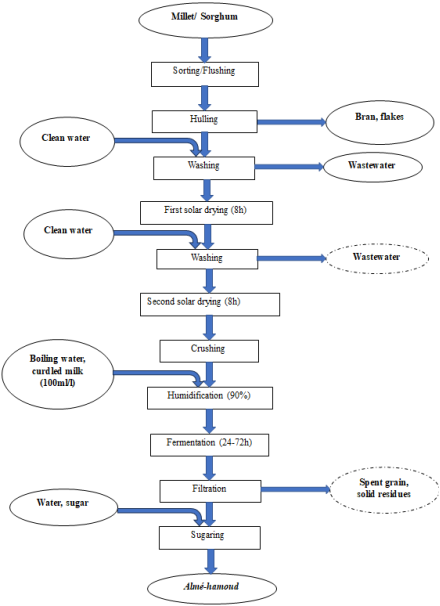
The Alme-hamoud is a sour fermented beverage made from sorghum or millet that is regularly consumed in rural areas of Chad. Its production process begins with the pretreatment of the sorghum or millet. The sorghum or millet is first sorted and cleaned to remove rotten grains, stones, and impurities. Next, it is hulled and winnowed to remove the flakes and bran. After hulling, the sorghum or millet is lightly sun-dried for 8 hours before being washed with clean water to remove any remaining impurities. After washing, it is sun-dried a second time for 8 hours before being ground. The cracked millet is then moistened with boiling water until it reaches the desired consistency (0.9 L/kg of flour), and curdled milk is added (100 mL/L). After filtering the resulting mixture, the liquid undergoes spontaneous anaerobic fermentation in a sealed container for 24 to 72 hours to produce the Alme-hamoud (Figure 1).
Figure 1. Diagram of the production process of the Alme-hamoud.
3.2. Production Process for the Amtabadj
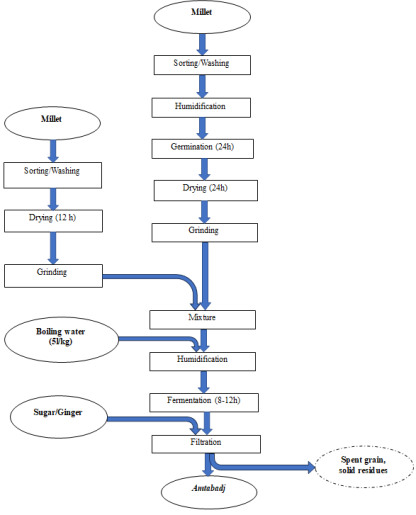
The Amtabadj is a traditional fermented beverage made from hulled or unhulled millet, sprouted millet, sesame, and ginger. The artisanal process for making the Amtabadj consists mainly of four steps: pretreatment of the raw materials, germination, grinding, and spontaneous fermentation. Each raw material is processed separately before being mixed to produce the Amtabadj. Pretreatment involves sorting, cleaning, and washing with clean water to remove impurities.
First, the millet is sorted by hand, followed by cleaning and washing with potable water to remove impurities. The grains are then dried for 12 hours and ground into powder.
At the same time, a portion of the millet is placed in a bag or jar for about 24 hours to promote germination. The sprouted grains are then sun-dried for 24 hours and ground into powder.
The ginger is also cleaned, washed, and ground until a smooth paste is obtained.
Next, a handful of ungerminated millet flour is mixed with about one liter of clean boiling water to form a premix. Then, the mixture of germinated and ungerminated millet flour is gradually incorporated into the premix and kneaded until a homogeneous dough is obtained. After cooling, the dough is transferred to a container and combined with about 4 liters of water per kilogram of raw materials. The mixture is then left to ferment spontaneously for about 8 to 12 hours. At the end of this fermentation, ginger paste and sugar are added, and the mixture is thoroughly stirred before being filtered through a fine cloth to separate the solid particles from the liquid. The resulting filtrate is the traditional beverage known as Amtabadj (Figure 2).
Figure 2. The Amtabadj Production Diagram.
3.3. The Kawal Production Technology
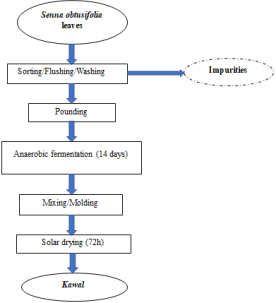
The Kawal is a traditional food condiment obtained by fermenting the leaves of Senna obtusifolia. The production process begins with the harvest of fresh Senna obtusifolia leaves. These are then sorted to remove impurities and damaged leaves, and washed with clean water. After washing, the leaves are partially pounded in a mortar until a soft, homogeneous paste is obtained. This paste is placed in a jar, sealed tightly, and left to undergo spontaneous anaerobic fermentation for 14 days by burying the jar underground to create anaerobic conditions. At the end of fermentation, the paste is removed, kneaded by hand, and then shaped into small balls or patties. The product is finally sun-dried for 72 hours to produce dry Kawal, ready for consumption or storage (Figure 3).
Figure 3. Diagram of the Manufacturing Process for the Kawal.
3.4. Production Process for the Damourgue
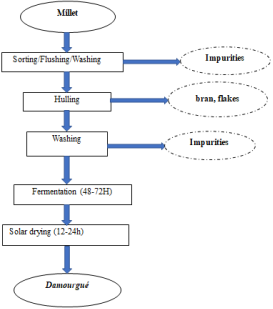
The Damourgue is a fermented food made from millet or sorghum that is widely enjoyed and consumed in Chad. The production process is relatively simple. It begins with the pretreatment of the millet, which includes sorting, hulling, winnowing, and washing to remove impurities, husks, and bran from the millet. The hulled and washed millet is then left to undergo spontaneous fermentation for 48 to 72 hours. After fermentation, the product is rinsed with clean water, spread out, and sun-dried for 12 to 24 hours. The dried product obtained in this way is the Damourgue (Figure 4).
Figure 4. Diagram of the Traditional Manufacturing Process for the Damourgue.
3.5. Production Process for the Kissar
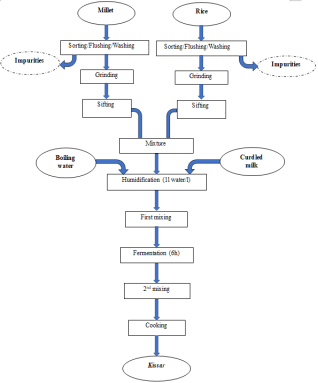
The Kissar is a fermented and baked flatbread made from millet and rice flour that is widely consumed by the Chadian population. The artisanal production process consists of three main stages: pre-processing of the raw materials, fermentation, and cooking on a hot griddle. The process begins with the pre-processing of the millet and rice grains, which includes sorting, hulling, winnowing, and washing. The processed grains are then separately ground into fine powder. The two powders are first sifted and mixed in equal parts to obtain a homogeneous mixture. This mixture is moistened with boiling water (1 liter of water per liter of mixture), and then 10 mL of curdled milk is added per kilogram of mixture to form a homogeneous dough. Then, sugar is added to the prepared dough, and the mixture is stirred to ensure thorough homogenization. The resulting mixture is left to ferment spontaneously for 6 hours. At the end of this fermentation, the mixture is stirred again until a homogeneous dough is obtained. After fermentation, small portions of the fermented dough are cut and then cooked in a thin layer on a preheated griddle that has been brushed with fat to produce the Kissar (Figure 5). During cooking, the product is flipped to ensure even cooking on both sides.
Figure 5. Production Diagram of the Kissar.
3.6. Production Technology of the Kindjine
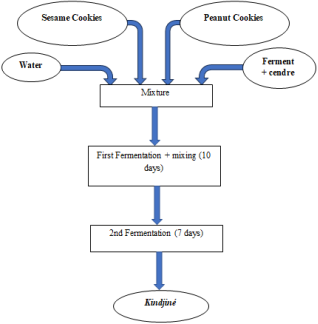
The Kindjine is a fermented food product made from sesame and peanut meal. The production process is relatively simple and involves mixing the sesame and peanut meal and then allowing the mixture to ferment after adding a starter culture prepared in advance from sprouted millet.
The meal is first mixed, and then a few drops of water are added. After this initial mixing, the starter culture and ash from millet or sesame stalks are incorporated. The mixture is stirred and undergoes an initial fermentation for 10 days. During this period, the mixture is stirred daily to promote uniform primary fermentation. After the ten days of fermentation, the resulting dough is sealed airtight in a container to create anaerobic conditions and left to undergo a second fermentation for 7 days to produce the Kindjine (Figure 6). For optimal preservation, the Kindjine is spread in a thin layer to dry in the sun for 48 to 72 hours.
Figure 6. Production Diagram for Kindjine.
3.7. Production Technology of the Rouwaba
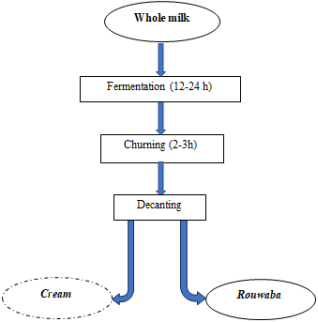
The Rouwaba is a curdled milk product obtained through the spontaneous fermentation of whole milk. The production process is traditional and consists of two main stages: fermentation and churning. Fresh milk is first collected in a clean container and then left to rest for 12 to 24 hours. During this phase, the milk undergoes spontaneous lactic fermentation, causing the milk proteins to coagulate. After this phase, the contents of the container are shaken vigorously for 2 to 3 hours to facilitate the separation of the fat-rich cream from the curdled milk at the bottom of the container. After the cream is skimmed off, the remaining curdled milk constitutes the Rouwaba (Figure 7).
Figure 7. Diagram of Production for the Rouwaba.
3.8. Production Technology of the Djir
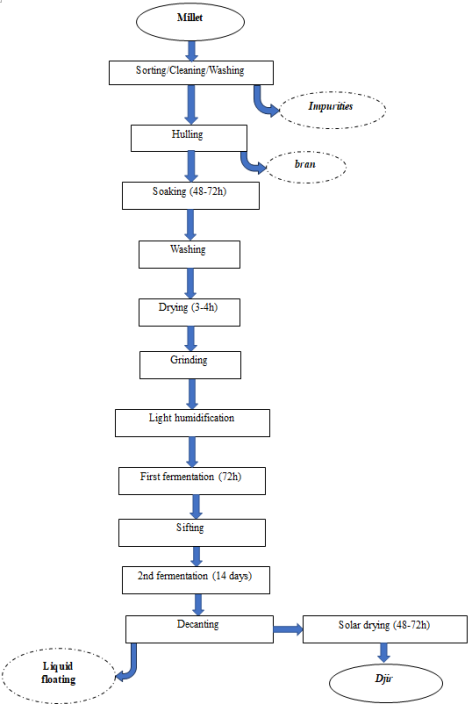
The Djir is a highly prized millet-based flour used to prepare porridge. The traditional Djir production process involves the steps of pretreatment, soaking, fermentation, grinding, and drying. The millet is first sorted, cleaned, and then washed with clean water to remove all impurities. The pretreated millet is then partially hulled and soaked in a jar containing a large amount of water for 48 to 72 hours. After soaking, the grains are thoroughly washed and then partially dried. Next, the partially dried grains are ground into powder. The resulting powder is lightly moistened and undergoes an initial spontaneous fermentation for 72 hours. After this initial fermentation, the mixture is coarsely sieved through muslin to obtain a homogeneous suspension, which is then subjected to a second spontaneous fermentation for 14 days. At the end of this stage, the mixture is left to settle to allow the solid particles to settle naturally. This settling process separates the mixture into two fractions: a liquid supernatant and a solid sediment. The sediment is collected and spread in a thin layer on a clean surface, then dried in the sun for 48 to 72 hours. Once dried, the fermented flour is known as Djir (Figure 8).
Figure 8. Production Diagram of the Djir.
3.9. Analysis of Production Technologies
The production technologies for all eight products studied involve both pretreatment and processing operations. Pre-processing operations focus on sorting, cleaning, shelling, and washing. As for processing operations, the most common are grinding, moistening, fermentation, filtration, and drying, but there is very little cooking or packaging. The final product is consumed directly at the production site or at retail locations near the production sites. An assessment of all production technologies reveals a strong predominance of manual operations with very few adequate hygiene measures. With regard to production equipment, the utensils used are, for the most part, also used for activities other than production, particularly in the preparation of family meals. Consequently, producers have very little equipment specifically designed for production. Furthermore, much of the equipment is also unsuitable for certain operations, which makes it difficult to control certain production parameters.
4. Discussion
The diet of the entire Chadian population is largely dominated by cereals, legumes, oilseeds, dairy products, tubers, and leafy vegetables . These foods provide the primary sources of energy for the population. This is due to their wide availability locally, their nutritional richness, and their suitability for processing, particularly as substrates for fermentation . These foods improve the nutritional quality of diets because of their biochemical composition and functional properties . They are thus processed into numerous products, including fermented beverages, flatbreads, pastas, and porridges . At the same time, raw cow’s or goat’s milk is widely used in dairy processing to produce various fermented dairy products. These are valued for their high content of protein, fiber, carbohydrates, and micronutrients .
An assessment of the production processes for the traditional foods evaluated shows that, overall, the essential steps in agri-food production are followed. Raw materials first undergo pretreatment before being incorporated into the processing chain. These procedures should therefore result in high-quality, compliant products. Furthermore, certain products, such as Kissar, are cooked at the end of the production process at high temperatures for several minutes, thereby ensuring the microbiological safety of the products. Indeed, most microorganisms are sensitive to temperatures above 100°C for a few seconds, with the exception of resistant spores . The problem therefore lies in controlling fermentation, which remains largely spontaneous, and in the lack of hygiene control during the production process. Indeed, the production process is still dominated by numerous operations that are performed exclusively by hand. This could facilitate microbiological contamination, particularly by fecal bacteria . Furthermore, in the fermentation of traditional local foods, many processors use spontaneous fermentation or the “fermentation starter” technique, which involves adding a starter culture derived from the product already processed the previous day .
Spontaneously fermented foods involve a wide variety of microorganisms, some of which may possess probiotic properties beneficial to consumer health, the most abundant being lactic acid bacteria, but they also include potentially pathogenic strains . In general, fermentation produces organic acids and/or alcohol, and this acidification of the environment helps neutralize the vegetative forms of pathogenic microorganisms present and limit food spoilage . However, spores can persist in the absence of specific heat treatments. Despite these numerous advantages, because the processes studied involve very little final cooking, contamination can occur at various stages of the preparation chain, particularly due to the use of poor-quality water, improperly washed or rinsed containers, poor hand hygiene, or a failure to control key parameters (time, temperature, and pH) . In addition, contamination can frequently occur after fermentation, during the drying, packaging, transportation, and sale phases. Several studies conducted in Chad on the fermentation of milk, Djir, and Kawal have identified shortcomings in process control and compliance with hygiene regulations . Furthermore, the grains used as substrates can also become contaminated with mycotoxin-producing molds when drying and storage conditions are unfavorable. High humidity promotes the synthesis of mycotoxins, particularly aflatoxins, which can cause hepatotoxic and carcinogenic effects in humans .
Due to the artisanal nature of production processes and the spontaneous nature of fermentation, the quality of traditional fermented foods in Chad remains quite varied, and these foods are not highly standardized. The development of simple, accessible, and improved methodologies will help to better standardize the final products. For example, this could be achieved by clearly defining the expected moisture content after drying, the particle size of the powder after grinding, the exact amount of water for hydration or moistening, the cooking time for certain products where necessary, or the conditions for germination. Furthermore, process improvement relies on the mastery and strict application of good hygiene practices throughout the fermentation chain.
To achieve consistent and better-controlled fermentations, careful selection of microorganisms suited to local products and improved control over the various technological steps are essential. Research could therefore be leveraged to develop starter cultures tailored to each product by identifying the relevant microorganisms for each type of substrate. This approach will enable the selection of strains with the best technological and probiotic properties to better control process quality and improve product reproducibility.
5. Conclusion
Traditional production processes, and more specifically, spontaneous fermentation, play an important role in the daily lives of the Chadian people. By relying on local raw materials, these various processing methods yield products that are highly valued by the population. However, the risks associated with a lack of control over technological parameters and insufficient adherence to good hygiene practices pose significant health hazards and require improvements. To produce hygienic products with good organoleptic qualities, efforts to improve local technologies through research could provide short- and medium-term solutions.
Abbreviations

ENA

Emergency Nutrition Assessment

SPSS

Statistical Package for the Social Sciences

pH

Potential of Hydrogen

BMC

Microbial and Cellular Biotechnology

LARSAN

Laboratory of Food Science and Nutrition Research

LaBIA

Laboratory of Applied Biochemistry and Immunology

Acknowledgments
The authors are thankful to Adam Barka University of Abeche (Chad), University of N'Djamena (Chad), University of Sarh (Chad) and Joseph Ki-Zerbo University (Burkina Faso) for providing support in carrying out the study.
Author Contributions
Denis Erbi: Conceptualization, Formal Analysis, Investigation, Writing – original draft
Abdelsalam Adoum Doutoum: Conceptualization, Formal Analysis, Writing – original draft
Sanogo Bougma: Data curation, Writing – review & editing
Hamadou Abba: Methodology, Resources, Writing – review & editing
Alhadj Markhous Nazal: Project administration, Resources
Aly Savadogo: Project administration, Resources, Supervision, Validation
Data Availability Statement
All the data and materials are included in this paper.
Conflicts of Interest
The authors declare no conflicts of interest.
Appendix: Schematic Diagrams for Fermented Foods
Appendix I: The Alme-hamoud
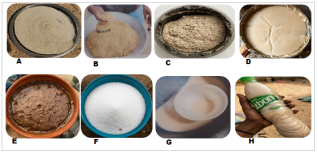
Figure A1. Diagram of the production process of the Alme-hamoud.
1. A: Millet grain; B: Hulling; C: first drying; D: washing; E: crushing; F: second drying; G: mixing;
H: filtration; I: fermentation; J: Alme-hamoud.
Appendix II: The Amtabadj
A: washing/drying; B: germination; C: grinding; D: dough; E: fermentation; F: sugar; G: filtration; H: Amtabadj.

Download: Download full-size image

Figure A2. The Amtabadj Production Diagram.
Appendix III: The Kawal
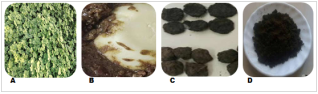
Figure A3. Diagram of the Manufacturing Process for the Kawal.
A: Senna obtusifolia leaves; B: fermentation; C: Solar drying; D: Kawal.
Appendix IV: The Damourgue
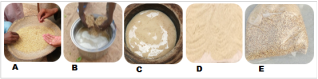
Figure A4. Production Process for the Damourgue.
A: Sorting; B: Washing; C: fermentation; D: Solar drying; C: Damourgue.
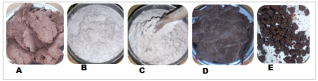
Appendix V: The Kissar
A: millet; B: millet flour; C: mixing; D: curdled milk; E: Kissar.

Download: Download full-size image

Figure A5. Production Process for the Kissar.
Appendix VI: The Kindjine
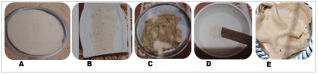
Figure A6. Production Technology of the Kindjine.
A: cookies; B: first fermentation; C: second fermentation; D: wet Kindjine; E: dried Kindjine.
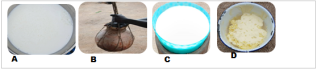
Appendix VII: The Rouwaba
A: Whole milk; B: fermentation; C: curdled milk; D: Cream.

Download: Download full-size image

Figure A7. Production Technology of the Rouwaba.
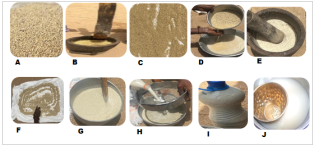
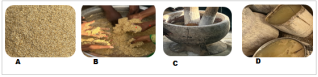
Appendix VIII: The Djir
A: Sorting; B: Washing; C: Hulling; D: fermentation.

Download: Download full-size image

Figure A8. Production Technology of the Djir.
References
[1] Marshall, E. and Meija, D. Traditional fermented food and beverages for improved livelihoods. FAO Diversification Booklet 21. Food and Agriculture Organization of the United Nations, Rome (Italy), 2011.
[2] Marco, M. L., Sanders, M. E., and Gänzle, M. The International Scientific Association for Probiotics and Prebiotics (ISAPP) consensus statement on fermented foods. Nat Rev Gastroenterol Hepatol. 2021, 18(3), 196-208.
[3] Konaté, A., N’Zebo, N. J., Don, O. R., and Amédée, P. A. H. I. Knowledge and Use of “Datu,” a Fermented Condiment Made from Hibiscus sabdariffa Seeds, in the Poro and Tchologo Regions (Northern Côte d’Ivoire). Journal of Animal & Plant Sciences. 2024, 61(1), 11153 -11167.
[4] Savary-Auzelouxa, I. and Rulb, F. Fermented foods: Health benefits of fermented foods. 2021.
[5] Duteurtre, G. and Corniaux, C. Marketing channels for products derived from ruminant livestock farming in Africa. Dynamics of pastoral and agropastoral livestock farming in intertropical Africa. 2019, 141-185 pp.
[6] Turpin, W. Toward an evaluation of the probiotic and nutritional potential of lactic acid bacteria constituting the microbiota of a traditional fermented millet-based food using a molecular approach. [Ph.D. dissertation], University of Montpellier 2, 2011.
[7] Lortal, S., El Mecherfi, K. E., Mariotti, F., Eutamène, H., Rul, F., Champomier-Vergès, M. C., and Savary-Auzeloux, I. Fermented foods and health benefits: a challenge for research. Cahiers de Nutrition et de Diététique. 2020, 55(3), 136-148.
[8] Abakar, I. L., Guira, F., Tapsoba, F., Zongo, C., Abdoullahi, H., Tidjani, A., and Savadogo, A. Kawal, a condiment made from fermented Senna obtusifolia leaves: technologies and nutritional values. Afr. J. Food Agric. Nutr. Dev. 2019, 19(2), 14244-14260.
[9] Koffi, E. K., Yao, S. D. M., Diarrassouba, N., and Siene, L. A. C. Current status and seed management of the main cereals grown in northern Côte d’Ivoire. European Scientific Journal. 2017, 13(3), 112-125.
[10] Kagambèga, B., Cissé, H., Tapsoba, F., Sawadoga, A., Zongo, C., Traoré, Y., and Savadogo, A. Traditional fermented cereal porridges in Burkina Faso: diversity, production technologies, and associated microorganisms with probiotic potential. Synthèse: Revue des Sciences et de la Technologie. 2019, 25(2), 12-24.
[11] Fall, M., Diop, M. B., Montet, D., Maiga, A. S., and Guiro, A. T. Fish fermentation in West Africa and societal challenges for improving product quality (adjuevan, guedj, and lanhouin): a literature review. Cahiers Agricultures. 2019, 28(7).
[12] Coulibaly, M., Parkouda, C., Compaore, S. C., and Savadogo, A. Traditional technologies for processing Nere seeds (Parkia biglobosa Jacq. R. Br.) in West Africa: a review of the main derived products and production constraints. Journal of Applied Biosciences. 2020, 152(1), 15698-15708.
[13] Cissé, B., Diarra, B., Dakuo, R. M., Kéita, M., Tall, S., Traoré, M., and Telly, N. Prevalence of malnutrition among children aged 6 to 59 months in the Commune VI health district of Bamako, Mali. Sciences de la santé. 2024, 47(1), 111-124.
[14] Touré, I., Cesaro, J. D., Wane, A., Duteurtre, G., Ickowicz, A., Ndiaye, A., and Taugourdeau, S. Analysis of the climate and environmental vulnerability of agro-pastoral systems in central-western Chad. Final report. CIRAD, Montpellier (France), 2017.
[15] Bouba, D., Mbaye Ngaressem, G., Madjigoto, R., and Raimond, C. The influences of urbanization on the regional distribution of cultivated plants in Chad and northern Cameroon. Les Cahiers d’Outre-Mer. 2014, 67(266), 169-194.
[16] Beral, V. M., Mayore, D. A., Hissein, A. O., Tarnagda, B., Bessimbaye, N., Mahamat, A., and Tidjani, A. T. A. Technological production processes and quality of dairy products consumed in the city of N’Djamena (Chad). International Journal of Biological and Chemical Sciences. 2023, 17(5), 1903-1916.
[17] Loba, S. E., Gbakaoro, J. B., Kouame, K. A., Grobji, G. A., and Brou, K. Formulation of compound flours, one based on rice (Oryza sativa) and the other on corn (Zea mays), for weaning-age children. European Scientific Journal. 2019, 15(33), 100-116.
[18] Tarnagda, B., Tankoano, A., Tapsoba, F., Pane, B. S., Hissein, O. A., Djbrine, A. O., and Savadogo, A. Assessment of agricultural practices for leafy vegetables: the case of pesticide and chemical input use in market garden sites in Ouagadougou, Burkina Faso. J. Appl. Biosci. 2017, 117(1), 11658-11668.
[19] Polak, R., Phillips, E. M., and Campbell, A. Legumes: health benefits and culinary approaches to increase consumption. Clin. Diabète. 2015, 33, 198-205.
[20] Setlow, P. and Johnson, E. A. Spores and their significance. Food microbiology: fundamentals and frontiers. 2019, 23-63.
[21] De Albuquerque, C. D. Study of thermal and non-thermal effects during a microwave pasteurization process of a food matrix: numerical and experimental approaches [Doctoral dissertation], University of Nantes, 2019.
[22] Boudaud, N., Boutteaux, P., La Carbona, S., and Pawlak, B. Primary contamination of salads by pathogenic microorganisms: critical points and control strategies. Innovations Agronomiques. 2021, 82, 301-314.
[23] Matallah, S., Matallah, F., Djedidi, I., Mostefaoui, K. N., and Boukhris, R. Physicochemical and microbiological qualities of raw milk from cows raised under extensive farming conditions in northeastern Algeria. Livestock Research for Rural Development. 2017, 29(11).
[24] Maïwore, J., P, B. M., Tatsadjieu, N. L., Fadila, J. A., Yaouba, Y. M., and Mont, D. Microbiological and physico-chemical quality of fermented milks consumed in Maroua (Cameroun). Int. J. Biol. Chem. Sci. 2018, 12(3), 1234-1246.
[25] Oluwafemi, A. A. Fermented foods made from African sorghum: past, present, and future prospects. Nutriments. 2020, 12(4), 1111.
[26] Roland, N., Spatz, M., Le-Loir, Y., Steyer, J. P., Schbath, S., Beney, L., and Paineau, D. Benefits of fermented foods, from empirical evidence to scientific demonstrations: the contribution of Ferments du Futur. Cahiers de Nutrition et de Diététique. 2026.
[27] Yao, A. A., Egounlety, M., Kouame, L. P., and Thonart, P. Lactic acid bacteria in starchy, fermented foods or beverages from West Africa: their current use. Ann. Méd. Vét. 2009, 153, 54-65.
[28] Caveriviere, R. Intensification of organic acid production via biological pathways: evaluation of selective extraction by electrodialysis [Doctoral dissertation], University of Toulouse, 2024.
[29] Musangu, M. S., Umba, F. M., Umba, E. K., Bope, M. H. B., Bora, G. K., Kalwaba, S. K., and Nyembo, C. M. Hand hygiene compliance in hospital settings: a requirement for patient safety in healthcare facilities in Lubumbashi, Democratic Republic of the Congo. Revue de l'Infirmier Congolais. 2020, 4(2), 36-42.
[30] Adogoni, M. B., Dotche, I., Ahouanse, G. A. G., and Youssao, I. A. K. Evaluation of good hygiene practices and slaughtering processes for the production and distribution of rabbit carcasses in Southern Benin. Revue Marocaine des Sciences Agronomiques et Vétérinaires. 2021, 9(1).
[31] Moussa, I. M., Edwige, S. T. R., Djibrine, A. O., Bechir, M., Tapsoba, F., Donatien, K., and Savadogo, A. Technological Characterization and Socioeconomic Significance of Djir, a Fermented Cereal Flour Consumed in Chad. Microbiology Research Journal International. 2025, 35(9), 9-27.
[32] Guezalane-tebibel, N., Bouras, N., and Ould El Hadj, M. D. Mycotoxins: a public health hazard. Algerian Journal of Arid Environment. 2016, 6(1), 32-49.
Cite This Article
  • APA Style

    Erbi, D., Doutoum, A. A., Bougma, S., Abba, H., Nazal, A. M., et al. (2026). Traditional Food Fermentation in Chad: Diversity, Technologies, Hygiene Practices, and Prospects for Improvement. International Journal of Food Science and Biotechnology, 11(3), 113-124. https://doi.org/10.11648/j.ijfsb.20261103.11

    Copy | Download

    ACS Style

    Erbi, D.; Doutoum, A. A.; Bougma, S.; Abba, H.; Nazal, A. M., et al. Traditional Food Fermentation in Chad: Diversity, Technologies, Hygiene Practices, and Prospects for Improvement. Int. J. Food Sci. Biotechnol. 2026, 11(3), 113-124. doi: 10.11648/j.ijfsb.20261103.11

    Copy | Download

    AMA Style

    Erbi D, Doutoum AA, Bougma S, Abba H, Nazal AM, et al. Traditional Food Fermentation in Chad: Diversity, Technologies, Hygiene Practices, and Prospects for Improvement. Int J Food Sci Biotechnol. 2026;11(3):113-124. doi: 10.11648/j.ijfsb.20261103.11

    Copy | Download

  • @article{10.11648/j.ijfsb.20261103.11,
      author = {Denis Erbi and Abdelsalam Adoum Doutoum and Sanogo Bougma and Hamadou Abba and Alhadj Markhous Nazal and Aly Savadogo},
      title = {Traditional Food Fermentation in Chad: Diversity, Technologies, Hygiene Practices, and Prospects for Improvement},
      journal = {International Journal of Food Science and Biotechnology},
      volume = {11},
      number = {3},
      pages = {113-124},
      doi = {10.11648/j.ijfsb.20261103.11},
      url = {https://doi.org/10.11648/j.ijfsb.20261103.11},
      eprint = {https://article.sciencepublishinggroup.com/pdf/10.11648.j.ijfsb.20261103.11},
      abstract = {Many local products made through traditional fermentation play an important role in the dietary and cultural habits of the Chadian people. Produced through spontaneous fermentation, these products are generally rich in carbohydrates, proteins, and minerals, and some may have beneficial probiotic properties. However, spontaneous fermentation processes are often carried out under inadequate hygienic conditions, which promote the growth of certain undesirable microorganisms and pose health risks to consumers. This study aimed to evaluate the production and fermentation technologies of eight fermented foods produced and marketed in Chad. The study used a cross-sectional survey with a structured questionnaire, and diagrams were analyzed against recommendations. The study was conducted in four locations in Chad (Abeche, Mongo, N’Djamena, and Moundou) between May and August 2026, involving a total of eighty (80) producers selected using a random sampling method that took into account geographical distribution and the types of processed products. The evaluation of production processes showed that, overall, the essential steps in food production were followed. However, the evaluation of all production technologies revealed a strong predominance of manual operations with very few adequate hygiene measures. With regard to production equipment, the utensils used are, for the most part, also used for activities other than production, particularly in the preparation of family meals. Consequently, producers have very little equipment dedicated specifically to production. Furthermore, much of the equipment is unsuitable for certain operations, making it difficult to control certain production parameters. These findings underscore the need for improvements to protect consumers by optimizing hygiene practices during preparation.},
     year = {2026}
    }
    

    Copy | Download

  • TY  - JOUR
    T1  - Traditional Food Fermentation in Chad: Diversity, Technologies, Hygiene Practices, and Prospects for Improvement
    AU  - Denis Erbi
    AU  - Abdelsalam Adoum Doutoum
    AU  - Sanogo Bougma
    AU  - Hamadou Abba
    AU  - Alhadj Markhous Nazal
    AU  - Aly Savadogo
    Y1  - 2026/10/20
    PY  - 2026
    N1  - https://doi.org/10.11648/j.ijfsb.20261103.11
    DO  - 10.11648/j.ijfsb.20261103.11
    T2  - International Journal of Food Science and Biotechnology
    JF  - International Journal of Food Science and Biotechnology
    JO  - International Journal of Food Science and Biotechnology
    SP  - 113
    EP  - 124
    PB  - Science Publishing Group
    SN  - 2578-9643
    UR  - https://doi.org/10.11648/j.ijfsb.20261103.11
    AB  - Many local products made through traditional fermentation play an important role in the dietary and cultural habits of the Chadian people. Produced through spontaneous fermentation, these products are generally rich in carbohydrates, proteins, and minerals, and some may have beneficial probiotic properties. However, spontaneous fermentation processes are often carried out under inadequate hygienic conditions, which promote the growth of certain undesirable microorganisms and pose health risks to consumers. This study aimed to evaluate the production and fermentation technologies of eight fermented foods produced and marketed in Chad. The study used a cross-sectional survey with a structured questionnaire, and diagrams were analyzed against recommendations. The study was conducted in four locations in Chad (Abeche, Mongo, N’Djamena, and Moundou) between May and August 2026, involving a total of eighty (80) producers selected using a random sampling method that took into account geographical distribution and the types of processed products. The evaluation of production processes showed that, overall, the essential steps in food production were followed. However, the evaluation of all production technologies revealed a strong predominance of manual operations with very few adequate hygiene measures. With regard to production equipment, the utensils used are, for the most part, also used for activities other than production, particularly in the preparation of family meals. Consequently, producers have very little equipment dedicated specifically to production. Furthermore, much of the equipment is unsuitable for certain operations, making it difficult to control certain production parameters. These findings underscore the need for improvements to protect consumers by optimizing hygiene practices during preparation.
    VL  - 11
    IS  - 3
    ER  - 

    Copy | Download

Author Information
  • Faculty of Health Sciences, Adam Barka University of Abeche, Abeche, Chad;Faculty of Human Health Sciences, University of N'Djamena, N'Djamena, Chad

    Biography: Denis Erbi is a teacher-researcher and head of the Department of Basic, Biomedical and Pharmaceutical Sciences at the Faculty of Health Sciences, Adam Barka University, Abeche, Chad, and an active collaborator with the Faculty of Human Health Sciences, University of N'Djamena, N'Djamena, Chad. An active member of the Laboratory of Food Science and Nutrition Research (LARSAN) and the Laboratory of Applied Biochemistry and Immunology (LaBIA), he has authored numerous publications in international journals focusing on fermented and non-fermented food technology in Chad, as well as antibiotic resistance. He holds a PhD in Biochemistry and Microbiology and a Master’s degree in Microbial and Cellular Biotechnology (BMC) from Joseph Ki-Zerbo University in Burkina Faso. He has participated in various nutrition-related training projects in Chad and has attended national and international scientific conferences.

    Research Fields: Biochemistry, Food Technology, Food Microbiology, Food Safety, Traditional Fermented Foods, Molecular Biology of Pathogenic Enterobacteria, Antibiotic Resistance

  • Faculty of Health Sciences, Adam Barka University of Abeche, Abeche, Chad

    Research Fields: Food Technology, Food Microbiology, Nutrition, Medical Microbiology, Food Quality, Food Safety

  • Department of Biochemistry and Microbiology, Joseph Ki-Zerbo University, Ouagadougou, Burkina Faso

    Research Fields: Food processing technology, Food microbiology, biochemistry, Nutrition, Fermented foods and beverages, Food sciences, Food processing

  • Faculty of Health Sciences, Adam Barka University of Abeche, Abeche, Chad

    Research Fields: Biochemistry and Microbiology, Antibiotic Resistance and Antibiotic Resistance Genes, Molecular Biology of Pathogenic Enterobacteria, Characterization of Broad-Spectrum Beta-Lactamases, Microbiological Quality of Food, Epidemiology of Nontyphoid Salmonella, Resistance to Quinolones and Tetracyclines, One Health Approach and Hospital-Acquired Infections

  • Faculty of Agricultural and Environmental Sciences, University of Sarh, Sarh, Chad

    Research Fields: Food technology, food microbiology, nutrition, urban agriculture, vegetable production, food quality, food safety

  • Department of Biochemistry and Microbiology, Joseph Ki-Zerbo University, Ouagadougou, Burkina Faso

    Research Fields: Food processing technology, Food microbiology and safety, biochemistry, Nutrition, Fermented foods and beverages, Molecular biology, cereals processing, Food sciences
  • Abstract
  • Keywords
  • Document Sections

    1. 1. Introduction
    2. 2. Materials and Methods
    3. 3. Results
    4. 4. Discussion
    5. 5. Conclusion
    Show Full Outline
  • Abbreviations
  • Acknowledgments
  • Author Contributions
  • Data Availability Statement
  • Conflicts of Interest
  • Appendix: Schematic Diagrams for Fermented Foods
  • References
  • Cite This Article
  • Author Information