Research Article | | Peer-Reviewed

Environmental Conservation: Effects of Land Use Types on Soil Physicochemical Properties in Gojera Kebele, Southeastern Ethiopia

Received: 6 January 2026     Accepted: 10 February 2026     Published: 21 February 2026
Views:       Downloads:
Abstract

Understanding the effects of different land use types on soil physicochemical properties (PCPs) is essential for the sustainable management of soil resources and environmental conservation. This study aimed to evaluate the impact of various land use types on selected soil PCPs in the Dinsho district of Ethiopia. A total of 32 soil samples were collected from four land use types: forests, agricultural farms, grazing areas, and grasslands, at two soil depths (0–20 cm and 20–40 cm), with three replicates per type. The mean differences in physical and chemical parameters were analyzed using a two-way analysis of variance. The results indicated that agricultural land and grasslands exhibited the highest values for sand and clay content. Forested areas showed significantly higher levels of SOM at 5.05% and TN with a p-value of less than 0.001. The mean available phosphorus ranged from 2.03 to 5.2 mg/kg, indicating a significant deficiency of available phosphorus in the study area. The mean bulk density and total porosity of the soils ranged from 1.14 to 1.37 g/cm³ and 42.02% to 51.5%, respectively, which are higher than the desirable limits for optimal soil health. The pH values ranged from 6.06 to 7.25, falling within an acceptable range. Additionally, the exchangeable basic cations, CEC, and PBS values were classified as high to very high across all land use types. These findings suggest that inappropriate land use practices significantly affect soil physicochemical properties, leading to detrimental effects on soil quality. Therefore, it is crucial to implement Land?Use Planning and Environmental Impact Assessment (EIA) strategies to ensure the sustainable use of soil resources and promote environmental conservation.

Published in Journal of Energy, Environmental & Chemical Engineering (Volume 11, Issue 1)
DOI 10.11648/j.jeece.20261101.12
Page(s) 12-27
Creative Commons

This is an Open Access article, distributed under the terms of the Creative Commons Attribution 4.0 International License (http://creativecommons.org/licenses/by/4.0/), which permits unrestricted use, distribution and reproduction in any medium or format, provided the original work is properly cited.

Copyright

Copyright © The Author(s), 2026. Published by Science Publishing Group

Keywords

Soil Quality, Land Use Types, Dinsho District, Soil Physicochemical Analysis

1. Introduction
The term "use of land" often refers to the arrangements, activities, and inputs that people make in a particular type of land use to produce, alter, or sustain it . Kiflu and Beyene (2013) claim that excessive farming, leaching, and soil erosion can cause soil to rapidly lose both its quality and quantity. Therefore, managing agriculture necessitates a basic comprehension of sustainable use and land preservation . For effective soil management to preserve soil quality throughout time, one must comprehend how the soil responds to agricultural operations . However, as it promotes relatively high crop output and is a necessary component of sustainable agriculture, maintaining good soil quality is the cornerstone of sustainable agricultural growth . Food and fibre production, as well as improvements in local, regional, and global environmental quality, has benefited greatly from soil resources . However, the areas most affected by the growing human population are the regions in central Ethiopia, where there is high population density and a significant dependency on land resources. This is the horrifying problem of depleting soil resources, which raises concerns about the sustainability of the land and leads to degradation . Overgrazing and deforestation, farming on steep terrain, and unpredictable and high rainfall patterns are the main causes of land degradation, the depletion of natural resources, and environmental degradation in Ethiopia .
Additionally, because of the interaction between slope and agricultural practices, the topography of land has a significant effect on both soil quality and soil depth . Thus, countries in tropical Africa face significant problems such as decreasing resource degradation, increasing agricultural productivity, decreasing poverty, and achieving food security . Therefore, physical, biological, and socioeconomic factors should receive all the available attention. An economic setting for the sustainable use of natural resources to produce food crops, cattle, wood, and other goods . As the populations of both humans and livestock have grown, the rapid expansion of agricultural and grazing areas has affected the characteristics of the soil . This resulted from the growth of land use utilization, which is based on converting forest areas that already exist into pasture and agricultural land . In nations such as Ethiopia, where the percentage of land covered by forests has decreased from 40% to less than 3% and the population is growing rapidly, the frequent and ongoing exploitation of the available land has persisted even after the limit on intensification was reached .
On the other hand, current research has revealed that plantation systems and afforestation are increasing the amount of forest cover by 15% . To determine how different land use patterns affect the physical and chemical characteristics of Ethiopian soil, several studies have been carried out . According to Fentie et al., the topsoil layer had higher levels of total nitrogen (N), exchangeable potassium (K), and exchangeable calcium (Ca) after cropland was replanted with a variety of specious trees than did the subsurface soil layer . When farmland, forestlands, and grazing grounds were evaluated , total nitrogen and soil organic carbon (OC) decreased in agriculture relative to forestlands. The forestland in the study area has currently undergone significant degradation due to the production of firewood and lumber and the extension of farming and grazing areas. These factors can affect agricultural productivity and decrease soil fertility, both of which affect the livelihoods of the surrounding communities. In the research area, the grassland has also been transformed into grazing land. This is due to the increase in livestock, which removes palatable bushes and bush trees and causes soil compaction. This also exposes the upper layer of soil to erosion concerns.
Gojera Kebele in the Dinsho District of Southeastern Ethiopia is characterized by predominantly clayey black soils, diverse agro-climatic zones, and a mosaic of land-use categories. Despite this ecological diversity, the area has been facing persistent declines in agricultural productivity, increasing soil degradation, recurrent soil slides, and progressive dryland expansion, all of which are closely linked to inappropriate and unregulated land-use practices that have altered the natural soil system. Although various land-use types are widely practiced in the district, they are often implemented without proper environmental impact assessments or scientifically guided management strategies, leaving the long-term sustainability of soil resources and agricultural production uncertain. While land-use change is recognized as a major driver of soil quality deterioration in Ethiopia, no comprehensive scientific study has been conducted in Dinsho District particularly in Gojera Kebele to quantify how different land-use types influence soil physical and chemical properties. Existing regional studies provide general insights but fail to capture the unique soil characteristics, agro-ecological variability, and land-use dynamics specific to this district. The absence of localized data limits the ability of policymakers, agricultural experts, and local communities to design evidence-based soil conservation and land-management strategies, resulting in a poor understanding of the relationship between land-use practices and soil degradation in this specific landscape. This study aims to provide the first systematic, site-specific assessment of how major land-use types in Gojera Kebele affect key soil physicochemical properties and agricultural productivity. By integrating field measurements, laboratory analyses, and comparative evaluations across land-use categories, the research generates new empirical evidence for a region where scientific documentation is currently lacking. The study’s novelty lies in producing baseline soil quality data for a previously unstudied area, demonstrating how land-use decisions directly influence soil health and crop productivity in clay-dominated highland soils, and offering scientifically grounded recommendations for sustainable land-use planning, soil conservation, and environmental management tailored to the Dinsho District. This contribution fills a critical knowledge gap and supports the development of sustainable agricultural and environmental conservation strategies in Southeastern Ethiopia.
2 Materials and Methods
2.1. Description of the Study Area
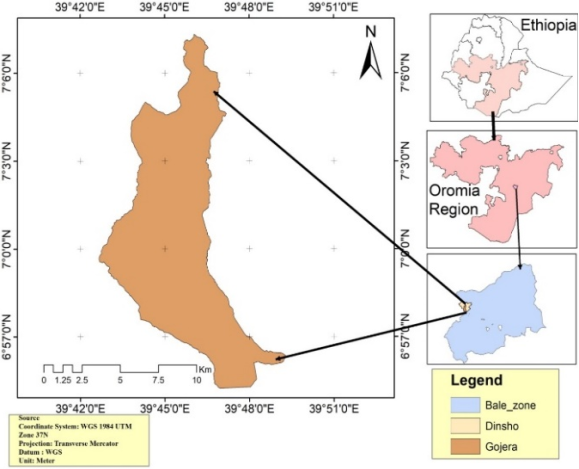
Gojera Kebele, Dinsho District, Southeast Bale Zone, Oromia National Regional State, Ethiopia, was the study location, as shown in Figure 1. It is 400 kilometers away from Addis Ababa. Its geographic coordinates are approximately 39°38′0''E longitude and 6°53′30''N latitude, with an altitudinal range of 2532 to 4047 m above sea level (masl) .
2.2. Climate of the Study Area
According to statistics on temperature and rainfall obtained from the Bale Robe meteorological station, the study area experiences annual rainfall of up to 1060–1150 mm during some peak years, and the mean monthly maximum temperature is 15°C, while its mean monthly lowest temperature is 12.5°C. There is little variation in the average annual temperature of 12.5°C from year to year. The seasonal distribution of rainfall is lowest in December and February, peaks in July, and then decreases in November and December .
2.3. Soils, Vegetation and Topography
Verti soils are the most common type of soil in the research area. "Biyyee Gurraacha" is the local term for it, and it refers predominantly to clayey black soil. The three main agroclimatic zones of high land, semihigh land, and low land define the topography of Woreda. The district's variety of vegetation is typified by trees, shrubs, and scrubs. DWAO in 2022 reported that there is a shortage of natural forests in the study area across several land use categories . Deforestation has been a major problem in the study area, as it is in the majority of Ethiopia. To produce lumber, firewood, and building materials and to develop cultivated areas, vegetation has been removed. As a result, the fertile soils have gone, and the wild creatures have become endangered.
Figure 1. Map of the study area.
2.4. Farming System (Agriculture)
A mixed farming system is used in the study area to produce livestock and plant a range of crops in an effort to improve the standard of living and income of the residents. In the region, mixed farming is a common practice that mostly entails cultivating crops and rearing animals. In addition to the pulse crops field pea, house bean, chickpea, and lentil, the main crops grown are wheat, barley, maize, and sorghum. One of the main ways that residents in the study area support their families is by rearing livestock. The livestock population of Dinsho District is diverse and includes horses, donkeys, sheep, goats, chickens, and beekeepers for honey production .
2.5. Site Selection
For this study, the Gojera kebele was purposively selected from Dinsho district because greater land degradation and soil erosion problems are commonly observed in this area, which has harmful impacts on the physical and chemical properties of the soil under different land use types. Prior to the collection of soil samples, discussions were held with woreda agricultural office experts to obtain prehistories and current information about the utilization of land use types and lifestyles of the local community in the study area. Throughout the visual observation of the study area, its geographic coordinates (latitude and longitude) and elevation were recorded via a global positioning system (GPS). Then, to address the intended objective, the treatments were stratified into four land use types: farm, grazing, forest and grassland.
2.6. Soil Sampling
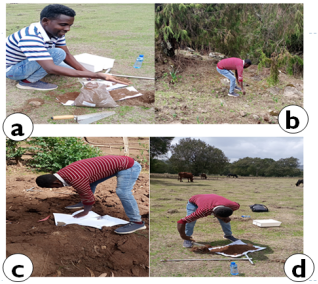
The soil sampling procedure was conducted as described by Ryan et al. with slight modifications. Three replications for each of the four land use types, farm, grazing, forest, and grassland soil samples (Figure 2), were taken at two different soil depths: 0–20 cm and 20–40 cm. Every component was positioned on different geological, slope, and topographic factors and slope features. Undistributed soil samples were collected via a core sampler to determine the bulk density of the soil, whereas disturbed soil samples were collected via an auger to determine the specific physical and chemical properties of the soil. Dead plants, old manures, areas close to trees, and compost pits were excluded from the soil sample collection to reduce any differences that might arise from the dilution of soil organic matter as a result of cultivation and other causes.
The samples were then taken from five points of the plot by measuring 100 m × 20 m, 150 m × 30, 180 m × 30, and 170 m × 25 for forest, farm, grass and grazing, respectively considering their compactness with quadrant one at the center and the other four at the corners of the quadrants. These collected samples were mixed to form a composite to reduce variability within the quadrants. Therefore, composite sample methods were used for soil collection to obtain an accurate estimate of the population mean, reduce cost and analytical time, and achieve these goals (Jackson, 1958). A total of 32 soil samples with three replicates were taken from the four selected land use types. Additional, 32 soil sample from the same sampling point for the above were collected in core sampling technique for soil bulk density (BD) analysis for each of the land use types. Finally, the collected soil samples were combined, labelled, mixed, and packaged thoroughly in plastic bags, and 500 g of soil sample from each type of soil depth and land use was obtained for analysis.
For physicochemical investigation, the soil samples were passed through a 2 mm filter (sieve) after being air dried. However, to analyse specific soil physical and chemical features, organic carbon (OC) and total nitrogen (N) were first ground to pass through a 0.5 mm screen.
Figure 2. Soil samples from different land use types: grassland (a), forestland (b), farmland (c) and grazing land (d).
2.7. Analysis of Soil Physical and Chemical Properties
The soil texture was analysed via the Bouyoucous hydrometer method . After the OM was destroyed or burned with hydrogen peroxide (H2O2), the soil particles were dispersed and disintegrated with sodium carbonate (Na2CO3) and sodium hexametaphosphate (NaPO3) in distilled water, and amyl alcohol was used to destroy the soil solution foam. After the percent particle size distributions were determined, the textural class of the soil was obtained via the USDA soil textural triangle classification system (USDA, 2008).
The bulk density (BD) of the soil was measured from undisturbed soil samples collected via a core sampler after drying the core samples in an oven at 105°C (Black, 1965). The total porosity of the soil samples was estimated from the values of bulk density (BD) and particle density (PD) (assuming that the average particle density of the mineral soil was 2.65 g cm-3). The total porosity (TP) was subsequently calculated as follows: TP (%) = (1-Bulk density/Particle density) * (100).
The pH of the soils was measured in a water (H2O) suspension at a ratio of 1:2.5 (soil: liquid) via a pH meter, whereas the electrical conductivity was measured via a conductivity meter . The calcium carbonate content of the soil was determined via an acid neutralization method in which the soil carbonate was neutralized with a standard 0.1 M HCl solution and back-titreed with standard NaOH .
To determine organic carbon, the Walkley and Black method was used, in which the carbon was oxidized under standard conditions with potassium dichromate (K2Cr2O7) in a sulfuric acid solution. Finally, the organic matter content of the soil was calculated by multiplying the organic carbon percentage by 1.724, following the assumption that OM is composed of 58% carbon. The total nitrogen content in the soils was determined via the Kjeldahl digestion, distillation and titration methods by oxidizing the OM in a concentrated sulfuric acid solution (0.1 N H2SO4) as described by Black (1965). The C: N ratio was subsequently calculated by dividing the organic carbon content by the total nitrogen content. The available P was calculated via the Olsen method using sodium bicarbonate (0.5 M NaHCO3) as an extraction solution .
Exchangeable bases (Na, K, and Ca) were determined after the soil samples were extracted with ammonium acetate (1 N NH4OAc) at pH 7.0. The exchangeable Na, K and Ca contents were analysed via a flame photometer as described by Rowell . The cation exchange capacity was estimated titrimetrically by distillation of ammonium, which can be displaced from NaCl solution by sodium . The percent base saturation was calculated by dividing the sum of the charge equivalents of the base-forming cations (Na, K, and Ca) by the CEC of the soil and multiplying by 100.
2.8. Statistical Data Analysis
To evaluate the variations in the soil physical and chemical parameters among the land use types and soil depths, a two-way analysis of variance (ANOVA) was employed. The treatment means were analysed, and the means for significantly different parameters were separated via the least significant difference (LSD) test at the 0.05 level of significance because its greater ability to detect real differences among treatment means and reduce Type I error strongly . The data analysis was conducted via SPSS software (version 20.0).
3. Results and Discussion
3.1. Selected Soil Physical Properties Under Different Land Use Types
3.1.1. Soil Texture
The results of the analysis of variance (ANOVA) revealed that neither the interactions between the land use categories nor the different soil depths nor the sand particle sizes varied significantly. However, Table 1 shows that the type of land used had a significant (P < 0.05) effect on silt and clay particles. There was a numerical variance in the distribution of soils and particles among land use types, although there was no statistically significant difference. The surface soil layers of the farmlands and forestlands presented the highest and lowest levels of sand (36.3% and 23.5%, respectively) as a result of the interaction between soil depth and land use type. The soil layer under the surface (20–40 cm) in both the farm and forestland had the highest percentage of clay (52.2%) and lowest percentage (38.6%), respectively (Table 1). With respect to soil depth, the topsoil layer (0–20 cm) had the highest sand content, whereas the subsurface (20–40 cm) soil layer had the highest silt and clay contents (Table 2).
Typically, the subsurface layer of farmland has more clay than the nearby grass, forest, and grazing grounds do. The cause may be related to clay migration, which is the preferential removal of clay particles and their downwards migration into the subsurface soil layer. Similarly, Chemada et al., reported that longer farming seasons caused the clay content of cultivated land to increase from the topsoil layer to the bottom soil layer . Mezgebe noted that agricultural land had a higher clay content in the subsurface layer and a lower clay content in the surface layer than other neighboring natural forests, plantation forests, and grazing areas . According to Abbasi et al., the variations in soil texture between land use types generally suggest that different land use types' use and management practices affect soil properties .
Table 1. Interaction effects of land use type and soil depth on selected soil physical properties of the Gojjera kebele.

Land use types

Sand (%)

Silt (%)

Clay (%)

BD gm./cm-3

TP (%)

Soil depth (cm)

Soil depth (cm)

Soil depth (cm)

Soil depth

Soil depth (cm)

0-20

20-40

0-20

20-40

0-20

20-40

0-20

20-40

0-20

20-40

Forestland

23.5

27.35

33.8

39.5m

47.0

38.6n

1.23b

1.26d

45.42b

46.54n

Farm land

36.3

28.35

24.7

23.8n

40.1

52.2n

1.39n

1.35m

51.45a

50.94a

Grazing land

28.5

26.1

29.7

31.6mn

42.7

43.5mn

1.37n

1.34n

50.97c

49.57a

Grass land

26.0

24.7

27.0

26.0n

50.0

51.3n

1.08m

1.20a

39.75a

44.28b

Mean

28.58

26.63

28.8

30.2

44.95

46.3

1.27

1.29

46.90

47.83

SD

5.55

4.86

5.92

4.84

7.7

5.76

0.0073

0.0085

0.29

0.28

CV (%)

19.3

18.25

20.6

16.0

17.1

12.45

0.578

0.65

0.605

0.58

P Values

Ns

Ns

Ns

*

ns

*

***

***

***

***

The relationship means within a column followed by different letters or letters are significantly different from each other at P ≤ 0.05; *= significant at P ≤ 0.05; *** = significant at P ≤ 0.001; BD = bulk density; TP = total porosity; CV= coefficient of variation; ns= not significant.
3.1.2. Bulk Density
Land use and their interactions had a significant (P ≤ 0.001) effect on the soil bulk density value, whereas soil depth had a significant (P ≤ 0.01) effect (Tables 2 and 3). After the primary effects were analysed, farmland had the highest mean bulk density (1.37 g cm-3), and grassland had the lowest (1.14 g cm-3) mean value (Table 2). The higher clay content and lower disturbance of the soil under the grassland may be the cause of the grassland having the lowest soil bulk density. The higher bulk density of the soil in the farmlands might be due to the practice of ploughing in the farm soil, which tends to lower the quantity of organic matter (OM) in that soil through animal operations and exposes the soil surface to direct strikes by raindrops. High bulk density is an indicator of low soil porosity, which may cause poor movement of air and water through the soil. For mineral agricultural soils, a bulk density of 1.3 to 1.4 g cm-3 is adequate . The average soil bulk density in this study was within this range. The variations in clay concentration, organic matter, and total porosity could be the cause of the variety in land use types. As a result of the higher pore rates associated with high OM and clay contents, land use types with high clay and organic matter contents have lower bulk densities than those with low OM and clay contents. One of the key physical factors considered when assessing the physical fertility of soils is bulk density.
3.1.3. Total Porosity
The results of the analysis of variance (ANOVA) revealed that the relationships between different land use types and the total porosity of the soil were significantly (P ≤ 0.001) impacted. However, at P≤0.01, the depth of the soil had a significant influence (Table 1 and Table 2). Considering the interaction of land use type with soil depth, the highest (51.45%) and lowest (47.6%) values of total porosity were recorded in the surface soil layers of the farmlands and grasslands, respectively (Table 1). The relatively high value of soil total porosity in the farmlands implied a high bulk density of grassland in the area. The mean total porosities of the forest, farm, grazing, and grass areas were 45.98, 51.20, 50.27, and 42.02%, respectively, in terms of the mean values under various land use types (Table 2). The subsurface soil layer presented greater total porosity values at the two soil depths. The total porosity across adjacent land use categories was higher and lower, which corresponded to lower and higher bulk density values for that soil. In contrast, according to the FAO (2006c), which classified total porosity values as very low (2%), low (>5%), medium (>5%), high (15–40%), or very high (>40%), the percentage of total porosity of all land use groups was very high. The total porosity of each land use type in the present study was greater than the desirable range (Table 2).
Table 2. Main effects of land use type and soil depth on selected physical properties of the soil in the study area.

Managements

Sand (%)

Silt (%)

Clay (%)

BD (%)

TP (%)

Land uses types

Forestland

25.4

36.7

42.8mn

1.25m

45.98d

Farm land

32.3

24.3

46.2m

1.37c

51. 20c

Grazing land

27.3

30.6

43.1mn

1.36d

50.27c

Grass land

25.4

26.5

50.65n

1.14n

42.02m

Soil depth (cm)

0-20

27.1

28.5

44.45

1.26m

47.8c

20-40

25.3

29.1

45.58

1.28n

48.46b

Land use

Ns

*

*

***

***

Depth

Ns

Ns

Ns

**

**

The main effect means within columns followed by different letter(s) are significantly different from each other at P ≤ 0.05; ns=not significant * = significant at P ≤ 0.05; ** = significant at P ≤ 0.01; *** = significant at P ≤ 0.001.
3.2. Specific Soil Chemical Characteristics in Relation to Various Land Use Types
3.2.1. Calcium Carbonate, pH, and Electrical Conductivity
The results of the analysis of variance demonstrated that land use category, soil depth, and their interactions significantly (P≤0.01) affected the soil pH. Under the forestland and the farmland, respectively, the greatest mean value (7.1) and the lowest (5.82) soil pH values were found (Table 3). Low levels of soil management, including severe overgrazing, continuous cropping, soil erosion, soil deterioration, and poor soil management, may be responsible for the low soil pH values. The subsurface (20–40 cm) soil layers of the forest and agricultural fields presented the greatest (7.1) and lowest (5.82) values of soil reactions, respectively (Table 3). The subsurface soil layer had a greater pH value than did the topsoil layer.
Table 3. Effects of land use type and soil depth on soil, EC, pH and CaCO3 in the study area.

Land use system

PH

EC (S/m)

CaCO3 (ppm)

Soil depth (cm)

Soil depth (cm)

Soil depth (cm)

0-20

20-40

0-20

20-40

0-20

20-40

Forestland

7.1a

7.2m

0.59n

0.47b

10.8a

9.09m

Farm land

5.82b

6.3ab

0.34m

0.35ac

6.5c

7.1a

Grazing land

6.8c

7.0n

0.32m

0.36ac

5.2d

5.65c

Grass land

6.9d

7.1m

0.31m

0.35c

7.82b

9.1m

Mean

6.7

6.9

0.39

0.28

7.56

7.74

St. Deviation

0.28

0.30

0.08

0.07

0.40

0.33

CV (%)

4.2

4.4

20.50

25.0

5.3

4.3

P Values

**

*

**

*

***

***

The relationships within a column followed by different letters are significantly different from each other at P ≤ 0.05; ** = significant at P ≤ 0.01; *** = significant at P ≤ 0.001; * = significant at P≤0.05; EC=electrical conductivity; CaCO3=calcium carbonate; ns=not significant.
In comparison with the other proximate land use types, farmland had the lowest mean value of soil reaction. This might be caused by the lowering of basic cations during crop collection. Similar findings were reported by Bore and Bedadi, who reported that farmland experiences less soil reactivity than nearby grazing and grassland areas do . The findings of Takele et al., who suggested that the soil reaction was lower under farmland than under forest and grazing fields at soil depths of 0–20 cm and 20–40 cm, are also supported by the findings of the current investigation . According to Tekalign’s classification of soil pH, the grass and forestlands in the research area were rated as having a relatively alkaline pH, whereas the agricultural and grazing fields had a pH that was closer to slightly alkaline . The presence of less calcareous soil, which is distinguished by high calcium carbonate (CaCO3) compound contents and utilizes exchangeable compound sites, was demonstrated by the low pH values of the soil in the study area. The land use type significantly (P ≤ 0.01) affected the electrical conductivity (EC) values of the soils, although the soil depth and their interaction had no significant effect (Tables 3 and 5). The maximum (0.59 S/m) and lowest (0.31 S/m) EC values of the soils were obtained in the forest and the grasslands, respectively, when the primary influences of land use types were considered (Table 3). Owing to the low bulk density and increased total porosity of the grassland, the lowest EC value may have been caused by the loss of base-forming cations due to high water separation.
Additionally, this conclusion is consistent with findings from , who reported that grasslands have poorer electrical conductivity than nearby croplands, bush lands, and bushed grasslands at soil depths between 0 and 20 cm. Except in forestland, where it declined from the surface (0.59 S/m) layer to the subsurface layer, the EC of the soil increased with depth, that is, from the surface (0–20 cm) layer to the subsurface (20–40 cm) layer (0.47 S/m). Land use type and its interaction with soil depth had a significant (P≤ 0.001) impact on soil calcium carbonate (CaCO3), whereas soil depth had no significant (P ≤ 0.001) impact (Tables 3 and 5). The surface (0–20 cm) soil layer of forest and grazing had the greatest (10.8 ppm) and lowest (5.2 ppm) CaCO3 values, respectively, when the interaction of land use type with soil depth was taken into account. In accordance with the categorization of Landon (1991), soil is considered calcareous when its CaCO3 level is 0.5% or above and not calcareous when it is less than 0.5%. According to this classification, my results were distinguished by high CaCO3 content across all land use classes, which suggests that calcareous soil is present in the research area. This leads to phosphorus precipitation in the form of Ca-phosphate, which in turn reduces the amount of P that is available in the soil.
3.2.2. Soil Organic Matter
The findings of the analysis of variance revealed that the type of land use, soil depth, and interaction of those two factors significantly (P ≤ 0.001) affected the soil OM content (Table 4 and Table 5). Overgrazing and the dense soil in which animals walk may be responsible for the low OM content of the soil in grazing areas. This might block the buildup of soil OM at both the surface and under soil layers. Farmland has relatively greater soil OM at the surface and in deeper soil layers than do grazing areas. This may be because farming land contains large, long roots of crops, whereas grazing land has fine, short roots, which can greatly contribute to the improvement of OM and soil microbial function .
Table 4. Interaction effects of land use and soil depth on total TN, SOC, SOM, and C: N and Av. P of the soils in the study area.

Land use system

TN (%)

TOC (%)

SOM (%)

C: N (%)

Av. P (%)

Soil depth (cm)

Soil depth (cm)

Soil depth (cm)

Soil depth (cm)

Soil depth (cm)

0-20

20-40

0-20

20-40

0-20

20-40

0-20

20-40

0-20

20-40

Forestland

0.27ab

0.22mn

3.21c

2.70a

5.7mn

4.40

11.85

10.80d

6.80b

3.60a

Farm land

0.21b

0.20mn

2.35b

1.90b

3.7m

3.30

11.75

10.65c

4.75c

3.05mn

Grazing land

0.20c

0.16a

2.19d

1.65c

3.6m

2.74

10.5

10.30b

2.74a

1.83m

Grass land

0.25b

0.20b

2.87a

2.19d

4.6n

3.60

11.5

10.95c

3.32d

2.08n

Mean

0.23

0.20

2.67

2.11

4.4

3.51

11.52

10.51

3.44

1.94

St. Deviation

0.03

0.02

0.14

0.27

0.24

0.47

0.96

0.91

0.72

0.20

CV (%)

13.0

10

5.24

12.80

5.5

13.39

8.33

866

20.9

10.3

P Values

***

**

**

*

***

*

*

Ns

***

*

The interaction means within a column followed by different letters are significantly different from each other at P ≤ 0.05; TOC- total organic carbon, TN- total nitrogen, SOM-soil organic matter, C: N- carbon to nitrogen ratio, Av. P-available phosphorous; * = significant at P ≤ 0.05; *** = significant at P ≤ 0.001; ** = significant at P ≤ 0.01; ns = not significant.
On the other hand, the maximum value of soil OM was attributed to the excess biomass and plant remnants on the surface layer of the forestland. The soil OM content of the research area decreased with increasing soil depth, i.e., from the surface soil layer (0–20 cm) to the subsurface soil layer (20–40 cm) (Table 4). This showed that there was enough soil OM in the topsoil layer, which contained both plant and animal remnants, to support a wide variety of soil organisms. In the process of mineralization, this ingredient has a long history. As a consequence, the analysis of variance findings support the finding that, with respect to the soil depth of the research area, the soil OM value was greater (4.4%) in the topsoil layer than in the subsurface (3.5%) soil layer (Table 5). This result is consistent with the findings of other researchers , who reported that soil organic matter (OM) decreases with increasing soil depth, with greater addition to the upper surface soil layer.
3.2.3. Soil Organic Carbon (SOC)
This result is consistent with the findings of other researchers, such as Chibsa and Ta'a , Duguma et al. and Takele et al. , whose were reported that soil organic matter (OM) decreases with increasing soil depth, with greater addition to the upper surface soil layer. With significantly higher mean values (3.0%) under forestland and lower mean values (1.92%) under intensively grazed land, the soil organic carbon content was significantly (P ≤ 0.001) influenced by the type of land used (Table 5). The significant variance can be explained by intensive land usage, which accelerates the oxidation of organic matter and the complete clearance of harvest waste for use as animal feed and a source of domestic energy .
3.2.4. Total Nitrogen (TN)
The different land use categories had a significant (P≤ 0.001) effect on the total nitrogen (TN) level of the soils. On the other hand, soil depth had a significant effect (P≤ 0.01), and the interactions between land use and soil depth had a significant effect (P≤ 0.05) (Tables 5 and 6). As one moves from grazing, farm, grass, and forestlands, the nitrogen content of the soils is typically in the low to medium range and follows the pattern of the organic matter levels. This conclusion is consistent with that of Yadda , who revealed that continuous and intense cultivation accelerated the oxidation of OC and reduced TN. However, the total nitrogen content was greater (0.27) in the forestland and lower (0.20) in the grazed land. The variations in the total N content among the different land use types were similar to those in the OM content, which decreased with increasing soil depth (Table 5). While the low total N content in grazing land may be caused by the use of animal dung as fuel in homes rather than leaving it in the field, the greater total nitrogen content in the soils of forestland may be related to the high OM levels of the soils. Additionally, the removal of vegetation by livestock grazing and the direct exposure of the top layer of grazing land to raindrops may generate more surface overflow, which may remove the remains of the animals and plants from the topsoil layer and result in a reduction in the amount of nitrogen in the soil overall.
In forests and grazed with a thick layer of natural flora, organic matter frequently returns to the soil, increasing the SOM concentration and, as a result, the overall nitrogen content of these soils. Tekalign , gave the grassland and forest areas a high rating while giving the total N in the study area's grazing and cultivated lands a middling grade.
3.2.5. Carbon to Nitrogen Ratio (C: N)
The analysis of variance revealed that the various land use patterns had a significant (P≤ 0.05) impact on the carbon: nitrogen ratio (C: N) of the soils in the study area. However, neither the effects of the interactions nor the depth of the soil had a significant effect (Tables 5 and 6). When the principal effects of soil depth were taken into consideration, the mean C: N value for the surface (0–20 cm) soil layer was greater (10.5). This shows that total N decreased with soil depth at a rate that was significantly greater than the pace at which carbon decreased. In particular, the soil C: N ratio decreases as the soil depth increases. This ratio only very rarely increases with increasing soil depth, possibly because the deposited soil has a higher C: N ratio in the subsurface soil layer than in the surface soil layer as a result of sedimentation processes. The optimal C/N ratios, which offer more nitrogen than is required by microorganisms, are between 10:1 and 12:1 .
The findings of this investigation, however, revealed that the C: N ratio decreased as the soil depth increased. The surface soil layers of the forest and grazing fields presented the greatest (11.85) and lowest (10.5) C: N values, respectively, when the interaction effects were taken into account (Table 2). While the lower C: N ratio in the surface soil of grazed and farmlands may be caused by greater microbial activity and more CO2 growth and CO2 loss to the atmosphere in the surface (0–20 cm) soil layer than in the subsurface (20–40 cm) soil layer, the higher C: N ratio in the forest soil indicates the occurrence of optimal biological activities.
This finding is consistent with findings of Gebrelibanos and Assen, who reported that forest areas have a greater C: N ratio than nearby plantations, grazing areas, and farmlands do . He reported that the ideal C: N ratio is between 10:1 and 12:1, which provides nitrogen for extra microbial activity. As a result, the C: N ratio of the soil in all the land use types within the research area was within the ideal range. This suggests that there are suitable systems in place for soil organisms to mineralize.
Table 5. Main effects of land use type and soil depth on selected chemical properties of the soil in the study area.

Treatments

pH

EC

CaCO3

TOC

SOM

TN

C: N

Av. P

(S/m)

(ppm)

(%)

(%)

(%)

(mgkg-1)

land use types

Forestland

7.25a

0.52n

9.95a

3.00n

5.05a

0.25c

11.33a

5.2ba

Farm land

6.06c

0.34m

6.8b

2.13m

3.5b

0.21a

11.35a

3.9c

Grazing land

6.9b

0.34m

5.43c

1.92c

3.17c

0.18b

10.4b

2.30a

Grass land

7.0d

0.31mn

8.46d

2.53mn

4.1d

0.23a

11.23c

2.7d

Soil depth (cm)

0-20

6.70a

0.39

7.58

2.70a

4.4a

0.23n

10.7

4.40a

20-40

6.90b

0.37

7.74

2.11b

3.51b

0.20m

10.5

2.64b

Land use system

***

**

***

***

***

***

*

***

Soil depth

***

Ns

Ns

**

**

**

Ns

***

CV (%)

4.10

20.26

4.5

9.5

10.10

9.6

8.48

27.5

The main effect means within a column followed by different letters are significantly different from each other at P ≤ 0.05; **= significant at P ≤ 0.01; ***= significant at P ≤ 0.001; *= significant at P ≤ 0.05; ns=not significant.
The findings of the analysis of variance revealed that the different land use types had a significant (P ≤ 0.05) impact on the carbon: nitrogen ratio (C: N) of the soils in the study area. However, neither soil depth nor the impacts of the interactions had a significant impact (Table 5 and Table 6). Given the primary influence of soil depth, the surface (0–20 cm) soil layer presented the highest (10.7) mean C: N ratio.
3.2.6. Available Phosphorus
According to the results of the analysis of variance, the study area's available P was considerably (P ≤ 0.001) influenced by the different types of land use, the depth of the soil, and how those two factors interacted (Tables 5 and 6). Compared with that in the underlying soil layer, the accessible P was greater in the surface soil layer (Table 6). Broadly speaking, differences in the amount of accessible P in soils may be linked to the rate of soil weathering or disturbance under various land use types. The forest area had the highest accessible P concentration (5.2 mg kg-1), and the grazing land had the lowest (2.30 mg kg-1) when the primary consequences of different land use types were examined (Table 6).
The maximum (6.80 mg kg-1) and lowest (2.74 mg kg-1) available P concentrations were observed in the surface soil layer of the forest and subsurface soil layer of the grazing areas, respectively, due to the interaction effect of land use type with soil depth (Table 5). Unlike previous studies by Aytenew and Kibret and Chemada et al. , which revealed that agriculture had higher levels of available phosphorus than nearby grazing and forestlands did, this study revealed that forestland had higher levels of available P at both the surface and deeper soil layers. The high level of accessible phosphorus in the forestland may be caused by the high level of soil organic matter (OM), which causes the release of organic phosphorus and therefore increases the level of phosphorus in the forestland. Abad et al. reported that the available phosphorus was greater in forestland than in grassland and farmland at the 0–30 cm soil depth , which is also in agreement with this conclusion.
The Gojjera kebele farmland adjacent to the forestland had a greater amount of available phosphorous, similar to the other land use types. This might be because the farmlands in the research area employ fertilizers such as nitrogen, phosphorous, and sulfur (NPS) and di ammonium phosphate (DAP). Although the available phosphorus can precipitate in the form of calcium phosphate in calcareous soil, the lack of available phosphorus in the study area is generally assumed to be caused by the high CaCO3 content of the soil. This outcome is also consistent with that of Melese et al., who reported that the precipitation of calcium phosphate reduced the amount of accessible phosphorus in calcareous soil .
3.2.7. Cation Exchange Capacity
The findings of the analysis of variance revealed that the different types of land use had a significant (P ≤ 0.05) impact on the cation exchange capacity (CEC) of the soils in the study area. The mean CEC values for forest, farm, grazing and grassland were 42.50, 28.74, 34.85, and 38.53 cmolc kg-1, respectively (Table 6). The higher and lower CEC values in the forestland and farmlands might be due to the presence and absence of soil organic matter or high soil organic matter in the forestland, but the values were lower in the grazed land. In addition, the quantity and nature of clay particles affect soil CEC depending on the type of land use.
Table 6. Interaction effects of land use type and soil depth on Na, K, Ca, CEC and PBS in the study area.

Na+

K+

Ca2+

CEC

PBS

c molc kg-1 %

Soil depth (cm)

Soil depth (cm)

Soil depth (cm)

Soil depth (cm)

Soil depth (cm)

Land use systems

0-20

20-40

0-20

20-40

0-20

20-40

0-20

20-40

0-20

20-40

Forestland

0.45

0.49

1.62c

1.3

26.5b

22.3a

44.50

40.42b

67.23b

78.5c

Farm land

0.43

0.47

0.74a

0.85

17.8c

21.8ab

34.5

35.20a

59.0d

78.6c

Grazing land

0.43

0.44

0.45b

0.49

16.2c

17.4c

28.12

29.35c

55.14c

74.72a

Grass land

0.44

0.47

0.65a

0.69

24.3a

25.70b

37.43

39.62b

64.8b

80.2c

Mean

0.44

0.47

0.87

0.83

21.2

21.8

36.14

36.08

61.54

78.01

St. deviation

0.08

0.07

0.19

0.11

0.74

1.17

1.28

2.4

1.07

2.3

CV (%)

18.2

14.89

21.80

13.25

3.49

5.37

3.54

6.65

1.7

2.95

P values

Ns

Ns

**

Ns

***

*

***

**

***

*

The means of the relationships within the columns followed by the different values are significantly different from each other at P ≤ 0.05; * = significant at P ≤ 0.05; *** = significant at P ≤ 0.001; * = significant at P≤0.01; ns=not significant.
The findings of Yitbarek et al., who reported that the CEC of soil was greater in forestland than in nearby grazing and farmland areas, are supported by this result . The effects of the interactions between the land use categories and the soil depth on the CEC of the soil in the research area were significant (P ≤ 0.05) (Table 6). The surface soil layer (0–20 cm) of forestland had the highest amount of CEC (44.40 cmolc kg–1), whereas the surface soil layer of the grazing field had the lowest value (28.12 cmolc kg–1).
Considering the soil depth, such as the interaction of land use type with soil depth, the values of the soil under different land use types were not significantly affected by soil depth. However, statistically, a relatively high value was found in the surface (0–20 cm) soil layer (Table 6). Therefore, Kiflu and Beyene reported that soil depth at depths of 0–15 cm and 15–30 cm did not significantly affect the soil CEC under neighboring maize, enset, or grasslands.
Additionally, Abebe and Endalkew reported that the underlying soil layer under nearby forests, farmlands, and grazing fields had greater CEC values. According to the CEC ratings by Hazelton and Murphy, the soil under grass, farm, and grazing land had a high rating, whereas the soil under forestland had a very high rating .
3.2.8. Exchangeable Bases
The findings of the analysis of variance revealed that land use type, soil depth, and the interaction between land use type and soil depth all significantly (P ≤ 0.001) impacted the exchangeable Ca (Tables 6 and 7). Such a large range in exchangeable Ca could result from various management techniques, methods for using land, and various imbalances related to OM and soil texture. The mean values of exchangeable Ca among the forest, farm, grazing, and grass areas were 24.4, 19.8, 16.8, and 25.0 cmolc kg-1, respectively, considering the primary effects of the land use categories (Table 7).
Table 7. Main effects of land use type and soil depth on selected chemical properties of the soil in the study area.

Treatments

Na+

K+

Ca2+

CEC

PBS

cmolc kg-1%

Land use system

Forestland

0.46

1.46

24.4

42.50

74.40

Farm land

0.45

0.80

19.8

28.74

66.93

Grazing land

0.43

0.47

16.8

34.85

66.80

Grass land

0.44

0.67

25.0

38.53

74.0

Soil depth (cm)

0-20

0.43

0.88

21.2

36.1

61.5

20-40

0.46

0.83

20.8

36.15

78.0

Land use

Ns

**

***

*

***

Soil depth

Ns

Ns

**

Ns

*

Land use*depth

Ns

Ns

***

Ns

***

The main effect means within columns followed by different letters are significantly different from each other at P≤0.05; ns=not significant; * = significant at P ≤ 0.05; ** = significant at P ≤ 0.01; *** = significant at P ≤ 0.001.
When the exchangeable Ca at the two soil depths were compared, the surface soil depth had a greater amount of exchangeable Ca than did the subsurface soil depth (Table 7). There may be an opportunity because there was more richness in the animal and plant remains on the surface of the soil layer than under it because of the high exchangeable Ca that was present. Similar findings were reported by , who reported that biological accumulation from plant residues and biological activity were correlated with higher soil exchangeable Ca levels in the surface soil layer than in the subsurface soil layer.
In terms of how different land use types interact with soil depth, the surface soil layers of grazing lands and forests had the highest exchangeable Ca concentrations (26.5 cmolc kg-1) and the lowest exchangeable Ca concentrations (16.2 cmolc kg-1), respectively (Table 6). According to FAO report in 2006, the soil in the research area had exchangeable Ca concentrations that were rated as high under farm and grazing areas and very high under grass and forest lands . Consequently, at this point, the study area was distinguished by a high exchangeable Ca content.
The different land use types had a significant (P ≤ 0.001) impact on the exchangeable K of the soil in the study area. However, neither soil depth nor the relationship between different land use types and soil depth had a significant effect (Table 6 and Table 7). The mean exchangeable K values for forest, farm, grazing and grass fields were 1.46, 0.80, 0.47, and 0.67 cmolckg-1, respectively, when the major effects of land use categories were considered (Table 7). Given the soil depth of the research area, the surface (0–20 cm) soil layer contained the highest exchangeable K levels (Table 7).
In the surface soil layers of the forest and grazing lands, the highest (1.62 cmolc kg-1) and lowest (0.45 cmolc kg-1) exchangeable K contents, respectively, were recorded (Table 7). The availability of surface biomass through litterfall and the lack of surface soil disturbance by raindrops, surface runoff, and other severe erosion agents may be the causes of the increased exchangeable K in the surface layer of forestland. In the case of the surface layer of grazing land, the derivative of this phenomenon is the cause of lower exchangeable K, which is worsened by greater disorder. The findings of Yitbarek et al. and Duguma et al. who reported that the exchangeable K of soil is greater in forestland than in farmlands and grazing lands, are consistent with these results. The exchangeable K contents of the research area's grass and farmlands were classified as high, whereas those of the grazing and forest areas were evaluated as medium and very high, respectively, by the rate of exchangeable K stated by FAO in 2006 report .
The findings of the analysis of variance revealed that the land use type, soil depth, and interactions between the two variables had no discernible effects on the exchangeable Na of the studied region (Table 6 and Table 7). This conclusion is consistent with that of Gebrelibanos and Assen, who reported that exchangeable Na did not show any considerable variation under neighboring diverse land use types or across the soil depth by the time the exchangeable Ca and K did . The findings of the analysis of variance revealed that the land use type, soil depth, and interactions between the two variables had negligible impacts on the exchangeable Na in the studied area (Table 6 and Table 7). This conclusion is consistent with that of Gebrelibanos and Assen , who reported that the exchangeable Na content did not show any considerable variation under neighboring diverse land use types or across the soil depth by the time the exchangeable Ca and K did.
The average values for exchangeable Na, forest, farm, grazing, and grasslands in the research area were 0.46, 0.45, 0.43, and 0.44 cmolckg-1, respectively. The surface soil layer (0–20 cm) presented higher exchangeable Na levels than did the deep soil layer (20–40 cm) (Table 7). The maximum exchangeable Na concentration (0.49 cmol kg-1) was found under the subsurface soil layer of forestland, whereas the lowest concentration (0.43 cmol ckg-1) was found in the surface soil layer of both farm and grazing lands (Table 6).
The increased exchangeable Na in forestland may be caused by the availability and buildup of plant residues caused by the abscission of leaf trees and biological processes, although there was no statistical variance in its values. The clearance of crop residues through harvesting activities was responsible for the lower exchangeable Na in agricultural and grazing fields, but livestock grazing may have reduced the lower exchangeable Na in grazing land. This result is also connected to that of Chemada et al. , who reported that agricultural and grazing grounds have lower exchangeable Na contents than nearby forestland does. The exchangeable Na of the research area, according to a grading system FAO, was in the range of a medium rate under all land use patterns.
3.2.9. Percent Base Saturation
The land use categories and their interactions with soil depth had a significant (P ≤ 0.05) effect on the percent base saturation (PBS) of the research area, as shown in Tables 6 and 7. The surface (0–20 cm) soil layers of forestland and grazing land yielded the greatest (67.23%) and lowest (55.14%) values of PBS, respectively, when the interplay of land use types with soil depth was considered. The highest (74.40%) and lowest (66.80%) values of PBS were reported under the forest and grazing fields, respectively, considering the primary influences of land use categories (Table 7).
Generally, processes that influence the concentration of basic cations also affect the percent base saturation of the soil. The PBS in the research area was evaluated as high in the grass, farm, and grazing fields, whereas it was classified as extremely high in the forestland, according to the PBS rate reported by Hazelton and Murphy . This suggests that the research area's soil contains large amounts of exchangeable bases. The subsurface soil layer had a greater pH value than did the topsoil layer.
4. Conclusions
In conclusion, the study revealed that soil physical and chemical properties, varied significantly across different land use types in the Gojera kebele, Dinsho district, southeastern Ethiopia. The results indicated that agricultural land and grasslands exhibited the highest values for sand and clay content. Grazing and farmlands, forestlands presented greater soil organic matter and total nitrogen contents. The mean available phosphorus ranged from 2.03 - 5.2 mg/kg, indicating a significant deficiency of available phosphorus in the study area. The mean bulk density and total porosity of the soils ranged from 1.14 to 1.37 g/cm³ and 42.02% to 51.5%, respectively, which are higher than the desirable limits for optimal soil health. Additionally, the exchangeable basic cations, CEC, and PBS values were classified as high to very high across all land use types. Farmlands most degraded land use almost in all PCPs. These findings suggest that inappropriate land use practices significantly affect soil physicochemical properties. Therefore, it is crucial to implement Land Use Planning and Environmental Impact Assessment (EIA) strategies to ensure the sustainable use of soil resources and promote environmental conservation. Future researchers should investigate the long-term effects of specific land use practices on soil health and productivity in the Gojera kebele to develop targeted management strategies that promote sustainable soil resource use and environmental conservation.
Abbreviations

AVp

Available Phosphorus

BD

Bulk Density

BZAO

Bale Zone Agricultural Office

BMNP

Bale mountain National Park

CEC

Cation Exchange Capacity

C/N

Carbon-to-nitrogen Ratio

CSA

Central Statistical Agency

CV

Coefficient of Variation

DWAO

Dinsho Woreda Agricultural Office

EC

Electrical Conductivity

FGD

Focus Group Discussion

IFPRI

International Food Policy Research Institute

ILCA

International Livestock Research Center for Africa

ISRIC

International Soil Reference and Information Center

MoFED

Ministry of Finance and Economic Development

NPS

Nitrogen Phosphorus Sulfur

NuMaSS

Nutrient Management Support System

PASDEP

Plan for Accelerated Sustained Development to End Poverty

PBS

Percent Base Saturation

PCPs

Physicochemical Properties

PD

Particle Density

SOC

Soil Organic Carbon

TOC

Total Organic Carbon

Acknowledgments
The authors are thankful to Madda Walabu University, Department of Environmental Science, for delivering logistics and materials for field activities and Department of Chemistry and Sinana Soil Agricultural Laboratory for providing laboratory facilities such as instruments and chemical support during laboratory analysis.
Author Contributions
Yohannes Shuka: Conceptualization, Methodology, Data curation, Formal Analysis, Supervision, Validation, Software, Writing – original draft, Writing – review & editing
Alemu Niguesse: Funding acquisition, Investigation, Project administration, Resources, Visualization, Writing – original draft, Writing – review & editing
Funding
This work is not supported by any external funding.
Data Availability Statement
The data that support the findings of this study can be found at preprint: https://doi.org/10.21203/rs.3.rs-3624549/v1 and https://assets-eu.researchsquare.com/files/rs-3624549/v1/7d4fc005ee9782720f6b8547.docx; Additional, the data is available from the corresponding author upon reasonable request.
Conflicts of Interest
The authors declare no conflicts of interest.
References
[1] Tufa, M., Melese, A., & Tena, W. (2019). Effects of land use types on selected soil physical and chemical properties: The case of Kuyu District, Ethiopia. Eurasian journal of soil science, 8(2), 94-109.
[2] Lisec, U., Prevolnik Povše, M., Gselman, A., & Kramberger, B. (2024). Sustainable Grassland-Management Systems and Their Effects on the Physicochemical Properties of Soil. Plants, 13(6), 838.
[3] Grover, D., Mishra, A. K., Rani, P., Kalonia, N., Chaudhary, A., Sharma, S. (2024). Soil Management in Sustainable Agriculture: Principles and Techniques. In: Kumar, P., Aishwarya (eds) Technological Approaches for Climate Smart Agriculture. Springer, Cham.
[4] Lemenih, M., 2004. Effects of land use changes on soil quality and native flora degradation and restoration in the highlands of Ethiopia (Vol. 306, No. 306).
[5] Bore, G. and Bedadi, B., 2015. Impacts of land use types on selected soil physico-chemical properties of Loma Woreda, Dawuro Zone, Southern Ethiopia. Science, Technology and Arts Research Journal, 4(4), pp. 40-48.
[6] Dragović, N., Vulević, T. (2020). Soil Degradation Processes, Causes, and Assessment Approaches. In: Leal Filho, W., Azul, A., Brandli, L., Lange Salvia, A., Wall, T. (eds) Life on Land. Encyclopedia of the UN Sustainable Development Goals. Springer, Cham.
[7] Aytenew, M. and Kibret, K., 2016. Assessment of soil fertility status at Dawja watershed in Enebse Sar Midir district, Northwestern Ethiopia. International journal of plant & soil science, 11(2), pp. 1-13.
[8] Fang, H., Zhai, Y. & Li, C. (2024). Evaluating the impact of soil erosion on soil quality in an agricultural land, northeastern China. Sci Rep 14, 15629.
[9] Pavlů, Lenka, Luboš Borůvka, Antonín Nikodem, Marcela Rohošková, and Vít Penížek. "Altitude and forest type effects on soils in the Jizera Mountains region Original Paper." Soil and Water Research 2, no. 2 (2007).
[10] Adeyemo, A. J. and Agele, S. O., 2010. Effects of tillage and manure application on soil physicochemical properties and yield of maize grown on a degraded intensively tilled alfisol in southwestern Nigeria. Journal of Soil Science and Environmental Management, 1(8), pp. 205-216
[11] Jaleta Negasa, D., 2020. Effects of land use types on selected soil properties in central highlands of Ethiopia. Applied and Environmental Soil Science, 2020(1), p. 7026929.
[12] Chemeda, M., Kibret, K. and Fite, T., 2017. Influence of different land use types and soil depths on selected soil properties related to soil fertility in Warandhab area, Horo Guduru Wallaga Zone, Oromiya, Ethiopia. International Journal of Environmental Sciences and Natural Resources, 4(2), p. 555634.
[13] MoFED (2007). Ministry of finance and Economic development. PASDEP Annual progress Report 2006/07, Building on progress: A plan for Accelerated and sustained Development to End poverty (PASDEP 2005/06-2009/10). Addis Ababa.
[14] FAO, (1998). Topsoil characterization for sustainable land management. (DRAFT). Food and Agriculture Organization, Land and Water Development Division, Soil Resources, ManagementandConservationService, Rome, Italy. Availableat: (accessdate: 18.05.2018):
[15] Fentie, S. F., Jembere, K., Fekadu, E. and Wasie, D., 2020. Land use and land cover dynamics and properties of soils under different land uses in the tejibara watershed, Ethiopia. The Scientific World Journal, 2020(1), p. 1479460.
[16] Asmare, T. K., Abayneh, B., Yigzaw, M. and Birhan, T. A., 2023. The effect of land use type on selected soil physicochemical properties in Shihatig watershed, Dabat district, Northwest Ethiopia. Heliyon, 9(5).
[17] Debebe, W., Yirgu, T. and Debele, M., 2024. Dynamics of Soil Physical and Chemical Properties under Different Current Land Use Types and Elevation Gradients in the Sala Watershed of Ari Zone, South Ethiopia. Applied and Environmental Soil Science, 2024(1), p. 7389265.
[18] DWAO (Dinsho Agricultural Office, (2022). Annual reported data on land use systems. Unpublished document, Bale Zone, Ethiopia.
[19] Ryan, J., Estefan, G. and Rashid, A., 2001. Soil and plant analysis laboratory manual. ICARDA.
[20] Bouyoucos, G. J., 1962. Hydrometer method improved for making particle size analyses of soils 1. Agronomy journal, 54(5), pp. 464-465.
[21] Van-Reeuwijk, L., (1992). Procedures for Soil Analysis (3rd ed.), International Soil Reference and information Center (ISRIC). Wageningen. The Netherlands.
[22] Olsen, S. R., 1954. Estimation of available phosphorus in soils by extraction with sodium bicarbonate (No. 939). US Department of Agriculture.
[23] Rowell, D. L., 2014. Soil science: Methods & applications. Routledge.
[24] Chapman, H. D., 1965. Cation‐exchange capacity. Methods of soil analysis: Part 2 Chemical and microbiological properties, 9, pp. 891-901.
[25] Landon, J. R., 2014. Booker tropical soil manual: a handbook for soil survey and agricultural land evaluation in the tropics and subtropics. Routledge.
[26] Mezgebe, T., 2014. Effects of Land Use/cover Changes on Soil properties in a Dryland Watershed of Hirmi and its Adjacent Agro Ecosystem: Northern Ethiopia.
[27] Abbasi, M. K., Zafar, M. and Khan, S. R., 2007. Influence of different land-cover types on the changes of selected soil properties in the mountain region of Rawalakot Azad Jammu and Kashmir. Nutrient Cycling in Agroecosystems, 78, pp. 97-110.
[28] Mustapha, S. (2007). Physico-chemical properties and fertility status of some Haplic Plinthaquults in Bauchilocal government area of Bauchi State, Nigeria. International Journal of Soil Science investigation of environmental influences on the acetate and methane formation in solid waste management, 24: 763–773.
[29] Takele, L., Chimdi, A., Abebaw, A., (2014). Dynamics of Soil fertility as ınfluenced by different land use systems and soil depth in West Showa Zone, Ginde Beret District, Ethiopia. Agriculture, Forestry and Fisheries, 3(6): 489-494.
[30] Tekalign, T., (1991). Soil, plant, water, fertilizer, animal manure and compost analysis. Working Document No. 13. International Livestock Research Center for Africa (ILCA), Addis Ababa, Ethiopia.
[31] Mesele, S., Gebrekidan, H., Gizachew, L., Layne, C., (2006). Changes in land cover and soil conditions for theYabelodistrictof the Borana plateau, 1973-2003. Global Livestock Collaborative Research Support Program. University of California, Davis. 4.
[32] Gebrelibanos, H. and Negassa, W., 2006. Inmpact of Land use and management practices on Chemical properties of some soils of Bako area, Western Ethiopia. Ethiopian Journal of Natural Resources.
[33] Chibsa, T. and Ta, A. A., 2009. Assessment of soil organic matter under four land use systems in the major soils of bale highlands, South East Ethiopia b. Factors affecting soil organic matter distribution. World Applied Sciences Journal, 6(11), pp. 1506-1512.
[34] Duguma, L. A., Hager, H. E. and Sieghardt, M. O., 2010. Effects of land use types on soil chemicalproperties in smallholder farmers of central highland Ethiopia. Ekológia (Bratislava. Ekologia, 29(1), pp. 1-14.
[35] Elias, E., 2017. Characteristics of Nitisol profiles as affected by land use type and slope class in some Ethiopian highlands. Environmental Systems Research, 6(1), pp. 1-15.
[36] Yadda, F. and Abdulkadir, A., 2011. The effect of cropland fallowing on soil nutrient restoration in the Bale Mountains, Ethiopia. Journal of Science and Development, 1(1), pp. 43-51.
[37] Negassa W., (2001). “Assessment of important physico chemical properties of nitosols under different management systems in bako area, western Ethiopia,”M. Sc. Thesis. Haramaya University, Dire Dawa, Ethiopia. 109.
[38] Yitbarek, T., Gebrekidan, H., Kibret, K. and Beyene, S., 2013. Impacts of land use on selected physicochemical properties of soils of Abobo area, western Ethiopia. Agriculture, Forestry and Fisheries, 2(5), pp. 177-183.
[39] Kiflu, A. and Beyene, S., 2013. Effects of different land use systems on selected soil properties in South Ethiopia. Journal of soil science and Environmental Management, 4(5), pp. 100-107.
[40] Abebe, N. and Endalkachew, K., 2011. Impact of biomass burning on selected physicochemical properties of nitisol in Jimma zone, Southwestern Ethiopia. International Research Journal of Agricultural science and soil science, 1(9), pp. 394-401.
[41] Hazelton, P. and Murphy, B., 2016. Interpreting soil test results: What do all the numbers mean?. CSIRO publishing.
[42] Walkley, A., Black, I. A., (1934). An examination of Degtjareff method for determining soil organic matter and a proposed modification of the chromic acid titration method. Soil Science, 37(1): 29-37.
[43] FAO, (2006). Plant Nutrition for Food Security: A guide for integrated nutrient management. FAO Fertilizer and Plant Nutrition Bulletin No. 16, Food and Agriculture Organization, Rome, Italy. Availableat: (accessdate: 18.05.2018):
Cite This Article
  • APA Style

    Jara, Y. S., Gari, A. N. (2026). Environmental Conservation: Effects of Land Use Types on Soil Physicochemical Properties in Gojera Kebele, Southeastern Ethiopia. Journal of Energy, Environmental & Chemical Engineering, 11(1), 12-27. https://doi.org/10.11648/j.jeece.20261101.12

    Copy | Download

    ACS Style

    Jara, Y. S.; Gari, A. N. Environmental Conservation: Effects of Land Use Types on Soil Physicochemical Properties in Gojera Kebele, Southeastern Ethiopia. J. Energy Environ. Chem. Eng. 2026, 11(1), 12-27. doi: 10.11648/j.jeece.20261101.12

    Copy | Download

    AMA Style

    Jara YS, Gari AN. Environmental Conservation: Effects of Land Use Types on Soil Physicochemical Properties in Gojera Kebele, Southeastern Ethiopia. J Energy Environ Chem Eng. 2026;11(1):12-27. doi: 10.11648/j.jeece.20261101.12

    Copy | Download

  • @article{10.11648/j.jeece.20261101.12,
      author = {Yohannes Shuka Jara and Alemu Nigussie Gari},
      title = {Environmental Conservation: Effects of Land Use Types on Soil Physicochemical Properties in Gojera Kebele, Southeastern Ethiopia},
      journal = {Journal of Energy, Environmental & Chemical Engineering},
      volume = {11},
      number = {1},
      pages = {12-27},
      doi = {10.11648/j.jeece.20261101.12},
      url = {https://doi.org/10.11648/j.jeece.20261101.12},
      eprint = {https://article.sciencepublishinggroup.com/pdf/10.11648.j.jeece.20261101.12},
      abstract = {Understanding the effects of different land use types on soil physicochemical properties (PCPs) is essential for the sustainable management of soil resources and environmental conservation. This study aimed to evaluate the impact of various land use types on selected soil PCPs in the Dinsho district of Ethiopia. A total of 32 soil samples were collected from four land use types: forests, agricultural farms, grazing areas, and grasslands, at two soil depths (0–20 cm and 20–40 cm), with three replicates per type. The mean differences in physical and chemical parameters were analyzed using a two-way analysis of variance. The results indicated that agricultural land and grasslands exhibited the highest values for sand and clay content. Forested areas showed significantly higher levels of SOM at 5.05% and TN with a p-value of less than 0.001. The mean available phosphorus ranged from 2.03 to 5.2 mg/kg, indicating a significant deficiency of available phosphorus in the study area. The mean bulk density and total porosity of the soils ranged from 1.14 to 1.37 g/cm³ and 42.02% to 51.5%, respectively, which are higher than the desirable limits for optimal soil health. The pH values ranged from 6.06 to 7.25, falling within an acceptable range. Additionally, the exchangeable basic cations, CEC, and PBS values were classified as high to very high across all land use types. These findings suggest that inappropriate land use practices significantly affect soil physicochemical properties, leading to detrimental effects on soil quality. Therefore, it is crucial to implement Land?Use Planning and Environmental Impact Assessment (EIA) strategies to ensure the sustainable use of soil resources and promote environmental conservation.},
     year = {2026}
    }
    

    Copy | Download

  • TY  - JOUR
    T1  - Environmental Conservation: Effects of Land Use Types on Soil Physicochemical Properties in Gojera Kebele, Southeastern Ethiopia
    AU  - Yohannes Shuka Jara
    AU  - Alemu Nigussie Gari
    Y1  - 2026/02/21
    PY  - 2026
    N1  - https://doi.org/10.11648/j.jeece.20261101.12
    DO  - 10.11648/j.jeece.20261101.12
    T2  - Journal of Energy, Environmental & Chemical Engineering
    JF  - Journal of Energy, Environmental & Chemical Engineering
    JO  - Journal of Energy, Environmental & Chemical Engineering
    SP  - 12
    EP  - 27
    PB  - Science Publishing Group
    SN  - 2637-434X
    UR  - https://doi.org/10.11648/j.jeece.20261101.12
    AB  - Understanding the effects of different land use types on soil physicochemical properties (PCPs) is essential for the sustainable management of soil resources and environmental conservation. This study aimed to evaluate the impact of various land use types on selected soil PCPs in the Dinsho district of Ethiopia. A total of 32 soil samples were collected from four land use types: forests, agricultural farms, grazing areas, and grasslands, at two soil depths (0–20 cm and 20–40 cm), with three replicates per type. The mean differences in physical and chemical parameters were analyzed using a two-way analysis of variance. The results indicated that agricultural land and grasslands exhibited the highest values for sand and clay content. Forested areas showed significantly higher levels of SOM at 5.05% and TN with a p-value of less than 0.001. The mean available phosphorus ranged from 2.03 to 5.2 mg/kg, indicating a significant deficiency of available phosphorus in the study area. The mean bulk density and total porosity of the soils ranged from 1.14 to 1.37 g/cm³ and 42.02% to 51.5%, respectively, which are higher than the desirable limits for optimal soil health. The pH values ranged from 6.06 to 7.25, falling within an acceptable range. Additionally, the exchangeable basic cations, CEC, and PBS values were classified as high to very high across all land use types. These findings suggest that inappropriate land use practices significantly affect soil physicochemical properties, leading to detrimental effects on soil quality. Therefore, it is crucial to implement Land?Use Planning and Environmental Impact Assessment (EIA) strategies to ensure the sustainable use of soil resources and promote environmental conservation.
    VL  - 11
    IS  - 1
    ER  - 

    Copy | Download

Author Information
  • Department of Chemistry, Borana University, Yabello, Ethiopia

    Biography: Yohannes Shuka Jara 29 year young Ethiopian Chemist, who is now a PhD Candidate at the University of Messina (UniME), Italy. He previously served as Chief-in lab chemist at Madda Walabu University and as a Lecturer and Researcher of Physical Chemistry at Borana University in Ethiopia. Since 2020, he has been a scientific article author and paper reviewer. Yohannes graduated with distinction in Applied Chemistry from Dilla University in 2019 and earned an MSc in Physical Chemistry from Hawassa University in June 2024, where he was honored with the Presidential Award for Excellence for his outstanding academic achievements. To date, I have published eight works in reputable journals, with three more currently in the publication process. He looks forward to learning and sharing efforts with you through fellowship and professional collaboration.


  • Department of Environmental Sciences, Madda Walabu University, Robe, Ethiopia

  • Abstract
  • Keywords
  • Document Sections

    1. 1. Introduction
    2. 3. Results and Discussion
    3. 4. Conclusions
    Show Full Outline
  • 2 Materials and Methods
  • Abbreviations
  • Acknowledgments
  • Author Contributions
  • Funding
  • Data Availability Statement
  • Conflicts of Interest
  • References
  • Cite This Article
  • Author Information