
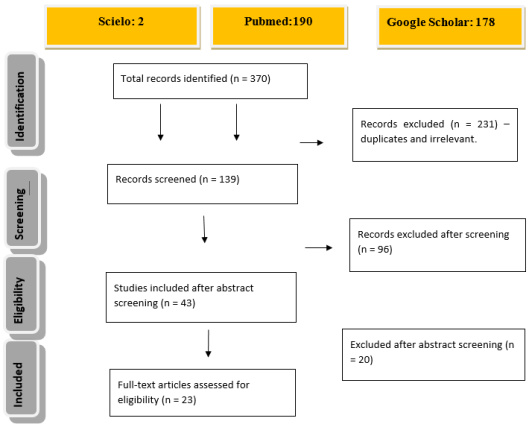
Antimicrobial resistance represents one of the most serious global public health threats, and in pediatric care, it poses a growing challenge in the treatment of urinary tract infections (UTIs), where Escherichia coli is the most frequently identified pathogen. This literature review aimed to analyze recent scientific evidence on the antibiotic resistance patterns of E. coli in pediatric UTIs, in order to identify trends that may guide clinical practice and prevention strategies. A structured bibliographic search was conducted in three databases—PubMed, SciELO, and Google Scholar—covering the period between 2019 and 2024. A total of 23 studies were selected, including original articles and narrative reviews, that met the following inclusion criteria: population under 18 years of age, microbiologically confirmed diagnosis, and full-text availability. The reviewed literature revealed a high prevalence of resistance to commonly used antibiotics in clinical practice, such as ampicillin and trimethoprim-sulfamethoxazole, with significant geographic variation. In contrast, carbapenems such as meropenem and imipenem exhibited low resistance rates, positioning them as effective therapeutic options for complicated clinical cases. Moreover, multidrug-resistant strains were reported in several countries, increasing the complexity of empirical treatment approaches. These findings underscore the urgent need to strengthen microbiological surveillance systems, regularly update pediatric clinical guidelines, and promote the rational use of antimicrobials. The review also highlights the importance of generating local evidence in Latin America, given the limited number of regional studies, to better inform empirical therapy and improve clinical outcomes in pediatric populations affected by urinary tract infections caused by antibiotic-resistant Escherichia coli.
| Published in | Pharmaceutical Science and Technology (Volume 10, Issue 2) |
| DOI | 10.11648/j.pst.20261002.11 |
| Page(s) | 25-31 |
| Creative Commons |
This is an Open Access article, distributed under the terms of the Creative Commons Attribution 4.0 International License (http://creativecommons.org/licenses/by/4.0/), which permits unrestricted use, distribution and reproduction in any medium or format, provided the original work is properly cited. |
| Copyright |
Copyright © The Author(s), 2026. Published by Science Publishing Group |
Antibiotic Resistance, Urinary Tract Infection, Pediatrics, Escherichia coli
Author and Year | Country | Title | Sample | Summary of findings |
|---|---|---|---|---|
K. Vazouras et al. 2019 [10] | Greece | “Antibiotic treatment and antimicrobial resistance in children with urinary tract infections”. | 230 patients under 17 years hospitalized with UTI. | E. coli showed high resistance to: Ampicillin 42%, Trimethoprim-sulfamethoxazole 26.5%, Ampicillin/sulbactam 19.3%, Cephalothin (2nd gen) 28.8%, Piperacillin/tazobactam 12.1% |
Suh et al (2019) [11] | South Korea | “Febrile urinary tract infection in children: changes in epidemiology, etiology, and antibiotic resistance patterns over a decade”. | 359 children under 19 years with febrile UTI. | High resistance rates were observed for penicillins, cephalosporins, and ciprofloxacin. Piperacillin-tazobactam remains effective. Higher recurrence in vesicoureteral reflux |
Lu Keshi et al (2019) [12] | China | “Analysis of drug resistance of extended-spectrum beta-lactamases-producing Escherichia Coli and Klebsiella pneumoniae in children with urinary tract infection”. | 698 children with positive urine cultures | Resistance exceeding 98% was observed for first- to third-generation cephalosporins and aztreonam. In contrast, carbapenems such as meropenem and imipenem showed resistance rates ranging from 0.24% to 5.45%, making them the most effective antibiotics for treating infections caused by extended-spectrum beta-lactamase (ESBL)-producing organisms. Caution is recommended in the use of cephalosporins, and combinations with β-lactamase inhibitors should be considered for appropriate treatment. |
Vázquez-Pérez Alvaro, Alonso-Acero Laura, Fernando Baquero-Artigaoa, Manuela de Pablos Gómez y Cristina Calvoa (2021) [13] | Spain | Community-acquired UTI: etiology, resistance, and patient profile in a tertiary care hospital | A sample of 169 unique patients at La Paz Hospital. | Sensitivity to amoxicillin-clavulanate was high in children without uropathy (87%) but lower in patients with uropathy (64.2%). Therefore, amoxicillin-clavulanate was recommended for patients without uropathy, while combination therapy (amoxicillin-clavulanate plus gentamicin or amikacin) was suggested for those with uropathy. |
Escandell Rico Francisco Miguel & Pérez Fernández Lucia (2022) [1] | Spain | Urinary tract infections: etiology and antimicrobial susceptibility | 388 uropathogens. | This study shows that fosfomycin and amoxicillin-clavulanate generally effective. However, fosfomycin is recommended as the preferred option due to its advantages in dosing, side-effect profile, and clinical outcomes. |
Mendieta-Tello et al. (2023) [2] | Ecuador | Retrospective analysis of microbiological profile and antimicrobial resistance in pediatric urinary tract infections in public hospitals in Quito | 445 urine cultures from patients aged 1 month to 15 years, collected from three public hospitals in the city of Quito. | Resistance was primarily observed to ampicillin, amoxicillin, ampicillin-sulbactam, trimethoprim-sulfamethoxazole, and first- through fourth-generation cephalosporins. |
Samanci S y Pinarbaş (2023) [14] | Turkey | Microbial etiology and antibiotic resistance in urinary tract infections in children; view from an area where antibiotics are overused”. | 4,064 positive urine cultures from children under 18 years of age in a hospital. | Common resistance patterns were observed for ampicillin (69.8%), amoxicillin-clavulanate (59.7%), and cefixime (51.3%), while sensitivity was noted to amikacin, meropenem, nitrofurantoin, and ciprofloxacin. |
Heshmat H, Meheissen M, Farid A y Hamza E (2023) [15] | Egypt | “Bacteremia and antimicrobial resistance pattern of uropathogens causing febrile urinary tract infection in a Pediatric University Hospital”. | 103 patients with microbiologically confirmed UTIs in Alexandria. | Higher resistance was identified to ampicillin (75%), cefuroxime and cefotaxime (62.7%), ciprofloxacin (60.8%), and ceftazidime (58.8%). Greater susceptibility was observed to fosfomycin, levofloxacin, meropenem, and tetracycline. |
Alsubaie et al. (2023) [16] | Saudi Arabia | “Antibiotic resistance patterns of pediatric community-acquired urinary tract infections in a tertiary care center in Jeddah”. | Pediatric patients aged 0 to 14 years with 510 culture-confirmed UTIs were included. | Resistance was observed to ampicillin (71.2%), cefazolin (56.5%), co-trimoxazole (52.5%), cefuroxime (37.8%), ceftriaxone (34.5%), ciprofloxacin (35.3%), and amoxicillin-clavulanate (30.9%), while amikacin (0.4%) and imipenem (0%) showed very low resistance rates. |
Fakhri-Demeshghieh et al. (2024) [17] | Iran | “Antibiotic Resistance of Uropathogenic Escherichia coli (UPEC) among Iranian Pediatrics: A Systematic Review and Meta-Analysis”. | Meta-analysis including 19 studies on antibiotic resistance of Escherichia coli. | The highest prevalence of antibiotic resistance was observed for doxycycline (59%), followed by ticarcillin- clavulanate (57%), cefazolin (54%), cefuroxime (53%), and amoxicillin-clavulanate (52%). In contrast, the lowest resistance rates were found for colistin (0%), meropenem (1%), and imipenem (2%), suggesting that these antibiotics may represent more effective treatment options for E. coli urinary tract infections in Iranian children. |
Zhang K, Xiang C, Zhang Y, Chao M (2024) [18] | China | “A retrospective study of uropathogen and its antibiotic resistance among children with urinary tract infection from a single center in China”. | 458 patients with positive cultures. | High resistance was observed to ampicillin (93.39%), cefazolin (76.03%), ceftriaxone (73.55%), trimethoprim-sulfamethoxazole (63.64%), and aztreonam (64.46%). However, high susceptibility was noted to amikacin, ertapenem, nitrofurantoin, and imipenem. Multidrug resistance (MDR) was reported in 80.44% of complicated UTIs and 77.05% of uncomplicated cases. |
Abdikarin Ahmed Mohamed, Yavuz Bastug, Cem Senol, Mohamed Muktar Kassim, Abdisalam Abdullahi Yusuf & Abdikarim Hussein Mohamed (2024) [19] | Somalia | “Antimicrobial resistance pattern and uropathogens distribution in children visiting a referral hospital in Mogadishu. Somalia”. | 840 urine cultures, of which 148 were positive for Escherichia coli. | Most cephalosporins showed high resistance rates (83%) against the pathogens, as did trimethoprim-sulfamethoxazole (79.7%). Carbapenem resistance ranged from 6.8% to 14.6%, and an alarmingly high prevalence of multidrug-resistant (MDR) uropathogens (27%) was observed. |
Roza E et al (2024) [20] | Tanzania | “Bacterial aetiology, antimicrobial susceptibility patterns, and factors associated with urinary tract infection among under-five children at primary health facility, North-Western Tanzania”. | 106 urine cultures from febrile children under five years of age | The study reported higher resistance to ampicillin (81.1%), gentamicin (32.4%), and trimethoprim-sulfamethoxazole (37.8%), and greater susceptibility to cefepime (97.3%), piperacillin-tazobactam (95.5%), nitrofurantoin (96.2%), and meropenem (100% in some strains). Multidrug resistance (MDR) was identified in 33.0% of isolates, predominantly S. aureus (31.4%), E. coli (20.0%), and Klebsiella spp. (20.0%). Additionally, the combination of ampicillin, gentamicin, and trimethoprim-sulfamethoxazole showed a high MDR rate exceeding 50%. |
He, Xin-Tian et al (2024) [21] | China | “The risk factors, antimicrobial resistance patterns, and outcomes associated with extended-spectrum β-lactamases-Producing pathogens in pediatric urinary tract infection”. | 288 positive cultures for E. coli in children under 18 years of age in a hospital in Taiwan. | Analyses revealed high resistance to ampicillin (67.6%-85.5%). A significant increase in resistance to gentamicin, ciprofloxacin, cefazolin, and third-generation cephalosporins was observed during the study period. In contrast, resistance to amikacin was minimal, and no resistance to imipenem was detected. |
Oliva FA (2024) [22] | Cuba | Bacterial resistance and detection of β-lactamases in hospitalized children with urinary tract infections | 342 urine cultures, of which 260 were positive for E. coli, in a hospital in Cuba. | The study showed resistance to aminopenicillins and third-generation cephalosporins (34.2%), and susceptibility to carbapenems, aminoglycosides, and fosfomycin. |
UTI | Urinary Tract Infection |
MDR | Multidrug Resistance |
ESBL | Extended-Spectrum Beta-Lactamase |
PRISMA | Preferred Reporting Items for Systematic Reviews and Meta-Analyses |
UPEC | Uropathogenic Escherichia Coli |
| [1] | Escandell Rico FM, Pérez Fernández L. Urinary tract infections: etiology and antimicrobial susceptibility. Rev Chilena Infectol.2022; 24(96): e45-e50. |
| [2] | Mendieta-Tello I, Arnao-Noboa A, Calderón-Robalino D, Gea-Izquierdo E. Retrospective analysis of the microbiological profile and antimicrobial resistance in pediatric urinary tract infections in public hospitals in Quito, Ecuador. 2023; 39(1): 95-108. |
| [3] |
World Health Organization. Antimicrobial resistance [Internet]. 2021 [cited 18 oct 2024]. Available from:
https://www.who.int/es/news-room/fact-sheets/detail/antimicrobial-resistance |
| [4] | Alperi García S, Martínez Suárez V. Urinary tract infection and vesicoureteral reflux. Pediatr Integral. 2022; 8(460): 335-348. |
| [5] | Sánchez Álvarez P, Rincón Zuno J, Mejía Caballero L. Current status of antimicrobial resistance in the pediatric population at a hospital in Mexico Rev Med Inst Mex Seguro Soc. 2022; 60(4): 371-378. |
| [6] | Pilar HJ, Nazal V, González C, Rosati P, Alarcón C. Recommendations for the diagnosis, management, and evaluation of urinary tract infection in pediatrics. Part 2. Rev Chil Pediatr. 2020; 91(3): 260–269. |
| [7] | Ara Montojo MF, González-Lamuño D, Alonso Álvarez J, de la Asunción D. Bacterial resistance in pediatrics. Soc Esp Infectol Pediátrica. 2023; 1-19. |
| [8] | Mahony M, Benador B, Koyle M, Elder J, Kaskel F. Multidrug-resistant organisms in urinary tract infections in children. Pediatr Nephrol. 2020; 35(9): 1563-1574. |
| [9] | Kaufman J, Schroeder T, Martin L. Urinary tract infections in children: an overview. BMJ Pediatric Open. 2019; 3(1): e000487. |
| [10] | Vazouras K, Tsentemeidou A, Katsioulis A, Vasilakopoulou A, Velonakis E, Tzatzarakis E, et al. Antibiotic treatment and antimicrobial resistance in children with urinary tract infections. J Glob Antimicrob Resist. 2019; 20: 4-10. |
| [11] | Suh W, Bae K, Nam K. Febrile urinary tract infection in children: changes in epidemiology, etiology, and antibiotic resistance patterns over a decade. Clin Exp Pediatr. 2021; 64(6): 270-275. |
| [12] | Lu K, Wang X. Analysis of drug resistance of extended-spectrum beta-lactamase-producing Escherichia coli and Klebsiella pneumoniae in children with urinary tract infection. Saudi Med J. 2019; 40(11): 1132-1137. |
| [13] | Vázquez-Pérez A, Alonso-Acero L, Baquero-Artigao F, De Pablos Gómez M, Calvo C. Community-acquired urinary tract infection: etiology, antimicrobial resistance, and patient profile in a tertiary care hospital An Pediatr (Barc). 2022; 96(1): 78-80. |
| [14] | Samanci S, Pinarbaşı AS. Microbial etiology and antibiotic resistance in urinary tract infections in children: view from an area where antibiotics are overused. Eur Rev Med Pharmacol Sci. 2023; 27(16): 5631-5638. |
| [15] | Heshmat H, Meheissen M, Farid A, Hamza E. Bacteremia and antimicrobial resistance pattern of uropathogens causing febrile urinary tract infection in a Pediatric University Hospital. Germs. 2023; 13(3): 123-129. |
| [16] | Alsubaie MA, Alsuheili AZ, Aljehani MN, Alothman AA, Alzahrani A, Mohammedfade HA, et al. Antibiotic resistance patterns of pediatric community-acquired urinary tract infections in a tertiary care center in Jeddah, Saudi Arabia. J Infect Dev Ctries. 2023; 17(10): 729-735. |
| [17] | Fakhri-Demeshghieh A, Behzadi S. Antibiotic resistance of uropathogenic Escherichia coli (UPEC) among Iranian pediatrics: a systematic review and meta-analysis. Iran J Public Health. 2024; 53(3): 310-320. |
| [18] | Zhang K, Xiang C, Zhang Y, Chao M. A retrospective study of uropathogen and its antibiotic resistance among children with urinary tract infection from a single center in China. Heliyon. 2024; 10(11): e20576. |
| [19] | Mohamed AA, Bastug Y, Senol C, Muktar M, Yusuf AA, Mohamed AH. Antimicrobial resistance pattern and uropathogens distribution in children visiting a referral hospital in Mogadishu. Future Science OA. 2024; 10(1): FSO889. |
| [20] | Ernest R, Lema N, Yassin S, Joachim A, Majigo M. Bacterial aetiology, antimicrobial susceptibility patterns, and factors associated with urinary tract infection among under-five children at primary health facility, Northwestern Tanzania. PLoS One. 2024; 19(5): e0287660. |
| [21] | He X, Tian Y, et al. Risk factors, antimicrobial resistance patterns, and outcomes associated with extended-spectrum β-lactamase-producing pathogens in pediatric urinary tract infection. Pediatr Neonatol. 2024; 65(3): 205-212. |
| [22] | Falcón AO. Bacterial resistance and detection of β-lactamases in children hospitalized with urinary tract infection. Rev Cubana Pediatr. 2024; 96(1): 17-25. |
APA Style
Rosales, S. L. S., Quiroz, S. K. V., Marin, F. J. M. (2026). Antibiotic Resistance of Escherichia coli in Pediatric Urinary Tract Infections: A Literature Review. Pharmaceutical Science and Technology, 10(2), 25-31. https://doi.org/10.11648/j.pst.20261002.11
ACS Style
Rosales, S. L. S.; Quiroz, S. K. V.; Marin, F. J. M. Antibiotic Resistance of Escherichia coli in Pediatric Urinary Tract Infections: A Literature Review. Pharm. Sci. Technol. 2026, 10(2), 25-31. doi: 10.11648/j.pst.20261002.11
@article{10.11648/j.pst.20261002.11,
  author = {Samantha Lucia Sandigo Rosales and Sheila Karina Valdivia Quiroz and Francisco Jose Mayorga Marin},
  title = {Antibiotic Resistance of Escherichia coli in Pediatric Urinary Tract Infections: A Literature Review},
  journal = {Pharmaceutical Science and Technology},
  volume = {10},
  number = {2},
  pages = {25-31},
  doi = {10.11648/j.pst.20261002.11},
  url = {https://doi.org/10.11648/j.pst.20261002.11},
  eprint = {https://article.sciencepublishinggroup.com/pdf/10.11648.j.pst.20261002.11},
  abstract = {Antimicrobial resistance represents one of the most serious global public health threats, and in pediatric care, it poses a growing challenge in the treatment of urinary tract infections (UTIs), where Escherichia coli is the most frequently identified pathogen. This literature review aimed to analyze recent scientific evidence on the antibiotic resistance patterns of E. coli in pediatric UTIs, in order to identify trends that may guide clinical practice and prevention strategies. A structured bibliographic search was conducted in three databases—PubMed, SciELO, and Google Scholar—covering the period between 2019 and 2024. A total of 23 studies were selected, including original articles and narrative reviews, that met the following inclusion criteria: population under 18 years of age, microbiologically confirmed diagnosis, and full-text availability. The reviewed literature revealed a high prevalence of resistance to commonly used antibiotics in clinical practice, such as ampicillin and trimethoprim-sulfamethoxazole, with significant geographic variation. In contrast, carbapenems such as meropenem and imipenem exhibited low resistance rates, positioning them as effective therapeutic options for complicated clinical cases. Moreover, multidrug-resistant strains were reported in several countries, increasing the complexity of empirical treatment approaches. These findings underscore the urgent need to strengthen microbiological surveillance systems, regularly update pediatric clinical guidelines, and promote the rational use of antimicrobials. The review also highlights the importance of generating local evidence in Latin America, given the limited number of regional studies, to better inform empirical therapy and improve clinical outcomes in pediatric populations affected by urinary tract infections caused by antibiotic-resistant Escherichia coli.},
 year = {2026}
}
TY  - JOUR
T1  - Antibiotic Resistance of Escherichia coli in Pediatric Urinary Tract Infections: A Literature Review
AU  - Samantha Lucia Sandigo Rosales
AU  - Sheila Karina Valdivia Quiroz
AU  - Francisco Jose Mayorga Marin
Y1  - 2026/07/28
PY  - 2026
N1  - https://doi.org/10.11648/j.pst.20261002.11
DO  - 10.11648/j.pst.20261002.11
T2  - Pharmaceutical Science and Technology
JF  - Pharmaceutical Science and Technology
JO  - Pharmaceutical Science and Technology
SP  - 25
EP  - 31
PB  - Science Publishing Group
SN  - 2640-4540
UR  - https://doi.org/10.11648/j.pst.20261002.11
AB  - Antimicrobial resistance represents one of the most serious global public health threats, and in pediatric care, it poses a growing challenge in the treatment of urinary tract infections (UTIs), where Escherichia coli is the most frequently identified pathogen. This literature review aimed to analyze recent scientific evidence on the antibiotic resistance patterns of E. coli in pediatric UTIs, in order to identify trends that may guide clinical practice and prevention strategies. A structured bibliographic search was conducted in three databases—PubMed, SciELO, and Google Scholar—covering the period between 2019 and 2024. A total of 23 studies were selected, including original articles and narrative reviews, that met the following inclusion criteria: population under 18 years of age, microbiologically confirmed diagnosis, and full-text availability. The reviewed literature revealed a high prevalence of resistance to commonly used antibiotics in clinical practice, such as ampicillin and trimethoprim-sulfamethoxazole, with significant geographic variation. In contrast, carbapenems such as meropenem and imipenem exhibited low resistance rates, positioning them as effective therapeutic options for complicated clinical cases. Moreover, multidrug-resistant strains were reported in several countries, increasing the complexity of empirical treatment approaches. These findings underscore the urgent need to strengthen microbiological surveillance systems, regularly update pediatric clinical guidelines, and promote the rational use of antimicrobials. The review also highlights the importance of generating local evidence in Latin America, given the limited number of regional studies, to better inform empirical therapy and improve clinical outcomes in pediatric populations affected by urinary tract infections caused by antibiotic-resistant Escherichia coli.
VL  - 10
IS  - 2
ER  -
Center for Health Research and Studies (CIES), National Autonomous University of Nicaragua (UNAN), Managua, Nicaragua
Center for Health Research and Studies (CIES), National Autonomous University of Nicaragua (UNAN), Managua, Nicaragua
Center for Health Research and Studies (CIES), National Autonomous University of Nicaragua (UNAN), Managua, Nicaragua

Information



 Share This Article
 Twitter
 Linked In
 Facebook
 Copy
Copy Download