1. Introduction
Research on data analytics capability and organizational sustainability development by Ramos had gained significant global attention due to its critical impact on enterprise resilience, environmental stewardship, and long-term economic viability. According to the authors Rahman et al, Villanueva et al, despite extensive policy interventions and academic discourse, such as the United Nations' Sustainable Development Goals, foundational barriers persisted, exacerbating disparities in technological adoption, technical and management skills, organizational learning
| [48] | Ramos, P. (2021). Organizational learning and sustainability alignment. Asia-Pacific Social Science Review, 21(2), 90–105. |
[48]
, and data-driven culture, and hindering progress in the agribusiness industry, particularly in developing economies
| [47] | Rahman, M., Uddin, S., & Khan, A. (2021). Sustainability challenges in developing economies. Journal of Cleaner Production, 310, 127–145. |
| [62] | Villanueva, R., & Tolentino, F. (2022). Data analytics capability and firm performance in the Philippines. Philippine Journal of Management Studies, 30(1), 75–92. |
[47, 62]
. Recent studies of Villanueva et al & Akman, revealed alarming trends, highlighting severe gaps in the maturity and integration of data analytics capability dimensions, which demonstrated the inefficiency of current organizational frameworks in translating strategic sustainability intentions into tangible outcomes
| [2] | Akman, I. (2023). Data analytics capability and organizational performance: Evidence from emerging markets. Journal of Business Analytics, 6(1), 45–60. |
| [62] | Villanueva, R., & Tolentino, F. (2022). Data analytics capability and firm performance in the Philippines. Philippine Journal of Management Studies, 30(1), 75–92. |
[2, 62]
.
According to the Philippine Institute for Development Studies & Visser, The data analytics study capability and organizational sustainability development had gained significant international attention due to its critical impact on corporate decision-making, green innovation, and stakeholder trust across industries. Despite extensive policy interventions and academic discourse, this challenge persisted across multiple national contexts, exacerbating disparities in sustainability reporting quality and hindering progress in industry practice
| [46] | Philippine Institute for Development Studies. (2022). Innovation and sustainability in Philippine firms. Retrieved from https://www.pids.gov.ph |
| [63] | Visser, W. (2021). Corporate social responsibility and sustainability. CSR International Journal, 5(1), 1–10. |
[46, 63]
. In Jordan, according to Hussien, Garcia, & Lopez big data analytics was found to contribute directly to the quality of corporate sustainability reporting by improving data collection, real-time analysis, and stakeholder engagement
| [25] | Garcia, R. (2022). Analytics integration in agribusiness operations. Philippine Journal of Agribusiness, 14(2), 88–102. |
| [31] | Hussien, A. (2025). Big data infrastructure and sustainability reporting effectiveness. Journal of Information Systems, 19(2), 88–102. |
| [33] | Lopez, A. (2020). Stakeholder engagement challenges in agribusiness. Philippine Journal of Development Studies, 47(1), 23–40. |
[25, 31, 33]
. In Latvia, by Novicka, scholarly synthesis established that the key success factors of data analytics capability were essential drivers for advancing sustainability-oriented business performance
| [42] | Novicka, I. (2025). Data transparency and stakeholder trust in sustainability reporting. Corporate Governance Journal, 20(1), 66–80. |
[42]
. El Manzani study results, that the Cross-national evidence further demonstrated that data analytics capability was a critical factor in achieving green innovation and sustainable competitive advantage, with country-level conditions such as technological infrastructure moderating this relationship across firms worldwide
| [19] | El Manzani, Y. (2025). Data analytics and sustainability performance. International Journal of Data Science, 10(1), 22–35. |
[19]
.
In the Philippines, according to Zhong et al., research and policy efforts had been directed toward strengthening data analytics capability among enterprises to advance organizational sustainability development, yet persistent systemic issues continued to hinder progress in the agribusiness sector. Garcia findings, the national studies indicated that firms equipped with better analytics infrastructure and workforce training performed more resiliently, particularly during periods of crisis, demonstrating the tangible value of data-driven capability for enterprise sustainability
| [24] | Garcia, M., Santos, D., & Reyes, T. (2022). Data analytics adoption and firm resilience in the Philippines. Philippine Management Review, 29(1), 55–70. |
| [65] | Zhong, R., Li, Z., & Chen, Y. (2024). Measuring organizational sustainability development: A multidimensional scale approach. Sustainability, 16(3), Article 1125. Retrieved from
https://www.mdpi.com |
[24, 65]
. Business World, accordingly many organizations continued to rely on manual and fragmented processes that impaired the quality of sustainability reporting and overall performance, revealing a persistent research gap between capability and practice
| [11] | Business World. (2024). Philippine firms struggle with data-driven transformation. BusinessWorld Online. Retrieved from https://www.bworldonline.com |
[11]
. Ramos et al & Aranzamendez et al, revealed that the local scholarship further emphasized that organizational learning and a strong data-driven culture were essential to sustainability success, with analytics-based strategies found to support the environmental, social, and economic dimensions of enterprises, yet the lack of alignment and consistent implementation across firms severely limited this potential
| [4] | Aranzamendez, R., Cruz, M., & Lopez, J. (2025). Organizational learning and sustainability practices in Philippine enterprises. Journal of Sustainable Development Studies, 18(1), 45–60. |
| [49] | Ramos, P., & Bautista, G. (2021). Sustainability strategies in Philippine organizations. Asia-Pacific Social Science Review, 21(2), 90–105. |
[4, 49]
. Ghazwani, states that This misalignment had resulted in negative consequences, such as isolated data initiatives, uneven capability distribution, and gaps in leadership commitment, particularly among organizations with insufficient investment in analytics infrastructure and limited employee upskilling programs
| [27] | Ghazwani, M., Rahman, H., & Ali, S. (2023). Data analytics capability and organizational performance. Journal of Organizational Analytics, 8(3), 134–150. |
[27]
. Schwab, found out that without urgent intervention, these challenges were likely to continue escalating, deepening existing organizational and operational disparities, especially for government-supervised entities like DOLE Stanfilco Panabo City, which operated under complex regulatory and operational pressures
| [57] | Schwab, K. (2021). Stakeholder capitalism. Wiley. |
[57]
. Thus, according to Reyes et al, a comprehensive investigation was essential to assess the role of data analytics capability in organizational sustainability development at DOLE Stanfilco Panabo City, offering evidence-based recommendations to strengthen institutional practice, policy implementation, and academic standards, and ensuring that Philippine agribusiness enterprises remained competitive within the broader regional and global sustainability landscape
| [52] | Reyes, J., & Santos, M. (2021). Data analytics and organizational resilience during crises. Philippine Journal of Business Research, 14(2), 40–58. |
[52]
.
Existing studies of Barney et al, & Elkington et al, & Na-Nan et al, indicated that data analytics capability served as a strategic enabler of organizational sustainability, with the Resource-Based View establishing it as a valuable and unique organizational resource capable of generating competitive advantage, while the Triple Bottom Line framework provided the theoretical structure for examining its influence across environmental, social, and economic dimensions
| [6] | Barney, J. (1991). Firm resources and sustained competitive advantage. Journal of Management, 17(1), 99–120. |
| [18] | Elkington, J. (1997). Cannibals with forks: The triple bottom line of 21st century business. Capstone Publishing. |
| [40] | Na-Nan, K., Sanamthong, E., & Sulong, M. (2024). Data analytics capability and sustainable organizational performance. Sustainability, 16(4), 1452. Retrieved from
https://www.mdpi.com |
[6, 18, 40]
. However, according to Na-Nan et al & Rahman studies, the specific interplay among the distinct dimensions of data analytics capability, namely tangible resources, technical and management skills, organizational learning, and data-driven culture, and their combined effect on multidimensional sustainability indicators such as continuous improvement, governance and ethics, strategic integration, and stakeholder engagement remained understudied, particularly within agribusiness enterprises in developing-country settings
| [40] | Na-Nan, K., Sanamthong, E., & Sulong, M. (2024). Data analytics capability and sustainable organizational performance. Sustainability, 16(4), 1452. Retrieved from
https://www.mdpi.com |
| [47] | Rahman, M., Uddin, S., & Khan, A. (2021). Sustainability challenges in developing economies. Journal of Cleaner Production, 310, 127–145. |
[40, 47]
. Current literature, both international and local, by Lopez, the primarily focused on the general association between data analytics capability and firm-level performance or sustainability outcomes, while little attention had been given to how individual employee demographic characteristics moderated these relationships, nor to how persistent gaps in infrastructure, skills, cultural embedding, and leadership commitment collectively constrained the translation of analytics capability into sustainability impact at the enterprise level
| [34] | Lopez, A., & Dela Cruz, M. (2020). Demographic influences on technology adoption in organizations. Philippine Journal of Human Resource Management, 15(1), 33–47. |
[34]
. Additionally, existing theoretical and methodological approaches failed to provide a structured, empirically grounded framework capable of capturing these nuanced linkages within a government-supervised agribusiness organization operating under complex regulatory and operational pressures. Therefore, this study aimed to fill these critical empirical gaps by conducting a quantitative investigation into how the dimensions of data analytics capability influenced organizational sustainability development among employees at DOLE Stanfilco, Panabo City, while accounting for demographic moderators, thereby offering actionable, contextually grounded insights to enhance the harmonization of technology, management, and sustainability in developing-country enterprise environments.
1.1. Statement of the Problem
This study aims to examine how Data Analytics Capability (DAC) influences Organizational Sustainability Development (OSD) among employees of DOLE Stanfilco in Panabo City. Specifically, it aims to evaluate how the various dimensions of Data Analytics Capability impact the organization’s sustainability outcomes, encompassing continuous improvement, environmental stewardship, social responsibility, governance, and economic viability. Moreover, it aims to investigate whether demographic factors and organizational contexts influence the relationship between Data Analytics Capability (DAC) and Organizational Sustainability Development (OSD), thereby providing a basis for evidence-based strategies that promote sustainable growth and resilience in the agribusiness sector.
1) What is the level of data analytics capability among DOLE employees in Panabo City in terms of:
a) tangible resources;
b) technical skills;
c) management skills;
d) organizational learning; and
e) data-driven culture?
2) What is the status of organizational sustainability development in DOLE Panabo city in terms of:
a) continuous improvement and learning;
b) environmental Stewardship;
c) social responsibility;
d) governance and ethics;
e) economic viability;
f) integration and alignment; and
g) stakeholder engagement?
3) Is there a significant relationship between data analytics capability and organizational sustainability development among DOLE employees in Panabo City?
4) Is there a significant difference in organizational sustainability development among DOLE employees when analyzed according to age, sex, and tenure?
1.2. Null Hypotheses
This study suggests two primary null hypotheses. The first null hypothesis states that there is no significant relationship between data analytics capability and organizational sustainability development among employees of DOLE Stanfilco in Panabo City. The second null hypothesis asserts that there is no significant difference in organizational sustainability development when analyzed according to demographic factors such as age, sex, and tenure among these employees. These hypotheses guide the investigation by setting the baseline assumption that any observed effects or differences in sustainability outcomes are not statistically significant unless proven otherwise.
1.3. Theoretical Framework
This study is anchored on the Resource-Based View Theory proposed by Jay Barney, which explains that organizations achieve competitive advantage through valuable and strategic resources. In this study, Data Analytics Capability (DAC) is considered a strategic organizational resource that improves decision-making, operational efficiency, and adaptability. DAC includes tangible resources, technical skills, management skills, organizational learning, and a data-driven culture. These components help organizations utilize data effectively to support sustainability and long-term organizational performance
| [6] | Barney, J. (1991). Firm resources and sustained competitive advantage. Journal of Management, 17(1), 99–120. |
[6]
.
The study also adopts the Triple Bottom Line Theory introduced by John Elkington and carroll, which emphasizes that sustainability involves balancing economic, environmental, and social responsibilities. Organizational Sustainability Development (OSD) includes continuous improvement and learning, environmental stewardship, social responsibility, governance and ethics, economic viability, integration and alignment, and stakeholder engagement
| [12] | Carroll, A. (2021). Corporate social responsibility: Perspectives and practice. Business & Society, 60(1), 125–140. |
| [18] | Elkington, J. (1997). Cannibals with forks: The triple bottom line of 21st century business. Capstone Publishing. |
[12, 18]
.
By integrating RBV and TBL theories, this study explains that strong Data Analytics Capability can support Organizational Sustainability Development in DOLE Stanfilco Panabo City through improved decision-making, efficient resource management, and sustainable organizational practices.
1.4. Conceptual Framework
In this study, the independent variable is Data Analytics Capability (DAC), while the dependent variable is Organizational Sustainability Development (OSD). Data Analytics Capability (DAC) refers to an organization’s ability to effectively gather, analyze, and utilize data to enhance decision-making and performance. It has indicators, namely: tangible resources, technical skills, management skills, organizational learning, and data-driven culture. The tangible resources comprise the physical and technological assets, including hardware, software, and infrastructure, used in data analysis. Technical skills refer to the knowledge and ability of employees to analyze and interpret data for organizational purposes. Management skills involve leaders' ability to apply data insights in planning, decision-making, and strategic management. Organizational learning is the process of acquiring and applying knowledge gained from data to improve performance and innovation. The data-driven culture refers to the mindset and practices within the organization that encourage data-based decisions at all levels.
The dependent variable is Organizational Sustainability Development (OSD). It is defined as the organization’s effort to balance economic, social, environmental, and governance goals for long-term growth. It has indicators, namely: continuous improvement and learning, environmental stewardship, social responsibility, governance and ethics, economic viability, integration and alignment, and stakeholder engagement. Continuous improvement and learning refer to the organization’s commitment to consistently enhancing its systems and operations. Environmental stewardship focuses on protecting and managing natural resources in a responsible manner. Social responsibility refers to the organization’s contributions to employee welfare and community development. Governance and ethics encompass transparency, accountability, and ethical practices in leadership and decision-making. The economic viability is the organization’s ability to maintain profitability and operational efficiency. The integration and alignment involve linking sustainability goals with business strategies and activities. Lastly, stakeholder engagement refers to the organization’s collaboration and communication with its employees, partners, and community to achieve sustainable outcomes.
Figure 1. The Conceptual Framework of the study.
1.5. Significance of the Study
The significance of this study was demonstrated through its contribution to both theory and practice by examining the relationship between Data Analytics Capability (DAC) and Organizational Sustainability Development (OSD) in DOLE Stanfilco, Panabo City. Grounded in the Resource-Based View (RBV) and the Triple Bottom Line (TBL) theory, the study enriched the existing body of knowledge by explaining how analytics capability functioned as a strategic organizational resource in advancing economic, social, and environmental sustainability. The findings provided empirical evidence that supported DOLE Stanfilco in strengthening its analytics infrastructure, enhancing employees’ technical and managerial competencies, fostering organizational learning, and cultivating a data-driven culture that improved decision-making, operational efficiency, resilience, and long-term sustainability. Likewise, the study offered valuable insights to private companies, particularly in the agriculture and manufacturing sectors, by presenting a practical framework for integrating data analytics into sustainability initiatives and improving organizational competitiveness, regulatory compliance, and corporate social responsibility. The results also served as a valuable reference for organizational leaders and managers in formulating evidence-based strategies, policies, and resource allocation decisions that promoted innovation, accountability, and sustainable organizational performance. Furthermore, the study benefited employees by emphasizing the importance of continuous professional development and active participation in data-driven decision-making processes, while providing BSBA students with relevant academic and practical insights into the application of analytics in achieving sustainable business performance. Finally, the study established a strong foundation for future researchers by extending the theoretical integration of RBV and TBL and providing empirical evidence that could support subsequent investigations on data analytics capability and organizational sustainability across diverse industries, organizations, and developing-country contexts.
2. Methodology
This chapter presented the research methods and procedures utilized in the conduct of the study. It described the overall research design, the research locale, the respondents and sampling procedure, and the research instrument used for data collection. It also outlined the data gathering procedures, statistical tools employed for data analysis, and the ethical considerations observed to ensure the validity, reliability, and integrity of the research process.
2.1. Research Design
This study employed a quantitative research design, specifically the descriptive-correlational method, to systematically examine the relationship between Data Analytics Capability (DAC) and Organizational Sustainability Development (OSD) in DOLE Stanfilco Panabo City. The descriptive approach was utilized to determine the level of DAC and the status of OSD among the respondents by analyzing data through descriptive statistics, including the mean and standard deviation, while the correlational approach was applied to determine the significance of the relationship between the two variables using appropriate correlation analysis. Furthermore, Analysis of Variance (ANOVA) was employed to examine significant differences in organizational sustainability development when respondents were grouped according to selected demographic characteristics. This research design ensured the objective, systematic, and reliable collection, analysis, and interpretation of quantitative data, thereby providing valid empirical evidence on how data analytics capability influenced organizational sustainability development within the organization
| [64] | Wilson, J. (2019). Essentials of business research: A guide to doing your research project. Sage Publications. |
[64]
.
2.2. Research Locale
This study was conducted at DOLE Stanfilco in Panabo City, Davao del Norte, Philippines, one of the major operating divisions of DOLE Philippines, Inc., which specialized in the production, processing, and export of fresh bananas and other tropical fruits. The research locale was purposively selected because of its strategic role in the Philippine agribusiness industry and its established utilization of data analytics in production monitoring, operational planning, resource allocation, and organizational decision-making, alongside its commitment to environmental, social, and economic sustainability initiatives. These characteristics made the organization an appropriate setting for examining the relationship between Data Analytics Capability (DAC) and Organizational Sustainability Development (OSD). The respondents consisted of regular office employees who were directly involved in data-related functions and organizational processes, whose insights provided reliable empirical data for achieving the objectives of the study.
2.3. Research Respondents
The respondents of this study consisted of 100 regular employees of DOLE Stanfilco in Panabo City, Davao del Norte, representing various functional departments within the organization. These respondents were selected because they possessed relevant knowledge and experience regarding the organization's data analytics practices and sustainability initiatives, making them reliable sources of information on Data Analytics Capability (DAC) and Organizational Sustainability Development (OSD). Consistent with the recommendations
| [22] | Fox, N., Hunn, A., & Mathers, N. (2024). Sampling and sample size calculation. The NIHR Research Design Service for Yorkshire and the Humber. Retrieved from
https://www.rds-yh.nihr.ac.uk |
[22]
, According to Etikan & Palinkas et al, a sample size of 100 respondents was considered adequate to generate statistically meaningful and reliable findings. The study employed a stratified random sampling technique, wherein the population was first grouped according to departmental affiliations or functional units, and respondents were randomly selected from each stratum in proportion to its size to ensure equitable representation and minimize sampling bias. This probability sampling method enhanced the representativeness, validity, and generalizability of the findings by providing every qualified employee within each stratum an equal opportunity to participate. The inclusion criteria covered only regular employees actively engaged in organizational operations, data-related functions, and sustainability practices, while contractual, probationary, agency-based personnel, and employees without direct involvement in these functions were excluded to ensure that the data collected accurately reflected the study variables and strengthened the reliability of the research findings
| [20] | Etikan, I., Musa, S. A., & Alkassim, R. S. (2016). Comparison of convenience sampling technique. American Journal of Theoretical and Applied Statistics, 5(1), 1–4.
https://doi.org/10.11648/j.ajtas.20160501.11 |
| [43] | Palinkas, L. A., Horwitz, S. M., Green, C. A., Wisdom, J. P., Duan, N., & Hoagwood, K. (2015). Purposeful sampling for qualitative data collection and analysis in mixed method implementation research. Administration and Policy in Mental Health and Mental Health Services Research, 42(5), 533–544. https://doi.org/10.1007/s10488-013-0528-y |
[20, 43]
.
2.4. Research Instrument and Statistical Treatment
The primary data-gathering tool of this study is a structured survey questionnaire designed to assess the relationship between data analytics capability and organizational sustainability development among employees of DOLE Stanfilco in Panabo City. The instrument is divided into three parts.
The first part gathers the demographic profile of the respondents, including their age, sex, and tenure in the company. These variables serve as the moderating factors in the study.
The second part measures the organization's data analytics capability. This section is adapted from relevant literature and consists of items that assess five indicators: (1) tangible resources, (2) technical skills, (3) management skills, (4) organizational learning, and (5) data-driven culture. All statements in Parts II and III are rated using a 4-point Likert scale to measure the respondents’ level of agreement with each item, as shown below:
Table 1. Statistical Treatment of the study for the Data Analytics Capability variable.
Scale | Range of Means | Interpretation |
3.26-4.00 | Very High | Data-analytics capability is always observed. |
2.51-3.25 | High | Data-analytics capability is oftentimes observed. |
1.76-2.50 | Low | Data-analytics capability is sometimes observed. |
1.00-1.75 | Very Low | Data-analytics capability is rarely observed. |
The third part evaluates Organizational Sustainability Development, adapted from the questionnaire of Zhong et al. (2024). This section covers seven indicators: (1) continuous improvement and learning, (2) environmental stewardship, (3) social responsibility, (4) governance and ethics, (5) economic viability, (6) integration and alignment, and (7) stakeholder engagement. Similar to the second part, the items are rated using the same 4-point Likert scale.
Table 2. Statistical Treatment of the study for the Organizational Sustainability Development.
Range of Means | Description | Interpretation |
3.26 – 4.00 | Very High | Organizational sustainability development is always observed. |
2.51 – 3.25 | High | Organizational sustainability development is oftentimes observed. |
1.76 – 2.50 | Low | Organizational sustainability development is sometimes observed. |
1.00 – 1.75 | Very Low | Organizational sustainability development is rarely observed. |
The study utilizes a 4-point Likert scale to eliminate neutral responses and encourage respondents to provide more decisive answers. This approach avoids the tendency to select a middle option, resulting in clearer and more meaningful data. By requiring respondents to express either agreement or disagreement, the 4-point scale enhances the accuracy and interpretability of results, allowing for a more reliable assessment of the organization’s data analytics capability and sustainability development practices.
The questionnaire is contextualized to the operational setting of DOLE Stanfilco Panabo City and refined through expert validation by professionals in the fields of management, sustainability, and research to ensure content validity and relevance.
2.5. Data Gathering Procedure
According to Bryman, explains that data collection involves using appropriate research methods and instruments to obtain the information needed to address the research questions of a study. These methods may include questionnaires, interviews, and observations
| [9] | Bryman, A. (2016). Social research methods (5th ed.). Oxford University Press. |
[9]
. In this study, the researchers first secured the necessary approvals from the College Dean, Research Adviser, Program Research Coordinator, Vice President for Academic Affairs, and the Research and Development Office before requesting formal permission from the management of DOLE Stanfilco Panabo City to conduct the study. Upon approval, informed consent was obtained from all participants after explaining the study's objectives, procedures, voluntary participation, confidentiality, and ethical considerations. A researcher-made questionnaire, validated by subject matter experts and tested for reliability, was then administered to the respondents selected through a stratified random sampling technique, wherein regular employees were grouped according to their respective functional departments, and respondents were randomly selected proportionately from each stratum to ensure equitable representation and minimize sampling bias. Standardized instructions were provided to promote consistency in data collection, after which the accomplished questionnaires were retrieved, encoded, verified, and organized using Microsoft Excel for accuracy and completeness. The data were subsequently analyzed using appropriate statistical tools to address the research objectives and test the study hypotheses. Finally, all research data were securely stored and treated with strict confidentiality in compliance with ethical research standards, and the completed study was presented for academic evaluation and submitted as partial fulfillment of the degree requirements.
2.6. Data Analysis
The data collected from the survey questionnaires were systematically organized, coded, tabulated, and analyzed using appropriate statistical software to address the objectives of the study. Descriptive statistics, particularly the weighted mean and standard deviation, were employed to determine the level of Data Analytics Capability (DAC) and the status of Organizational Sustainability Development (OSD) among the respondents. The Pearson Product-Moment Correlation Coefficient (Pearson's r) was utilized to determine the significance, strength, and direction of the relationship between DAC and OSD. Furthermore, an independent samples F-test was applied to examine significant differences in OSD when respondents were grouped according to sex, and Analysis of Variance (ANOVA) was used to determine significant differences based on age and tenure. All statistical analyses were interpreted using a 0.05 level of significance, providing objective, valid, and reliable empirical evidence to support the study's findings, conclusions, and recommendations.
2.7. Ethical Considerations
In conducting the study entitled “Data Analytics Capability and Organizational Sustainability Development in DOLE Stanfilco Panabo City,” the researchers adhered to the ethical principles of respect for persons, beneficence, and justice outlined in the report
, as well as the provisions of the Data Privacy Act of 2012 (Republic Act No. 10173). Participants were selected through random stratified sampling to ensure fair and equitable representation of employees across relevant organizational strata and to minimize selection bias. Before participation, respondents were informed of the study’s purpose, procedures, and their rights, and their voluntary participation was secured through informed consent. The researchers protected the confidentiality and privacy of respondents by anonymizing personal information, limiting access to collected data, and using the information solely for academic purposes. Participants were also informed of their right to decline participation or withdraw at any stage without penalty or adverse consequences. The questionnaire was designed to avoid intrusive, offensive, or potentially harmful questions, while the findings were intended to provide useful insights into data analytics capability and organizational sustainability development in DOLE Stanfilco Panabo City. Through these measures, the researchers upheld fairness, participant welfare, privacy, and research integrity throughout the study.
3. Results and Discussion
This chapter presents, analyzes, and interprets the data gathered in the study. The first part deals with the level of Data Analytics Capability (DAC) among employees of DOLE Stanfilco in Panabo City in terms of tangible resources, technical skills, management skills, organizational learning, and data-driven culture. The second part tackles the status of Organizational Sustainability Development (OSD) in terms of continuous improvement and learning, environmental stewardship, social responsibility, governance and ethics, economic viability, integration and alignment, and stakeholder engagement. The third part presents the significant relationship between Data Analytics Capability and Organizational Sustainability Development. The fourth part discusses the significant differences in Organizational Sustainability Development when respondents are grouped according to age, sex, and length of service.
3.1. Level of Data Analytics Capability
Based on the results in
Table 1, the overall mean is 3.09, described as high, with a standard deviation of 0.49. The mean result shows that data analytics capability is oftentimes observed within the organization. The standard deviation is below 1, indicating a high level of consistency in responses using the 4-point Likert scale.
In terms of tangible resources, the item with the highest mean is “The organization ensures reliable network and system support” with a mean value of 3.25, which fall as high. Similarly, “Data systems and databases are accessible when needed” obtained the second highest mean value of 3.24, also mean as high and are oftentimes observed. The item, “The organization has adequate hardware and equipment for data analytics” obtained the lowest mean value of 2.67, which is still within the high range. Furthermore, the category mean value of 3.04 also falls within the high range, indicating that data analytics capability in terms of tangible resources is oftentimes observed in the organization; However, the gap between strong system support and relatively lower hardware availability suggests an imbalance that may affect the efficiency and speed of data processing, highlighting the need for more consistent investment in physical resources to further enhance overall capability.
The literature authored by Rahman et al revealed that organizations with strong technological infrastructure, including reliable systems and accessible databases, are more capable of enhancing data analytics capability and improving operational efficiency
| [47] | Rahman, M., Uddin, S., & Khan, A. (2021). Sustainability challenges in developing economies. Journal of Cleaner Production, 310, 127–145. |
[47]
. The study highlighted the importance of having stable and well-established systems to support effective data processing and decision-making. Furthermore, Ghazwani found that investments in digital infrastructure significantly improve organizational performance by enabling analytics-driven decisions and efficient operations
| [27] | Ghazwani, M., Rahman, H., & Ali, S. (2023). Data analytics capability and organizational performance. Journal of Organizational Analytics, 8(3), 134–150. |
[27]
. However, Mikalef et al & Vial, stressed that in addition to digital systems, adequate hardware and equipment are equally important in fully maximizing data analytics capability. Their study revealed that insufficient physical resources can limit the effectiveness of analytics processes, which may explain the relatively lower rating in hardware availability in the present study
| [39] | Mikalef, P., Krogstie, J., Pappas, I., & Pavlou, P. (2020). Big data analytics capabilities. Information & Management, 57(2), 103–169. |
| [61] | Vial, G. (2021). Digital transformation and firm performance. Journal of Strategic Information Systems, 30(2), 101–109. |
[39, 61]
.
Technical skills reveal that the item with the highest mean is “The employees are confident in handling data-related tasks” with a mean value of 2.98, which falls within the high range. The item “The employees can interpret data for decision-making” obtained the second highest mean value of 2.97, also within the high range. On the other hand, “The organization provides training to improve technical skills” obtained the lowest mean value of 2.94 described as high. Furthermore, the category mean value of 2.96, which falls within the high range, indicates that data analytics capability related to technical skills is oftentimes observed in the organization. However, the relatively lower rating in training suggests a need to enhance capacity-building initiatives, professional development programs, and upskilling opportunities to further strengthen employees’ competencies and ensure long-term sustainability of analytics capability.
Table 3. Level of Data Analytics Capability among DOLE Employees in Panabo City.
Indicators and Statements | Mean | SD | Description |
A. Tangible Resources | | | |
1) The organization has adequate hardware and equipment for data analytics. | 2.67 | 1.27 | High |
2) The organization provides updated software for data analysis. | 3.0 | 0.65 | High |
3) Data systems and databases are accessible when needed. | 3.24 | 0.52 | High |
4) The organization ensures reliable network and system support. | 3.25 | 0.51 | High |
5) There are sufficient tools for data storage and processing. | 3.11 | 0.57 | High |
Category Mean | 3.04 | 0.48 | High |
B. Technical Skills | | | |
1) The Employees have the necessary skills to analyze data effectively. | 2.96 | 0.47 | High |
2) The Employees can use data analysis tools and software. | 2.95 | 0.48 | High |
3) The Employees can interpret data for decision-making. | 2.97 | 0.46 | High |
4) The organization provides training to improve technical skills. | 2.94 | 0.49 | High |
5) The Employees are confident in handling data-related tasks. | 2.98 | 0.45 | High |
Category Mean | 2.96 | 0.47 | High |
C. Management Skills | | | High |
1) The Management supports the use of data in decision-making. | 3.10 | 0.52 | High |
2) The Leaders integrate data analytics into planning and strategy. | 3.18 | 0.48 | High |
3) The Management allocates resources for analytics initiatives. | 3.12 | 0.50 | High |
4) The Leaders encourage the use of data in operations. | 3.06 | 0.51 | High |
5) The Management promotes analytics-driven performance. | 3.19 | 0.39 | High |
Category Mean | 3.13 | 0.48 | High |
D. Organizational Learning | | | |
1) The organization promotes continuous learning in data analytics. | 3.13 | 0.48 | High |
2) The Employees share knowledge related to data analytics. | 3.20 | 0.53 | High |
3) The organization supports innovation through data use. | 3.17 | 0.50 | High |
4) The insights from data are applied to improve performance. | 3.19 | 0.40 | High |
5) The organization encourages improvement through analytics insights. | 3.19 | 0.49 | High |
Category Mean | 3.18 | 0.48 | High |
E. Data-Driven Culture | | | |
1) The Decisions in the organization are based on data. | 3.15 | 0.54 | High |
2) The employees rely on data when performing their daily tasks. | 3.17 | 0.45 | High |
3) The organization values evidence-based decision-making. | 3.27 | 0.45 | High |
4) Data is consistently used to guide operations. | 3.17 | 0.60 | High |
5) The organization promotes a culture of using data. | 2.99 | 0.60 | High |
Category Mean | 3.15 | 0.53 | High |
OVERALL MEAN & SD | 3.09 | 0.49 | High |
According to the research findings Mikalef et al emphasized that strong technical expertise, particularly in data analysis, programming, and interpretation, is essential in maximizing data analytics capability, as it enables employees to transform raw data into meaningful insights that support organizational performance. Similarly, highlighted that continuous training and development programs enhance employees’ ability to utilize data analytics effectively, especially in supporting sustainability and decision-making processes
| [39] | Mikalef, P., Krogstie, J., Pappas, I., & Pavlou, P. (2020). Big data analytics capabilities. Information & Management, 57(2), 103–169. |
[39]
.
In addition, Abubakar et al stressed that investing in human capital through skill development strengthens organizational performance and improves the effective use of data. The present findings support these studies, as technical skills were rated high, indicating that employees are generally capable, competent, and confident in performing data-related tasks. However, the relatively lower rating in training suggests a gap compared to the ideal conditions emphasized in earlier studies, where continuous and structured learning is consistently implemented. This implies that while employees already possess adequate technical skills, the organization may need to further strengthen its training programs and capacity-building initiatives to enhance advanced competencies and sustain long-term data analytics capability
| [1] | Abubakar, A., Elrehail, H., Alatailat, M., & Elçi, A. (2021). Knowledge management, decision-making style and organizational performance. Journal of Innovation & Knowledge, 6(2), 104–114. |
[1]
.
In terms of management skills, the result indicates that the item with the highest mean is “Management promotes analytics-driven performance” with a mean value of 3.19, interpreted as high. The item “Leaders integrate data analytics into planning and strategy” obtained the second highest mean value of 3.18, also within the high range. This is followed by “Management allocates resources for analytics initiatives” with a mean value of 3.12 and “Management supports the use of data in decision-making” with a mean value of 3.10, both interpreted as high. On the other hand, “Leaders encourage the use of data in operations” obtained the lowest mean value of 3.06, although still within the high range. Furthermore, the category mean value of 3.13, which falls within the high range, indicates that data analytics capability related to management skills is oftentimes observed in the organization. However, the slight variation among indicators implies a need to strengthen the operational integration of data use to ensure that analytics-driven practices are consistently applied across all levels of the organization.
According to Gramaki, E management plays a critical role in aligning data analytics initiatives with organizational goals through strong leadership support, strategic integration, and effective resource allocation
| [28] | Gramaki, E., Papadopoulos, T., & Spanaki, K. (2021). The impact of big data analytics on sustainability. Sustainability, 13(5), 2768. Retrieved from https://www.mdpi.com |
[28]
. Similarly, Mikalef et al emphasized that top management commitment is a key driver in fostering a data-driven environment, as it influences how analytics is embedded across different organizational functions
| [39] | Mikalef, P., Krogstie, J., Pappas, I., & Pavlou, P. (2020). Big data analytics capabilities. Information & Management, 57(2), 103–169. |
[39]
.
In addition, Abubakar et al highlighted that active managerial involvement not only strengthens the adoption of data-driven practices but also enhances overall organizational performance by encouraging employees to utilize data in their tasks. The present findings support these studies, as management skills were rated high, indicating that leaders actively promote analytics-driven performance and integrate data analytics into planning and strategy
| [1] | Abubakar, A., Elrehail, H., Alatailat, M., & Elçi, A. (2021). Knowledge management, decision-making style and organizational performance. Journal of Innovation & Knowledge, 6(2), 104–114. |
[1]
. However, the relatively lower rating in encouraging the use of data in operations suggests a gap compared to the ideal conditions emphasized in earlier studies, where the consistent and routine application of data in day-to-day activities is strongly practiced. This implies that while management demonstrates strong strategic and structural support for data analytics, there is still a need to reinforce its practical implementation at the operational level to ensure that data-driven practices are consistently applied across all aspects of the organization.
In terms of Organizational learning, it reveals that “The organization promotes continuous learning in data analytics” obtained the highest mean value of 3.20, which falls within the range of 2.51–3.25 and is interpreted as high. This is followed by “Insights from data are applied to improve performance” and “The organization encourages improvement through analytics insights,” both with mean values of 3.19 descried as high. Similarly, “The organization supports innovation through data use” obtained a mean value of 3.17 described as high. On the other hand, “Employees share knowledge related to data analytics” obtained the lowest mean value of 3.13, described as high. Furthermore, the category mean value of 3.18, which falls within the high range (2.51–3.25), indicates that organizational learning in data analytics is oftentimes observed; however, the slight variation among indicators implies a need to strengthen collaborative learning and knowledge-sharing mechanisms to further enhance collective capability and sustain continuous improvement within the organization.
Chen, L. emphasized that organizations that promote continuous learning are more effective in utilizing data analytics for innovation and decision-making, particularly when learning is supported by knowledge sharing, experimentation, and continuous improvement
| [16] | Chen, L. (2024). Organizational learning and sustainability performance. Sustainability, 16(3), 1120. Retrieved from https://www.mdpi.com |
[16]
. Similarly, Argote, L. highlighted that organizational learning is strengthened through knowledge transfer and social interaction, where insights derived from data analytics are shared and institutionalized to improve processes and performance
| [3] | Argote, L. (2021). Organizational learning: Creating, retaining and transferring knowledge (3rd ed.). Springer. |
[3]
.
According to Fiol, C. further explained that learning becomes more effective when organizations are able to translate data-driven experiences into actionable knowledge that supports strategic decisions. The present findings support these studies, as continuous learning in data analytics obtained the highest mean, indicating that the organization actively fosters learning and development in this area
| [21] | Fiol, C. (2021). Organizational learning and knowledge interpretation. Academy of Management Review, 10(4), 803–813. |
[21]
.
However, this contrasts with the findings of Garcia et al, and Ramos et al who emphasized that organizations with strong analytics capability also demonstrate consistent and well-established knowledge-sharing practices and collaborative learning environments. This is evident in the present study where knowledge sharing among employees obtained the lowest mean, suggesting that while learning is encouraged, the exchange and institutionalization of data-related knowledge may not be fully reinforced. This implies that although the organization demonstrates strength in promoting continuous learning, there is still a need to enhance collaboration, strengthen knowledge-sharing mechanisms, and institutionalize learning practices to fully maximize its data analytics capability
| [23] | Garcia, L., & Rivera, P. (2023). Analytics capability and sustainability integration in emerging economies. Journal of Business Analytics, 6(2), 101–115. |
| [49] | Ramos, P., & Bautista, G. (2021). Sustainability strategies in Philippine organizations. Asia-Pacific Social Science Review, 21(2), 90–105. |
[23, 49]
.
Data-driven culture shows that the item with the highest mean is “The organization values evidence-based decision-making” with a mean value of 3.27, which falls within the range of 3.26–4.00 and is interpreted as very high. The items “Employees rely on data in their daily tasks” and “Data is consistently used to guide operations” both obtained mean values of 3.17, which fall within the range of 2.51–3.25 and are interpreted as high. On the other hand, “The organization promotes a culture of using data” obtained the lowest mean value of 2.99, also interpreted as high. Furthermore, the category mean value of 3.15, which falls within the high range (2.51–3.25), indicates that a data-driven culture is oftentimes observed within the organization; however, the variation among indicators implies a need to further strengthen cultural reinforcement strategies to ensure that data-driven practices are consistently embedded and sustained.
According to the Business World and Hussien Research findings emphasized that organizations that foster a data-driven culture are more effective in integrating data into decision-making processes, leading to improved performance, transparency, and accountability
| [11] | Business World. (2024). Philippine firms struggle with data-driven transformation. BusinessWorld Online. Retrieved from https://www.bworldonline.com |
| [31] | Hussien, A. (2025). Big data infrastructure and sustainability reporting effectiveness. Journal of Information Systems, 19(2), 88–102. |
[11, 31]
. Similarly, the Business World highlighted that embedding analytics within organizational culture enhances stakeholder trust and strengthens sustainability reporting through consistent data utilization
| [13] | Caringal-Go, J., Santos, P., & Lim, R. (2025). Data-driven culture and organizational sustainability in Southeast Asia. Asian Business Review, 12(2), 78–95. |
[13]
. Garcia et al, further explained that organizations that institutionalize data use in daily operations are better able to improve efficiency, governance, and innovation. The present findings support these studies, as evidence-based decision-making obtained the highest mean, indicating that the organization strongly values and consistently applies data in guiding decisions and operational activities
| [23] | Garcia, L., & Rivera, P. (2023). Analytics capability and sustainability integration in emerging economies. Journal of Business Analytics, 6(2), 101–115. |
[23]
.
However, this contrasts with the findings of Villanueva & Tolentino, who emphasized that building a strong data-driven culture requires continuous cultural transformation, including efforts to overcome resistance to change and promote data use across all organizational levels. This is evident in the present study where the promotion of a data-driven culture obtained the lowest mean, suggesting that while data use is already practiced, efforts to fully institutionalize and reinforce a strong data-driven mindset may still be limited. This implies that although the organization demonstrates strong application of data in decision-making and operations, there is still a need to strengthen cultural and organizational initiatives to fully embed and sustain a comprehensive data-driven culture
| [62] | Villanueva, R., & Tolentino, F. (2022). Data analytics capability and firm performance in the Philippines. Philippine Journal of Management Studies, 30(1), 75–92. |
[62]
.
3.2. Status of Organizational Sustainability Development
Based on the result in
Table 2, the overall mean is 3.18, which is described as high, with a standard deviation of 0.46. Referring to the parameter limit, a mean range of 2.51–3.25 is interpreted as high, indicating that data-analytics capability is oftentimes observed. This means that the employees of DOLE Stanfilco in Panabo City generally perceive that the organization demonstrates a high level of sustainability development. Moreover, the standard deviation being less than 1 suggests that the responses are consistent, reflecting a shared perception among employees regarding the organization’s sustainability practices.
Continuous improvement and learning indicate that the item with the highest mean is “Sustainability policies are adjusted based on analytics feedback.” with a mean value of 3.27, which falls within the range of 2.51–3.25 and is interpreted as high. The second highest mean is “The organization benchmarks its sustainability performance using data analytics” with a mean result of 3.26 also described as high. On the other hand, the item “Training programs on sustainability are frequently updated with new data and analytics findings.” obtained the lowest mean value of 3.06, although still within the high range, indicating that while learning is present, its systematic integration into formal decision-making structures may not be consistently
Table 4. Status of Organizational Sustainability Development in DOLE Panabo City.
Indicators & Statements | Mean | SD | Interpretation |
A. Continuous Improvement and Learning | | | |
1) The organization regularly evaluates its sustainability practices using data analytics. | 3.19 | 0.60 | High |
2) Training programs on sustainability are frequently updated with new data and analytics findings. | 3.06 | 0.60 | High |
3) Sustainability policies are adjusted based on analytics feedback. | 3.27 | 0.45 | High |
4) The organization benchmarks its sustainability performance using data analytics. | 3.26 | 0.53 | High |
Category Mean | 3.20 | 0.43 | High |
B. Environmental Stewardship | | | |
1) Data analytics are used to monitor and reduce environmental impacts. | 3.20 | 0.43 | High |
2) Measurable environmental targets are set based on analytics data. | 3.11 | 0.40 | High |
3) Environmental sustainability goals are integrated into operations. | 3.20 | 0.42 | High |
Category Mean | 3.17 | 0.42 | High |
C. Social Responsibility | | | |
1) Data analytics support social responsibility programs. | 3.18 | 0.52 | High |
2) Stakeholder feedback is collected and analyzed. | 3.10 | 0.64 | High |
3) Analytics inform employee welfare and equity policies. | 3.22 | 0.46 | High |
Category Mean | 3.17 | 0.54 | High |
D. Governance and Ethics | | | |
1) The organization ensures ethical use of data. | 3.19 | 0.55 | High |
2) Governance promotes transparency and accountability. | 3.21 | 0.41 | High |
3) Regular data audits ensure compliance. | 3.24 | 0.41 | High |
Category Mean | 3.21 | 0.46 | High |
E. Economic Viability | | | |
1) Financial decisions balance profitability and sustainability. | 3.19 | 0.39 | High |
2) Analytics-driven forecasting guides planning. | 3.18 | 0.49 | High |
3) Financial discrepancies are analyzed and addressed. | 3.02 | 0.56 | High |
Category Mean | 3.13 | 0.48 | High |
F. Integration and Alignment | | | |
1) Sustainability goals are integrated into strategy. | 3.12 | 0.38 | High |
2) Departments collaborate using analytics platforms. | 3.21 | 0.41 | High |
3) Sustainability metrics are included in performance evaluation. | 3.20 | 0.40 | High |
Category Mean | 3.18 | 0.40 | High |
G. Stakeholder Engagement | | | |
1) Stakeholder concerns are tracked using data. | 3.14 | 0.35 | High |
2) Analytics are used to tailor stakeholder communication. | 3.15 | 0.36 | High |
3) Analytics-driven engagement builds trust and partnerships. | 3.21 | 0.41 | High |
Category Mean | 3.17 | 0.37 | High |
Overall Organizational Sustainability Development | 3.18 | 0.46 | High |
Furthermore, the category mean value of 3.20, which falls within the high range (2.51–3.25), indicates that continuous improvement and learning as a dimension of organizational sustainability development is oftentimes observed. however, there is still a need to strengthen the integration of learning mechanisms into decision-making processes to ensure a more structured, adaptive, and sustainability-oriented approach within the organization.
Perez, J., & Domingo, Research reveals that continuous improvement and learning, particularly when supported by analytics, are essential for strengthening organizational adaptability and sustaining performance over time. This supports the present findings, where analytics applied to enhance employee skills and knowledge obtained the highest mean, indicating that learning and development are actively practiced within the organization
| [44] | Perez, J., & Domingo, M. (2020). Technological infrastructure and data analytics capability in organizational sustainability. Journal of Information Systems and Sustainability, 12(2), 85–102. |
[44]
. Similarly, Schaltegger highlighted that analytics-driven feedback systems enable organizations to identify performance gaps and continuously refine sustainability strategies, which aligns with the observed emphasis on process improvement
| [56] | Schaltegger, S., Burritt, R., & Petersen, H. (2021). Sustainability accounting and performance management. Accounting, Auditing & Accountability Journal, 34(5), 1025–1045. |
[56]
. Lozano, further explained that institutionalized learning processes, such as knowledge sharing and adaptive planning, enhance the integration of sustainability into organizational systems, consistent with the high level of learning observed in the study
| [36] | Lozano, R. (2021). Organizational learning and sustainability. Journal of Cleaner Production, 29(3), 100–110. |
[36]
. However, Bocken pointed out that continuous improvement becomes more effective when learning mechanisms are fully embedded into organizational structures and decision-making processes. This is reflected in the present findings, where the integration of learning into decision-making obtained the lowest mean, suggesting that while learning is evident, it may not yet be systematically incorporated into formal decision frameworks. This implies that although the organization demonstrates strong engagement in continuous improvement and learning, there is still a need to strengthen the institutionalization of learning mechanisms to fully support and sustain organizational sustainability development
| [10] | Bocken, N., Short, S., Rana, P., & Evans, S. (2021). A literature review and practice review of sustainable business model archetypes. Journal of Cleaner Production, 65, 42–56. Retrieved from https://www.sciencedirect.com |
[10]
.
Environmental stewardship indicates that “Environmental sustainability goals are integrated into daily operations” and “Data analytics are used to monitor and reduce environmental impacts” both obtained the highest mean value of 3.20, which falls within the range of 2.51–3.25 and is interpreted as high. On the other hand, “Environmental targets are set based on analytics data” obtained the lowest mean value of 3.11, described as high. Furthermore, the category mean value of 3.17, which falls within the high range (2.51–3.25), indicates that environmental stewardship is oftentimes observed within the organization; however, the variation among indicators suggests a need to strengthen the use of analytics in setting clear, measurable, and strategic environmental targets to further enhance sustainability performance.
According to the research findings of Sarkis, it was emphasized that data analytics significantly enhance environmental stewardship by enabling organizations to monitor, measure, and manage environmental impacts such as resource use, emissions, and waste, which supports the present findings where monitoring and operational integration obtained the highest means
| [55] | Sarkis, J. (2020). Supply chain sustainability and analytics. International Journal of Production Economics, 217, 107–119. |
[55]
. Similarly, Seuring, highlighted that analytics-driven practices improve environmental performance by optimizing resource utilization and minimizing inefficiencies, aligning with the observed integration of sustainability into daily operations
| [58] | Seuring, S., & Müller, M. (2021). Sustainable supply chain management. Journal of Cleaner Production, 16(15), 1699–1710. |
[58]
. Schwab further explained that analytics-driven innovation allows organizations to develop sustainable solutions that balance operational efficiency with environmental protection, reinforcing the role of data in guiding environmental practices
| [57] | Schwab, K. (2021). Stakeholder capitalism. Wiley. |
[57]
.
In the Philippine context, the Department of Environment and Natural Resources, Philippines emphasized that data-driven environmental monitoring systems enhance regulatory compliance and resource management, which is consistent with the present results. However, while these studies highlight the importance of comprehensive analytics use, the present finding shows that setting environmental targets based on analytics obtained the lowest mean, suggesting that although monitoring and operational application are strong, the use of analytics in establishing clear and measurable environmental targets may still be less emphasized. This implies that the organization may further strengthen its environmental stewardship by improving data-driven target-setting to support more strategic and measurable sustainability outcomes
| [17] | Department of Environment and Natural Resources, Philippines. (2023). Environmental monitoring and sustainability report. Retrieved from https://www.denr.gov.ph |
[17]
.
Within the social responsibility indicator, “Analytics inform employee welfare and equity policies” obtained the highest mean of 3.22, interpreted as high. This is followed by “Data analytics support social responsibility programs” with a mean of 3.18, also described as high. Meanwhile, “Stakeholder feedback is collected and analyzed” registered the lowest mean of 3.10, also still interpreted as high. Overall, the category mean is 3.17, described as high, indicates that organizational sustainability development is oftentimes observed in supporting social responsibility, particularly in enhancing employee welfare and guiding organizational social initiatives, although there is still room to strengthen stakeholder engagement through more consistent feedback analysis.
Another findings’ by Lopez emphasized that data analytics play a vital role in strengthening social responsibility programs by enabling organizations to accurately target initiatives and effectively measure their outcomes, highlighting the importance of aligning programs with the needs of employees and communities
| [34] | Lopez, A., & Dela Cruz, M. (2020). Demographic influences on technology adoption in organizations. Philippine Journal of Human Resource Management, 15(1), 33–47. |
[34]
. Similarly, Garcia & Rivera found that fostering a data-driven culture enhances accountability and stakeholder engagement within Philippine institutions, which supports the present findings where employee welfare and program support obtained the highest means. These results indicate that the organization effectively utilizes analytics in promoting social initiatives and improving employee-related policies
| [23] | Garcia, L., & Rivera, P. (2023). Analytics capability and sustainability integration in emerging economies. Journal of Business Analytics, 6(2), 101–115. |
[23]
.
However, Serrano & Yu, findings of research pointed out that organizations often encounter challenges in fully integrating analytics for systematic stakeholder feedback monitoring. This is consistent with the present finding where stakeholder feedback collection obtained the lowest mean, suggesting that while analytics is actively used in social responsibility efforts, there is still a need to strengthen mechanisms for capturing and analyzing stakeholder insights to further enhance organizational sustainability development
| [59] | Serrano, L., & Yu, K. (2021). Governance and sustainability in government-regulated enterprises. Public Administration Review, 81(3), 456–470. |
[59]
.
In the governance and ethics indicator, the highest mean is “Regular data audits ensure compliance” at 3.24, described as high. Followed by “Governance promotes transparency and accountability” at 3.21 also described as high. While the lowest is “The organization ensures ethical use of data” at 3.19, also still described as high. The overall category mean of 3.21, described as high. These results suggest that the organization actively applies analytics to support compliance, transparency, and accountability, with strong formal processes for monitoring and reporting. However, the slightly lower rating for ethical data use indicates that while operational and reporting mechanisms are robust, attention to formal ethical protocols such as privacy, consent, and responsible analytics practices, may not yet be fully institutionalized. This pattern reflects a common organizational tendency to prioritize compliance and transparency over the systematic integration of ethics in data practices, highlighting an opportunity to strengthen training, policies, and monitoring to ensure that governance and ethics are balanced and fully embedded across all analytics initiatives.
The findings of Garcia & Rivera, the literature emphasized that integrating analytics within governance frameworks enhances transparency, accountability, and ethical decision-making, which supports the present findings where compliance audits and governance practices obtained the highest means
| [29] | Hernandez, P., & Velasco, M. (2020). Governance, ethics, and sustainability. Corporate Governance Journal, 18(2), 99–115. |
[29]
. Rivera, further explained that managers’ strategic use of analytics strengthens ethical standards and promotes consistent monitoring, aligning with the observed strong governance practices
| [53] | Rivera, P., Gomez, L., & Cruz, D. (2021). Data analytics and governance performance. Journal of Business Ethics, 172(3), 501–515. |
[53]
.
According to Chatterjee, One of the literature review highlighted that governance success depends not only on technological infrastructure but also on leadership’s commitment to integrating analytics, which reflects the slightly lower mean for ethical use of data, suggesting that while the organization actively applies analytics to promote accountability, there is still room to further institutionalize ethical practices and ensure that data is consistently used responsibly across all processes
| [15] | Chatterjee, S., Chaudhuri, R., & Vrontis, D. (2022). Does data analytics improve firm performance? Technological Forecasting and Social Change, 174, 121–133. Retrieved from https://www.sciencedirect.com |
[15]
. Garcia, also supports this view, noting that embedding analytics into governance enhances stakeholder trust and transparency, underscoring the importance of continuously reinforcing ethical standards through both systems and leadership
| [26] | Garcia, R. (2023). Data-driven governance and stakeholder engagement. Journal of Public Administration, 45(1), 70–85. |
[26]
.
In terms of economic viability, the item with the highest mean is “Financial decisions balance profitability and sustainability” at 3.19, described as high. followed by “Analytics-driven forecasting guides planning” at 3.18 also described as high. while “Financial discrepancies are analyzed and addressed” obtained the lowest mean 3.02, also still described as high. The overall category mean of 3.13, described as high, indicates that the organization actively uses analytics to support economic sustainability, particularly in aligning financial decisions with sustainability goals and guiding strategic planning.
This result can be attributed to the organization’s effective use of data analytics in decision-making, which aligns with Rivera and Strielkowski et al, who emphasized that analytics improves financial planning, resource allocation, and operational efficiency
| [53] | Rivera, P., Gomez, L., & Cruz, D. (2021). Data analytics and governance performance. Journal of Business Ethics, 172(3), 501–515. |
| [60] | Strielkowski, W., Veinbender, T., & Tvaronavičienė, M. (2023). Digital transformation and sustainability. Sustainability, 15(2), 980. Retrieved from https://www.mdpi.com |
[53, 60]
. However, the slightly lower mean for addressing financial discrepancies suggests that while analytics supports planning and profitability alignment, there may be gaps in monitoring and auditing practices, reflecting an area where enhanced analytical application could improve transparency, detect anomalies, and ensure more robust economic resilience, consistent with Horani, and Perez & Domingo who stressed the role of continuous improvement and learning in maintaining sustainable economic performance
| [30] | Horani, F. (2025). Leadership and analytics in sustainable business. International Business Review, 14(1), 44–59. |
| [45] | Perez, M., & Domingo, L. (2020). Organizational learning and economic resilience. Philippine Management Journal, 27(1), 50–65. |
[30, 45]
.
The Rivera research revealed and emphasized that data analytics enhances economic viability by improving financial management, optimizing resource allocation, and increasing operational efficiency, which supports the present findings where forecasting and sustainability-aligned decision-making obtained the highest means
| [53] | Rivera, P., Gomez, L., & Cruz, D. (2021). Data analytics and governance performance. Journal of Business Ethics, 172(3), 501–515. |
[53]
. Similarly, Strielkowski et al, highlighted that process optimization through analytics contributes to cost-efficiency and strengthens organizational competitiveness, consistent with the observed high scores in planning and profitability alignment
| [60] | Strielkowski, W., Veinbender, T., & Tvaronavičienė, M. (2023). Digital transformation and sustainability. Sustainability, 15(2), 980. Retrieved from https://www.mdpi.com |
[60]
. Horani further stressed that leadership-driven integration of analytics into financial strategies enables organizations to balance profitability with sustainability goals, aligning with the present results
| [30] | Horani, F. (2025). Leadership and analytics in sustainable business. International Business Review, 14(1), 44–59. |
[30]
. However, Perez & Domingo the slightly lower mean in analyzing and addressing financial discrepancies suggests that while analytics effectively guides planning and strategic decisions, there remains an opportunity to strengthen monitoring and control mechanisms to ensure full transparency and resilience in economic performance, reinforcing the importance of continuous improvement and adaptive learning in sustaining long-term economic viability
| [45] | Perez, M., & Domingo, L. (2020). Organizational learning and economic resilience. Philippine Management Journal, 27(1), 50–65. |
[45]
.
In the integration and alignment indicator, “Departments collaborate using analytics platforms” scored the highest mean of 3.21 described as high. Followed closely by “Sustainability metrics are included in performance evaluation” 3.20 also described as high. The lowest mean was “Sustainability goals are integrated into strategy” at 3.12 also described as high. The overall category mean is 3.18 described as high, shows that the organization effectively aligns sustainability initiatives across departments, with room to further integrate these goals into strategic decision-making for more comprehensive impact.
The findings of Lopez & Kim, emphasized that analytics facilitates the strategic integration of environmental, social, and economic objectives, which aligns with the high means observed in departmental collaboration and performance metrics tracking
| [35] | Lopez, R., & Kim, S. (2020). Sustainability alignment through analytics. Sustainability Management Journal, 8(2), 55–70. |
[35]
. Bautista highlighted that transparency and data-driven coordination enhance alignment across organizational functions, supporting the present findings
| [7] | Bautista, G. (2022). Data-driven governance and stakeholder engagement in Philippine organizations. Philippine Management Review, 30(2), 60–75. |
[7]
. Similarly, Garcia, demonstrated that integrated analytics improves forecasting, monitoring, and operational coherence, reinforcing the results of this study
| [24] | Garcia, M., Santos, D., & Reyes, T. (2022). Data analytics adoption and firm resilience in the Philippines. Philippine Management Review, 29(1), 55–70. |
[24]
. However, Ramos, P., & Bautista underscored the importance of organizational learning in sustaining alignment, which corresponds to the slightly lower mean observed for embedding sustainability goals into overall strategy, suggesting that while operational coordination is strong, strategic integration still requires further attention
| [49] | Ramos, P., & Bautista, G. (2021). Sustainability strategies in Philippine organizations. Asia-Pacific Social Science Review, 21(2), 90–105. |
[49]
.
In terms of stakeholder engagement indicator, the item with the highest mean is “Analytics-driven engagement builds trust and partnerships” with a mean value of 3.21, which is described as high. The item with the second highest mean value, 3.15, is “Analytics are used to tailor stakeholder communication,” which is also described as high. The item with the lowest mean value, 3.14, is “Stakeholder concerns are tracked using data,” which is described as high. Furthermore, the category mean value of 3.17, which is described as high, indicates that the organization actively engages stakeholders using analytics, particularly in building trust and customizing communication, although systematic tracking of concerns may still require improvement.
The literature study of Bautista found that data analytics enhances stakeholder engagement by enabling transparent communication and shared accountability, which aligns with the present findings where engagement and tailored communication obtained high means
| [7] | Bautista, G. (2022). Data-driven governance and stakeholder engagement in Philippine organizations. Philippine Management Review, 30(2), 60–75. |
[7]
. Caringal-Go emphasized that analytics fosters trust and inclusivity in Philippine institutions, supporting the observed strength in trust-building practices
| [13] | Caringal-Go, J., Santos, P., & Lim, R. (2025). Data-driven culture and organizational sustainability in Southeast Asia. Asian Business Review, 12(2), 78–95. |
[13]
. Similarly, Santos, noted that analytics encourages cooperative action in environmental programs, reflecting the organization’s effective use of data to strengthen partnerships
| [54] | Santos, R. (2021). Stakeholder engagement in environmental sustainability. Environmental Management Review, 12(2), 66–80. |
[54]
.
However, Lopez & Dela Cruz highlighted that limited analytics maturity can challenge comprehensive stakeholder engagement, which is consistent with the slightly lower mean observed in tracking stakeholder concerns. Overall, the results suggest that while the organization actively engages stakeholders and builds trust through analytics, there is still room to improve systematic monitoring and response to stakeholder feedback
| [34] | Lopez, A., & Dela Cruz, M. (2020). Demographic influences on technology adoption in organizations. Philippine Journal of Human Resource Management, 15(1), 33–47. |
[34]
.
3.3. Relationship Between Data Analytics Capability and Organizational Sustainability Development
Correlation analysis was performed to determine the relationship between data analytics capability and organizational sustainability development.
Table 3 presents the relationship between data analytics capability and organizational sustainability development. According to the findings, data analytics capability has a statistically significant relationship with organizational sustainability development, as evidenced by a p-value of 0.000, which is lower than the 0.05 level of significance
The correlation analysis between Data Analytics Capability and Organizational Sustainability Development revealed a strong positive relationship, r (98) = 0.80, p < 0.01. This indicates that as data analytics capability increases, organizational sustainability development also tends to increase. The result is statistically significant, as reflected by the p-value of 0.000, leading to the rejection of the null hypothesis. Therefore, it can be concluded that there is a significant relationship between data analytics capability and organizational sustainability development. According to Rasool et al & Rasool et al, This strong association can be attributed to the role of analytics in enhancing decision-making, fostering data-driven cultures, and supporting continuous learning, which collectively enable organizations to implement sustainable practices more effectively
| [50] | Rasool, F., Shah, A., & Islam, N. (2022). The role of analytics skills in organizational innovation. Technology in Society, 68, 101–120. |
| [51] | Rasool, S. F., Samma, M., Wang, M., Zhao, Y., & Zhang, Y. (2022). How human resource management practices influence employee performance: The mediating role of data analytics capability. Frontiers in Psychology, 13, Article 812145.
https://doi.org/10.3389/fpsyg.2022.812145 |
[50, 51]
.
Table 5. Correlation Between Data Analytics Capability and Organizational Sustainability Development.
Variables | N | R | p-value | Decision on Ho |
Data Analytics | 100 | 0.800 | 0.000 | Reject Ho |
Capability and Organizational |
Sustainability |
Development |
The findings support the study of Perez, M., & Domingo which emphasized that analytics-driven feedback systems enhance sustainability performance through continuous monitoring and adaptive learning
| [45] | Perez, M., & Domingo, L. (2020). Organizational learning and economic resilience. Philippine Management Journal, 27(1), 50–65. |
[45]
. Similarly, Wilson, highlighted that big data analytics capability significantly improves firm performance and decision-making effectiveness, which are critical components of sustainability development
| [64] | Wilson, J. (2019). Essentials of business research: A guide to doing your research project. Sage Publications. |
[64]
. Furthermore, the results are aligned with the study of Bocken, who found that organizations with strong analytics capabilities are better able to integrate sustainability practices into their operations, particularly in environmental and social dimensions
| [10] | Bocken, N., Short, S., Rana, P., & Evans, S. (2021). A literature review and practice review of sustainable business model archetypes. Journal of Cleaner Production, 65, 42–56. Retrieved from https://www.sciencedirect.com |
[10]
. Another study, according to Cavusoglu, emphasized that data analytics capability, when supported by organizational resources and skills, leads to improved strategic outcomes and long-term competitiveness
| [14] | Cavusoglu, H., Mishra, A., & Raghunathan, S. (2022). The value of IT-enabled analytics in organizations. Information Systems Research, 33(1), 210–228. |
[14]
.
However, the findings contrast with the study of Mikalef et al. (2018), which suggested that the mere presence of analytics technology does not guarantee improved organizational outcomes unless it is complemented by a strong data-driven culture and managerial support. This implies that while data analytics capability is significantly related to organizational sustainability development, its effectiveness depends on how it is utilized within the organization.
3.4. Difference in Organizational Sustainability Development When Analyzed according to Age, Sex, and Tenure
The analysis of variance (ANOVA) was conducted to determine if there are significant differences in data analytics capability when grouped according to demographic variables. According to the ANOVA results, tenure has a significant effect on data analytics capability, as indicated by F (4, 95) = 8.40, p <.01. This suggests that employees with different lengths of service demonstrate varying levels of analytics capability, possibly due to increased experience, exposure, and familiarity with organizational systems over time. In contrast, age (F (3, 96) = 1.20, p =.32) and sex (F (1, 98) = 2.20, p =.14) do not show significant differences, indicating that employees across these groups report comparable levels of capability. Overall, tenure is the only demographic factor that significantly influences data analytics capability in the organization.
Table 6. Organizational Sustainability Development when Analyzed according to Age, Sex, and Tenure
Cases | Sum of Squares | Df | Mean Square | F | p value | Decision |
Age | 0.342 | 3 | 0.114 | 1.200 | 0.315 | Accepted |
Sex | 0.209 | 1 | 0.209 | 2.199 | 0.142 | Accepted |
Tenure | 3.194 | 4 | 0.799 | 8.398 | 0.000 | Rejected |
According to Kiron et al, the study findings, found no significant differences in satisfaction based on socio-demographic profiles such as sex and type of tourist, which is consistent with the present findings where sex does not significantly influence organizational sustainability development
| [32] | Kiron, D., Prentice, P., & Ferguson, R. (2020). The analytics-driven organization. MIT Sloan Management Review, 61(4), 1–10. |
[32]
. Similarly, the findings align with Mendoxa et al who reported no significant differences in satisfaction across demographic characteristics, further supporting the idea that demographic factors like sex may not strongly affect organizational perceptions
| [38] | Mendoxa, R., Villanueva, S., & Torres, L. (2022). Enhancing employee analytics skills for organizational innovation. International Journal of Training and Development, 26(3), 211–225. |
[38]
. Tenure plays a vital role in shaping employees’ perceptions of organizational sustainability development, as reflected in the significant result obtained in this study. This finding of Matten et al is supported by the study of which revealed that employees with longer tenure tend to have deeper organizational knowledge, stronger engagement, and a better understanding of company practices, including sustainability initiatives
| [37] | Matten, D., & Crane, A. (2020). Corporate citizenship. Academy of Management Review, 30(1), 166–179. |
[37]
.
Similarly, National Economic and Development Authority studies found that work experience significantly influences employees’ awareness and participation in sustainability programs, as more tenured employees are more exposed to organizational policies and long-term strategic goals
| [41] | National Economic and Development Authority. (2023). Social development report. Retrieved from https://www.neda.gov.ph |
[41]
. Furthermore, National Economic and Development Authority, it was emphasized that employees who have stayed longer in an organization are more likely to develop pro-environmental behaviors due to increased familiarity with sustainability practices and organizational culture
| [5] | Asian Institute of Management. (2022). Data-driven leadership in Philippine organizations. AIM Research Report. Retrieved from
https://www.aim.edu |
[5]
.
However, this finding contrasts with the study Mikalef, suggested that organizational outcomes, including sustainability, are not solely dependent on experience or tenure but also on the presence of a strong data-driven culture and managerial support. This implies that while tenure significantly influences organizational sustainability development in this study, its effect may still depend on how well sustainability initiatives are communicated and implemented across all employee levels
| [39] | Mikalef, P., Krogstie, J., Pappas, I., & Pavlou, P. (2020). Big data analytics capabilities. Information & Management, 57(2), 103–169. |
[39]
.
Overall, the significant difference observed in tenure indicates that employees’ length of service contributes to variations in their perception and evaluation of sustainability development, highlighting the importance of experience and organizational exposure in understanding sustainability practices.





 Share This Article
 Twitter
 Linked In
 Facebook

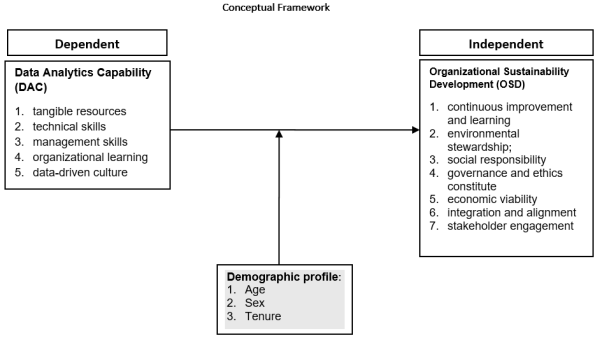
 Copy
 Download