Research Article | | Peer-Reviewed

Knowledge and Perception Towards Family Planning Utilization Among Males of Reproductive Age in Imo State

Received: 5 September 2026     Accepted: 23 September 2026     Published: 20 October 2026
Views:       Downloads:
Abstract

Family planning utilization among males remains an important reproductive health issue in Nigeria, as poor knowledge, misconceptions, and limited male involvement may affect contraceptive use. This study assessed knowledge and perception towards family planning utilization among males of reproductive age in Imo State, Nigeria. A community-based cross-sectional study was conducted among 630 males selected using a multistage sampling technique. Data were collected using a structured interviewer-administered questionnaire and analysed using descriptive statistics, chi-square test, logistic regression, propensity score matching, and inequality analysis. The prevalence of family planning utilization was 67.14% (95% CI: 63.37-70.71). Respondents who utilized family planning had a higher proportion of positive perception than those who did not. Good knowledge was significantly associated with family planning utilization, with respondents having good knowledge more likely to utilize family planning services (AOR = 1.87; 95% CI: 1.19-2.92; p = 0.006). Respondents with tertiary education also had higher odds of family planning utilization compared with those with primary education or less (AOR = 2.48; 95% CI: 1.27-4.86; p = 0.008). The unmatched results revealed that males exposed to good knowledge had a higher mean knowledge score (7.42) compared to those not exposed to good knowledge (5.24), with a mean difference of 2.18 (SE = 0.17, t = 12.94). After matching, the average treatment effect on the treated (ATT) showed that males exposed to good knowledge had a higher mean knowledge score (7.43) compared to their matched unexposed counterparts (5.30), with a mean difference of 2.13 (SE = 0.17, t = 12.64). The study concludes that knowledge and educational attainment are important factors in family planning utilization among males in Imo State. Strengthening male-focused health education, improving access to accurate reproductive health information, and promoting male involvement in family planning are recommended to improve utilization.

Published in World Journal of Public Health (Volume 11, Issue 4)
DOI 10.11648/j.wjph.20261104.12
Page(s) 404-426
Creative Commons

This is an Open Access article, distributed under the terms of the Creative Commons Attribution 4.0 International License (http://creativecommons.org/licenses/by/4.0/), which permits unrestricted use, distribution and reproduction in any medium or format, provided the original work is properly cited.

Copyright

Copyright © The Author(s), 2026. Published by Science Publishing Group

Keywords

Family Planning, Imo State, Knowledge, Males, Perception, Utilization
1. Introduction
Family planning is an important part of reproductive health because it enables individuals and couples to decide freely and responsibly the number of children they want and the timing and spacing of pregnancies . Access to appropriate contraceptive methods can prevent unintended pregnancies and contribute to improved maternal, newborn and child health, while also supporting the social and economic well-being of families . Family planning includes a range of modern contraceptive methods, such as condoms, oral contraceptive pills, injectables, implants, intrauterine devices and sterilization . Although women have traditionally been the main focus of family planning programmes, men also have an important role as contraceptive users, partners and decision-makers .
Men's involvement in family planning is particularly important in settings where reproductive decisions are strongly influenced by male partners and household norms. Evidence from low- and middle-income countries shows that interventions that deliberately involve men can improve contraceptive uptake and strengthen their participation in reproductive health decisions . Men's perspectives and approval may influence whether couples discuss contraception, select a method and continue its use . In Nigeria, studies have similarly shown that male involvement is associated with joint decision-making, communication between partners, media exposure and support for access to family planning services . However, men are not always adequately reached by family planning programmes, and reproductive health services are still frequently perceived as services mainly intended for women .
Knowledge is one of the important factors that may shape men's decisions about family planning. Having accurate information about contraceptive methods, effectiveness, benefits and possible side effects can help individuals make informed reproductive health decisions . In contrast, inadequate knowledge and misinformation may contribute to fear, misconceptions and reluctance to use contraceptives . A systematic review of contraceptive use in sub-Saharan Africa identified misinformation, concerns about side effects, male partner disapproval and social and cultural norms as important barriers to contraceptive use . Similarly, studies among men in Nigeria have shown that education, exposure to family planning messages and contraceptive-related ideas are associated with attitudes and readiness towards contraceptive use .
Knowledge alone, however, may not be sufficient to influence behaviour. The way men perceive family planning may determine whether they are willing to use a method themselves or support their partners to use one . Some men may associate contraception with infertility, reduced sexual ability, promiscuity or a loss of control over family decisions, while others may regard it as a means of protecting the health and economic well-being of the family . These perceptions are often shaped by social interaction, previous experiences, religious beliefs, community expectations and prevailing gender norms . Evidence from Nigeria has shown that negative perceptions among men can influence family planning demand and contraceptive behaviour within couples .
Male perceptions of family planning may also be influenced by the expectation of family size and the value attached to having children. In some communities, having many children may be associated with social status, family strength or economic security, which may reduce interest in fertility regulation . Research across sub-Saharan Africa has shown that fertility preferences, social norms, education and communication between partners are related to contraceptive behaviour . A national study of Nigerian men found that perceptions of contraceptive use, exposure to family planning information, education and place of residence were associated with differences in contraceptive attitudes and use . More recent evidence from Nigeria also indicates that higher education and good knowledge are associated with greater male participation in contraceptive decision-making .
Nigeria continues to face substantial reproductive health challenges, making family planning an important public health issue. Although contraceptive methods are available in the country, availability alone does not guarantee their use. Studies have identified education, socioeconomic conditions, knowledge, perceptions, partner communication, cultural expectations and access to health services as factors associated with contraceptive behaviour in Nigeria . National and subnational analyses have also demonstrated differences in contraceptive use across geographical areas and socioeconomic groups, suggesting that family planning behaviour is influenced by both individual and community characteristics .
The role of men is particularly relevant because reproductive decisions are often made within relationships rather than by individuals in isolation. Nigerian studies have found that men's attitudes towards contraception can influence women's contraceptive demand and use . For example, when men view contraception as exclusively a woman's responsibility or associate contraceptive use with undesirable sexual behaviour, their attitudes may create barriers to contraceptive adoption . Conversely, communication between partners and joint decision-making may encourage contraceptive use . Recent evidence from Southeast Nigeria further demonstrates that factors such as media exposure, joint decision-making and accompanying a spouse to a family planning clinic can influence men's involvement in family planning services .
Despite the importance of male involvement, many family planning programmes and studies have historically concentrated more on women. Reviews of reproductive health interventions have shown that men are often less directly engaged in reproductive health services and that sociocultural expectations may discourage men from participating . Barriers include the perception that reproductive health is primarily a woman's responsibility, lack of male-friendly services, limited opportunities for men to obtain information, and community norms surrounding masculinity and fertility . Interventions that involve men through community education, peer approaches, health communication and couple-based activities have shown potential for improving knowledge, attitudes and contraceptive uptake .
Evidence from Nigeria also suggests that there is considerable variation in men's knowledge, perceptions and involvement in family planning. A community-based study in Abuja examined men's knowledge, attitudes and involvement and highlighted the importance of spousal communication in family planning . Similarly, research in Osun State found high awareness and generally favourable perceptions among men, but actual family planning practice did not correspond fully with their level of awareness and perception . Studies in other parts of Nigeria have continued to identify education, media exposure, beliefs and male involvement as important factors associated with contraceptive behaviour .
The evidence from Southeast Nigeria is particularly relevant to the present study. A study conducted in Abia State found that male involvement in family planning was associated with factors such as television exposure, joint decision-making and accompanying a spouse to a family planning clinic . More recent research in Nigeria has also shown that men with better knowledge and higher educational attainment are more likely to participate in contraceptive decision-making . These findings suggest that men's knowledge and perceptions should be examined alongside their actual family planning behaviour rather than assuming that awareness automatically translates into utilization.
Although previous studies have provided useful information on male involvement and contraceptive behaviour in Nigeria, there remains a need for more evidence on the relationship between men's knowledge, perception and actual family planning utilization, particularly at the state level. Recent national and subnational studies have identified important sociodemographic and behavioural factors, but evidence specifically examining knowledge, perception and utilization among males of reproductive age in Imo State remains limited . Understanding these relationships is important because factors influencing family planning behaviour may differ according to local social, cultural and demographic contexts.
Imo State provides an important setting for examining these issues because understanding men's knowledge, perceptions and reproductive health behaviour can provide useful evidence for strengthening family planning programmes and improving male participation. Identifying misconceptions, knowledge gaps and groups with less favourable perceptions can help guide health education, community communication and male-friendly family planning services. Evidence from interventions involving men suggests that programmes that provide accurate information and create opportunities for men to participate meaningfully in reproductive health decisions can improve contraceptive uptake .
It is against this background that this study assessed knowledge and perception towards family planning utilization among males of reproductive age in Imo State, Nigeria. The study also examined factors associated with family planning utilization, and assessed the relationship between knowledge and utilization.
2. Materials and Methods
2.1. Study Setting
This study was conducted in Imo State, South-Eastern Nigeria. The state is one of the five states in the South-East geopolitical zone and consists of 27 Local Government Areas (LGAs), grouped into three administrative zones: Owerri, Orlu, and Okigwe. Imo State has a predominantly Igbo population and includes urban, semi-urban, and rural communities. Owerri, the state capital, is a major administrative and commercial centre, while several communities in the Orlu and Okigwe zones are predominantly rural.
Healthcare services in Imo State are provided through primary, secondary, and tertiary health facilities. Primary healthcare centres serve as the first point of contact for many residents, while secondary and tertiary facilities provide referral and specialised services. Family planning services are available through public and private health facilities, faith-based organisations, and community-based programmes. These services include family planning counselling, condom provision, and other contraceptive services, with referrals for methods that may not be available at the point of service. The state has social and economic characteristics that may influence family planning knowledge and utilization among men. Cultural expectations, religious beliefs, family size preferences, education, occupation, and access to health information may shape men's views and decisions about contraception. Although family planning programmes have traditionally focused more on women, men remain important in reproductive health decision-making and are increasingly recognized as partners in family planning.
2.2. Study Design
A cross-sectional study design was used. The design involved collecting information from males of reproductive age at a single period to assess their knowledge, perception, and utilization of family planning. The design was considered appropriate because it allowed the study to determine the level of family planning utilization and examine the relationship between knowledge, perception, and other factors associated with utilization among males in Imo State.
The cross-sectional design also allowed information on the study participants' characteristics, knowledge, perceptions, and family planning practices to be collected at the same time. This made it possible to examine factors associated with family planning utilization within the study population.
2.3. Study Population
The study population comprised males of reproductive age residing in selected communities in Imo State, Nigeria. Eligible participants were males aged 15-59 years who had lived in the selected communities for at least six months before the study. Participants were required to be available during the data collection period and provide informed consent to participate. Males who showed signs of cognitive impairment, were seriously ill and unable to participate effectively, or submitted incomplete questionnaires were excluded from the study.
2.4. Sample Size Determination
The sample size for this study was determined using Cochran’s (1977) formula for estimating proportions in large populations. Since the projected population of Imo State exceeds five million people, it was considered sufficiently large to apply the standard formula for an infinite population.
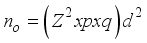
The Cochran formula is expressed as:
(1)
Where:
= initial sample size
Z = standard normal value at 95% confidence level (1.96)
p = estimated prevalence (0.5)
q = 1 − p
d = margin of error (0.05)
In the absence of a precise state-wide prevalence estimate, a prevalence of 50% (0.5) was used. This assumption maximizes sample size and is recommended when prior estimates are uncertain.
Substituting into the formula:
The minimum calculated sample size was therefore 384 respondents.
Adjustment for Design Effect
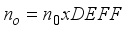
Because a multi-stage cluster sampling technique was used rather than simple random sampling, adjustment for design effect (DEFF) was necessary to account for intra-cluster correlation.
A design effect of 1.5 was applied:
(2)
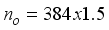
Thus, the adjusted sample size became 576 respondents.
Adjustment for Non-Response
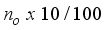
To compensate for possible non-response or incomplete questionnaires, a 10% non-response rate was added:
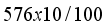
Non-response adjustment =
Non-response adjustment = 57.6
Final sample size (n) = + non-response adjustment
Final sample size (n) = 576 + 58
Final sample size (n) = 634
Therefore, the final minimum sample size for the study was 634 respondents.
The total sample size of 634 respondents was proportionally distributed across the six selected local government areas. Equal allocation was applied for operational simplicity, resulting in approximately:
2.5. Sampling Technique
A multistage probability sampling technique was employed to select eligible male respondents across Imo State. The sampling process was carried out in three stages to ensure adequate representation of the three senatorial zones of the state.
In the first stage, Imo State was stratified into the three senatorial zones: Owerri, Orlu, and Okigwe. Two Local Government Areas (LGAs) were selected from each senatorial zone using simple random sampling through balloting without replacement, giving a total of six selected LGAs.
In the second stage, two communities were selected from each of the six selected LGAs using simple random sampling. This resulted in a total of twelve communities. A household listing exercise was then conducted in each selected community with the assistance of community leaders and trained field assistants. The listed households were assigned identification numbers to form the sampling frame.
In the third stage, households were selected using systematic random sampling. The sampling interval for each community was determined by dividing the total number of listed households by the required number of households to be selected. A starting point was randomly selected, after which every kth household was selected until the required sample size was reached. In each selected household, eligible males aged 15-59 years who were permanent residents of the community and had lived there for at least six months were identified.
2.6. Method of Data Collection
Before the commencement of data collection, the researcher obtained a letter of introduction from the department for identification and permission to conduct the study. The letter was presented to the relevant community leaders in the selected study areas to facilitate access to the respondents.
The researcher was assisted by five trained research assistants in the administration of the questionnaires. The research assistants were properly guided on the purpose of the study, the selection of eligible respondents, administration of the questionnaire, and ethical considerations. The purpose of the study and the procedure for completing the questionnaire were explained clearly to the respondents before administration. Eligible respondents were approached and invited to participate in the study.
2.7. Instrument Validity and Reliability
Data were collected using a structured questionnaire developed by the researcher with guidance from the research supervisors and relevant literature. The questionnaire consisted of four sections with 58 items. Section A contained 31 items on the socio-demographic and selected background characteristics of the respondents. Section B contained four items assessing the prevalence and use of family planning methods, including ever-use, methods used, reasons for use, and reasons for non-use. Section C contained 12 items assessing respondents’ perceptions towards family planning using a five-point modified Likert scale ranging from 1 = strongly disagree to 5 = strongly agree. Section D contained 11 knowledge items on family planning services, with responses provided as True (T), False (F), or Don’t Know (DK). The knowledge score was obtained by summing the correct responses.
Face and content validity of the questionnaire were established through expert review. The experts examined the items for clarity, relevance, adequacy, and appropriateness in relation to the research questions and objectives of the study. Their recommendations were used to revise the questionnaire before the final version was produced.
The reliability of the questionnaire was assessed through a pilot test conducted among 30 respondents who were randomly selected outside the study area but had characteristics similar to those of the study population. The questionnaire was administered to the same respondents on two occasions, with an interval of two weeks between the first and second administration. The test-retest method was used to assess the stability of the instrument over time. In addition, Cronbach’s alpha was used to assess the internal consistency of the Likert-scale items. The responses obtained from the pilot test were analysed using the STATA version 17. The reliability coefficient obtained was 0.875 indicating acceptable reliability of the instrument for the main study.
2.8. Method of Data Analysis
Data were coded, cleaned, and analysed using Stata version 17. Both descriptive and inferential statistical techniques were employed to address the study objectives. Descriptive statistics, including frequencies and percentages, were used to summarise the socio-demographic characteristics of the respondents and key study variables. Family planning utilization was measured as a binary outcome and coded as 1 for respondents who reported utilization and 0 for those who did not. Knowledge of family planning was classified into poor and good knowledge based on the predefined scoring and categorisation criteria, while perception towards family planning was classified into negative and positive perception according to the established scoring criteria. The general model was specified as:
To determine whether perception was associated with family planning utilization, the Pearson Chi-square (χ2) test of association was employed. The test compared the distribution of family planning utilization between respondents with negative and positive perceptions.
The Chi-square statistic is generally expressed as:
χ2=∑(O-E)2E(3)
Where:
O = observed frequency;
E = expected frequency.
A p-value of less than 0.05 was considered statistically significant.
At the multivariate level, binary logistic regression analysis was employed to identify factors independently associated with family planning utilization.
The general form of the binary logistic regression model was specified as:
Logit(Pi)=ln(Pi⁡(1-Pi)) =β0+β1X1i+β2X2i+⋯+βkXki(4)
Where:
Pi = probability that the i-th respondent utilized family planning;
1−Pi = probability that the i-th respondent did not utilize family planning;
β0= constant/intercept;
β1, β2,…, βk = regression coefficients;
X1, X2,…, Xk = explanatory variables included in the model.
To determine the effect of knowledge on family planning utilization among males of reproductive age in Imo State, Propensity Score Matching (PSM) was employed.
Knowledge of family planning was treated as the exposure variable and categorized into poor knowledge and good knowledge. The PSM approach was used to reduce the influence of differences in observed characteristics between respondents with good and poor knowledge and to estimate the effect associated with knowledge on the outcome of interest.
The propensity score represents the conditional probability of having good knowledge given a set of observed characteristics.
It can be expressed as:
e(Xi)= Pr (Ti = 1∣Xi)(5)
Where:
E (Xi) = propensity score for respondent ii;
Ti = knowledge exposure status;
Ti=1= good knowledge;
Ti=0 = poor knowledge; and
Xi = observed characteristics used in estimating the propensity score.
Respondents with good knowledge were matched with comparable respondents with poor knowledge based on their propensity scores. The matching procedure aimed to create groups that were more comparable with respect to their observed characteristics, thereby reducing selection bias attributable to measured confounding factors.
The effect of knowledge was assessed using the Average Treatment Effect on the Treated (ATT), the Average Treatment Effect on the Untreated (ATU) and the Average Treatment Effect (ATE), as appropriate.
The ATT was defined as:
ATT=E [Y(1)-Y(0)∣T=1](6)
Where:
Y (1) = potential outcome if the respondent had good knowledge;
Y (0) = potential outcome if the respondent had poor knowledge; and
T=1 = respondents with good knowledge.
The Average Treatment Effect (ATE) was expressed as:
ATE=E [Y (1)-Y (0)](7)
The ATU represents the average treatment effect among respondents who were in the untreated/unexposed group.
2.9. Ethical Considerations
Ethical approval for this study was obtained from the Rivers State University Health Research and Ethics Committee (RSU/FBMS/REC/25/432). Written informed consent was obtained from all respondents before participation. Participation was voluntary, and respondents were informed of their right to decline participation or withdraw from the study at any time. Confidentiality and anonymity of the information provided were maintained throughout the study, and no identifying information, such as respondents’ names, was collected.
3. Result
Table 1 presents the socio-demographic characteristics of the respondents in the study area. The findings show that 34.76% of the respondents were aged 25-35 years, while 32.06% were aged 36-44 years. Most of the respondents (68.89%) were currently married, while 31.11% were currently unmarried. The findings also show that 41.43% of the respondents had their first sexual intercourse between 16-18 years, while 36.98% reported sexual debut between 19-21 years. Respondents who initiated sexual intercourse before 16 years accounted for 11.11%, whereas 10.48% reported first sexual intercourse at 22 years and above. The majority of the respondents (63.97%) reported having one sexual partner, while 22.06% had two partners and 13.97% had three partners. Nevertheless, a larger proportion of respondents (43.81%) considered large family size culturally desirable, while 35.71% did not consider it desirable. Moreover, 36.98% of the respondents had 2-3 male children alive, while 27.78% had none. Respondents with one male child accounted for 21.11%, whereas 14.13% had four or more male children alive. Additionally, more than half of the respondents (54.92%) resided in rural areas, while 45.08% lived in urban areas of the State.
Table 1. Socio-Demographic Characteristics of Respondents.

Variable

Frequency (n)

Percent (%)

Age Group (years)

Less than 24

95

15.08

25-35

219

34.76

36-44

202

32.06

45 and above

114

18.10

Mean Age (Mean± SD)

35.49 ± 9.75

Marital Status

Currently unmarried

196

31.11

Currently married

434

68.89

Religion

Islam

5

0.79

Orthodox

294

46.67

Pentecostal

316

50.16

Others

15

2.38

Educational Level

≤ Primary

119

18.89

Secondary

329

52.22

Tertiary

182

28.89

Occupational Status

Artisan

58

9.21

Businessman

244

38.73

Civil servant

105

16.67

Farmer

129

20.48

Student

81

12.86

Others

13

2.06

Age at First Sexual Intercourse (years)

Less than 16

70

11.11

16-18

261

41.43

19-21

233

36.98

22 and above

66

10.48

Number of Sexual Partners

1

403

63.97

2

139

22.06

3

88

13.97

Health Insurance Enrollment

No

585

92.86

Yes

45

7.14

Distance to Health Facility

<1 km

188

29.84

1 km

183

29.05

2 km

130

20.63

3 km

60

9.52

4 km

69

10.95

Large Family Culturally Desirable

No

225

35.71

To some extent

129

20.48

Yes

276

43.81

Number of Male Children Alive

None

175

27.78

1

133

21.11

2-3

233

36.98

4 and above

89

14.13

Place of Residence

Rural

346

54.92

Urban

284

45.08

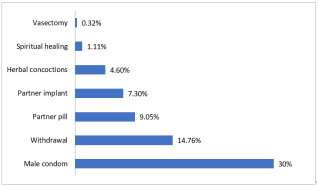
The Figure 1 reveal that 32.86% of the respondents were not using any family planning method. Male condom was the most (30.00%) commonly used method among those practicing family planning. Withdrawal method constituted 14.76%, while 9.05% reported that their partners used pills and 7.30% reported partner implant use. A smaller proportion of respondents used herbal concoctions (4.60%).
Figure 1. Distribution of Family Planning Method Used.
Table 2 presents the distribution of males’ perception towards family planning utilization in the study area. The findings show that, total of 36.83% agreed and 27.14% strongly agreed that family planning improves maternal health, giving a mean score of 3.68 ± 1.12. Similarly, 36.19% agreed and 26.51% strongly agreed that family planning improves children’s health, with a mean score of 3.59 ± 1.22. Also, 38.57% agreed and 27.14% strongly agreed that family planning is a shared responsibility between partners, giving a mean score of 3.70 ± 1.11. The findings also show that, about 33.17% disagreed and 31.75% strongly disagreed that contraceptive use is unacceptable, while only 14.92% agreed and 4.44% strongly agreed with the statement. Likewise, 34.92% disagreed and 28.89% strongly disagreed that family planning diminishes masculinity, with a mean score of 2.34 ± 1.18. In the same way, 33.81% disagreed and 32.06% strongly disagreed that vasectomy leads to loss of sexual performance, giving a mean score of 2.27 ± 1.17.
More also, 39.52% agreed and 25.56% strongly agreed that men should support their partners in family planning decisions, producing a mean score of 3.63 ± 1.09. A total of 37.94% agreed and 28.57% strongly agreed that they trust health workers for family planning information, with a mean score of 3.71 ± 1.14. Similarly, 35.56% agreed and 27.14% strongly agreed that they discuss family planning with their partners, giving a mean score of 3.63 ± 1.16.
Table 2. Distribution of Males Perception towards Family Planning Utilization.

Item

Strongly Disagree n (%)

Disagree n (%)

Neutral n (%)

Agree n (%)

Strongly Agree n (%)

Mean ± SD

Family planning improves maternal health

38 (6.03)

72 (11.43)

117 (18.57)

232 (36.83)

171 (27.14)

3.68 ± 1.12

Family planning improves children’s health

58 (9.21)

72 (11.43)

105 (16.67)

228 (36.19)

167 (26.51)

3.59 ± 1.22

Family planning is a shared responsibility between partners

41 (6.51)

64 (10.16)

111 (17.62)

243 (38.57)

171 (27.14)

3.70 ± 1.11

Contraceptive use is unacceptable

200 (31.75)

209 (33.17)

99 (15.71)

94 (14.92)

28 (4.44)

2.27 ± 1.15

Family planning diminishes masculinity

182 (28.89)

220 (34.92)

105 (16.67)

80 (12.70)

43 (6.83)

2.34 ± 1.18

Vasectomy leads to loss of sexual performance

202 (32.06)

213 (33.81)

96 (15.24)

81 (12.86)

38 (6.03)

2.27 ± 1.17

Family planning causes long-term infertility

209 (33.17)

191 (30.32)

101 (16.03)

85 (13.49)

44 (6.98)

2.31 ± 1.24

Family planning is only for educated/literate people

206 (32.70)

192 (30.48)

97 (15.40)

94 (14.92)

41 (6.51)

2.32 ± 1.23

Men should support their partners in family planning decisions

33 (5.24)

77 (12.22)

110 (17.46)

249 (39.52)

161 (25.56)

3.63 ± 1.09

I trust health workers for family planning information

45 (7.14)

64 (10.16)

102 (16.19)

239 (37.94)

180 (28.57)

3.71 ± 1.14

I discuss family planning with my partner

48 (7.62)

75 (11.90)

112 (17.78)

224 (35.56)

171 (27.14)

3.63 ± 1.16

Religious beliefs prevent family planning use

197 (31.27)

207 (32.86)

112 (17.78)

82 (13.02)

32 (5.08)

2.25 ± 1.15

Figure 2. Perception Level of Family Planning Utilization among Males.
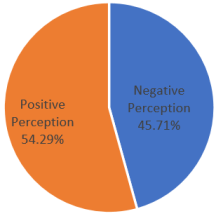
The Figure 2 shows that 45.71% of the respondents had negative perception towards family planning utilization. However, 54.29% of the respondents had positive perception towards family planning utilization.
Table 3 shows the perception of family planning utilization among males by selected characteristics. Respondents who utilized family planning had a higher proportion of positive perception (56.03%; 95% CI: 51.25-60.70) compared to those who did not utilize family planning (50.72%; 95% CI: 43.93-57.49).
The highest proportion of respondents with positive perception by age was observed among those aged 36-44 years (57.92%; 95% CI: 50.99-64.55), while respondents aged 45 years and above had the lowest proportion (46.49%; 95% CI: 37.53-55.68). By marital status, 55.10% (95% CI: 48.07-61.94) of currently unmarried respondents had positive perception compared to 53.92% (95% CI: 49.20-58.57) of currently married respondents.
The result also showed that respondents practicing Orthodox Christianity had the highest proportion of positive perception (58.16%; 95% CI: 52.43-63.68), while respondents in the Islamic group had the lowest proportion (40.00%; 95% CI: 9.99-80.01). Similarly, respondents with secondary education had the highest proportion of positive perception (66.57%; 95% CI: 61.28-71.47), while respondents with ≤ primary education had the lowest proportion (5.04%; 95% CI: 2.28-10.78). Among occupational groups, businessmen recorded the highest proportion of positive perception (58.61%; 95% CI: 52.31-64.63), followed by civil servants (54.29%; 95% CI: 44.70-63.57).
Respondents whose age at first sex was 22 years and above had the highest proportion of positive perception (59.09%; 95% CI: 46.91-70.25), while those aged less than 16 years recorded 51.43% (95% CI: 39.83-62.87). Similarly, respondents with two sexual partners had the highest proportion of positive perception (62.59%; 95% CI: 54.25-70.24), while respondents with one sexual partner had the lowest proportion (51.12%; 95% CI: 46.23-55.98).
Respondents not enrolled in health insurance had a slightly higher proportion of positive perception (54.36%; 95% CI: 50.30-58.37) compared to those enrolled (53.33%; 95% CI: 38.86-67.27). Distance to health facility showed that respondents living 1 km away had the highest proportion of positive perception (56.28%; 95% CI: 49.00-63.31), while those living 3 km away had the lowest proportion (50.00%; 95% CI: 37.59-62.41). Respondents who did not desire a large family recorded the highest proportion of positive perception (58.22%; 95% CI: 51.66-64.50), while those who desired large families recorded the lowest proportion (50.36%; 95% CI: 44.47-55.76).
Table 3. Prevalence of Male Perception towards Family Planning.

Characteristic

Negative Perception n (%)

Positive Perception n (%)

95% CI for Good Perception

Family Planning Utilization

No

102 (49.28)

105 (50.72)

43.93-57.49

Yes

186 (43.97)

237 (56.03)

51.25-60.70

Age (years)

Less than 24

48 (50.53)

47 (49.47)

39.56-59.43

25-35

94 (42.92)

125 (57.08)

50.42-63.49

36-44

85 (42.08)

117 (57.92)

50.99-64.55

45 and above

61 (53.51)

53 (46.49)

37.53-55.68

Marital Status

Currently unmarried

88 (44.90)

108 (55.10)

48.07-61.94

Currently married

200 (46.08)

234 (53.92)

49.20-58.57

Religion

Islam

3 (60.00)

2 (40.00)

9.99-80.01

Orthodox

123 (41.84)

171 (58.16)

52.43-63.68

Others

6 (40.00)

9 (60.00)

34.76-80.85

Pentecostal

156 (49.37)

160 (50.63)

45.12-55.13

Education

≤ primary

113 (94.96)

6 (5.04)

2.28-10.78

Secondary

110 (33.43)

219 (66.57)

61.28-71.47

Tertiary

65 (35.71)

117 (64.29)

57.05-70.95

Occupation

Artisan

30 (51.72)

28 (48.28)

35.78-60.99

Businessman

101 (41.39)

143 (58.61)

52.31-64.63

Civil servant

48 (45.71)

57 (54.29)

44.70-63.57

Farmer

63 (48.84)

66 (51.16)

42.57-59.69

Other

9 (69.23)

4 (30.77)

12.02-59.12

Student

37 (45.68)

44 (54.32)

43.42-64.82

Age at First Sex (years)

Less than 16

34 (48.57)

36 (51.43)

39.83-62.87

16-18

120 (45.98)

141 (54.02)

47.94-59.99

19-21

107 (45.92)

126 (54.08)

47.63-60.39

22 and above

27 (40.91)

39 (59.09)

46.91-70.25

Number of Sexual Partners

1

197 (48.88)

206 (51.12)

46.23-55.98

2

52 (37.41)

87 (62.59)

54.25-70.24

3

39 (44.32)

49 (55.68)

45.19-65.69

Insurance Status

No

267 (45.64)

318 (54.36)

50.30-58.37

Yes

21 (46.67)

24 (53.33)

38.86-67.27

Distance to Health Facility

1 km

80 (43.72)

103 (56.28)

49.00-63.31

2 km

57 (43.85)

73 (56.15)

47.51-64.44

3 km

30 (50.00)

30 (50.00)

37.59-62.41

4 km

33 (47.83)

36 (52.17)

40.46-63.65

<1 km

88 (46.81)

100 (53.19)

46.03-60.23

Desire for Large Family

No

94 (41.78)

131 (58.22)

51.66-64.50

To some extent

57 (44.19)

72 (55.81)

47.14-64.15

Yes

137 (49.64)

139 (50.36)

44.47-55.76

Male Children Alive

None

74 (42.29)

101 (57.71)

50.26-64.83

1

57 (42.86)

76 (57.14)

48.59-65.29

2-3

118 (50.64)

115 (49.36)

42.97-55.76

4+

39 (43.82)

50 (56.18)

45.73-66.11

Media Exposure Type

Mass media

189 (44.79)

233 (55.21)

50.43-59.91

Community channel

45 (40.54)

66 (59.46)

50.08-68.19

No exposure

54 (55.67)

43 (44.33)

34.77-54.33

Residence

Rural

159 (45.95)

187 (54.05)

48.76-59.24

Urban

129 (45.42)

155 (54.58)

48.74-60.29

Table 4 shows the association between family planning utilization and socio-demographic characteristics among males. The result also showed a statistically significant association between knowledge category and family planning utilization (χ2 = 28.74; p = 0.000). Respondents with good knowledge recorded the proportion of family planning utilization (48.46%; 95% CI: 34.32-86.13).
Family planning utilization was highest among respondents aged less than 24 years (72.63%; 95% CI: 62.81-80.66), followed by those aged 25-35 years (69.41%; 95% CI: 62.98-75.16), while respondents aged 45 years and above recorded 64.04% (95% CI: 54.83-72.31). However, there was no statistically significant association between age and family planning utilization (χ2 = 3.291; p = 0.349). The result further showed that 67.97% (95% CI: 63.42-72.19) of currently married respondents utilized family planning compared to 65.31% (95% CI: 58.33-71.68) of currently unmarried respondents. There was no statistically significant association between marital status and family planning utilization (χ2 = 0.435; p = 0.510).
Educational status showed a statistically significant association with family planning utilization (χ2 = 34.027; p = 0.000). Respondents with tertiary education had the highest proportion of family planning utilization (84.07%; 95% CI: 78.02-88.73), while respondents with no formal education had the lowest proportion (53.57%; 95% CI: 35.52-70.90).
The result also showed that artisans recorded the highest proportion of family planning utilization (72.41%; 95% CI: 59.84-82.01), followed by businessmen (70.90%; 95% CI: 64.90-76.26), while respondents in the “other” occupation category recorded the lowest proportion (46.15%; 95% CI: 19.22-74.87). However, there was no statistically significant association between occupation and family planning utilization (χ2 = 6.376; p = 0.271).
Table 4. Association between Family Planning Utilization and Socio-Demographic Characteristics among Males.

Background Characteristics

No n (%)

Yes n (%)

Total (n)

X2

P value

95% CI for Family Planning Utilization

Perception Category

630

1.58

0.209

Poor perception

102 (49.28)

186 (43.97)

288

39.00-70.16

Good perception

105 (50.72)

237 (56.03)

342

51.34-77.03

Knowledge Category

630

28.74

0.000*

Poor knowledge

153 (73.91)

218 (51.54)

371

49.83-61.26

Good knowledge

54 (26.09)

205 (48.46)

259

34.32-86.13

Age (years)

630

3.291

0.349

Less than 24

26 (27.37)

69 (72.63)

95

62.81-80.66

25-35

67 (30.59)

152 (69.41)

219

62.98-75.16

36-44

73 (36.14)

129 (63.86)

202

57.00-70.20

45 and above

41 (35.96)

73 (64.04)

114

54.83-72.31

Marital Status

630

0.435

0.510

Currently unmarried

68 (34.69)

128 (65.31)

196

58.33-71.68

Currently married

139 (32.03)

295 (67.97)

434

63.42-72.19

Religion

630

1.795

0.616

Islam

1 (20.00)

4 (80.00)

5

28.36-99.49

Orthodox

94 (31.97)

200 (68.03)

294

62.45-73.03

Others

7 (46.67)

8 (53.33)

15

27.43-77.72

Pentecostal

105 (33.23)

211 (66.77)

316

61.33-71.76

Educational Status

630

34.027

0.000*

No formal education

13 (46.43)

15 (53.57)

28

35.52-70.90

Primary

34 (37.36)

57 (62.64)

91

52.39-71.90

Secondary

131 (39.82)

198 (60.18)

329

54.80-65.35

Tertiary

29 (15.93)

153 (84.07)

182

78.02-88.73

Occupation

630

6.376

0.271

Artisan

16 (27.59)

42 (72.41)

58

59.84-82.01

Businessman

71 (29.10)

173 (70.90)

244

64.90-76.26

Civil servant

36 (34.29)

69 (65.71)

105

56.20-74.11

Farmer

47 (36.43)

82 (63.57)

129

54.95-71.42

Other

7 (53.85)

6 (46.15)

13

19.22-74.87

Student

30 (37.04)

51 (62.96)

81

51.45-73.14

Age at First Sex

630

0.481

0.923

Less than 16

22 (31.43)

48 (68.57)

70

56.90-78.35

16-18

86 (32.95)

175 (67.05)

261

61.06-72.53

19-21

75 (32.19)

158 (67.81)

233

61.46-73.55

22 and above

24 (36.36)

42 (63.64)

66

51.50-74.17

Number of Sexual Partners

630

1.496

0.473

1

135 (33.50)

268 (66.50)

403

61.70-71.00

2

48 (34.53)

91 (65.47)

139

57.12-72.98

3

24 (27.27)

64 (72.73)

88

62.53-81.06

Residence

630

2.009

0.156

Rural

122 (35.26)

224 (64.74)

346

59.51-69.62

Urban

85 (29.93)

199 (70.07)

284

64.48-75.13

Significant at p < 0.05.
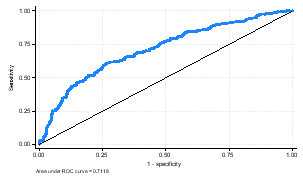
The Receiver Operating Characteristic (ROC) curve in Figure 3 shows the predictive performance of the model used in assessing family planning utilization among males. The curve lies above the reference diagonal line, indicating that the model performs better than chance in distinguishing between respondents who utilized family planning services and those who did not.
Figure 3. ROC Curve for Model Performance.
The Area Under the Curve (AUC) was 0.7118, which suggests that the model has a fair to good predictive ability. This means that there is approximately a 71.2% probability that the model correctly distinguish between males who utilized family planning services and those who did not. Since the AUC value is above 0.70, the model can be considered acceptable for prediction.
Table 5 presents the factors influencing family planning utilization among males using both crude and adjusted logistic regression models. The findings showed that, males with moderate knowledge were about two times more likely to utilize family planning compared to those with poor knowledge (AOR = 2.12; 95% CI: 1.35-3.32, p = 0.001). Similarly, respondents with good knowledge were also about two times more likely to utilize family planning than those with poor knowledge (AOR = 2.14; 95% CI: 1.23-3.74, p = 0.007). Perception towards family planning was not significantly associated with utilization after adjustment. Respondents with moderate perception (AOR = 0.98; 95% CI: 0.59-1.61, p = 0.926) and those with good perception (AOR = 1.19; 95% CI: 0.73-1.92, p = 0.488) did not differ significantly from those with poor perception.
Age also showed a significant association with family planning utilization. Respondents aged 36-44 years were less likely to utilize family planning compared to those aged below 25 years (AOR = 0.53; 95% CI: 0.30-0.96, p = 0.036). However, respondents aged 25-35 years (AOR = 0.80; 95% CI: 0.44-1.43, p = 0.443) and those aged 45 years and above (AOR = 0.58; 95% CI: 0.31-1.11, p = 0.101) did not show significant differences.
Furthermore, respondents with tertiary education were almost three times more likely to utilize family planning compared to those with no formal education (AOR = 2.83; 95% CI: 1.07-7.50, p = 0.036). Primary education (AOR = 1.19; 95% CI: 0.47-3.00, p = 0.708) and secondary education (AOR = 1.09; 95% CI: 0.46-2.60, p = 0.839) were not statistically significant.
Table 5. Factors influencing family planning utilization among males.

Variables

COR

95% CI

p-value

AOR

95% CI

p-value

Knowledge Category

Age (years)

<25 (Ref)

1.00

-

-

1.00

-

-

25-35

0.85

0.50-1.46

0.565

0.80

0.44-1.43

0.443

36-44

0.67

0.39-1.14

0.136

0.53

0.30-0.96

0.036

45 and above

0.67

0.37-1.21

0.186

0.58

0.31-1.11

0.101

Marital Status

Currently unmarried (Ref)

1.00

-

-

1.00

-

-

Currently married

1.13

0.79-1.61

0.510

1.26

0.72-2.21

0.411

Religion

Islam (Ref)

1.00

-

-

1.00

-

-

Orthodox

0.53

0.06-4.82

0.575

0.77

0.07-8.08

0.830

Others

0.29

0.03-3.20

0.309

0.51

0.04-6.56

0.604

Pentecostal

0.50

0.06-4.55

0.540

0.89

0.08-9.36

0.923

Education

≤ Primary (Ref)

1.00

-

-

1.00

-

-

Secondary

1.31

0.60-2.84

0.495

1.09

0.46-2.60

0.839

Tertiary

4.57

1.97-10.61

0.000

2.83

1.07-7.50

0.036

Occupation

Artisan (Ref)

1.00

-

-

1.00

-

-

Businessman

0.93

0.49-1.76

0.819

0.73

0.37-1.46

0.377

Civil servant

0.73

0.36-1.47

0.380

0.63

0.29-1.36

0.243

Farmer

0.66

0.34-1.31

0.238

0.53

0.25-1.11

0.092

Other

0.33

0.10-1.12

0.075

0.26

0.06-1.03

0.055

Student

0.65

0.31-1.35

0.244

0.49

0.22-1.10

0.084

Age at First Sex

<16 years (Ref)

1.00

-

-

1.00

-

-

16-18

0.93

0.53-1.64

0.809

0.91

0.49-1.70

0.775

19-21

0.97

0.54-1.72

0.905

1.12

0.60-2.10

0.716

22 and above

0.80

0.39-1.63

0.543

0.64

0.29-1.39

0.255

Number of Sexual Partners

1 (Ref)

1.00

-

-

1.00

-

-

2

0.95

0.64-1.43

0.824

0.94

0.59-1.50

0.795

3

1.34

0.80-2.24

0.259

1.85

0.99-3.47

0.055

Health Insurance

No (Ref)

1.00

-

-

1.00

-

-

Yes

0.98

0.51-1.86

0.944

1.21

0.60-2.46

0.591

Distance to Health Facility

1 km (Ref)

1.00

-

-

1.00

-

-

2 km

1.02

0.63-1.66

0.943

1.11

0.65-1.90

0.708

3 km

0.84

0.45-1.56

0.579

1.05

0.53-2.05

0.896

4 km

0.80

0.44-1.43

0.443

0.84

0.45-1.59

0.598

<1 km

0.88

0.57-1.35

0.552

0.94

0.58-1.52

0.797

Large Family Desire

No (Ref)

1.00

-

-

1.00

-

-

To some extent

1.10

0.69-1.77

0.681

1.36

0.81-2.27

0.248

Yes

0.84

0.58-1.22

0.352

0.92

0.61-1.40

0.711

Male Children Alive

None (Ref)

1.00

-

-

1.00

-

-

1

1.06

0.66-1.72

0.798

0.91

0.50-1.65

0.748

2-3

0.94

0.62-1.42

0.756

0.89

0.50-1.59

0.686

4+

1.46

0.83-2.58

0.193

1.56

0.74-3.27

0.245

Media Exposure

Mass media (Ref)

1.00

-

-

1.00

-

-

Community channel

0.76

0.49-1.18

0.226

0.69

0.43-1.10

0.117

No exposure

0.99

0.62-1.59

0.969

1.08

0.64-1.82

0.768

Residence

Rural (Ref)

1.00

-

-

1.00

-

-

Urban

1.28

0.91-1.78

0.157

1.31

0.90-1.91

0.153

Key: COR = Crude Odds Ratio; AOR = Adjusted Odds Ratio; CI = Confidence Interval; Ref = Reference category.
Table 6 presents the distribution of respondents’ knowledge about family planning. The findings showed that 58.89% of the respondents knew that condoms reduce the risk of pregnancy and sexually transmitted infections, while 41.11% did not know this. Also, 53.49% correctly reported that vasectomy prevents sperm release but not ejaculation, whereas 46.51% did not know. More than half of the respondents (52.70%) knew that implants must be removed by a trained provider before fertility can be restored, while 47.30% did not know. Similarly, 56.67% agreed that proper counseling improves the correct and consistent use of family planning methods, while 43.33% did not. The result also showed that 52.22% of the respondents knew that side effects of family planning methods should be discussed with a health worker before use, while 47.78% did not know.
The findings further showed that 54.13% of the respondents believed that family planning methods are meant only for married couples, while 45.87% disagreed. Lastly, 51.11% agreed that men can participate actively in family planning decisions and methods, whereas 48.89% did not agree.
Table 6. Distribution of Knowledge about Family Planning.

Variable

Frequency (n)

Percent (%)

Condoms reduce risk of pregnancy and Sexually transmitted infections

No

259

41.11

Yes

371

58.89

Vasectomy prevents sperm release but not ejaculation

No

293

46.51

Yes

337

53.49

Implants must be removed by a trained provider to restore fertility

No

298

47.30

Yes

332

52.70

Proper counseling improves correct and consistent use of family planning methods

No

273

43.33

Yes

357

56.67

Side effects of family planning methods should be discussed with a health worker before use

No

301

47.78

Yes

329

52.22

Family planning services are available at primary health care facilities

No

288

45.71

Yes

342

54.29

Switching from one family planning method to another should involve guidance from a trained health worker

No

278

44.13

Yes

352

55.87

Modern family planning methods are safer than traditional methods when used correctly

No

284

45.08

Yes

346

54.92

Family planning methods are meant only for married couples

No

289

45.87

Yes

341

54.13

Men can participate actively in family planning decisions and methods

No

308

48.89

Yes

322

51.11

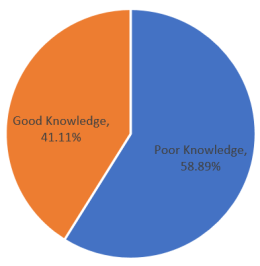
The Figure 4 shows that 58.89% of the respondents had poor knowledge of family planning, while 41.11% had good knowledge.
Figure 4. Knowledge Level of Family Planning Utilization.
Table 7 presents the factors associated with knowledge of family planning services utilization among males. Respondents with good knowledge were 1.87 times more likely to utilize family planning services (AOR = 1.87; 95% CI: 1.19-2.92, p = 0.006). Age was significantly associated with family planning utilization among respondents aged 36-44 years, who had lower odds of utilization compared to respondents aged below 25 years (AOR = 0.52; 95% CI: 0.29-0.94, p = 0.031). However, respondents aged 25-35 years (AOR = 0.78; 95% CI: 0.44-1.40, p = 0.412) and those aged 45 years and above (AOR = 0.56; 95% CI: 0.30-1.07, p = 0.079) did not differ significantly from respondents aged below 25 years.
Respondents with tertiary education had significantly higher odds of family planning utilization compared to those with no formal education (AOR = 2.48; 95% CI: 1.27-4.86, p = 0.008). However, respondents with secondary education (AOR = 0.90; 95% CI: 0.53-1.51, p = 0.691) did not show a significant difference.
Table 7. Factors Associated with Knowledge of Family Planning Services Utilization among Males.

Variables

Crude OR

95% CI

p-value

Adjusted OR

95% CI

p-value

Knowledge of Family Planning

Poor knowledge (Ref)

1.00

-

-

1.00

-

-

Good knowledge

2.66

1.85-3.83

<0.001

1.87

1.19-2.92

0.006

Perception of Family Planning

Poor perception (Ref)

1.00

-

-

1.00

-

-

Good perception

1.24

0.89-1.73

0.210

1.09

0.72-1.66

0.693

Age (years)

<25 (Ref)

1.00

-

-

1.00

-

-

25-35

0.85

0.50-1.46

0.565

0.78

0.44-1.40

0.412

36-44

0.67

0.39-1.14

0.136

0.52

0.29-0.94

0.031

45 and above

0.67

0.37-1.21

0.186

0.56

0.30-1.07

0.079

Marital Status

Not currently married (Ref)

1.00

-

-

1.00

-

-

Currently married

1.13

0.79-1.61

0.510

1.29

0.74-2.26

0.368

Religion

Catholic (Ref)

1.00

-

-

1.00

-

-

Orthodox

0.53

0.06-4.82

0.575

0.89

0.09-8.94

0.921

Others

0.29

0.03-3.20

0.309

0.53

0.04-6.54

0.617

Pentecostal

0.50

0.06-4.55

0.540

1.03

0.10-10.36

0.983

Education

≤ Primary (Ref)

1.00

-

-

1.00

-

-

Secondary

0.99

0.64-1.51

0.951

0.90

0.53-1.51

0.691

Tertiary

3.44

2.01-5.92

<0.001

2.48

1.27-4.86

0.008

Occupation

Unemployed (Ref)

1.00

-

-

1.00

-

-

Businessman

0.93

0.49-1.76

0.819

0.75

0.38-1.48

0.404

Civil servant

0.73

0.36-1.47

0.380

0.63

0.30-1.36

0.241

Farmer

0.66

0.34-1.31

0.238

0.54

0.26-1.11

0.095

Other

0.33

0.10-1.12

0.075

0.27

0.07-1.04

0.058

Student

0.65

0.31-1.35

0.244

0.49

0.22-1.07

0.074

Age at First Sex

<16 (Ref)

1.00

-

-

1.00

-

-

16-18

0.93

0.53-1.64

0.809

0.97

0.52-1.81

0.935

19-21

0.97

0.54-1.72

0.905

1.15

0.62-2.15

0.653

22 and above

0.80

0.39-1.63

0.543

0.68

0.31-1.48

0.330

Number of Sexual Partners

1 (Ref)

1.00

-

-

1.00

-

-

2

0.95

0.64-1.43

0.824

0.94

0.59-1.49

0.780

3

1.34

0.80-2.24

0.259

1.75

0.94-3.27

0.076

Health Insurance

No (Ref)

1.00

-

-

1.00

-

-

Yes

0.98

0.51-1.86

0.944

1.23

0.61-2.46

0.561

Distance to Facility

>4 km (Ref)

1.00

-

-

1.00

-

-

2 km

1.02

0.63-1.66

0.943

1.11

0.65-1.89

0.699

3 km

0.84

0.45-1.56

0.579

1.07

0.55-2.10

0.837

4 km

0.80

0.44-1.43

0.443

0.82

0.44-1.55

0.548

<1 km

0.88

0.57-1.35

0.552

0.91

0.57-1.47

0.714

Large Family Influence

No (Ref)

1.00

-

-

1.00

-

-

To some extent

1.10

0.69-1.77

0.681

1.33

0.80-2.23

0.271

Yes

0.84

0.58-1.22

0.352

0.89

0.59-1.34

0.566

Male Children Alive

0 (Ref)

1.00

-

-

1.00

-

-

1

1.06

0.66-1.72

0.798

0.90

0.50-1.63

0.730

2-3

0.94

0.62-1.42

0.756

0.87

0.49-1.55

0.633

4+

1.46

0.83-2.58

0.193

1.51

0.72-3.16

0.277

Media Type

Television/Radio (Ref)

1.00

-

-

1.00

-

-

Community channel

0.76

0.49-1.18

0.226

0.69

0.43-1.10

0.116

No exposure

0.99

0.62-1.59

0.969

1.08

0.65-1.80

0.773

Residence

Rural (Ref)

1.00

-

-

1.00

-

-

Urban

1.28

0.91-1.78

0.157

1.33

0.92-1.92

0.127

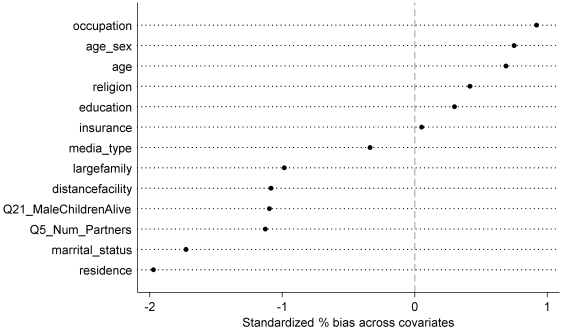
Figure 5 presents the standardized percentage bias across covariates after propensity score matching. The plot shows that most of the covariates had standardized biases close to zero, indicating good balance between the comparison groups after matching. Occupation had the highest positive standardized bias, followed by age-sex interaction and age, although the values remained relatively small. Religion and education also showed slight positive biases.
Insurance status was very close to zero, indicating minimal imbalance between the groups. Media type showed a slight negative bias, while large family desire, distance to health facility, number of male children alive, and number of sexual partners also had small negative standardized biases.
Marital status and residence exhibited the largest negative standardized biases, with residence showing the farthest deviation from zero among all covariates.
Figure 5. Quality of matching by propensity score distribution.
Table 8 presents the effect of exposure of knowledge on family planning services utilization among males in Imo State using propensity score matching analysis. The unmatched results revealed that males exposed to good knowledge had a higher mean knowledge score (7.42) compared to those not exposed to good knowledge (5.24), with a mean difference of 2.18 (SE = 0.17, t = 12.94). After matching, the average treatment effect on the treated (ATT) showed that males exposed to good knowledge had a higher mean knowledge score (7.43) compared to their matched unexposed counterparts (5.30), with a mean difference of 2.13 (SE = 0.17, t = 12.64). This indicates that exposure to good knowledge was associated with a higher knowledge score among the males who were exposed.
The average treatment effect on the untreated (ATU) indicated that if males who were not exposed to good knowledge had been exposed, their mean knowledge score would have increased by an estimated 2.15 points. Similarly, the average treatment effect (ATE) showed that exposure to good knowledge resulted in an estimated overall increase of 2.15 points in the knowledge score (SE = 0.13, t = 16.06).
Table 8. Effect of Exposure of Knowledge on Family Planning Utilization among Males in Imo State (PSM Results).

Outcome

Sample

Exposed Mean

Unexposed Mean

Difference

Std. Error

t-stat

Knowledge Score

Unmatched

7.42

5.24

2.18

0.17

12.94

ATT

7.43

5.30

2.13

0.17

12.64

ATU

8.25

7.41

2.15

-

-

ATE

-

-

2.15

0.13

16.06

ATT = Average Treatment Effect on the Treated (Good Knowledge Group)
ATU = Average Treatment Effect on the Untreated (Poor Knowledge Group)
ATE = Average Treatment Effect
4. Discussion
The study found that many of the respondents recognised the health benefits of family planning and viewed it as a shared responsibility between partners. Most respondents agreed that family planning could improve maternal and child health and that men should be involved in family planning decisions. This finding is consistent with previous evidence showing that men who understand the benefits of family planning are more likely to support contraceptive use and participate in reproductive health decisions . Similarly, studies among men in Nigeria have reported that knowledge of family planning is important aspects of male involvement in contraceptive decisions . These findings suggest that awareness of the benefits of family planning can encourage men to support its use. However, a study among Nigerian men found that although awareness of contraception was relatively high, some men still held negative perceptions, including the belief that contraception is mainly a woman's responsibility and concerns that contraceptive use could promote promiscuity . The study also found that respondents with higher educational attainment generally had a more favourable perception of family planning. Respondents with tertiary education had better perception than those with no formal education. This is consistent with evidence from Nigeria showing that education is associated with men's perceptions and use of modern contraceptives . Higher educational attainment may provide men with greater access to reproductive health information and may improve their ability to distinguish accurate information from misconceptions. Education may also encourage men to communicate more openly with their partners about fertility intentions and contraceptive choices.
Exposure to community channels and mass media was also associated with better perception of family planning. This finding agrees with studies showing that exposure to family planning messages can influence men's knowledge, attitudes and contraceptive behaviour . Radio, television and community-based programmes may provide opportunities for men to receive accurate information about available methods and to discuss concerns relating to side effects, effectiveness and fertility. A recent Nigerian study also found that exposure to family planning information was associated with men's perceptions and contraceptive behaviour . These communication channels may therefore be useful for reaching men who have limited contact with reproductive health services.
The study further showed some differences in perception by number of sexual partners and place of residence. Men with multiple sexual partners had relatively better perception than those with one partner, while urban respondents had slightly better perception than rural respondents. Differences by residence may reflect unequal access to reproductive health information and services between urban and rural communities. Previous research among Nigerian men has reported differences in contraceptive perceptions and use according to residence, education and other sociodemographic characteristics . However, the finding concerning number of sexual partners should be interpreted cautiously. The observed association does not mean that having multiple sexual partners improves perception of family planning. It may instead reflect differences in age, social exposure, access to information or other characteristics that were not fully captured by the perception measure.
Men with good knowledge were more likely to utilize family planning than those with poor knowledge. This finding is consistent with studies showing that knowledge is an important factor in contraceptive behaviour among men . Research among Nigerian men has also demonstrated that educational exposure and knowledge-related factors are associated with modern contraceptive use and perceptions of family planning . Adequate knowledge may help men understand available methods, their benefits, effectiveness and possible side effects, and may reduce fears associated with contraceptive use. This finding therefore suggests that improving men's access to accurate family planning information may contribute to increased utilization.
Older respondents, particularly those aged 36-44 years, were less likely to utilize family planning than younger respondents. This may be related to differences in exposure to reproductive health information, fertility intentions and attitudes towards contraception across age groups. Younger men may have greater exposure to contemporary sources of reproductive health information, whereas older men may be more influenced by established beliefs about fertility and family size. Similar age-related differences have been reported among Nigerian men, with older age being associated with less favourable perceptions and greater likelihood of contraceptive non-use . However, the relationship between age and family planning use may differ across populations because of differences in fertility preferences, marital patterns and social norms.
Educational attainment was another important predictor of family planning utilization. Men with tertiary education were more likely to utilize family planning than those with no formal education. This finding is consistent with evidence from Nigeria showing that education is associated with contraceptive knowledge, perceptions and utilization among men . Education may improve access to reproductive health information and encourage communication between partners about fertility decisions. A study of men in Nigeria also found that more highly educated men had greater involvement in contraceptive decision-making . The finding therefore supports the need to consider educational differences when designing interventions aimed at improving male participation in family planning.
Other factors, including marital status, religion, occupation, number of sexual partners, health insurance, media exposure and residence, showed some differences in utilization but were not independently associated with utilization after adjustment. This suggests that their observed relationships with family planning utilization may partly be explained by other factors included in the model, particularly knowledge and education. Previous Nigerian studies have similarly identified education, age, residence and other sociodemographic characteristics as factors associated with men's contraceptive perceptions and use . The lack of independent association for some variables in the present study does not mean that these factors are unimportant; rather, their effects may overlap with other characteristics included in the multivariable model.
5. Conclusion
This study assessed knowledge, perception, and family planning utilization among males of reproductive age in Imo State, Nigeria. The findings indicate that although many respondents recognized the health benefits of family planning and its shared responsibility between men and women, overall perception towards family planning was positive. The study also showed that knowledge of family planning was an important factor associated with its utilization among males. Differences in perception and utilization were observed across some socio-demographic and contextual characteristics, particularly education, age, place of residence, and exposure to information.
The study further demonstrated that individual and socio-demographic factors do not influence family planning utilization in isolation. While age and educational attainment were important predictors of utilization, other characteristics that appeared important at the bivariate level did not remain significant after adjustment. This suggests that the relationship between male characteristics and family planning utilization may be influenced by other factors, particularly knowledge, access to information, social environment, and prevailing perceptions about male involvement in family planning.
The study concludes that improving family planning utilization among males in Imo State requires more than simply making contraceptive services available. There is a need to improve men's knowledge, address misconceptions and negative perceptions, and create opportunities for men to participate actively in family planning decisions. Family planning programmes should therefore place greater emphasis on male-focused information and education, while also addressing social and contextual factors that may discourage men from using or supporting family planning services.
6. Strengths and Limitations
This study provides useful evidence on knowledge, perception, and family planning utilization among males of reproductive age in Imo State, an area where male perspectives on family planning require greater attention. The study assessed several individual, socio-demographic, and contextual factors and used both descriptive and multivariable analyses to examine factors associated with family planning utilization. The use of propensity score matching also provided an additional approach for examining the relationship between knowledge and family planning utilization while accounting for differences in observed characteristics between the comparison groups. The study therefore contributes evidence that can support the design of interventions that promote greater male involvement in family planning.
However, the cross-sectional design limits the ability to establish causal relationships between knowledge, perception, and family planning utilization. The study also relied on self-reported information, which may be affected by recall or social desirability bias, particularly for questions relating to sexual behaviour and contraceptive use. Although several potential confounding factors were controlled for during analysis, some unmeasured factors, such as cultural beliefs, partner influence, gender norms, service-provider attitudes, and community-level influences, may also affect family planning decisions. In addition, the propensity score analysis could only account for observed characteristics included in the model and therefore cannot completely eliminate the possibility of residual or unmeasured confounding.
7. Practical Implications
The findings highlight the need to strengthen male-focused family planning interventions in Imo State. Family planning programmes should provide information that directly addresses men's concerns, misconceptions, and knowledge gaps and should encourage men to view family planning as a shared responsibility rather than solely a woman's concern. Health education and community-based communication should be strengthened through appropriate channels, including health facilities, community platforms, and mass media.
Healthcare providers should also create a more supportive environment for men seeking family planning information and services. Interventions should particularly target men with lower educational attainment and groups or communities where utilization and positive perceptions are less favourable. Engaging community leaders, male peer groups, partners, and other influential community structures may also help to improve acceptance and normalize male participation in family planning.
Abbreviations

DEFF

Design Effect

LGAs

Local Government Areas

ATT

Average Treatment Effect on the Treated

ATU

Average Treatment Effect on the Untreated

ATE

Average Treatment Effect

Acknowledgments
We appreciate the support received from Rivers State University, Port Harcourt, during this research work.
Author Contributions
Ogbonna Chidinma: Conceptualization, Methodology, Writing – original draft, Writing – review & editing
Queen Desmond Atuzie: Writing – review & editing
Chimaobi Daniel Dike: Writing – review & editing
Olatunde Raimi: Formal Analysis, Methodology, Visualization, Writing – review & editing
Anthony Ike Wegbom: Conceptualization, Formal Analysis, Methodology, Supervision, Visualization, Writing – review & editing
Clement Kelvin Edet: Conceptualization, Formal Analysis, Methodology, Supervision, Visualization, Writing – review & editing
Conflicts of Interest
The authors declare no conflicts of interest.
References
[1] World Health Organization. Family planning/contraception methods. Geneva: World Health Organization; 2025.
[2] Fabic MS, Choi Y, Bongaarts J, Darroch JE, Ross JA, Stover J, et al. Meeting demand for family planning within a generation: the post-2015 agenda. Lancet. 2015; 385(9981): 1928-1931.
[3] Aventin Á, Robinson M, Hanratty J, Keenan C, Hamilton J, Ruane McAteer E, et al. Involving men and boys in family planning: a systematic review of the effective components and characteristics of complex interventions in low- and middle-income countries. Campbell Syst Rev. 2023; 19(1): e1296.
[4] Withers M, Dworkin SL, Onono M, Oyier B, Cohen CR, Bukusi EA, et al. Men's perspectives on their role in family planning in Nyanza Province, Kenya. Stud Fam Plann. 2015; 46(2): 201-215.
[5] Akaba GO, Ketare N, Tile W. A community-based, mixed-methods study of the attitudes and behaviors of men regarding modern family planning in Nigeria. Int J Gynaecol Obstet. 2016; 135(1): 86-90.
[6] Amuzie CI, Nwamoh UN, Ukegbu A, Umeokonkwo CD, Azuogu BN, Agbo UO, et al. Determinants of male involvement in family planning services in Abia State, Southeast Nigeria. Contracept Reprod Med. 2022; 7: 15.
[7] Maaji SM, Beli II, Maaji BM, Alhassan MY, Umar SI, Tsiga-Ahmed FI. Husbands involvement in contraceptive decision-making in a northern Nigerian city. Contracept Reprod Med. 2025; 10: 77.
[8] Roudsari RL, Sharifi F, Goudarzi F. Barriers to the participation of men in reproductive health care: a systematic review and meta-synthesis. BMC Public Health. 2023; 23: 818.
[9] Gopal P, Fisher D, Seruwagi G, Taddese HB, et al. Male involvement in reproductive, maternal, newborn, and child health: evaluating gaps between policy and practice in Uganda. Reprod Health. 2020; 17: 114.
[10] Yadassa F, Debelew GT, Birhanu Z. The effect of family planning education on knowledge, attitude and practice toward family planning methods among married couples in Kersa and Goma districts of Jimma Zone, South West Ethiopia. Risk Manag Healthc Policy. 2023; 16: 2051-2062.
[11] Kumar R, Anwar M, Naeem N, Asim M, Kumari R, Pongpanich S. Effect of health education on knowledge, perception, and intended contraceptive use for family planning among university students in Pakistan. Sci Rep. 2024; 14: 28474.
[12] Blackstone SR, Nwaozuru U, Iwelunmor J. Factors influencing contraceptive use in sub-Saharan Africa: a systematic review. Int Q Community Health Educ. 2017; 37(2): 79-91.
[13] Babalola S, John N, Ajao B, Speizer IS. Ideation and intention to use contraceptives in Kenya and Nigeria. Demogr Res. 2015; 33: 211-238.
[14] Babalola S, et al. Factors associated with contraceptive ideation among urban men in Nigeria. Int J Gynaecol Obstet. 2015; 130(Suppl 3): E42-E46.
[15] Apanga PA, Adam MA. Factors influencing the uptake of family planning services in the Talensi District, Ghana. Pan Afr Med J. 2015; 20: 10.
[16] Adanikin AI, McGrath N, Padmadas SS. Impact of men's perception on family planning demand and uptake in Nigeria. Sex Reprod Healthc. 2017; 14: 55-63.
[17] Akinyemi JO, Salawu MM, Afolabi RF, Adebowale SA. Nigerian men and modern contraceptives: who are the non-users and what are their perceptions about family planning? Pan Afr Med J. 2023; 46: 64.
[18] D'Souza P, Bailey JV, Stephenson J, Oliver S. Factors influencing contraception choice and use globally: a synthesis of systematic reviews. Eur J Contracept Reprod Health Care. 2022; 27(5): 364-372.
[19] Blackstone SR, Iwelunmor J. Determinants of contraceptive use among Nigerian couples: evidence from the 2013 Demographic and Health Survey. Contracept Reprod Med. 2017; 2: 9.
[20] Odimegwu CO, Akinyemi JO, Banjo OO, Olamijuwon E, Amoo EO. Fertility, family size preference and contraceptive use in sub-Saharan Africa: 1990-2014. Afr J Reprod Health. 2018; 22(4): 44-53.
[21] Anglewicz P, Cardona C, Akinlose T, Gichangi P, OlaOlorun F, Omoluabi E, et al. Service delivery point and individual characteristics associated with the adoption of modern contraceptive: a multi-country longitudinal analysis. PLoS One. 2021; 16(8): e0254775.
[22] Akinlade OT, Ogunsanmi OO. Ideation as a predictor of contraceptive use among men in selected local government areas of Oyo State, Nigeria. Discov Public Health. 2025; 22: 713.
[23] Mercer LD, Lu F, Proctor JL. Sub-national levels and trends in contraceptive prevalence, unmet need, and demand for family planning in Nigeria with survey uncertainty. BMC Public Health. 2019; 19: 1752.
[24] Bolarinwa OA, Tessema ZT, Frimpong JB, Seidu AA, Ahinkorah BO. Spatial distribution and factors associated with modern contraceptive use among women of reproductive age in Nigeria: a multilevel analysis. PLoS One. 2021; 16(12): e0258844.
[25] Boadu I. Coverage and determinants of modern contraceptive use in sub-Saharan Africa: further analysis of demographic and health surveys. Reprod Health. 2022; 19: 18.
[26] Nkwonta CA, Messias DKH. Male participation in reproductive health interventions in sub-Saharan Africa: a scoping review. Int Perspect Sex Reprod Health. 2019; 45: 71-85.
[27] Assaf S, Davis LM. Women's modern contraceptive use in sub-Saharan Africa: does men's involvement matter? J Glob Health Rep. 2019; 3: e2019013.
[28] Wondim G, Degu G, Teka Y, Diress G. Male involvement in family planning utilization and associated factors in Womberma District, Northern Ethiopia: community-based cross-sectional study. Open Access J Contracept. 2020; 11: 197-207.
[29] Scott VK, Gottschalk LB, Wright KQ, Twose C, Bohren MA, Schmitt ME, et al. Community health workers' provision of family planning services in low- and middle-income countries: a systematic review of effectiveness. Stud Fam Plann. 2015; 46(3): 241-261.
[30] Amu EO, Odu OO, Aduayi VA, Deji SA, Emmanuel EE, Owoeye OO. Men's perception and practice of family planning in Ede South Local Government Area, Osun State, Nigeria. J Adv Med Med Res. 2017; 20(8): 1-10.
[31] Ibikunle OO, Ipinnimo TM, Bakare CA, et al. Community perceptions, beliefs and factors determining family planning uptake among men and women in Ekiti State, Nigeria: findings from a descriptive exploratory study. BMJ Open. 2024; 14(4): e077932.
[32] Akande TM, Olumide AO, Adeniran AS, Oyetunde O, Amole TG, Jimoh M, et al. Male support for family planning and contraceptive use by their partners during the COVID-19 pandemic in selected states in Nigeria: a qualitative explorative study. Reprod Health. 2026; 22(Suppl 3): 275.
[33] Akinyemi JO, Salawu MM, Afolabi RF, Adebowale SA. Male perceptions of family planning in four sub-Saharan African countries: evidence from demographic and health surveys. Heliyon. 2025; 11: e43418.
[34] Falade-Fatila O, Adebayo AM. Male partners' involvement in pregnancy related care among married men in Ibadan, Nigeria. Reprod Health. 2020; 17: 14.
[35] Tokhi M, Comrie-Thomson L, Davis J, Portela A, Chersich M, Luchters S. Involving men to improve maternal and newborn health: a systematic review of the effectiveness of interventions. PLoS One. 2018; 13(1): e0191620.
[36] Sanusi AA, Akinyemi OO, Onoviran OO. Do knowledge and cultural perceptions of modern female contraceptives predict male involvement in Ayete, Nigeria? Afr J Reprod Health. 2017; 21(4): 50-59.
Cite This Article
  • APA Style

    Chidinma, O., Atuzie, Q. D., Dike, C. D., Raimi, O., Wegbom, A. I., et al. (2026). Knowledge and Perception Towards Family Planning Utilization Among Males of Reproductive Age in Imo State. World Journal of Public Health, 11(4), 404-426. https://doi.org/10.11648/j.wjph.20261104.12

    Copy | Download

    ACS Style

    Chidinma, O.; Atuzie, Q. D.; Dike, C. D.; Raimi, O.; Wegbom, A. I., et al. Knowledge and Perception Towards Family Planning Utilization Among Males of Reproductive Age in Imo State. World J. Public Health 2026, 11(4), 404-426. doi: 10.11648/j.wjph.20261104.12

    Copy | Download

    AMA Style

    Chidinma O, Atuzie QD, Dike CD, Raimi O, Wegbom AI, et al. Knowledge and Perception Towards Family Planning Utilization Among Males of Reproductive Age in Imo State. World J Public Health. 2026;11(4):404-426. doi: 10.11648/j.wjph.20261104.12

    Copy | Download

  • @article{10.11648/j.wjph.20261104.12,
      author = {Ogbonna Chidinma and Queen Desmond Atuzie and Chimaobi Daniel Dike and Olatunde Raimi and Anthony Ike Wegbom and Clement Kelvin Edet},
      title = {Knowledge and Perception Towards Family Planning Utilization Among Males of Reproductive Age in Imo State},
      journal = {World Journal of Public Health},
      volume = {11},
      number = {4},
      pages = {404-426},
      doi = {10.11648/j.wjph.20261104.12},
      url = {https://doi.org/10.11648/j.wjph.20261104.12},
      eprint = {https://article.sciencepublishinggroup.com/pdf/10.11648.j.wjph.20261104.12},
      abstract = {Family planning utilization among males remains an important reproductive health issue in Nigeria, as poor knowledge, misconceptions, and limited male involvement may affect contraceptive use. This study assessed knowledge and perception towards family planning utilization among males of reproductive age in Imo State, Nigeria. A community-based cross-sectional study was conducted among 630 males selected using a multistage sampling technique. Data were collected using a structured interviewer-administered questionnaire and analysed using descriptive statistics, chi-square test, logistic regression, propensity score matching, and inequality analysis. The prevalence of family planning utilization was 67.14% (95% CI: 63.37-70.71). Respondents who utilized family planning had a higher proportion of positive perception than those who did not. Good knowledge was significantly associated with family planning utilization, with respondents having good knowledge more likely to utilize family planning services (AOR = 1.87; 95% CI: 1.19-2.92; p = 0.006). Respondents with tertiary education also had higher odds of family planning utilization compared with those with primary education or less (AOR = 2.48; 95% CI: 1.27-4.86; p = 0.008). The unmatched results revealed that males exposed to good knowledge had a higher mean knowledge score (7.42) compared to those not exposed to good knowledge (5.24), with a mean difference of 2.18 (SE = 0.17, t = 12.94). After matching, the average treatment effect on the treated (ATT) showed that males exposed to good knowledge had a higher mean knowledge score (7.43) compared to their matched unexposed counterparts (5.30), with a mean difference of 2.13 (SE = 0.17, t = 12.64). The study concludes that knowledge and educational attainment are important factors in family planning utilization among males in Imo State. Strengthening male-focused health education, improving access to accurate reproductive health information, and promoting male involvement in family planning are recommended to improve utilization.},
     year = {2026}
    }
    

    Copy | Download

  • TY  - JOUR
    T1  - Knowledge and Perception Towards Family Planning Utilization Among Males of Reproductive Age in Imo State
    AU  - Ogbonna Chidinma
    AU  - Queen Desmond Atuzie
    AU  - Chimaobi Daniel Dike
    AU  - Olatunde Raimi
    AU  - Anthony Ike Wegbom
    AU  - Clement Kelvin Edet
    Y1  - 2026/10/20
    PY  - 2026
    N1  - https://doi.org/10.11648/j.wjph.20261104.12
    DO  - 10.11648/j.wjph.20261104.12
    T2  - World Journal of Public Health
    JF  - World Journal of Public Health
    JO  - World Journal of Public Health
    SP  - 404
    EP  - 426
    PB  - Science Publishing Group
    SN  - 2637-6059
    UR  - https://doi.org/10.11648/j.wjph.20261104.12
    AB  - Family planning utilization among males remains an important reproductive health issue in Nigeria, as poor knowledge, misconceptions, and limited male involvement may affect contraceptive use. This study assessed knowledge and perception towards family planning utilization among males of reproductive age in Imo State, Nigeria. A community-based cross-sectional study was conducted among 630 males selected using a multistage sampling technique. Data were collected using a structured interviewer-administered questionnaire and analysed using descriptive statistics, chi-square test, logistic regression, propensity score matching, and inequality analysis. The prevalence of family planning utilization was 67.14% (95% CI: 63.37-70.71). Respondents who utilized family planning had a higher proportion of positive perception than those who did not. Good knowledge was significantly associated with family planning utilization, with respondents having good knowledge more likely to utilize family planning services (AOR = 1.87; 95% CI: 1.19-2.92; p = 0.006). Respondents with tertiary education also had higher odds of family planning utilization compared with those with primary education or less (AOR = 2.48; 95% CI: 1.27-4.86; p = 0.008). The unmatched results revealed that males exposed to good knowledge had a higher mean knowledge score (7.42) compared to those not exposed to good knowledge (5.24), with a mean difference of 2.18 (SE = 0.17, t = 12.94). After matching, the average treatment effect on the treated (ATT) showed that males exposed to good knowledge had a higher mean knowledge score (7.43) compared to their matched unexposed counterparts (5.30), with a mean difference of 2.13 (SE = 0.17, t = 12.64). The study concludes that knowledge and educational attainment are important factors in family planning utilization among males in Imo State. Strengthening male-focused health education, improving access to accurate reproductive health information, and promoting male involvement in family planning are recommended to improve utilization.
    VL  - 11
    IS  - 4
    ER  - 

    Copy | Download

Author Information
  • Department of Public Health Sciences, Rivers State University, Port Harcourt, Nigeria;Department of Community Health, Imo State College of Health and Management Sciences, Amaigbo, Nigeria

  • Department of Public Health Sciences, Rivers State University, Port Harcourt, Nigeria

  • Department of Community Health, Imo State College of Health and Management Sciences, Amaigbo, Nigeria

  • Department of Public Health Sciences, Rivers State University, Port Harcourt, Nigeria;Public Health Research Unit, Bloomfield International Learning and Evaluation Network, Oyo State, Nigeria

  • Department of Public Health Sciences, Rivers State University, Port Harcourt, Nigeria

  • Department of Community Medicine, Rivers State University, Port Harcourt, Nigeria