
Diabetes mellitus is a chronic metabolic disorder characterized by persistent hyperglycemia resulting from impaired insulin secretion, insulin resistance, or both. Prolonged hyperglycemia is associated with oxidative stress, dyslipidemia, and progressive damage to vital organs, highlighting the need for safer and more effective therapeutic agents. Syzygium tamilnadense Rathakr. & Chitra, an endemic medicinal species of the Western Ghats, India, has been traditionally used for various therapeutic purposes; however, its antidiabetic potential has not been scientifically validated. To the best of our knowledge, this is the first scientific exploration of its medicinal potential. The present study aimed to evaluate the antihyperglycemic, antioxidant, and organ-protective effects of the ethanolic extract of S. tamilnadense in nicotinamide–streptozotocin-induced type 2 diabetic rats. Experimental diabetes was induced using nicotinamide and streptozotocin, followed by oral administration of different doses of the ethanolic extract for four weeks. Fasting blood glucose, oral glucose tolerance, glycated hemoglobin (HbA1c), serum insulin, hepatic glycogen, lipid profile, antioxidant enzymes, hepatic and renal function biomarkers, and histopathological changes in pancreatic and hepatic tissues were evaluated. Treatment with S. tamilnadense significantly reduced fasting blood glucose and HbA1c levels, improved glucose tolerance, restored serum insulin and hepatic glycogen levels, normalized serum lipid profiles, and enhanced body weight compared with diabetic controls. The extract also improved endogenous antioxidant defense, attenuated oxidative stress, and significantly ameliorated hepatic and renal dysfunction. Histopathological examination further demonstrated marked regeneration of pancreatic β-cells and restoration of normal hepatic architecture in treated animals. The higher-dose treatment exhibited therapeutic efficacy comparable to the standard antidiabetic drug. These findings demonstrate that the ethanolic extract of S. tamilnadense possesses significant antihyperglycemic, antioxidant, hepatoprotective, and nephroprotective activities, suggesting its potential as a promising natural therapeutic candidate for the management of type 2 diabetes mellitus. Further studies are warranted to isolate the bioactive constituents and elucidate the underlying molecular mechanisms.
| Published in | Journal of Diseases and Medicinal Plants (Volume 12, Issue 3) |
| DOI | 10.11648/j.jdmp.20261203.13 |
| Page(s) | 117-127 |
| Creative Commons |
This is an Open Access article, distributed under the terms of the Creative Commons Attribution 4.0 International License (http://creativecommons.org/licenses/by/4.0/), which permits unrestricted use, distribution and reproduction in any medium or format, provided the original work is properly cited. |
| Copyright |
Copyright © The Author(s), 2026. Published by Science Publishing Group |
Syzygium tamilnadense Nicotinamide–streptozotocin (STZ), HbA1c, Antihyperglycemic, Antihyperlipidemic
Group | Before Induction of STZ on body weight | After Induction of STZ on body weight | Body Weight on diabetes animals with standard and extract | ||
|---|---|---|---|---|---|
Initial body weight | body weight on 1st week | body weight on 2nd week | body weight on 3rd week | body weight on 4th week | |
Control | 129±3.3 | 150±3.02 | 164±6.4 | 161±7.11 | 138±4.73 |
Only STZ | 132±5.93 | 145±6.31 | 148±2.08 | 148±6.88 | 141±4.2 |
STZ+ Glibenclamide | 127±6.11 | 148±4.25 | 153±3.78 | 152±5.06 | 158±6.79 |
STZ+E L 100 mg/kg | 119±2.18 | 147±3.15 | 159±2.79 | 160±2.5 | 156±2.35 |
STZ+E L 200 mg/kg | 138±3.83 | 158±5.05 | 172±7.1 | 161±6.5 | 161±2.35 |
STZ+E F 100 mg/kg | 131±2.62 | 142±4.18 | 161±1.76 | 165±2.6 | 172±3.37 |
STZ+E F 200 mg/kg | 138±4.52 | 148±2.69 | 163±2.38 | 165±3.13 | 171±5.32 |
Group | Before Induction of STZ | After Induction of STZ | Fasting blood sugar level on diabetes animals with standard and extract | ||
|---|---|---|---|---|---|
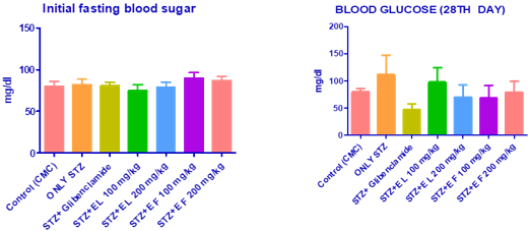
Initial fasting blood sugar | Fasting blood sugar on 72hr | Fasting blood sugar on 10th day | Fasting blood sugar on 15th day | Fasting blood sugar on 28th day | |
Control | 80.2±5.61 | 80.2±13.7 | 80.2±5.61 | 80.2±5.61 | 80.2±5.61 |
Only STZ | 82.2±6.23 | 405±151 | 355±31.4 | 267±36.1 | 112±35.5 |
STZ+ Glibenclamide | 80.7±3.89 | 300±75.6 | 349±50.9 | 312±81.2 | 47.2±10.5 |
STZ+E L 100 mg/kg | 74.8±6.95 | 405±134 | 276±34.8 | 357±59.2 | 98.2±25.8 |
STZ+E L 200 mg/kg | 78.8±6.18 | 313±87.6 | 333±32.9 | 393±60.8 | 70.7±21.8 |
STZ+E F 100 mg/kg | 90.0±6.2 | 318±82.6 | 308±83.1 | 235±77.1 | 68.7±23.2 |
STZ+E F200 mg/kg | 87±4.67 | 317±97.1 | 213±45.3 | 197±43.1 | 79.7±19.4 |
Group | Control (CMC) | Only STZ | STZ+ Glibenclamide | STZ+E L 100 mg/kg | STZ+E L 200 mg/kg | STZ+E F 100 mg/kg | STZ+E F 200 mg/kg |
|---|---|---|---|---|---|---|---|
HbA1c (mmol/l) | 5.53±0.612 | 11.5±0.318 | 5.73±0.203 | 8.43±0.448 | 7.67±0.536 | 8.53±0.546 | 6.47±0.384 |
Insulin (uIU/ml) | 0.863±0.026 | 1.33±0.287 | 0.763±0.0601 | 1.02±0.114 | 0.88±0.0231 | 1.06±0.156 | 0.857±0.0348 |
Glycogen (mg/dl) | 1.43±0.178 | 2.23±0.182** | 0.899±0.035 | 1.11±0.186 | 1.04±0.153 | 0.844±0.0605* | 0.808±0.0916* |
Group | GROUP | Control | Only OGTT | OGTT+ Metformin | OGTT + E L 100 mg/kg | OGTT + E L 200 mg/kg | OGTT + E F 100 mg/kg |
|---|---|---|---|---|---|---|---|
Initial Glucose level | 58.5±3.52 | 56.8±3.64 | 53.5±3.4 | 60.3±6.86 | 59.3±3.68 | 58.5±2.78 | 55.8±3.71 |
1sthr | 79.3±4.13 | 267±6.72*** | 239±3.3*** | 241±8.2*** | 228±11.8*** | 239±14.2*** | 222±9.43*** |
2ndhr | 76.5±1.55 | 245±9.86*** | 198±10.8*** | 218±14.9*** | 229±12.2*** | 234±16.3*** | 230±11.6*** |
3rdhr | 82±0.408 | 238±4.77*** | 201±11*** | 219±12.4*** | 218±7.64*** | 214±8.52*** | 205±3.51*** |
4thhr | 82±2.68 | 200±5.49*** | 175±4.56*** | 182±9.7*** | 174±10.1*** | 176±12.7*** | 171±7.62*** |
5thhr | 76.5±3.59 | 175±8.11*** | 138±4.11*** | 147±4.19*** | 150±5.01*** | 152±4.33*** | 133±5.91*** |
6thhr | 75.8±1.93 | 123±6.12*** | 101±3.73** | 119±6.27*** | 115±2.63*** | 109±2.8*** | 101±5.04** |
Group | Control (CMC) | Only STZ | STZ+ Glibenclamide | STZ+E L 100 mg/kg | STZ+E L 200 mg/kg | STZ+E F 100 mg/kg | STZ+E F 200 mg/kg |
|---|---|---|---|---|---|---|---|
SGOT (U/L) | 51.7±2.03 | 124±0.882*** | 95±11.9*** | 111±2.08*** | 86±4.62** | 102±1.45*** | 75±4.04** |
SGPT (U/L) | 44±3.21 | 42.7±0.882 | 35.7±0.882 | 45.7±0.882 | 29.3±1.76** | 49±4.04 | 38±3.46 |
ALP (U/L) | 131±4.67 | 145±7 | 137±24.5 | 139±4.04 | 130±3.93 | 150±3.46 | 127±2.89 |
Group | Control (CMC) | Only STZ | STZ+ Glibenclamide | STZ+E L 100 mg/kg | STZ+E L 200 mg/kg | STZ+E F 100 mg/kg | STZ+E F 200 mg/kg |
|---|---|---|---|---|---|---|---|
Urea (mg/dl) | 41±1.53 | 86.7±9.96*** | 40±0.577 | 73.3±3.53** | 69±7.1* | 42.3±2.03 | 36±3.46 |
Uric acid (mg/dl) | 0.567±0.0882 | 1.73±0.12** | 0.767±0.0882 | 1.53±0.176** | 0.933±0.285 | 0.9±0.208 | 0.8±0.153 |
Creatinine (mg/dl) | 0.6333±0.1453 | 1.833±0.03333** | 0.5333±0.08819 | 1.6±0.2309* | 1.233±0.318 | 0.8667±0.3283 | 0.7333±0.08819 |
Group | Control (CMC) | Only STZ | STZ+ Glibenclamide | STZ+E L 100 mg/kg | STZ+E L 200 mg/kg | STZ+E F 100 mg/kg | STZ+E F 200 mg/kg |
|---|---|---|---|---|---|---|---|
Total Cholesterol (mg/dl) | 48.9±3.29 | 57.7±3.99 | 38±0.837 | 54.2±3.01 | 47.6±4.86 | 45.2±2.31 | 42.2±1.76 |
Triglycerides (TG) (mg/dl) | 53.2±4.79 | 100±0.924*** | 71.7±1.1 | 86.4±6.38** | 55.8±7.57 | 83.7±3.41** | 55.4±6.09 |
HDL- Cholesterol (mg/dl) | 8.53±0.664 | 11.5±0.318* | 7.4±0.981 | 8.43±0.448 | 8±0.862 | 8.1±0.493 | 7.73±0.203 |
Group | Control (CMC) | Only STZ | STZ+ Glibenclamide | STZ+E L 100 mg/kg | STZ+E L 200 mg/kg | STZ+E F 100 mg/kg | STZ+E F 200 mg/kg |
|---|---|---|---|---|---|---|---|
RBC (×106/µL) | 5.67±0.167 | 5.48±0.15 | 5.16±0.0173 | 5.73±0.101 | 6.24±0.0722 | 5.62±0.259 | 5.35±0.232 |
WBC (×103/µL) | 10.8±0.346 | 11.3±0.26 | 13.2±0.549* | 13.6±0** | 13.5±0.924* | 11±0.491 | 13.1±0.521* |
Total Haemoglobin (g/dl) | 13.1±0.145 | 12.6±0.606 | 10.8±0.203* | 13.1±0.0577 | 13.8±0.145 | 12.4±0.328 | 11.9±0.994 |
Polymorphs (%) | 7.67±0.882 | 6±0.577 | 6.67±2.03 | 10±1.15 | 7±1.15 | 5±1.15 | 4.33±1.86 |
Lymphocytes (%) | 85.7±2.6 | 90±1.15 | 87±2.31 | 79±0.577 | 85.7±1.45 | 88.3±3.18 | 86.3±1.45 |
Group | Control (CMC) | Only STZ | STZ+ Glibenclamide | STZ+E L 100 mg/kg | STZ+E L 200 mg/kg | STZ+E F 100 mg/kg | STZ+E F 200 mg/kg |
|---|---|---|---|---|---|---|---|
Total Protein (mg/dl) | 0.791 ± 0.407 | 1.05 ± 0.194 | 0.229 ± 0.00318 | 0.9623 ± 0.2399 | 0.513 ± 0.227 | 0.447 ± 0.116 | 0.313 ± 0.057 |
SOD (unit/min/Mg protein) | 0.146 ± 0.0142 | 0.4 ± 0.045*** | 0.109 ± 0.00289 | 0.205 ± 0.0323 | 0.181 ± 0.00664 | 0.166 ± 0.0512 | 0.124 ± 0.0166 |
Catalysis (µmole h202/min/mg protein) | 0.3 ± 0.0157 | 0.9 ± 0.114*** | 0.116 ± 0.0234 | 0.746 ± 0.0303** | 0.363 ± 0.0121 | 0.307 ± 0.147 | 0.238 ± 0.0307 |
GPX (µmoles of glutathione oxidized/min/mg protein) | 0.039 ± 0.008544 | 0.2213 ± 0.03262*** | 0.05167 ± 0.03982 | 0.1577 ± 0.007796** | 0.142 ± 0.003464* | 0.117 ± 0.008185 | 0.075 ± 0.006928 |
GSH (µg/mg protein) | 0.179 ± 0.00733 | 0.469 ± 0.0661*** | 0.0827 ± 0.0367 | 0.326 ± 0.0468 | 0.273 ± 0.0367 | 0.163 ± 0.0347 | 0.146 ± 0.00611 |
LPO (nmol of MDA /mg protein) | 0.0757 ± 0.0012 | 0.148 ± 0.00866*** | 0.07 ± 0.00451 | 0.103 ± 0.00968* | 0.0873 ± 0.00145 | 0.083 ± 0.00866 | 0.0807 ± 0.00426 |
Group | Control (CMC) | Only STZ | STZ+ Glibenclamide | STZ+E L 100 mg/kg | STZ+E L 200 mg/kg | STZ+E F 100 mg/kg | STZ+E F 200 mg/kg |
|---|---|---|---|---|---|---|---|
Glucokinase (unit/min/mg protein) | 0.875 ± 0.032 | 0.913 ± 0.0358 | 0.493 ± 0.0917** | 0.664 ± 0.000882 | 0.467 ± 0.0607*** | 0.45 ± 0.064*** | 0.424 ± 0.0502*** |
Hexokinase (unit/min/mg protein) | 1.3 ± 0.00866 | 0.591 ± 0.153 | 0.524 ± 0.0242 | 0.647 ± 0.136 | 0.585 ± 0.0285 | 0.578 ± 0.041 | 0.53 ± 0.0876 |
Glucose-6- Phosphatase (nmoles of piliberated /min/mg protein) | 0.1187 ± 0.01157 | 0.242 ± 0.02859*** | 0.182 ± 0.01179 | 0.1823 ± 0.01068 | 0.1543 ± 0.01495 | 0.172 ± 0.008888 | 0.1503 ± 0.01313 |
Fructose 1-6- Di Phosphatase (nmoles of piliberated /min/mg protein) | 0.503 ± 0.0429 | 0.737 ± 0.112 | 0.488 ± 0.0987 | 0.465 ± 0.0616 | 0.426 ± 0.0303 | 0.362 ± 0.0549 | 0.26 ± 0.0485 |
ALP | Alkaline Phosphatase |
AST | Aspartate Aminotransferase |
ALT | Alanine Transaminase |
DM | Diabetes Mellitus |
EDTA | Ethylene Diamine Tetra Acetic Acid |
HbA1c | Haemoglobin A1c |
HDL | High Density Lipoprotein |
NIC | Nicotinamide |
OGTT | Oral Glucose Tolerance Test |
TG | Triglycerides |
TC | Total Cholesterol |
VLDL | Very Low Density Lipoprotein |
NA-STZ | Nicotinamide–Streptozotocin |
STZ | Streptozotocin |
| [1] | Dey P, Kundu A, Chakraborty HJ, Kar B, Choi WS, Lee BM, Bhakta T, Atanasov AG. Antidiabetic phytochemicals from medicinal plants: Prospective candidates for new drug discovery and development. Front Endocrinol (Lausanne). 2022; 3: 800714. |
| [2] | Anshika, Pandey RK, Singh L, Kumar S, Singh P, Pathak M, Jain S. Plant bioactive compounds and their mechanistic approaches in the treatment of diabetes: a review. Future Journal of Pharmaceutical Sciences. 2022; (1): 52. |
| [3] | Vishwakarma A, Biswas V, Hasan F, Praveen A, Sharma D. Diabetes mellitus: An updated overview and role of medicinal plants in modern treatment. Innov Med Omics. 2025; 2(2): 20-35. |
| [4] | Uddin ABMN, Hossain F, Reza ASMA, Nasrin MS, Alam AHMK. Traditional uses, pharmacological activities, and phytochemical constituents of the genus Syzygium: A review. Food Sci Nutr. 2022; 10(6): 1789-1819. |
| [5] | Youssef SA, Elosaily AH, Farag NF, Selim NM, Hussein MA, El Hefnawy HM. Syzygium australe extracts exhibit significant antioxidant and antidiabetic properties: A comprehensive analysis of the phytoconstituents. Future J Pharm Sci. 2025; 1: 55. |
| [6] | Suksri K, Muangchan N, Yingngam B, Kaewkanlaya P, Onthamma J, Bootmart Y, Pusinam C, Chaipipattanamongkol N, Sridakhot K, Sripukdee S, Kaokaew J. Syzygium samarangense fruit extract attenuates hyperglycemia in type 2 diabetic rats through modulation of oxidative stress and inflammation. Biomed Rep. 2025; 3(4): 163. |
| [7] | American Diabetes Association Professional Practice Committee. Standards of care in diabetes—2025. Diabetes Care. 2025; 8(Suppl 1): S1-S352. |
| [8] | Chayarop K, Peungvicha P, Temsiririrkkul R, Wongkrajang Y, Chuakul W, Rojsanga P. Hypoglycaemic activity of Mathurameha, a Thai traditional herbal formula aqueous extract, and its effect on biochemical profiles of streptozotocin-nicotinamide-induced diabetic rats. BMC Complement Altern Med. 2017; 7: 383. |
| [9] | Uçar Baş K, Güneş E, Çakır A. Therapeutic prospects of phytochemicals in diabetes: Insights from recent clinical evidence. Endokrynol Pol. 2025; 6(6): 586-593. |
| [10] | Sivakumar A, Thanu AS, Vishnumukkala T, Ganesh KSVAB. Management of diabetes mellitus using medicinal plants: A review. Bioinformation. 2024; 0(7): 705-710. |
| [11] | Ashagrie YN, Chaubey KK, Tadesse MG, Dayal D, Bachheti RK, Rai N, et al. Antidiabetic phytochemicals: An overview of medicinal plants and their bioactive compounds in diabetes mellitus treatment. Z Naturforsch C J Biosci. 2025; 80(9-10):457-479. |
| [12] | Rajan S, Jayendran M, Sethuraman M. Folk herbal practices among Toda tribe of the Nilgiri Hills in Tamil Nadu, India. J Nat Remedies. 2005; 5(1): 52-58. |
| [13] | Rampura ZF, Panwar SS. Herbal antidiabetics: An evidence-based review of medicinal plants used in type 2 diabetes. J Pharmacogn Phytochem. 2025; 4(5): 250-257. |
| [14] | Araújo ANV, Souza EL, Nascimento DS, Alves JM, Sampaio KB, Silva SRF, Alves JLB, Albuquerque TMR. Revisiting the nutritional and functional value and health-promoting potential of Syzygium species. Journal of Functional Foods. 2024; 18: 106265. |
| [15] | Dogara AM, Bradosty SW, Al-Zahrani AA, Hamad SW, Almalki HD. Ethnobotany, bioactive compounds and pharmacology of Syzygium guineense (Willd.) DC: A review. Journal of Ethnopharmacology. 2025; 39: 119149. |
| [16] | Chandran R, Parimelazhagan T, Shanmugam S, Thankarajan S. Antidiabetic activity of Syzygium calophyllifolium in streptozotocin-nicotinamide induced type 2 diabetic rats. Biomed Pharmacother. 2016; 2: 547-554. |
| [17] | Clemente-Suárez VJ, Martín-Rodríguez A, Beltrán-Velasco AI, Rubio-Zarapuz A, Martínez-Guardado I, Valcárcel-Martín R, Tornero-Aguilera JF. Functional and Therapeutic Roles of Plant-Derived Antioxidants in Type 2 Diabetes Mellitus: Mechanisms, Challenges, and Considerations for Special Populations. Antioxidants (Basel). 2025 Jun 13; 4(6): 725. |
| [18] | Ahmed I, Adeghate E, Cummings E, Sharma AK, Singh J. Beneficial effects and mechanism of action of Momordica charantia juice in the treatment of streptozotocin-induced diabetes mellitus in rat. Mol Cell Biochem. 2004; 261(1-2): 63-70. |
| [19] | Dey L, Attele AS, Yuan CS. Alternative therapies for type 2 diabetes. Altern Med Rev. 2002; (1): 45-58. |
| [20] | El-Hawary SS, Yassin NA, Abdel-Monem AR. Protective effects of medicinal plant antioxidants against diabetes-induced hepatic and renal dysfunction. Biomed Pharmacother. 2022; 46: 112537. |
| [21] | Karthick K, Suresh Kumar R, Mohanraj K. Role of phenolics and flavonoids in glycemic control and antioxidant defense in diabetic conditions. S Afr J Bot. 2023; 56: 98-107. |
| [22] | Sharma V, Meena R, Gupta P. Nano-herbal formulations for diabetes mellitus: Improved bioavailability and therapeutic efficacy. Int J Biol Macromol. 2025; 76: 130987. |
| [23] | Cock IE, Cheesman M. The medicinal properties and phytochemistry of plants of the genus Syzygium. Curr Tradit Med. 2018; (1): 50-75. |
| [24] | Rathakrishnan N, Chitra V. Syzygium tamilnadense: A new species from the Western Ghats, Tamil Nadu, India. Int J Adv Res. 2014; (9): 101-105. |
APA Style
Jayendran, M., Ganesan, C. M., Balasaravanan, T. (2026). Evaluation of the Antihyperglycemic Activity of Ethanolic Extracts of Syzygium tamilnadense in Nicotinamide–Streptozotocin-Induced Type 2 Diabetic Rats. Journal of Diseases and Medicinal Plants, 12(3), 117-127. https://doi.org/10.11648/j.jdmp.20261203.13
ACS Style
Jayendran, M.; Ganesan, C. M.; Balasaravanan, T. Evaluation of the Antihyperglycemic Activity of Ethanolic Extracts of Syzygium tamilnadense in Nicotinamide–Streptozotocin-Induced Type 2 Diabetic Rats. J. Dis. Med. Plants 2026, 12(3), 117-127. doi: 10.11648/j.jdmp.20261203.13
@article{10.11648/j.jdmp.20261203.13,
  author = {Mani Jayendran and Coimbatore Murugesan Ganesan and Thangamani Balasaravanan},
  title = {Evaluation of the Antihyperglycemic Activity of Ethanolic Extracts of Syzygium tamilnadense in
Nicotinamide–Streptozotocin-Induced Type 2 Diabetic Rats},
  journal = {Journal of Diseases and Medicinal Plants},
  volume = {12},
  number = {3},
  pages = {117-127},
  doi = {10.11648/j.jdmp.20261203.13},
  url = {https://doi.org/10.11648/j.jdmp.20261203.13},
  eprint = {https://article.sciencepublishinggroup.com/pdf/10.11648.j.jdmp.20261203.13},
  abstract = {Diabetes mellitus is a chronic metabolic disorder characterized by persistent hyperglycemia resulting from impaired insulin secretion, insulin resistance, or both. Prolonged hyperglycemia is associated with oxidative stress, dyslipidemia, and progressive damage to vital organs, highlighting the need for safer and more effective therapeutic agents. Syzygium tamilnadense Rathakr. & Chitra, an endemic medicinal species of the Western Ghats, India, has been traditionally used for various therapeutic purposes; however, its antidiabetic potential has not been scientifically validated. To the best of our knowledge, this is the first scientific exploration of its medicinal potential. The present study aimed to evaluate the antihyperglycemic, antioxidant, and organ-protective effects of the ethanolic extract of S. tamilnadense in nicotinamide–streptozotocin-induced type 2 diabetic rats. Experimental diabetes was induced using nicotinamide and streptozotocin, followed by oral administration of different doses of the ethanolic extract for four weeks. Fasting blood glucose, oral glucose tolerance, glycated hemoglobin (HbA1c), serum insulin, hepatic glycogen, lipid profile, antioxidant enzymes, hepatic and renal function biomarkers, and histopathological changes in pancreatic and hepatic tissues were evaluated. Treatment with S. tamilnadense significantly reduced fasting blood glucose and HbA1c levels, improved glucose tolerance, restored serum insulin and hepatic glycogen levels, normalized serum lipid profiles, and enhanced body weight compared with diabetic controls. The extract also improved endogenous antioxidant defense, attenuated oxidative stress, and significantly ameliorated hepatic and renal dysfunction. Histopathological examination further demonstrated marked regeneration of pancreatic β-cells and restoration of normal hepatic architecture in treated animals. The higher-dose treatment exhibited therapeutic efficacy comparable to the standard antidiabetic drug. These findings demonstrate that the ethanolic extract of S. tamilnadense possesses significant antihyperglycemic, antioxidant, hepatoprotective, and nephroprotective activities, suggesting its potential as a promising natural therapeutic candidate for the management of type 2 diabetes mellitus. Further studies are warranted to isolate the bioactive constituents and elucidate the underlying molecular mechanisms.},
 year = {2026}
}
TY  - JOUR
T1  - Evaluation of the Antihyperglycemic Activity of Ethanolic Extracts of Syzygium tamilnadense in
Nicotinamide–Streptozotocin-Induced Type 2 Diabetic Rats
AU  - Mani Jayendran
AU  - Coimbatore Murugesan Ganesan
AU  - Thangamani Balasaravanan
Y1  - 2026/08/27
PY  - 2026
N1  - https://doi.org/10.11648/j.jdmp.20261203.13
DO  - 10.11648/j.jdmp.20261203.13
T2  - Journal of Diseases and Medicinal Plants
JF  - Journal of Diseases and Medicinal Plants
JO  - Journal of Diseases and Medicinal Plants
SP  - 117
EP  - 127
PB  - Science Publishing Group
SN  - 2469-8210
UR  - https://doi.org/10.11648/j.jdmp.20261203.13
AB  - Diabetes mellitus is a chronic metabolic disorder characterized by persistent hyperglycemia resulting from impaired insulin secretion, insulin resistance, or both. Prolonged hyperglycemia is associated with oxidative stress, dyslipidemia, and progressive damage to vital organs, highlighting the need for safer and more effective therapeutic agents. Syzygium tamilnadense Rathakr. & Chitra, an endemic medicinal species of the Western Ghats, India, has been traditionally used for various therapeutic purposes; however, its antidiabetic potential has not been scientifically validated. To the best of our knowledge, this is the first scientific exploration of its medicinal potential. The present study aimed to evaluate the antihyperglycemic, antioxidant, and organ-protective effects of the ethanolic extract of S. tamilnadense in nicotinamide–streptozotocin-induced type 2 diabetic rats. Experimental diabetes was induced using nicotinamide and streptozotocin, followed by oral administration of different doses of the ethanolic extract for four weeks. Fasting blood glucose, oral glucose tolerance, glycated hemoglobin (HbA1c), serum insulin, hepatic glycogen, lipid profile, antioxidant enzymes, hepatic and renal function biomarkers, and histopathological changes in pancreatic and hepatic tissues were evaluated. Treatment with S. tamilnadense significantly reduced fasting blood glucose and HbA1c levels, improved glucose tolerance, restored serum insulin and hepatic glycogen levels, normalized serum lipid profiles, and enhanced body weight compared with diabetic controls. The extract also improved endogenous antioxidant defense, attenuated oxidative stress, and significantly ameliorated hepatic and renal dysfunction. Histopathological examination further demonstrated marked regeneration of pancreatic β-cells and restoration of normal hepatic architecture in treated animals. The higher-dose treatment exhibited therapeutic efficacy comparable to the standard antidiabetic drug. These findings demonstrate that the ethanolic extract of S. tamilnadense possesses significant antihyperglycemic, antioxidant, hepatoprotective, and nephroprotective activities, suggesting its potential as a promising natural therapeutic candidate for the management of type 2 diabetes mellitus. Further studies are warranted to isolate the bioactive constituents and elucidate the underlying molecular mechanisms.
VL  - 12
IS  - 3
ER  -
Department of Botany, Government Arts College, Udumelpet, India
Department of Botany, Government Arts College (Autonomous), Coimbatore, India
Department of Botany, LRG Government Arts College for women, Tiruppur, India

Information



 Share This Article
 Twitter
 Linked In
 Facebook
 Copy
Copy Download